Zirconia ceramic is zirconium dioxide (ZrO₂)-based engineered ceramic—most often yttria-stabilized (Y-TZP or PSZ)—selected when fracture toughness, wear, or sealing durability matter more than alumina’s lower expansion or silicon carbide’s extreme hardness. Use this page to decide whether ZrO₂ fits your duty, which stabilization class you need, and which failure modes to check before RFQ.
3-minute decision: Pick zirconia when you need oxide-ceramic toughness (typically ~6–10 MPa·m1/2) under contact, sealing, or impact risk. Stay with alumina when thermal-expansion match and cost dominate. Prefer SiC when abrasion + heat spreading dominate and impact is controlled. Prefer Si₃N₄ when high-speed rotation / strength-to-weight dominate. Do not specify “zirconia” by melting point alone.
What crystal phases matter for engineering zirconia?
Pure ZrO₂ is polymorphic: monoclinic at room temperature, tetragonal above ~1170 °C, cubic above ~2370 °C. The tetragonal→monoclinic change carries ~3–5% volume expansion. Uncontrolled, that expansion cracks parts on cooling. Controlled near a crack tip, the same expansion creates local compression and raises crack resistance—transformation toughening.
Engineering takeaway: phase control is the product, not a trivia fact. Grain size, dopant level, and constraint decide whether transformation helps or destroys the part.
Which stabilized zirconia system should you specify?
Stabilization uses aliovalent oxides (commonly Y₂O₃) to keep useful high-symmetry phases at service temperature.
| System | Typical dopant | What you buy | When it fits | Watch-out |
|---|---|---|---|---|
| Y-TZP | ~2–3 mol% Y₂O₃ | Metastable tetragonal; high toughness | Wear, sealing, structural parts needing crack tolerance | Hydrothermal aging (LTD) if grain size / humidity mismanaged |
| PSZ | ~3–8 mol% Y₂O₃ | Cubic matrix + transformable tetragonal precipitates | Multiaxial / thicker sections needing balance | Microstructure-sensitive; needs process control |
| Fully stabilized cubic | >~8 mol% Y₂O₃ | Stable cubic; lower toughness | Ionic conductor / sensor duties more than structural toughness | Not a toughness play |
Default structural ask: Y-TZP unless the process needs cubic ionic behavior or a PSZ microstructure is already qualified. State dopant mol%, density target, and grain-size window in the RFQ—not only “zirconia.”
What mechanical and thermal numbers actually change the design?
Typical fine-grained Y-TZP ranges used for screening (verify against supplier TDS for the lot you buy):
- Flexural strength often ~800–1200 MPa; fracture toughness often ~6–10 MPa·m1/2 (vs alumina ~3–4).
- Hardness ~11–13 GPa—below SiC, still far above most metals.
- CTE ~10–11.5 ×10⁻⁶ K−1 (higher than alumina)—mismatch with metals/ceramics drives interface stress.
- Thermal-shock ΔT tolerance is moderate (~200–350 °C class, geometry-dependent). Do not treat zirconia like Si₃N₄ for quench abuse.
- At room temperature it is an insulator; yttria-stabilized grades become oxygen-ion conductors at high temperature (solid-electrolyte regime). Separate structural vs ionic duties in the RFQ.
When should you choose zirconia—and when still pick Al₂O₃, SiC, or Si₃N₄?
| If the duty looks like… | First-look material | Why |
|---|---|---|
| Contact wear, sealing faces, impact/misalignment risk on an oxide ceramic | Zirconia (Y-TZP/PSZ) | Transformation toughening raises crack tolerance vs alumina |
| Rigid assemblies needing lower expansion / lower cost oxide | Alumina | Lower CTE, mature cost; accept lower toughness |
| Extreme abrasion + heat spreading with controlled impact | SiC | Hardness/conductivity lead; toughness usually lower |
| High-speed rotation / strength-to-weight | Si₃N₄ | Lower density with useful toughness |
| Specification driven only by “high melting point” | Do not default to zirconia | Many refractories survive temperature; zirconia earns its keep on toughness + chemistry for the duty |
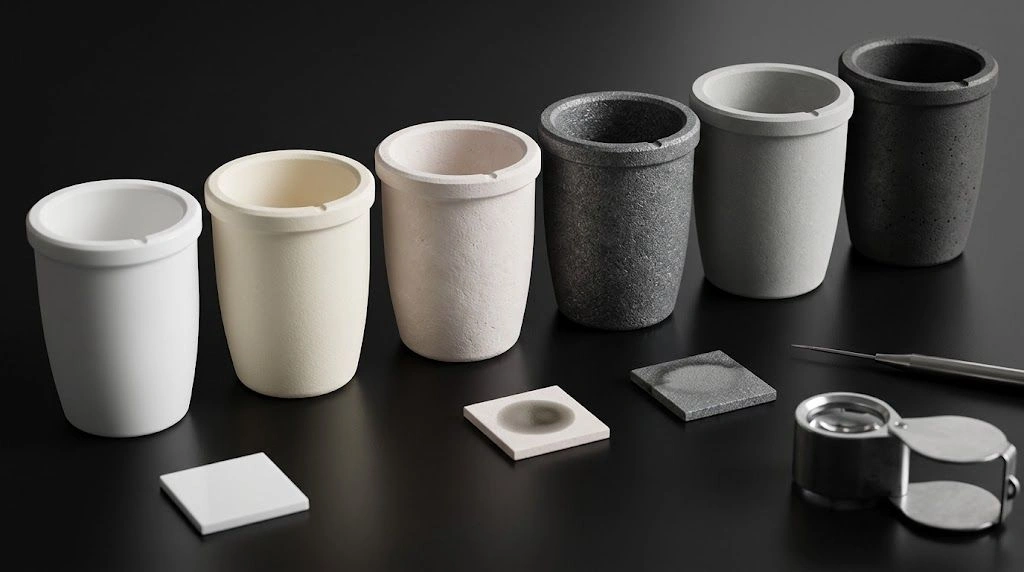
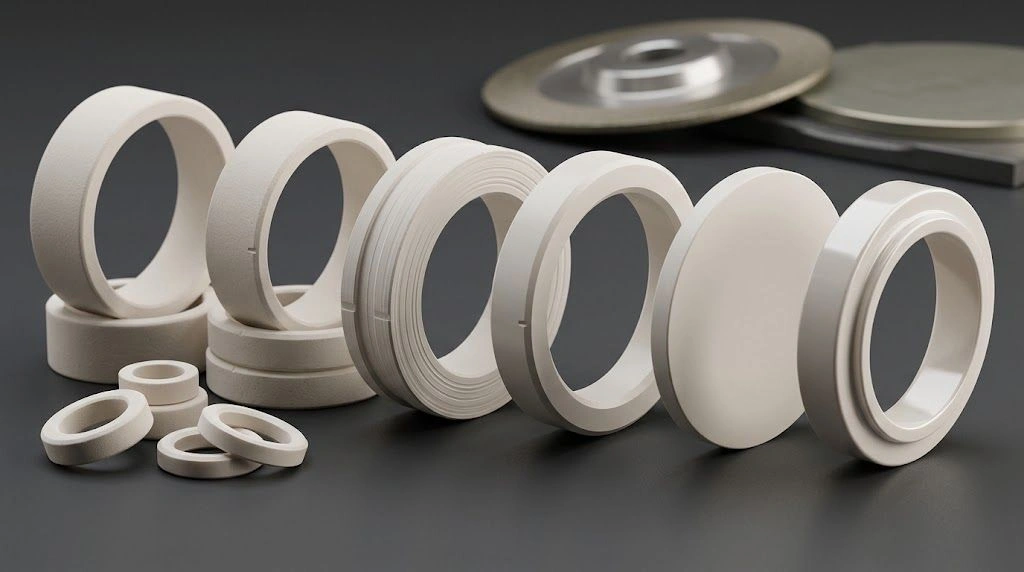
Form-factor exits after the material call: furnace/sensor geometry → zirconia tubes; precision parts → custom zirconia ceramic components; melt/thermal containment → zirconia ceramic crucibles.
What failure modes kill zirconia parts in service?
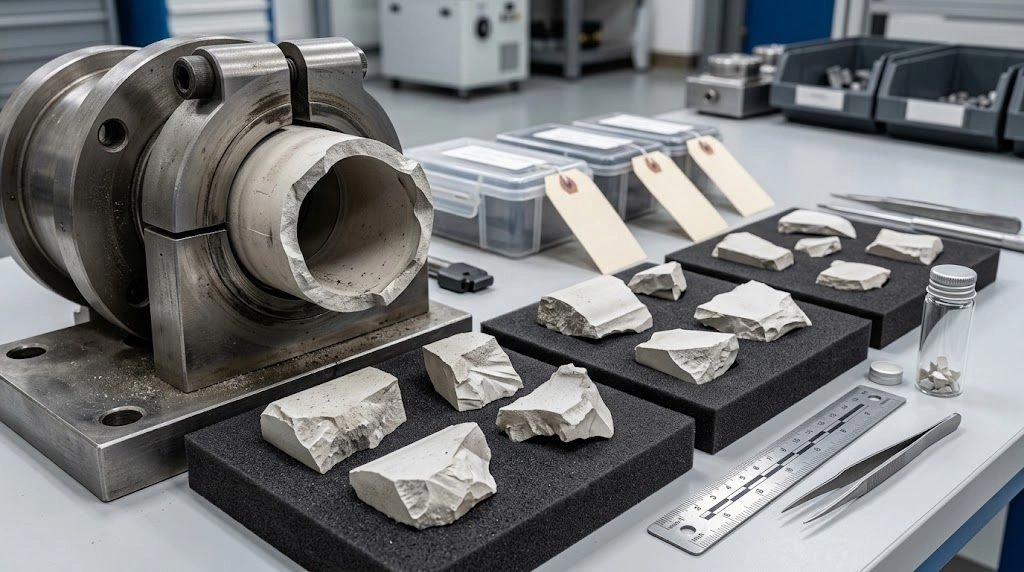
Low-temperature degradation (LTD): In humid environments (~65–300 °C), surface tetragonal→monoclinic conversion can deepen over time, roughening the surface and cutting flexural strength if grain size and stabilizer are wrong. It is usually surface-led first—not instant bulk collapse—so humidity + grain-size control belong in qualification.
Constraint / CTE mismatch cracking: Zirconia’s relatively high expansion vs alumina/SiC/Si₃N₄ builds tensile stress in rigid stacks. If the assembly cannot comply, edges and joints crack even when peak temperature looks “safe.”
Grain growth: Oversized grains (often cited risk above ~0.8–1 μm class) make spontaneous transformation easier and blunt the toughness advantage. Sintering history is a reliability variable.
Surface flaws under tension: Toughening delays cracks; it does not erase machining damage. Spec finish and NDT for tensile-dominated parts.
What to put in an RFQ so the grade is real
- Duty: wear / seal / structural / ionic-sensor — pick one primary
- Stabilizer and mol% (e.g., 3Y-TZP), density, grain-size target
- Temperature profile, atmosphere, humidity exposure
- Mating materials (CTE stack) and allowable ΔT / ramp
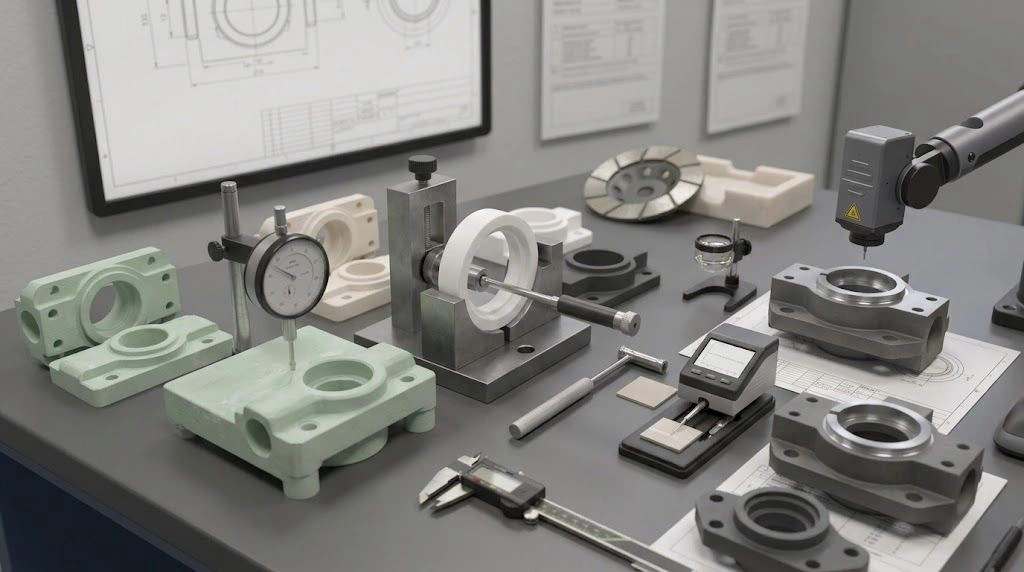
- Critical dimensions, surface finish, inspection method
- Form: tube / crucible / custom component drawing
Need a grade and geometry review? Share duty cycle, mating materials, and drawing for the zirconia ceramics product family—no need to guess mol% alone.
Frequently Asked Questions
Is zirconia always tougher than alumina?
In well-made Y-TZP/PSZ, yes on fracture toughness. Alumina can still win on CTE match, hardness in some wears, and cost.
Does zirconia degrade in moist heat?
It can (LTD) if microstructure and stabilizer are wrong. Qualify for the humidity/temperature window; do not assume “ceramic = inert forever.”
Can I use zirconia anywhere SiC is used?
No. SiC usually leads on hardness and thermal conductivity; zirconia leads when oxide-ceramic crack tolerance and sealing/wear geometry matter more.
What is the biggest RFQ mistake?
Writing only “zirconia ceramic” with no stabilizer class, grain-size/density expectation, or duty (structural vs ionic).
Related reading
- Zirconia crucibles for melting and casting stability
- Ceramic material selection matrix: Al₂O₃ vs ZrO₂ vs SiC vs BN
- Types of advanced engineering ceramics (2025 overview)