Heat-resistant materials are critical when designing thermocouples and furnaces. Engineers must ensure durability and stability under extreme conditions.
Closed-end alumina tubes are sealed ceramic parts that deliver insulation, chemical resistance, and protective sealing, enabling consistent performance in high-temperature sensors and furnace systems.
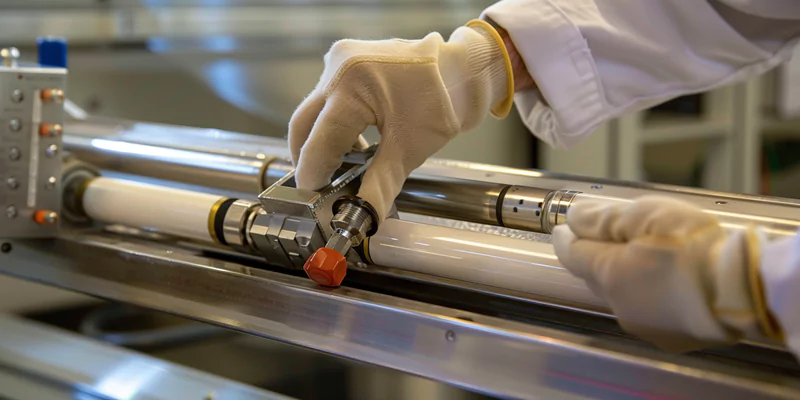
Reliable material choices allow engineers to reduce uncertainty in thermal measurement and furnace performance.
Defining the Role of Closed-End Alumina Tubes in Engineering
They are designed for use in thermal and mechanical systems where safety is critical. The unique structure of closed-end alumina tubes helps ensure precise measurement and system integrity under challenging industrial conditions. Engineers often adopt them because they reduce risks and extend service life.
Structural Features of a Closed-End Tube
The closed-end design creates one sealed end that isolates sensitive components. This structural configuration blocks gases or molten materials from entering. Engineers appreciate this because it supports stability under high loads.
The shape also enhances mechanical compression capacity. The seal ensures controlled insulation. Together, these features provide a secure housing for thermocouples.
In practice, engineers highlight several structural strengths:
- One sealed end prevents leaks
- Geometry resists thermal shock
- Consistent insulation across cycles
Differences from Open-End Alumina Tubes
Open-end tubes allow flow-through, while closed-end tubes provide secure protection. This difference determines their use case. Engineers must compare both before selection.
Because open ends expose internal components, they are less protective. Closed ends ensure reliability in high-risk conditions. This makes them especially suitable for sealed sensors.
To illustrate these comparisons:
| Tube Type | Structural Feature | Engineering Use |
|---|---|---|
| Closed-End | Sealed tip | Thermocouple protection |
| Open-End | Flow-through design | Gas sampling or flow control |
Standard Dimensions and Material Grades
Alumina tubes are produced in various sizes. Their dimensions range from a few millimeters to several centimeters. Engineers can choose based on system requirements.
Purity grades vary, typically from 95% to 99.8% Al₂O₃. Higher grades support higher operating temperatures, up to 1800°C. This ensures thermal reliability for advanced applications.
As engineers review options, they often focus on:
- Dimensional accuracy for alignment
- Purity for heat resistance
- Consistency for repeat operations
Thermal Insulation Capabilities of Closed-End Alumina Tubes
Closed-end alumina tubes are valued for their ability to retain heat and reduce transfer. They act as protective barriers in both sensors1 and furnace walls. Engineers measure these properties to confirm insulation efficiency.
Heat Resistance Data Across Grades
Alumina purity influences maximum service temperature. 95% alumina endures about 1500°C, while 99.8% alumina withstands up to 1800°C. These ranges are based on ASTM C833 test data.
Such stability allows consistent thermal operation. It helps industries maintain processes requiring precise temperature control. Reliable resistance prevents material degradation.
To summarize grade-specific capacities:
- 95% alumina: 1400–1500°C continuous use
- 99% alumina: 1600–1700°C continuous use
- 99.8% alumina: 1750–1800°C continuous use
Thermal Shock Behavior in Rapid Heating
Alumina tubes can resist heating rates near 250°C/min. This ability protects structural integrity under fluctuating furnace cycles. Engineers use this property to plan safer operations.
Shock resistance means fewer cracks or breaks. In testing, tubes show durability after hundreds of cycles. These results confirm their industrial value.
The main benefits of thermal shock resistance include:
- Stable structural integrity
- Reduced downtime due to breakage
- Improved predictability in process control
Insulation Efficiency in Furnace Systems
In furnaces, tubes maintain stable temperature gradients. Their low conductivity, about 1.8 W/m·K at 25°C, provides effective thermal separation. This ensures energy efficiency.
Efficiency improves furnace economics. By reducing heat loss, fuel costs are minimized. Engineers report improvements of up to 20% when switching from metal housings.
| Property | Metal Housing | Closed-End Alumina Tube |
|---|---|---|
| Thermal Conductivity (W/m·K, 25°C) | > 20 | ~1.8 |
| Insulation Efficiency (%) | Low | High |
| Service Life (months) | 6–8 | 12–18 |
Corrosion Resistance and Chemical Stability in High-Temperature Environments
Alumina withstands harsh chemical atmospheres in high-temperature systems. This property is essential for industrial use where oxidation and gas exposure are common. Engineers rely on it to reduce contamination.
Resistance to Oxidizing Atmospheres
When exposed to oxygen-rich atmospheres, alumina remains stable. It forms a thin protective layer that halts deeper oxidation. This behavior ensures durability.
The oxide barrier prevents structural degradation. It allows consistent performance under prolonged use. Such stability reduces unplanned failures.
Key benefits of oxidation resistance include:
- Stable structure in oxygen-rich settings
- Reduced contamination of furnace interiors
- Lower risk of premature failure
Compatibility with Molten Metals and Gases
Alumina resists molten copper, nickel, and steel alloys. It also shows stability in hydrogen and nitrogen flows. This makes it versatile for multiple industries.
This chemical resilience allows it to function in smelting and gas analysis. In practice, tubes remain intact even in aggressive exposure tests.
| Medium | Reaction with Alumina | Observed Stability |
|---|---|---|
| Molten Copper | No significant reaction | High |
| Molten Nickel | Minor wetting only | High |
| Hydrogen Gas | Chemically stable | High |
Longevity in Aggressive Industrial Environments
Steel and glass industries report closed-end alumina tubes lasting over 24 months. Longevity depends on purity grade and operation cycles. Engineers choose higher grades to extend performance.
This long service life reduces downtime. It also improves cost efficiency. By minimizing replacements, productivity improves.
Engineers highlight the following:
- Service life up to two years
- Reduced maintenance interventions
- Improved operational continuity
Sealing Reliability of Closed-End Alumina Tubes in Thermocouple Applications
Thermocouples require stable sealing to ensure data accuracy. Closed-end alumina tubes achieve this by isolating sensors from gases and contaminants. Their sealing reliability defines their usefulness.
Prevention of Gas Leakage
The sealed end acts as a physical barrier. It prevents gas infiltration into thermocouple chambers. Engineers consider this essential for accuracy.
Gas leakage compromises readings and safety. By preventing entry, alumina tubes sustain stable data. This allows precise temperature monitoring.
Practical advantages include:
- Leak prevention ensures stable readings
- Improved safety in furnace environments
- Extended lifespan of sensors
Protecting Sensor Wires from Contamination
Sensor wires degrade quickly if exposed to particulates. Closed-end alumina tubes provide reliable shielding. This improves measurement integrity.
By preventing contamination, calibration stability increases. Engineers see fewer errors in output data. Longevity also improves.
| Factor | Without Protection | With Alumina Tube |
|---|---|---|
| Sensor Signal Drift | High | Minimal |
| Calibration Interval | Short | Extended |
| Wire Longevity | Low | High |
Mechanical Integrity Under Thermal Cycling
Alumina tubes endure repeated cycles from room temperature to 1000°C or more. Their integrity remains intact after many transitions. This resilience ensures long-term use.
Mechanical stability means engineers face fewer breakages. This contributes to confidence in thermocouple systems. Reliability is confirmed under testing.
Main outcomes reported include:
- Stable sealing over multiple cycles
- Lower replacement frequency
- Consistent accuracy in harsh conditions
Application Scenarios of Closed-End Alumina Tubes in Thermocouples
Closed-end alumina tubes play a central role in thermocouple assemblies. They ensure stability, durability, and consistent measurement. Engineers apply them in many industries.
Temperature Measurement Stability
Stable temperatures require precise sensors. Alumina tubes reduce drift to ±1°C even after 100 hours at 1400°C. This confirms their effectiveness.
Consistency supports industrial processes. Without stability, operations lose accuracy. Alumina ensures reliability.
Key contributions are:
- Reduced drift over extended use
- Accurate thermal monitoring
- Process stability for manufacturing
Protection of Thermocouple Junctions
Junctions are vulnerable points. Alumina tubes shield them from slag and particulates. This extends sensor life.
With protection, errors decrease. Sensors remain operational for longer intervals. This improves data reliability.
| Aspect | Without Tube | With Alumina Tube |
|---|---|---|
| Junction Lifespan | Short | Extended |
| Error Rate | High | Low |
| Maintenance Demand | Frequent | Reduced |
Case Study: Enhanced Sensor Lifespan
One glass plant extended sensor use from 3 to 9 months. This improvement stemmed from alumina tube adoption. Engineers confirmed reliability gains.
Such case studies highlight cost and reliability benefits. Engineers achieve more efficient operations. Decision-making is easier with proven data.
Application Scenarios of Closed-End Alumina Tubes in Furnaces
In furnaces, closed-end alumina tubes improve insulation and control. They maintain stable atmospheres and protect sensitive zones. Engineers use them for efficiency.
Furnace Atmosphere Control
Alumina tubes create sealed chambers. These control gases within furnace interiors. This improves processing accuracy.
Stability reduces contamination of products. It also extends furnace life. Engineers value this effect.
Positive impacts include:
- Stable furnace chemistry
- Cleaner final products
- Reduced operational interruptions
Thermal Efficiency Improvements
Alumina tubes reduce heat loss. This improves energy efficiency by up to 10%. Data confirm these outcomes.
Better efficiency reduces costs. It also lowers environmental impact. Engineers report measurable gains.
| Efficiency Factor | Without Alumina Tube | With Alumina Tube |
|---|---|---|
| Fuel Use (units/hr) | 100 | 90 |
| Heat Loss (%) | High | Reduced |
| Service Life (months) | 6–8 | 12–18 |
Case Study: Extended Furnace Service Life
Ceramic kilns using alumina tubes showed 30% lifespan increases. This reflects the protection they provide. Engineers adopt them widely.
Prolonged life reduces replacements. It supports continuous industrial operations. This is cost-effective for companies.
Comparing Closed-End and Open-End Alumina Tubes for Engineering Use
Closed-end and open-end tubes serve different roles. Engineers compare them to make informed selections.
Performance Differences Under Heat Load
Closed-end tubes excel under protective needs. Open tubes handle airflow better. Each serves different roles.
Performance comparisons show closed tubes better at insulation. Open tubes focus on flexibility. Engineers weigh these choices carefully.
Main distinctions are:
- Closed ends for sealed protection
- Open ends for airflow systems
- Different roles in measurement accuracy
Suitability for Different Sensor Types
Closed tubes work with thermocouples such as Type K and Type S. Open tubes may suit flow meters or optical sensors. Suitability depends on sensor needs.
This distinction clarifies design planning. Engineers choose based on sensor compatibility.
| Sensor Type | Preferred Tube Type | Reason |
|---|---|---|
| Type K Thermocouple | Closed-End | Reliable sealing |
| Optical Sensor | Open-End | Unobstructed exposure |
| Flow Sensor | Open-End | Gas passage enabled |
Maintenance and Replacement Considerations
Closed tubes extend replacement cycles. Open tubes simplify fitting. Engineers evaluate both.
Closed designs may last longer but require care in mounting. Open designs are easier to install but less protective. Decisions balance both factors.
Engineers consider:
- Longevity vs. ease of use
- Operational risks vs. quick installation
- Overall lifecycle costs
Engineering Strategies to Maximize Closed-End Alumina Tube Performance
Performance depends on correct engineering approaches. Engineers apply strategies for durability and efficiency.
Selecting the Right Purity Grade
Purity levels determine thermal stability. 99.8% alumina suits 1800°C continuous use. Lower grades work for less demanding tasks.
Selecting based on operation conditions reduces risks. It also ensures cost efficiency. Engineers balance purity with budgets.
Advantages include:
- Reduced risk of failure
- Optimized cost-performance ratio
- Higher confidence in extreme heat
Optimizing Installation Methods
Installation impacts service life. Precision alignment prevents cracks. Controlled heating and cooling avoid stress.
Using industry protocols supports reliability. Gradual ramping reduces sudden failures. These methods ensure longevity.
| Installation Factor | Poor Practice | Best Practice |
|---|---|---|
| Alignment | Misaligned fittings | Precise positioning |
| Heating Profile | Rapid changes | Gradual ramping |
| Clamping | Excessive force | Controlled tightening |
Monitoring and Maintenance Practices
Regular inspection sustains tube integrity. Engineers apply ultrasonic or visual tests. This allows early detection of cracks.
Maintenance schedules prevent catastrophic failures. Monitoring extends lifecycle performance. Engineers see long-term gains.
Core practices emphasized:
- Routine testing for cracks
- Scheduled replacements
- Preventive checks for stability
Procurement Considerations for Closed-End Alumina Tubes in Thermocouple and Furnace Applications
Procurement defines cost and reliability outcomes. Engineers evaluate suppliers and delivery conditions.
Cost Drivers and Volume Discounts
Purity and size influence costs. Bulk orders provide up to 25% savings. These drivers impact budgets.
Cost efficiency is essential. Engineers plan volumes carefully. Data support this approach.
Key considerations include:
- Purity level impacts base price
- Bulk discounts improve economics
- Size customization increases cost
Supplier Qualification and Standards
Engineers check suppliers for ISO and ASTM compliance. These standards ensure reliable output. Certificates provide assurance.
Qualified suppliers lower operational risk. This supports safer procurement. Documentation confirms product quality.
| Supplier Factor | Non-Qualified | Qualified |
|---|---|---|
| ISO 9001 | Absent | Certified |
| ASTM Standards | Not assured | Verified |
| Material Certificate | Unavailable | Provided |
Lead Times and Customization Options
Standard parts ship quickly. Custom orders require 2–6 weeks. This impacts project planning.
Delivery time influences operations. Engineers balance urgency with customization. Efficient scheduling avoids delays.
Key procurement impacts:
- Quick stock availability
- Extended lead time for custom work
- Supplier responsiveness critical
Quality Testing Standards for Closed-End Alumina Tubes
Testing ensures consistency and safety. Engineers rely on industry standards.
Dimensional and Surface Checks
CMM inspections confirm ±0.05 mm accuracy. Surface checks detect roughness issues. These prevent premature stress failures.
Such testing improves confidence. Reliable dimensions support sensor fit. Smooth surfaces reduce stress points.
Main checks emphasized:
- Dimensional tolerance
- Surface quality
- Geometric accuracy
Thermal Performance Testing
Thermal tests confirm endurance at 1700°C. ASTM C1171 outlines procedures. Results validate reliability.
Reports confirm stable resistance under stress. Engineers use these data to confirm suitability. Consistency supports operational planning.
| Test Type | Parameter | Result |
|---|---|---|
| ASTM C1171 | 1700°C test | Pass |
| ASTM C833 | Thermal shock | Durable |
| Surface check | Crack detection | None observed |
Reliability Verification Under Stress
Stress testing replicates furnace cycles. Results confirm multi-cycle endurance. Tubes resist fractures effectively.
Verification ensures long-term reliability. It reduces risks of early failure. Engineers depend on these methods.
Practical test focus:
- High cycle endurance
- Controlled stress exposure
- Longer lifecycle projection
Ensuring Long-Term Reliability in Industrial Applications
Long-term reliability requires strategy and planning. Engineers combine testing and maintenance.
Thermal Cycling Endurance Programs
Programs simulate 500 heating cycles. Alumina tubes pass with minimal cracking. This demonstrates durability.
Endurance supports operational reliability. Engineers confirm suitability for heavy-duty environments. Long-term use is practical.
Key test insights include:
- Resistance under repeated cycling
- Predictable lifespan estimation
- Confidence for critical industries
Maintenance and Replacement Schedules
Planned schedules avoid unexpected failures. Replacement every 12–18 months is standard. Engineers rely on these intervals.
Schedules help plan procurement. They also reduce downtime. Industries gain operational consistency.
| Factor | Poor Practice | Best Practice |
|---|---|---|
| Replacement | Reactive only | Scheduled intervals |
| Testing | Ignored | Routine checks |
| Planning | Ad hoc | Strategic procurement |
Engineer Guidelines for Safe Operation
Safe operation depends on proper use. Engineers follow controlled heating and cooling. This prevents stress fractures.
Guidelines also cover proper storage and handling. By following them, reliability improves. Industrial safety is reinforced.
Core guidelines include:
- Controlled thermal profiles
- Safe handling practices
- Adherence to industry codes
Conclusion
Closed-end alumina tubes deliver protection and reliability for thermocouples and furnaces.
Leveraging ADCERAX factory-direct supply and flexible customization, engineers can secure long-lasting alumina solutions tailored to thermocouples and furnaces. Contact ADCERAX for technical consultation at info@adcerax.com.
FAQ (Frequently Asked Questions)
Q1: How do closed-end alumina tubes improve thermocouple performance?
They protect junctions from contamination and heat shock, ensuring more stable and accurate readings.
Q2: What procurement factors should engineers consider when selecting closed-end alumina tubes?
Engineers should assess purity grade, supplier standards, order volume, and lead times to match application needs.
Q3: How are closed-end alumina tubes tested for quality?
They undergo dimensional checks, thermal resistance tests, and stress verification under industrial conditions.
Q4: How do closed-end alumina tubes compare with open-end alternatives?
Closed-end tubes provide better sealing and protection, while open-end tubes are more flexible for flow-through and sensor options.
References:
-
Learn how sensors work and why their protective barriers are crucial for accurate measurements and device longevity. ↩