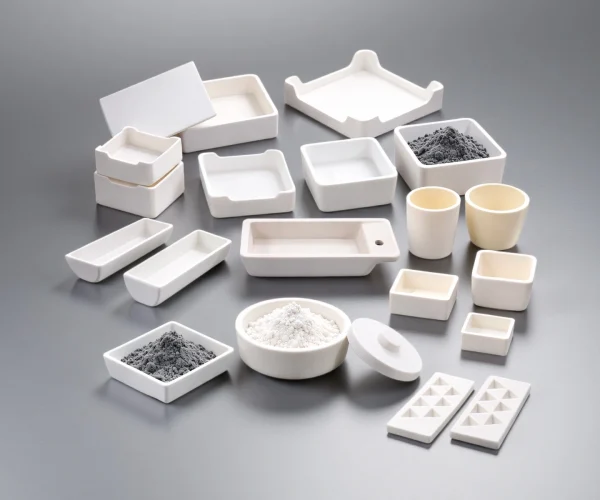
Ceramic Ashing Crucible for Ash Content Testing and Material Analysis
Purpose-built for gravimetric accuracy in muffle furnace ashing workflows — from routine industrial QC to high-precision analytical environments.
✓ Stable Tare Weight Across Ignition Cycles Dense alumina and zirconia construction minimizes blank drift and inter-unit tare variation for validated ash content and LOI methods.
✓ Chemical Inertness Across Sample Matrices Low reactivity with organic residues, coal, cement clinker, and alkali-rich samples protects gravimetric result integrity.
✓ Standard Sizes and Custom Geometry Available Stock crucibles for fast restocking;custom designs for specific furnace configurations, method requirements, or OEM integration.
The Problem with Conventional Materials
Process engineers running ash content testing and material analysis in muffle furnaces between 550 °C and 1000 °C have historically relied on platinum, porcelain, fused quartz, or glass-fiber crucibles. Each material introduces trade-offs that affect measurement repeatability, throughput, or total cost of ownership.
Common limitations:
🔹Platinum crucibles → deliver very low contamination but carry a cost per unit that makes large-volume or high-attrition workflows impractical
🔹Fused quartz crucibles → devitrify and craze after repeated thermal cycling, causing tare weight drift that directly compromises gravimetric accuracy
🔹Glass-fiber crucibles → suited to high-speed microwave ashing only; do not transfer to standard muffle furnace methods requiring rigid, covered vessels
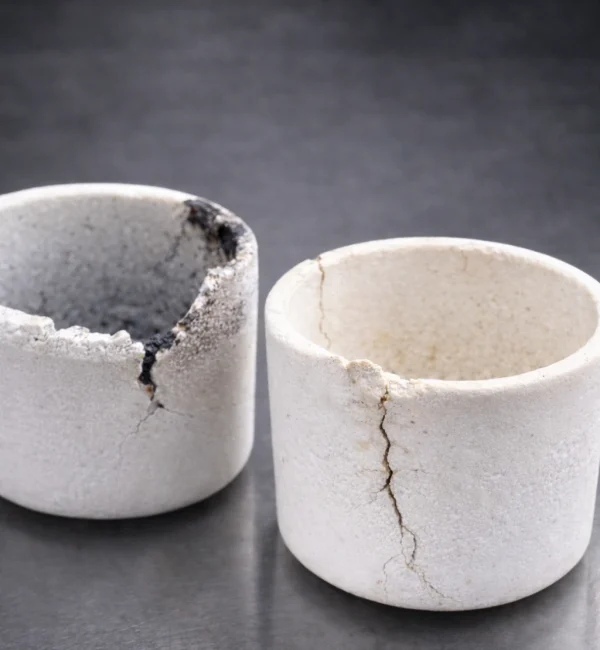
Why Conventional Materials
Fall Short?
These failures stem from inherent material characteristics that are fundamentally mismatched with the thermal, chemical, and gravimetric demands of ashing workflows.
Temperature limits and phase instability
- Fused quartz undergoes devitrification above approximately 1000 °C with repeated cycling, causing microstructural changes that alter tare weight over time.
Surface porosity and reactivity
- Lower-purity porcelain and some earthenware crucibles have open porosity that absorbs combustion products, moisture, and sample residues — introducing systematic tare weight errors.
Thermal expansion mismatch under cycling
- Materials with high or non-uniform thermal expansion coefficients are prone to cracking or spalling when subjected to the temperature ramp rates common in bench muffle furnaces (often 10–20 °C/min).
Chemical interaction with sample matrices
- Some matrices — particularly high-alkali or high-sulfur samples — will attack glassy or low-purity oxide surfaces, causing corrosion, pitting, and material pickup that contaminates results.
Mechanical fragility at operating temperature
- Thin-walled or inherently brittle materials are susceptible to edge chipping during handling with tongs at elevated temperatures, generating particulate that affects weighing accuracy.
Why Engineers Specify Ceramic for Ashing and LOI?
Ceramic ashing crucibles eliminate the tare weight drift, blank contamination, and thermal cracking failures inherent to platinum, porcelain, and quartz vessels. Material selection directly affects gravimetric repeatability and blank stability — particularly critical where conventional materials compromise method accuracy.
Ceramic Ashing Crucibles Advantages
Gravimetric Stability
Dense, low-porosity structure minimizes absorption between weighing cycles
Tare weight remains consistent across hundreds of ignition cycles
Reduces blank drift and inter-unit variation in validated methods
Chemical Inertness
High-purity alumina (≥99%) resists reactivity with organic residues, coal, and cement clinker
Low SiO₂ content prevents fluxing with alkali-bearing samples above 900 °C
No trace element contamination introduced into ash residues
Thermal Durability
Continuous use temperature typically extends to 1600 °C in oxidizing atmospheres
Dense sintered body resists particulate generation during handling
Mullite-grade crucibles tolerate aggressive thermal cycling without cracking or chipping
Batch Consistency
Controlled sintering delivers uniform wall thickness, density, and dimensional tolerance
Matched crucible-and-lid sets minimize inter-unit tare variation in multi-position furnace loading
Supports method validation continuity across procurement cycles
Different Ceramic Ashing Crucible Material Options
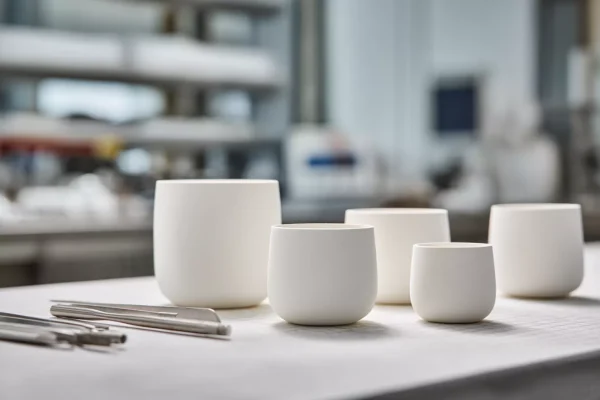
High purity options, stable tare weight across ignition cycles, low contamination risk in ash content and LOI determinations
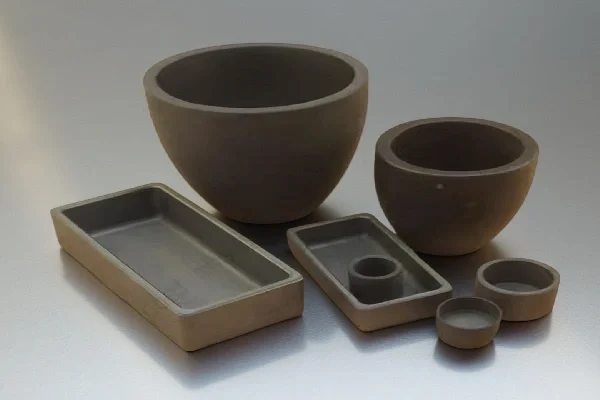
High thermal conductivity enabling more uniform temperature across the crucible body, strong at temperature.
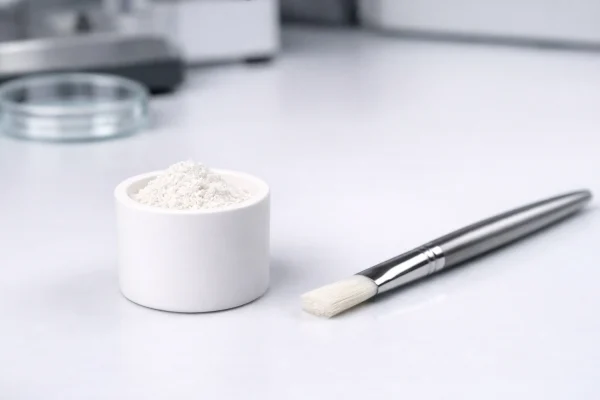
Low reactivity with aggressive matrices; preferred where alumina interacts with alkali-rich or halide-bearing samples
Ceramic Ashing Crucible Selection Guide
Material selection and geometry specification for ceramic ashing crucibles depend directly on operating temperature, sample matrix chemistry, furnace geometry, and analytical protocol. The parameters below help engineers confirm the right material grade and crucible form for reliable ash content testing and LOI determination.
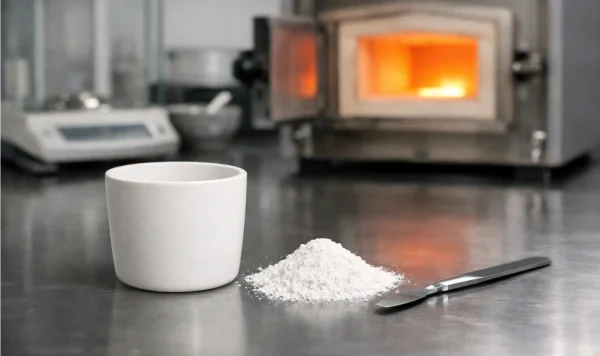
Key Selection Parameters
Operating temperature range: Confirm maximum and dwell temperatures per your test method (e.g., 550 °C for organic ashing, 750 °C or 950 °C for LOI)
Atmosphere: Most ashing applications use static or flowing air; confirm whether reducing atmospheres or inert purges are involved
Sample matrix chemistry: Alkali-rich, high-sulfur, and halide-bearing samples can attack oxide ceramics — identify matrix composition before specifying material grade
Capacity and geometry: Confirm required volume (15, 30, 50, or 100 mL), form factor (tall vs. low form), and lid requirement
Thermal cycling frequency: High-throughput furnace cycling imposes greater thermal shock demands; wall thickness and geometry should reflect this
Ceramic Ashing Crucible Material Comparison
The following materials are commonly specified, each with distinct performance profiles:
| Material | Strengths in This Application | Limitations | Best-fit Conditions | Notes |
|---|---|---|---|---|
| High-purity Alumina (Al₂O₃) | Low contamination risk, stable mass after conditioning, good oxidation resistance | Can crack under severe thermal shock if thin or edge-loaded; attacked by some molten alkali-rich residues | Routine ashing, LOI, oxidizing muffle cycles with controlled ramp | Common choice for “alumina ashing crucible” and “ashing crucible with lid” builds |
| Zirconia (ZrO₂) | Higher fracture toughness than many oxides; strong at elevated temperature; good for repeated cycling when designed correctly | Potential interaction concerns for Zr-sensitive analyses; generally higher cost and density | Tough-duty cycling where chipping and rim damage are frequent | Useful when handling damage dominates more than chemistry |
| Silicon Carbide (SiC) | High thermal conductivity reduces gradients; strong in many furnace duties | Oxidizing environments can form silica scale; Si contamination risk for sensitive assays | Thermal-shock-driven failures, faster ramps, thicker walls | Consider only when Si pickup is acceptable |
| Magnesia / MgO-based | Better compatibility with some basic residues; high refractoriness | Moisture sensitivity and handling/storage requirements; chemistry must be verified | Specific ash chemistries where alumina forms adherent phases | Use when sample chemistry is clearly basic and controlled |
Common Ceramic Ashing Crucible Configurations
Based on operating conditions and method requirements, the following ceramic ashing crucible configurations are commonly specified — each selected for a specific combination of temperature range, matrix chemistry, and furnace geometry.
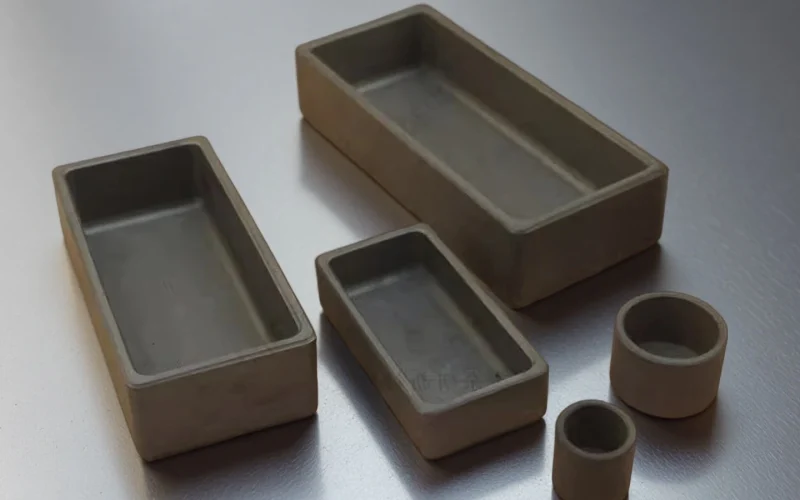
Silicon Carbide Ashing crucible
Uniform heat distribution; suited for high-throughput ashing cycles.
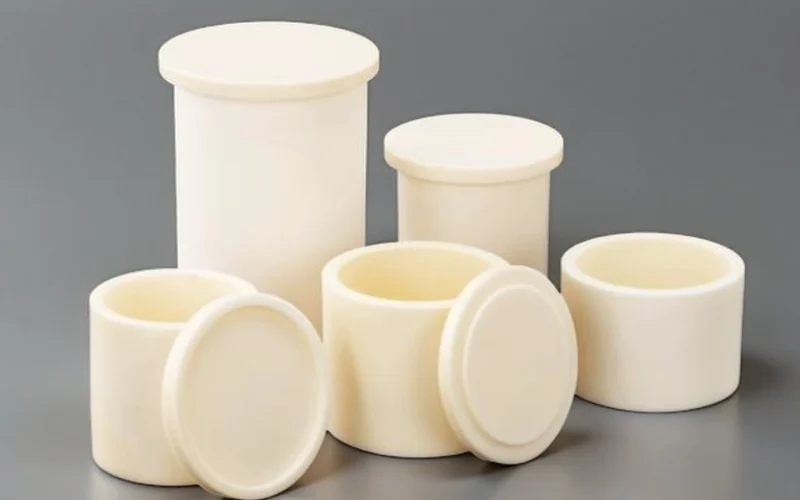
alumina Ashing crucible
Stable tare weight; broad matrix compatibility for ash testing.
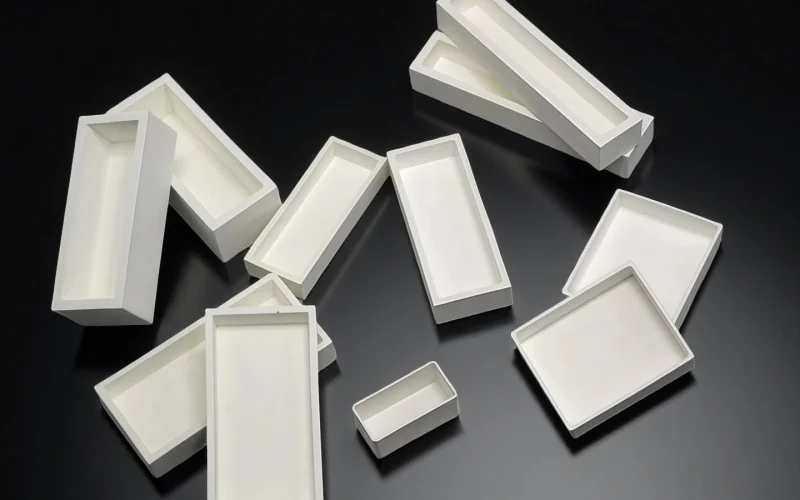
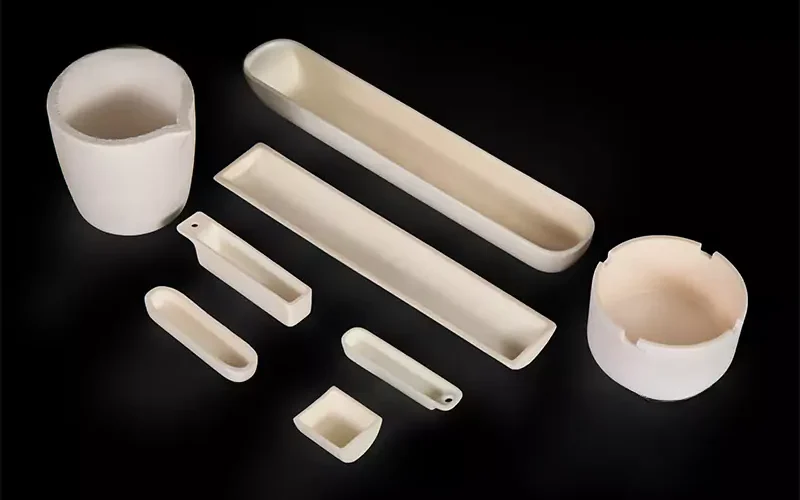
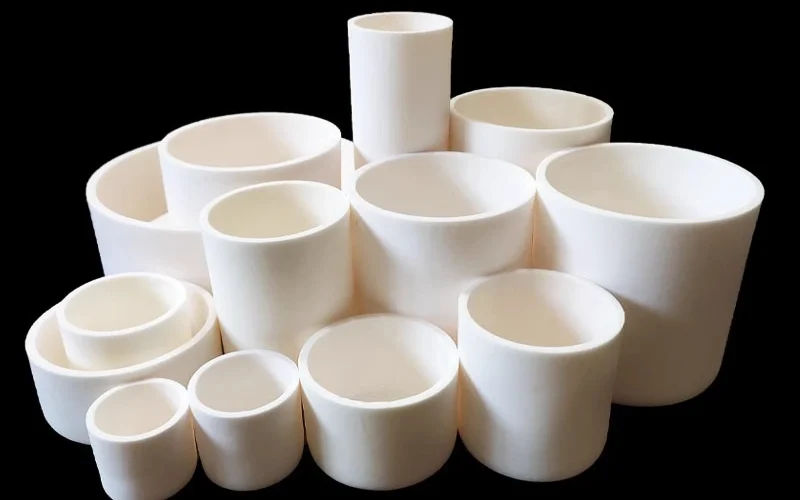
Cylindrical Ceramic Ashing Crucibles
Deep charge holding; less spill risk. For furnace heat treatment and long soaks.
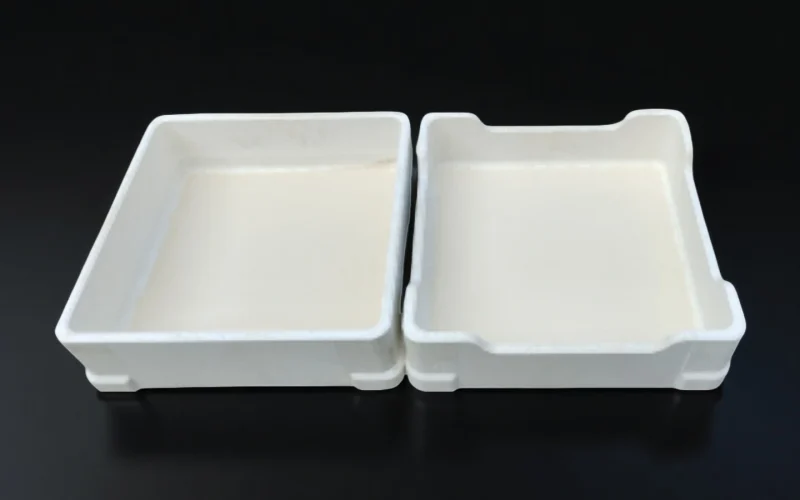
Ceramic Ashing Saggar with Lid
Faster heating; easier loading/cleaning. For shallow samples and quick cycles.
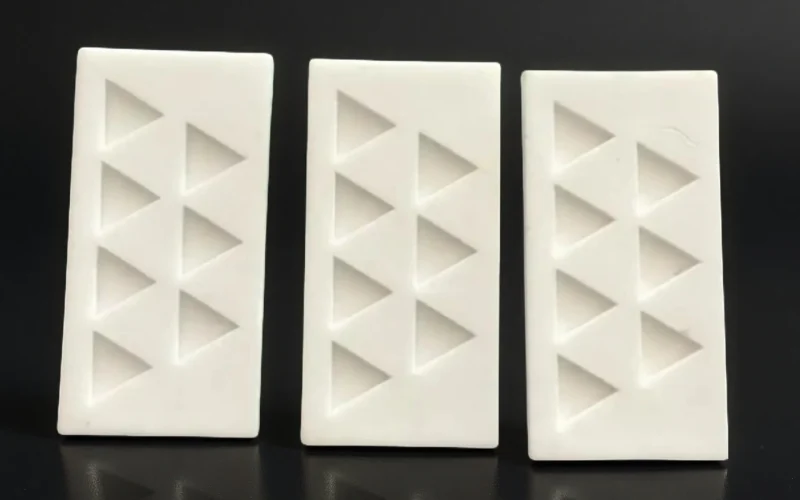
Ceramic Ash Boat for Coal Analysis
Stable support for long/narrow samples. For tube-furnace zones and directional heating.
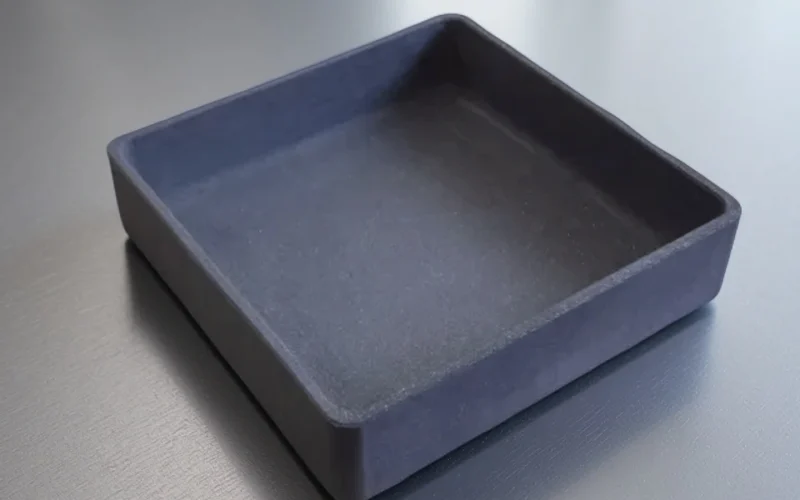
Rectangular Ceramic Ashing Crucible
Maximizes usable volume and stacking. Use for batch heating powders and solids.
Ceramic Ashing Crucible: Analytical and Industrial Applications
Ceramic ashing crucibles are deployed across a wide range of industries and laboratory types where combustion-based gravimetric methods are part of routine or regulatory quality workflows.
Cement and Minerals QC
LOI at 750 °C or 950 °C is standard for raw meal, clinker, and finished cement; high-volume operations require consistent tare weight and high cycle counts
Soil and Geological Analysis
Loss on ignition at 550 °C and 950 °C is standard for environmental monitoring and geochemical surveys; crucible contamination risk must be minimized
Testing Laboratories
High-throughput environments running parallel LOI, ash, and moisture determinations; batch consistency and restocking reliability are primary procurement drivers
Food and Feed Testing
Ash content in food matrices involves ashing at 550–600 °C in air; crucible surface must not interact with high-fat or high-sugar combustion residues
Muffle furnace OEM
Equipment manufacturers specify crucibles as part of complete ashing system packages; geometry must be confirmed against furnace chamber dimensions and rack spacing
Coal and Coke Proximate Analysis
Ash content determination per ASTM D3174 involves combustion in air at 750 °C; crucible purity and blank stability directly affect reportable ash values
Ceramic Ashing Crucible Failure Modes & Mitigation
Even ceramics can fail if thermal gradients, mechanical handling, or chemical compatibility are misaligned with the design. The most common issues appear after repeated cycles, when small defects accumulate into measurable drift.
| Symptom | Likely Cause | Design / Material Adjustment | Notes |
|---|---|---|---|
| Rim chips or edge spalls | Tongs contact, edge loading on supports, sharp transitions | Add rim reinforcement, radius transitions, use zirconia for handling-damage dominated cases | Chipping often precedes cracking and lid misfit |
| Hairline cracking after cycling | Thermal shock from fast door opens, hot insertion, thin walls | Increase wall thickness, use heat-spreading geometry, reduce ramp severity, consider SiC if chemistry allows | Cracks can trap residue and increase mass drift |
| Measured ash mass drifts upward | Residue retention in pores, adherent glassy phases, incomplete cleaning | Specify higher density finish, adjust surface state, define conditioning and cleaning protocol | This is a metrology problem, not just durability |
| Contamination flags in analysis | Chemical interaction (alkali attack), material pickup (Al/Si/Zr/Mg) | Match material to chemistry, use high-purity alumina when trace sensitivity is high, avoid SiC for Si-sensitive work | Define contamination sensitivity early in RFQ |
| Lid does not seat consistently | Warpage, rim damage, dimensional instability from cycling | Tighten geometry control, increase rim stiffness, avoid uneven support points | Lid fit affects airflow and spatter loss |
| Surface roughens / glaze-like deposits appear | Ash chemistry forms adherent phases at temperature | Switch material (e.g., MgO-based for basic residues), alter surface finish, reduce peak temperature if method allows | Verify with the specific sample matrix |
Customize Ceramic Ashing Crucible
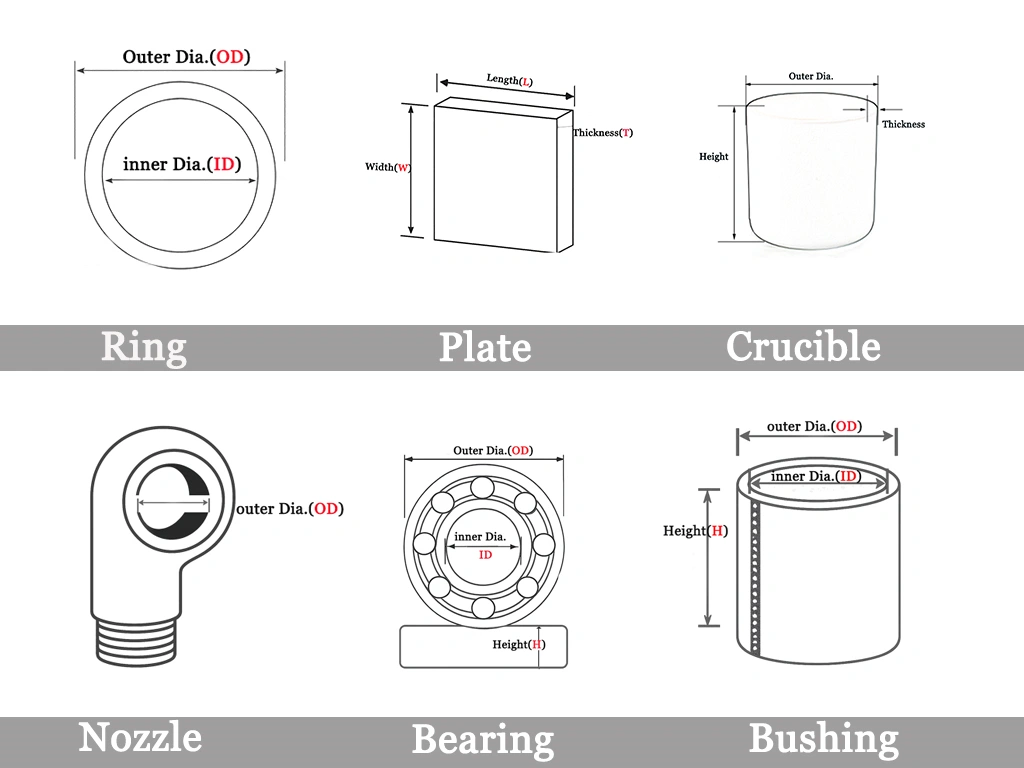
Standard crucibles do not always match analytical method or furnace configuration requirements. ADCERAX supports custom Ceramic Ashing Crucible designs to improve blank stability, contamination control, and dimensional consistency across repeated ignition cycles.
Why Custom Ashing Crucibles Are Specified?
Test method requires a specific temperature range or dwell time that standard crucible grades cannot reliably sustain
Furnace rack, tray, or automated handling system requires non-standard crucible dimensions or lid geometry
Sample matrix chemistry demands a higher alumina purity grade or alternative ceramic material to prevent contamination
High-throughput workflows require matched crucible-and-lid sets with tighter inter-unit tare weight tolerance
Recurring blank drift or thermal cracking under current operating conditions indicates a material or geometry mismatch
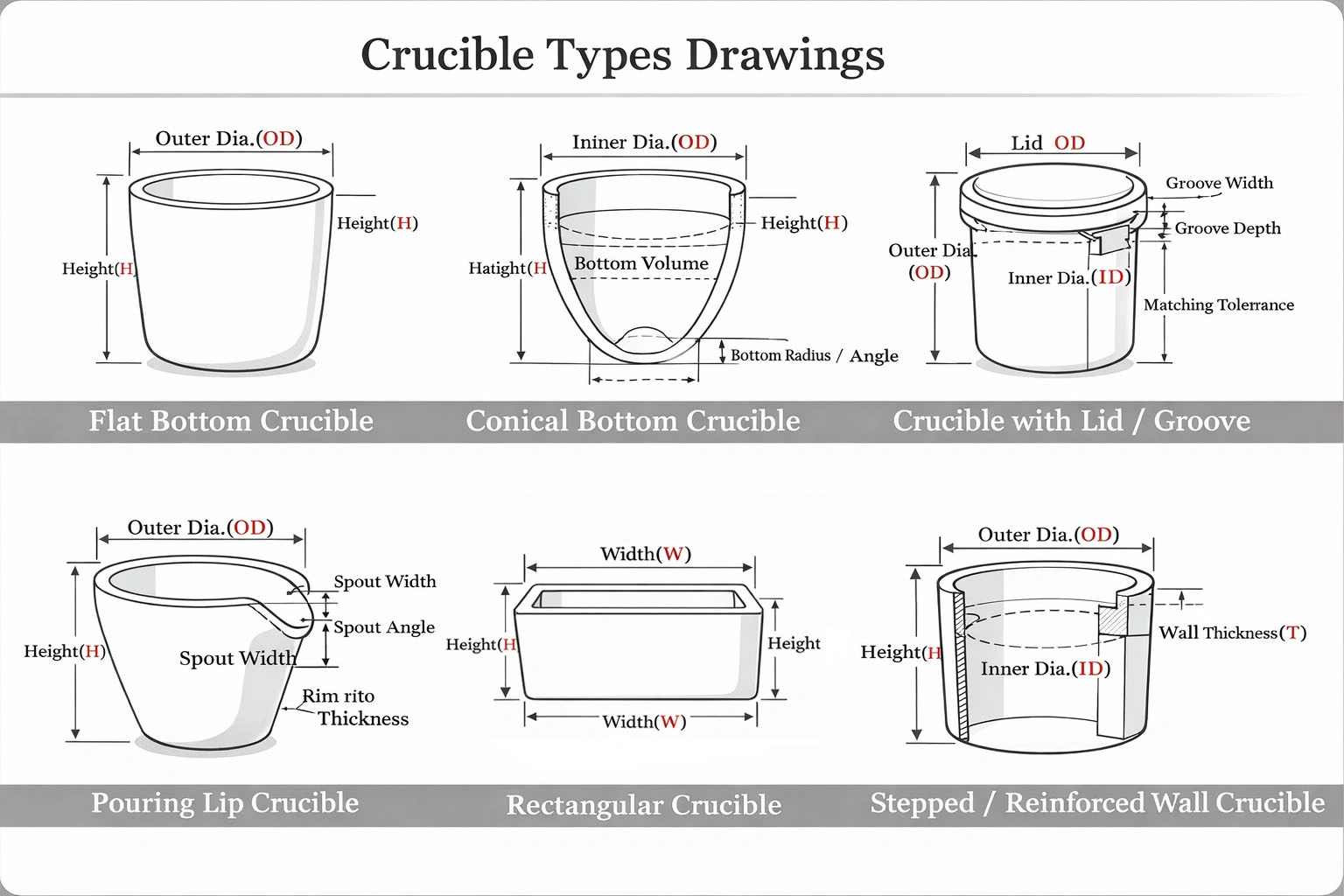
What Can be Customized in Ceramic Ashing Crucibles?
Geometry & Structure
- Inner diameter /outer diameter /depth
- Wall & base thickness
- Tall form /low form /custom profiles
- Flat base or rounded base
- Matched lid geometry (flat / domed / vented)
- Stacking or nesting features for multi-position furnace loading
Material & Grade
- Alumina (Al₂O₃) — 96% / 99% / 99.7%
- Zirconia (ZrO₂)
- Silicon Carbide (SiC)
- Magnesia (MgO)
Surface & Performance Tuning
- Surface finish to minimize blank absorption and improve post-ash cleaning
- Edge rounding to reduce chipping during handling and thermal cycling
- Density /porosity tuning for contamination-sensitive ashing
- Tightened dimensional and tare weight tolerance for validated environments
Custom Ceramic Ashing Crucible: What to Provide?
To evaluate a custom crucible, engineers typically provide:
Sample matrix type and chemistry
Operating temperature and thermal cycling rate
Furnace type and rack or tray configuration
Required crucible capacity and geometry
Drawing, sketch, or reference crucible sample
Pre-Order Engineering Checklist for Ceramic Ashing Crucible
Confirm these items before requesting a quote or matching a replacement:
Operating Conditions
| Parameter | Input |
|---|---|
| ☐ Target ashing temperature range | _____ °C |
| ☐ Typical holding time at peak temperature | _____ min |
| ☐ Furnace loading method (cold start / hot insertion / door-open cycling) | _____ |
| ☐ Airflow condition inside furnace (natural draft / forced air) | _____ |
Sample & Chemical Exposure
| Parameter | Input |
|---|---|
| ☐ Sample type (coal / cement / soil / food / polymer / other) | _____ |
| ☐ Expected residue behavior (powdery / sticky / molten / corrosive) | _____ |
| ☐ Presence of alkali or reactive salts (Yes / No) | _____ |
| ☐ Spatter risk during burn-off (Low / Medium / High) | _____ |
Crucible Geometry & Fit
| Parameter | Input |
|---|---|
| ☐ Required usable volume (sample mass basis) | _____ mL |
| ☐ Preferred shape (tall form / low form / with lid) | _____ |
| ☐ Maximum allowable outer diameter | _____ mm |
| ☐ Stackable or single-layer placement required | _____ |
Measurement Stability & Handling
| Parameter | Input |
|---|---|
| ☐ Acceptable tare weight drift per cycle | _____ mg |
| ☐ Pre-ignition conditioning required (Yes / No) | _____ |
| ☐ Cleaning method (brush / burn-off / acid wash) | _____ |
| ☐ Handling method (ceramic tongs / metal tongs / automated gripper) | _____ |
Get in touch with us
Share your sample matrix, temperature profile, atmosphere conditions, and furnace configuration with our engineering team.
Visit the Ceramic Crucible page for standard specifications, or submit drawings for custom geometry and manufacturability review.
info@adcerax.com
+(86) 0731-74427743 | WhatsApp: +(86) 19311583352
Within 24 hours
*Our team will answer your inquiries within 24 hours.
*Your information will be kept strictly confidential.