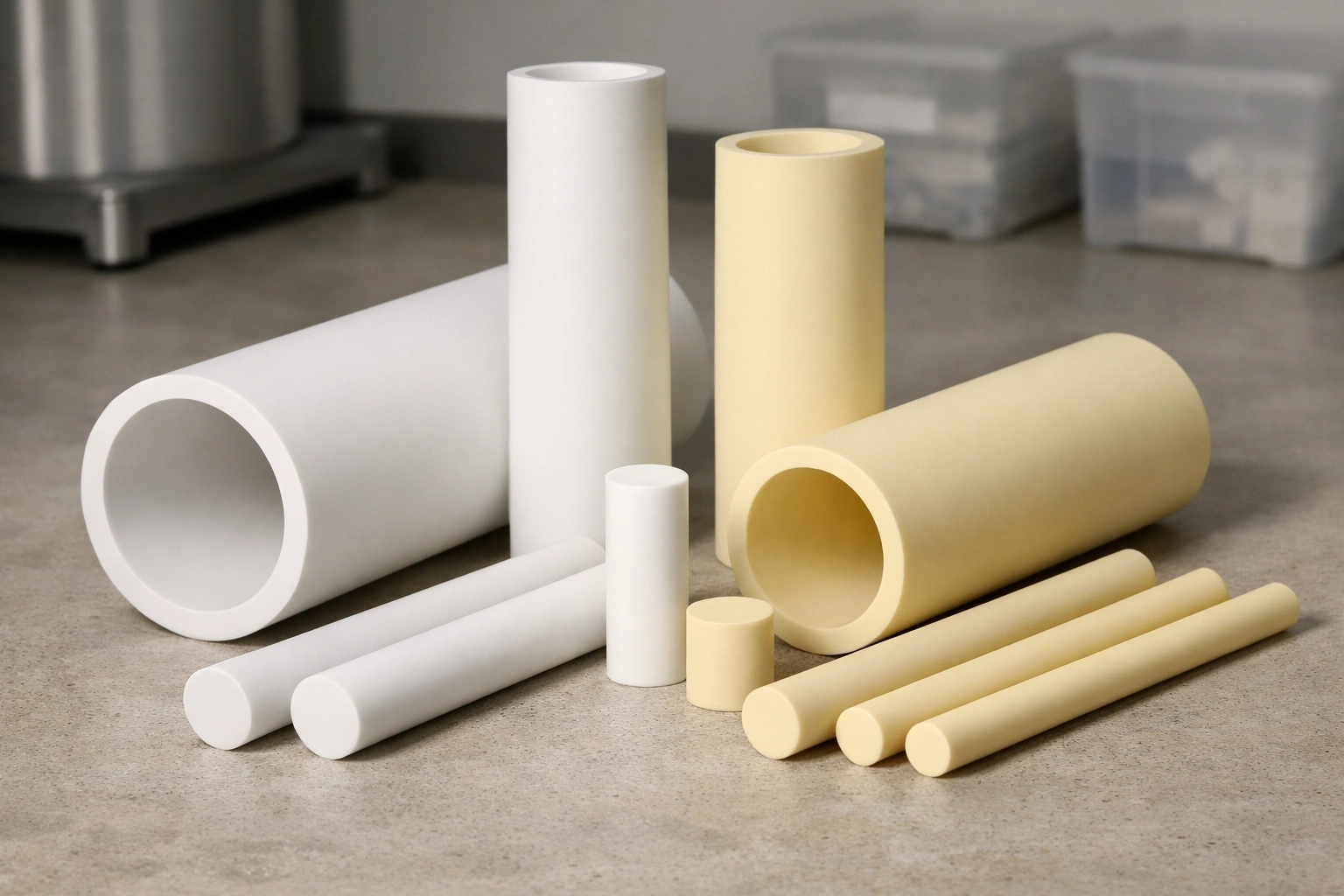
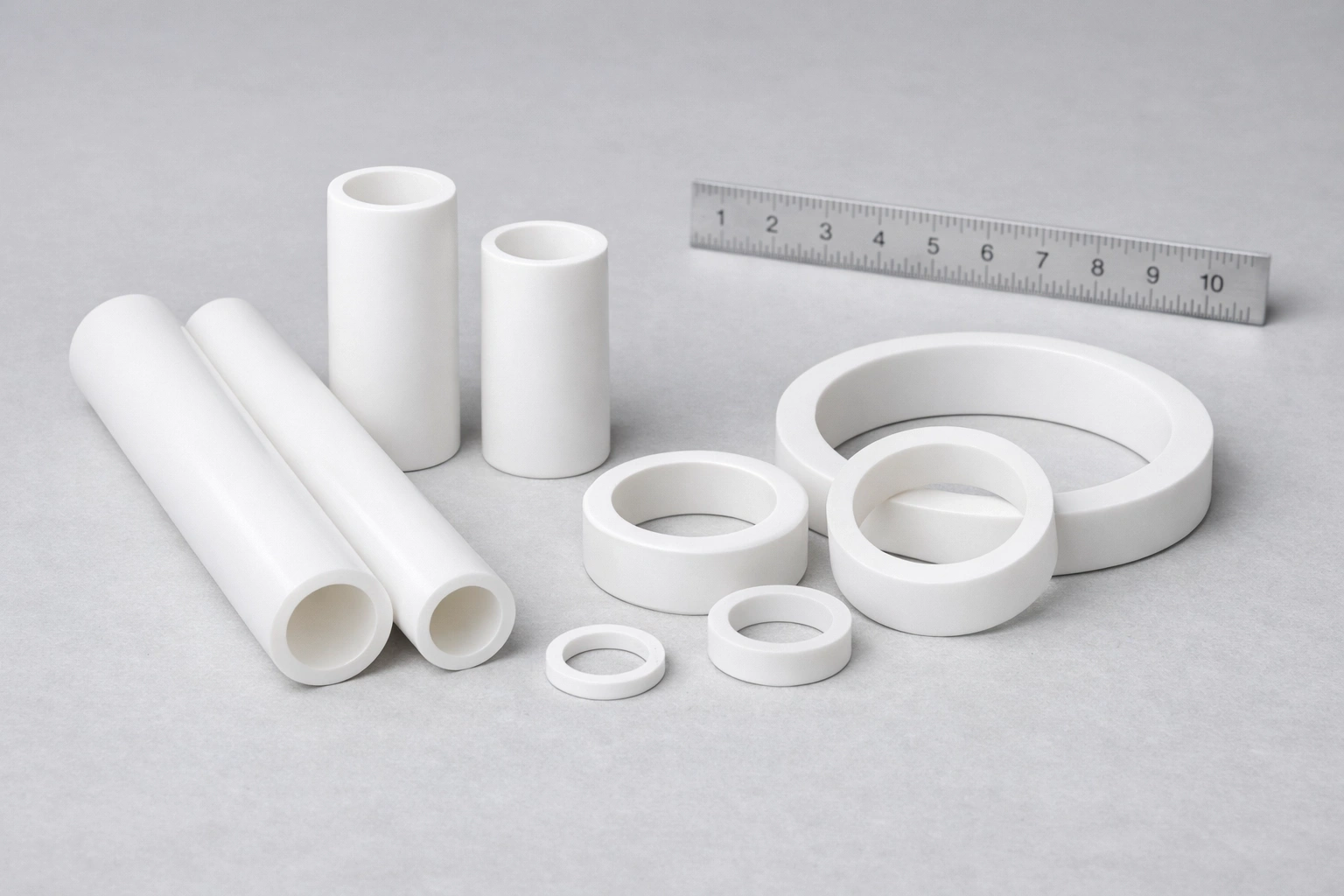
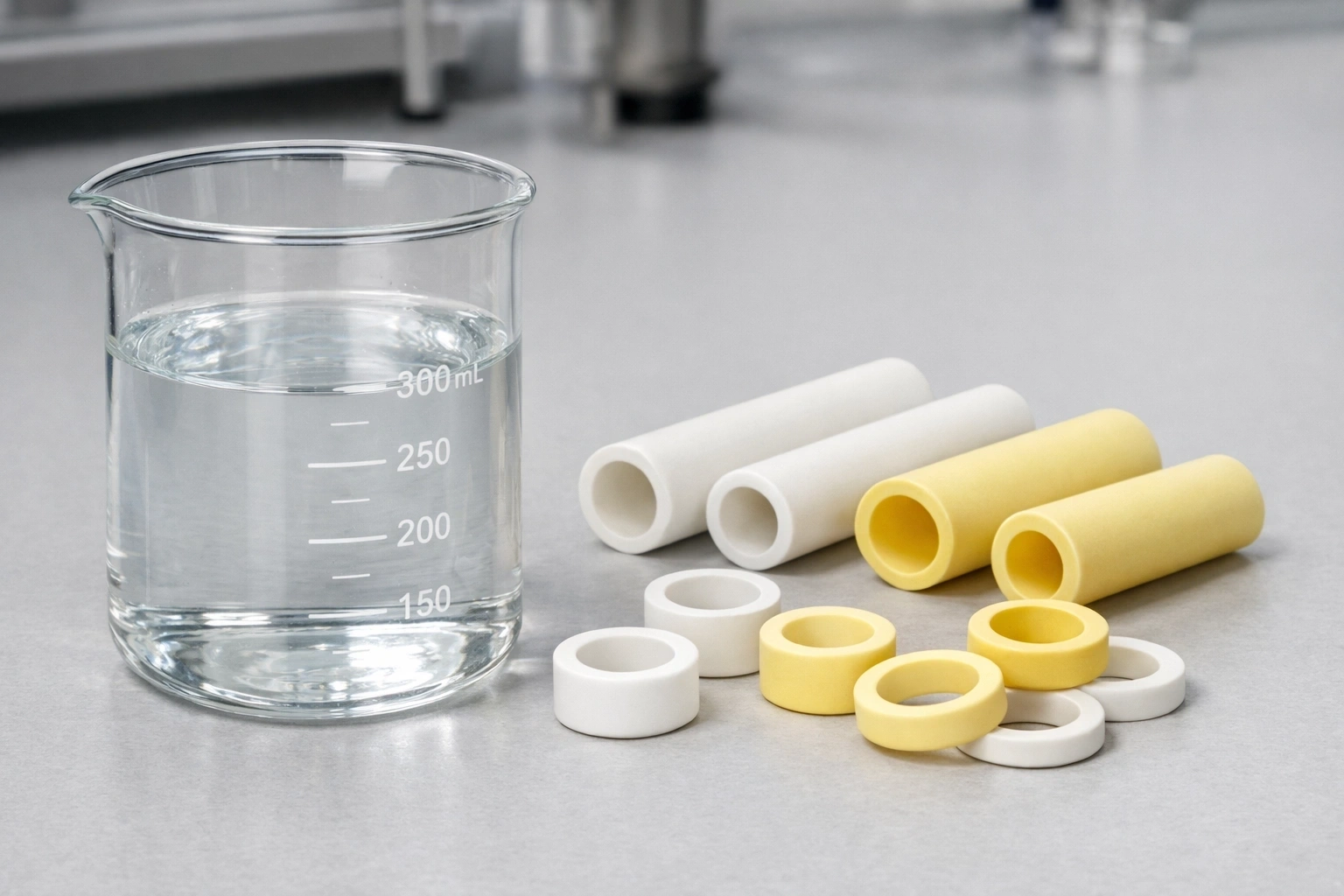
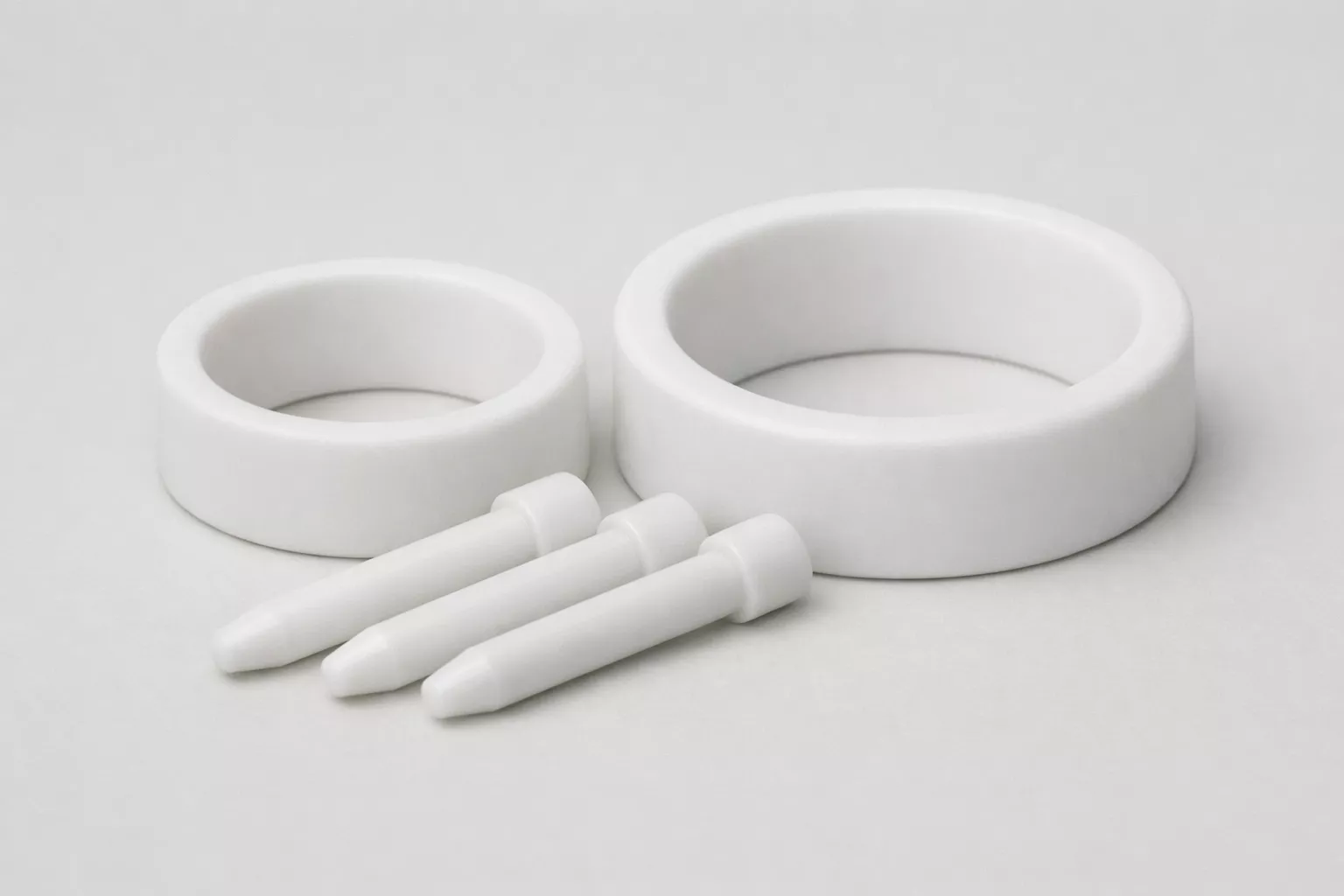
Alumina tube for vacuum furnace experiences extreme temperature gradients that create internal tensile stresses near its mechanical limits.
Controlled heating and cooling rates significantly reduce stress intensity, improving durability and extending operational life by over 300%.
Effective thermal management ensures long-term performance of alumina tube for vacuum furnace in high-vacuum, high-temperature environments. This article examines failure mechanisms, predictive modeling, and industrial practices that transform heating control into measurable longevity gains.
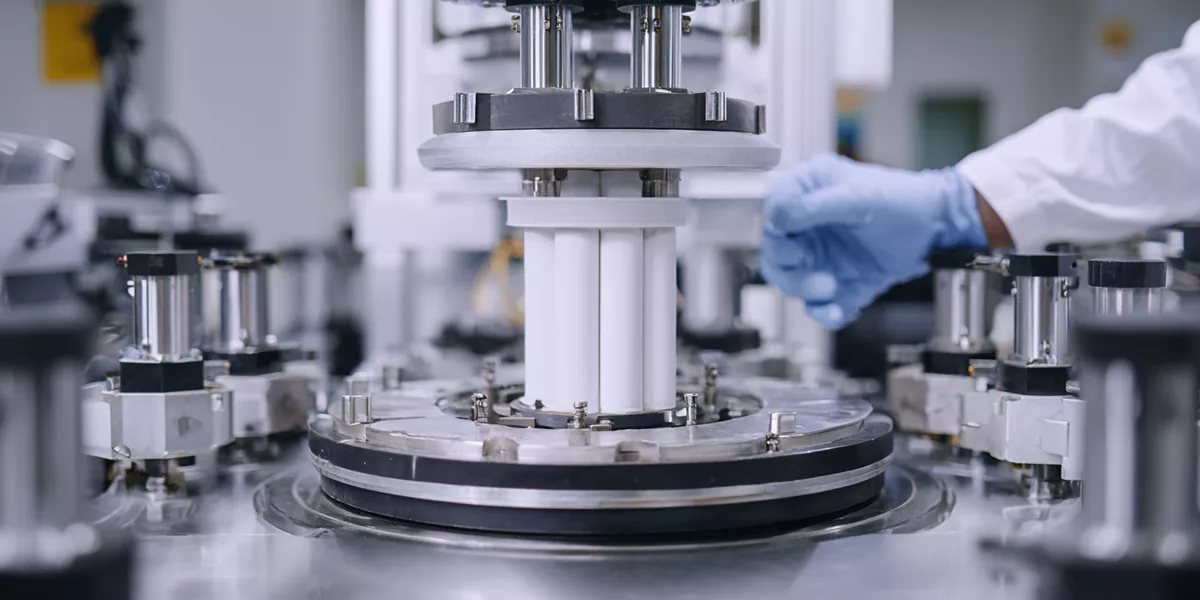
What Thermal Shock Mechanisms Cause Alumina Tube for Vacuum Furnace Failures?
Thermal shock failure in alumina tube for vacuum furnace results from rapid temperature gradients producing tensile stresses above fracture limits.
This occurs when ΔT generates stress σ = EαΔT/(1–ν), leading to microcrack initiation and catastrophic rupture if left uncontrolled.
Alumina tube for vacuum furnace typically exhibits tensile strength of 300–400 MPa. A 100°C surface-to-core temperature difference generates roughly 250 MPa tensile stress, nearly matching the failure threshold. Vacuum operation removes convective cooling, intensifying gradients that accelerate crack growth. Finite element studies reveal that controlled 5°C/min heating limits tensile stress below 200 MPa, ensuring safe cyclic use.
Thermoelastic stress equation governing temperature gradient effects
Thermoelastic stress follows σ = EαΔT/(1–ν). For alumina, with E = 380 GPa, α = 8×10⁻⁶/°C, ν = 0.22, a 100°C differential induces ~250 MPa stress. Controlled heating restricts ΔT, reducing stress amplitude by 40–50%.
Griffith fracture mechanics criteria for crack initiation from defects
Microdefects initiate cracks when K₁ > K₁c (≈4 MPa·m¹/²). Residual stress (20–60 MPa) and handling scratches act as stress concentrators. Reducing heating rate lowers ΔK per cycle, delaying crack propagation over hundreds of thermal cycles.
Radiation-dominated heat transfer in vacuum versus atmospheric conditions
In vacuum, radiation dominates heat transfer1 (h = 5–15 W/m²·K at 1600°C), versus 30–80 W/m²·K in air. Slower heating compensates for reduced convection2, maintaining uniform temperature through tube thickness.
Summary Table – Thermal Shock Parameters in Alumina Tube for Vacuum Furnace
| Parameter | Symbol | Typical Value | Unit | Effect on Failure |
|---|---|---|---|---|
| Elastic Modulus | E | 380 | GPa | Determines stress response |
| Thermal Expansion | α | 8.0×10⁻⁶ | /°C | Governs strain per ΔT |
| Poisson Ratio | ν | 0.22 | — | Influences stress distribution |
| Critical Fracture Toughness | K₁c | 3.5–4.5 | MPa·m¹/² | Defines crack initiation limit |
| Radiation Coefficient | h_rad | 5–15 | W/m²·K | Affects heat gradient severity |
How Do Mathematical Models Predict Safe Heating Rates for Alumina Tube for Vacuum Furnace?
Mathematical models determine safe heating rates ensuring alumina tube for vacuum furnace remains below its critical stress limit.
They combine heat conduction, elasticity, and damage accumulation laws validated by experimental strain data.
Thermal analysis uses Fourier’s Law q = –k∇T and the Biot number Bi = hL/k. With k = 25–30 W/m·K and h = 5–15 W/m²·K, Bi ranges from 0.6–4.0, confirming distributed gradients requiring transient modeling. The safe heating rate criterion (ΔT/Δt)_max ≈ k(1–ν)σ_f/(EαL²) yields 4–7°C/min for 5 mm walls, consistent with empirical ASTM C1525 results.
Biot number calculation determining thermal analysis regime applicability
For alumina tube for vacuum furnace, Bi > 0.5 indicates temperature non-uniformity. Finite element simulations replace simplified models, improving stress accuracy in vacuum systems.
Critical heating rate derivation from coupled heat transfer and stress equations
Derived models predict that doubling wall thickness increases stress by fourfold at identical heating rates. Thus, larger tubes demand proportionally slower heating to prevent exceeding 70% of tensile strength.
Finite element validation against experimental strain gauge measurements
ADCERAX data from 580+ tests confirm simulation accuracy (R² = 0.87). Tubes heated at 10°C/min exceeded 400 MPa, while 5°C/min maintained safe 180–220 MPa levels under cyclic operation.
Summary Table – Safe Heating Rate Prediction
| Wall Thickness (mm) | Environment | Safe Rate (°C/min) | Max Stress (MPa) | Safety Factor |
|---|---|---|---|---|
| 3 | Vacuum | 7 | 150 | 2.0 |
| 5 | Vacuum | 5 | 200 | 1.7 |
| 8 | Vacuum | 3 | 260 | 1.4 |
| 10 | Vacuum | 2 | 320 | 1.2 |
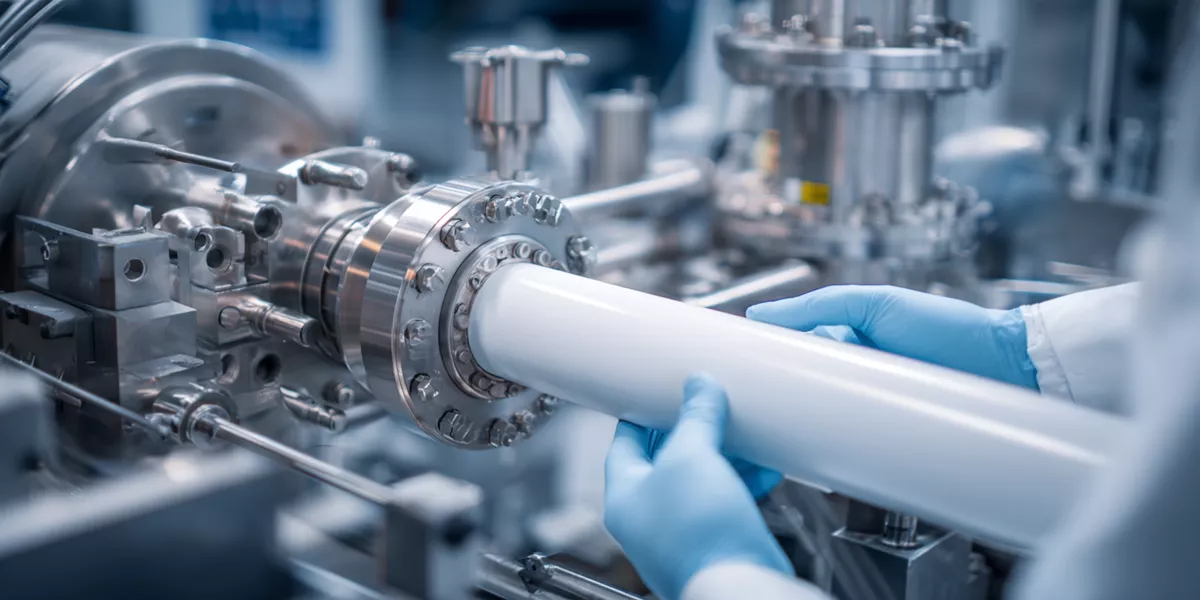
How Does Phase Stability Preservation Extend Alumina Tube for Vacuum Furnace Durability?
Maintaining α-phase stability prevents microcracking and premature degradation in alumina tube for vacuum furnace.
Controlled heating ensures uniform transformation and reduces intergranular stresses from anisotropic expansion.
Pure α-Al₂O₃ remains stable up to 2054°C, but residual metastable phases (γ, θ) transform at 1000–1200°C, releasing –8.4 kJ/mol heat and contracting by 3–4%. Slow heating below 5°C/min mitigates local overheating. Grain boundaries containing SiO₂–CaO melts stabilize under controlled heating, maintaining consistent microchemistry.
Metastable phase transformation thermodynamics and volume change effects
Rapid γ→α transition releases latent heat spikes up to 100°C above setpoint, amplifying stress. Controlled heating diffuses energy evenly, preserving structural uniformity and reducing phase gradient1 formation.
Thermal expansion anisotropy generating intergranular stresses in polycrystals
α-Al₂O₃ exhibits anisotropy: α_a = 8.3×10⁻⁶/°C, α_c = 9.0×10⁻⁶/°C. Controlled heating minimizes mismatch stress, lowering grain-boundary cracking by 70%.
Grain boundary dehydration kinetics during controlled versus rapid heating
Gradual heating allows moisture desorption before reaching 600°C. Rapid heating traps hydroxyls, reducing boundary cohesion by 30–50%. Proper dehydration through steady heating maintains strength consistency across cycles.
Phase Stability Summary in Alumina Tube for Vacuum Furnace
| Parameter | Controlled Heating | Rapid Heating | Effect |
|---|---|---|---|
| α-phase retention | >99.5% | 95–97% | Higher purity |
| Grain boundary variation | ±8% | ±25% | Lower stress heterogeneity |
| Microcrack density | 1× | 4× | Improved durability |
| Lifetime extension | 3–4× | Baseline | Enhanced reliability |
What Industrial Data Validates Heating Rate Optimization for Alumina Tube for Vacuum Furnace?
Industrial validation confirms heating control triples alumina tube for vacuum furnace lifespan while improving reliability.
Field and lab data reveal strong correlation between ramp rate and stress fatigue resistance.
Field data correlation between heating protocols and median cycle life
Comparative furnace testing shows life increasing from 420 cycles (uncontrolled) to 1650 cycles (optimized). Full-cycle control of both heating and cooling provides 293% life extension.
Fractographic analysis distinguishing controlled versus uncontrolled failure modes
Controlled heating produces multiple crack arrest lines, indicating stable sub-critical growth. In contrast, uncontrolled conditions create single-origin catastrophic fractures typical of thermal overshoot.
Weibull statistical analysis quantifying life predictability improvements
Weibull shape parameter β3 improves from 3.2 to 4.8 with control, denoting reduced variability. HIP-processed alumina further extends life 40–60% under identical heating.
Industrial Performance Summary for Alumina Tube for Vacuum Furnace
| Heating Protocol | Ramp Rate (°C/min) | Cooling Rate (°C/min) | Median Life (cycles) | Peak Stress (MPa) | ROI Period (months) |
|---|---|---|---|---|---|
| Uncontrolled | 15–25 | 25–35 | 200–350 | 420–550 | Baseline |
| 10°C/min Control | 10 | 25–35 | 400–600 | 320–380 | — |
| 5°C/min Standard | 5 | 5 | 850–1100 | 180–220 | 12–18 |
| Staged Optimized | 5→10→5→3 | ≤3 above 1000°C | 1200–1650 | 140–185 | 15–22 |
| HIP + Staged | 5→10→5→3 | ≤3 above 1000°C | 1800–2400 | 110–160 | 18–28 |
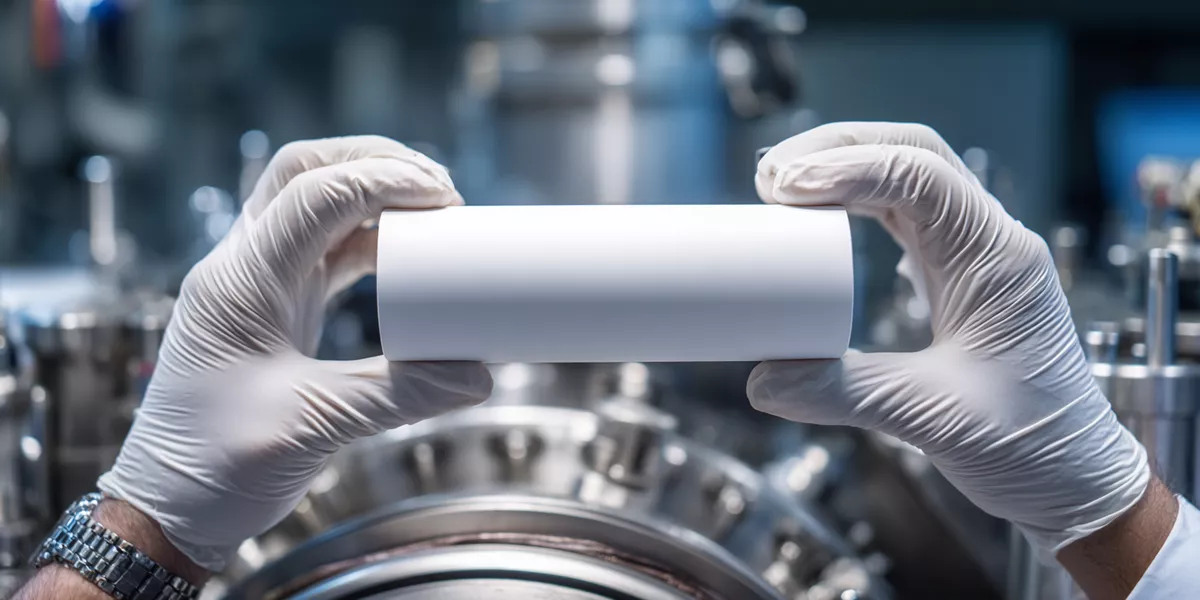
How Do Automated PID Controllers Enable Precise Heating Rate Management for Alumina Tube for Vacuum Furnace?
Automated PID systems precisely control temperature ramping in alumina tube for vacuum furnace, ensuring consistent performance across cycles.
They maintain programmed heating rates within ±2°C/min, preventing stress spikes and enhancing lifespan.
PID algorithm structure and tuning parameter optimization for ceramic systems
PID control follows u(t)=K_p·e(t)+K_i∫e dτ+K_d·de/dt. For MoSi₂ systems, K_p=15–30, K_i=0.05–0.15, K_d=40–80 maintain tight control. Proper tuning minimizes thermal lag and overshoot.
Multi-zone control strategies for maintaining uniform temperature distribution
Multi-zone heating balances temperature along tubes >800 mm. Independent zone sensors sustain ±10°C uniformity, reducing axial stress by up to 50%.
Adaptive control and statistical monitoring for long-term process stability
Adaptive algorithms auto-adjust PID gains with system aging. Statistical process control identifies drift trends early, ensuring >90% protocol adherence and 2.5× longer component life.
Temperature-Specific Recommendations for Alumina Tube for Vacuum Furnace
| Temperature Range | Max Heating Rate (°C/min) | Max Cooling Rate (°C/min) | Critical Concern | Biot Range | Heat Transfer Type |
|---|---|---|---|---|---|
| 25–500°C | ≤5 | ≤5 | Moisture removal | 0.6–1.2 | Radiation + gas |
| 500–800°C | ≤10 | ≤8 | Hydroxyl desorption | 1.0–2.1 | Radiation |
| 800–1000°C | ≤5 | ≤5 | Phase transition | 1.8–3.2 | Radiation dominant |
| 1000–1400°C | ≤3 | ≤3 | Peak stress region | 2.5–3.8 | Pure radiation |
| 1400–1750°C | ≤2 | ≤2 | Strength degradation | 3.0–4.2 | Radiation (12–18 W/m²·K) |
Conclusion
Controlled heating rates are essential for extending alumina tube for vacuum furnace life by over 300%, stabilizing structure and reducing maintenance costs.
FAQ
1. What limits determine thermal shock resistance in alumina tube for vacuum furnace?
Tensile strength (~350 MPa), wall thickness, and heating rate define thermal limits. Maintaining ≤5°C/min ensures stress remains below failure threshold.
2. How do controlled heating rates affect operating cost efficiency?
They extend service life 3× and cut downtime, offering ROI within 12–18 months without changing material grade.
3. What verification methods ensure safe heating in customized vacuum furnaces?
Finite element and strain gauge testing confirm heating rates that keep stress below 70% of material strength, matching ASTM C1525 guidelines.
4. Why choose alumina tube for vacuum furnace over zirconia alternatives?
Alumina offers higher thermal conductivity and lower cost, ideal for consistent heating cycles, while zirconia suits impact-intensive applications.
References:
-
Understanding the role of radiation in heat transfer can enhance your knowledge of thermal dynamics in various environments. ↩ ↩
-
Discover how reduced convection impacts heat transfer efficiency in vacuum settings and why it matters for temperature uniformity in materials. ↩
-
Understanding the Weibull shape parameter β is crucial for assessing product reliability and performance, making this resource invaluable. ↩