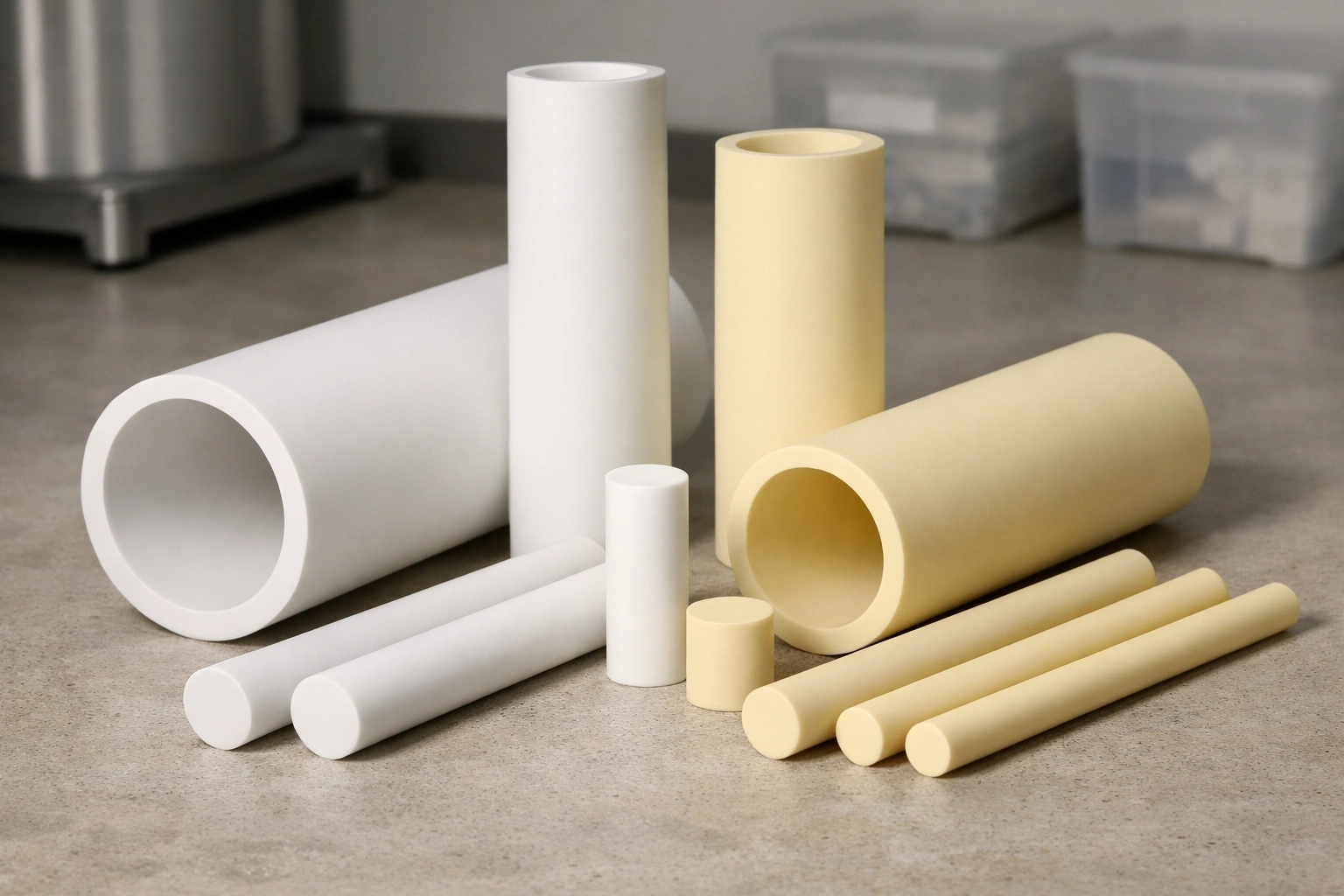
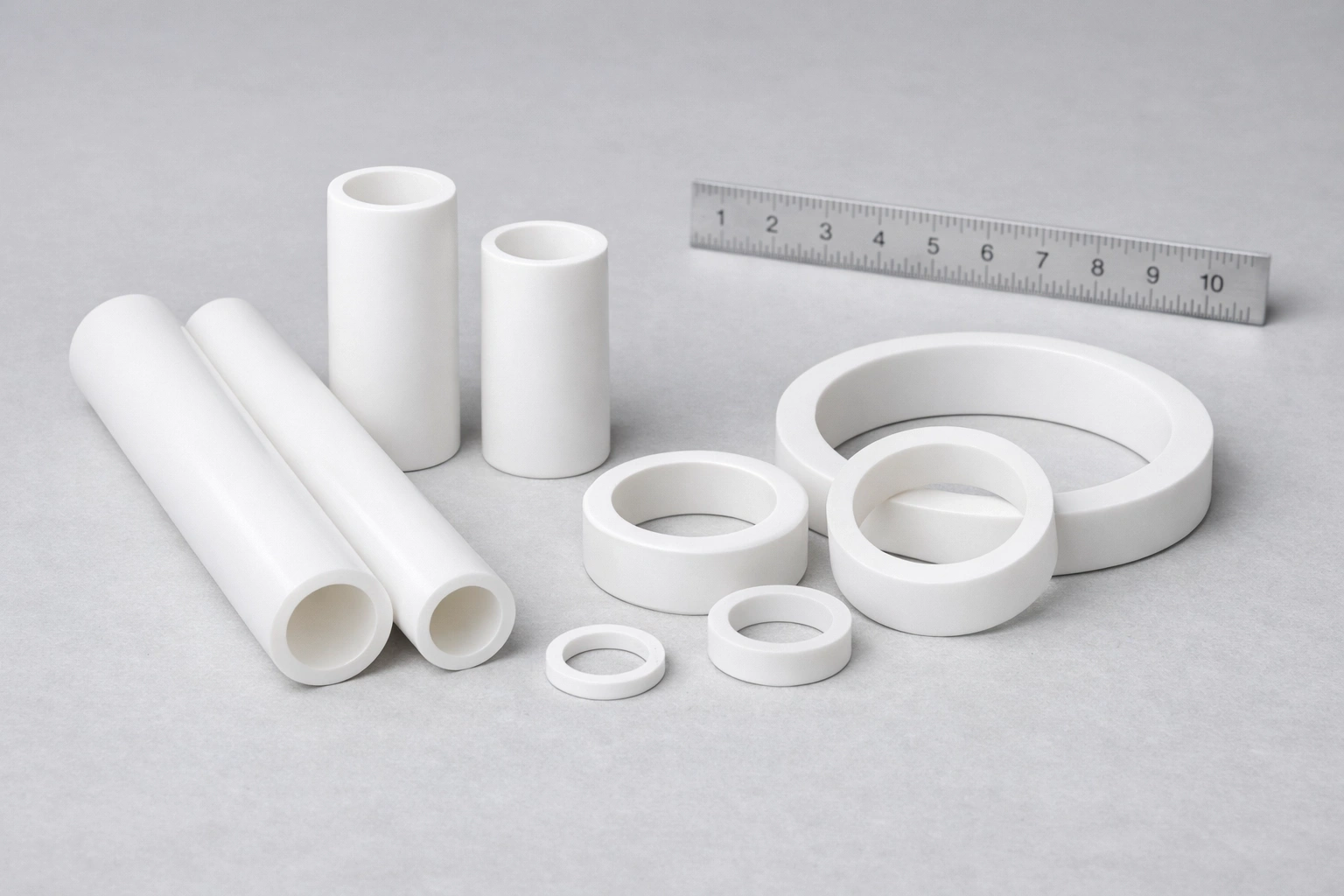
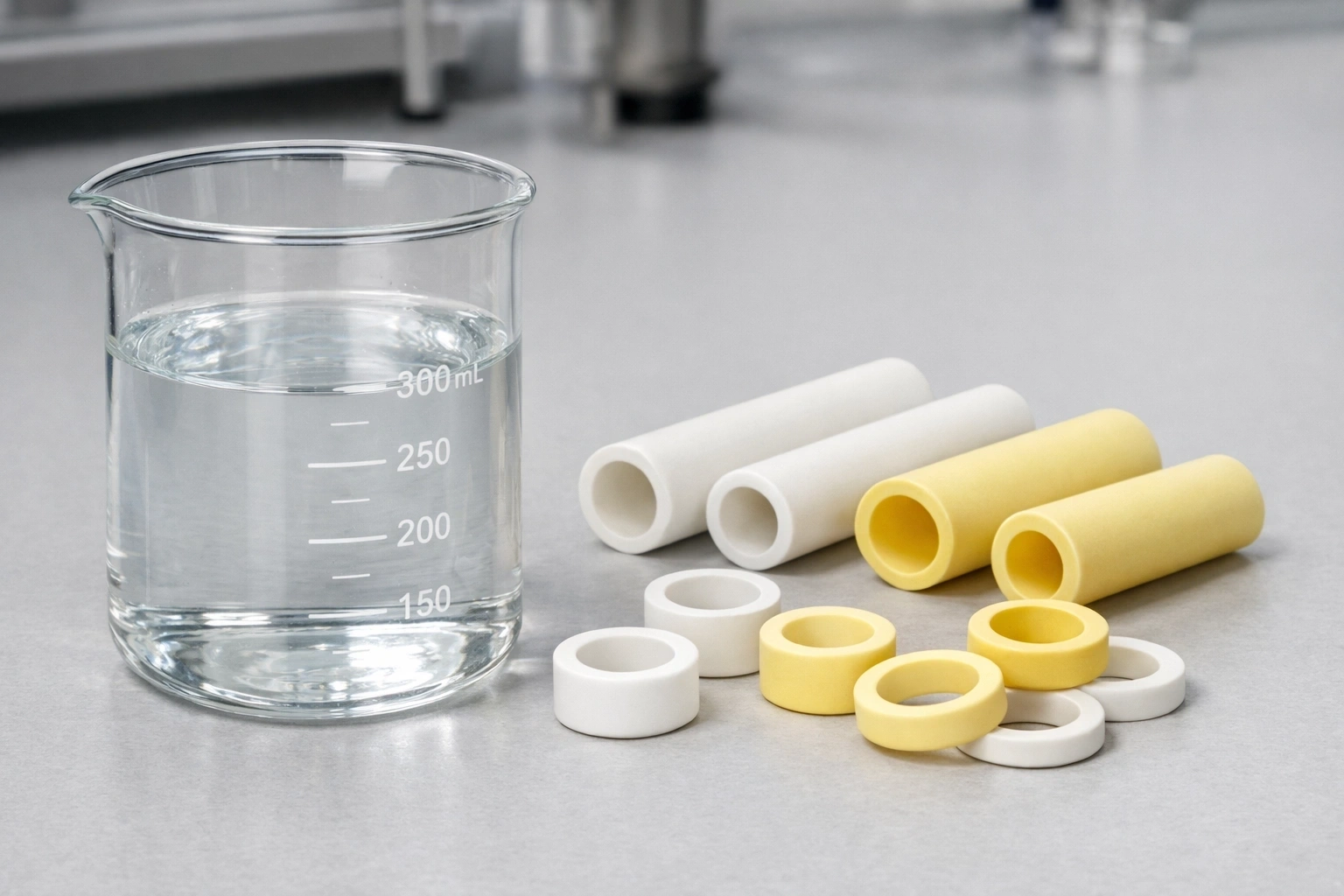
Custom diameter alumina tube selection is the foundation of accurate ceramic component design. At the beginning of every specification, defining the exact custom diameter alumina tube dimensions, tolerance class, and inspection criteria ensures functional reliability and cost efficiency. Without precise guidance, engineers risk over-specifying tolerance levels, extending lead times, and increasing cost without measurable performance benefit.
To define accurate custom diameter alumina tube requirements, engineers must align tolerance class, measurement methodology, sintering shrinkage, wall uniformity, and documentation level. This article provides a comprehensive framework to ensure each custom diameter alumina tube meets both technical and budgetary targets.

Defining Critical Dimensions: Nominal Diameter Tolerance Classes for Custom Diameter Alumina Tubes
Selecting the right tolerance class for a custom diameter alumina tube determines performance, price, and delivery time. Each class dictates the manufacturing process, achievable precision, and inspection standard.
Standard tolerance class characteristics and typical applications
Standard tolerance custom diameter alumina tubes maintain ±0.10–0.20 mm dimensional control. They are typically manufactured through as-sintered extrusion or pressing with Ra 1.6–3.2 μm surface finish. These tubes are suitable for general furnace components and non-critical mechanical assemblies requiring moderate precision.
Such tolerance levels meet most industrial use cases. Circumferential variation of 0.06–0.12 mm is acceptable when no sealing or precision alignment is required. Using this tolerance category reduces cost and lead time by up to 35%.
Precision tolerance manufacturing methods and cost implications
Precision tolerance custom diameter alumina tube production uses OD or ID grinding after sintering to reach ±0.05–0.08 mm accuracy. This process increases cost by 40–60% and adds 2–3 weeks of lead time. Surface finish improves to Ra 0.4–0.8 μm. These tubes are preferred for thermocouple protection, compression fittings1, and mechanical couplings requiring consistent alignment.
Grinding improves concentricity to ≤0.05 mm per ISO 1101. According to ADCERAX data, properly specified precision custom diameter alumina tubes achieve 97% conformance across more than 1,800 production batches, balancing precision and cost effectively.
High precision tolerance capabilities and inspection requirements
High precision custom diameter alumina tubes deliver ±0.02–0.03 mm tolerance with CMM-guided grinding. Production cost rises 90–130%, and delivery extends 8–10 weeks. The resulting Ra 0.2–0.4 μm finish supports analytical instrumentation and vacuum sealing systems where dimensional deviation is critical.
Full inspection maps with 8 radial × 4 axial points ensure control of manufacturing stability. Over-specifying high precision grades without clear justification can increase cost by more than 50% without measurable benefit.
Custom Diameter Alumina Tube Tolerance Summary
| Tolerance Class | Diameter Range (mm) | Surface Finish (Ra μm) | Cost Factor | Lead Time (weeks) | Typical Applications |
|---|---|---|---|---|---|
| Standard | ±0.10–0.20 | 1.6–3.2 | 1.0× | 3–4 | Furnace tubes, non-critical fit |
| Precision | ±0.05–0.08 | 0.4–0.8 | 1.4–1.6× | 5–7 | Sealing, thermocouples, couplings |
| High Precision | ±0.02–0.03 | 0.2–0.4 | 1.9–2.3× | 8–10 | Analytical systems, vacuum assemblies |
Specifying Measurement Methodology: OD/ID Measurement Points and Surface Criteria for Custom Diameter Alumina Tubes
Defining clear measurement standards prevents dimensional disputes in custom diameter alumina tube procurement. Consistency across radial and axial measurement points is essential for verification.
Instrument selection and calibration requirements per ISO 17025
Measurement accuracy for custom diameter alumina tubes depends on equipment with verified calibration. Micrometers2 (±0.01 mm accuracy) suit standard grades, while CMMs3 (±0.005 mm) are required for precision tubes. Calibration under ISO 170254 ensures traceable results. Consistent temperature at 20 ± 1 °C minimizes expansion-related errors during measurement.
Radial and axial measurement position protocols
At least four radial measurements at 90° intervals are required, while high precision tubes need eight points for circumferential accuracy. For long tubes (>300 mm), measure every 100 mm axially. The mean of all readings defines the nominal diameter, reducing interpretation variability between customer and supplier.
Such discipline reduces dimensional mismatch by 42%, according to ADCERAX quality records, ensuring uniform evaluation between parties.
Surface finish and porosity limits affecting measurement accuracy
As-sintered surfaces (Ra 1.6–3.2 μm) introduce ±0.04 mm uncertainty, while ground surfaces (Ra 0.4–0.8 μm) achieve ±0.01 mm. Porosity below 0.2% per ASTM C373 improves consistency, especially in sealing applications. Visual defects deeper than 0.3 mm must be excluded from measurement areas.
Clear specification of surface finish and porosity avoids supplier interpretation variance that often leads to false dimensional nonconformance.
Measurement Parameters for Custom Diameter Alumina Tubes
| Parameter | Standard | Precision | High Precision |
|---|---|---|---|
| Radial Points | 4 | 4–8 | 8 |
| Axial Points | 1/100 mm | 1/100 mm | 1/50 mm |
| Instrument Accuracy (mm) | ±0.01 | ±0.005 | ±0.003 |
| Surface Ra (µm) | 1.6–3.2 | 0.4–0.8 | 0.2–0.4 |
| Porosity (%) | <1.0 | <0.2 | <0.1 |
Incorporating Dimensional Stability: Accounting for Shrinkage During Sintering in Custom Diameter Alumina Tubes
Shrinkage behavior defines how close the finished custom diameter alumina tube matches target size. Compensation through validated data ensures reliable fit after firing.
Shrinkage factor calculation based on alumina purity and manufacturing method
Alumina ceramics experience 15–20% linear shrinkage, with higher purity materials (99.8%) contracting up to 20%. Variation of ±0.5–1.0% requires batch verification. For a 30 mm OD target, green diameter must range from 35.3–36.0 mm depending on density and powder quality. Controlled sintering between 1650–1750 °C reduces unpredictable contraction.
Witness sample protocols for batch-to-batch shrinkage verification
Witness samples sintered with each lot confirm dimensional consistency. They record actual shrinkage ratio versus expected. ADCERAX process tracking shows that using witness samples reduces rejection by 18%, particularly for large diameter custom tubes (>80 mm).
Statistical process control for shrinkage variability reduction
SPC implementation across 50 production runs defines control limits. Cpk ≥ 1.33 ensures process stability. Small-diameter tubes show ±0.3% variation, while large tubes show ±0.8%. Manufacturers achieving such control deliver consistent diameters across batches.
Shrinkage Behavior in Custom Diameter Alumina Tubes
| Alumina Grade | Linear Shrinkage (%) | Variation (%) | Control Method | Accuracy (mm) |
|---|---|---|---|---|
| 95% | 15–17 | ±1.0 | Die compensation | ±0.4–0.6 |
| 99.5% | 17–19 | ±0.7 | SPC + Witness | ±0.3–0.4 |
| 99.8% | 18–20 | ±0.5 | CMM Verification | ±0.2–0.3 |
Mandating Wall Thickness and Concentricity Controls for Uniform Diameter in Custom Diameter Alumina Tubes
Wall uniformity directly influences thermal performance and structural life of a custom diameter alumina tube. Precise concentricity minimizes thermal stress under repeated cycles.
Wall thickness coefficient of variation targets for different tolerance classes
Wall coefficient of variation (CV) should remain below 8% for Standard, 5% for Precision, and 3% for High Precision tubes. Variations above 10% increase failure rates during thermal cycling by 31%. Grinding can reduce CV by 50%, improving reliability in demanding applications.
Concentricity measurement and documentation requirements per ISO 1101
Custom diameter alumina tubes must meet concentricity ≤0.10 mm for Standard, ≤0.05 mm for Precision, and ≤0.03 mm for High Precision levels. Measurement at four radial positions every 100 mm identifies eccentricity caused by extrusion die wear. Documentation ensures compliance before mass production.
Manufacturing process impact on wall uniformity and diameter consistency
Isostatic pressing achieves the best uniformity (CV 3–5%), while extrusion yields 6–10%. Post-sinter grinding further refines dimensional alignment. Combining these techniques minimizes TIR values and enhances service stability up to 1700 °C.
Wall and Concentricity Performance Summary
| Tolerance Class | Wall CV (%) | Concentricity (mm) | Manufacturing Process | Life Cycle (cycles) |
|---|---|---|---|---|
| Standard | <8 | ≤0.10 | Extrusion | 150–500 |
| Precision | <5 | ≤0.05 | Grinding | 500–1,000 |
| High Precision | <3 | ≤0.03 | Isostatic + CMM | >1,000 |

Documentation and Inspection Protocols: Certifying Diameter Conformance for Custom Diameter Alumina Tubes
Proper documentation confirms that each custom diameter alumina tube meets required specifications for quality and dimensional integrity.
Dimensional inspection report content and measurement data granularity requirements
Inspection reports should list OD and ID data for all radial and axial points. Summarize min, max, mean, and standard deviation per ASTM C1161. Sampling standards follow ANSI Z1.4, varying with tolerance class. Comprehensive reporting reduces dimensional claim rates by 68%.
Material certification documentation for alumina purity and physical properties
Each lot requires XRF-certified alumina purity ≥99.5%, density ≥3.85 g/cm³, and open porosity <0.2%. These metrics guarantee structural reliability and compatibility for high-temperature and sealing applications.
Third-party inspection value for critical applications and supplier qualification
Third-party ISO/IEC 17025 accredited inspection confirms independent verification. It ensures credibility during supplier qualification and avoids disputes in regulated industries. Additional cost of $80–150 per lot is justified by reduced reinspection risk.
Inspection and Certification Framework for Custom Diameter Alumina Tubes
| Verification Level | Inspection Scope | Sampling (AQL) | Documentation | Application |
|---|---|---|---|---|
| Standard | Visual + Random | 2.5 | CoC | General furnace use |
| Precision | Statistical + FAI | 1.5 | Report + CoC | Sealing assemblies |
| High Precision | 100% + CMM Sampling | 1.0 | Cpk + CoC | Analytical use |
Conclusion
Accurate specification of a custom diameter alumina tube combines tolerance definition, shrinkage control, wall uniformity, and certified inspection to guarantee dependable performance.
FAQ
1. What tolerance level suits general applications for a custom diameter alumina tube?
Standard tolerance ±0.10–0.20 mm meets most non-critical applications, balancing cost and delivery with reliable performance.
2. How does tolerance class affect cost and production time?
Precision tolerance adds 40–60% cost and 2–3 weeks to lead time, while High Precision increases cost 90–130% and extends production to 8–10 weeks.
3. What documents should accompany a custom diameter alumina tube order?
Each order should include dimensional reports, material certificates, and process traceability records. For critical use, third-party inspection adds verification.
4. How do custom diameter alumina tubes compare to standard ones?
If dimensional deviation from standard sizes is within ±10%, standard tubes may meet performance needs at 40% lower cost and faster lead time.
References:
-
Learn how compression fittings work and why they're essential for secure, leak-free connections in various industrial and laboratory settings. ↩
-
Learn how micrometers provide high accuracy in measuring tube diameters and why they're essential for quality control in manufacturing. ↩
-
Learn how CMMs provide high-precision measurements essential for quality control in industries requiring tight tolerances, like custom tube manufacturing. ↩
-
Exploring ISO 17025 will provide insights into the standards for calibration and testing, ensuring reliable measurement results. ↩