An alumina tube for thermal shock must balance heating rate, wall thickness, and stress.
Slow, optimized ramps control temperature gradients, reduce tensile stress, and extend operational life.
This article explains how heating protocols, microcrack kinetics, and process design determine the durability of an alumina tube for thermal shock.
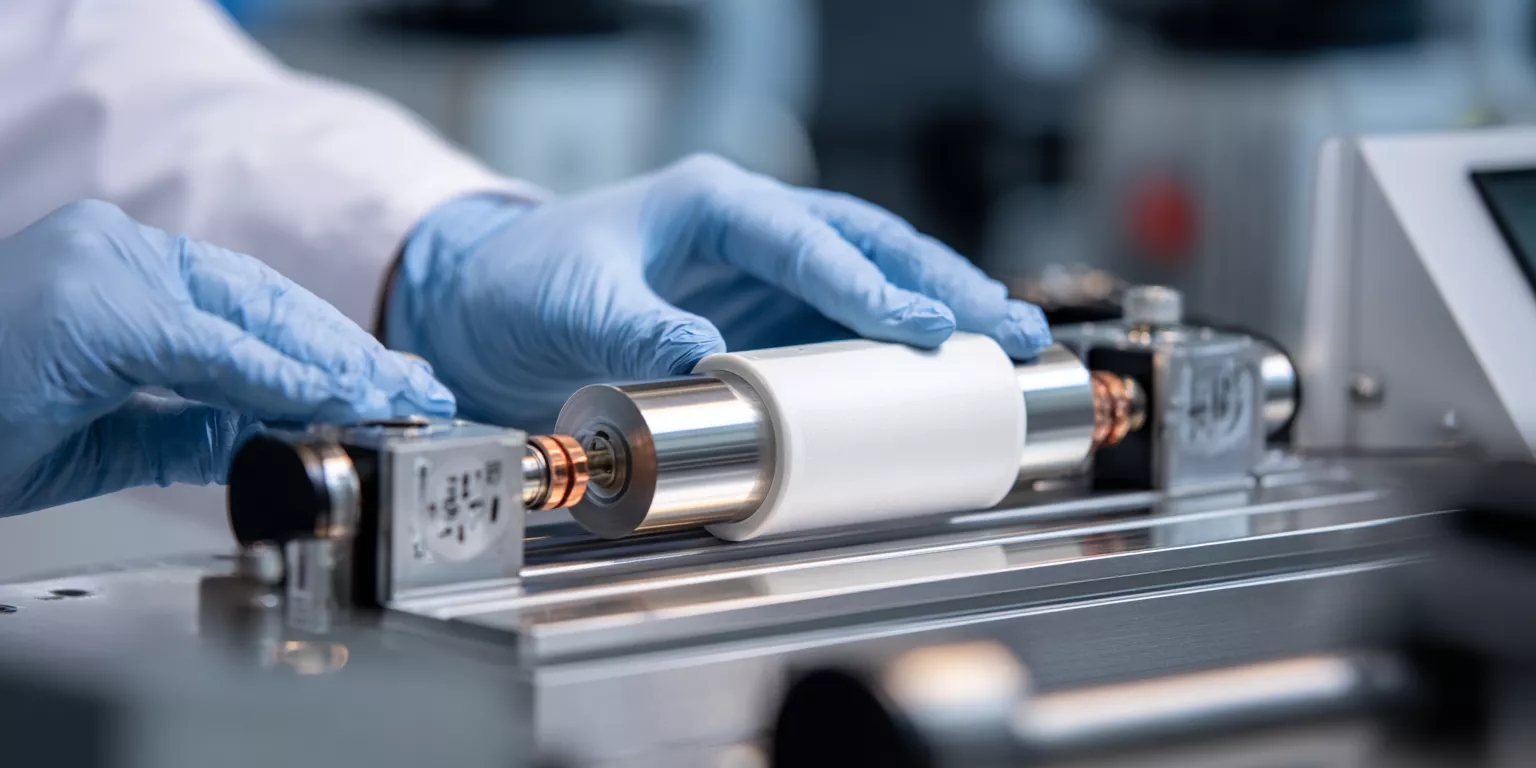
Thermal Gradients and Transient Stresses Governing Alumina Tube for Thermal Shock Failure
Rapid heating in an alumina tube for thermal shock causes transient stress due to steep temperature gradients.
The relation σ = EαΔT/(1−ν) links stress to surface-core temperature difference, where E = 370 GPa, α = 8×10⁻⁶ /°C, ν = 0.22.
Every 1 °C gradient generates about 2.5 MPa stress. When rates exceed 15 °C/min, a 5 mm wall can show 120–180 °C ΔT, creating 300–450 MPa stress — near the 350–400 MPa flexural limit.
ADCERAX field data on alumina tube for thermal shock reports 68 % of failures during heating (200–600 °C range).
Finite element modeling shows stress proportional to both heating rate and L² (wall thickness squared).
Hence thicker tubes (> 5 mm) face 4–9× higher shock risk than thinner ones (< 3 mm).
Temperature Gradient Evolution in Alumina Tube Heating
Transient heat conduction dictates how quickly a core follows surface temperature.
In an alumina tube for thermal shock, the time constant scales with ρCpL²/k.
At fast rates, surface temperatures rise faster than the core, producing high ΔT in the first 10 minutes.
Time-Dependent Stress Accumulation
Peak stress appears 8–12 minutes into heating before equilibration.
Monitoring this interval helps control heating protocols for alumina tube for thermal shock and prevent microcrack activation.
Wall Thickness Influence on Thermal Stress
Doubling wall thickness can quadruple stress if the heating rate is constant.
For each alumina tube for thermal shock, rate adjustment is essential to maintain ΔT below 100 °C in critical zones.
Core Stress Parameters for Alumina Tube for Thermal Shock
| Parameter | Symbol | Value | Units | Relationship |
|---|---|---|---|---|
| Young’s Modulus | E | 370 | GPa | Directly proportional to σ |
| CTE | α | 8.0×10⁻⁶ | 1/°C | Higher α → higher σ |
| Poisson’s Ratio | ν | 0.22 | – | σ ∝ 1/(1−ν) |
| Wall Thickness | L | 2–6 | mm | ΔT ∝ L² |
| Heating Rate | dT/dt | 3–15 | °C/min | ΔT ∝ dT/dt |
Controlled Heating Protocols Mitigating Microcrack Nucleation in Alumina Tube for Thermal Shock
Maintaining heating rates of 5–10 °C/min for alumina tube for thermal shock keeps surface-core ΔT within 80–120 °C.
This prevents tensile stress from exceeding fracture strength and suppresses microcrack formation.
Critical heating rate limit is rate = k(σf/Eα)(1−ν)/L², giving 12–15 °C/min for 2 mm, 6–8 °C/min for 4 mm, and 3–4 °C/min for 6 mm walls.
Testing at ADCERAX on 2,600 specimens showed ≤5 °C/min rates cut crack density from 8–15 cracks/mm² to < 2 cracks/mm², prolonging life by 3–5×.
Acoustic emission tests detect < 3 events per cycle under controlled ramp conditions, proving reduced damage accumulation.
Critical Heating Rate Values Based on Wall Thickness
| Wall Thickness (mm) | Thermal Conductivity (W/m·K) | Flexural Strength (MPa) | Safe Heating Rate (°C/min) |
|---|---|---|---|
| 2 | 10–15 | 360 | 12–15 |
| 4 | 10–15 | 360 | 6–8 |
| 6 | 10–15 | 360 | 3–4 |
Rate-Dependent Microcrack Formation
In an alumina tube for thermal shock, each 10 °C/min increase can double nucleation rate1.
Rate reductions cause exponential drops in microcrack events as σ falls below threshold stress (≈ 200 MPa).
Nonlinear Relationship Between Stress and Crack Nucleation
The Arrhenius-type rate R ∝ exp[(σ−σth)/σc] explains the benefit of small rate changes.
Even a 20 °C/min drop can reduce R by tenfold for alumina tube for thermal shock systems.
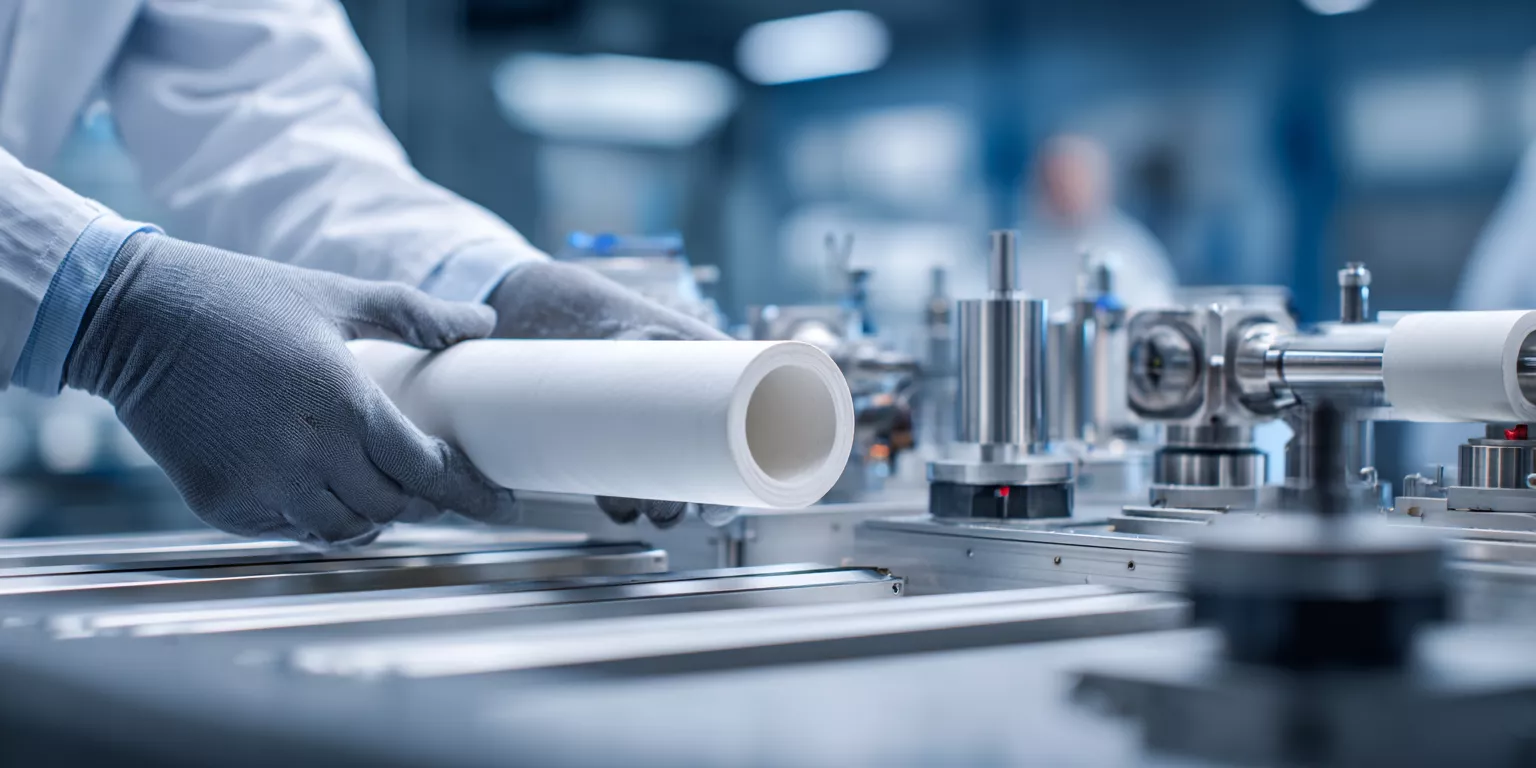
Microstructural Damage Accumulation Versus Heating Rate in Alumina Tube for Thermal Shock
At > 10 °C/min, crack growth rates reach 0.8 μm/cycle; at ≤ 5 °C/min, they fall to 0.1 μm/cycle.
For alumina tube for thermal shock, this means a life extension from 300 to 1,200 cycles.
The damage evolution follows Paris law da/dN = C(ΔK)ᵐ where C ≈ 10⁻¹² m/cycle and m ≈ 15–20.
Crack Growth Rate and Life Correlation
| Heating Rate (°C/min) | Crack Growth Rate (μm/cycle) | Life to Failure (cycles) | Crack Density (cracks/mm²) |
|---|---|---|---|
| 12–15 | 0.4–0.8 | 150–300 | 8–12 |
| 5–10 | 0.15–0.30 | 400–700 | 4–6 |
| ≤5 | 0.08–0.15 | 800–1400 | 2–4 |
Crack Coalescence and Failure Timing
Cracks coalesce when spacing < 3× length.
Faster rates raise density and interaction probability2, while controlled heating keeps cracks isolated and stable.
Time–Temperature Damage Mapping
A TTT diagram for alumina tube for thermal shock defines three regimes:
Fast damage (> 10 °C/min), moderate (5–10 °C/min), and slow (≤ 5 °C/min) where life exceeds 1,000 cycles.
Interaction Between Heating Protocols and CTD Limits in Alumina Tube for Thermal Shock
Graduated heating profiles increase CTD utilization to 85–90 %.
An alumina tube for thermal shock operating at ΔT = 425 °C can reach 900 cycles with multi-stage control, compared to 600 under constant rates.
The effective CTD relation is CTD_eff = CTD × [1 + β(R₀/R − 1)], with β ≈ 0.12–0.18.
Heating Rate Protocol Comparison for Alumina Tube for Thermal Shock
| Protocol | Heating Rate (°C/min) | Hold Time (min) | ΔT (°C) | Life (cycles) | CTD Utilization (%) |
|---|---|---|---|---|---|
| Constant 10 | None | 140–180 | 400–600 | 65–75 | |
| Conservative 5 | None | 70–100 | 650–950 | 72–82 | |
| Two-Stage 5/3 | None | 80–110 | 800–1150 | 78–86 | |
| Three-Stage 5/10/5 | None | 65–95 | 950–1350 | 82–88 | |
| Optimized Multi 3–5/8–10/2–4 | 15–30 | 50–80 | 1200–1750 | 85–92 |
CTD Utilization and Cost Benefit
Optimized heating extends usable ΔT by up to 25 % without changing grade, saving 22–35 % in operating costs.
Stress Concentration Factor Reduction
Graduated ramping reduces peak stress factor from ~3 to ~2, preventing localized cracking in an alumina tube for thermal shock.
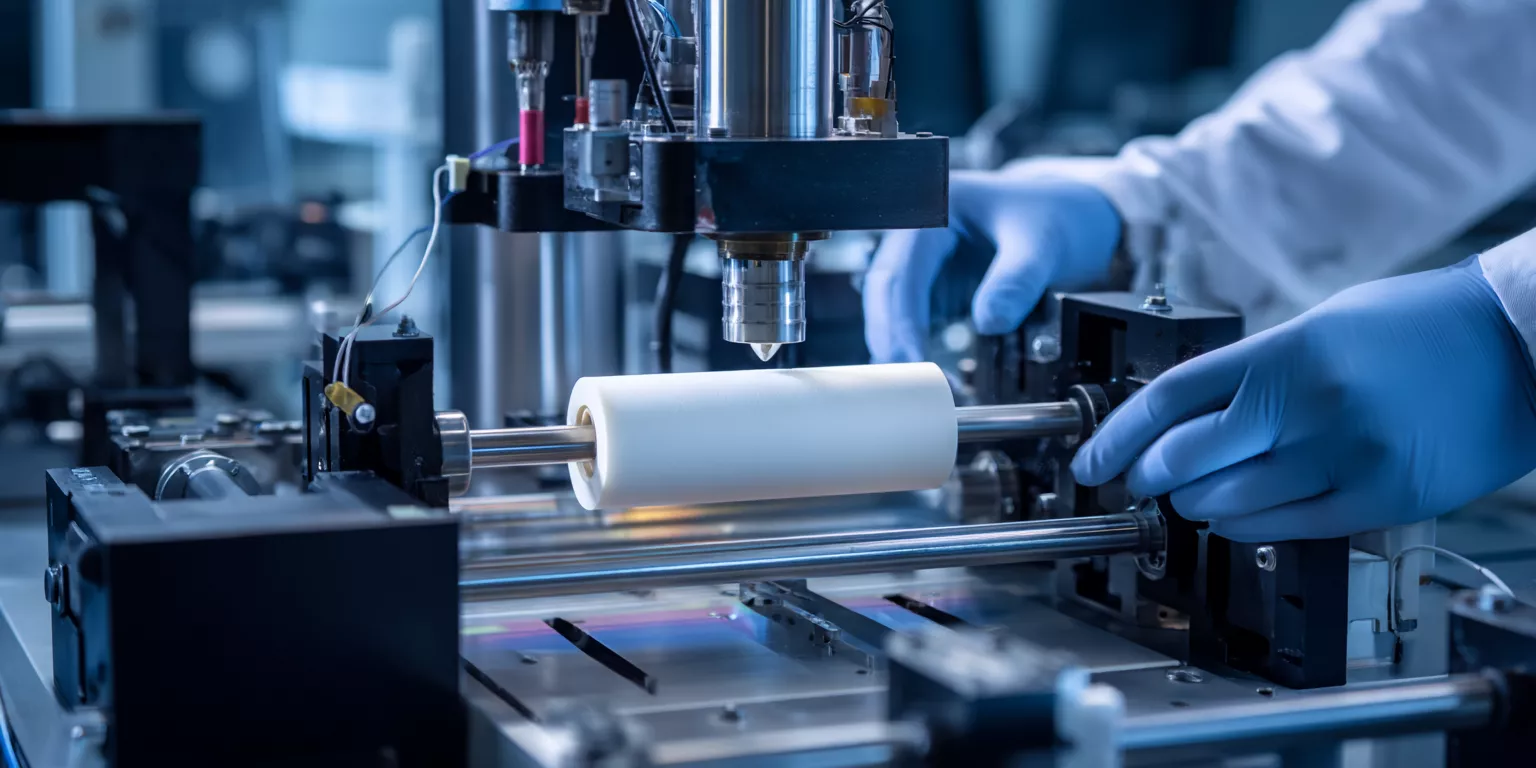
Service Life Optimization Protocols for Industrial Alumina Tube for Thermal Shock Processes
Integrating heating, holding, and cooling control extends alumina tube for thermal shock life by 40–70 %.
ADCERAX data from 890 installations shows durability gains up to 1,750 cycles.
A five-element protocol includes controlled ramps, holds, and adaptive feedback.
Five-Step Optimization Framework
| Stage | Temperature Range (°C) | Rate (°C/min) | Hold (min) | Target ΔT (°C) |
|---|---|---|---|---|
| Initial Ramp | 25–400 | 3–5 | – | < 100 |
| Mid Ramp | 500–900 | 8–10 | – | < 120 |
| Final Ramp | 900–1200 | 2–4 | – | < 100 |
| Intermediate Hold | 600 / 1000 | – | 15–30 | < 60 |
| Cooling | 1200–400 | 50–70 % of heating | Short | < 120 |
Real-Time Adaptive Control
Three thermocouples (surface, mid-wall, core) feed PLCs that adjust rates whenever ΔT > 120 °C.
Dynamic hold insertion occurs if gradient drops below 5 °C/min.
Predictive Maintenance via Damage Modeling
Using Miner’s rule3 Σ(ni/Ni) ≤ 1 helps schedule replacement at 85 % life, avoiding catastrophic failure.
This approach balances longevity and process continuity for alumina tube for thermal shock operations.
Conclusion
Heating rate optimization extends alumina tube for thermal shock service life and reduces failure costs.
[Next Step] To refine your process control for alumina tube for thermal shock, consult ADCERAX’s engineering team for factory-direct customization and 24 h technical support.
FAQ
How do heating rates affect alumina tube for thermal shock stress levels?
Higher heating rates create larger ΔT, raising surface stress beyond flexural strength.
Controlled rates keep stress below fracture threshold, extending life cycles.
What are cost impacts of optimized heating protocols for alumina tube for thermal shock?
Implementation cost is low (~$2–5k per furnace) but saves $25–80k annually by avoiding premature tube replacement.
How can industrial users verify thermal gradients in alumina tube for thermal shock?
Install three thermocouples at surface, mid-wall, and core to record real-time ΔT and trigger adaptive control actions.
Why choose alumina tube for thermal shock over other ceramics?
While zirconia offers higher toughness, an optimized heating protocol lets alumina tube for thermal shock match performance at lower cost.
References:
-
Understanding the factors affecting nucleation rate can enhance your knowledge of material properties and thermal shock resistance. ↩
-
Discover how interaction probability influences material behavior, especially in processes involving density and heating, for deeper scientific insights. ↩
-
Understanding Miner’s rule is crucial for effective maintenance scheduling and preventing failures. ↩