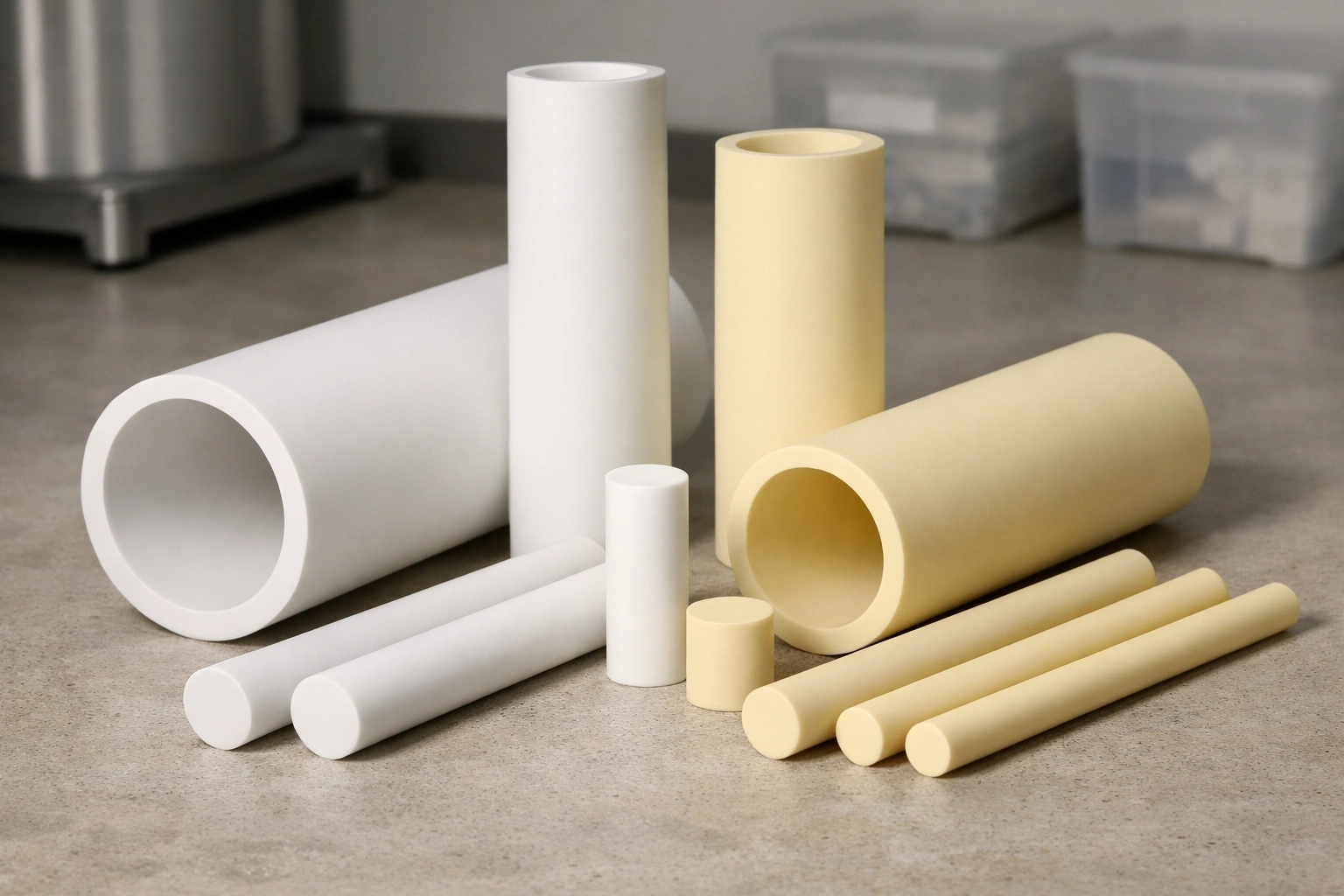
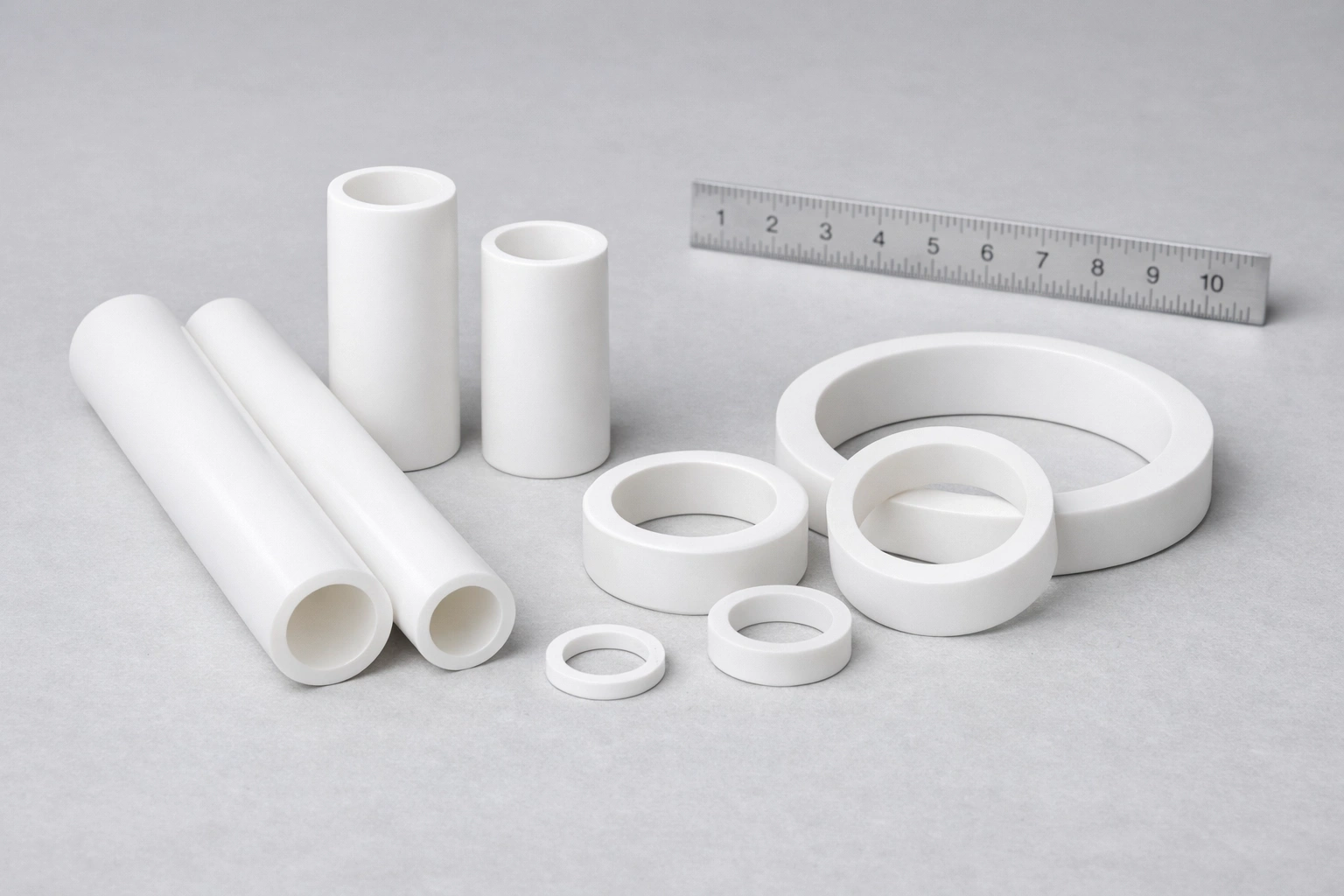
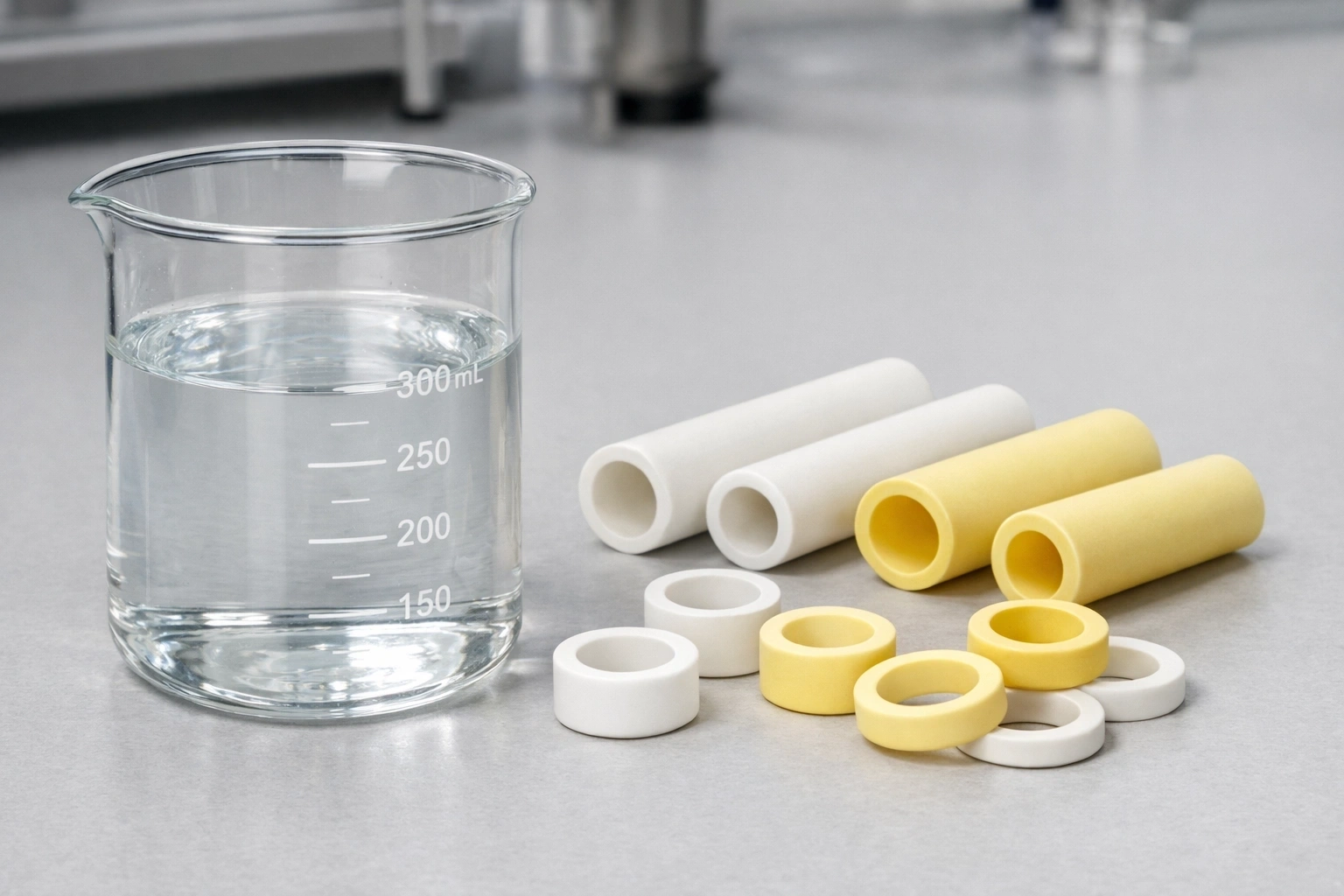
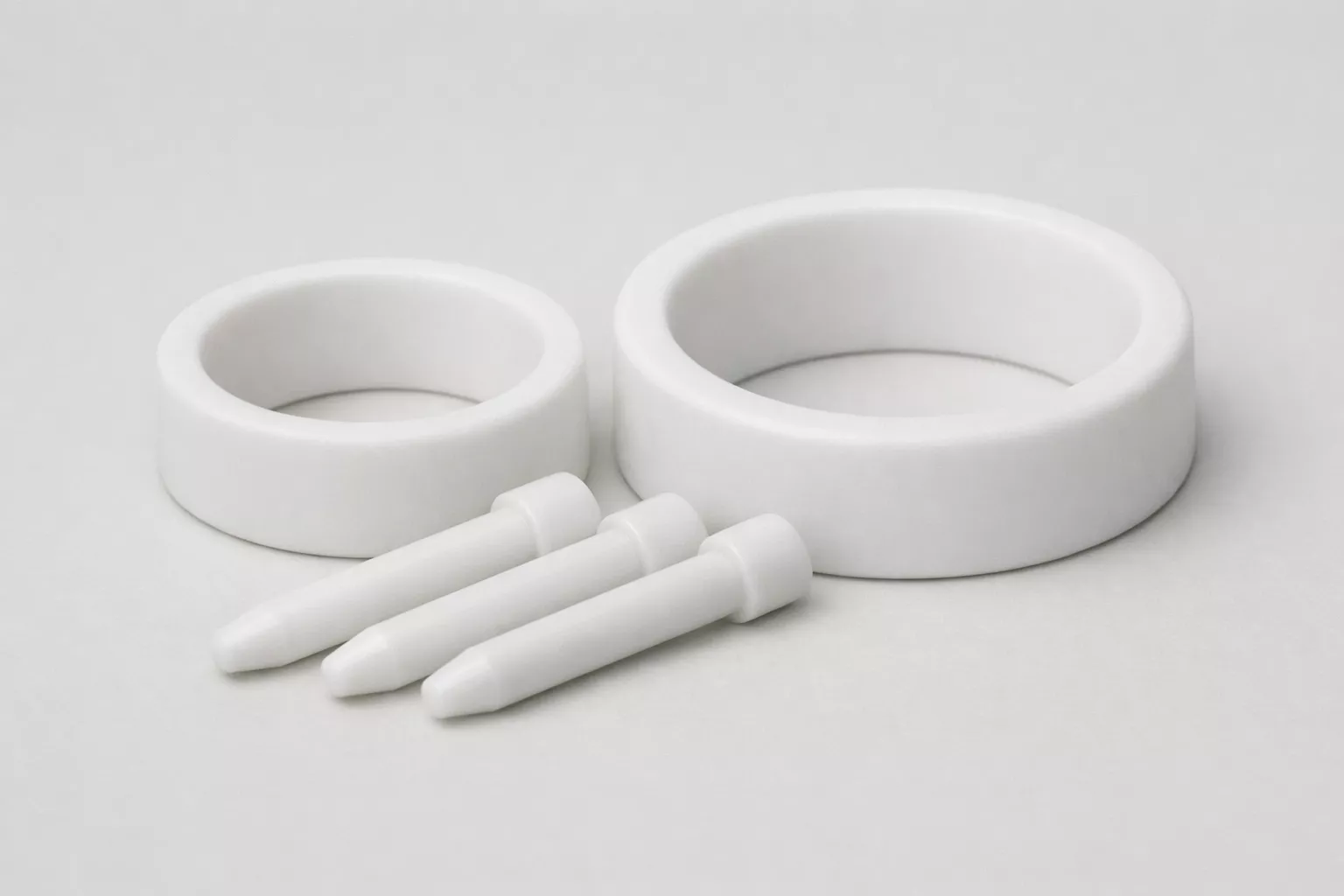
High strength alumina tube defines the performance foundation for modern industrial machinery operating under high thermal, mechanical, and vibrational stress. To ensure stable operation in precision systems and dynamic assemblies, the mechanical integrity of high strength alumina tube depends on the balance between flexural strength, compressive strength, tensile strength, and fracture toughness. Engineers across automation, chemical processing, and high-temperature environments rely on this ceramic component to provide dimensional precision, fatigue resistance, and predictable service life.
High strength alumina tube must achieve verified strength properties—flexural strength ≥ 350 MPa, compressive strength ≥ 2,200 MPa, and tensile strength ≥ 250 MPa—measured under standardized ASTM methods. These parameters guarantee that machinery components remain stable through continuous cycles of mechanical load, temperature variation, and pressure exposure.
This guide presents a full mechanical analysis framework for high strength alumina tube, integrating strength data, testing standards, and application-specific benchmarks validated by ADCERAX manufacturing and field performance records.
Defining Core Mechanical Properties for High Strength Alumina Tube
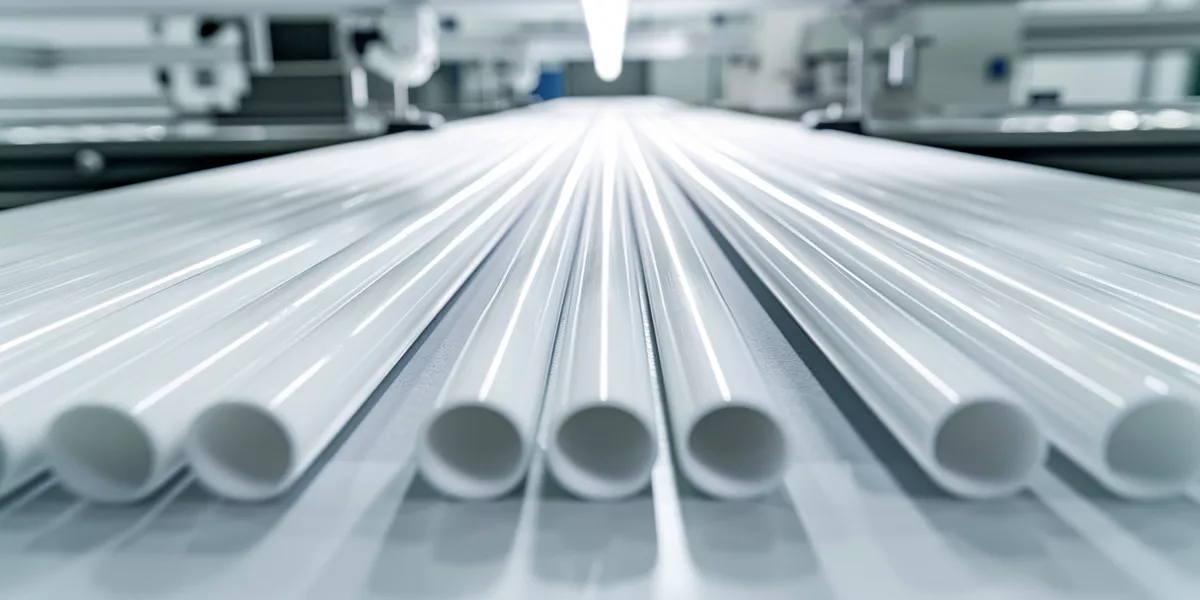
High strength alumina tube relies on three mechanical pillars: flexural strength (≥ 350 MPa, ASTM C1161)1, compressive strength (≥ 2,200 MPa, ASTM C7732), and tensile strength (≥ 250 MPa). While many engineers equate higher purity with higher strength, 99.5% alumina with optimized grain structure can outperform 99.9% grades when density exceeds 3.85 g/cm³ and porosity remains below 0.15%. The result is a component with five-year operational reliability in machinery exposed to 400–600 °C and vibration amplitudes up to 8 mm/s RMS.
Flexural strength measurement protocols ensuring accurate load-bearing capacity assessment
Accurate bending data ensures structural safety in tubes used as linear guides and support shafts. ASTM C1161 testing under four-point bending defines true material capability, minimizing measurement bias common in three-point methods.
Compressive strength requirements for hydraulic and pneumatic machinery components
Hydraulic systems depend on high compressive strength to avoid crushing under variable pressures. Alumina tubes exceeding 2,200 MPa resist failure in 20 bar pneumatic cycles, providing long-term sealing and shape retention.
Tensile strength's role in threaded connections and press-fit interface reliability
Threaded connections and press-fit joints demand tensile strength ≥ 250 MPa. This prevents cracking under tightening torque or when misalignment induces concentrated stresses exceeding 2.5× nominal load.
Interrelationship between porosity, density, and mechanical property achievement
Porosity strongly influences structural reliability. A dense structure (3.85–3.9 g/cm³) yields 20–25% higher flexural strength due to reduced crack nucleation sites, vital for rotating or oscillating machinery.
Bending Strength and Fracture Toughness Demands for High Strength Alumina Tube in Dynamic Machinery
Dynamic environments impose cyclic stresses3 requiring high strength alumina tube with ≥ 380 MPa modulus of rupture and fracture toughness ≥ 4.0 MPa√m. Machines such as conveyors, rollers, and spindles generate alternating loads up to 280 MPa at frequencies of 10–120 Hz. When toughness is inadequate, cracks initiate at grain boundaries even if static strength is sufficient.
Modulus of rupture specifications for tubes experiencing cyclic bending loads
The modulus of rupture reflects the limit before crack initiation under oscillating motion. Tubes sustaining ≥ 380 MPa MOR can endure 10⁷ cycles without fracture under controlled loading frequency.
Fracture toughness mechanisms controlling crack propagation resistance
Fracture toughness indicates energy absorption before failure. Fine grains (2–4 μm) deflect cracks, while controlled boundary chemistry improves crack-bridging, preventing rapid propagation.
Fatigue limit correlation with combined strength and toughness properties
Fatigue endurance depends on both static strength and toughness. When KIC ≥ 4.2 MPa√m, fatigue limit reaches 60% of MOR, maintaining operational safety under high-frequency vibration.
Weibull statistical analysis predicting failure probability in tube populations
Weibull modulus > 10 ensures population consistency. This parameter enables predictive maintenance scheduling and lowers variability across multiple tube installations.
Thermal Stability and Temperature-Dependent Performance of High Strength Alumina Tube
Thermal performance defines whether high strength alumina tube sustains its load capacity at operating temperature. Retaining ≥ 85% of room-temperature strength ensures resistance to creep and grain boundary degradation. At 1,200 °C, high purity alumina experiences 12–18% strength loss, which increases sharply above 1,400 °C.
Strength retention curves quantifying temperature-dependent mechanical property degradation
Testing per ASTM C1211 shows gradual strength decline with temperature. Maintaining ≥ 300 MPa beyond 1,200 °C supports reliable furnace and reactor use.
Creep resistance requirements for sustained high-temperature load-bearing applications
Creep deformation accelerates above 0.5× the melting point. MgO-stabilized alumina shows 40% improved creep resistance over undoped variants during 500-hour testing cycles.
Thermal shock parameter calculations determining thermal cycling survivability
Thermal cycling with ΔT up to 400 °C tests the parameter R = σf × k / (E × α). R > 300 W/m indicates survival under fast temperature change, critical for heat treatment equipment.
Grain boundary stabilization methods preventing high-temperature strength loss
Fine grains and MgO doping (0.25–0.5%) slow glass-phase movement along boundaries, preserving integrity and mitigating creep-induced weakening.
Industry-Specific Strength Requirements for High Strength Alumina Tube Applications
Industrial sectors require tailored mechanical standards for high strength alumina tube. Chemical systems prioritize corrosion and mechanical strength; water treatment focuses on thermal shock durability; automation emphasizes dimensional accuracy and consistency.
Chemical processing strength requirements balancing corrosion resistance and mechanical loading
99.7–99.8% alumina with ≥ 400 MPa flexural strength endures corrosive acids and alkalis at 2–15 bar pressure. Smooth interior surfaces (Ra < 0.4 μm) reduce chemical abrasion risk.
Water treatment thermal shock specifications for rapid temperature cycling environments
Backwash cycles involve ΔT = 60–120 °C within minutes. Tubes with R > 350 W/m retain strength through 10,000+ cycles, protecting filtration systems from crack propagation.
Automation machinery dimensional precision and statistical reliability demands
Automation lines require Weibull modulus ≥ 12 and tolerance ± 0.03 mm for positioning accuracy. Consistent strength distribution prevents unscheduled downtime.
Industry-specific material trade-offs optimizing cost versus performance requirements
Each industry balances purity and property targets differently. Selecting 99.7% alumina instead of 99.9% cuts cost 30–40% while maintaining over 90% of required mechanical strength.
High Strength Alumina Tube Mechanical Property Requirements by Industry
| Industry Application | Minimum Flexural Strength (MPa) | Minimum Fracture Toughness (MPa√m) | Purity Requirement (% Al₂O₃) | Critical Performance Factor | Key Test Standard |
|---|---|---|---|---|---|
| Chemical processing equipment | 400–450 | 4.0–4.5 | 99.7–99.8 | Corrosion + strength combination | ASTM C1161 + C965 |
| Water treatment systems | 350–380 | 4.2–4.8 | 99.5–99.7 | Thermal shock resistance R > 350 W/m | ASTM C1525 + C1161 |
| Automation machinery | 380–420 | 4.0–4.5 | 99.5–99.7 | Weibull m ≥ 12, tolerance ± 0.03 mm | ASTM C1239 + C1161 |
| High-temperature furnaces | 380–420 | 3.8–4.2 | 99.7–99.8 | Strength retention > 85% at 1,200 °C | ASTM C1211 |
| Precision grinding equipment | 420–480 | 4.2–4.8 | 99.7–99.8 | Hardness HV > 1,600 + low porosity | ASTM C1327 + C373 |
Quality Compliance Standards for High Strength Alumina Tube Manufacturing
Ensuring mechanical reliability requires full ISO and ASTM certification. High strength alumina tube tested under ISO 6474, ASTM C1161, and ASTM C1421 demonstrates 3.5× fewer field failures and 25–40% lower warranty claims compared with non-certified suppliers.
ISO 6474 certification requirements for advanced ceramic mechanical property validation
ISO 6474 ensures uniform test methodology, including specimen geometry and environmental control, yielding consistent mechanical data for engineering validation.
ASTM C1161 four-point flexural testing protocols and specimen size specifications
ASTM C1161 defines specimen size (3 × 4 × 45 mm) and stress application to verify load distribution accuracy, producing statistically valid mechanical profiles.
Batch-specific test certificate documentation enabling production lot traceability
Documentation links each test result to its production lot, enabling cause analysis for any failure events and reinforcing accountability in manufacturing control.
Statistical validation methods confirming manufacturing process consistency
A coefficient of variation < 10% for flexural strength indicates stable sintering and controlled grain growth, ensuring batch-to-batch reproducibility.
High Strength Alumina Tube Specification Selection Logic
| Application Conditions | Recommended Specification |
|---|---|
| Chemical exposure (pH < 3 or > 11), stress > 200 MPa, T < 600 °C | 99.7% Al₂O₃, ≥ 400 MPa (ASTM C1161), grain < 3 μm, ASTM C965 |
| Thermal cycling ΔT > 200 °C, > 5 cycles/day, T < 900 °C | R > 350 W/m (ASTM C1525), ≥ 360 MPa, MgO-doped boundaries |
| Dynamic loading > 10⁶ cycles, vibration > 6 mm/s RMS | Weibull m ≥ 12 (ASTM C1239), ≥ 380 MPa, KIC > 4.2 MPa√m |
| Continuous operation > 1,200 °C, oxidizing environment | 99.8% Al₂O₃, ≥ 80% strength retention (ASTM C1211), grain 3–5 μm |
| Precision positioning T < 400 °C | ≥ 380 MPa, CTE 7–8 ppm/°C, ± 0.02 mm, Ra < 0.3 μm (ISO 4287) |
Conclusion
High strength alumina tube success in industrial systems depends on balancing strength, toughness, and reliability under mechanical and thermal stress.
FAQ
Q1: How does fracture toughness influence performance in high strength alumina tube?
Fracture toughness ≥ 4.0 MPa√m reduces crack growth during cyclic stress, directly improving fatigue endurance and preventing premature failure.
Q2: What determines procurement cost for high strength alumina tube?
Purity level, certification, and tolerance precision impact cost. 99.7% Al₂O₃ provides optimal performance while controlling expenses.
Q3: What certification should be verified before purchasing high strength alumina tube?
Ensure ISO 6474, ASTM C1161, and C1421 reports accompany each production batch for traceable mechanical validation.
Q4: How does high strength alumina tube compare to zirconia tube under load?
Alumina provides higher hardness and thermal endurance, while zirconia offers greater fracture toughness. Selection depends on temperature and dynamic load profile.
References:
-
Learn about ASTM C1161, the standard test method for flexural strength in ceramics, to understand its importance in evaluating alumina tube performance. ↩
-
Learn about ASTM C773 to understand the standardized method for measuring compressive strength in alumina tubes and other ceramics. ↩
-
Learn how cyclic stresses impact material durability and why understanding them is crucial for high-performance engineering applications. ↩