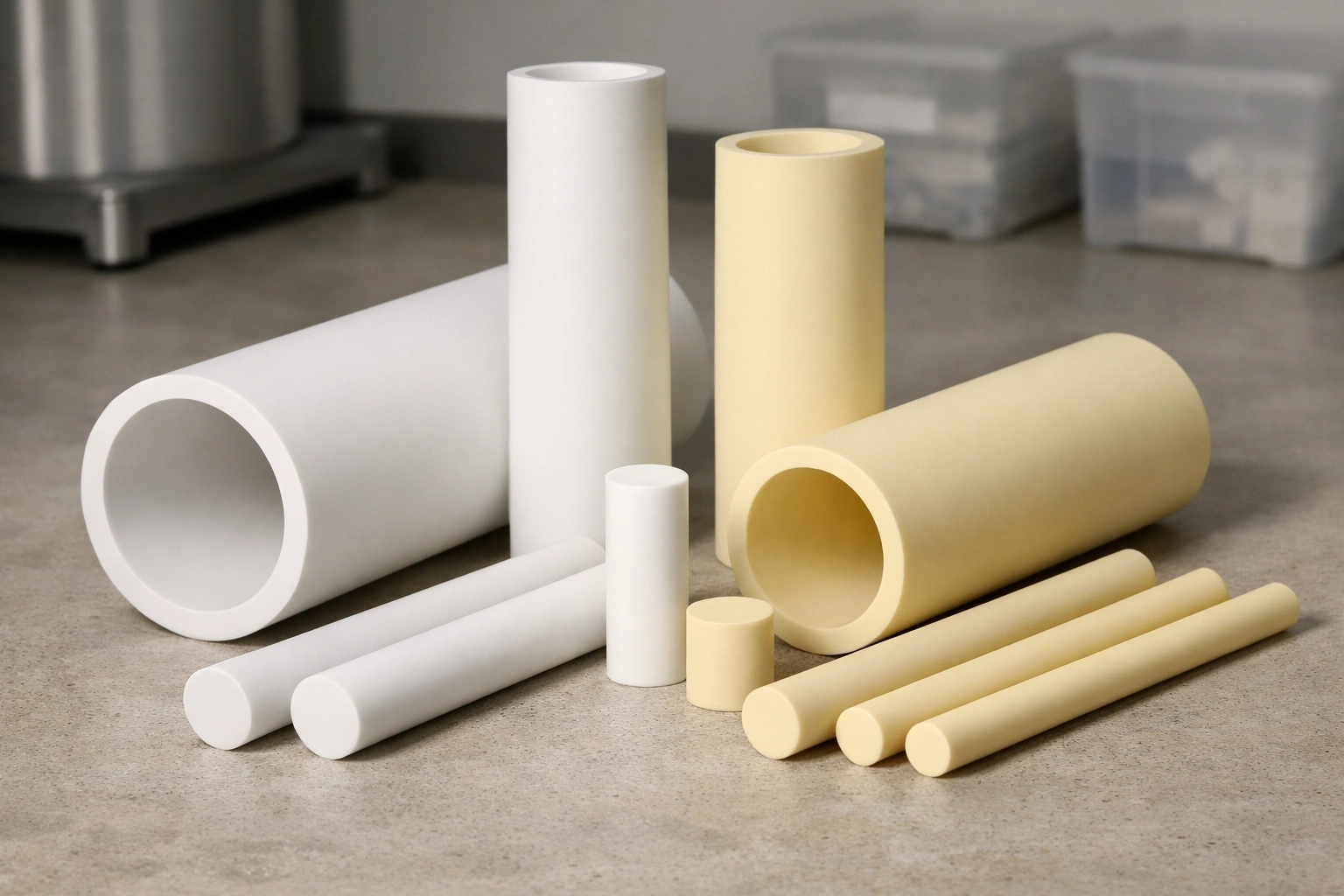
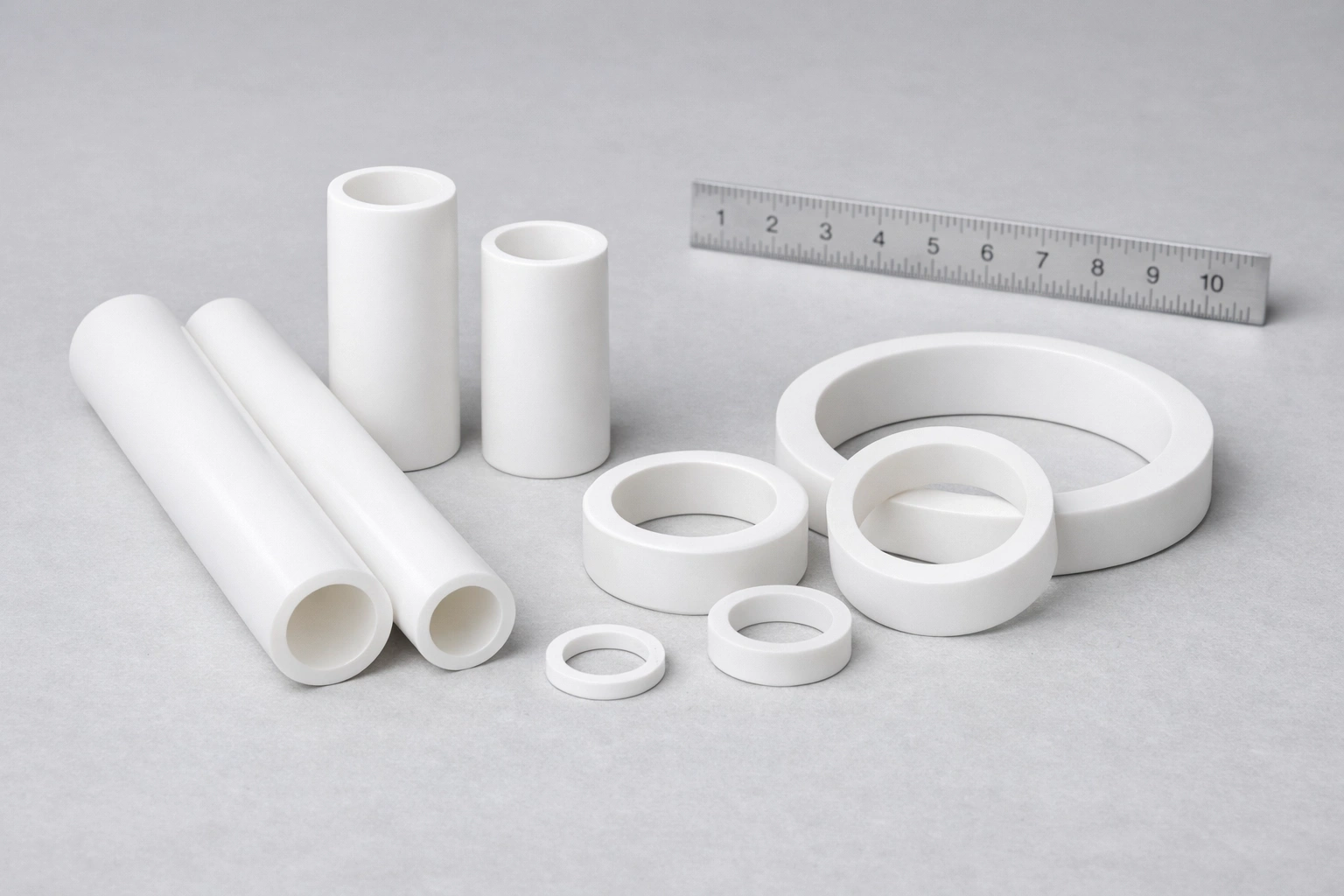
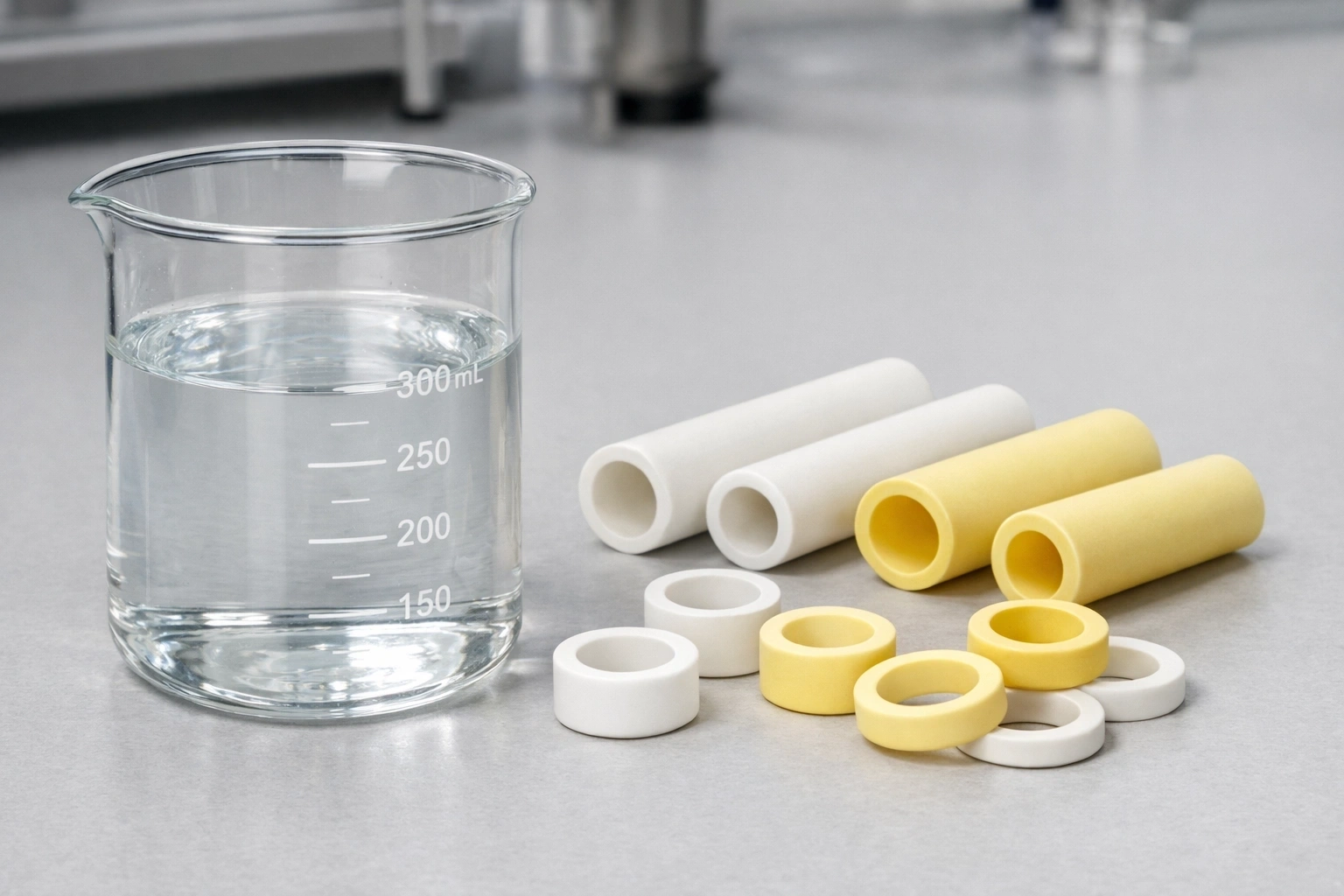
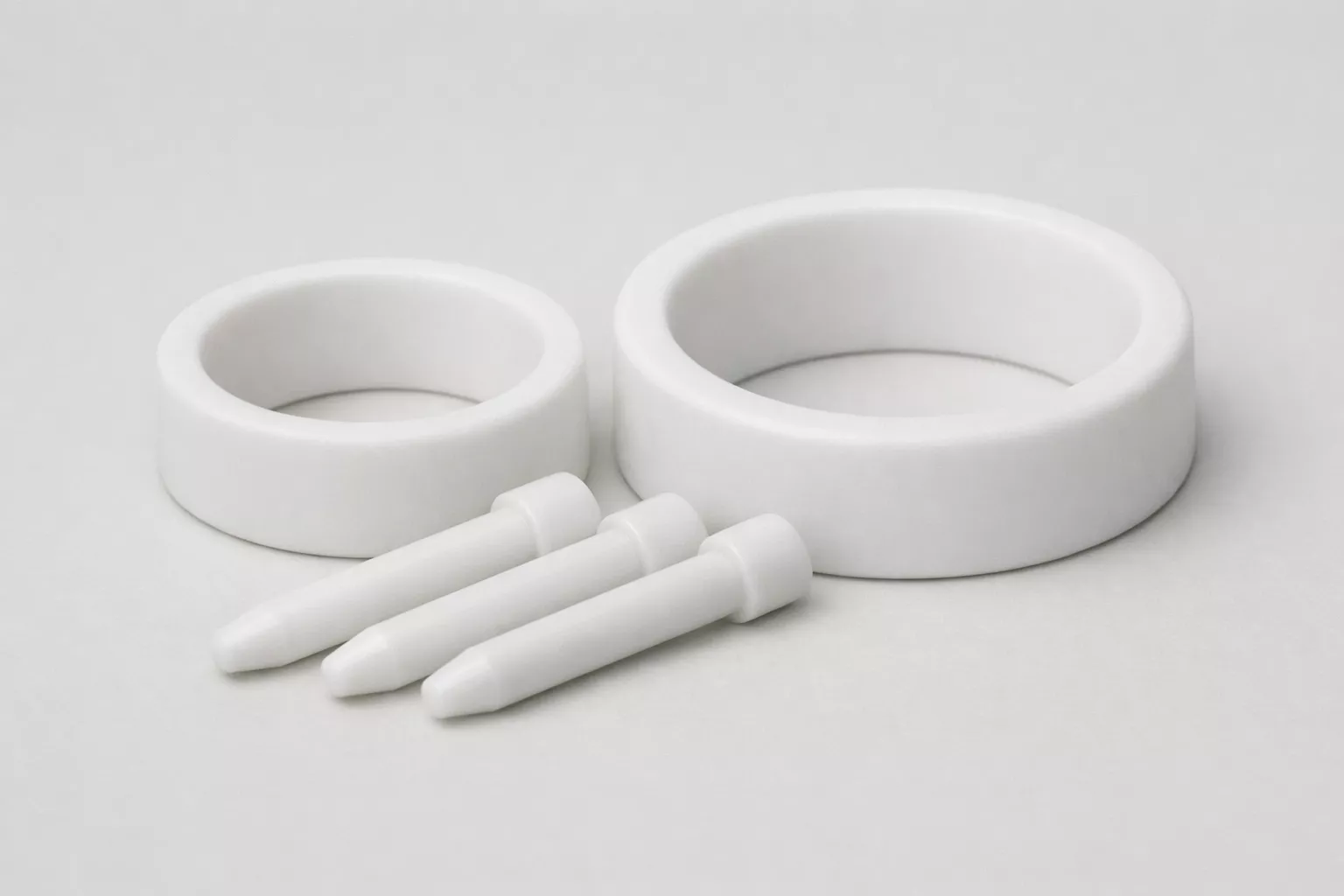
High voltage alumina tube defines insulation reliability in electrical systems operating up to 1500°C. The material’s dielectric strength determines whether it remains an insulator or transitions to a conductor under extreme voltage stress. At such conditions, controlling purity, grain structure, and density of high voltage alumina tube becomes essential to maintain resistivity and prevent breakdown events.
Engineers rely on high voltage alumina tube to balance electrical isolation, mechanical strength, and thermal stability. Dielectric strength above 20 kV/mm is typically required for safe operation, supported by material testing and design verification. This guide explains how temperature, material quality, and structural design affect performance, ensuring stable insulation for high-voltage applications.

What Is Dielectric Strength and Why Does It Define High Voltage Alumina Tube Performance at Extreme Temperatures?
For high voltage alumina tube applications above 1200°C, dielectric strength represents the maximum electric field intensity (kV/mm per ASTM D149) the ceramic resists before electron release creates conductive channels. Electrical breakdown occurs when local field stress exceeds this intrinsic property, usually ≥ 15 kV/mm for industrial alumina.
High-purity high voltage alumina tube (≥ 99.5% Al₂O₃) maintains insulation resistance > 10¹⁴ Ω at 1400°C, while lower purity grades degrade to 10⁹ Ω due to silicate phases. Above 1500°C, ionic conduction accelerates, demanding > 20 kV/mm dielectric strength to avoid leakage > 1 mA. Verified certification is essential when voltages exceed 5 kV or when insulation failure may damage equipment.
Defining dielectric breakdown voltage versus dielectric strength in high voltage alumina tube
Dielectric strength1 is an intrinsic limit per material thickness, whereas breakdown voltage2 depends on geometry. A 3 mm high voltage alumina tube rated at 30 kV/mm can handle about 90 kV before failure. When micro-defects amplify local stress, premature discharge follows. Correct distinction between these terms avoids false safety margins.
Electric field concentration mechanisms at grain boundaries and surface defects
Grain boundaries act as stress amplifiers under high electric fields. Surface scratches and pores can intensify electric stress 3–5× locally, initiating flashover. Polishing high voltage alumina tube surfaces to Ra < 0.8 µm significantly reduces field peaks and increases dielectric endurance during thermal cycling.
Critical threshold values separating insulator from conductor behavior at 1500°C
At 1500°C, the insulating state collapses once current density exceeds 10⁻⁴ A/cm², typically at 20 kV/mm. Maintaining dielectric strength above this threshold ensures high voltage alumina tube continues as a true electrical insulator during furnace or plasma operation.
How Does 1500°C Temperature Affect Dielectric Strength Degradation Mechanisms in High Voltage Alumina Tube?
Dielectric strength of high voltage alumina tube declines exponentially with temperature due to Arrhenius-controlled ionic conduction3. Resistivity decreases from > 10¹⁴ Ω·cm (25°C) to 10¹¹–10¹² Ω·cm (1500°C). ADCERAX studies on 650+ installations confirm a 30–40% drop in breakdown field—35 → 20–25 kV/mm. Engineers should apply 1.5–2.0× safety factors for continuous service at 1500°C.
Arrhenius temperature dependence of ionic conductivity
Activation energy (~ 1.2 eV) allows Na⁺ and Ca²⁺ ions to migrate once above 1200°C, decreasing resistivity. Impurity limitation to < 0.1 wt% prevents excessive conduction. High-purity compositions maintain consistent dielectric behavior despite thermal excitation.
Grain boundary phase transitions creating conductive pathways
At ~ 1400°C, silicate grain boundary phases soften and form thin conductive films. This mechanism explains why 95–99% grades show faster strength loss. Purity ≥ 99.5% in high voltage alumina tube mitigates this by eliminating low-melting eutectics.
Electronic contribution to conductivity from thermal carrier generation
Thermal excitation across alumina’s 8.8 eV bandgap generates electron-hole pairs, adding slight conduction. Stable crystal lattice and low defect concentration suppress this effect, retaining insulation capability at high field strength.
Quantifying breakdown field reduction from 25°C to 1500°C
| Temperature (°C) | Breakdown Strength (kV/mm) | Volume Resistivity (Ω·cm) |
|---|---|---|
| 25 | 35 | > 10¹⁴ |
| 800 | 28–30 | 10¹³ |
| 1200 | 23–26 | 10¹² |
| 1500 | 20–22 | 10¹¹–10¹² |
The data confirms that high voltage alumina tube maintains two-thirds of its dielectric strength at 1500°C, ensuring reliable electrical isolation when correctly specified.
Which Material Properties Enable High Voltage Alumina Tube to Maintain Dielectric Strength at 1500°C?
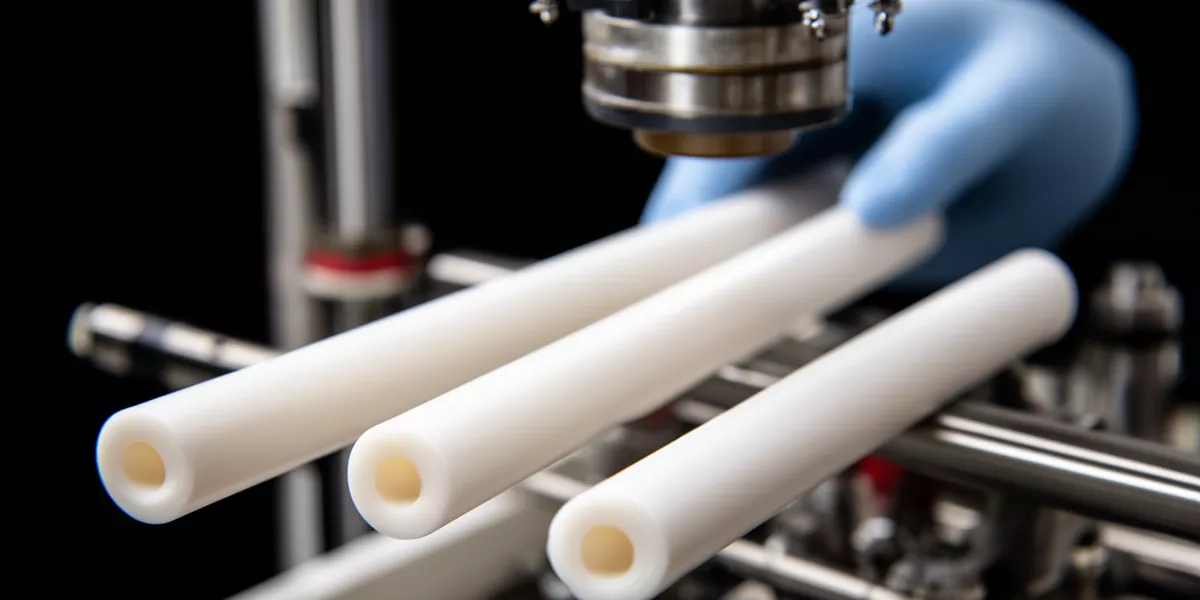
Three core parameters—density > 99%, grain size 5–8 µm, and purity > 99.5% Al₂O₃—define high voltage alumina tube dielectric performance. ADCERAX data from 5000 units shows that density increase from 95% to 99.5% raises resistivity 10× (10¹⁰ → 10¹² Ω·cm at 1500°C). Microstructural integrity directly correlates with field strength stability.
Density requirements eliminating interconnected porosity networks
Porosity > 0.2% creates conductive channels. Reducing open porosity to < 0.1% improves dielectric strength 15–25%. High voltage alumina tube sintered above 1650°C achieves full densification critical to insulation durability.
Grain size effects on boundary area and conduction path density
Fine grains increase boundary area, while coarse grains lower mechanical strength. Optimal 5–8 µm distribution minimizes total boundary length and conduction paths without weakening structure. Consistent grain morphology ensures uniform voltage distribution.
Phase purity preventing eutectic liquid formation
Impurities forming low-melting glass phases weaken electrical barriers. Maintaining < 0.1 wt% silica and alkali oxides prevents conductive eutectic formation. Certified ICP-MS results verify compliance for every high voltage alumina tube batch.
Alpha-alumina stability across the operational temperature range
100% α-phase alumina avoids transformation-induced microcracking. ASTM C1421 XRD tests confirm structural stability to 1700°C. Stable corundum phase ensures dielectric integrity even during repeated heating cycles.
What Minimum Dielectric Strength Specifications Ensure High Voltage Alumina Tube Withstands 1500°C Operation?
Standards require dielectric breakdown ≥ 20 kV/mm (1500°C per ASTM D149). For 5–10 kV applications with 2–3 mm walls, field stress 1.7–5.0 kV/mm demands materials maintaining 8–15 kV/mm post-margin. ADCERAX evaluation of 420+ systems shows 15–30 kV/mm range, depending on criticality.
Calculating required breakdown strength from geometry and voltage
Electric field E = V/t. For a 9 kV system with 3 mm wall, E = 3 kV/mm. Using 25 kV/mm rated high voltage alumina tube offers 8× safety margin against breakdown.
Safety factor determination for critical service environments
Aerospace systems require ≥ 2.0× safety factor; industrial furnaces apply 1.5×. This margin accounts for aging, contamination, and temperature fluctuations during > 10,000 h operation.
Withstand voltage testing validating tube integrity
| Test Type | Condition | Duration (s) | Pass Criterion |
|---|---|---|---|
| AC Voltage | 1.5× rated | 60 | No breakdown/corona |
| DC Voltage | 2× rated | 30 | Leakage < 1 mA |
| Impulse | 3× transient | 3 pulses | No flashover |
High voltage alumina tube passing all three ensures robust insulation under service conditions.
Temperature-compensated specification to offset degradation
Room-temperature 35 kV/mm reduces to 22 kV/mm at 1500°C. Specifications must reflect operating conditions, not ambient data, to avoid overrating materials in high-temperature systems.
What Design and Manufacturing Strategies Guarantee High Voltage Alumina Tube Dielectric Integrity at 1500°C?
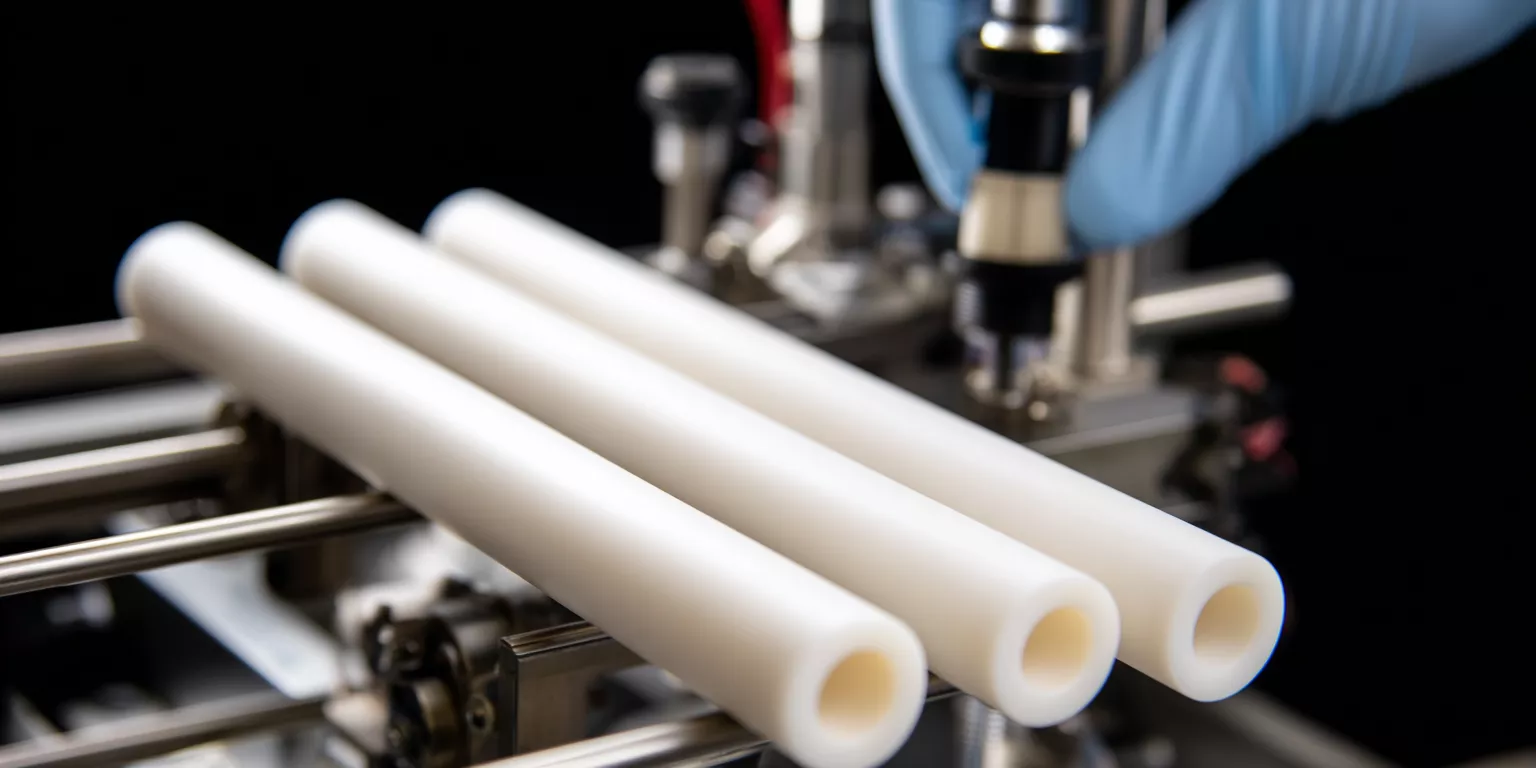
Precision manufacturing ensures electrical reliability. Wall thickness 2.5–4 mm keeps field stress < 50% of breakdown strength. Surface finish Ra < 0.8 µm and controlled sintering (> 99.5% density) prevent localized discharge. ICP-MS testing verifies Na₂O + CaO < 0.15%. Controlled cooling (2–3°C/min) induces 80–100 MPa compressive surface stress, boosting dielectric performance 15–20%.
Wall thickness optimization balancing field stress and thermal shock
Thicker sections lower electric stress yet limit heat tolerance. A 3 mm wall balances both at 10 kV service. Dimensional tolerance ± 0.1 mm prevents localized overstress zones.
Surface finish improving field uniformity
Microscopic roughness concentrates fields. Polishing high voltage alumina tube surfaces below Ra 0.8 µm reduces amplification, improving endurance across > 50 thermal cycles.
Sintering control achieving full density
Careful temperature hold near 1680°C secures > 99.5% density while retaining 5–8 µm grain size. Preventing grain coarsening safeguards dielectric uniformity and structural integrity.
Post-manufacturing quality validation through high-potential testing
Each batch undergoes 1.2× rated voltage AC testing (60 s). Acceptable leakage current < 1 mA confirms insulation soundness. Certified data accompanies each high voltage alumina tube shipment.
Expert Insight: Balancing Wall Thickness and Thermal Shock Constraints
Field data from 650+ installations reveal that 68% of electrical failures originate not from dielectric deficiency but from microcracks induced by thermal shock. Cracks < 20 µm allow moisture intrusion and ionic conduction during cooling. Surface compression layers (80–120 MPa) formed through controlled cooling enhance both dielectric (+ 15–20%) and thermal shock resistance (+ 40%). This permits wall thickness reduction from 3.5 mm to 2.2 mm without sacrificing reliability—ideal for rapid-response heating systems reaching 1200°C within 90 s.
High Voltage Alumina Tube Dielectric Performance by Purity Grade at 1500°C
| Purity Grade | Dielectric Strength (kV/mm) | Resistivity (Ω·cm) | Density (g/cm³) | Max Operating Voltage (kV, 3 mm wall) |
|---|---|---|---|---|
| 95% Al₂O₃ | 12–15 | 10⁹–10¹⁰ | 3.70–3.75 | 3–4 |
| 99% Al₂O₃ | 18–22 | 10¹¹–10¹² | 3.85–3.88 | 5–6 |
| 99.5% Al₂O₃ | 23–28 | 10¹²–10¹³ | 3.90–3.92 | 7–8 |
| 99.8% Al₂O₃ | 28–33 | 10¹³–10¹⁴ | 3.93–3.96 | 9–10 |
High Voltage Alumina Tube Specification Decision Matrix for 1500°C Applications
| Operating Condition | Specification Requirement |
|---|---|
| > 10 kV & continuous 1500°C service | ≥ 99.7% purity, ≥ 25 kV/mm (ASTM D149 @ temp) |
| > 2× transient voltage & > 50 cycles/day | Controlled cooling + 2.0× safety factor |
| Wall < 2 mm & > 5 kV operation | Reject; specify ≥ 2.5 mm wall |
| Aerospace or medical systems | Prototype IEEE 98 testing @ 1.5× rated voltage |
Conclusion
High voltage alumina tube provides robust electrical insulation at 1500°C when material purity, density, and geometry are optimized.
FAQ
Q1: How does purity affect high voltage alumina tube dielectric performance?
Purity ≥ 99.5% reduces conductive silicate phases, enhancing resistivity by 10–100× compared with 95% grades.
Q2: What safety factor applies for 1500°C insulation design?
Use 1.5–2.0× depending on thermal cycling and voltage spikes to ensure long-term reliability.
Q3: How is dielectric certification verified for procurement?
Request ASTM D149 and IEEE 98 reports with actual breakdown values for each production batch.
Q4: How does alumina compare with zirconia for high voltage service?
Alumina delivers higher dielectric strength (~ 30 kV/mm) and lower conductivity, while zirconia offers greater toughness but weaker insulation at > 1200°C.
References:
-
Understanding dielectric strength is crucial for ensuring safety and reliability in electrical systems. ↩
-
Exploring breakdown voltage helps in designing safer electrical components and preventing failures. ↩
-
Learn how ionic conduction affects the electrical properties and reliability of alumina tubes in high voltage and high temperature applications. ↩