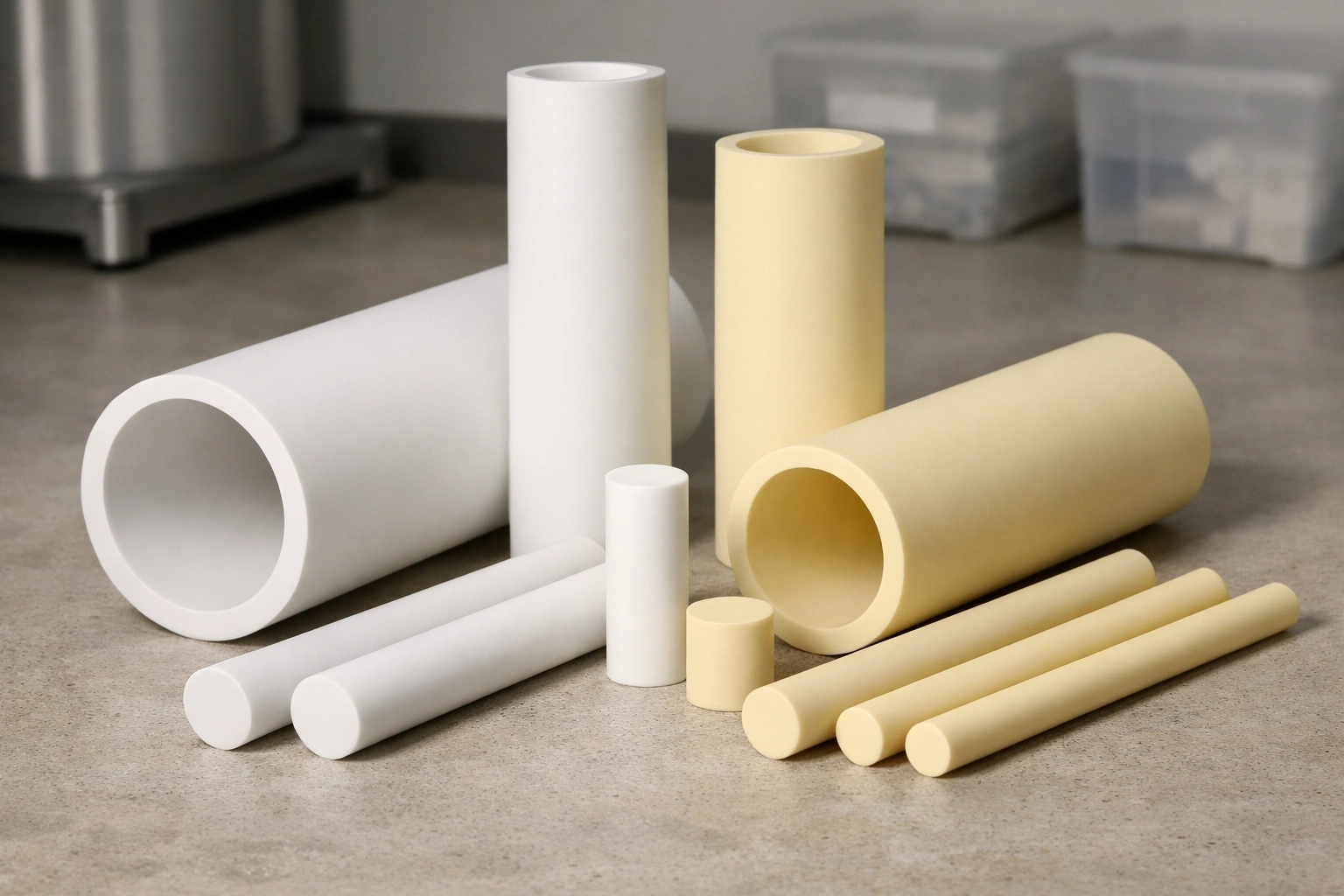
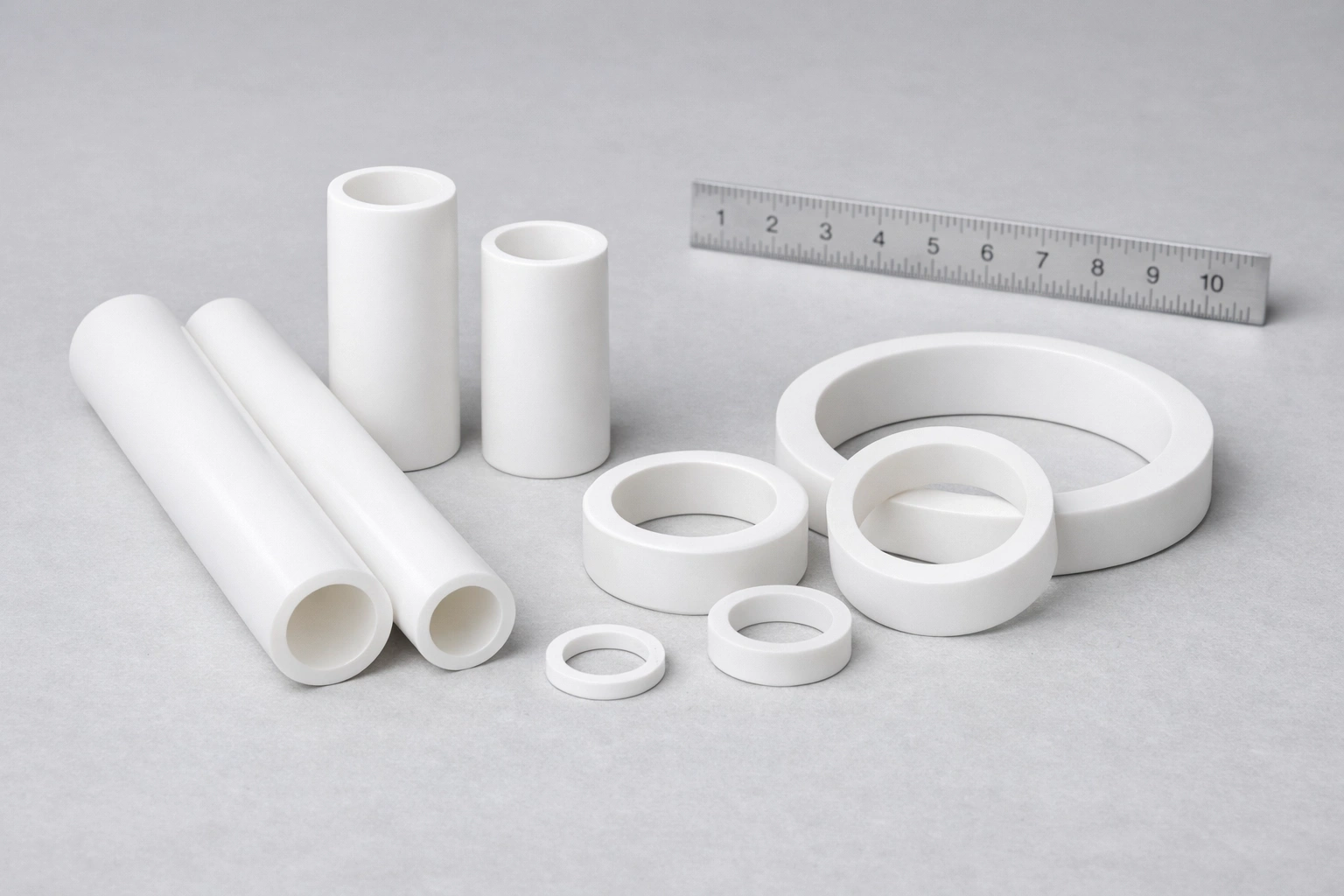
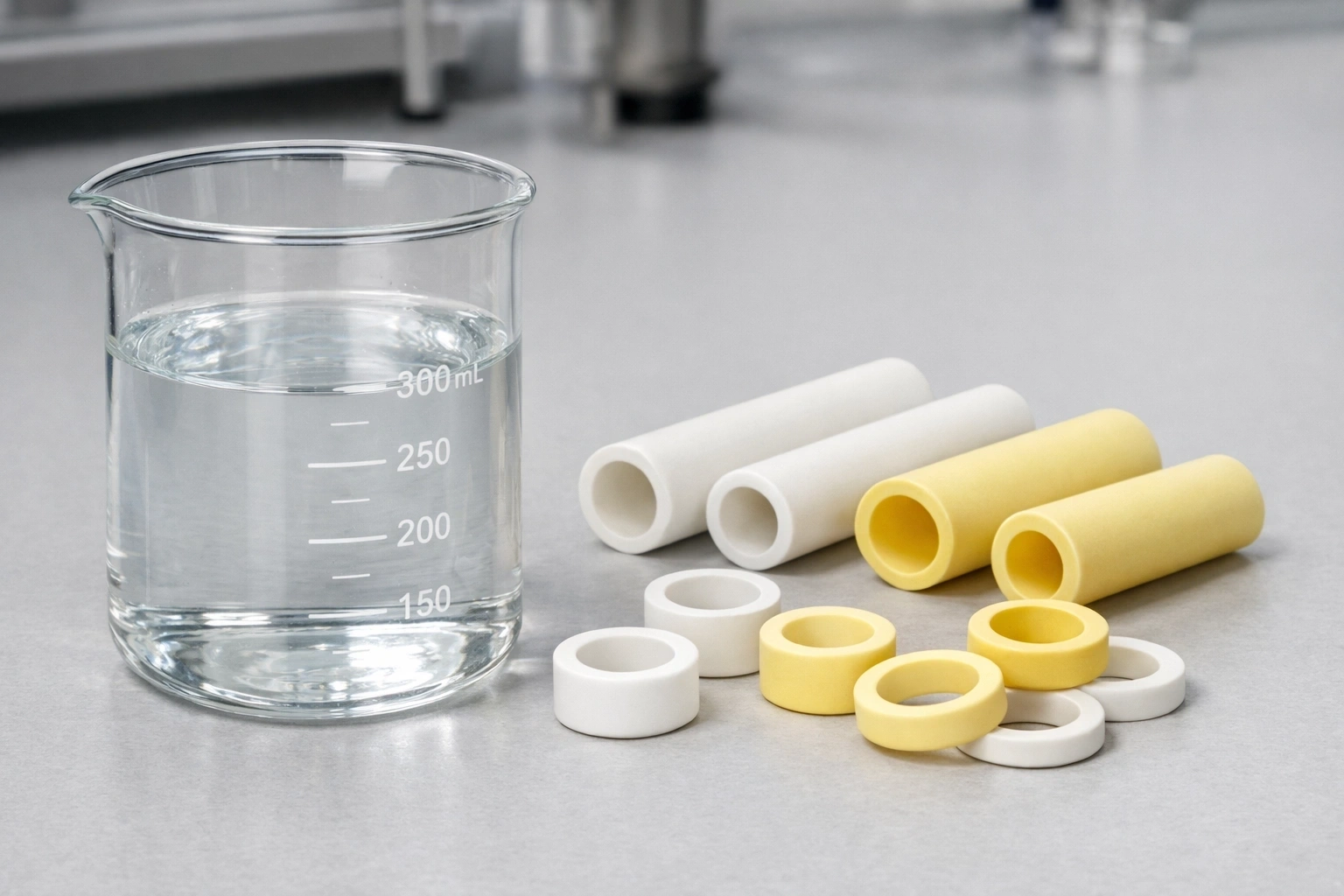
Thermal shock resistant alumina tube design depends on understanding how critical temperature difference (CTD) governs durability.
This relationship defines the upper limit of safe operation under rapid temperature fluctuations.
At the beginning of performance analysis, engineers evaluate CTD as the key factor influencing crack formation and thermal stress balance.

Defining Critical Temperature Difference (CTD) in Thermal Shock Resistant Alumina Tube Science
Critical temperature difference quantifies the maximum ΔT a thermal shock resistant alumina tube can endure before fracture.
It connects stress generation, mechanical limits, and microstructure response during sudden cooling.
A higher CTD means longer service life, reduced fracture risk, and superior thermal shock reliability.
Thermomechanical stress generation during rapid surface cooling
When surface temperature drops faster than the core, thermal gradients create tensile stress.
Using σ = EαΔT/(1-ν), with E = 370 GPa, α = 8.0 × 10⁻⁶/°C, and ν = 0.22, one can estimate induced stress.
When σ exceeds 350 MPa (for 99.5% alumina), cracks initiate, compromising the thermal shock resistant alumina tube integrity.
Mathematical relationship between material properties and crack initiation threshold
The CTD value depends on R = σf(1 − ν)/(Eα), linking strength and thermal expansion.
Low α and high σf elevate CTD, enhancing thermal shock performance.
This explains why high-purity alumina materials exhibit two to three times greater CTD margins than lower grades.
Flexural strength dependence on surface flaw population and grain boundary cohesion
Flaw size and density define stress concentration points.
Fine-grain sintering1 creates cohesive boundaries that prevent crack propagation.
Uniform microstructure2 ensures stable performance under repeated temperature shocks.
Quantifying CTD Through Standard Testing Methods for Thermal Shock Resistant Alumina Tube Validation
Measuring CTD ensures each thermal shock resistant alumina tube meets performance specifications.
ASTM C1525-183 and ISO 64744 provide repeatable test frameworks for industrial-grade validation.
Each test simulates extreme thermal gradients to define real-world strength retention.
ASTM C1525-18 water quench protocol ensuring conservative validation
Samples are heated between 200–1000°C, held for 15 minutes, then quenched in 20–25°C water.
This method replicates the harshest cooling scenarios for thermal shock resistant alumina tubes.
Because of higher heat transfer coefficients, water quenching gives conservative CTD values 40–60% lower than air quench results.
Flexural strength retention curves defining critical ΔT thresholds
After quenching, flexural strength is measured using ASTM C1161.
The CTD is determined when retained strength falls to 70% of its initial value.
Tubes with CTD above 400°C are preferred for severe cycling conditions in industrial furnaces.
Fracture toughness measurement correlating with flaw tolerance capability
The fracture toughness (KIC) typically ranges from 3–4 MPa√m in high-purity alumina.
Higher KIC values correspond to better crack resistance and higher CTD.
This correlation explains the reliability difference between high-purity and technical alumina tubes.
Microstructural Determinants of CTD Thresholds in Thermal Shock Resistant Alumina Tube Design
Microstructure defines how a thermal shock resistant alumina tube reacts under stress.
Parameters such as grain size, porosity, and secondary phases directly control CTD.
Engineering each factor yields consistent high-temperature endurance.
Grain size optimization balancing strength and crack deflection mechanisms
A 3–5 μm grain size offers the ideal balance between strength and crack deflection.
Smaller grains (< 2 μm) may reduce strength, while larger ones (> 10 μm) limit fracture energy absorption.
Consistent sintering maintains optimal CTD and mechanical stability.
Porosity-induced stress concentration quantification and CTD correlation
Porosity above 0.2% accelerates failure initiation under thermal stress.
Data shows every 0.1% porosity increase lowers CTD by 25–35°C.
Maintaining < 0.1% porosity ensures predictable, stable CTD in thermal shock resistant alumina tubes.
Secondary phase CTE mismatch creating progressive grain boundary weakening
Impurities such as CaO or SiO₂ produce mismatched expansion coefficients.
These interfacial zones introduce stress concentrations up to 150 MPa.
Controlling secondary phases below 0.5 vol% increases CTD by 100–150°C.
CTD as a Direct Performance Indicator for Thermal Shock Resistant Alumina Tube Failure Prediction
CTD predicts service life under thermal cycling.
Operational safety is ensured when ΔT remains ≤ 0.8 × CTD for each thermal shock resistant alumina tube.
ADCERAX data from 680+ installations confirm exponential life reduction beyond this threshold.
Empirical correlation between operating ΔT/CTD ratio and failure probability
Failure rate stays below 5% when ΔT/CTD ≤ 0.75.
At 0.9, it can exceed 40%, proving how sensitive CTD margins are.
This ratio directly dictates the durability and maintenance interval.
Power law relationship governing thermal cycle capability versus CTD margin
The relationship follows cycles to failure ≈ 1000 × (1 − ΔT/CTD)².
A small CTD improvement doubles cycle life.
This power law underlines why CTD optimization is key in tube design.
Fractographic analysis distinguishing thermal shock from alternative failure modes
Thermal shock failures show radial surface cracks from temperature gradients.
When CTD margins are safe, failures shift toward chemical attack or abrasion.
This distinction informs both design improvement and operational control.

Material Design Strategies to Maximize CTD in Thermal Shock Resistant Alumina Tube Manufacturing
Enhancing CTD involves improving purity, sintering control, and composite modification.
Every manufacturing step influences the structural integrity of the thermal shock resistant alumina tube.
ADCERAX production data demonstrates quantifiable improvements with microstructural refinement.
Impurity control protocols minimizing grain boundary phase formation
High-purity alumina (> 99.7%) prevents secondary phase formation.
Limiting SiO₂ < 0.15%, CaO < 0.08%, and Na₂O < 0.10% maintains grain cohesion.
Purity gains of 0.1% beyond 99.5% raise CTD by about 20°C.
Two-stage sintering optimization achieving density and grain size targets
Two-step firing—1650°C for 2 h followed by 1700°C for 1 h—achieves > 99.5% theoretical density.
Grain uniformity ensures consistent fracture resistance and higher CTD.
Controlled heating eliminates microvoids and internal stress gradients.
Compositional modification strategies reducing effective thermal expansion coefficient
Minor MgO addition (0.25–0.50 wt%) enhances toughness to 4.2 MPa√m.
Incorporating 10% mullite reduces CTE to 6.5 × 10⁻⁶/°C while maintaining 280 MPa strength.
Such composites deliver CTD between 550–650°C, ideal for rapid cycling environments.
Critical Temperature Difference Performance Matrix
| Material Grade | Al₂O₃ Purity (%) | CTD (°C) | Flexural Strength (MPa) | Open Porosity (%) | Service Life (cycles at 80% CTD) |
|---|---|---|---|---|---|
| Standard | 96–97 | 250–300 | 280–320 | 0.3–0.5 | 150–250 |
| Technical | 99.0–99.3 | 350–420 | 320–360 | 0.15–0.25 | 400–600 |
| High-Purity | 99.5–99.7 | 450–550 | 350–400 | 0.05–0.10 | 700–1000 |
| Ultra-Purity | 99.8–99.9 | 600–700 | 380–420 | < 0.05 | 1200–1800 |
| Mullite-Modified | 99.5 + 10% mullite | 550–650 | 280–320 | 0.08–0.12 | 800–1200 |
CTD-Based Application Selection Framework
| Process ΔT / Cycle Condition | Recommended Grade | CTD (°C) Range | Target ΔT/CTD Ratio |
|---|---|---|---|
| ≤ 200°C, < 5 cycles/day | Standard | 250–300 | 0.67–0.80 |
| 200–350°C, 5–15 cycles/day | Technical | 350–420 | ≤ 0.75 |
| 350–500°C, > 15 cycles/day | High-Purity | 450–550 | ≤ 0.70 |
| > 500°C, extreme quenching | Ultra-Purity / Mullite | 600–700 | ≤ 0.65 |
| CTD unknown | ASTM C1525 testing required | – | – |
Conclusion
CTD establishes the engineering boundary for safe and efficient thermal shock resistant alumina tube operation.
FAQ
Q1: Which material factors most affect CTD in a thermal shock resistant alumina tube?
Grain size, porosity, and secondary phases define how stress distributes during rapid cooling, controlling CTD thresholds.
Q2: How can consistency in thermal shock resistant alumina tube performance be verified?
By applying ASTM C1525-18 water quench testing for every batch, ensuring CTD and strength values align with operational requirements.
Q3: What documents should engineers request before procurement?
Material certificates confirming flexural strength, porosity, and CTD validation data should accompany every order.
Q4: How does a thermal shock resistant alumina tube compare with zirconia in thermal cycling use?
Alumina provides a balance of cost and CTD stability, while zirconia offers higher toughness but greater density and expense.
References:
-
Explore this link to understand how fine-grain sintering enhances material properties and prevents crack propagation. ↩
-
Discover the importance of uniform microstructure in ensuring stability and performance in challenging conditions. ↩
-
Explore this link to understand the importance of ASTM C1525-18 in ensuring reliable industrial testing standards. ↩
-
Learn about ISO 6474 to see how it contributes to consistent and repeatable testing in industrial applications. ↩