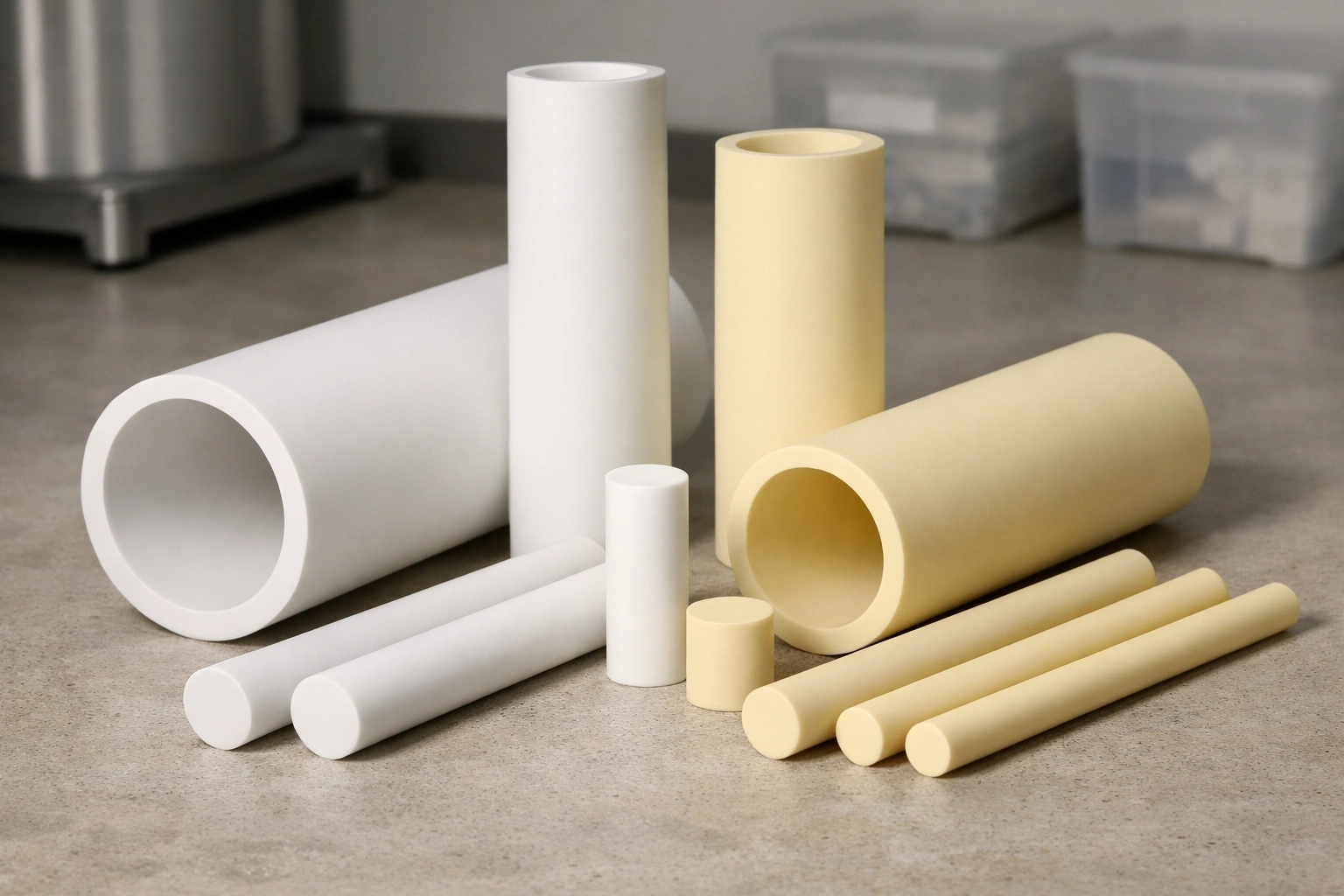
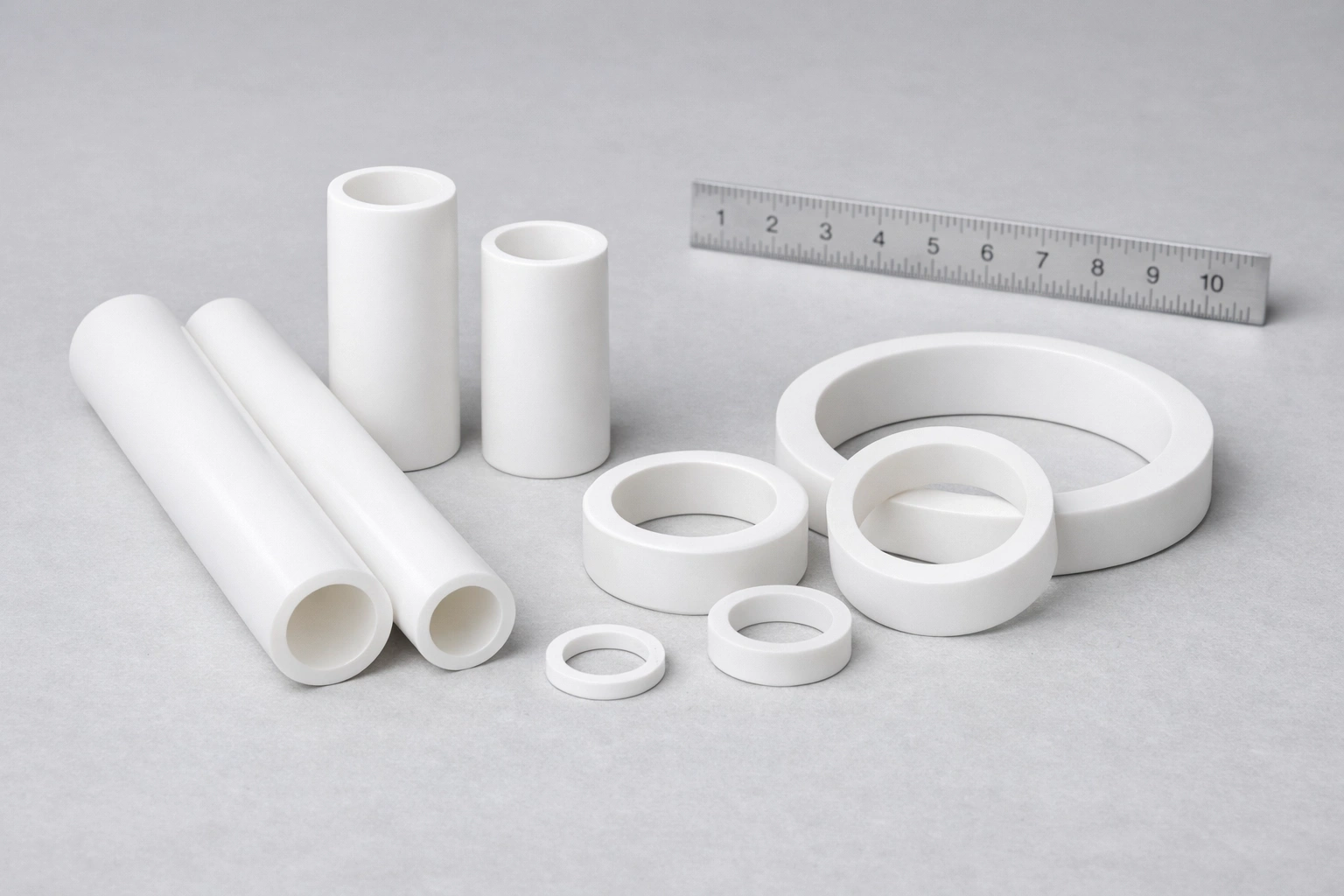
Hydrogen-resistant alumina tube selection hinges on purity, density, grain-boundary chemistry, validated permeation, and standards-based aging.
Hydrogen-resistant alumina tube compatibility is driven by ≥99.7% Al₂O₃, density ≥3.92 g/cm³, optimized MgO/SiO₂, low permeation at temperature, and qualification to AMS and DIN requirements.
This guide organizes hydrogen-resistant alumina tube decisions into measurable inputs, acceptance tests, and field-life projections.
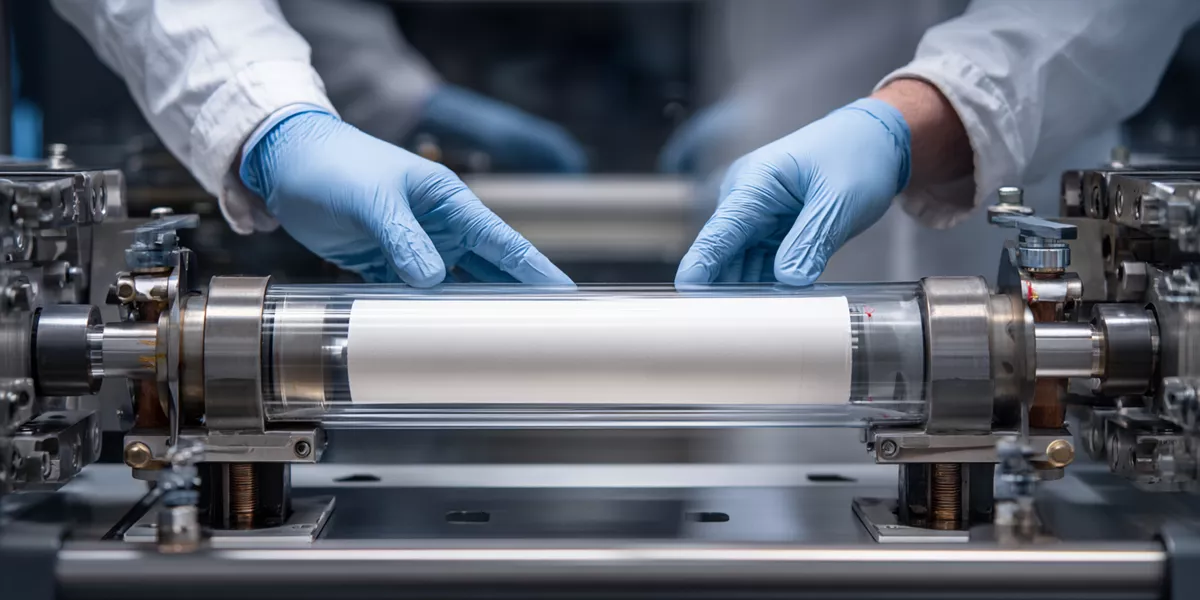
What Hydrogen Embrittlement Mechanisms Affect Hydrogen-Resistant Alumina Tube Performance?
Hydrogen-resistant alumina tube embrittlement intensifies when high temperature activates reduction reactions and fast boundary diffusion.
Hydrogen-resistant alumina tube failures concentrate at grain boundaries where hydroxyl formation, impurity reduction, and precipitates reduce cohesion and enable intergranular fracture.
Hydrogen-resistant alumina tube degradation starts with H₂ dissociation on active sites, rapid atomic hydrogen ingress1, and Al–O–Al bond disruption into Al–OH groups. Silicate or transition-metal oxides2 reduce, leaving metallic inclusions that stress boundaries. Fine-grain microstructures3 multiply boundary area and accelerate cumulative damage; coarser grains reduce total attack front while maintaining acceptable strength.
Hydrogen-resistant alumina tube thermodynamic and kinetic parameters summary
| Specification (units) | Conservative target for hydrogen-resistant alumina tube | Mechanistic intent |
|---|---|---|
| Activation energy for H diffusion (kJ/mol) | 120–180 | Calibrate Arrhenius life models |
| Impurity reduction onset (°C) | 800–1200 | Prevent Fe/Si-bearing precipitates |
| Boundary glass phase (vol%) | ≤1.0 | Limit fast-diffusion films |
| Grain size (μm), severe H₂ | 15–25 | Reduce boundary area per volume |
Thermodynamic analysis of hydrogen reduction reactions with alumina impurities
Hydrogen-resistant alumina tube stability depends on suppressing reducible oxides. In reducing atmospheres above 800–900 °C, iron oxides and silicate phases become thermodynamically favorable for reduction. Reaction products nucleate along grain edges, forming stress raisers. Specifying tight Fe₂O₃ and SiO₂ limits reduces driving force for boundary decohesion and extends hydrogen-resistant alumina tube service life.
Hydrogen diffusion kinetics through grain boundaries versus crystalline lattice
Hydrogen-resistant alumina tube transport is dominated by boundary pathways when glassy films persist. Disorder and larger free volume raise diffusivity by orders of magnitude compared with crystalline corundum. Managing additive content and promoting boundary crystallinity restricts the fast lane, so hydrogen-resistant alumina tube penetration rates align with slow lattice diffusion rather than percolating boundaries.
Hydroxyl formation mechanisms disrupting Al–O–Al bond networks
Hydrogen-resistant alumina tube boundaries accumulate Al–OH terminations when atomic hydrogen reacts with bridging oxygen. This reduces bond density, increases local free volume, and lowers cohesive strength. Progressive hydroxylation forms weak planes that channel intergranular cracking, so hydrogen-resistant alumina tube processing must minimize vacancy generators and catalytic impurity phases.
How Does Density Threshold ≥3.90 g/cm³ Enable Hydrogen-Resistant Alumina Tube Impermeability?
Hydrogen-resistant alumina tube impermeability improves sharply when open porosity pathways collapse near 3.90–3.92 g/cm³.
Hydrogen-resistant alumina tube targets of ≥3.92 ± 0.02 g/cm³ remove pore connectivity, cutting permeation by 100–500× versus 3.85–3.88 g/cm³ materials.
Hydrogen-resistant alumina tube gas-barrier behavior4 is controlled by pore topology5. Closed pores are benign for transport; connected pores dominate flux. Verification requires Archimedes density, mercury intrusion porosimetry, and at-temperature permeation tests to confirm the barrier function holds under operating conditions.
Density, porosity, and permeation mapping for hydrogen-resistant alumina tube
| Property | 3.85–3.88 g/cm³ | 3.90–3.95 g/cm³ | Acceptance for hydrogen-resistant alumina tube |
|---|---|---|---|
| Total porosity (%) | 5–6 | 2–3 | ≤3 preferred |
| Open porosity (% of total) | 30–50 | ≤5 | ≤5 mandatory |
| H₂ permeation at T (cm³·cm/(cm²·s·Pa)) | 8–40×10⁻¹⁴ | <5×10⁻¹⁴ | <5×10⁻¹⁴ target |
| MT10% strength loss at 1500–1600 °C (h) | 800–1,400 | 2,400–4,200 | ≥2,400 desired |
Mercury intrusion porosimetry quantifying open versus closed porosity fractions
Hydrogen-resistant alumina tube lots below threshold admit measurable mercury volume at moderate pressures, proving interconnected throats. Lots at ≥3.91 g/cm³ show negligible intrusion, indicating sealed paths. Routine intrusion screening keeps hydrogen-resistant alumina tube wall microstructures within impermeable topology.
Archimedes density measurement methodology per ASTM C373
Hydrogen-resistant alumina tube density is computed from dry, saturated, and suspended masses to yield reliable ρ_bulk. Production SPC with ±0.02 g/cm³ bands flags drift, prompting sintering-profile review before permeation rises. Consistent metrology ensures hydrogen-resistant alumina tube shipments meet barrier expectations.
Manufacturing process capability for achieving target density specifications
Hydrogen-resistant alumina tube made via HIP after pressureless sintering reliably reaches 3.93–3.97 g/cm³ and equalizes density across the wall. Where HIP is unavailable, tighter powder PSD, optimized burnout, and MgO-aided sintering can pass 3.92 g/cm³, but hydrogen-resistant alumina tube permeation must be tested at temperature to confirm equivalence.
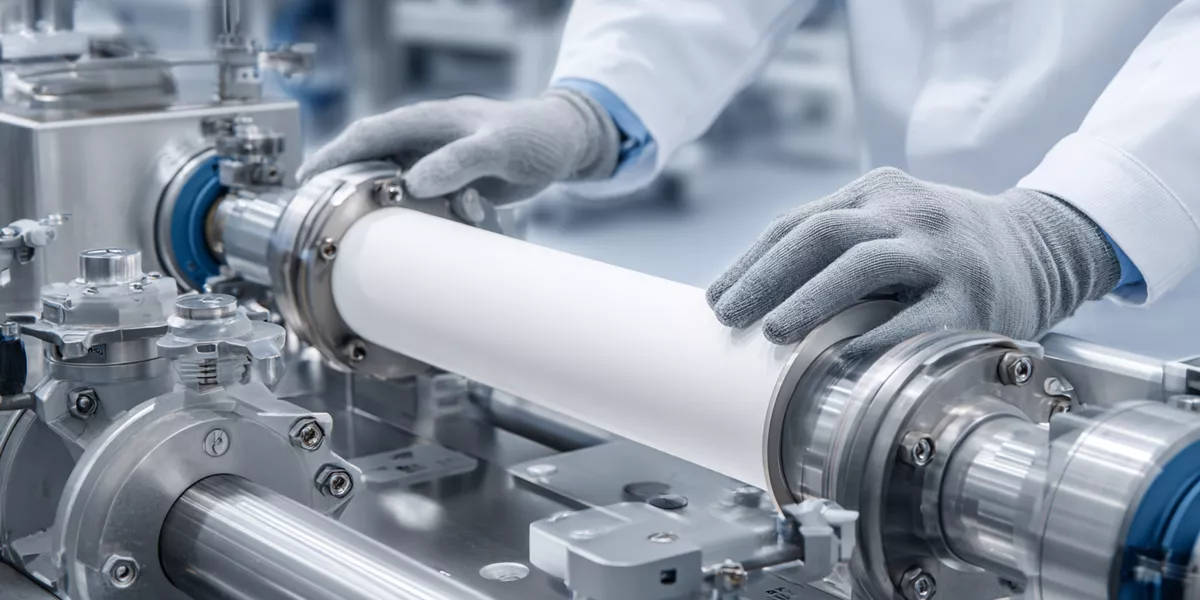
How Do SiO₂/MgO Additives Affect Hydrogen-Resistant Alumina Tube Degradation?
Hydrogen-resistant alumina tube densifies with controlled additives; excessive glassy boundaries undermine resistance.
Hydrogen-resistant alumina tube compositions in the 0.18–0.28 wt% total-additive window close pores while avoiding continuous glass films.
Hydrogen-resistant alumina tube processing uses eutectic liquids to accelerate mass transport. Residual boundary glass remains a fast-diffusion phase unless composition, soak, and cooling promote crystallization or disrupt continuity. MgO pins grains and supports densification; SiO₂ must be limited to avoid film networks.
Additive window and performance outcomes for hydrogen-resistant alumina tube
| Class | Total additives (wt%) | MgO (wt%) | SiO₂ (wt%) | Density (g/cm³) | Grain size (μm) | Strength retained after 2,000 h H₂ at 1550 °C (%) |
|---|---|---|---|---|---|---|
| Ultra-pure | <0.10 | <0.03 | <0.05 | 3.88–3.91 | 18–30 | 92–96 |
| Optimized high-purity | 0.18–0.28 | 0.08–0.15 | 0.10–0.18 | 3.91–3.94 | 8–15 | 85–92 |
| Standard high-purity | 0.30–0.45 | 0.12–0.20 | 0.18–0.28 | 3.89–3.93 | 5–12 | 78–86 |
| Standard grade | 0.50–0.80 | 0.20–0.35 | 0.30–0.50 | 3.86–3.90 | 3–8 | 65–78 |
Eutectic liquid phase formation enabling lower-temperature densification
Hydrogen-resistant alumina tube gains densification leverage from Al₂O₃–SiO₂–CaO and Al₂O₃–MgO eutectics that activate below pure-alumina temperatures. These liquids shrink pore networks effectively. The residual-film risk requires time–temperature control and restricted SiO₂ to prevent continuous boundary coverage in hydrogen-resistant alumina tube microstructures.
Hydrogen diffusion coefficient differences between glassy boundaries and crystalline alumina
Hydrogen-resistant alumina tube performance degrades when boundary films elevate hydrogen diffusivity by 10²–10³× over corundum. Discontinuity in films and partial crystallization restore the slow pathway and yield higher strength retention under prolonged exposure for hydrogen-resistant alumina tube parts.
Property trade-off optimization balancing density, chemistry, and mechanical performance
Hydrogen-resistant alumina tube optimization balances three levers: cross the density threshold, minimize continuous glass, and select grain size for duty. For severe 100% H₂ at ≥1600 °C, slightly coarser grains with clean boundaries often extend life despite modestly lower baseline strength.
What AMS 7902 and DIN EN 60672 Standards Validate Hydrogen-Resistant Alumina Tube Quality?
Hydrogen-resistant alumina tube quality is evidenced by hydrogen aging retention, composition limits, density floors, and permeation thresholds.
Hydrogen-resistant alumina tube compliance with AMS 7902 and DIN EN 60672 anchors procurement to measurable criteria and consistent test setups.
Hydrogen-resistant alumina tube suppliers should document retained strength after hydrogen exposure, SEM boundary integrity, composition by XRF, density and porosity, thermophysical properties, and at-temperature permeability. These artifacts convert hydrogen risk into pass/fail gates.
Standards alignment matrix for hydrogen-resistant alumina tube
| Criterion | Threshold | Method | Intent |
|---|---|---|---|
| Retained strength after 500 h in 100% H₂ at 1400 °C | ≥85% | AMS 7902 + ASTM C1161 | Screen embrittlement |
| Grain-boundary separation depth | None >2 μm | SEM per AMS 7902 | Limit decohesion |
| Weight change after H aging | <0.10% | AMS 7902 | Detect reduction/volatilization |
| Al₂O₃ purity / Fe₂O₃ / SiO₂ | ≥99.5 / <0.01 / <0.20 wt% | ASTM C1109 | Control reducible phases |
| Bulk density | ≥3.88–3.90 g/cm³ | ASTM C373 | Ensure impermeability |
| Closed porosity | >90–95% | ASTM D4404 | Block gas channels |
| Thermal expansion (25–1000 °C) | 7.5–8.5×10⁻⁶/°C | ISO 7991 | Fit assemblies |
| Thermal conductivity at 1000 °C | >24 W/m·K | ASTM E1461 | Manage gradients |
| H permeability at T | <1×10⁻¹³ to <5×10⁻¹⁴ | ISO 15105-1 / ASTM F73 | Verify barrier |
AMS 7902 hydrogen exposure testing protocols and acceptance criteria
Hydrogen-resistant alumina tube specimens aged 500 h in 100% H₂ at 1400 °C must retain strength, limit mass change, and show no deep boundary separation. These requirements simulate severe service and create a consistent acceptance line for hydrogen-resistant alumina tube procurement.
DIN EN 60672 physical and mechanical property specifications
Hydrogen-resistant alumina tube materials that meet DIN EN 60672 baseline properties provide density, expansion, conductivity, and high-temperature strength floors. These floors complement hydrogen-specific tests and lower integration risk in hot-zone assemblies.
Hydrogen permeation measurement standards per ISO 15105-1 and ASTM F73
Hydrogen-resistant alumina tube permeability measured at operating temperature links microstructure to function. Acceptance below 10⁻¹³ cm³·cm/(cm²·s·Pa) and preferably near 5×10⁻¹⁴ matches long-life goals in hydrogen service.
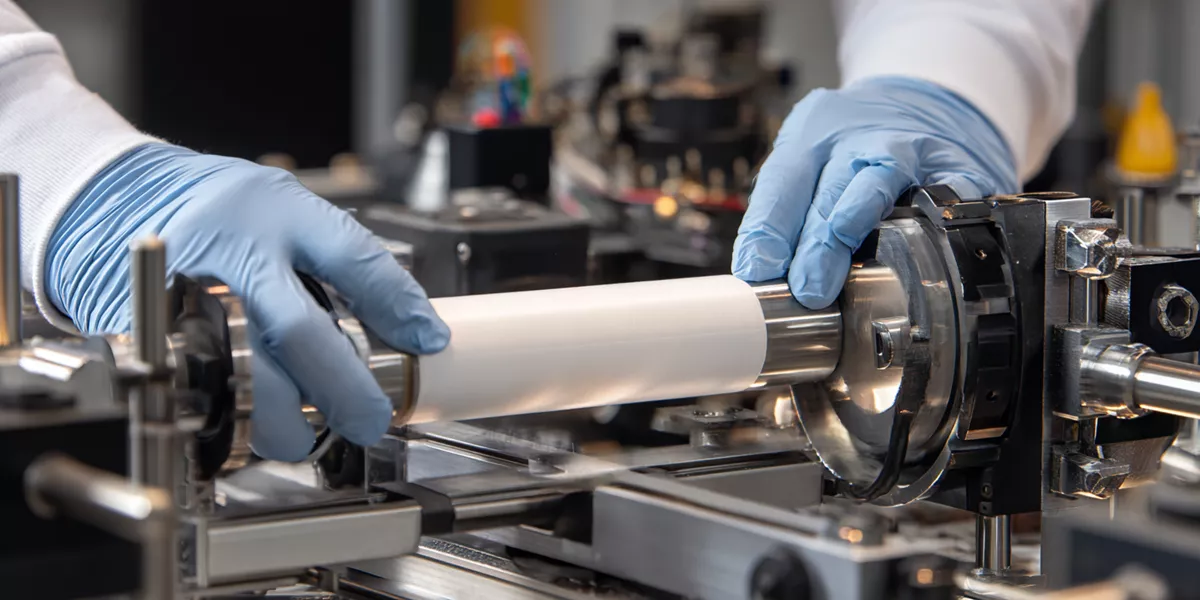
How Does Accelerated Aging Validate Hydrogen-Resistant Alumina Tube Service Life?
Hydrogen-resistant alumina tube aging at 1600–1700 °C for 250–1000 h compresses field exposure into actionable timelines.
Hydrogen-resistant alumina tube life prediction improves when diffusion and reduction mechanisms are modeled with separate activation energies.
Hydrogen-resistant alumina tube programs require clean gas, uniform temperature, and multi-technique post-analysis. Decision rules convert test outputs into reformulation or release actions for production lots.
Accelerated program targets and field correlations for hydrogen-resistant alumina tube
| Variable | Accelerated target | Field equivalence | Decision gate |
|---|---|---|---|
| Temperature (°C) | 1650 | ~1500 | Set Arrhenius span |
| Time (h) | 500 | 3,000–5,000 | Establish life window |
| Retained strength (%) | ≥85 | ≤15% loss at service | Pass to production |
| Weight change (%) | ≤0.08 | Stability indicator | Flag reduction risk |
| Correlation (R²) | 0.84–0.87 (dual-mechanism) | — | Planning fidelity |
Arrhenius acceleration principles for compressed time-temperature testing
Hydrogen-resistant alumina tube damage proceeds via diffusion-controlled ingress and reaction-controlled impurity reduction. Fitting separate activation energies reduces projection error, enabling tighter replacement planning and inventory control for hydrogen-resistant alumina tube fleets.
Multi-technique characterization quantifying degradation mechanisms
Hydrogen-resistant alumina tube evaluations should combine mass, dimensions, flexural strength, toughness, SEM, XRD, and SIMS hydrogen profiling. Convergent evidence identifies the dominant mechanism and the most effective composition or process adjustment.
Larson–Miller parameter validation correlating laboratory and field performance
Hydrogen-resistant alumina tube results mapped with Larson–Miller parameters produce comparable life points across temperatures. Validated constants translate lab time to field time and standardize procurement language for hydrogen-resistant alumina tube replacements.
Hydrogen Atmosphere Compatibility Requirements for Representative Applications
Hydrogen-resistant alumina tube requirements vary by duty cycle; specifications must scale with temperature and H₂ fraction.
Hydrogen-resistant alumina tube success depends on matching purity, density, and life targets to each application envelope.
Application envelopes and targets for hydrogen-resistant alumina tube
| Application | Operating temperature (°C) | H₂ concentration (%) | Required purity (Al₂O₃, %) | Required density (g/cm³) | Max strength loss after test (%) | Service life target (h) |
|---|---|---|---|---|---|---|
| Bright annealing | 1000–1200 | 5–20 (N₂ balance) | ≥99.3 | ≥3.85 | <20 after 3,000 h | 4,000–6,000 |
| Sintering metals | 1200–1500 | 50–100 | ≥99.5 | ≥3.88 | <15 after 2,000 h | 3,000–5,000 |
| Tungsten processing | 1400–1700 | 100 | ≥99.7 | ≥3.92 | <12 after 2,000 h | 4,000–7,000 |
| Refractory metals | 1600–1800 | 100 | ≥99.8 | ≥3.95 | <10 after 1,500 h | 3,500–6,000 |
Decision Framework for Specifying Hydrogen-Resistant Alumina Tube
Hydrogen-resistant alumina tube selection improves with explicit condition-to-spec routing.
Hydrogen-resistant alumina tube acceptance gates convert test results into reformulation or release actions.
Condition mapping and corrective actions for hydrogen-resistant alumina tube
| Condition | Specify / verify | Primary check | Corrective action |
|---|---|---|---|
| T >1500 °C and 100% H₂ | ≥99.7% Al₂O₃; ρ ≥3.92 g/cm³ | 500 h H aging; ≥85% retention | Reduce additives <0.25 wt%; raise purity |
| Strength loss 15–20% with microcracks | Reformulate additive package | SEM boundary audit | Adjust SiO₂↓, MgO within window |
| Weight change >0.10% with precipitates | Fe₂O₃ <0.005%; SiO₂ capped | XRF lot control | Purify powders; re-fire |
| Penetration >1.5 mm at 1,500 h | Increase density to ≥3.94 g/cm³ | ASTM F73 at T | Consider ultra-pure + HIP |
Expert Insight: Practical Trade-Offs in Hydrogen-Resistant Alumina Tube
Hydrogen-resistant alumina tube design crosses a narrow ridge between densification and boundary cleanliness. Compositions near 99.6–99.7% Al₂O₃ with 0.20–0.25 wt% total additives often clear the density threshold without establishing continuous glass films. In severe hydrogen at ≥1600 °C, slightly coarser grains reduce total boundary area and extend life despite lower initial strength. Dual-mechanism life models, not single-Q fits, align lab aging to field hours and stabilize maintenance planning.
Conclusion
Anchor hydrogen-resistant alumina tube specs in purity, density, boundary control, permeation limits, and hydrogen aging.
FAQ
How do hydrogen-resistant alumina tube grain-boundary properties affect high-temperature performance?
Boundary chemistry and continuity control hydrogen ingress and decohesion. Discontinuous, crystalline boundaries outlast glassy films by lowering diffusivity and resisting reduction. Coarser grains reduce total boundary area and slow cumulative damage at ≥1500 °C.
What commercial criteria should guide supplier selection for hydrogen service tubes?
Require documented density (ASTM C373), permeation at temperature (ASTM F73 or ISO 15105-1), hydrogen aging retention (AMS 7902/DIN EN 60672 alignment), and XRF chemistry limits for reducible oxides. Request lot-level data, not brochures, and specify acceptance bands in the PO.
What is the practical procurement process for custom hydrogen-duty tubes?
Provide drawings with wall, ID/OD, length, and straightness; declare hydrogen temperature and gas purity; set purity and density minima; define acceptance tests. Order pilot samples for accelerated aging before releasing production. Implement incoming inspection for density and dimensions.
How does alumina compare with zirconia or silicon nitride in hydrogen atmospheres?
Alumina offers strong high-temperature stability and predictable permeation control via density. Zirconia has higher fracture toughness but can show hydrogen-related conductivity changes and reduction of stabilizers. Silicon nitride provides lower thermal expansion and good toughness, yet lower upper-temperature stability versus high-purity alumina in 100% hydrogen.
References:
-
Learn how atomic hydrogen ingress impacts material degradation, especially in hydrogen environments, to better understand failure mechanisms and prevention strategies. ↩
-
Learn how transition-metal oxides influence hydrogen resistance and degradation, crucial for understanding advanced material performance and durability. ↩
-
Exploring the impact of fine-grain microstructures can provide insights into enhancing material strength and durability. ↩
-
Learn how gas-barrier behavior impacts material performance and discover methods to evaluate and optimize barrier properties for demanding applications. ↩
-
Learn how pore topology influences hydrogen resistance and gas transport in alumina tubes, crucial for understanding advanced barrier materials. ↩