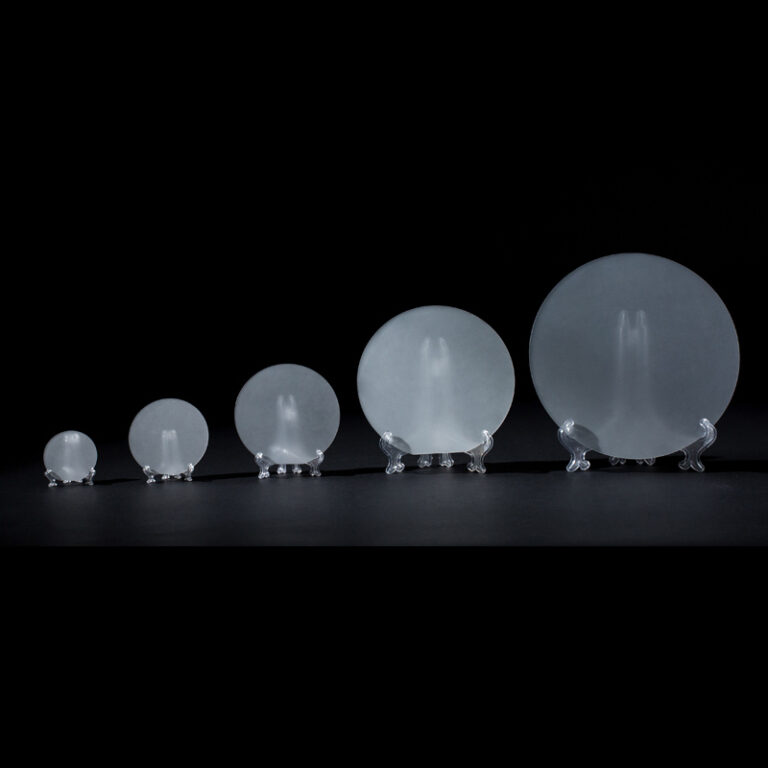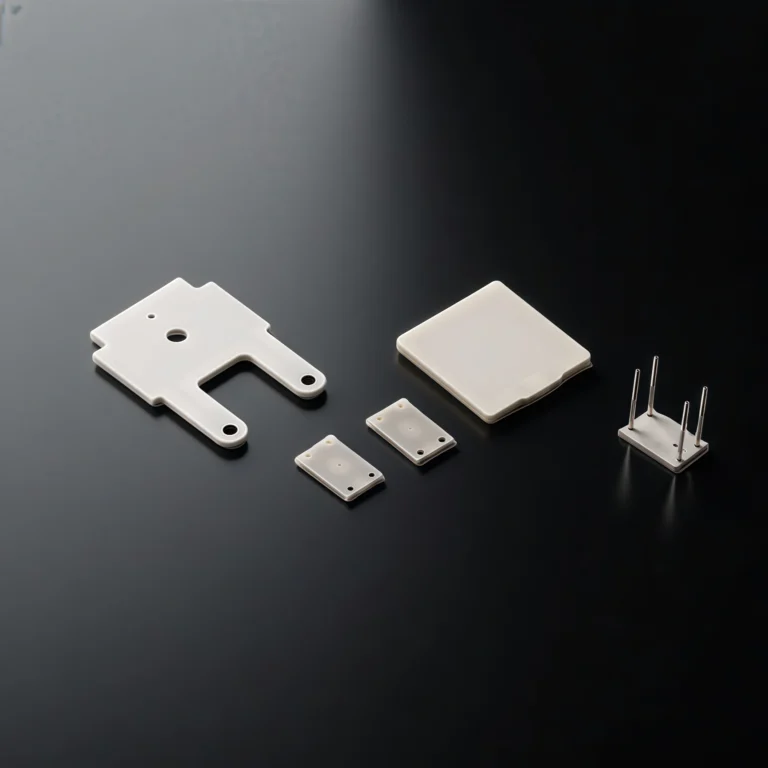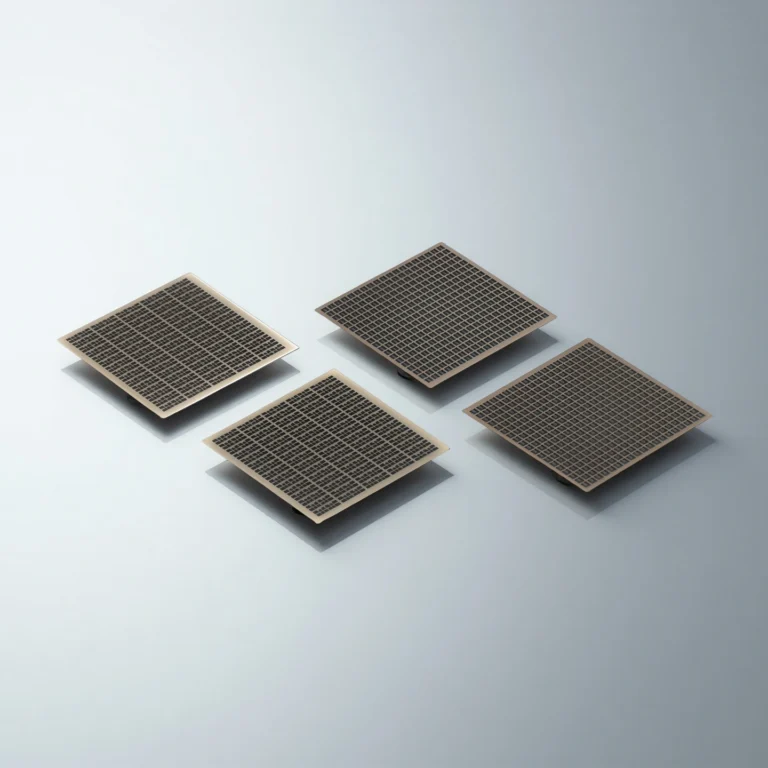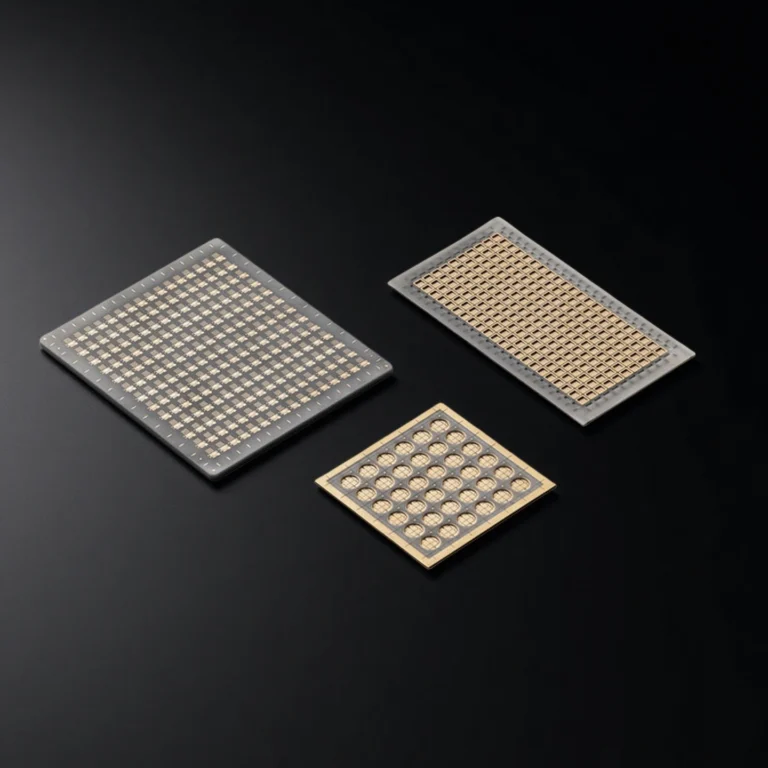
Aluminum Nitride Heat-Spreader Plate for High-Power LED and UV LED Packages

The aluminum nitride heat sink plate is designed for thermal management in high-power electronic applications. It offers high thermal conductivity, electrical insulation, and dimensional stability, making it suitable for LED packaging, laser diode cooling, and IGBT module mounting.

Catalogue No. AT-AN-SR001
Material  Aluminum Nitride
Thermal Conductivity ≥170 W/m·K
Coefficient of thermal expansion ~4.5–5.0 × 10⁻⁶ /K
Dielectric strength ~10–15 kV/mm
24H Standard Dispatch
Small Batch Support OEM
Factory Direct
Expert Engineering Support

Aluminum Nitride Heat-Spreader Plates are flat, electrically insulating ceramic plates engineered to distribute heat from chips, dies and module assemblies into a larger surface area, lowering thermal resistance between the active device and the system heatsink. They are used in compact power electronics, LED modules, laser diode packages and RF amplifiers where high thermal flux and limited footprint require a stable, high-conductivity ceramic layer.

AlN Heat Spreader Plate Benefits

  • High heat spreading efficiency
    The aluminum nitride heat-spreader plate provides high in-plane thermal conductivity, helping to equalize temperature across the device footprint and reduce local hotspots in SiC, GaN and IGBT modules.

  • Electrical insulation with matched CTE
    The plate combines strong dielectric strength with a thermal expansion coefficient close to semiconductor materials, supporting high-voltage isolation without introducing excessive thermo-mechanical stress.

  • Stable flatness for die attach and TIM layers
    Precisely ground surfaces and controlled flatness enable uniform solder layers or thermal interface materials, helping to minimize voids and contact resistance in power modules and laser submounts.

  • Design flexibility for complex module layouts
    The aluminum nitride heat-spreader plate can be machined with fixing holes, cavities, steps, reference edges and metallized pads to follow the package layout and assembly process.

  • Support for metallized interfaces
    When required, aluminum nitride heat-spreader plates can be supplied with metallization schemes compatible with common die attach solders and baseplate bonding processes.

Aluminum Nitride Heat Spreader Plate

Property Content Unit Unit ALN-170 ALN-200 ALN-230
Basic Properties Color gray light yellow light yellow
Density g/cm³ 3.2-3.3 3.2-3.3 3.2-3.3
Surface Roughness μm 0.2-0.75 0.2-0.75 0.2-0.8
Camber length ‰ ≤3‰ ≤3‰ ≤3‰
Hardness HV 1100 1100 1100
Thermal Properties Max Operating Temperature °C 1100 1100 1100
Thermal Conductivity W/m·K 170-190 190-220 220-230
Coefficient of Thermal Expansion 10⁻⁶/K(20-400°c) 4-5 4-5 4-5
Coefficient of Thermal Expansion 10⁻⁶/K(400-800°c) 5-6 5-6 5-6
Mechanical Properties Flexural Strength MPa 300-400 350-450 400-500
Tensile Strength MPa 200-300 250-350 280-380
Compressive Strength MPa 2000-3000 2200-3200 2500-3500
Electrical properties Dielectric Constant at 1MHz 8-9 8-9 8-9
Dielectric strength KV/mm ≥15 ≥15 ≥15
Volume resistivity 20℃ Ω.cm ≥1014 ≥1014 ≥1014


AlN heat spreader plate Specifications

Aluminum Nitride Heat Sink Plate
Item no. Size Thickness Metal electrode Coated metal Side wrapping treatment
AT-AN-SR001 Customizable Customizable tungsten Nickel gold or nickel yes


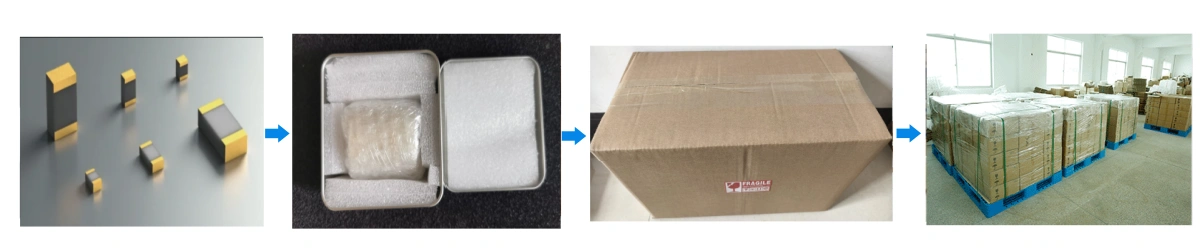
Aluminum Nitride Heat Spreader Plate Packaging

  • Aluminum nitride heat-spreader plates are separated by cavity blister trays or rigid plastic separators to avoid edge chipping and surface contact.

Aluminum Nitride Heat Spreader Plate Packaging

Aluminum Nitride Heat-Spreader Plate Applications

  • Power Electronics Modules – SiC / GaN / IGBT

    ✅Key Advantages

    1. Junction temperature control
    Aluminum nitride heat-spreader plates help lower device junction temperature by spreading heat laterally before it enters the baseplate or heatsink, reducing thermal gradients in SiC and IGBT modules.
    2. Reduced thermal resistance path
    By placing a high-conductivity AlN plate directly under the die, the effective thermal resistance from junction to case can be reduced compared with alumina or organic insulators at similar thickness.
    3. Improved thermal cycling robustness
    The thermal expansion of aluminum nitride is closer to silicon and SiC, which supports stable solder joints and encapsulant interfaces under repeated power cycling.

    ✅ Problem Solved

    A mid-power industrial drive module running at several kilowatts replaced a thicker alumina insulator with a thinner aluminum nitride heat-spreader plate of similar area. Thermal simulations and measurements indicated a junction-to-case thermal resistance reduction in the range of 15–25%, and steady-state junction temperature dropped by around 10–15°C at rated load. This improvement enabled the customer to keep the existing heatsink design while extending projected module lifetime and maintaining a comfortable margin against thermal derating limits.

  • High-Power LED, UV LED and Laser Diode Packages

    ✅Key Advantages

    1. Local hotspot reduction in LED arrays
    Aluminum nitride heat-spreader plates distribute heat under dense LED or UV LED arrays, limiting local temperature peaks in multi-die layouts.
    2. Support for stable optical output
    Lower and more uniform junction temperature helps maintain lumen output and wavelength stability over the operating range of high-power LED and laser diode modules.
    3. Compact package thermal design
    High in-plane thermal conductivity allows designers to keep compact optical packages while managing the heat flow into downstream heatsinks.

    ✅ Problem Solved

    In a UV LED curing head, a compact array of high-power emitters was initially mounted to a metal-core board and showed significant temperature variation across the array. After introducing an aluminum nitride heat-spreader plate between the LED dies and the board, thermal mapping showed peak junction temperature reduced by around 8–12°C and temperature variation across the active area reduced by several degrees. This improvement supported longer continuous operation at the same optical output level and improved uniformity on the cured area.

  • RF and Microwave /5G Power Amplifier Modules

    ✅Key Advantages

    1. Enhanced thermal path under RF dies
    Aluminum nitride heat-spreader plates provide a stable thermal interface beneath RF power transistors and MMICs, reducing thermal impedance to the module base.
    2. Compatibility with high-frequency structures
    AlN offers a combination of thermal conductivity and dielectric properties that support RF power amplifier layouts in compact modules.
    3. Stable operation in base station environments
    Robust thermal spreading helps maintain device temperature in 5G and microwave amplifiers exposed to varying loads and ambient conditions.

    ✅ Problem Solved

    An RF power module designer for a telecom base station platform introduced an aluminum nitride heat-spreader plate beneath the active die region and over the machined metal base. Thermal analysis predicted, and bench measurements confirmed, a reduction in case temperature on the hottest devices by approximately 5–8°C at rated output power. This provided additional margin for operation under high ambient temperatures and contributed to improved long-term stability of gain and linearity.

AlN Heat-Spreader Plate Usage Instructions

  • Installation

    Verify that mounting surfaces, baseplates and associated TIM or solder layers are clean, flat and free from burrs before placing the aluminum nitride heat-spreader plate.
    Align the plate according to the drawing, using orientation marks, machined edges or holes to match the module layout.
    When using solder or braze layers, follow the recommended heating profile to limit thermal shock to the plate and the surrounding structure.
    Apply uniform pressure during die attach or baseplate bonding so that the aluminum nitride heat-spreader plate seats evenly without bending.

  • In-use considerations

    Ensure that the aluminum nitride heat-spreader plate remains within the specified operating temperature window and that thermal cycling rates follow the agreed profile.
    Avoid point loads or local mechanical pressure from screws or clamps directly on the ceramic, and use washers or clamps designed to distribute force.
    Monitor device junction temperature and case temperature as part of validation to confirm that the target thermal performance is achieved.

  • Storage

    Store aluminum nitride heat-spreader plates in their original trays or similar holders to avoid edge contact and scratching.
    Keep parts in a clean, dry environment, away from conductive dust or corrosive atmospheres.
    Avoid stacking loose plates or mixing different thicknesses in the same compartment.

  • Cleaning

    Use soft, lint-free wipes or compressed clean air to remove loose particles from the surfaces.
    If wet cleaning is necessary, use suitable non-aggressive solvents and ensure the plates are fully dried before assembly.
    Avoid abrasive cleaning methods that could alter surface roughness or introduce micro-cracks in the aluminum nitride heat-spreader plate.

  • Common misuse points and handling solutions

    1. Issue: Cracks from uneven clamping
    If the aluminum nitride heat-spreader plate is clamped at a single point or over-tightened, local stress can cause edge cracks. Use torque-controlled fasteners and clamping hardware designed to apply even pressure over a wider area, and verify assembly torque in the work instructions.

    2. Issue: Voids in solder layers under the plate
    Incomplete wetting or contaminated surfaces can lead to voids that increase thermal resistance. Review surface cleanliness, solder alloy selection and reflow profile; introduce process controls such as pre-cleaning or flux adjustment to keep void levels within the design target.

    3. Issue: Dimension or flatness out of tolerance after assembly
    Overly aggressive thermal cycles or mismatched baseplate materials can distort the structure. Confirm that the aluminum nitride heat-spreader plate specifications, base materials and assembly process have compatible thermal expansion and heating profiles, and adjust design or process if measurements after assembly are outside the agreed limits.

FAQ – Aluminum Nitride Heat-Spreader Plate

  1. Q: When should I use an aluminum nitride heat-spreader plate instead of a standard alumina plate?
    A: An aluminum nitride heat-spreader plate is selected when higher thermal conductivity and closer CTE matching to Si or SiC are needed, for example in compact power modules, high-power LED arrays or laser diode packages where junction temperature margin is limited.
  2. Q: Can aluminium nitride heat-spreaders plates be supplied with custom shapes and holes?
    A: Yes, aluminum nitride heat-spreader plates can be machined with custom outer shapes, mounting holes, slots, pockets and stepped surfaces according to customer drawings, as long as minimum wall thickness and machining clearances are respected.
  3. Q: Are metallized aluminium nitride heat-spreader plates available?
    A: Aluminum nitride heat-spreader plates can be delivered with metallization patterns for die attach, baseplate attach or bonding pads, using metallization stacks compatible with common solder and brazing systems specified in the project.
  4. Q: What flatness can be achieved on the active surface of an AlN heat-spreader plate?
    A: For critical die attach areas on an AlN heat-spreader plate, flatness targets such as ≤0.02 mm over the active surface are common, with final values defined in the technical specification and validated during sampling.
  5. Q: How does an aluminium nitride heat-spread plate affect junction-to-case thermal resistance?
    A: By adding a high-conductivity ceramic layer with well-controlled thickness and contact quality, an aluminum nitride heat-spreader plate can reduce junction-to-case thermal resistance compared with thicker or lower conductivity insulators, especially when combined with optimized solder or TIM layers.
  6. Q: What information is needed to quote a custom aluminum nitride heat-spreader plate?
    A: For a custom aluminum nitride heat-spreader plate, typical information includes material grade, length, width and thickness, tolerances, flatness targets, machining details, metallization pattern and stack, inspection requirements and estimated annual usage.

Product Reviews – Aluminum Nitride Heat-Spreader Plate

  • ⭐️⭐️⭐️⭐️⭐️
    We introduced Aluminum Nitride Heat-Spreader Plates from ADCERAX in a SiC inverter project and saw a clear reduction in junction temperature compared with our previous ceramic stack. The parts arrived with consistent flatness and dimensions, which made the die attach process much easier to control.
    -- Michael R., Power Module Design Engineer – DriveTech Systems GmbH
  • ⭐️⭐️⭐️⭐️⭐️
    For our industrial power supplies we needed a supplier that could handle several custom sizes of AlN heat-spreader plate with moderate monthly volumes. ADCERAX as a factory supplier has been able to match the drawings, keep delivery times stable and maintain a predictable cost level across multiple projects.
    -- Laura S., Purchasing Manager – Northwave Power Electronics Inc.
  • ⭐️⭐️⭐️⭐️⭐️
    The aluminum nitride heat-spreader plates have performed well under our RF power cycling tests. The combination of thermal performance and flatness under the dies helped us keep device temperatures within our target window without changing the existing heatsink design.
    -- Kenji T., RF Module Development Lead – Horizon RF Solutions
  • ⭐️⭐️⭐️⭐️⭐️
    Our UV LED curing heads use custom-shaped Aluminum Nitride Heat-Spreader Plates to manage heat under dense emitter arrays. The ability to specify mounting holes, alignment features and metallized pads in one part has simplified our mechanical and thermal design at the same time.
    -- Elena M., Optoelectronics Product Manager – Lumicore Instruments
customize size

Customize– Aluminum Nitride Heat-Spreader Plate

Aluminum nitride heat-spreader plates are typically specified to match existing module envelopes and die layouts, so each project often requires tailored geometry and surfaces. Custom aluminum nitride heat-spreader plates can be configured to match both thermal design targets and assembly constraints.

  • Outer dimensions: length and width windows, commonly 5–80 mm, with thickness from 0.3–3.0 mm

  • Dimensional tolerances: standard ±0.1 mm on length/width, tighter tolerances such as ±0.05 mm available on request

  • Flatness and parallelism: flatness targets for die attach areas, for example ≤0.02 mm across the active area

  • Edge and corner features: chamfers, radiused edges, alignment notches or orientation marks

  • Machining details: mounting holes, countersinks, slots, grooves, pockets and steps for multi-level assemblies

  • Metallization pattern: pads for die attach, baseplate bonding areas, solderable or bondable pads, isolated tracks or ground planes

  • Metallization stack: options such as Mo/Mn + Ni, W + Ni, or direct Cu and barrier layers adapted to the joining process

  • Surface finish: lapped or ground surfaces for critical thermal interfaces, standard fired surfaces for non-critical faces

Related Products

ADCERAX - Your Trusted Advanced Ceramics Manufacturing Partner

Direct factory manufacturing with comprehensive ceramic materials expertise and global supply capabilities

Direct Factory Manufacturing

China-based ceramic materials production facility with state-of-the-art equipment

Engineering Team

Experienced professionals in advanced ceramics applications and custom design

Quality Control

Strict quality control standards for technical ceramics manufacturing and quality management

Global Supply Chain

Serving customers worldwide with technical ceramics and rapid response

24/7 Technical Support

Round-the-clock support for ceramic components inquiries and technical assistance

500+ Satisfied Customers

Trusted by global customers for advanced ceramic materials and precision components

Get in touch with us

Our team will be happy to respond to you in less than 24 hours.

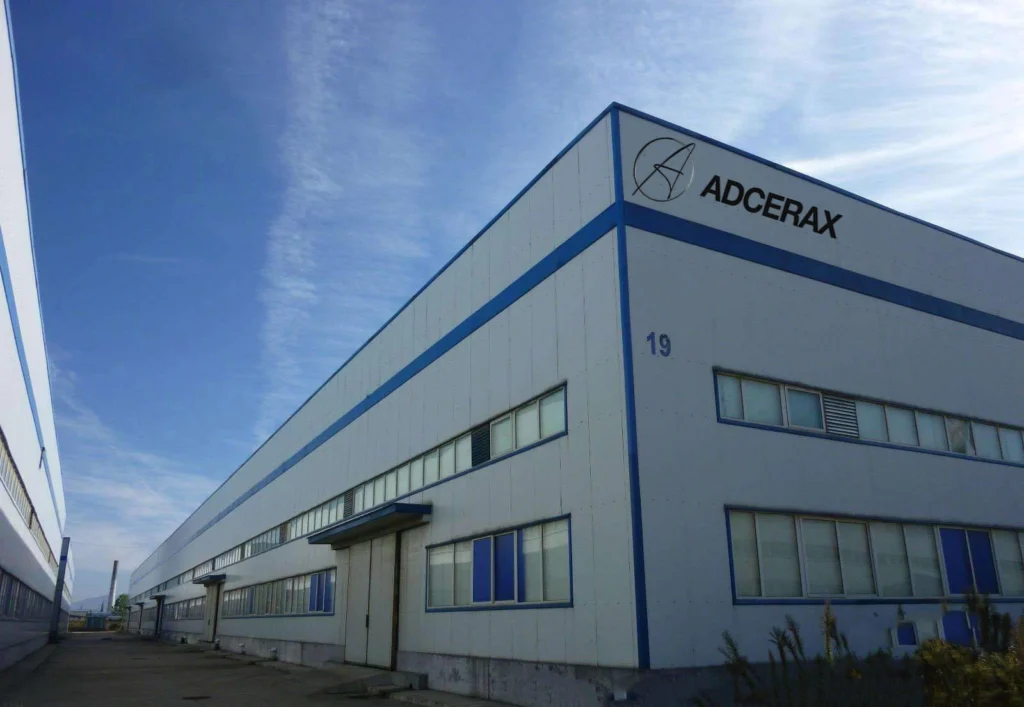
Adcerax's factory

Quick Quotation

*Our team will answer your inquiries within 24 hours.

*Your information will be kept strictly confidential.

Ready to Solve Your Engineering Challenge?

Partner with ADCERAX for reliable, high-performance advanced ceramic solutions. Our engineers are ready to discuss your project.

E-mail

info@adcerax.com

Phone

+(86) 0731-74427743 | WhatsApp: +(86) 19311583352

Response Time

Within 24 hours

Quick Quote

The more details you provide, the faster we can quote.

*We respond within 24 hours. All inquiries are confidential.

Download Catalog

Get Your Custom Sulution

The more details you provide, the faster we can respond.

customize size

*We respond within 24 hours. All inquiries are confidential.

Download Catalog