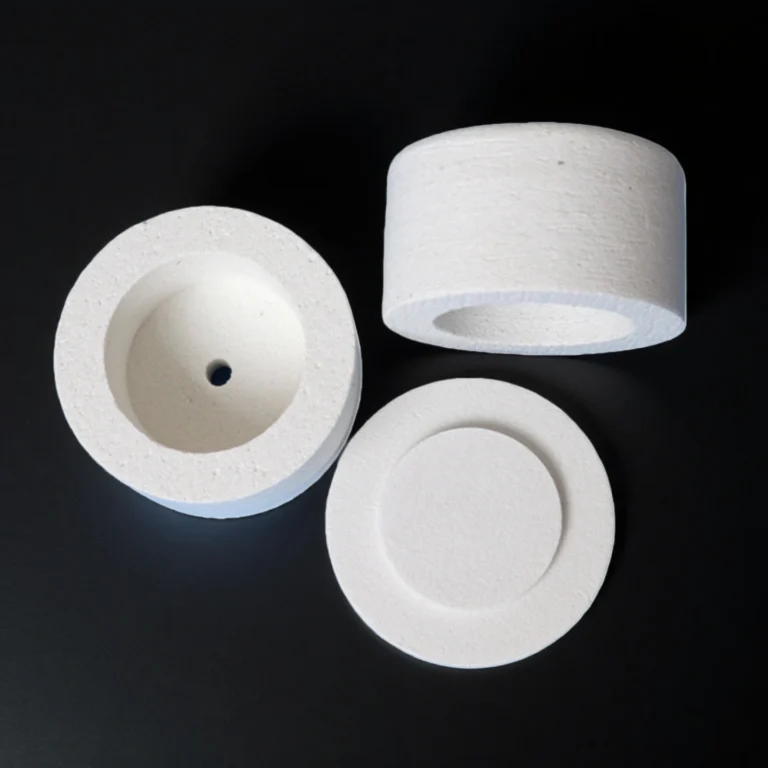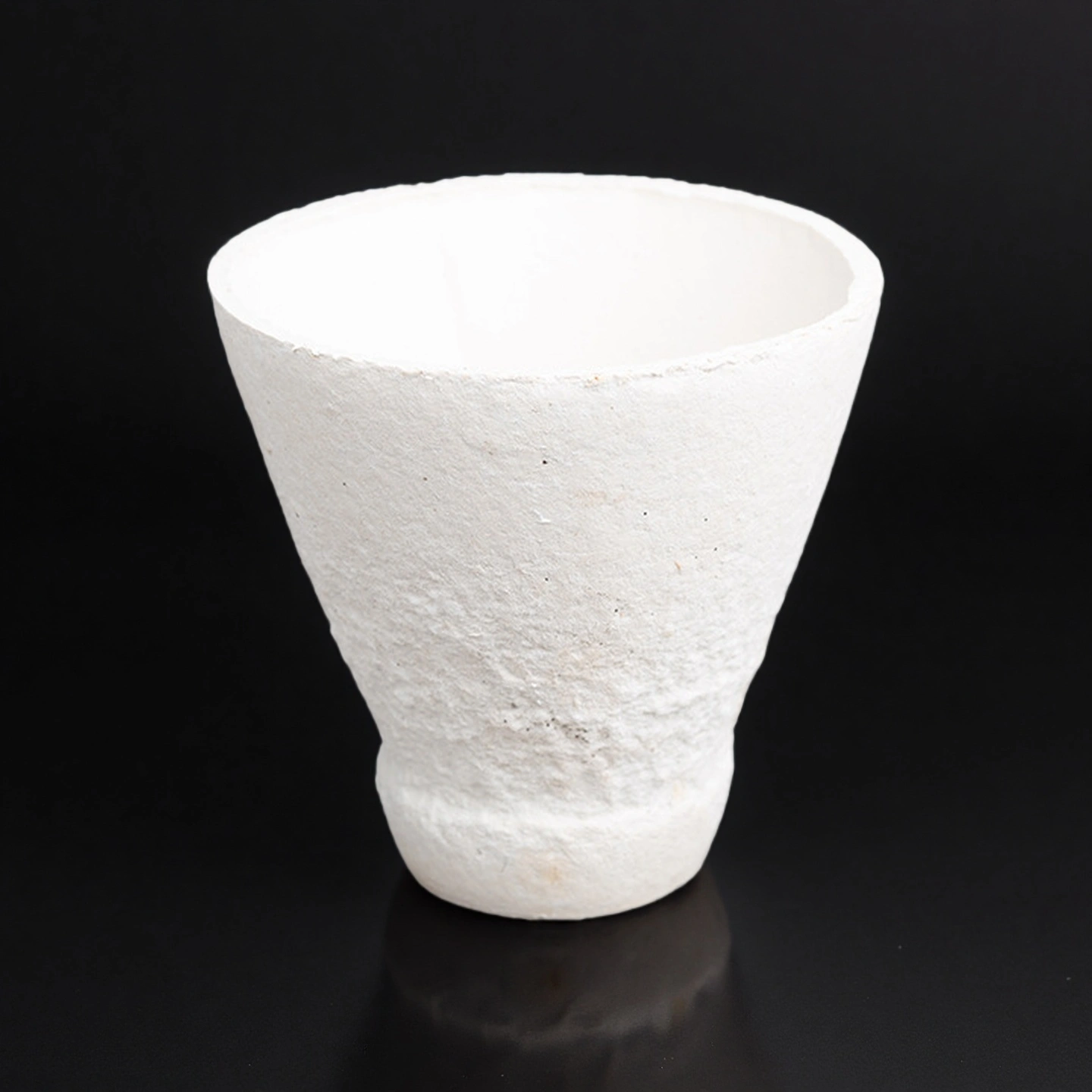
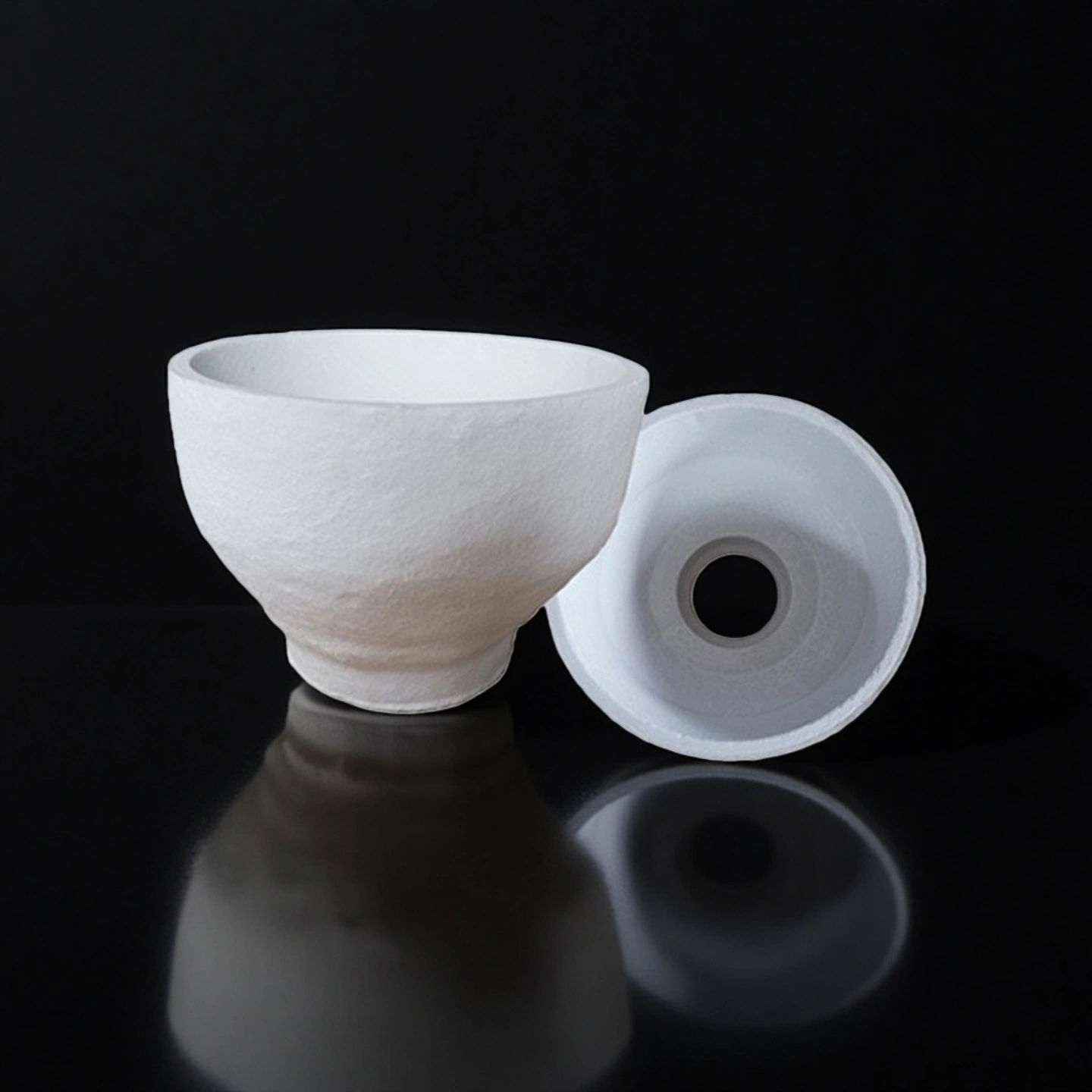
Aluminum Silicate Ceramic Pouring Cup for Investment Casting Gating Systems

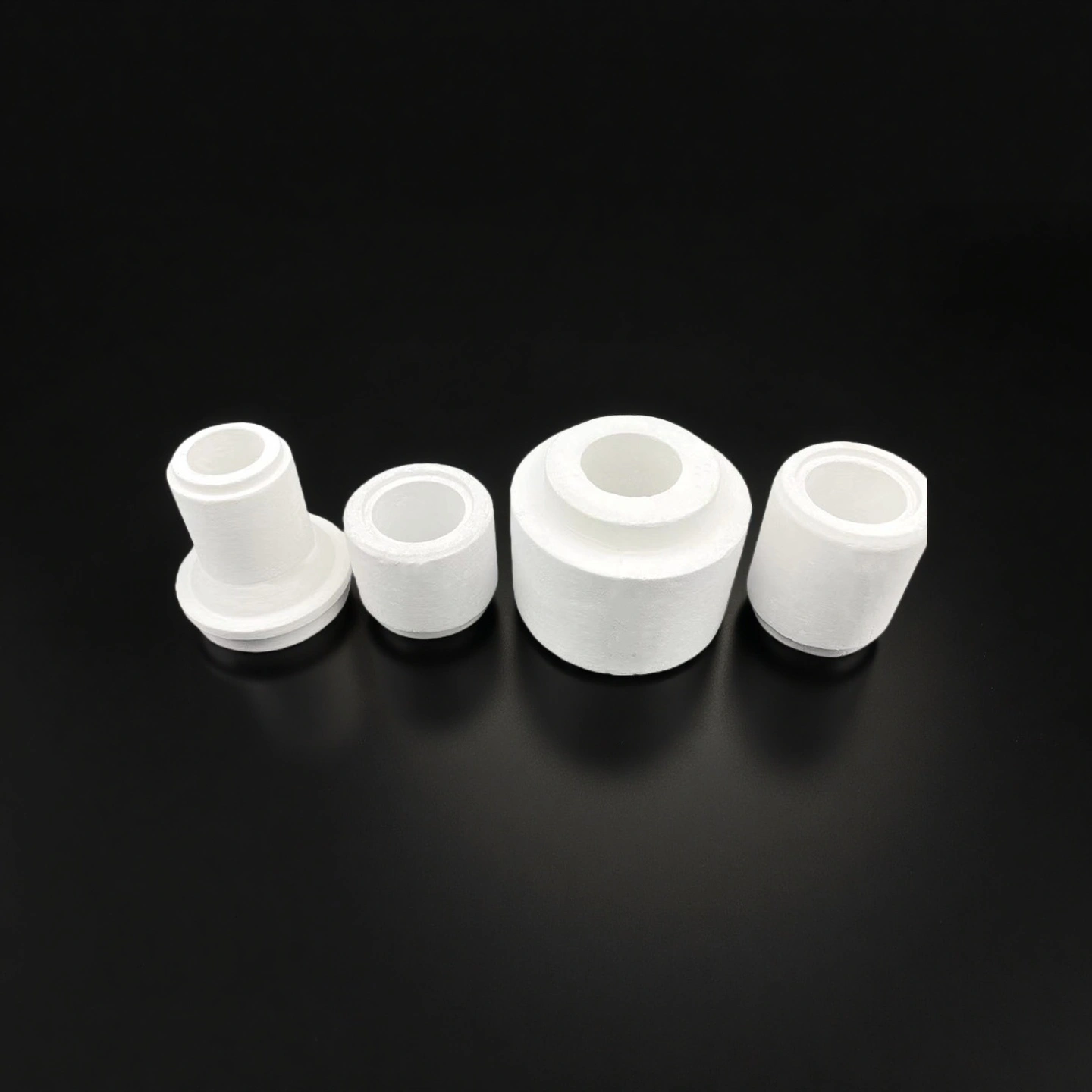
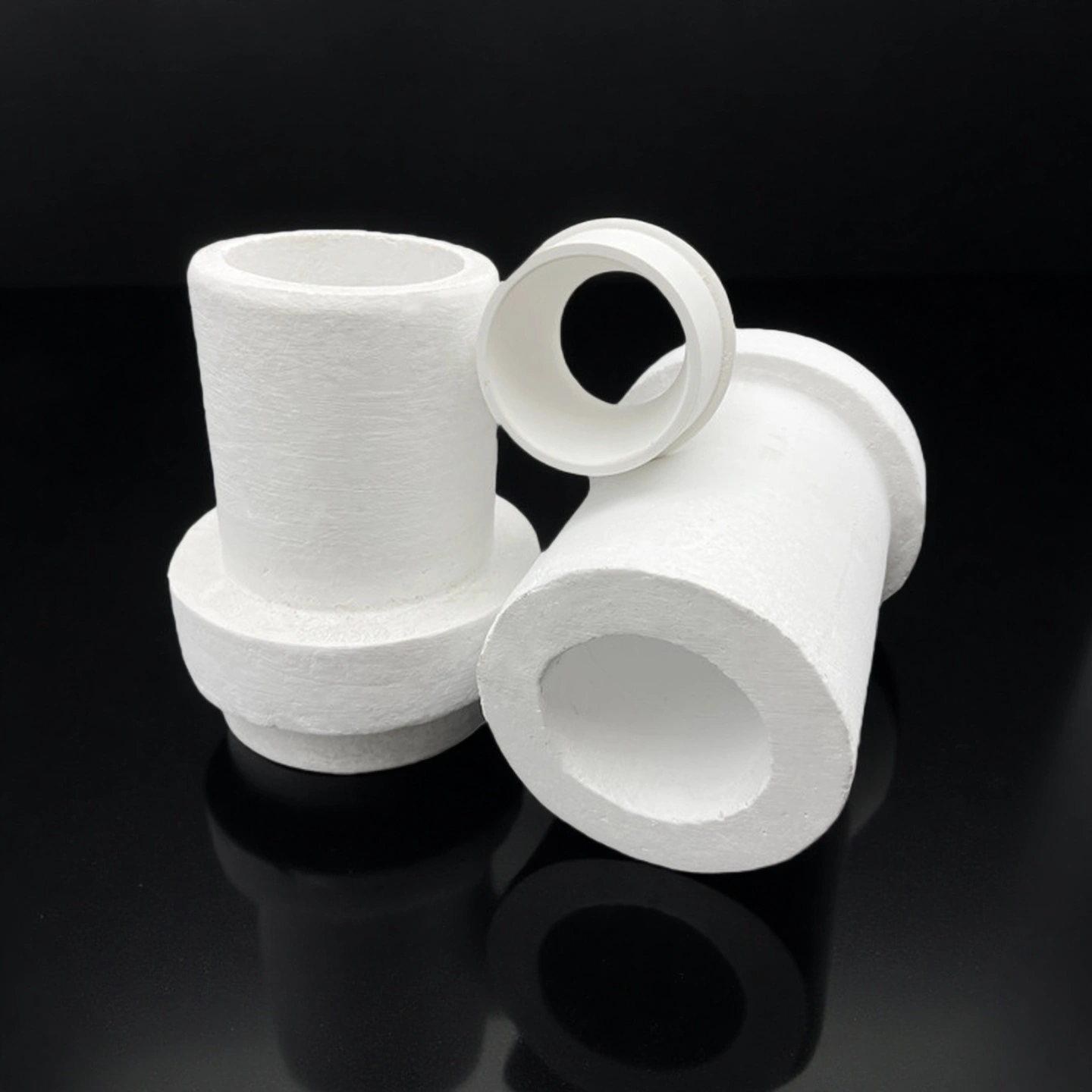
ADCERAX supplies aluminum silicate ceramic pouring cups in standard conical and shoe shapes with typical A/B/C dimensions from about 70–270 mm, and also produces fully custom pouring cup geometries according to customer drawings, including special filter pockets and sprue interfaces for specific gating systems.

Catalogue No. AT-GSL-JK1004
Material Al2O3+SiO₂
Maximum Operating Temperature 1650 °C
Thermal Conductivity at 1000 °C ≈ 0.18 W/m·K
Flexural Strength (room temperature) >10 MPa
24H Standard Dispatch
Small Batch Support OEM
Factory Direct
Expert Engineering Support

Aluminum silicate ceramic pouring cups are refractory gating components used at the top of the down sprue in investment casting to receive molten metal, calm the flow, and feed it into the ceramic shell with reduced turbulence and inclusions. Typical high alumina silicate formulations withstand up to around 1650 °C and are suitable for steel, stainless steel and high-temperature alloy castings.

Aluminum Silicate Pouring Cup Benefits

  • Stable geometry in the shell – The rigid aluminum silicate body bonds well to the ceramic shell, providing a stable impact zone for molten metal and lowering the chance of shell breakage at the sprue entrance.

  • Controlled flow and fewer inclusions – The smooth inner surface and optimized cup profile help reduce re-oxidation, air entrainment and slag roll-in, supporting lower inclusion-related scrap in precision castings.

  • Thermal shock resistance at casting temperatures – High alumina silicate compositions combine refractoriness up to 1650 °C with good thermal shock resistance, enabling repeated preheat–pour cycles without premature cup cracking.

  • Compatibility with investment mold materials – Aluminum silicate and mullite-based cups are designed to be chemically compatible with typical silica and alumina-based investment shell systems, minimizing reaction at the metal–mold interface.

  • Adaptable to multiple alloys – One pouring cup material can support ferrous, nickel-aluminium, bronze-based and selected superalloy systems, which simplifies consumable management in multi-alloy foundries.


Aluminum Silicate Pouring Cup Properties

Aluminum Silicate Ceramic
Parameter Typical Value Notes / Industrial Relevance
Material Composition Al₂O₃–SiO₂ Silicate-based refractory matrix
Working Temperature 1000–1400°C Depends on density & grade
Bulk Density 200–400 kg/m³ Lower density = better insulation
Thermal Conductivity 0.08–0.22 W/m·K Measured at 600–1000°C
Linear Shrinkage ≤ 2% at 1000–1300°C Ensures dimensional stability
Cold Crushing Strength 0.6–1.2 MPa Resistance to mechanical load
Thermal Shock Resistance High Suitable for rapid heating cycles
Water Absorption Low Supports clean installation
Available Thickness 10–75 mm Custom thickness on request
Available Forms Boards, blocks, custom-machined shapes Supports OEM engineering designs


Aluminium Silicate Pouring Cup Specification
Aluminum Silicate Pouring Cup Standard Sizes

Square Aluminium Silicate Pouring Cup
Item Top Dia (mm) Bottom Dia (mm) Height(mm) Thickness (mm)
AT-GSL-JK1004 50 30 110 8
AT-GSL-JK1005 105 55 90 8
AT-GSL-JK1006 105 50 150 8
AT-GSL-JK1007 110 40 100 8
AT-GSL-JK1008 110 60 120 8
AT-GSL-JK1009 110 80 60 8
AT-GSL-JK1010 140 40 125 8
AT-GSL-JK1011 140 45 180 8
AT-GSL-JK1012 155 50 155 8
AT-GSL-JK1013 170 70 175 8
AT-GSL-JK1014 180 38 160 8


Aluminium Silicate Ceramic Pouring Cup Packaging

  • Each aluminum silicate ceramic pouring cup is separated in carton cells or layered cardboard trays to avoid impact and edge chipping during transport.
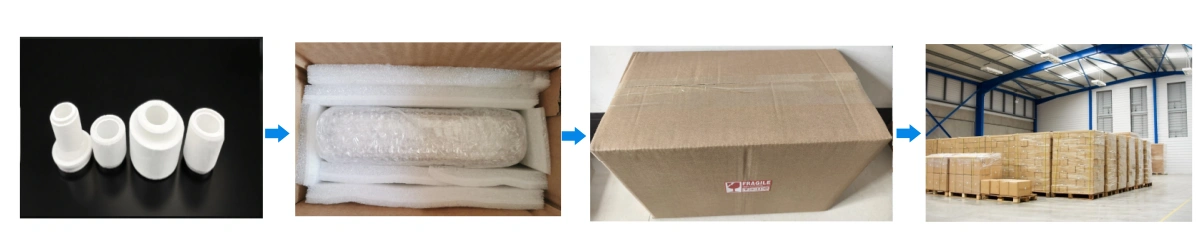
Aluminium Silicate Ceramic Pouring Cup Packaging

Applications of Aluminum Silicate Pouring Cups

  • Automotive & Commercial Vehicle Investment Casting

    ✅Key Advantages

    1. Stable cup for high-speed automotive pouring
    Provides a consistent impact zone for molten steel during automated pouring, supporting stable flow at typical automotive production rates.

    2. Reduced inclusion defects in suspension and steering parts
    Smooth-walled aluminum silicate pouring cups help lower slag and sand inclusions in control arms and knuckles, supporting tighter fatigue requirements.

    3. Support for multi-cavity wax trees
    Compatible with large multi-cavity trees, allowing higher metal head without excessive shell erosion at the cup interface.

    ✅ Problem Solved

    A mid-size automotive investment foundry producing steel suspension components reported around 10–12 % scrap due to inclusions and shell damage at the sprue entry. After redesigning the gating system with high alumina silicate ceramic pouring cups and integrated ceramic foam filters, the inclusion-related scrap rate dropped to around 4–5 %, and emergency rework batches were significantly reduced over a 6-month period. The more stable pouring cup also allowed a small increase in pouring speed without additional shell breakage, improving overall throughput.

  • Industrial Pumps, Valves & Process Equipment Casting

    ✅Key Advantages

    1. Improved cleanliness for sealing surfaces
    Aluminum silicate ceramic pouring cups support cleaner steel and stainless steel castings, which is critical for pump and valve sealing faces.

    2. High-temperature alloy compatibility
    The 1650 °C operating range and alumina–silicate chemistry make the cup suitable for chromium and molybdenum alloy steels commonly used in chemical and power applications.

    3. Dimensional consistency over large batches
    Isostatic or high-pressure pressing of the aluminum silicate pouring cups provides repeatable cup geometry, supporting consistent shell build and metal flow from batch to batch.

    ✅ Problem Solved

    A European pump and valve caster supplying the energy sector found that small shell failures near the sprue caused frequent repairs and dimensional risks on critical sealing faces. Switching from a simple sand basin to high alumina silicate ceramic pouring cups with defined impact areas and better shell adhesion reduced sprue-area shell repairs by more than 50 % over one year. At the same time, the rate of customer returns related to internal inclusions fell noticeably, supporting stricter lifecycle guarantees on high-pressure equipment.

  • Turbine, Energy and High-Temperature Alloy Investment Casting

    ✅  Key Advantages

    1. Support for superalloy and stainless shells
    Aluminum silicate pouring cups can be formulated as mullite or alumina–silicate blends compatible with investment shells used for turbine blades and hot-section components.

    2. Controlled metal entry for thin-walled parts
    The cup geometry helps control the first impact of high-temperature alloys, reducing shell scouring in thin airfoil and nozzle segments.

    3. Flexible profiles for multi-alloy product ranges
    Custom cup designs allow foundries to adapt the same aluminum silicate base material to several turbine and energy alloy families with different tree designs.

    ✅  Problem Solved

    In the industrial gas turbine segment, one foundry using complex tree assemblies for stainless and nickel-based components experienced shell wash at the top of the sprue during fast pours. By implementing deeper aluminum silicate ceramic pouring cups with reinforced impact zones and an integrated filter shelf, shell wash complaints on these assemblies largely disappeared across several thousand pours. The change supported a measurable reduction in scrap on critical flow-path components and gave the process engineers more flexibility when adjusting superheat and pour rate.


Aluminum Silicate Ceramic Pouring Cup Usage Guide

  • Installation

    1. Check each aluminum silicate ceramic pouring cup for visible cracks or chips before waxing to the down sprue.
    2. Position the cup concentrically on the wax down sprue, ensuring the bottom outlet is fully aligned with the sprue axis.
    3. Use appropriate wax or adhesive patterns to seal the joint between the pouring cup and wax sprue to avoid shell penetration or gas pockets.
    4. Incorporate grooves or keying features on the cup outer surface into the shell build to improve mechanical lock with the investment shell.

  • Use during shell building and pouring

    1. Build the investment shell over the cup and tree according to your standard slurry and stucco schedule, ensuring proper coverage of the cup exterior.
    2. Follow the recommended drying and preheat cycle to minimize thermal gradients in the cup–shell assembly before pouring.
    3. During pouring, maintain the specified metal head height relative to the cup rim and avoid direct impact on exposed shell edges.

  • Storage

    1. Store aluminum silicate ceramic pouring cups in a dry, covered area, away from water and condensation.
    2. Keep cups in original cartons or trays until use, and avoid stacking loose cups directly on top of each other to prevent cracking.

  • Cleaning and handling

    1. Remove dust or small chips from the inner surface before assembly by gentle air blow or soft brush.
    2. Do not attempt to reuse cups that have been through a full casting cycle; these are designed as single-use refractory components.

  • Common misuse and fixes

    1. Problem – Cup cracked after shell preheat
    Likely causes: rapid temperature ramp, local moisture, or mechanical stress from fixtures.
    Fix: reduce heating rate through the critical 200–800 °C range, ensure shells are fully dried, and check support tooling for localized points of contact.

    2. Problem – Shell breakage at cup–shell interface during pouring
    Likely causes: cup not properly keyed into the shell, impact zone too close to unsupported shell edge.
    Fix: increase shell thickness around the cup, add grooves or roughness to the cup surface to improve bonding, and adjust pouring angle to direct flow into the cup basin.

    3. Problem – Excess slag and inclusions observed above gates
    Likely causes: cup profile not suitable for alloy, insufficient filter area, high turbulence.
    Fix: re-design the aluminum silicate ceramic pouring cup geometry (deeper basin, longer outlet) and integrate a ceramic foam filter seat to stabilize flow.

FAQ – Aluminum Silicate Ceramic Pouring Cup

  1. Q: What alloys can an aluminum silicate ceramic pouring cup handle?
    A: Aluminum silicate ceramic pouring cups are typically used for ferrous, stainless steel, nickel-aluminium and bronze-based alloys, and in some cases selected superalloys, as long as the casting temperature stays within the 1650 °C operating range.
  2. Q: Why choose aluminum silicate ceramic pouring cups instead of a simple sand basin?
    A: Compared with a sand basin, an aluminum silicate ceramic pouring cup provides a defined impact area, smoother internal surface and better shell support, which together help reduce shell erosion, inclusions and scrap in investment castings.
  3. Q: What is the typical service temperature of an aluminum silicate pouring cup in investment casting?
    A: Typical high alumina silicate pouring cups are rated for operating temperatures around 1650 °C, which is suitable for most steel and stainless steel investment casting processes.
  4. Q: How does the coefficient of thermal expansion of the aluminum silicate ceramic pouring cup affect the shell?
    A: The 8–9×10⁻⁶ /K coefficient of thermal expansion is chosen to be compatible with common silica- and alumina-based investment shell systems, helping to minimize differential expansion stresses at the cup–shell interface during preheat and pouring.
  5. Q: Can ADCERAX aluminum silicate ceramic pouring cups be customized for double-cup or up-sprue designs?
    A: Yes, aluminum silicate ceramic pouring cups can be manufactured as single or double-cup designs with up-sprue features to control air escape and reduce re-oxidation inclusions in specific gating layouts.
  6. Q: Are aluminum silicate ceramic pouring cups compatible with ceramic foam filters?
    A: Aluminum silicate ceramic pouring cups can include dedicated filter pockets or seats that hold ceramic foam filters, creating a combined cup–filter system for improved removal of slag and non-metallic inclusions.

Aluminum Silicate Ceramic Pouring Cup Reviews

  • ⭐️⭐️⭐️⭐️⭐️
    We switched to aluminum silicate ceramic pouring cups on our stainless steel investment casting line, and the inclusion-related scrap on suspension brackets dropped noticeably. ADCERAX supported the gating redesign and the new aluminum silicate pouring cup profile works well on both manual and automated pouring.
    -- David H., Foundry Manager, NorthRiver Castings Ltd.
  • ⭐️⭐️⭐️⭐️⭐️
    Our pump casting plant runs several alloys, and the aluminum silicate ceramic pouring cups from ADCERAX gave us a common solution across multiple trees. The dimensional consistency and stable performance made supplier consolidation easier without pushing us into extreme minimum order quantities.
    -- Elena Rossi, Purchasing Director, EuroFlow Pumps S.p.A.
  • ⭐️⭐️⭐️⭐️⭐️
    We use customized high alumina silicate ceramic pouring cups for turbine and energy parts. The deeper basin and reinforced impact zone in the ADCERAX design have reduced shell wash on critical airfoil clusters, and the integration with foam filters has supported our cleanliness targets.
    -- Michael Turner, Senior Casting Engineer, TurbineTech Components Inc.
  • ⭐️⭐️⭐️⭐️⭐️
    After introducing aluminum silicate ceramic pouring cups across our steel investment casting shops, we saw a better balance between flow control and shell stability. The ADCERAX factory was able to match our existing cup dimensions and add identification marks, which helps with traceability on the shop floor.
    -- Sophie Martin, Operations Manager, Atlantic Precision Castings
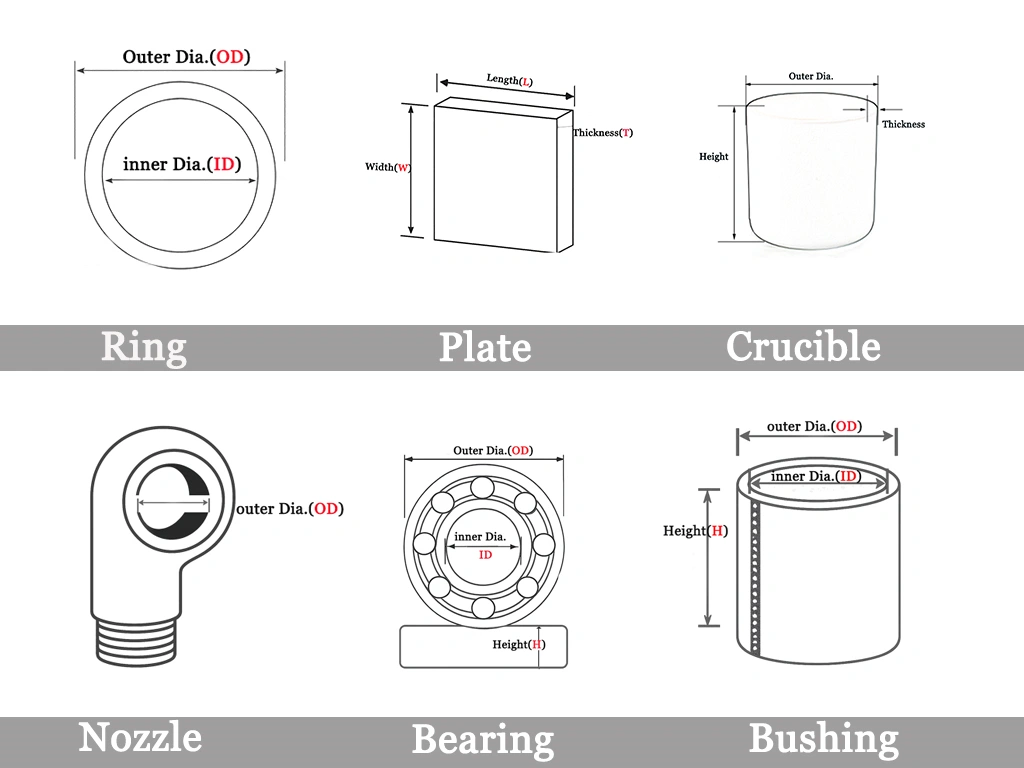
customize size

Custom Aluminum Silicate Ceramic Pouring Cups

Aluminum silicate ceramic pouring cups from ADCERAX can be tailored to match existing gating systems or new process designs, including dimensions, cup profiles and filter integration for specific alloys and casting sizes.

  • Outer dimensions (A/B/C) – You can define overall height, top diameter and bottom connection diameter, with typical tolerances down to about ±1.0 mm on standard sizes and tighter limits on critical interfaces.

  • Cup profile and shape – You can choose between conical, shoe-type, offset inlet, deep basin or double-cup designs to match your preferred gating layout and pouring practice.

  • Sprue connection details – You can specify a straight or tapered outlet to the wax down sprue, groove or key patterns for locking into the shell, and lifting or alignment holes to simplify handling.

  • Filter pocket design – You can add a recess for ceramic foam filters or screen filters, including seat diameter, pocket depth and support shoulders to keep the filter stable during shell building and pouring.

  • Wall thickness and local reinforcement – You can set nominal wall thickness and request thicker impact zones, ribs or collars where higher metal head pressure or mechanical load is expected.

  • Material grade – You can select a standard high alumina silicate body or request mullite-rich and other aluminum silicate variants for more severe thermal shock or higher pouring temperature ranges.

  • Surface finish – You can choose between as-pressed, lightly ground or deburred gate edges and outer surfaces to support your shell build process and reduce risk of inclusions from loose particles.

Related Products

ADCERAX - Your Trusted Advanced Ceramics Manufacturing Partner

Direct factory manufacturing with comprehensive ceramic materials expertise and global supply capabilities

Direct Factory Manufacturing

China-based ceramic materials production facility with state-of-the-art equipment

Engineering Team

Experienced professionals in advanced ceramics applications and custom design

Quality Control

Strict quality control standards for technical ceramics manufacturing and quality management

Global Supply Chain

Serving customers worldwide with technical ceramics and rapid response

24/7 Technical Support

Round-the-clock support for ceramic components inquiries and technical assistance

500+ Satisfied Customers

Trusted by global customers for advanced ceramic materials and precision components

Get in touch with us

Our team will be happy to respond to you in less than 24 hours.

Adcerax's factory

Quick Quotation

*Our team will answer your inquiries within 24 hours.

*Your information will be kept strictly confidential.

Ready to Solve Your Engineering Challenge?

Partner with ADCERAX for reliable, high-performance advanced ceramic solutions. Our engineers are ready to discuss your project.

E-mail

info@adcerax.com

Phone

+(86) 0731-74427743 | WhatsApp: +(86) 19311583352

Response Time

Within 24 hours

Quick Quote

The more details you provide, the faster we can quote.

*We respond within 24 hours. All inquiries are confidential.

Download Catalog

Get Your Custom Sulution

The more details you provide, the faster we can respond.

customize size

*We respond within 24 hours. All inquiries are confidential.

Download Catalog