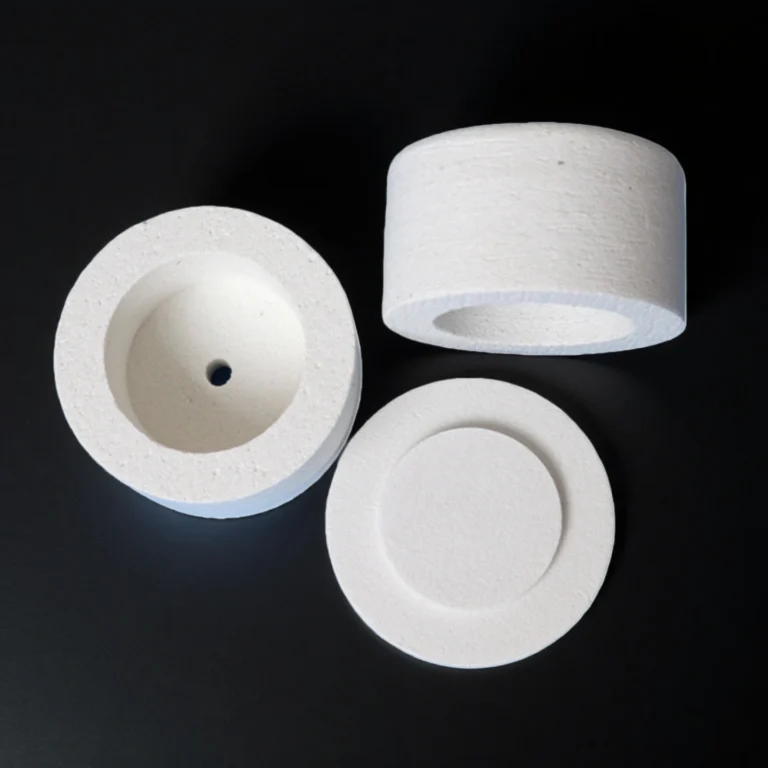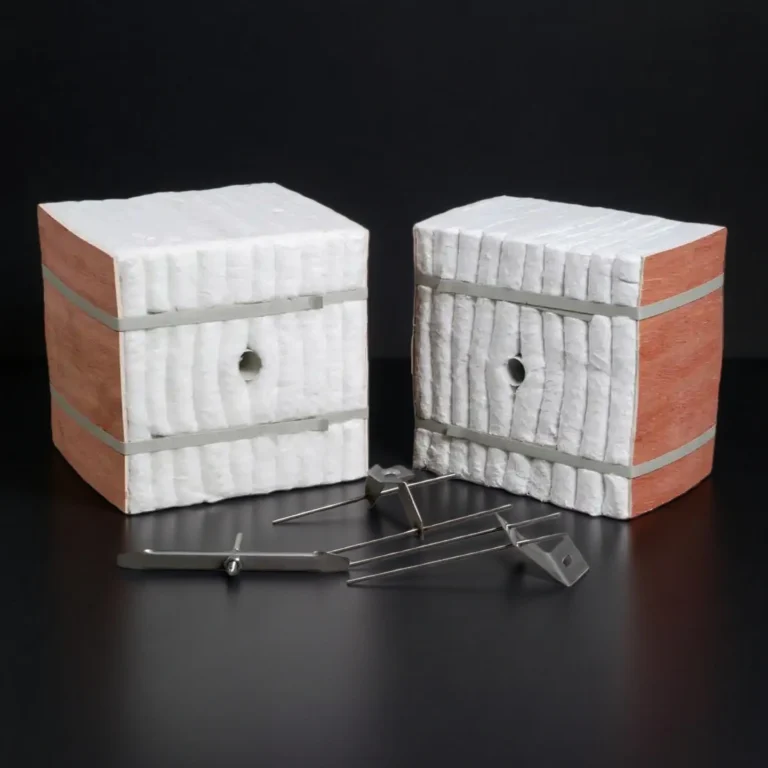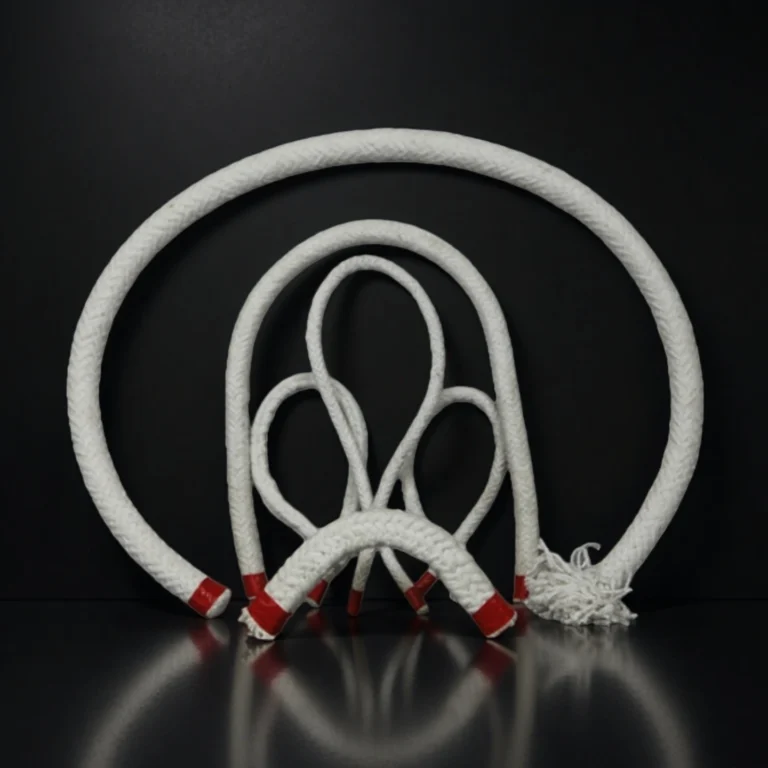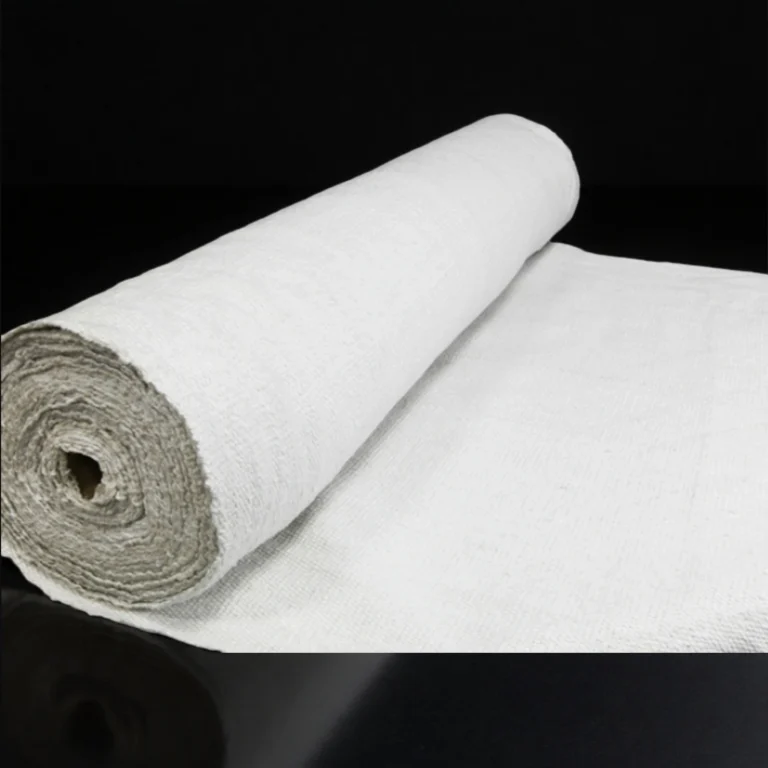
Aluminum Silicate Fiber Cotton for Industrial Furnace Backup Insulation 1260°C Class

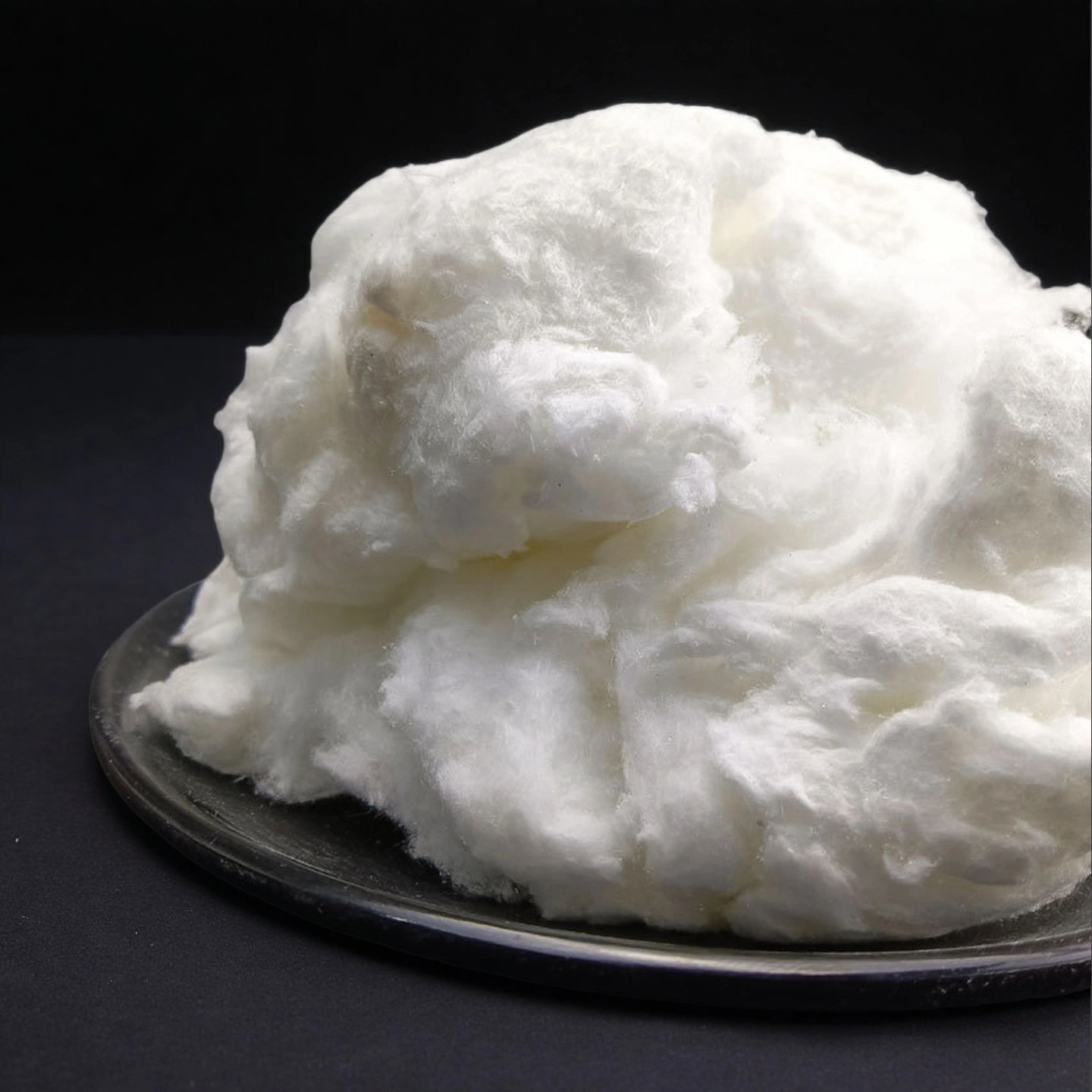
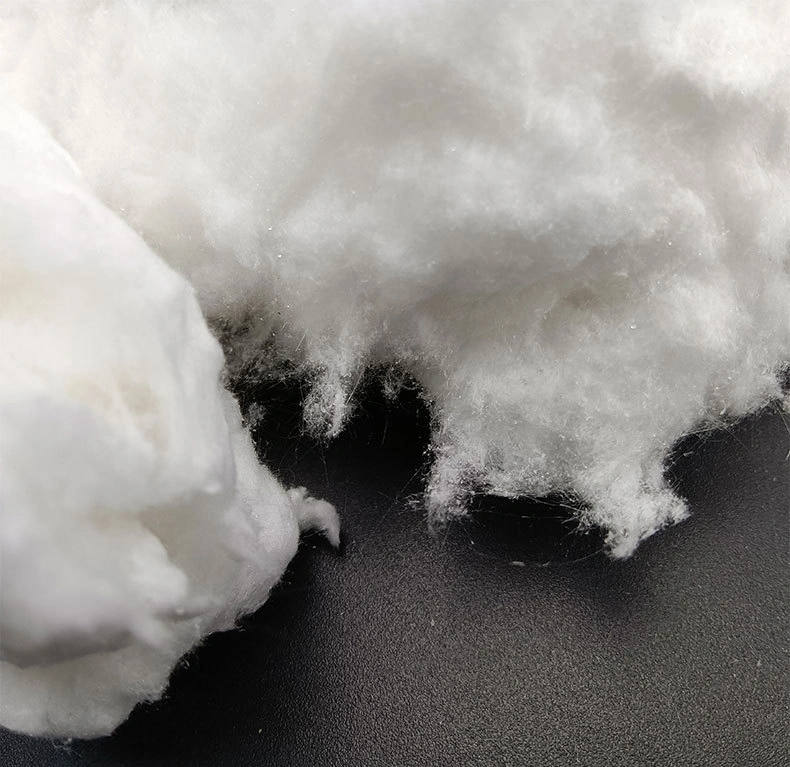
Aluminum silicate fiber cotton is delivered as bulk ceramic fiber wool in compressed bags or boxes, available in standard bulk densities and fiber length ranges, and can be customized in grade (standard, high-purity, zirconia-containing, bio-soluble) and packaging volume to match your furnace lining design and downstream forming processes.

Catalogue No. AT-GSL-M1001
Material Al2O3+SiO₂
Classification Temperature 1260 °C class
Bulk Density Approx. 64–128 kg/m³
Thermal conductivity (600 °C)  Approx. 0.13–0.21 W/(m·K)
24H Standard Dispatch
Small Batch Support OEM
Factory Direct
Expert Engineering Support

Aluminum silicate fiber cotton is a loose, fluffy alumino-silicate ceramic fiber insulation wool with a typical 1260 °C classification temperature, produced by melting and fiberizing Al₂O₃–SiO₂ materials into fine, low-density fibers. It is used as bulk high-temperature insulation, gap-filling material and as the base fiber for manufacturing ceramic fiber blankets, boards, modules and vacuum-formed shapes in industrial furnaces, kilns, heat-treatment equipment and metallurgical vessels.


Aluminum Silicate Fiber Cotton Benefits

1. Stable high-temperature insulation

  • 1260 °C classification temperature with typical service temperature up to around 1050–1100 °C in continuous operation, suitable for most steel, aluminum, glass and ceramic furnace backup linings.

2. Low thermal conductivity and low heat storage

  • Industry data show 1260 °C alumino-silicate fiber products provide thermal conductivity around 0.13–0.21 W/(m·K) at 600–800 °C, significantly reducing shell heat loss compared with traditional brick linings and supporting faster heating/cooling cycles.

3. Controlled shot content and fiber diameter

  • Aluminum silicate fiber cotton is produced with controlled fiber diameter (typically 2–5 µm) and limited shot content, helping to achieve uniform vacuum-formed surfaces and consistent thermal performance in backing layers.

4. Lightweight structure for thin, efficient linings

  • Compared with lightweight insulating bricks, ceramic fiber insulation wool has much lower bulk density and heat capacity, allowing thinner furnace walls and reducing overall lining weight and heat storage, which can save 20–40 % energy in many ceramic fiber lining projects.

5. Versatile raw material for multiple product forms

  • The same aluminum silicate fiber cotton can be used as the base fiber for blankets, boards, modules, papers and vacuum-formed parts, simplifying raw material management for refractory and insulation product manufacturers.


Aluminum Silicate Ceramic Fiber Cotton Properties

Item General Grade Standard Grade High Purity Grade High Alumina Grade Zirconia-Containing Grade
Classification Temperature (°C) 1100 1260 1260 1360 1430
Service Temperature (°C) <1000 1050 1100 1200 1350
Color White Off-white Off-white Off-white Off-white
Bulk Density (kg/m³) 260–320 260–320 260–320 260–320 260–320
Permanent Linear Shrinkage (%) (24 h holding; based on 128 kg/m³) <2.5 (1000°C) <2.5 (1050°C) <2.5 (1100°C) <2.5 (1100°C) <2.5 (1350°C)
Thermal Conductivity (W/m·K) (bulk density 128 kg/m³) 0.085 (400°C) 0.085 (400°C) 0.085 (400°C) 0.085 (400°C) 0.085 (400°C)
0.132 ( 800°C) 0.132 ( 800°C) 0.132 ( 800°C) 0.132 ( 800°C) 0.132 ( 800°C)
0.180 (1000°C) 0.180 (1000°C) 0.180 (1000°C) 0.180 (1000°C)
Tensile Strength (MPa) (bulk density 128 kg/m³) 0.5 0.5 0.5 0.5 0.5
Chemical Composition (wt%)
Al₂O₃ 44 46 47–49 52–55 39–40
Al₂O₃ + SiO₂ 96 97 99 99
Al₂O₃ + SiO₂ + ZrO₂ 99
ZrO₂ 15–17
Fe₂O₃ <1.2 <1.0 0.2 0.2 0.2
Na₂O + K₂O ≤0.5 ≤0.5 0.2 0.2 0.2


Aluminum Silicate Fiber Cotton Specifications

Item No. Chemical Composition Diameter (mm) Thickness (mm) Purity
AT-GSL-M1001 Standard Customize
AT-GSL-M2001 High-Alumina Customize
AT-GSL-M3001 Zirconia-Containing Customize


Aluminum Silicate Fiber Cotton Packaging

  • Aluminum silicate fiber cotton is normally supplied in compressed polyethylene bags or inner bag + outer carton to minimize volume and limit dust during handling.
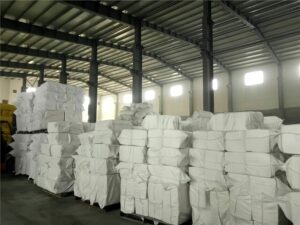

Aluminum Silicate Fiber Cotton Packaging

Aluminum Silicate Fiber Cotton Application Scenarios

  • Aluminum Silicate Fiber Cotton in Metallurgy & Foundry Linings

    ✅Key Advantages

    1. Ladle and tundish backup insulation – Aluminum silicate fiber cotton fills gaps behind refractory linings and in covers, lowering heat loss and helping reduce molten metal temperature drop between furnace and casting points.

    2. Lightweight furnace wall upgrades – Replacing part of the brick backup with aluminum silicate fiber cotton-based modules can reduce lining weight by more than 70 % and cut heat loss by 20–40 % in many furnace types.

    3. Quick repair and hot patch work – Loose aluminum silicate fiber cotton can be packed into joints, door frames and cracks as a temporary or semi-permanent repair solution, restoring insulation without full relining shutdown.

    ✅ Problem Solved

    A steel foundry operating a 1100 °C holding furnace replaced part of its dense brick backup with a lining concept using modules and aluminum silicate fiber cotton packing. Measured fuel consumption decreased by about 20 %, and the outer shell temperature dropped by roughly 60–80 °C compared with the original design, extending maintenance intervals and improving the working environment near the furnace. This magnitude of savings is consistent with published data where ceramic fiber linings can cut energy use by 20–40 % versus traditional refractory brick systems.

  • Aluminum Silicate Fiber Cotton for Industrial Furnaces & Heat Treatment OEMs

    ✅Key Advantages

    1. Efficient backup insulation behind hot-face refractories – When used as loose fill or as the base fiber for blankets and boards, aluminum silicate fiber cotton provides low thermal conductivity in the 0.13–0.21 W/(m·K) range at 600–800 °C, supporting thin, efficient furnace walls.

    2. Fast heat-up and cool-down cycles – Low heat capacity and low mass enable faster temperature changes in ceramic fiber lined furnaces, reducing start-up time by up to about one hour compared with traditional brick linings in some industrial tests.

    3. Flexible design for complex geometries – Loose aluminum silicate fiber cotton can be packed around burners, flanges and non-standard recesses that are hard to cover with rigid refractory materials, improving overall lining continuity.

    ✅ Problem Solved

    A heat-treatment furnace OEM redesigned a 1050 °C batch furnace using aluminum silicate ceramic fiber products based on fiber cotton instead of mainly firebrick. According to project data and typical industry comparisons, the new design reduced wall thickness by approximately 50 % while maintaining the same internal working temperature and allowed the furnace to reach set point around 40–60 minutes faster per cycle. Fuel usage per batch dropped by more than 20 %, directly improving the operating cost per ton of treated parts.

  • Aluminum Silicate Fiber Cotton for Vacuum-Formed Shapes & Ceramic Fiber Products

    ✅  Key Advantages

    1. Consistent base fiber for formed products – Aluminum silicate fiber cotton with controlled fiber diameter and shot content gives a uniform base for vacuum-formed boards, cones, launders and special shapes used in steel, aluminum and ceramic industries.

    2. Adaptable to different binders and formulations – The fiber surface morphology and chemistry work with common inorganic and organic binders used in castables, coatings and formed parts, simplifying formulation changes.

    3. Supports high-temperature performance up to 1260 °C class – Formed products based on aluminum silicate fiber cotton can reach classification temperatures between 1260–1360 °C, depending on grade and formulation, covering a wide range of industrial furnace applications.

    ✅  Problem Solved

    A refractory manufacturer producing vacuum-formed aluminum silicate fiber launders for non-ferrous casting standardized on a specific aluminum silicate fiber cotton grade with defined Al₂O₃+SiO₂ level and fiber length. After the change, dimensional stability of formed shapes improved, scrap rate dropped by several percentage points, and users reported fewer surface cracks after repeated thermal cycling at 900–1000 °C, in line with the known thermal shock resistance and low thermal inertia of ceramic fiber products.


Aluminum Silicate Ceramic Fiber Cotton Usage Guide

  • Installation

    1. Unpack aluminum silicate fiber cotton slowly and allow it to expand fully before installation.
    2. For backup insulation, loosely place or lightly tamp the fiber cotton into cavities, behind modules or between structural members; avoid excessive compression that would increase thermal conductivity.
    3. In expansion joints and door seals, pack the fiber cotton to a uniform density to maintain contact without over-stressing the surrounding structure.
    4. When used as raw material for forming, disperse the fiber cotton according to your slurry or mixing procedure to avoid clumps.

  • Use

    1. Keep fiber cotton clear of direct flame impingement and mechanical abrasion unless designed as a replaceable hot-face packing.
    2. Ensure the hot-face refractory or module system in front of the aluminum silicate fiber cotton is rated for the maximum furnace temperature.
    3. Monitor shell temperatures after start-up to verify that the thickness and density of the aluminum silicate fiber cotton layer meet your design assumptions.

  • Storage

    1. Store unopened bags in a dry, covered area away from rain and standing water.
    2. Avoid heavy loads on top of pallets to prevent excessive pre-compression.
    3. For bio-soluble or special grades, keep original labels visible to distinguish them from standard fiber stock.

  • Cleaning and housekeeping

    1. Use industrial vacuum cleaners with suitable filters when cleaning work areas; avoid dry sweeping to reduce airborne fiber.
    2. Collect offcuts and loose fiber for possible reuse in patch mixes, where quality requirements allow.

  • Common misuse and corrective actions

    1. Over-compressed packing behind hot-face linings
    Issue: Excessive tamping increases density and thermal conductivity, leading to higher shell temperatures.
    Fix: Follow recommended loose density ranges; if shell temperatures are high, reduce packing density or increase layer thickness.

    2. Using aluminum silicate fiber cotton as the only hot-face material in high gas velocity zones
    Issue: Direct erosion by high-velocity gases shortens lifetime.
    Fix: Use brick, castable or rigidized fiber products on the hot face and keep aluminum silicate fiber cotton as backup insulation.

    3. Incorrect grade selection for high-temperature or chemically aggressive atmospheres
    Issue: Standard 1260 °C grade may sinter or shrink under repeated exposure above its class temperature.
    Fix: For demanding atmospheres or higher temperatures, specify high-alumina or zirconia-containing alumino-silicate fiber cotton grades within the design.

Aluminum Silicate Ceramic Fiber Cotton FAQ

  1. Q: What is the typical service temperature of aluminum silicate fiber cotton?
    A: For 1260 °C class aluminum silicate fiber cotton, continuous service temperature is usually designed up to around 1050–1100 °C, depending on atmosphere and safety margin.
  2. Q: What is the density range of aluminum silicate fiber cotton?
    Q:  Aluminum silicate fiber cotton is typically used at loose bulk densities matching blanket and board products, around 64–128 kg/m³, with higher densities possible when compressed in confined spaces.
  3. Q: How does aluminum silicate fiber cotton compare with firebrick in energy efficiency?
    Q:  Because of its low thermal conductivity and low heat storage, aluminum silicate ceramic fiber insulation can reduce energy use by roughly 20–40 % compared with traditional refractory brick linings in many furnace applications and also shortens heat-up and cool-down times.
  4. Q: Can aluminum silicate fiber cotton be used as raw material for vacuum-formed products?
    Q: Yes, aluminum silicate fiber cotton is widely used as the base fiber in vacuum-formed ceramic fiber boards, cones, launders, burner blocks and other special shapes.
  5. Q: What key parameters should I define when ordering aluminum silicate fiber cotton?
    Q:  It is helpful to define the required classification temperature, approximate operating temperature, desired bulk density, fiber length range, chemical composition window (especially Al₂O₃+SiO₂ content) and whether a bio-soluble grade is needed.

Aluminum Silicate Fiber Cotton Reviews

  • ⭐️⭐️⭐️⭐️⭐️
    We changed our ladle backup insulation to aluminium silicate fiber cotton and saw a noticeable reduction in metal temperature drop during transfer. The material packs well behind the brick and has been stable through multiple relines.
    -- Michael Turner – Maintenance Manager, North Steel Castings Inc.
  • ⭐️⭐️⭐️⭐️⭐️
    In several 1050 °C batch furnaces we design, using aluminium silicate fiber cotton as the backup layer helped us shorten heat-up time and keep shell temperatures within our targets. ADCERAX as the ceramic fiber supplier has been responsive on grade selection and technical details.
    -- Javier Morales – Technical Director, ThermoFurnace Engineering
  • ⭐️⭐️⭐️⭐️⭐️
    We use aluminum silicate fibre cotton as the base fibre for vacuum-formed shapes. After switching to the new grade, the surface finish became more uniform and scrap related to fiber clusters decreased, which made downstream machining easier.
    -- Sophie Nguyen – Production Engineer, EuroRefractory Components
  • ⭐️⭐️⭐️⭐️⭐️
    For our kiln projects we buy aluminum silicate fibre cotton in bulk bags and pair it with blankets and modules. The pricing from ADCERAX as a factory supplier is competitive, and the consistency between lots has been good for our repeat designs.
    -- Daniel Kim – Purchasing Manager, HeatPro Kiln Systems
customize size

Aluminum Silicate Fiber Cotton Customized

Aluminum silicate fiber cotton can be supplied in different grades, densities and fiber structures to fit specific furnace lining designs and downstream forming processes, covering both standard 1260 °C products and higher performance or bio-soluble options.

1. Fibre grade: Standard (STD), high-purity (HP), high-alumina, zirconia-containing, bio-soluble alumino-silicate wool (where required by local regulations).

2. Temperature class: 1050 °C, 1260 °C, 1360 °C, 1430 °C classification temperature ranges, depending on alloy and atmosphere requirements.

3. Bulk density range: Target loose bulk density window (e.g. 64, 96 or 128 kg/m³ equivalent) for easier metering and consistent packing density in molds or cavities.

4. Fibre length and structure

  • Standard sprayed/spun long fibers for vacuum forming.
  • Chopped fiber length ranges (e.g. 3–25 mm) for castables, coatings and reinforcement.

5. Chemical composition window

  • Al₂O₃+SiO₂ content (e.g. ≥ 97 %, ≥ 98 %, ≥ 99 %), with optional ZrO₂ additions for higher temperature use.

6. Shot content level

  • Standard shot content or lower shot grades for smoother vacuum-formed surfaces and better thermal performance.

7. Moisture and organic content

  • Untreated “dry” fiber or with defined organic content where needed, following the ranges used in ceramic fibre papers and boards.

Related Products

ADCERAX - Your Trusted Advanced Ceramics Manufacturing Partner

Direct factory manufacturing with comprehensive ceramic materials expertise and global supply capabilities

Direct Factory Manufacturing

China-based ceramic materials production facility with state-of-the-art equipment

Engineering Team

Experienced professionals in advanced ceramics applications and custom design

Quality Control

Strict quality control standards for technical ceramics manufacturing and quality management

Global Supply Chain

Serving customers worldwide with technical ceramics and rapid response

24/7 Technical Support

Round-the-clock support for ceramic components inquiries and technical assistance

500+ Satisfied Customers

Trusted by global customers for advanced ceramic materials and precision components

Get in touch with us

Our team will be happy to respond to you in less than 24 hours.

Adcerax's factory

Quick Quotation

*Our team will answer your inquiries within 24 hours.

*Your information will be kept strictly confidential.

Ready to Solve Your Engineering Challenge?

Partner with ADCERAX for reliable, high-performance advanced ceramic solutions. Our engineers are ready to discuss your project.

E-mail

info@adcerax.com

Phone

+(86) 0731-74427743 | WhatsApp: +(86) 19311583352

Response Time

Within 24 hours

Quick Quote

The more details you provide, the faster we can quote.

*We respond within 24 hours. All inquiries are confidential.

Download Catalog

Get Your Custom Sulution

The more details you provide, the faster we can respond.

customize size

*We respond within 24 hours. All inquiries are confidential.

Download Catalog