Beryllium Oxide Rod — High-Thermal-Conductivity, RF-Grade Ceramic Insulating Rods
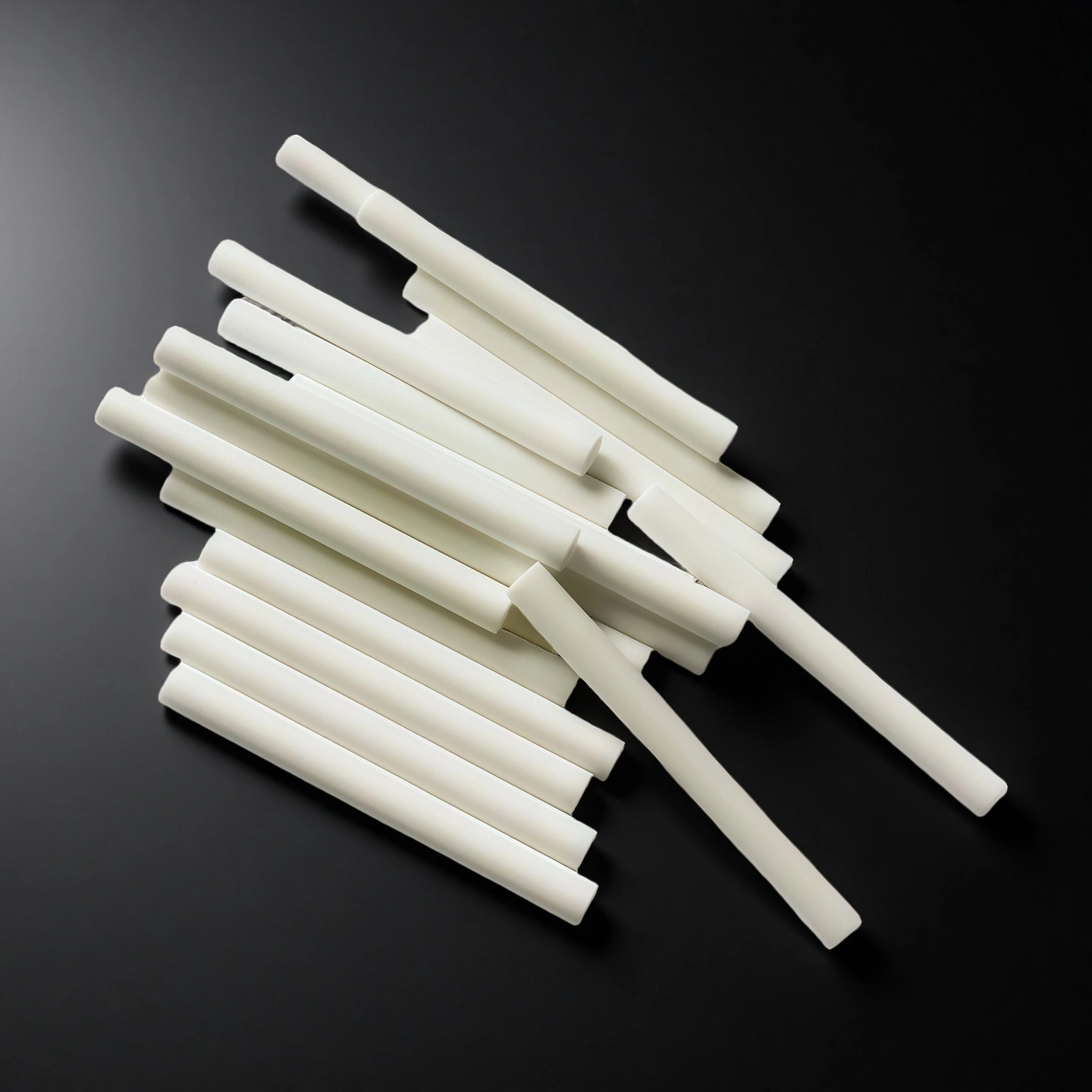
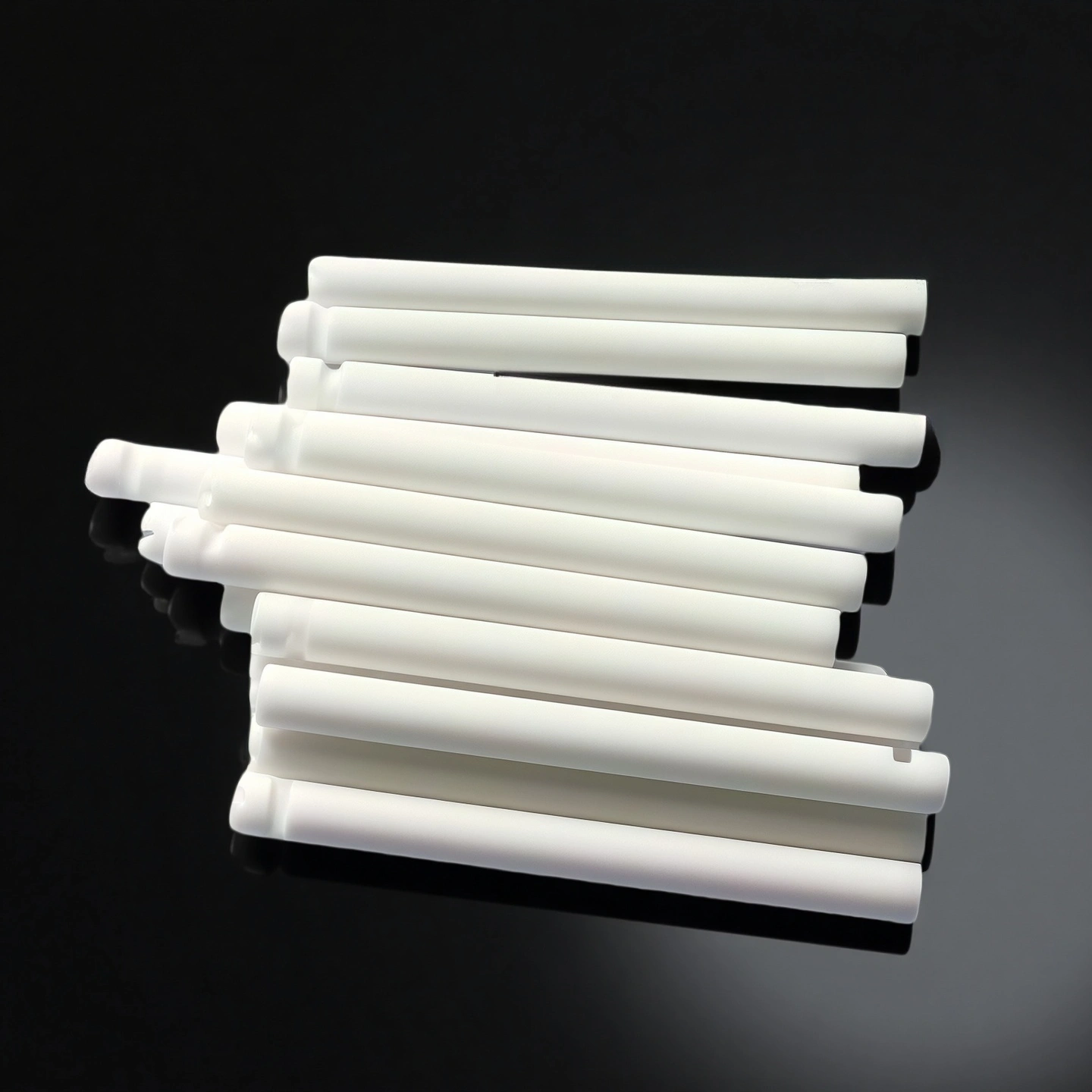
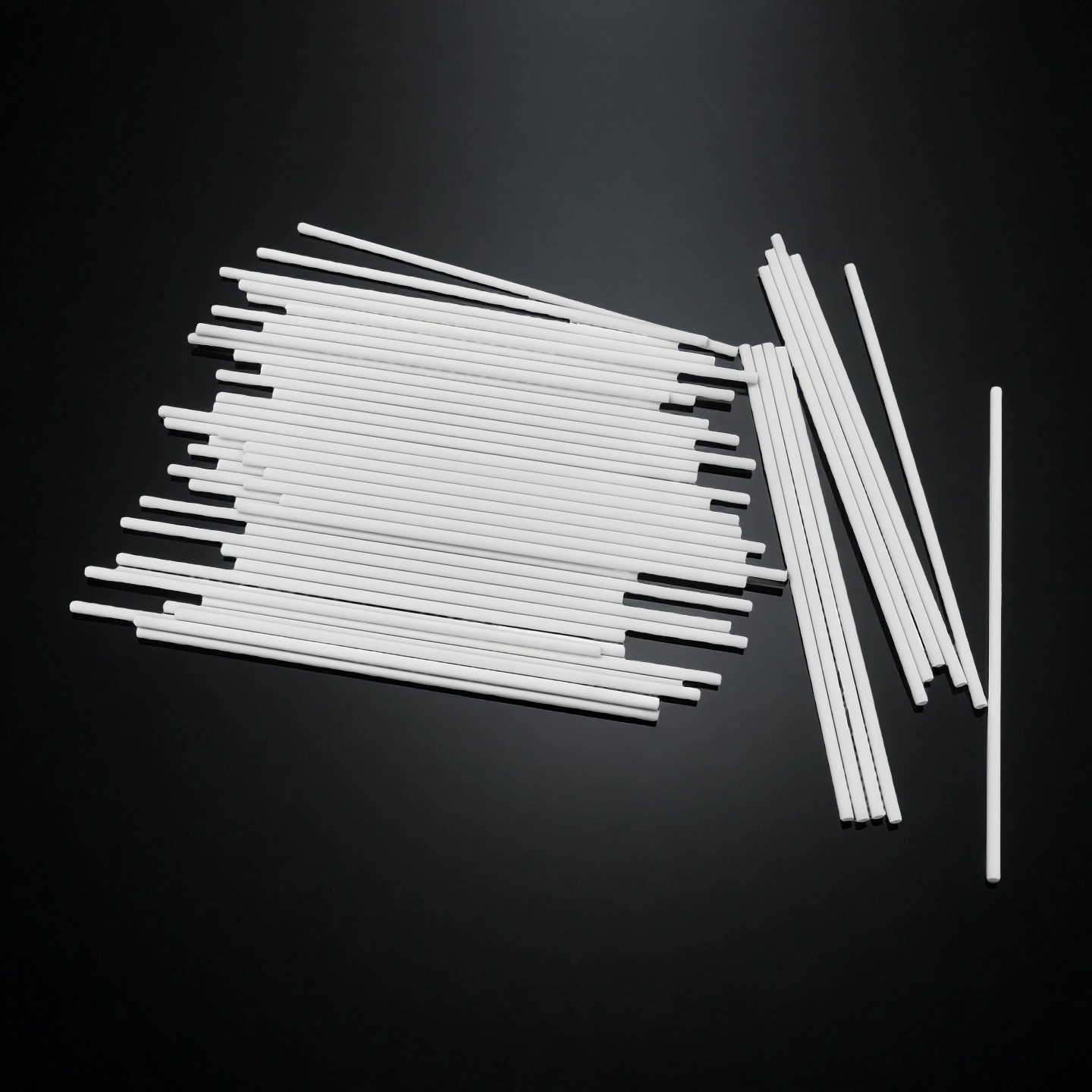
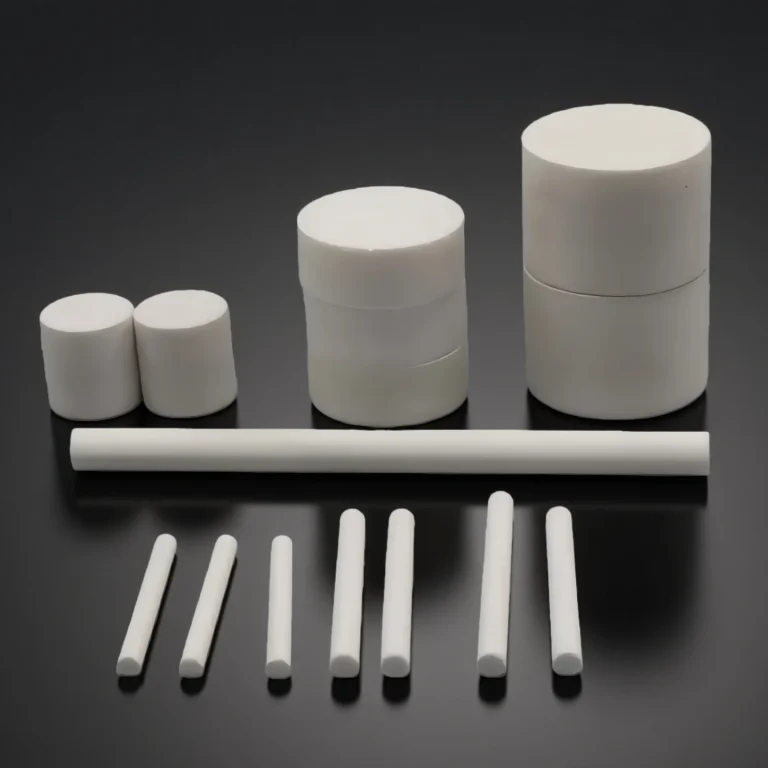
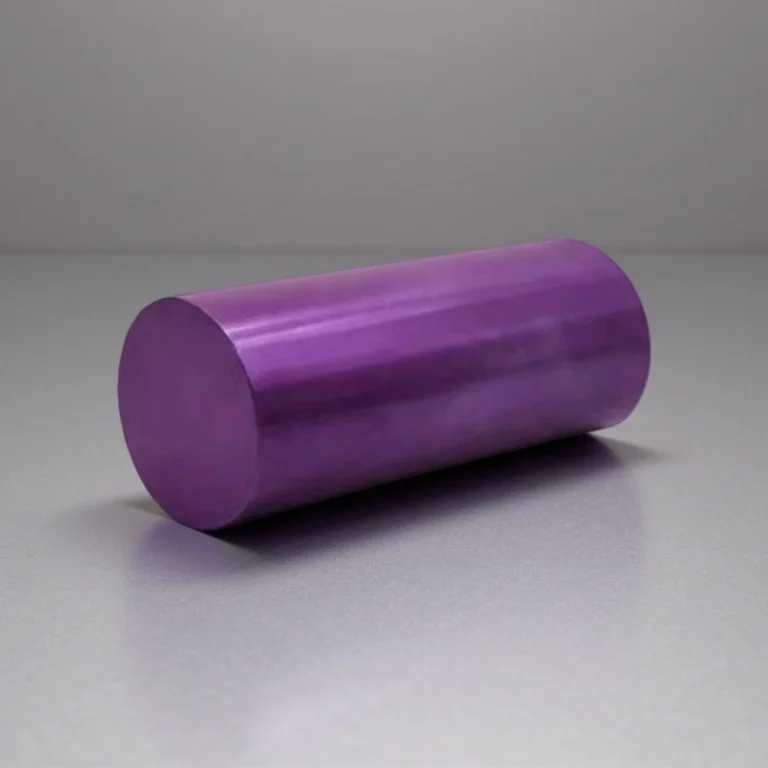
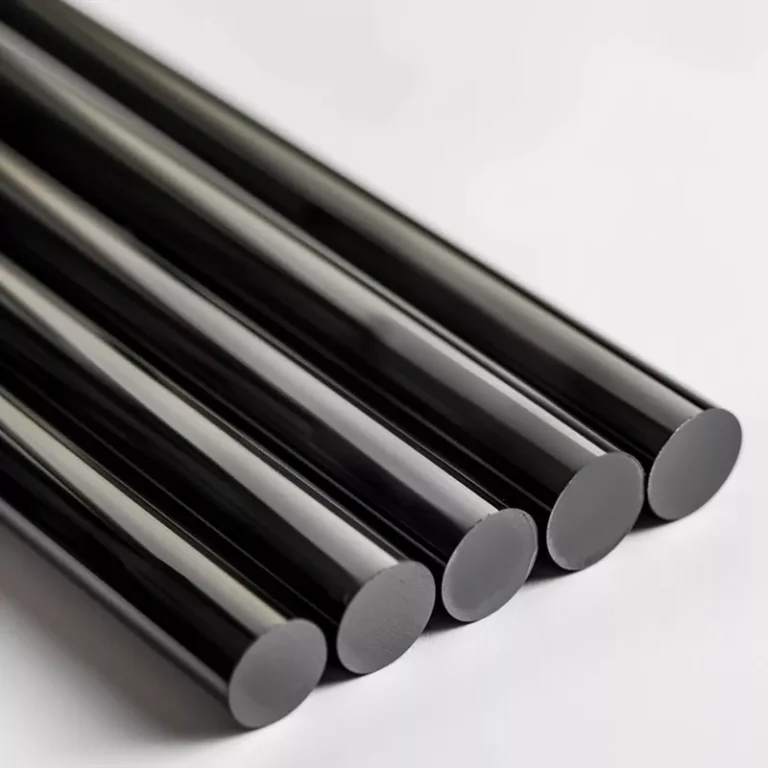
Beryllium Oxide Rod provides a heat-spreading, electrically insulating ceramic bar for RF fixtures, vacuum chambers, optical benches, and precision tooling, available in standard diameters and custom lengths with controlled finishes. BeO rod is supplied in φ1–5 mm stock sizes and custom diameters up to drawing limits, with lengths commonly 50–300 mm; tolerances, end-face features, and Ra levels are configurable.
Beryllium Oxide (BeO) rod is a precision-machined, high-thermal-conductivity ceramic bar used as a heat-spreading, electrically insulating structural element in RF/microwave fixtures, optical benches, vacuum equipment, and precision jigs. It is produced from high-purity BeO powder by pressing, sintering, and finish machining (e.g., grinding, lapping, polishing) to tight dimensional tolerances.
Beryllium Oxide Rod Benefits
Heat-moving insulator: combines high thermal conductivity with dielectric isolation in one part.
Tight geometry control: OD/ID/length tolerances typically ±0.05–0.10 mm for stable assembly.
Finish options: ground, lapped, or polished ends to defined Ra for contact repeatability.
RF-grade dielectric: low loss tangent suitable for microwave fixtures and couplers.
Vacuum-ready: dense microstructure and clean surface preparation for low outgassing integration.
Beryllium Oxide Rod Properties
Property
Be-97
Be-99
BeO Purity
≧97%
≧99%
Density (g/cm3)
≧2.85
≧2.85
Hardness (Hv)
1200
1250
Maximum Working Temperature (℃)
1600
1650
Flexural Strength (MPa)
170
190
Fracture Toughness (MPa*m1/2)
2.5~3.5
2.5~3.5
Dielectric Constant (at 1MHz)
6.5
7
Breakdown Voltage (kV/mm)
15
20
Thermal Conductivity (W/m*K)
220-240
260-310
Thermal Expansion Coefficient (/℃)
7~8.5*10-6
7~8.5*10-6
Beo Ceramic Rods Specifications
Item No.
Outer Dia(mm)
Length(mm)
Purity(%)
AT-BeO-B1001
1.5
60
99
AT-BeO-B1002
1.5
93
99
AT-BeO-B1003
1.5
30-300
99
AT-BeO-B1004
2
30-300
99
AT-BeO-B1005
0.3-2
30-300
99
Beryllium Oxide Rod Packing
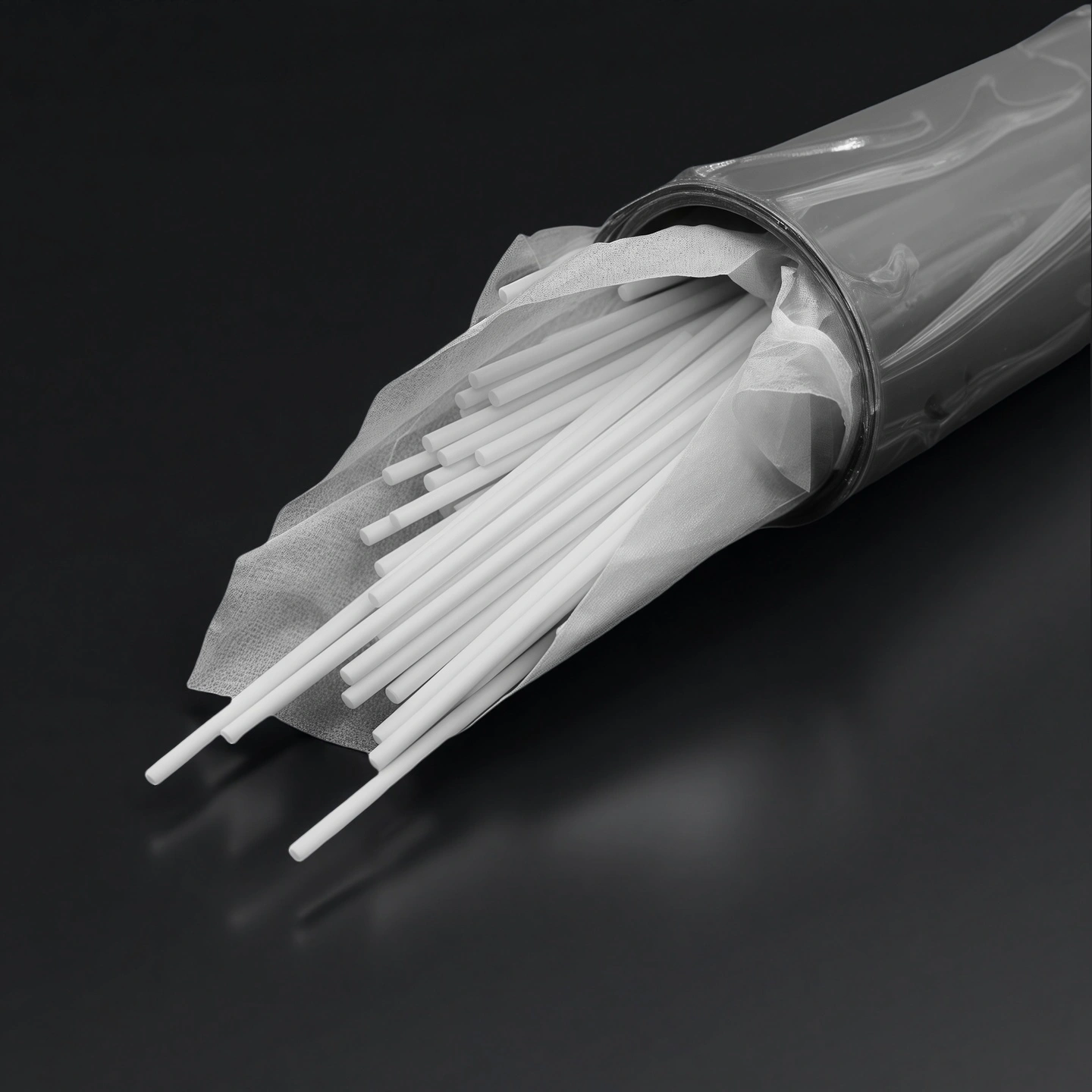
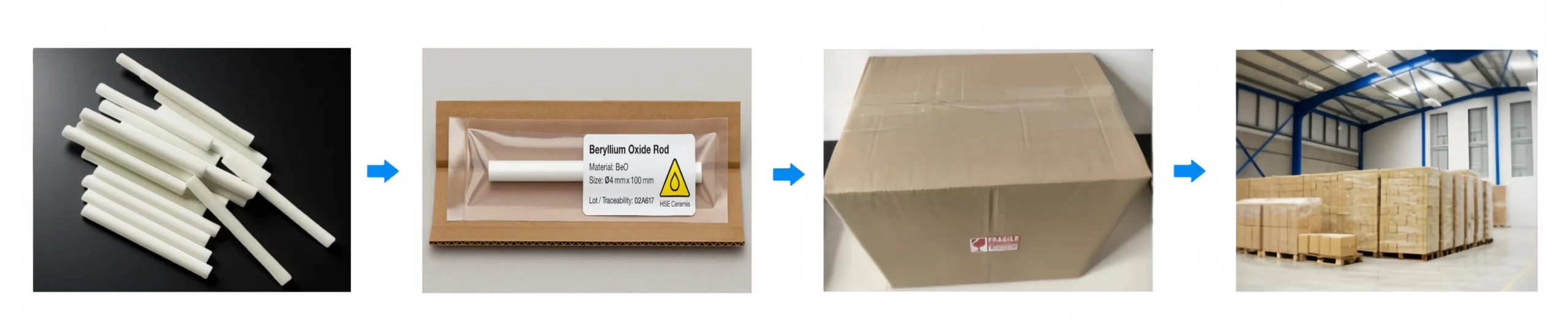
Each Beryllium Oxide Rod is individually sleeved, cushioned, clearly labeled with material and lot details, and sealed with HSE hazard marking to ensure clean and safe delivery.
Beryllium Oxide Rod Application
RF/Microwave & Vacuum Electronics
✅Key Advantages
1. Lower fixture heating vs. alumina in identical geometry due to higher thermal conductivity
2. Maintains low loss tangent levels across common RF bands for reduced insertion loss
3. Supports tight coaxiality and flatness at functional faces for repeatable alignment
✅ Problem Solved
A power-combiner fixture using BeO rods reduced hotspot temperature rise and kept capacitor banks within safe margins during continuous operation. Tolerance-controlled ends improved assembly repeatability, cutting rework events and stabilizing output during extended high-duty cycles.
Optical/Laser Benches & Detectors
✅Key Advantages
1. Heat pathway near sensitive sensors while preserving electrical isolation
2. Polished-end contact surfaces enhance positional stability in clamp sets
3. Low outgassing preparation supports vacuum or clean environments
✅ Problem Solved
A detector mount replaced polymer standoffs with BeO rods to manage thermal drift. After changeover, alignment checks decreased and temperature-induced offsets were contained within the allowable error band through long dwell tests.
Precision Jigs/Fixtures for High-Temperature or High-Field Work
✅Key Advantages
1. CTE close to many metallization systems for reduced stress at interfaces
2. Ground-to-spec diameters enable sliding fits in bushings and guides
3. Dimensional stability sustains gauge repeatability through thermal cycles
✅ Problem Solved
A tooling set for elevated-temperature inspection adopted BeO rods with defined chamfers and Ra levels, improving gauge repeatability and reducing fixture-related dimensional drift during soak-and-measure sequences.
Beryllium Oxide Rods Usage Instructions
Proper handling and use of Beryllium Oxide (BeO) Rods ensure consistent performance, safety, and long service life. Follow these best practices during installation, operation, storage, and maintenance.
Install
1. Inspect each rod for chips, cracks, or edge defects before assembly.
2. Use soft clamps, torque-limited fasteners, or precision slots — avoid point loads or metal-to-ceramic contact pressure.
3. When alignment is critical, specify lapped or polished ends (Ra ≤ 0.2 µm) to ensure uniform contact and minimal tilt.
4. For brazed or bonded assemblies, confirm metallization system (e.g., Mo/Mn, TiW) and filler compatibility before heating.
5. Apply uniform pressure during assembly; misalignment may cause stress cracking during thermal cycles.
Use
1. Maintain smooth thermal transitions; avoid quenching or sudden temperature drops above 100 °C/min.
2. Keep parts clean and dry before powering high-voltage or RF systems to prevent arc discharge.
3. In vacuum or cleanroom setups, use gloves and lint-free holders to prevent surface contamination.
4. Do not exceed the rated service temperature for your BeO grade (typically ≤ 1000 °C continuous).
5. If the rod serves as an insulator, ensure clearances follow dielectric spacing requirements.
Store
1. Keep rods in sealed anti-static sleeves with desiccant packs to prevent moisture adsorption.
2. Separate by foam or corrugated partitions to avoid edge collisions.
3. Store flat on vibration-free shelves, away from chemical vapors and high humidity.
4. For long-term storage, retain the lot label and HSE hazard marking for traceability.
Clean
1. Use lint-free wipes and filtered isopropanol or deionized water for surface cleaning.
2. Avoid abrasive tools or ultrasonic baths that may alter the surface finish.
3. Dry with filtered compressed air or nitrogen; re-seal immediately after cleaning.
4. For vacuum use, perform a mild 120 °C bake-out before installation to remove adsorbed moisture.
Cautions
1. BeO is safe in solid form but hazardous as dust — do not cut, grind, or machine outside a controlled facility with dust extraction.
2. Dispose of damaged or contaminated rods through certified hazardous-material channels.
3. Always wear gloves when handling; avoid dropping or impacting the surface.
4. Include BeO safety data (MSDS) and warning labels in your internal documentation.
5. In case of accidental breakage, isolate the area, ventilate, and follow site HSE cleanup procedures.

Beryllium Oxide Substrates FAQ
Q: What is the main advantage of a Beryllium Oxide Rod compared with alumina or aluminum nitride rods? A: Beryllium Oxide provides both high thermal conductivity (≈200 W/m·K) and electrical insulation, outperforming alumina in heat transfer and maintaining lower dielectric loss than AlN in RF and microwave environments.
Q: What dimensional tolerances can ADCERAX achieve for BeO rods? A: Typical OD/ID/length tolerance is ±0.05–0.10 mm. For precision assemblies, ±0.02 mm and flatness ≤0.01 mm are achievable after feasibility review and surface lapping.
Q: Can the surface finish of a BeO rod be specified for functional contact? A: Yes. End faces can be fine-ground, lapped, or mirror-polished to target Ra values (down to 0.1–0.2 µm) to ensure smooth contact and consistent alignment in optical or vacuum fixtures.
Q: Can ADCERAX provide custom-machined BeO rods with features such as holes or slots? A: Yes. We can machine partial slots, axial or radial holes, steps, and chamfers under controlled conditions to maintain structural integrity and dimensional accuracy.
Q: What is the safe operating temperature range for BeO rods? A: Continuous use is typically rated up to 1000 °C in air or vacuum. Short-term exposure to 1200 °C is possible depending on thermal cycling rate and fixture design.
Q: Are BeO rods compatible with metallization and brazing processes? A: Yes. Mo/Mn, TiW, and AgCu active brazing systems can be applied within 850–950 °C process windows when properly surface-prepared and cleaned before joining.
Q: How should Beryllium Oxide rods be stored and handled before installation? A: Keep sealed in original anti-static sleeves with desiccant. Avoid mechanical shock, contamination, and high humidity. Handle only with gloves to prevent surface particle transfer.
What our Clients Say about Beo Ceramic Rods
⭐️⭐️⭐️⭐️⭐️
We used to a Beryllium Oxide Rod for our combiner fixture; end-face flatness and heat flow stability improved our run-in results.
Elena M. — Senior RF Engineer, Waveform Systems (US)
⭐️⭐️⭐️⭐️⭐️
Polished-end BeO rods held alignment on our detector mount through long temperature dwells; fewer re-touches at final test.
Kenji S. — Opto-Mechanical Lead, Shinra Tools (JP)
⭐️⭐️⭐️⭐️⭐️
ADCERAX supported drawing review and delivered consistent diameters across multiple lots; the rods dropped into our vacuum jigs.
Martin G. — Operations Manager, EuroVac Components (DE)
⭐️⭐️⭐️⭐️⭐️
Stock φ3 mm Beryllium Oxide Rods arrived clean and ready; surface finish matched the clamp design and reduced setup time.
Priya R. — R&D Technician, Northgate Instruments (UK)
We provide engineering-based customization to align with your thermal, dielectric, and assembly fit-up requirements. What You Can Specify:
Dimensions & Geometry Outer and inner diameters from φ1–10 mm; lengths up to ~1000 mm depending on diameter ratio and rigidity. Straightness and concentricity can be maintained within defined micrometre ranges on request.
Dimensional Tolerance OD/ID/length typically ±0.05–0.10 mm; critical parts achievable to ±0.02 mm after feasibility check. Shape tolerance such as flatness, perpendicularity, and coaxiality, was verified using optical metrology.
End Configurations Square, C-chamfer, R-chamfer, countersink, pilot bore, or multi-step profiles for assembly alignment or brazing support.
Functional Features Partial slots, axial or radial holes, locator steps, anti-rotation flats, and thread-start seats for hybrid assemblies.
Surface Finish Options As-fired (where applicable), fine-ground, lapped, or mirror-polished to defined Ra ≤ 0.2 µm on critical faces. Functional surfaces can be referenced for Ra vs. flatness correlation in repeatable fixtures.
Cleanroom Preparation Particle-controlled washing, ultrasonic cleaning, nitrogen drying, and double-sealed packaging for vacuum or optical applications.
Metalization Compatibility Window evaluation for joining schemes using Mo/Mn, TiW, or AgCu active brazing layers, adjusted for your filler and process temperature.