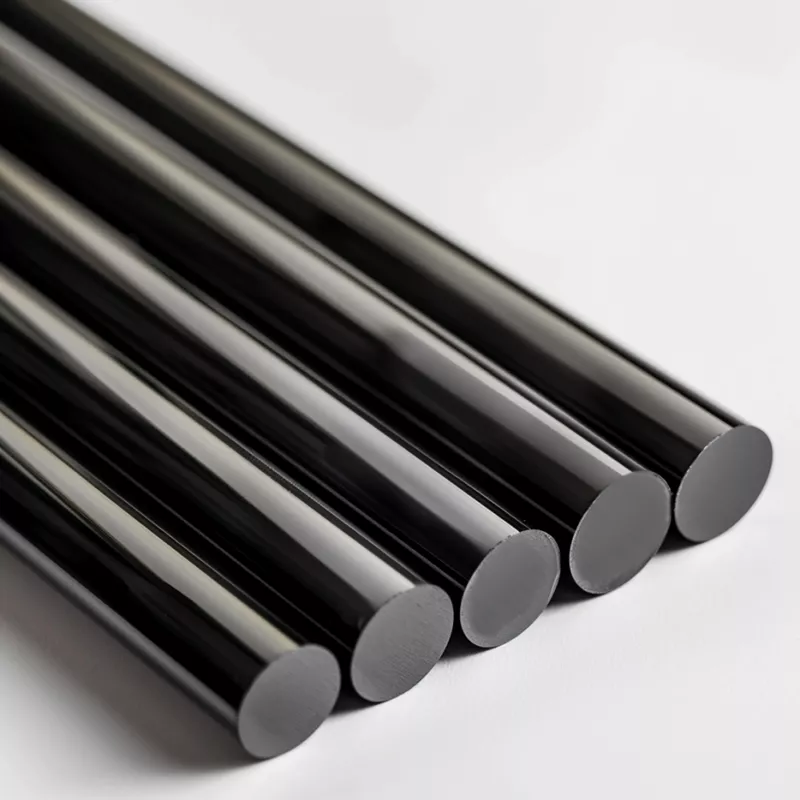
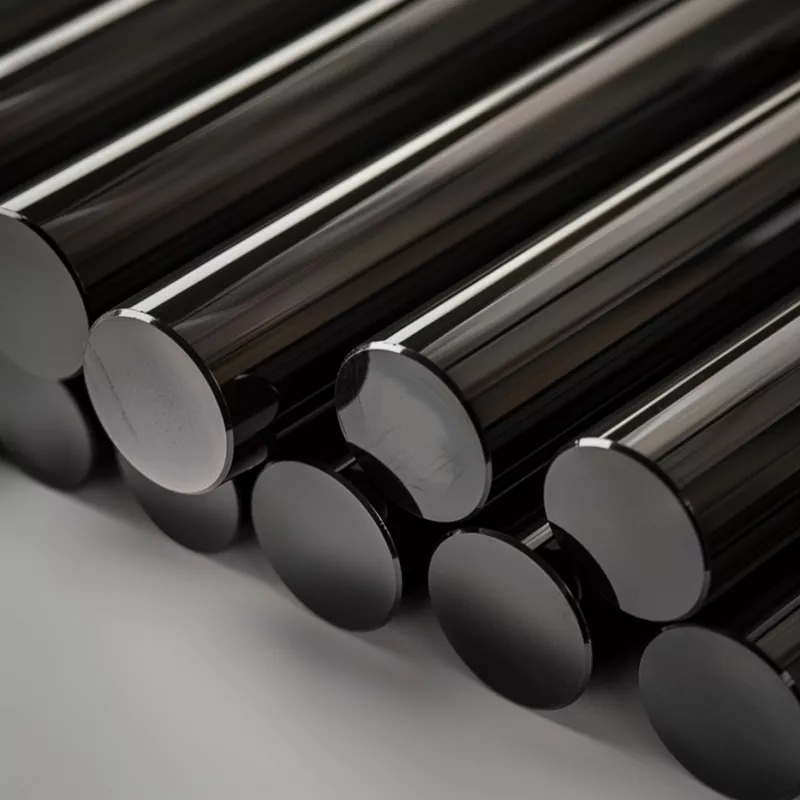
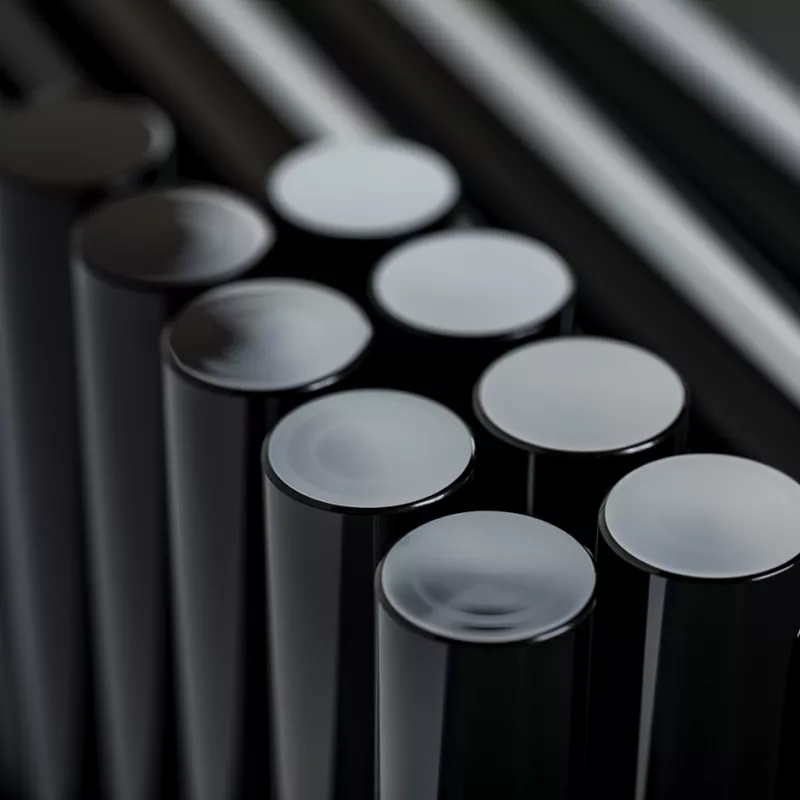
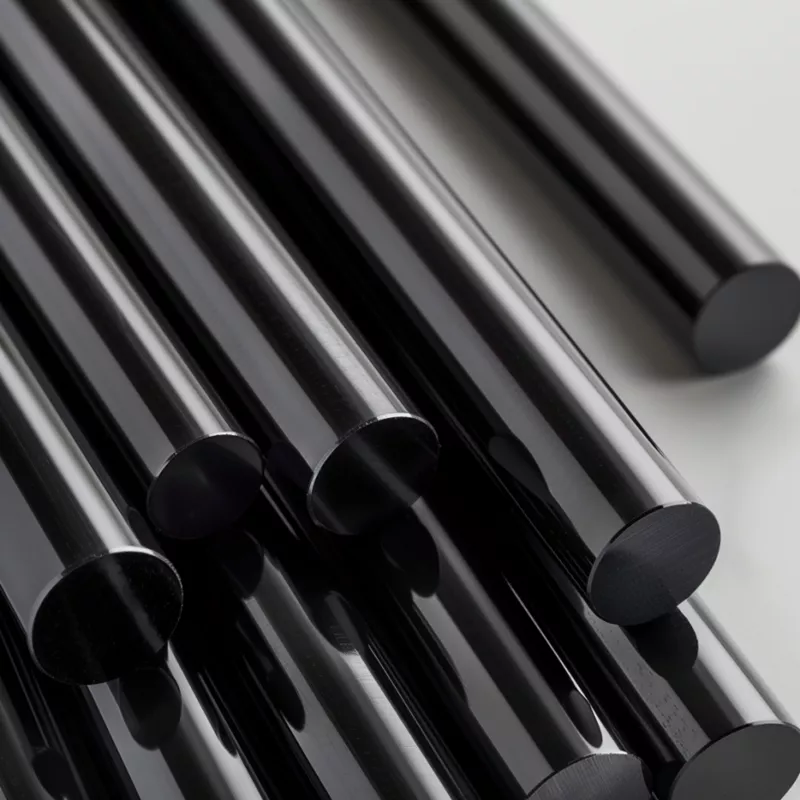
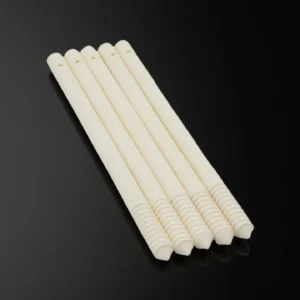
ADCERAX Black zirconia ceramic rods are structural ceramic designed for heavy-load, high-wear industrial systems. Its combination of hardness, flexural strength above 1000 MPa, and resistance to acids, alkalis, and high temperature ensures long service in demanding environments. The black zirconia ceramic rod replaces steel components in machinery, metallurgy, and chemical equipment where durability and corrosion stability are critical. It provides reliable performance for engineers seeking long-term efficiency and maintenance reduction.
Key Advantages of Black Zirconia Ceramic Rods
Stable Wear Surface for Sliding and Contact Assemblies
Black zirconia ceramic rods provide a hard, dense working surface for guide, sliding, positioning and support roles. This helps reduce surface wear, metal contamination and frequent replacement when steel, aluminum or polymer rods cannot maintain stable contact behavior.
Improved Toughness Compared with Many Brittle Ceramics
Zirconia is often selected when alumina or glass ceramic rods may be too brittle for repeated handling, insertion or vibration-prone assemblies. The higher fracture toughness of zirconia helps reduce edge chipping risk when the rod has chamfers, steps or polished contact zones.
Electrical Insulation Without Metal Corrosion Risk
For compact equipment where a rod must support parts while limiting electrical conduction, black zirconia ceramic offers a non-metallic insulating structure. It is useful in selected sensor holders, positioning fixtures, electronic equipment supports and test assemblies where metal rods may cause current leakage or magnetic interference.
Corrosion Resistance for Chemical and Fluid-Handling Equipment
Dense black zirconia rods can be reviewed for contact with many corrosive or abrasive process environments. They are suitable for selected pump, valve, metering, stirring and fluid-control parts where metal rods may rust, pit, release particles or require frequent replacement.
Black Appearance for Visual Contrast and Part Identification
The black zirconia body provides a stable visual contrast that can help equipment builders distinguish rod locations, inspection zones or product families. This is especially useful when the rod is installed near light-colored ceramics, metal fixtures or optical inspection areas.
Drawing-Based Machining for Real Assembly Fit
ADCERAX reviews each black zirconia rod according to drawing dimensions, end design, tolerance zones, surface finish and mating components. This helps reduce procurement risk when the rod must fit into a bearing seat, clamp, guide block, ceramic sleeve, sealing structure or custom mechanical fixture.
Technical Properties of Black Zirconia Ceramic Rods
Black zirconia ceramic rods provide a dense ceramic structure with wear resistance, electrical insulation, corrosion stability and controlled surface finish. The values below are typical reference properties and should be confirmed according to final material grade, drawing requirements and operating conditions.
| Property |
Specification |
Why It Matters |
| Material Composition |
≥94% ZrO₂ + Y₂O₃ stabilizer + black pigment |
This composition provides the main zirconia ceramic structure, stable black appearance and improved mechanical toughness for industrial rod applications. |
| Crystal Phase |
Tetragonal phase (fully stabilized) |
A stable tetragonal phase helps improve toughness and reduces cracking risk during handling, assembly and repeated mechanical contact. |
| Density |
≥6.0 g/cm³ |
High density indicates a compact ceramic body with low porosity, which helps improve wear resistance, strength and surface stability. |
| Flexural Strength |
≥1000 MPa (ISO 14704) |
High flexural strength supports use in precision assemblies, but bending load and support spacing should still be reviewed before use. |
| Compressive Strength |
≥2000 MPa (ASTM C773) |
Strong compressive resistance helps the rod perform in supported contact, positioning and clamping applications when stress is properly distributed. |
| Vickers Hardness |
1250–1350 HV10 (ASTM C1327) |
High hardness helps reduce surface wear when the rod works as a guide, locating element, sliding contact part or fixture support. |
| Fracture Toughness |
8–10 MPa·m½ (ASTM C1421) |
Higher fracture toughness makes zirconia less prone to edge chipping than many brittle ceramics during machining, installation and service. |
| Thermal Conductivity |
2.5 W/m·K |
Low thermal conductivity helps limit heat transfer through the rod when thermal isolation is useful in tooling, fixtures or equipment supports. |
| Thermal Expansion Coefficient |
10.5 × 10⁻⁶/K (25–1000°C) |
This value helps engineers review clearance, fit and stress when the rod is assembled with metal or other ceramic components. |
| Maximum Service Temperature |
1100°C (continuous in air/inert) |
The service temperature helps determine whether the rod is suitable for high-temperature fixtures, supports or process equipment. |
| Electrical Resistivity |
>10¹² Ω·cm @ 25°C |
High electrical resistivity allows the rod to function as an insulating support where metal conduction is not acceptable. |
| Acid Resistance |
>95% mass retention (72h in H₂SO₄ @ 90°C) |
Good acid resistance supports selected chemical processing and fluid-handling applications, subject to final medium compatibility review. |
| Alkali Resistance |
Stable in NaOH <10% |
Alkali resistance helps the rod maintain surface stability in selected cleaning or process environments, but concentration and temperature should be confirmed. |
| Grain Size |
<0.5 μm (dense fine-grain structure) |
A fine-grain structure helps improve surface finish, wear behavior and dimensional stability after precision grinding or polishing. |
| Surface Finish (polished) |
Ra ≤ 0.2 μm |
A polished surface reduces friction and particle generation in sliding, guiding, sealing or precision contact areas. |
Specifications of Black Zirconia Ceramic Rods
|
Black Zirconia Ceramic Rods |
|
Model |
Size |
|
AT-HG-B1001 |
Customized |
Packaging of Black Zirconia Ceramic Rods
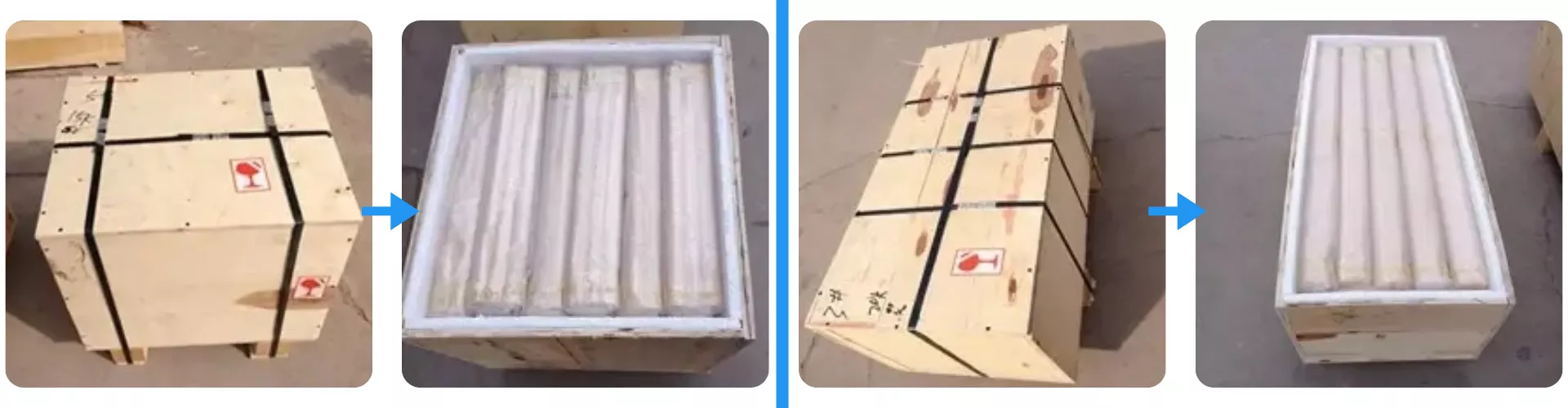
Black zirconia ceramic rods are securely packed in foam-lined wooden crates to prevent impact and abrasion during transport. Each rod is individually wrapped in protective film and isolated within a shock-absorbing cavity. The packaging ensures stability, minimizes vibration, and supports long-distance international shipping.
Applications of Black Zirconia Ceramic Rods
Black zirconia ceramic rods are used when a rod-shaped component must provide wear resistance, corrosion stability, insulation or precise positioning in a compact assembly. The following applications show where the material and geometry can create practical value beyond a standard metal or plastic rod.
Precision Guide Rods and Positioning Pins
In automation fixtures, inspection tools and small mechanical assemblies, black zirconia rods can serve as guide rods or positioning pins where repeated contact may wear metal surfaces or create alignment drift. The hard ceramic surface helps maintain a stable locating interface, while the black color can improve visual contrast during inspection or assembly identification.
Small Ceramic Shaft Elements and Rotary Support Rods
Black zirconia rods can be reviewed for selected low-to-moderate load shaft, spacer or support roles where corrosion resistance, electrical insulation or non-magnetic behavior is more important than metal ductility. The mating design, bearing contact, torque transfer method and bending load must be checked before using a ceramic rod as a shaft element.
Chemical Stirring, Metering and Fluid-Handling Parts
In chemical processing, dosing and fluid-control equipment, black zirconia rods may be used as stirrer rods, plunger-related supports or non-metallic contact elements. They are selected when metal rods may corrode, contaminate the medium or lose surface quality. Medium compatibility, cleaning chemicals and operating temperature should be reviewed before final material selection.
Wear-Contact Rods for Pump, Valve and Process Equipment
For pump, valve, metering and process equipment, black zirconia rods can provide a dense wear-contact surface in selected guide, support or sliding positions. They help reduce rust, galling and particle generation compared with many metal parts. The rod should be designed with proper support length and edge protection to avoid excessive bending stress.
Electrical Insulating Support Rods
Black zirconia rods can support components in equipment where electrical isolation is required together with mechanical stability. They are useful in selected test fixtures, sensor holders, electronics-related tooling and compact assemblies where a metal rod may create unwanted conduction or magnetic response.
Custom Fixture and Tooling Rods
In precision tooling, black zirconia rods can be used as locating elements, support posts, wear pads or replaceable rod inserts. The material is useful when the fixture must resist repeated contact, cleaning chemicals or surface scratching. Drawings should clearly mark contact zones, clamping areas and replacement interfaces.
Handling and Installation Guidelines
Black zirconia ceramic rods are strong engineering ceramic components, but they should still be handled as brittle materials. Proper installation, operation and storage can reduce edge chipping, bending fracture, thermal shock and surface damage.
Installation
Surface Check: Check the rod surface, end faces and chamfers before assembly. Do not install rods with visible cracks, chips or impact marks.
Alignment: Keep the rod aligned with the mating bore, guide sleeve, clamp or support seat. Misalignment can create bending stress during use.
Clamping: Avoid point loading from sharp metal jaws, narrow clamps or set screws. Use supported contact surfaces, soft pads or sleeves where possible.
Tightening Control: Do not over-tighten metal fixtures around the ceramic rod. Excessive local pressure may cause hidden cracks or edge damage.
Operation
Load Review: Avoid using the rod as a direct flexible metal shaft replacement unless bending load, torque transfer and support spacing have been reviewed.
Surface Protection: Protect polished or ground surfaces from abrasive dust, metal burrs and hard particles during operation.
Thermal Fit: Allow for thermal expansion differences when the rod is assembled with metal parts or used near heat sources.
Chemical Use: For chemical service, confirm the medium, cleaning chemicals and working temperature before continuous use.
Cleaning and Maintenance
Cleaning Method: Clean the rod with non-abrasive cloths or compatible solvents. Avoid aggressive scraping or grinding on precision surfaces.
Edge Inspection: Inspect contact zones, grooves, steps and edges during maintenance. Small chips may indicate impact, misalignment or excessive clamping force.
Replacement: Replace rods based on inspection results and duty conditions rather than waiting for complete fracture.
Storage and Transport
Separation: Store rods in separated slots, sleeves or padded trays to prevent rod-to-rod impact.
Support: Keep long rods fully supported during storage to avoid point pressure or accidental bending.
Identification: Label parts by size, drawing number, batch or project number to avoid mixing rods with similar appearance but different tolerances.
Black Zirconia Ceramic Rods FAQ
- What are black zirconia ceramic rods used for?
Black zirconia ceramic rods are used as guide rods, positioning rods, insulating supports, wear-contact rods, small shaft elements and fixture rods in industrial equipment. They are selected when a rod-shaped part must resist wear, corrosion, electrical conduction or surface contamination better than many metal or polymer rods.
- Are black zirconia rods different from white zirconia rods?
The main difference is the black appearance and the specific material formulation used to achieve that color. Both black and white zirconia rods can provide high toughness, wear resistance and corrosion stability, but black zirconia is often preferred when visual contrast, part identification or a dark ceramic appearance is required.
- Can black zirconia ceramic rods replace metal shafts?
Black zirconia rods can replace selected metal shafts, guide rods or support rods when corrosion resistance, insulation, non-magnetic behavior or wear resistance is more important than metal ductility. They should not be treated as direct drop-in replacements for every shaft. Bending load, torque transfer, support spacing, impact risk and mating design must be reviewed first.
- Are black zirconia ceramic rods electrically insulating?
Zirconia ceramic is generally electrically insulating at room temperature, so black zirconia rods can be considered for selected support, positioning and fixture applications where metal conduction is undesirable. The final suitability depends on operating temperature, voltage condition, surface contamination and the surrounding assembly design.
- How do I choose the right black zirconia rod size and tolerance?
The right size and tolerance depend on the mating bore, guide sleeve, clamp, bearing seat or fixture position. Critical dimensions should be marked on the drawing, including OD, length, straightness, roundness, end-face condition, chamfer and any groove or step. Precision-ground tolerances should only be applied to functional zones to avoid unnecessary cost.
- Can black zirconia rods be polished or machined with grooves and steps?
Yes, black zirconia rods can be reviewed for grinding, polishing, chamfers, steps, flats and selected grooves. Machining feasibility depends on rod diameter, feature depth, edge distance and stress concentration risk. Sharp internal corners and deep narrow grooves should be avoided when the rod will carry load or vibration.
- What information should I send for a custom black zirconia rod quote?
Please send a drawing, 3D model or sample photos, together with the required OD, length, tolerance, surface finish, end design, quantity and application conditions. It is also helpful to provide the operating medium, temperature range, load direction, mating materials, clamping method and whether the rod is used for wear, insulation, positioning or visual identification.