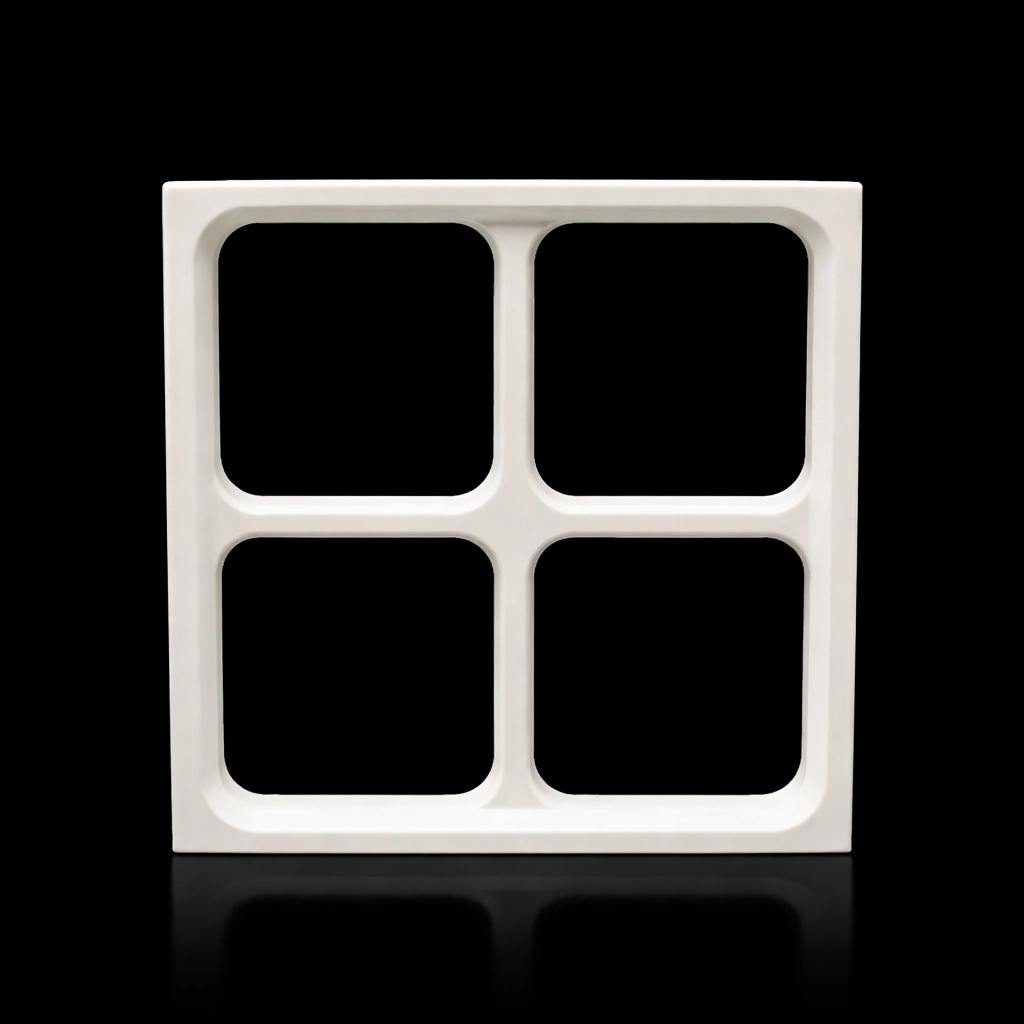
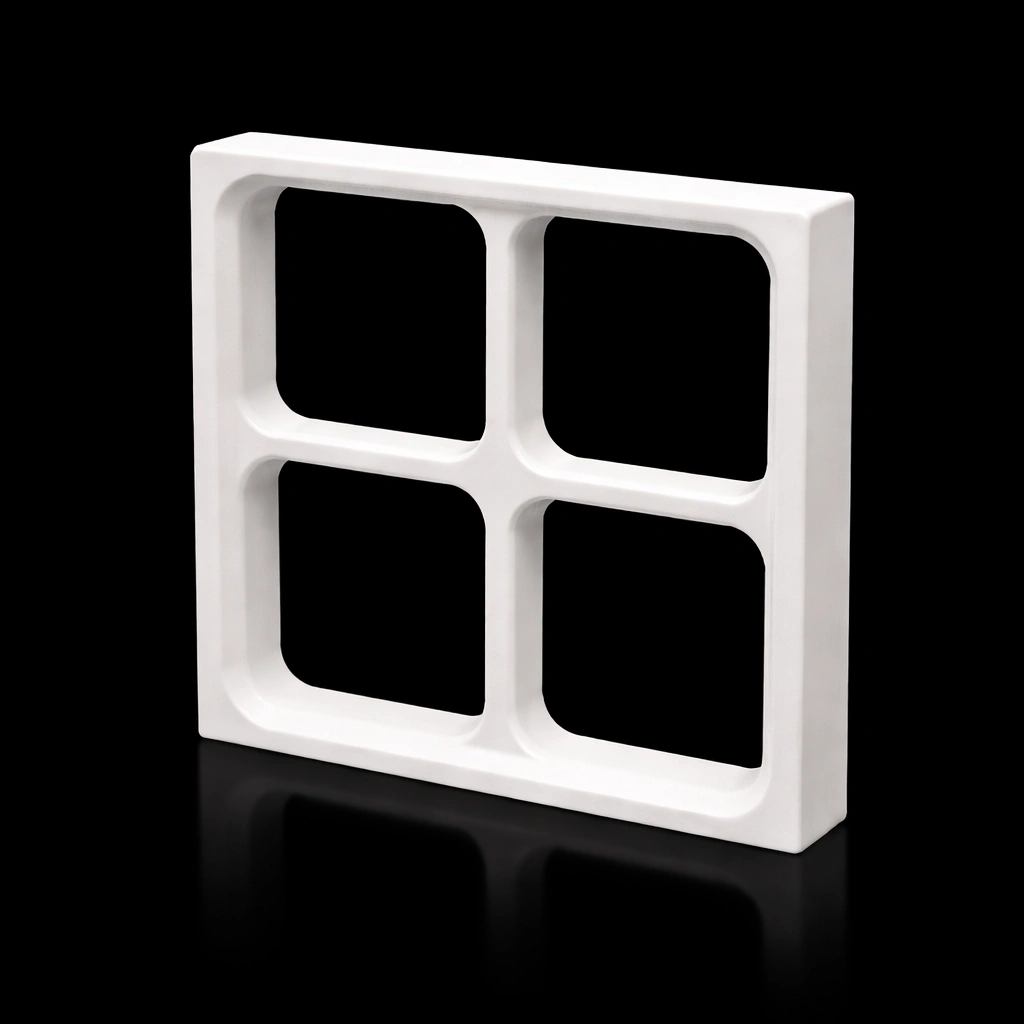
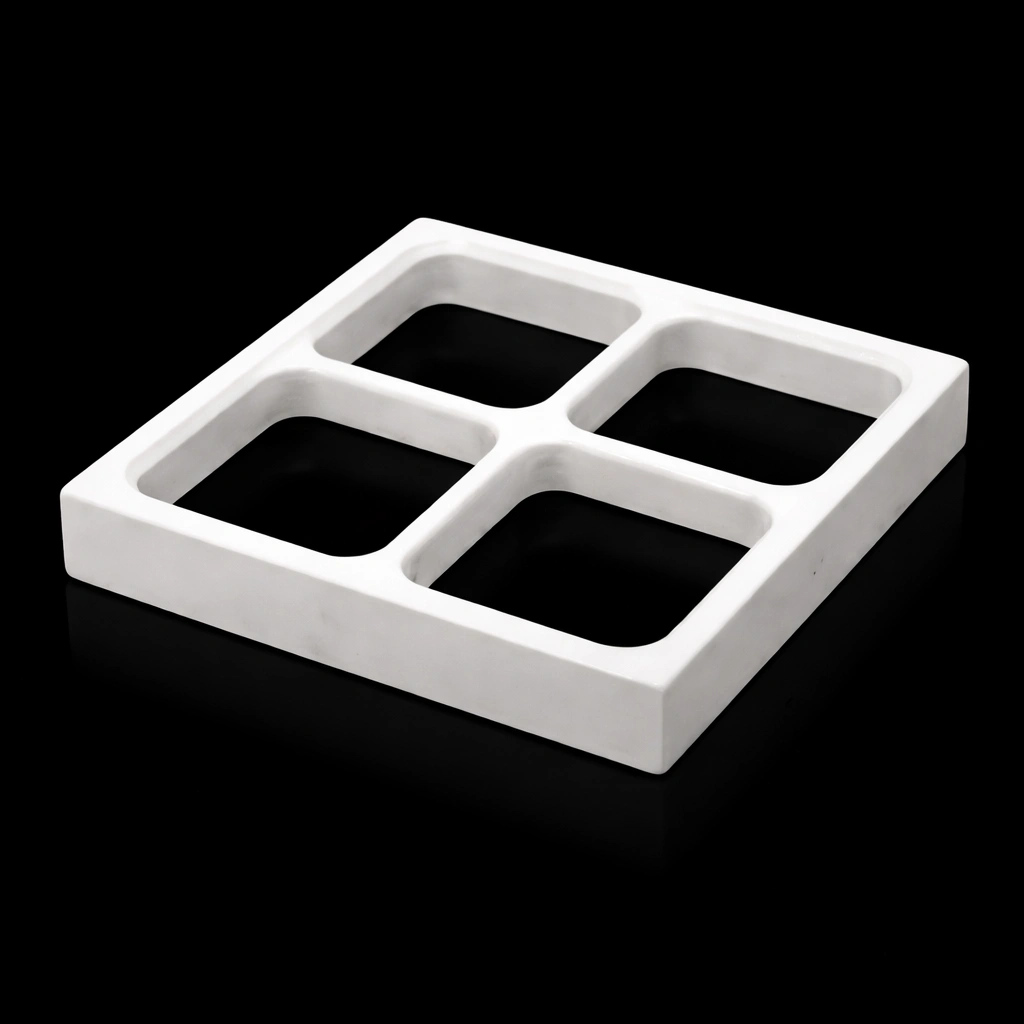
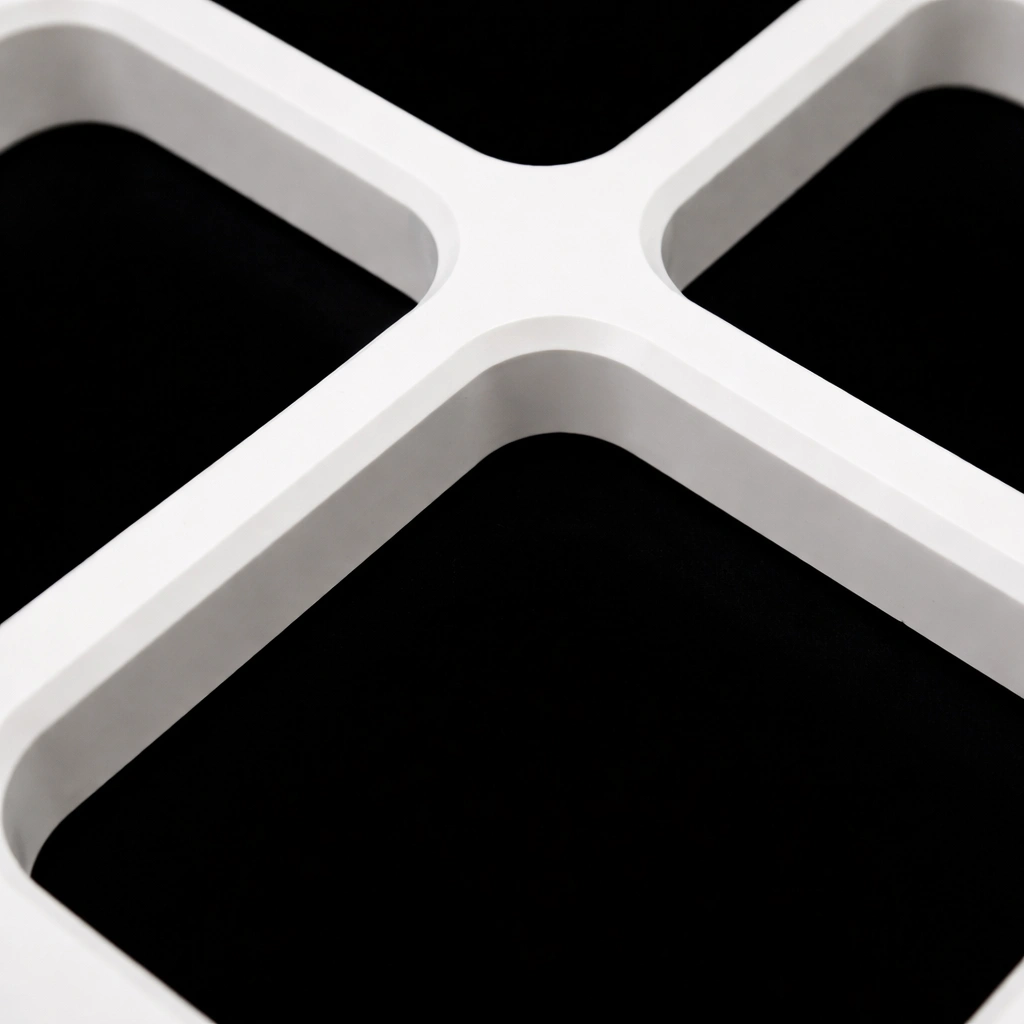
Custom 4-Sided Alumina Ceramic Square Gauge for Multi-Face Reference Setup and Inspection

ADCERAX supplies Ceramic Square Gauge options in common shop-floor sizes and also supports custom designs based on drawings or samples. Edge lengths, thickness, and multi-face reference configurations can be defined to match specific inspection heights, machine travel ranges, and measurement setups. Custom solutions are often used in CNC machine alignment, fixture verification, and dimensional inspection where the gauge geometry must fit the available measurement space and reference method.

Catalog No. AT-JYI202050-SG
Material Al2O3
Purity 99% 99.5% 99.7%
Density 1680°c(99%)-1730°c(99.7%)
Customize 1000x400x50mm


24H Standard Dispatch
Small Batch Support OEM
Factory Direct
Expert Engineering Support

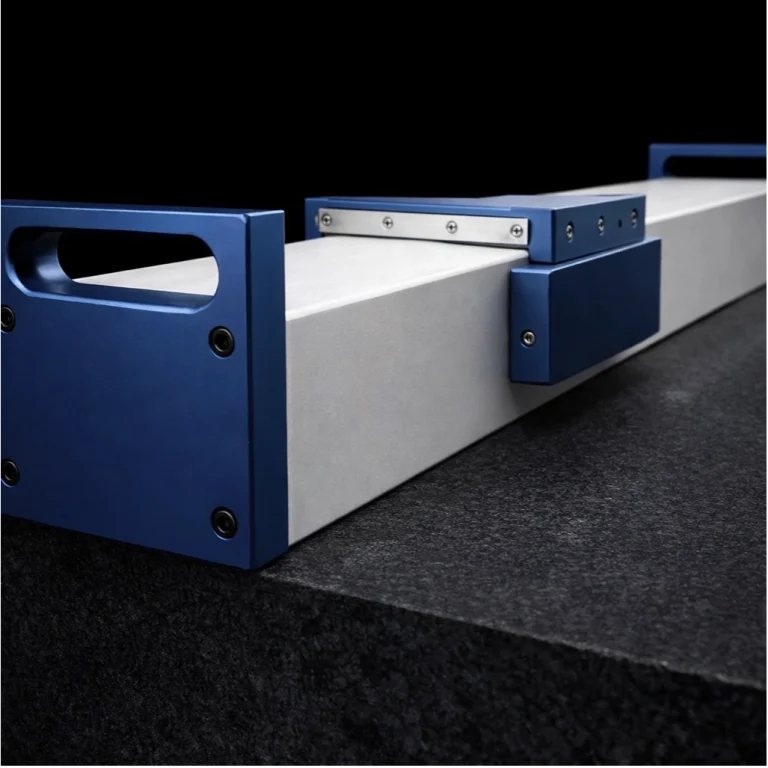
Ceramic Square Gauge is a precision right-angle reference tool made from technical ceramic, used to verify 90° squareness between surfaces, machine axes, fixtures, and inspection setups. It functions like a “master square” in dimensional metrology: you place it on a reference surface and use an indicator, probe, or optical method to check whether a wall, axis, or fixture is truly perpendicular.

Benefits of the Ceramic Square Gauge

  • Multi-face reference geometry for flexible squareness verification
    The Ceramic Square Gauge is designed with multiple precision reference faces, allowing technicians to position the gauge from different orientations during inspection. This structure helps maintain consistent right-angle verification across different machine setups, fixtures, and measurement positions.
  • Wear-resistant reference edges for long-term dimensional stability
    The contact edges of the Ceramic Square Gauge resist abrasion during repeated indicator or probe contact. This reduces edge rounding over time and helps maintain stable inspection geometry in high-frequency measurement environments.
  • Low sensitivity to corrosion-related geometry change
    Unlike conventional steel reference squares, ceramic surfaces do not oxidize in humid shop environments or coolant-rich machining areas. This helps preserve edge integrity and minimizes long-term geometry drift caused by corrosion.
  • Non-magnetic body prevents magnetic interference during inspection
    The Ceramic Square Gauge does not interact with magnetic chucks, ferrous chips, or residual magnetism in machining environments. This prevents positioning errors that can occur when steel tools are influenced by magnetic attraction.
  • Stable handling format for fast inspection routines
    The rigid ceramic structure and balanced geometry allow operators to position the gauge quickly during maintenance checks or acceptance inspections. This supports efficient “place-and-verify” measurement routines in machine alignment workflows.


Ceramic Square Gauge Properties

Property Unit 99.5% Al₂O₃ 99.6% Al₂O₃ 99.7% Al₂O₃ 99.8% Al₂O₃ 99.9% Al₂O₃ 99.99% Al₂O₃
Alumina content % 99.5 99.6 99.7 99.8 99.9 99.99
Density g/cm³ 3.89 3.91 3.92 3.93 3.94 3.98
Open porosity % 0
Color Ivory Ivory Ivory Ivory Ivory Ivory
Water absorption % 0 0 0 0 0
Young’s modulus (Elastic modulus) GPa 375 356 357 358 359 362
Shear modulus GPa 152
Bulk modulus GPa 228
Poisson’s ratio 0.22
Compressive strength MPa 2600 2552 2554 2556 2558 2570
Flexural strength MPa 379 312 313 314 315 320
Fracture toughness MPa·m¹ᐟ² 4
Hardness GPa 14.1 (≈1440 kg/mm²) 23 24 25 26 30
Thermal conductivity W/m·K 35 32–37 33–38 34–39 35–40 36–42
Thermal shock resistance ΔT °C 222 223 224 225 228
Maximum use temperature (no load) °C ≤1750 1755 1760 1765 1770 1800
Coefficient of thermal expansion 10⁻⁶/°C 8.4
Specific heat J/kg·K 880
Volume resistivity Ω·cm >1×10¹⁴ >1×10¹⁴ >1×10¹⁴ >1×10¹⁴ >1×10¹⁴ >1×10¹⁴
Dielectric constant (relative permittivity) 9.8 9.83 9.84 9.85 9.86 9.92
Dielectric strength kV/mm 16.9 23.2 23.4 23.6 23.8 24
Dissipation factor (loss factor @ 1 kHz) 0.0002


Ceramic Square Gauge Specifications

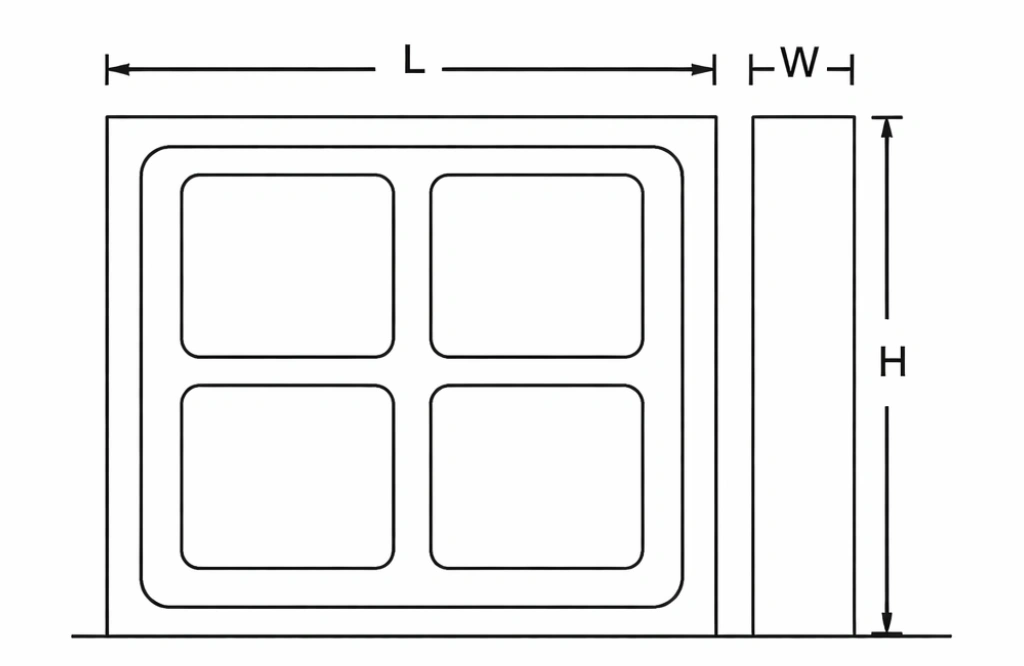
Ceramic Square Gauge picture

Model No. Dimensions (L×W×H) mm Straightness μm Perpendicularity μm Weight kg
AT-JYI202050-SG 200×200×50 < 1.5 3.5
AT-JYI353550-SG 350×350×50 8.1
AT-JYI404050-SG 400×400×50 11
AT-JYI454550-SG 450×450×50 < 2 12.5
AT-JYI505055-SG 500×500×55 /
Custom 1000×400×50 < 2 /

Ceramic Square Gauge Packaging

  • Each Ceramic Square Gauge is individually protected with edge guards to prevent reference-face impact during transit.
  • Shock-absorbing inner packing with rigid outer carton reduces corner chipping risk.
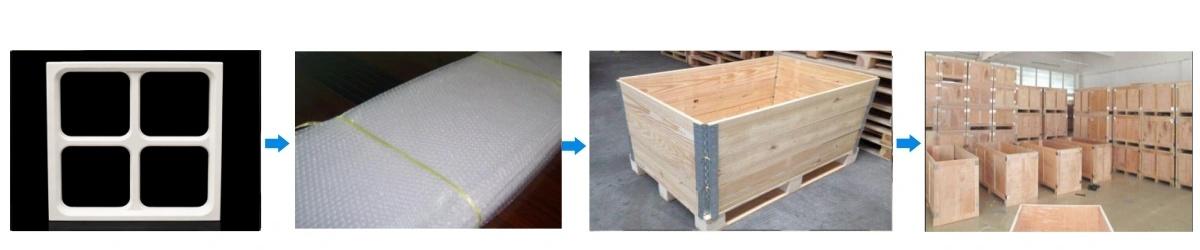
Ceramic Square Gauge Packaging


Application Scenarios — Ceramic Square Gauge

  • CNC Job Shops & Precision Machining Plants

    ✅ Key Advantages

    1. Faster squareness confirmation during setup reduces trial cuts and rework loops.
    2. Multi-face reference supports consistent placement across multiple machines and shifts.
    3. Non-magnetic body reduces handling issues near magnetic workholding.

    ✅ Problem Solved

    A typical squareness drift of 0.02 mm over a 300 mm height can produce a measurable angular error that shows up as tapered walls or assembly mismatch. When this appears after a setup is locked, rework often includes re-indicating, re-clamping, and repeating first-article checks, which can consume hours across a shift. A Ceramic Square Gauge enables a quick right-angle verification step before cutting, helping teams decide whether to proceed, compensate, or schedule alignment. The result is fewer repeated setups and fewer parts rejected for angle-related geometry issues.

  • Machine Tool Alignment & Maintenance Service Providers

    ✅Key Advantages

    1. Portable right-angle reference supports on-site machine acceptance and post-repair verification.
    2. Reference edges resist corrosion-related geometry change in varied shop environments.
    3. Multi-face layouts reduce reposition steps when checking different axes or planes.

    ✅ Problem Solved

    Field alignment work often runs on a fixed window where machine downtime must be minimized. If right-angle verification requires repeated repositioning and the reference tool is sensitive to handling damage, results can vary between technicians. A Ceramic Square Gauge with defined reference faces supports a consistent “place–check–record” workflow across sites. This reduces repeat checks caused by uncertain reference conditions and helps service teams deliver acceptance documentation with fewer iterations.

  • Metrology & Calibration Ecosystem

    ✅Key Advantages

    1. Defined reference faces support controlled datum selection in inspection procedures.
    2. Wear-resistant edges help maintain repeatability under frequent contact measurements.
    3. Custom tolerances and reference strategies align with documented verification routines.

    ✅ Problem Solved

    In dimensional inspection, variation often results from inconsistent datum selection rather than instrument accuracy. A squareness error of 0.02 mm over 300 mm height equals about 0.0038° angular deviation, which can cause visible taper or assembly misalignment. The Ceramic Square Gauge provides a stable 90° reference for quick perpendicularity checks. This helps reduce repeated setup adjustments and improves measurement consistency across operators and machines.

User Guide — Ceramic Square Gauge

  • Installation / Setup

    1. If using on a surface plate, confirm the plate is clean and free of chips near the contact area.
    2. Place the Ceramic Square Gauge using two-hand support to avoid corner impact; set it down vertically without sliding.
    3. If clamps are required, apply only the force needed to prevent movement and avoid point loading on corners.

  • Use

    1. Select one reference face of the Ceramic Square Gauge as the datum and keep the same orientation for repeated checks.
    2. Maintain a consistent contact method such as indicator sweep path, probe force, and measurement height.
    3. Record measurement heights (e.g., 100 mm, 200 mm, 300 mm) so results can be compared over time.
    4. For CNC squareness verification, perform measurements after machine warm-up to minimize thermal variation.
    5. If possible, measure at two different heights to identify angular deviation trends.

  • Storage

    1. Store the Ceramic Square Gauge in a protective case with edge guards installed.
    2. Avoid placing heavy objects on the case to prevent edge damage.
    3. Keep the gauge away from vibration-prone areas to reduce accidental impact.

  • Cleaning

    1. Wipe reference faces with a clean lint-free cloth after use to remove dust and metal particles.
    2. Use mild solvent only if required by your inspection procedure; avoid abrasive pads on reference surfaces.
    3. Inspect edges before use and avoid using chipped reference faces for precision verification.

FAQ — Ceramic Square Gauge

  1. What is a Ceramic Square Gauge used for in CNC squareness verification?
    A Ceramic Square Gauge provides a 90° reference to check machine axis squareness, fixture right angles, and setup geometry before machining or acceptance.

  2. How do I choose the correct size of the Ceramic Square Gauge for my machine?
    Choose an edge length that covers your common inspection height and allows indicator sweep clearance; larger machines often need a longer edge length for meaningful angle sensitivity.

  3. Is a 4-sided Ceramic Square Gauge necessary compared with a 2-face design?
    A 4-sided Ceramic Square Gauge is useful when you need multiple datum faces for repeated setups, quicker repositioning, or different inspection orientations without changing tools.

  4. What tolerance information should I provide when requesting a custom Ceramic Square Gauge?
    Provide target squareness tolerance, reference face flatness requirement, and the measurement method you will use so the reference strategy matches your inspection procedure.

  5. Can a Ceramic Square Gauge replace a granite square or steel square in daily QC checks?
    In many shops it can, especially where corrosion risk or magnetic interference affects steel tools; selection depends on your handling method and required squareness grade.

  6. How often should a Ceramic Square Gauge be recalibrated?
    Recalibration frequency depends on usage frequency and handling environment; high-contact daily use typically requires more frequent verification than occasional maintenance checks.

  7. What should I do if the Ceramic Square Gauge has a small edge chip?
    Do not use the chipped reference face for acceptance checks; isolate that face and switch to an intact reference face or replace the gauge if the chip affects datum integrity.

  8. Which measurement tools are commonly used with a Ceramic Square Gauge?
    Dial test indicators, indicator stands, CMM probes (non-semiconductor contexts), and surface

Ceramic Square Gauge Reviews

  • ⭐️⭐️⭐️⭐️⭐️
    We use the Ceramic Square Gauge for post-repair squareness verification on vertical machining centers. The multi-face reference makes our field workflow more consistent across technicians.
    -- Michael Turner, Maintenance Supervisor, AxisLine Machine Service
  • ⭐️⭐️⭐️⭐️⭐️
    Our Ceramic Square Gauge order included a custom edge length to match our typical inspection height. The gauge helps us confirm right-angle conditions before first-article checks.
    -- Elena Rossi, Quality Engineer, Varese Precision Machining
  • ⭐️⭐️⭐️⭐️⭐️
    We source this Ceramic Square Gauge line as a repeat item for customers with toolroom QC needs. ADCERAX factory communication on specifications and lead-time assumptions was clear, which reduced back-and-forth.
    -- Daniel Wong, Purchasing Manager, NorthBridge Industrial Supply
  • ⭐️⭐️⭐️⭐️⭐️
    The pricing structure was workable for both standard and drawing-based Ceramic Square Gauge requests. Our customers mainly care about reference faces and tolerance clarity, and the documentation matched that expectation.
    -- Sarah Collins, Operations Manager, Meridian Tooling Solutions
customize size

Customization — Ceramic Square Gauge

Ceramic Square Gauge customization focuses on aligning the gauge geometry with your inspection method, machine working envelope, and reference strategy. Based on your drawing or measurement requirements, key dimensions and reference features can be defined to support stable squareness verification.

  • Edge length (L) and overall height (H) to match CNC travel range, surface plate coverage, or fixture inspection height, ensuring full measurement span without repositioning.
  • Thickness and cross-section structure optimized for stiffness-to-weight balance, minimizing deflection while maintaining probe or indicator clearance.
  • Reference face configuration including 2-face, 4-face, or multi-datum layouts to support different inspection orientations and repeatable setups.
  • Squareness tolerance level defined according to machine alignment targets or metrology standards, with agreed verification method if required.
  • Reference face flatness and waviness limits specified to maintain stable contact conditions during high-precision measurement routines.
  • Edge treatment options such as sharp precision edges, safety chamfers, or controlled radii to balance accuracy and durability.
  • Surface finish selection (ground, fine-lapped, matte) based on contact method, friction control, and inspection repeatability needs.
  • Handling and safety features including grip grooves, lift points, and reinforced corner protection for safer shop-floor use.

Related Products

ADCERAX - Your Trusted Advanced Ceramics Manufacturing Partner

Direct factory manufacturing with comprehensive ceramic materials expertise and global supply capabilities

Direct Factory Manufacturing

China-based ceramic materials production facility with state-of-the-art equipment

Engineering Team

Experienced professionals in advanced ceramics applications and custom design

Quality Control

Strict quality control standards for technical ceramics manufacturing and quality management

Global Supply Chain

Serving customers worldwide with technical ceramics and rapid response

24/7 Technical Support

Round-the-clock support for ceramic components inquiries and technical assistance

500+ Satisfied Customers

Trusted by global customers for advanced ceramic materials and precision components

Get in touch with us

Our team will be happy to respond to you in less than 24 hours.

Adcerax's factory

Quick Quotation

*Our team will answer your inquiries within 24 hours.

*Your information will be kept strictly confidential.

Ready to Solve Your Engineering Challenge?

Partner with ADCERAX for reliable, high-performance advanced ceramic solutions. Our engineers are ready to discuss your project.

E-mail

info@adcerax.com

Phone

+(86) 0731-74427743 | WhatsApp: +(86) 19311583352

Response Time

Within 24 hours

Quick Quote

The more details you provide, the faster we can quote.

*We respond within 24 hours. All inquiries are confidential.

Download Catalog

Get Your Custom Sulution

The more details you provide, the faster we can respond.

customize size

*We respond within 24 hours. All inquiries are confidential.

Download Catalog