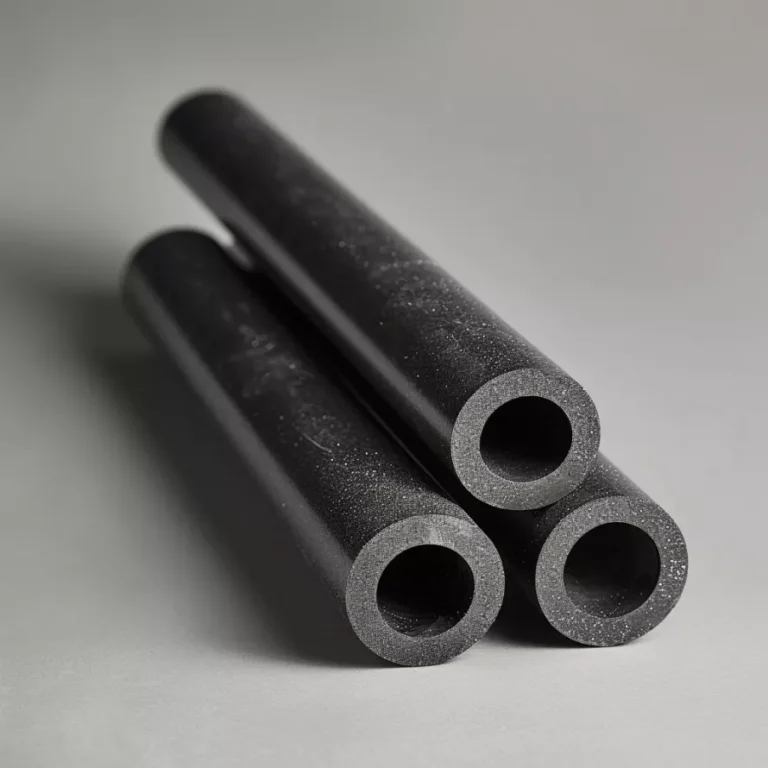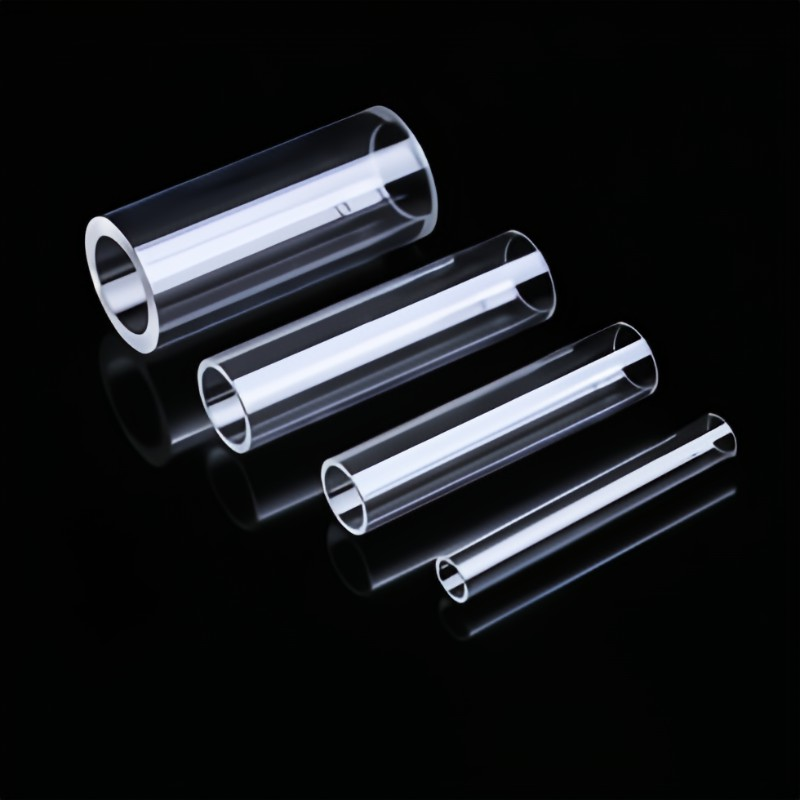
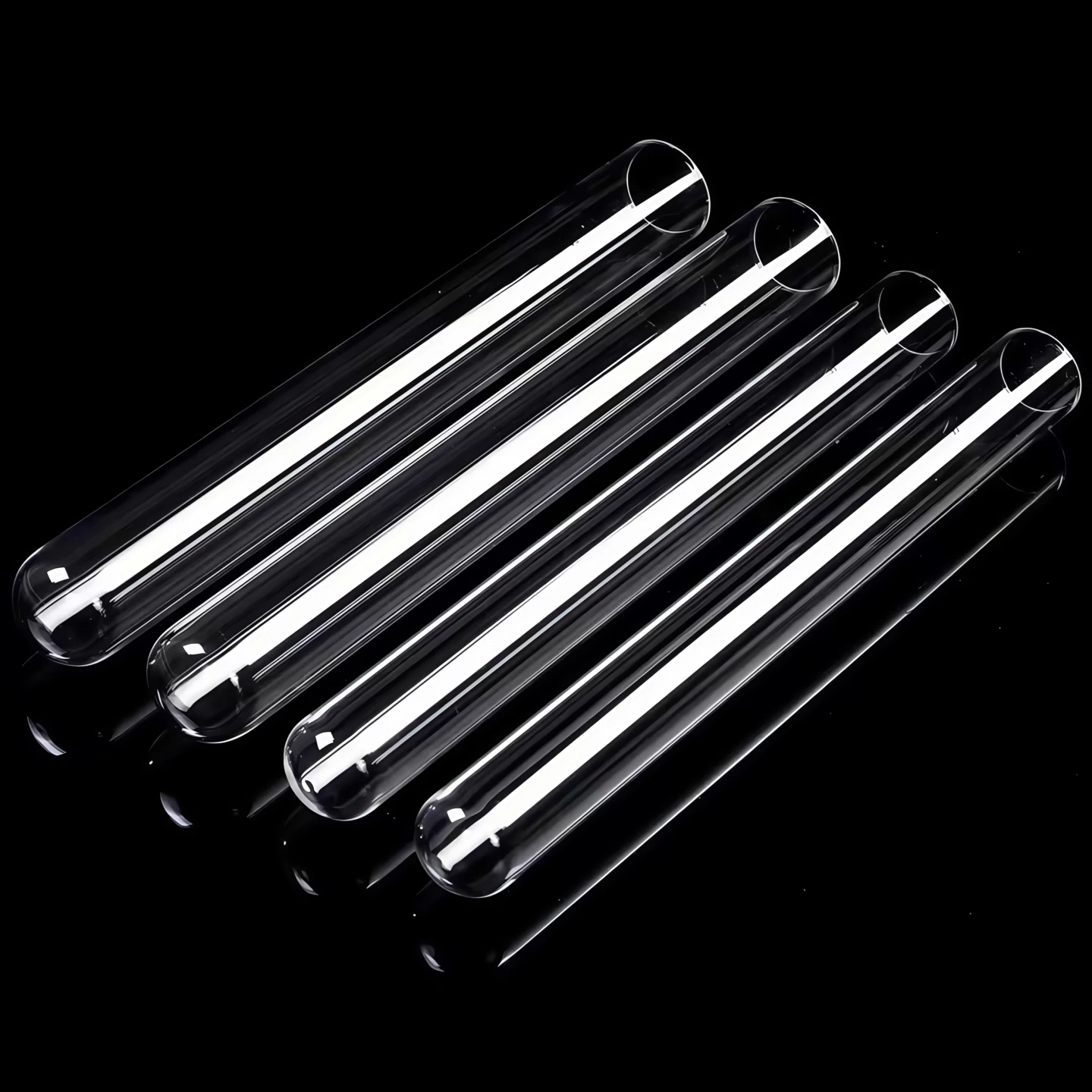
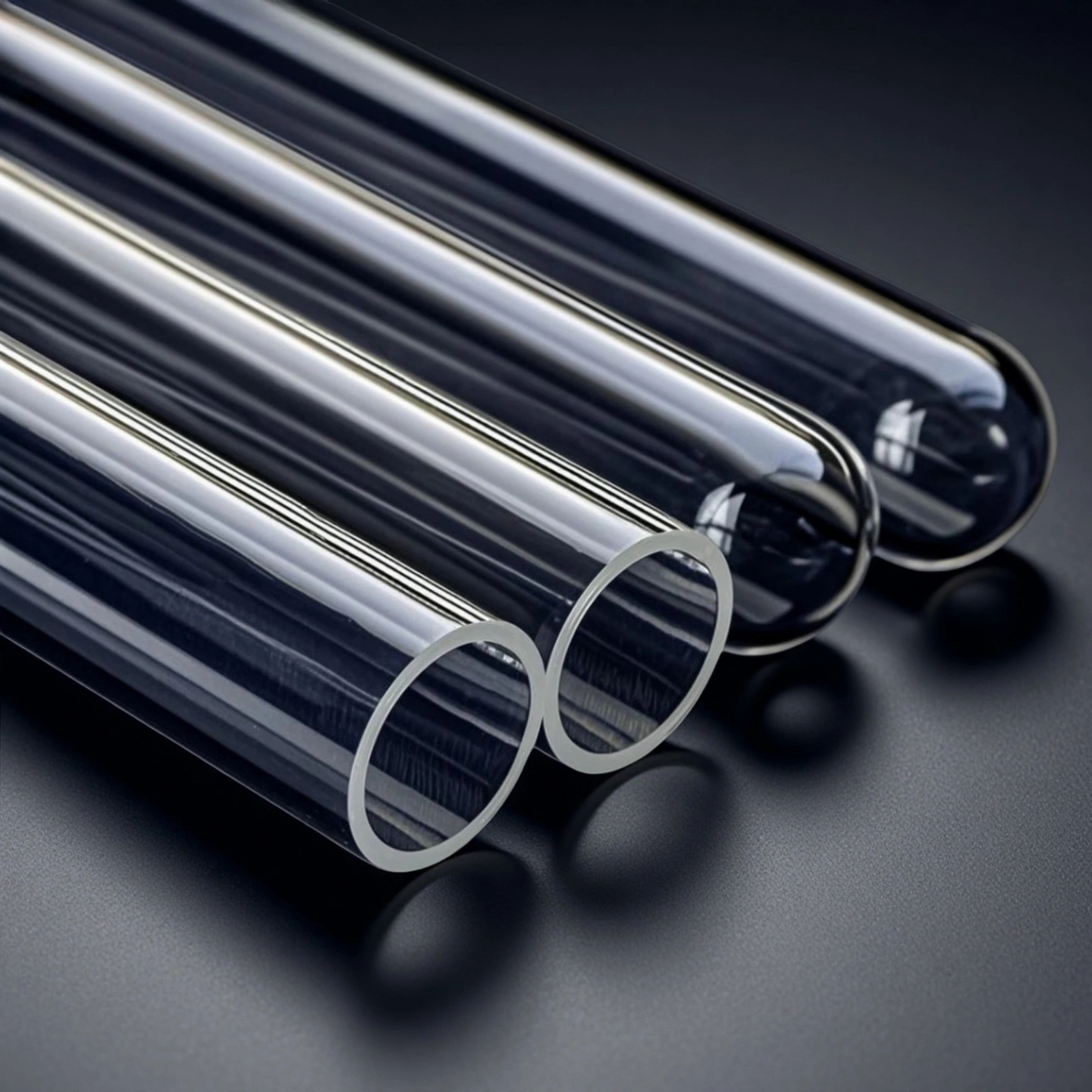
Sapphire Tube (Sapphire Tubing & Sleeves) for UV, Plasma, and High-Temperature View

Sapphire tube (sapphire tubing/sleeve) provides a high-hardness, deep-UV-to-NIR transmissive path or protective channel for UV curing lines, UVC disinfection units, plasma equipment, and high-temperature viewports. Stock sizes cover common OD/ID ranges; custom thin-wall, end-face polish, and concentricity are available.

Catalogue No. AT-BS-G2001
Material Al₂O₃
Refractive index n (@633 nm) ≈ 1.76
Tolerance ±0.05mm (ID/OD)
Dimensions/Sizes Download PDF
24H Standard Dispatch
Small Batch Support OEM
Factory Direct
Expert Engineering Support

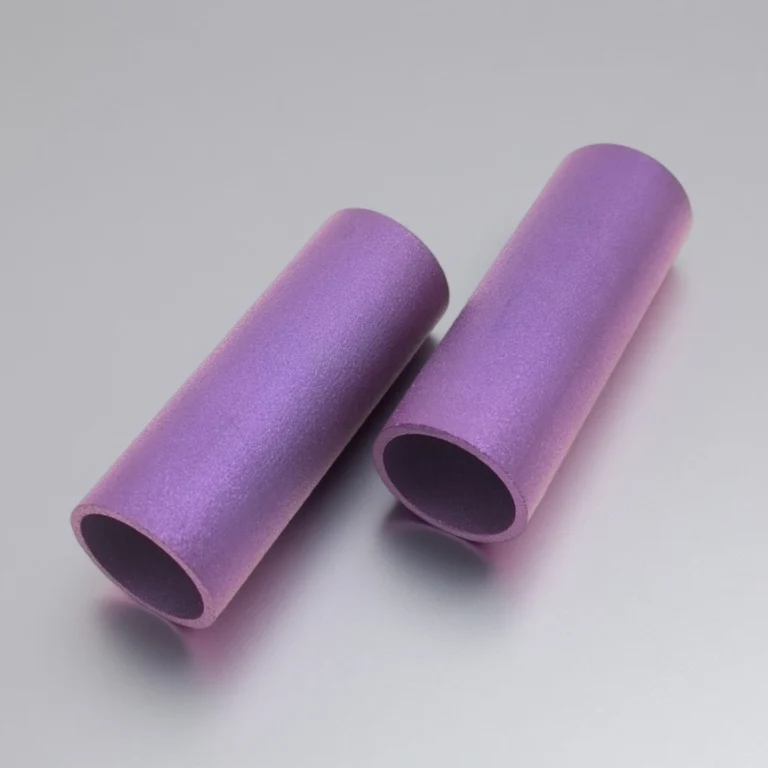
Sapphire tube is a hollow component made from single-crystal aluminum oxide (Al₂O₃). It functions as a protective sleeve, optical path, or sight tube in equipment that requires deep-UV to near-IR transmission, high hardness, chemical stability, and dimensional integrity at elevated temperature. Sapphire tubing is typically produced from C-plane single crystal and then machined and polished to the required OD/ID, wall thickness, straightness, and end-face geometry.

Sapphire Tube Benefits

  • Concentricity over length — stable OD/ID axis alignment to reduce lamp fit and seal stress.
  • End-face geometry options — square, bevel, or micro-chamfer to lower chipping risk and improve sealing.
  • Thin-wall capability — enables lower optical loss and weight without compromising straightness.
  • Low-scatter finish — optional end polishing to improve UV throughput and imaging consistency.
  • Dimensional repeatability — drawing-matched batches for easier replacement and interchange.


Sapphire Tubing Properties

Property Value
Material Al2O3 (monocrystalline structure)
Purity 99.999%
Max. Working Temperature 1950℃
Transmissivity >86% (280-3500nm)
Refractive Index (λ ≈ 546 nm) 1.76
Density 3.98-4.1g/cm3
Hardness 1700Hv
Compressive Strength 2100MPa
Tensile Strength 200MPa
Bending Strength 445MPa
Elasticity Modulus 380GPa
Poisson's Ratio 0.28
Thermal Conductivity 28-32W/m*K
Thermal Expansion Coefficient 6*10-6/K
Refractive Index 1.76
Volume Resistivity >1.5*1016Ohm*cm
Dielectric Strength 48KV/mm
Lattice Constant (a, c) a = 4.758 Å, c = 12.991 Å
Double-Side Polished Surface Ra < 0.5 nm
Decomposition Point > 2000 °C (in air)


Sapphire Tube Specifications


Type 1 ——Sapphire Tube Open at Both Ends
Item No. Outer Diameter(mm) Thickness(mm) Length (mm)
AT-BS-G2001 5~10mm 1~4mm 0~1400mm
AT-BS-G2002 10~20mm 1~8mm 0~1400mm
AT-BS-G2003 20~30mm 1~10mm 0~1400mm
AT-BS-G2004 30~50mm 1~15mm 0~1400mm
AT-BS-G2005 50~70mm 1~15mm 0~400mm
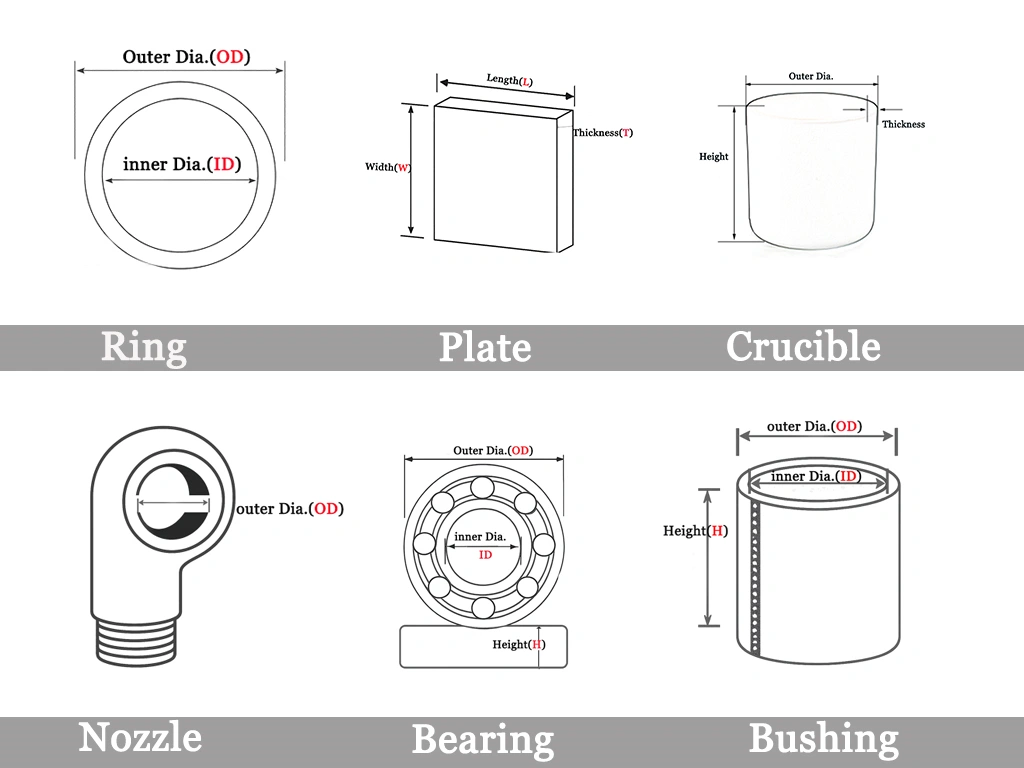
AT-BS-G2006 1~3mm Inner hole 0.3~1mm 0~150mm
AT-BS-G2007 5-200mm Inner hole0.3-180mm 5-1400mm (Customize)


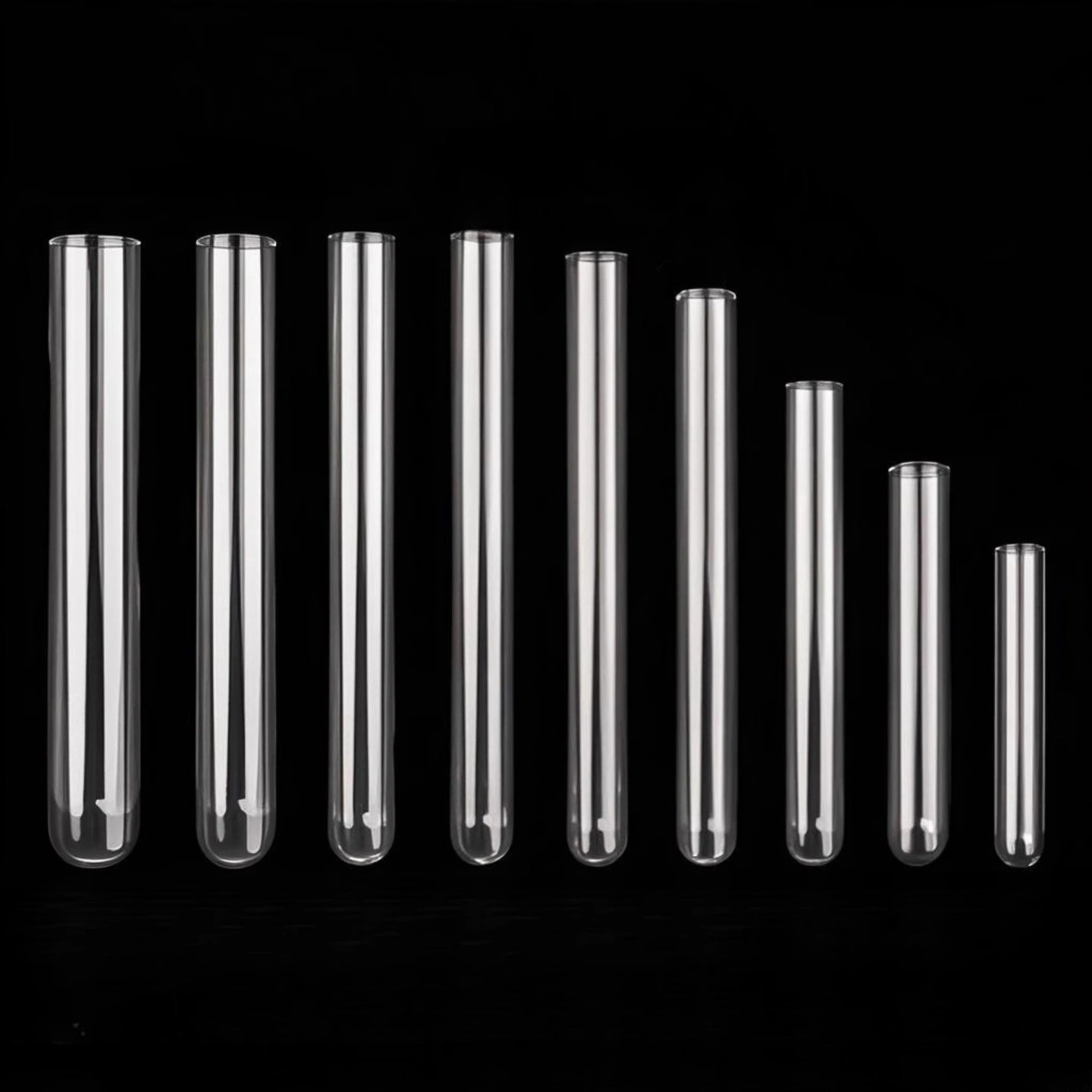
Type 2 ——Sapphire Tube One End Sealed
Item No. Outer Diameter(mm) Inner Diameter(mm) Length (mm)
AT-BS-G2008 20-70 16 800
AT-BS-G2009 20-70 16 900
AT-BS-G2010 20-70 16 1000
AT-BS-G2011 20-70 16 1450


Type 3 ——Sapphire Thermocouple Protection Tubes
Item No. Outer Diameter(mm) Inner Diameter(mm) Length (mm)
AT-BS-G2012 6 4 5-1500
AT-BS-G2013 8 5 5-1500
AT-BS-G2014 10 5 5-1500
AT-BS-G2015 5-80 2-70 5-1500 (Customize)


Type 4 ——Sapphire Capillary Tube
Item No. Outer Diameter(mm) Inner Diameter(mm) Length (mm)
AT-BS-G2016 1.57 0.5 280


Sapphire Tube vs. Quartz/Borosilicate

  • Durability: Sapphire outperforms in hardness and abrasion resistance; quartz/borosilicate are more prone to scratching.
  • Optics: Sapphire supports deep-UV and high-energy environments with polished, low-scatter ends; quartz also transmits UV but scratches more easily.
  • Temperature & strength: Sapphire maintains geometry at heat with lower CTE; borosilicate is cheapest but least suitable for harsh UV/thermal duty.
  • Cost & machining: Sapphire is higher cost and requires diamond machining; quartz/borosilicate are easier to form and cheaper for non-critical use.
Property Sapphire Tube Quartz Tube
Hardness Mohs 9 (very high) Mohs 7
Thermal Shock Resistance Excellent (up to 1000 °C ramp tolerance) Moderate (≤800 °C)
UV Transmission Deep-UV (190 nm) UV (220 nm limit)
Chemical Resistance Excellent to acids/alkalis/plasma Limited in fluorine/chlorine plasma
Cost Higher, but longer service life Lower initial cost

In summary: sapphire is chosen where lifetime stability, deep UV throughput, or dimensional precision is critical.


Sapphire Sleeves Packing

  • Each sapphire tube is individually packed in anti-static foam-lined boxes
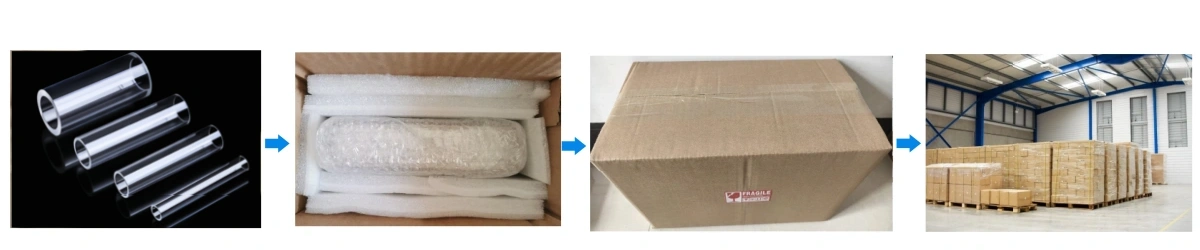
Sapphire Sleeves Packing

Application Scenarios – Sapphire Tube Use

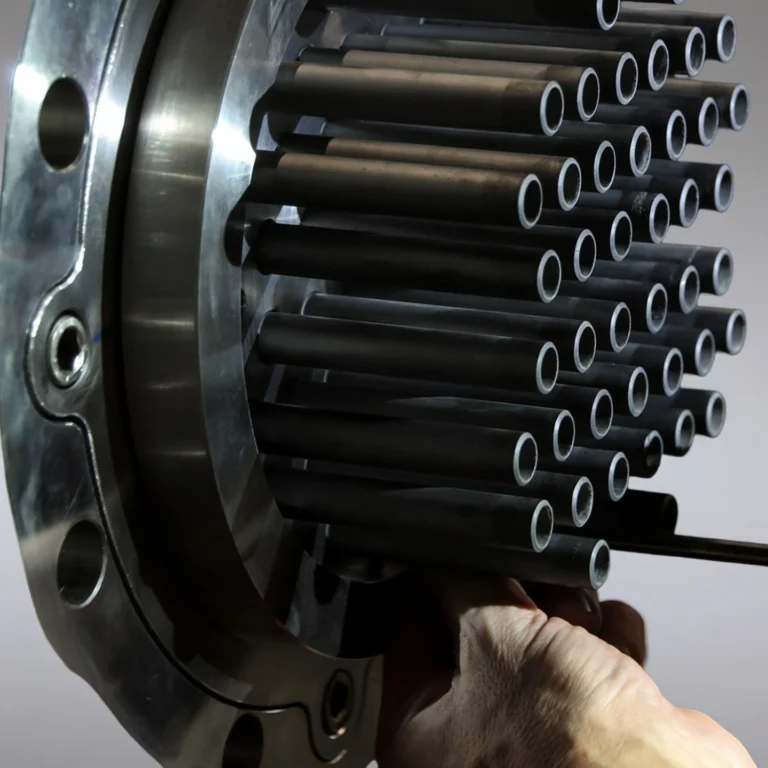
  • UV Systems (UVC & UV Curing)

    ✅Key Advantages

    1. Higher service life vs thin glass — abrasion-resistant sleeve maintains clarity across duty cycles.
    2. End-polish improves UV dose repeatability — stable output uniformity over maintenance intervals.
    3. Tight concentricity — better lamp alignment, less seal stress in housings.

    ✅ Problem Solved

    A printing line replaced quartz sleeves with sapphire tubes on the highest-wear stations. With polished ends and a ±0.10 mm wall tolerance, lamp alignment checks dropped from weekly to monthly. Output drift related to sleeve wear was reduced by ~30%, and changeover scrap decreased by ~12% over two quarters (1,800+ hours).

  • Plasma & Vacuum Equipment

    ✅Key Advantages

    1. Erosion resistance in reactive plasmas extends inspection intervals.
    2. Low-scatter finish keeps optical diagnostics stable during runs.
    3. Defined straightness enables consistent sealing in feedthroughs.

    ✅ Problem Solved

    A plasma cleaner OEM reported tube erosion marks and seal leakage after 8–10 weeks. Switching to sapphire tubes with specified straightness and bevelled ends extended average maintenance cycles to ~16 weeks and cut seal replacement cost by ~25% across 120 tools.

  • High-Temperature Viewing/Process Sight

    ✅Key Advantages

    1. Thermal stability maintains geometry near hot zones.
    2. Chamfered ends lower chip initiation during installation.
    3. Repeatable batches simplify annual outage spares planning.

    ✅ Problem Solved

    A heat-treat facility standardized on a single drawing for three furnace models. Concentricity and end-face polish were fixed in the spec; with batch-matched lots, on-site fitting time dropped by ~35% and breakage on install fell below 1% for the year.

Sapphire Tubing Usage Instructions

  • Installation

    Proper installation ensures the sapphire tube maintains its geometry and surface quality throughout operation.

    1. Verify all dimensions — Confirm OD, ID, length, and end geometry against the approved drawing before unsealing clean pouches.
    2. Use soft-jaw or polymer-padded fixtures to prevent point stress; never clamp directly on edges.
    3. Align axially and evenly — Apply uniform torque across clamps to avoid ovalization and micro-cracking along thin walls.
    4. Support both ends when installing long tubes (>400 mm) to prevent sagging or twisting.
    5. Avoid metal-to-sapphire contact during mounting; use sleeves or collars made of PTFE, PEEK, or silicone.
    6. Inspect orientation marks or engraving for correct direction before assembly in optical or UHV systems.
    7. Clean environment — Perform installation in a clean area to minimize particle or oil contamination on polished surfaces.

  • In Use

    Sapphire’s hardness and optical clarity remain stable under proper conditions. Follow these guidelines for maximum lifetime:
    1. Respect thermal gradients — Gradually ramp up and cool down temperatures according to equipment specs to reduce thermal shock.
    2. Avoid rapid cycling between hot and cold environments; excessive thermal swing may cause micro-fractures at chamfers or end faces.
    3. Prevent mechanical vibration impact — Use guiding collars, rubber isolators, or O-rings to minimize edge contact.
    4. Keep surfaces clean — Fingerprints and residues increase scatter and lower UV transmission; handle only with gloves or tweezers.
    5. Monitor alignment — Slight eccentricity can raise seal stress; recheck concentricity after every maintenance cycle.
    6. Avoid direct flame or plasma impingement on one spot; use shielding or deflectors when necessary.

  • Storage

    To maintain geometry and surface quality during long-term storage:
    1. Keep tubes seated in their original foam cavities and sealed in clean pouches to prevent dust or scratches.
    2. Store flat or horizontally on padded trays to eliminate bending stress on long tubes.
    3. Separate by size and drawing number; label each batch with orientation and QC lot code for traceability.
    4. Maintain stable ambient conditions — humidity < 60%, temperature 15–25 °C; avoid exposure to strong UV or sunlight.
    5. Do not stack trays directly; use rigid interlayers between batches.

  • Cleaning

    Regular cleaning ensures optical clarity and sealing performance:

    1. Blow away loose dust using clean compressed air or nitrogen.
    2. Wipe end faces with lint-free wipes moistened by filtered IPA or ethanol; follow with dry wipes.
    3. Avoid abrasive powders or mechanical polishing compounds on optical surfaces.
    4. Do not ultrasonically clean long thin-wall tubes unless fully supported, as resonance can cause cracking.
    5. Inspect under 5–10× magnification to confirm there are no scratches, chips, or residue marks.
    6. Ensure full drying before repackaging; moisture trapped in pouches may create stains during temperature cycling.
    7. Replace pouches if any inner surface shows lint, oil, or static dust.

Sapphire Sleeves FAQ

  1. Q: What tolerances can be achieved for sapphire tubes?
    A: After DFM review, typical wall-thickness tolerance is ±0.10 mm, and OD/ID tolerance ±0.05–0.10 mm depending on length and diameter. For optical or UHV assemblies requiring concentricity, runout ≤0.10 mm can be achieved on tubes up to 500 mm. Ultra-long (>800 mm) parts may require compromise on straightness.
  2. Q: Can sapphire tubes be used in deep-UV (UVC) environments?
    A: Yes. Single-crystal sapphire transmits down to 190–200 nm, enabling stable performance in UVC disinfection systems, photolithography, and UV curing. Unlike quartz, sapphire resists UVC-induced browning, maintaining >85% transmission over extended exposure cycles.

  3. Q: What surface finishes are available for sapphire tubing?
    A: ADCERAX offers:
    a. Ground finish for structural/thermal use (Ra ≤0.2 μm).
    b. End-face optical polish for transmission and sealing surfaces (Ra ≤0.05 μm).
    c. Double-sided polish for transparent flow or optical path tubes.
    d. Interior polish optional for spectroscopy or plasma observation channels.

  4. Q: What information is required to quote a sapphire tube?
    A: To ensure accurate costing and manufacturability, please specify:
    a. OD/ ID/wall thickness and tolerance requirements.
    b. Total length and straightness or runout band.
    c. End details (square, bevel, chamfer, or closed-end).
    d. Surface finish (raw, polished, double-side polished).
    e. Optical or general-grade defect allowance.
    f. Target quantity, repeat order frequency, and usage environment (UV, plasma, or thermal).

  5. Q: Can sapphire tubes be customized for non-circular or multi-bore designs?
    A: Yes. ADCERAX can produce square, rectangular, or dual-bore sapphire sleeves using precision diamond grinding. These are used in dual optical channels, custom sensors, and compact vacuum ports. Each design undergoes DFM verification to ensure tool accessibility and deformation control during machining.
  6. Q: What is the expected lifespan or maintenance interval for sapphire tubes?
    A: Service life depends on operating environment:
    a. UV lamp sleeves: typically >3000 hours continuous operation without haze or distortion.
    b. Plasma viewports: up to 6–12 months before optical cleaning or replacement.
    c. Furnace sight tubes: often reused for >3 years if handled and stored properly.
    Routine inspection for micro-chips or scatter rise is advised every maintenance cycle.

What our Clients Say about Sapphire Tube

  • ⭐️⭐️⭐️⭐️⭐️
    “The sapphire tubes from ADCERAX replaced our quartz sleeves perfectly. UV output stayed stable, and there’s no discoloration even after continuous UVC use.”
    -- Daniel Meyer | Technical Director | UV Systems GmbH (Germany)
  • ⭐️⭐️⭐️⭐️⭐️
    “Custom sapphire tubing matched our drawings exactly. The chamfered ends sealed well, and the dimensional repeatability between batches was excellent.”
    -- Rebecca Lin | Procurement Manager | PlasmaTech Asia (Singapore)
  • ⭐️⭐️⭐️⭐️⭐️
    “We use sapphire sight tubes for furnace inspection ports. They handle 1000 °C easily and arrived in flawless foam packaging without any edge chips.”
    -- Aaron Collins | Mechanical Engineer | ThermoSight Process Solutions (USA)
  • ⭐️⭐️⭐️⭐️⭐️
    “ADCERAX supplied double-polished sapphire optical sleeves for our laser tests—low scatter, precise fit, and fast turnaround.”
    -- Sofia Marques | R&D Scientist | Photonics Research Lab (Portugal)
customize size

Sapphire Tubes Customized

For integration into equipment, define geometry and inspection criteria up-front. ADCERAX provides DFM feedback on tolerances, finish, and edge design before sample build.

1. Outer / Inner Diameter & Wall Thickness Tolerance

  • Define OD / ID dimensions according to your system fit-up.
  • Wall-thickness tolerance as tight as ±0.10 mm after DFM review.
  • OD range commonly 3–60 mm, ID and wall proportional to optical or mechanical requirements.
  • For precision lamp sleeves and view tubes, concentric OD–ID alignment ≤0.1 mm is achievable.

2. Length & Straightness

  • Customizable from 100 mm up to 1000 mm (longer on case-by-case evaluation).
  • Straightness window defined by span; critical for long sight tubes and UV lamp housings.
  • Straightness deviation typically controlled within 0.10–0.25 mm per 100 mm length.
  • Optional runout report can be issued with CMM inspection data.

3. End Details & Edge Geometry

  • End type: open/one-end closed/bevelled/sloped/flat / chamfered per drawing.
  • Chamfer size and edge break radius prevent chipping during installation.
  • Optional end-face polishing improves optical transmission and sealing performance.
  • Orientation mark or engraved ID available for assembly direction reference.

4. Cross-Section Variants

  • Standard circular cross-section for most optical and mechanical assemblies.
  • Square or rectangular sleeves for structural integration or sensor protection.
  • Multi-bore configurations for dual optical paths or fluid channels (evaluated per project).
  • Complex geometries are possible through CNC and diamond core grinding under DFM validation.

4. Surface Condition & Finish

  • Finishing stages include as-ground, lapped, or optically polished ends.
  • Interior polish is optional for flow-through or optical path designs.
  • Surface roughness Ra < 0.05 μm attainable for optical-grade finish.
  • Clean-room packaging follows polishing to prevent particle contamination.

5. Concentricity/Runout

  • Controlled to match mechanical assembly requirements.
  • Runout ≤0.05–0.15 mm depending on OD and length.
  • Critical for UVC lamp alignment, reducing seal stress and ensuring even irradiation.

6. Defect/Appearance Grade

  • Define inclusion, striae, and bubble acceptance levels per intended use (optical or mechanical).
  • Optical-grade tubes guaranteed low scatter/high clarity/no visible striae under 50× inspection.
  • General-purpose grade allows micro-defects within 1% area for non-optical applications.
  • Optional transmission test (200–800 nm) data sheet upon request.

Related Products

ADCERAX - Your Trusted Advanced Ceramics Manufacturing Partner

Direct factory manufacturing with comprehensive ceramic materials expertise and global supply capabilities

Direct Factory Manufacturing

China-based ceramic materials production facility with state-of-the-art equipment

Engineering Team

Experienced professionals in advanced ceramics applications and custom design

Quality Control

Strict quality control standards for technical ceramics manufacturing and quality management

Global Supply Chain

Serving customers worldwide with technical ceramics and rapid response

24/7 Technical Support

Round-the-clock support for ceramic components inquiries and technical assistance

500+ Satisfied Customers

Trusted by global customers for advanced ceramic materials and precision components

Get in touch with us

Our team will be happy to respond to you in less than 24 hours.

Adcerax's factory

Quick Quotation

*Our team will answer your inquiries within 24 hours.

*Your information will be kept strictly confidential.

Ready to Solve Your Engineering Challenge?

Partner with ADCERAX for reliable, high-performance advanced ceramic solutions. Our engineers are ready to discuss your project.

E-mail

info@adcerax.com

Phone

+(86) 0731-74427743 | WhatsApp: +(86) 19311583352

Response Time

Within 24 hours

Quick Quote

The more details you provide, the faster we can quote.

*We respond within 24 hours. All inquiries are confidential.

Download Catalog

Get Your Custom Sulution

The more details you provide, the faster we can respond.

customize size

*We respond within 24 hours. All inquiries are confidential.

Download Catalog