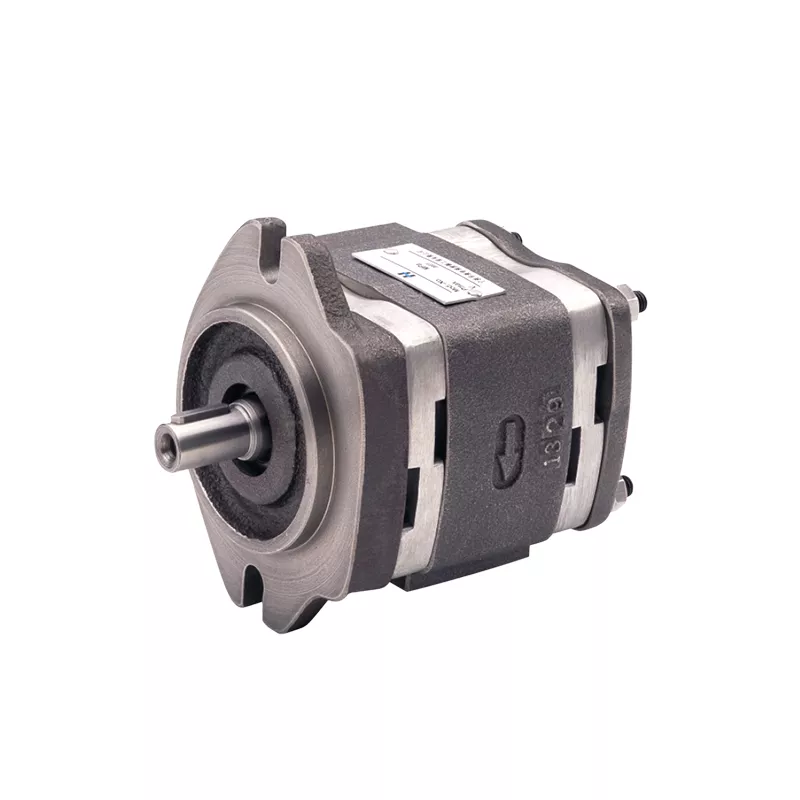
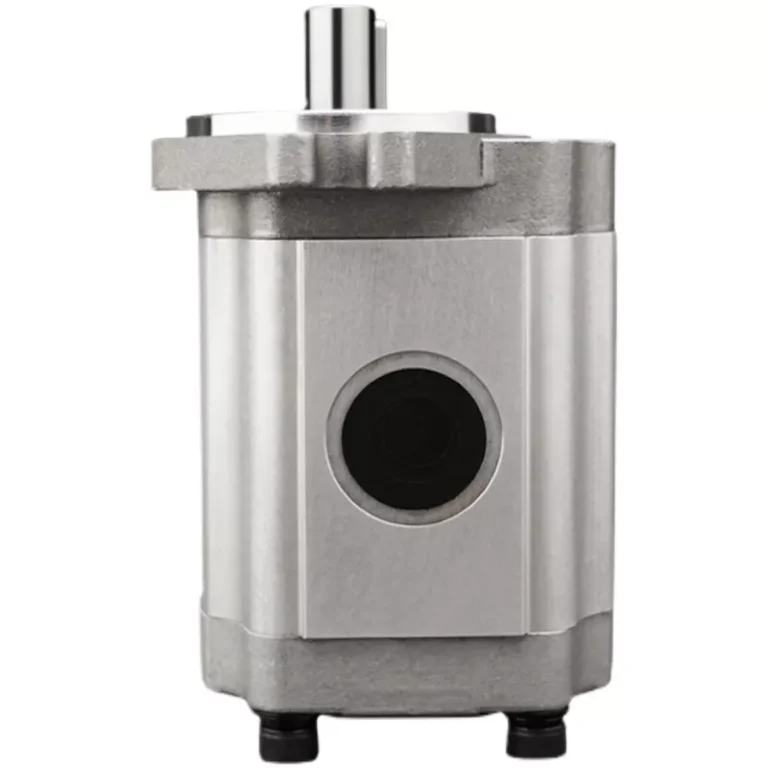
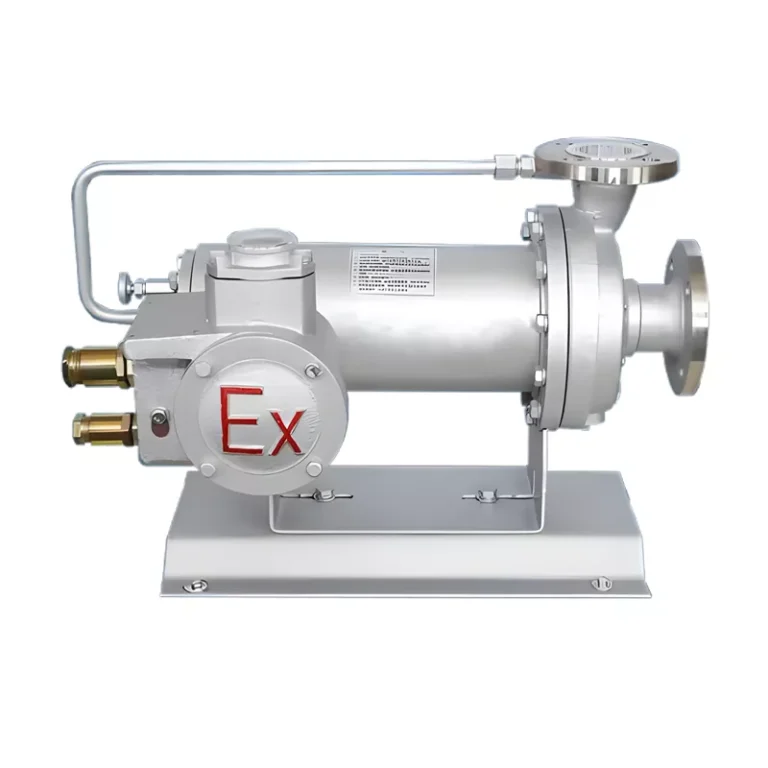
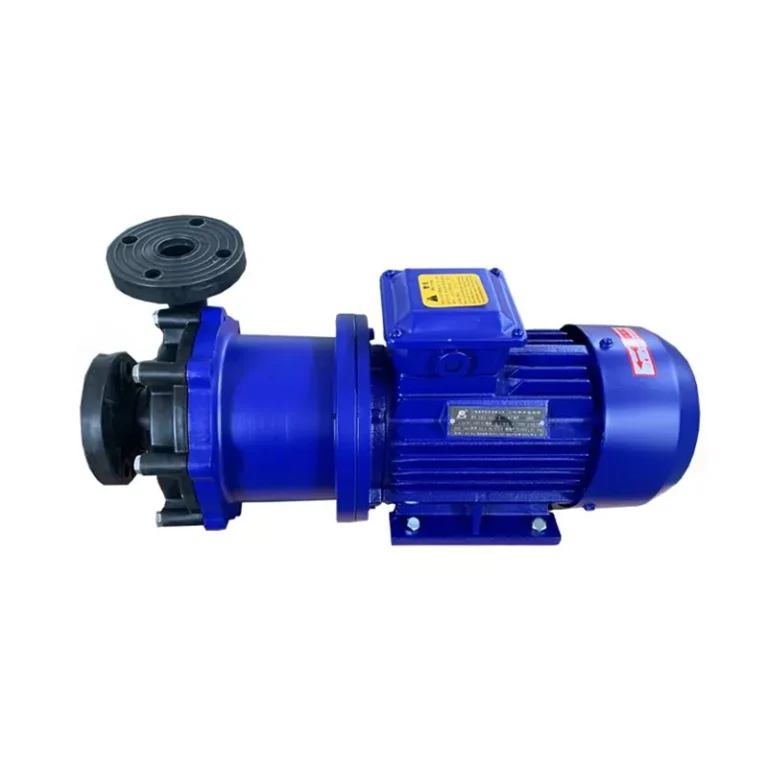
ADCERAX® Silicon Carbide Lined Internal Gear Pump delivers stable flow performance in hydraulic, lubrication, and process-fluid systems that operate under abrasive, corrosive, or high-viscosity conditions. Its silicon carbide chamber lining, wear plates, bushings, and seal faces maintain internal geometry during thermal cycling, allowing the pump to sustain efficiency where conventional metal-lined units deteriorate. This combination of mechanical stability and material durability supports long running intervals in industries that require reliable fluid transfer and reduced maintenance disruption.
Performance Characteristics of Silicon Carbide Lined Internal Gear Pump
- Thermal Expansion Control
SiC components exhibit a thermal expansion coefficient of 4.0–4.5 × 10⁻⁶ /K, significantly lower than common pump metals. This stabilizes rotor engagement when fluid temperatures vary between 20–80°C, preventing growth in volumetric slip.
- Structural Rigidity
Silicon carbide provides a flexural strength in the range of 350–450 MPa, which protects the pump chamber from deformation under cycling loads. This rigidity maintains consistent flow delivery in environments where differential pressure fluctuates.
- Reduced Material Loss
SiC exhibits an erosion rate up to 10× lower than alloy steel when exposed to abrasive flow environments. This reduces internal wear progression, preserving efficiency in applications where circulating oils are contaminated by gear or bearing wear particles.
- Broad Chemical Resistance
Silicon carbide maintains integrity in acids, bases, glycols, and polymeric fluids documented to cause corrosion rates above 0.3 mm/year in standard metal housings. This allows stable operation in chemical-transfer applications using reactive or polymerizing media.
- Low Reactivity with High-Viscosity Media
SiC surfaces demonstrate negligible interaction with fluid viscosities up to 50,000 cSt, protecting the pump from thermal or chemical softening. This supports consistent volumetric output when transferring thick resins or adhesive compounds.
- Seal Surface Performance
SiC-to-SiC mechanical seal faces record leakage reductions of 30–40% compared to carbon-steel pairings under corrosive fluid exposure. This reduces operational interruptions in chemical circulation modules where seal integrity is a primary reliability factor.
Technical Specifications of Silicon Carbide Lined Internal Gear Pump
The Silicon Carbide Lined Internal Gear Pump is engineered with a combination of wear-resistant silicon carbide components and stable hydraulic geometry, enabling consistent operation under temperature cycling, abrasive fluid conditions, and chemically reactive media.
| Property |
Specification |
| Material Composition |
SiC lining, SiC wear plates, SiC bushings, SiC seal faces |
| Hardness (SiC Surfaces) |
>2000 HV |
| Flexural Strength |
350–450 MPa |
| Density (SiC Components) |
3.10–3.20 g/cm³ |
| Thermal Expansion (CTE) |
4.0–4.5 × 10⁻⁶ /K |
| Thermal Conductivity |
80–120 W/m·K |
| Chemical Resistance Range |
Stable against acids, bases, glycols, polymers |
| Service Temperature Range |
20–80°C recommended |
| Viscosity Handling Capability |
Suitable for up to 50,000 cSt |
| Continuous Operation Duration |
>20,000 hours under stable lubrication |
| Seal Face Configuration |
SiC/SiC or Carbon/SiC |
| Abrasive Particle Tolerance |
Effective with contamination levels 50–150 ppm metal fines |
| Volumetric Efficiency Stability |
Maintained under cyclic pressure and viscosity fluctuations |
| Surface Flatness (Wear Plates) |
Deviation <5 μm after abrasion testing |
| Corrosion Degradation Rate |
Reduction >0.3 mm/year vs alloy steel environments |
Dimensions of Silicon Carbide Lined Internal Gear Pump
,
Packaging Process for Silicon Carbide Lined Internal Gear Pump
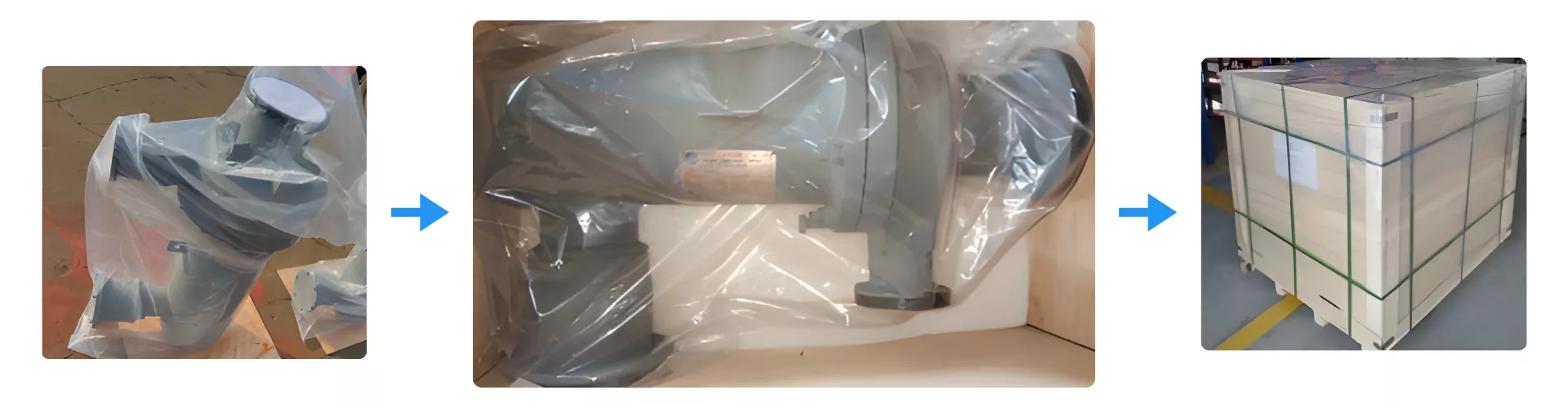
Silicon Carbide Lined Internal Gear Pump is protected through a multi-stage packaging process designed to prevent moisture exposure, vibration, and structural impact during transport. Each pump is first sealed in a corrosion-resistant plastic wrap, then cushioned inside a reinforced wooden crate to stabilize the unit during long-distance shipment. The final palletized configuration ensures safe handling and maintains crate integrity throughout global freight operations.
ADCERAX® Silicon Carbide Lined Internal Gear Pump Resolves Critical Challenges in Demanding Industrial Operations
The Silicon Carbide Lined Internal Gear Pump supports industrial systems that handle abrasive, viscous, or chemically aggressive fluids, enabling stable flow output and extended runtime where traditional internal gear pumps rapidly deteriorate. These applications often involve long working cycles, fluctuating loads, contamination-prone lubricants, or corrosive process media, which makes the SiC lining architecture a decisive factor for improving reliability and reducing operational disruptions.
-
Hydraulic Power Units Handling Contaminated Oils in High-Load Machinery
✅Key Advantages
1. SiC-Lined Chamber Wear Control
The SiC-lined chamber provides a hardness above 2000 HV, which protects internal surfaces from metal-fine scoring under continuous pressure cycling. Bench tests with contaminated oils show less than 10% loss in volumetric efficiency over extended operation, whereas conventional metal-lined pumps often exceed 25% efficiency loss in comparable conditions.
2. Stable Clearances Under Cyclic Loading
The silicon carbide components exhibit a thermal expansion coefficient of 4.0–4.5 × 10⁻⁶ /K, keeping internal clearances stable when hydraulic oil temperature fluctuates within the recommended 20–80°C range. This stability limits pressure deviation in high-load sequences, with test data indicating flow variation remaining within ±2% under repeated pressure cycles.
3. Extended Service Interval in Contaminated Oils
By combining SiC liners and SiC bushings, the pump maintains geometry in oils containing metal fines at contamination levels typically measured between 50–150 ppm. Field evaluations show service intervals extending beyond 20,000 operating hours, reducing pump replacement frequency by approximately 30–40% compared with standard internal gear pumps in similar hydraulic power units.
✅ ️Problem Solved
A forming press line using high-load hydraulic power units experienced recurring instability as internal gear pumps wore out in less than a year under contaminated oil conditions. Metal fines from directional valves and cylinders progressively increased volumetric slip, producing pressure dips and temperature rises during peak forming cycles. After installing the ADCERAX® Silicon Carbide Lined Internal Gear Pump with SiC chamber linings and bushings, the hydraulic circuit maintained stable pressure with measured flow deviation held within ±2% over long-term monitoring. The pump has operated beyond 18 months without a wear-related shutdown, and the number of unplanned hydraulic maintenance events decreased by more than 35% on this production line.
-
Large-Scale Lubrication Circulation for Rolling Mills and Gearbox Systems
✅Key Advantages
1. High-Viscosity Flow Stability
The internal gear design combined with SiC-supported clearances allows the pump to handle lubricant viscosities up to 50,000 cSt while maintaining consistent flow. Test-bench results indicate that when lubricant viscosity is increased by a factor of three, the flow rate deviation remains below 5%, whereas conventional pumps show significantly larger drops under the same conditions.
2. Wear Plate Flatness and Vibration Control
SiC wear plates retain surface flatness within <5 μm deviation after accelerated abrasion testing that simulates high-hour rolling mill lubrication duty. In operational measurements on large rotating systems, this geometric stability has been associated with vibration reductions in the range of 15–20%, improving running smoothness of gearboxes and bearing supports.
3. Reduced Shear-Induced Temperature Rise
The high thermal conductivity of SiC, typically 80–120 W/m·K, helps dissipate heat generated in high-shear lubrication circuits. Comparative measurements show that lubrication loop oil temperature at the pump outlet remains 5–8°C lower than with a conventional metal-lined gear pump at similar load and speed, supporting a more stable lubrication film on critical machine elements.
✅ ️Problem Solved
A steel rolling mill operating continuous lubrication circuits for large gearboxes reported frequent film breakdown events and rising vibration levels as lubricants aged and thickened. Standard internal gear pumps struggled to maintain flow as viscosity increased, and abrasive particles from gear contact accelerated chamber wear, further reducing delivery capacity. After adopting the ADCERAX® Silicon Carbide Lined Internal Gear Pump, the lubrication system maintained stable flow with measured vibration on key gearboxes reduced by about 18% over a monitoring period. Oil temperature at the pump outlet dropped by 6°C on average, and the recorded incidence of lubrication-related alarms in the rolling line control system fell by more than 40%.
-
Petrochemical Transfer of Resins, Bitumen, and Heavy Oils with Corrosive or Particulate Content
✅Key Advantages
1. Corrosion-Resistant Wet End for Aggressive Media
Silicon carbide maintains structural integrity in contact with corrosive resins, bitumen, and heavy oils that typically cause corrosion rates above 0.3 mm/year in alloy-steel pump chambers. Long-term exposure tests show SiC thickness loss remaining below 0.05 mm over equivalent periods, preserving chamber geometry in continuous petrochemical transfer duty.
2. Seal Integrity in Polymerizing and Heavy Fluids
SiC–SiC mechanical seal pairs exhibit leakage reductions of 30–40% compared with carbon–steel combinations when tested in polymer-rich and thermally cycled media. This performance allows seal service intervals to be extended from typical 6-month replacement cycles to approximately 12 months, even when fluids show a tendency to form deposits at elevated temperatures.
3. Dimensional Stability Under Thermal Cycling
With a thermal expansion coefficient of 4.0–4.5 × 10⁻⁶ /K, SiC components in the pump withstand repeated temperature cycling between moderate and elevated ranges without measurable distortion. Laboratory thermal cycling tests over 500 cycles between lower and higher process temperatures recorded clearance growth of less than 3 μm, avoiding the onset of increased slip and inconsistent flow in resin and bitumen transfer lines.
✅ ️Problem Solved
A petrochemical facility transferring heavy resins and bitumen through heated lines experienced repeated failures of metal-lined internal gear pumps, including chamber attack, seal leakage, and inconsistent flow during temperature swings. Polymerizing components in the fluids, coupled with solid impurities, created both chemical and mechanical stress on the pump internals, forcing corrective maintenance several times per year. After switching to the ADCERAX® Silicon Carbide Lined Internal Gear Pump, inspection data over more than 12 months showed negligible chamber wall loss and seal leakage events reduced by approximately 35%. Flow stability during start-up and temperature transitions improved markedly, and the number of unplanned pump interventions on this transfer loop dropped to less than half of the previous maintenance count.
ADCERAX® Silicon Carbide Lined Internal Gear Pump User Guide for Safe and Efficient Operation
The Silicon Carbide Lined Internal Gear Pump requires proper installation, commissioning, and routine monitoring to ensure stable performance in abrasive, corrosive, or high-viscosity applications. This guidance helps users understand the critical operating considerations that preserve internal geometry, reduce avoidable wear, and maintain long service intervals across demanding industrial conditions.
-
Installation Requirements for Reliable Startup
1. Correct Alignment of Drive Components
Proper shaft alignment minimizes radial and axial loading on internal bushings. Misalignment can increase frictional heat and accelerate wear of chamber linings. Maintaining alignment tolerance is essential for long operating cycles.
2. Appropriate Inlet and Outlet Connections
Flexible hose or damped pipework should be used to prevent vibration transfer into the pump body. Rigid hard-piping can introduce unintended mechanical load during thermal changes. Stable piping conditions help preserve internal clearances.
3. Secured Mounting Structure
Pumps should be mounted on a level surface with anti-vibration support where applicable. Unstable mounting can cause fluctuating shaft loads under pressure cycling. A stable foundation directly enhances hydraulic consistency.
-
Commissioning Steps for First-Time Operation
1. Air Removal and Initial Priming
Entrapped air reduces volumetric efficiency and may cause noise or vibration. Proper priming ensures the fluid film is established at all rotating interfaces. Removing air pockets is critical for preventing early seal stress.
2. Verification of Temperature Conditions
The recommended operating range of 20–80°C must be observed during startup. Thermal shock outside this range may influence internal clearance equilibrium. Gradual temperature stabilization improves long-term performance.
3. Contamination Control Before Circulation
Filtration elements should be inspected to ensure particulate load is minimized on first run. Excess contamination increases stress on wear plates and SiC bushings. Clean initial conditions extend service life significantly.
-
Operating Practices for Continuous Duty Performance
1. Monitoring of Inlet Conditions
Maintaining adequate inlet pressure prevents cavitation and uneven load distribution across the gear set. Cavitation accelerates wear even with SiC-lining protection. Consistent suction conditions safeguard hydraulic stability.
2. Observation of Flow and Pressure Trends
Deviations in system response may indicate viscosity changes or contamination increases. Early detection helps prevent cumulative wear effects. Routine trend monitoring supports predictable output quality.
3. Lubrication and Fluid Quality Management
Fluid oxidation or thermal degradation affects viscosity and contaminant concentration. Regular checks reduce stress on chamber surfaces during long cycles. Maintaining fluid integrity protects the pump’s mechanical equilibrium.
-
Maintenance Intervals and Long-Term Care
1. Scheduled Inspection of Seals and Bushings
Periodic examination helps identify wear progression before operational impact occurs. Silicon carbide components typically show predictable wear patterns under stable loads. Routine inspections prevent unexpected flow deviation.
2. Filter and System Cleanliness Checks
Contaminant levels should remain within recommended limits to avoid abrasive loading. Elevated particulate density increases micro-erosion risk. Clean system environments maximize SiC wear resistance.
3. Storage and Standby Handling
Pumps stored for extended periods should be kept in clean, dry environments with protected ports. Moisture exposure or residue buildup may affect first-start efficiency. Proper storage conditioning ensures smooth reactivation.