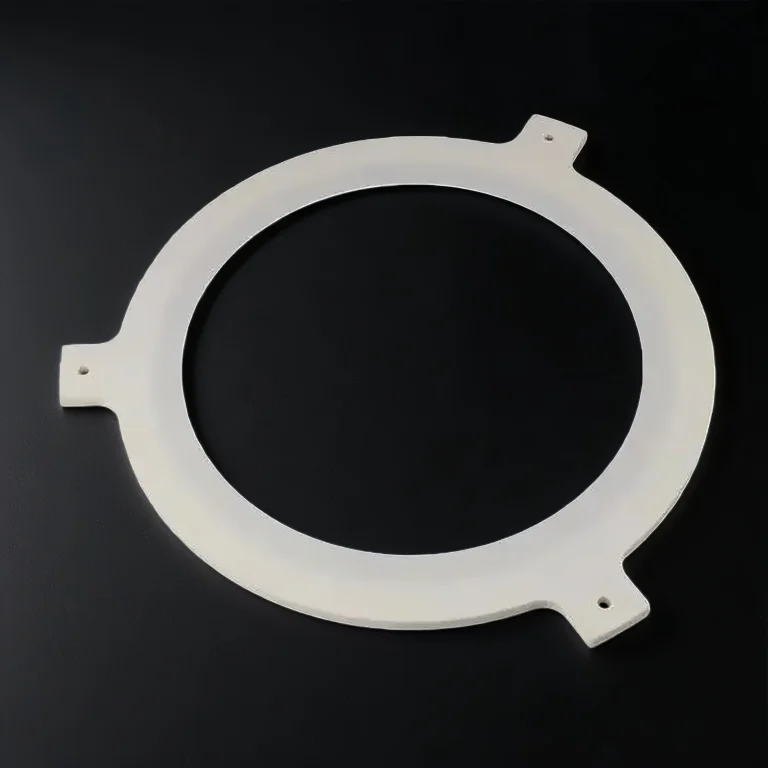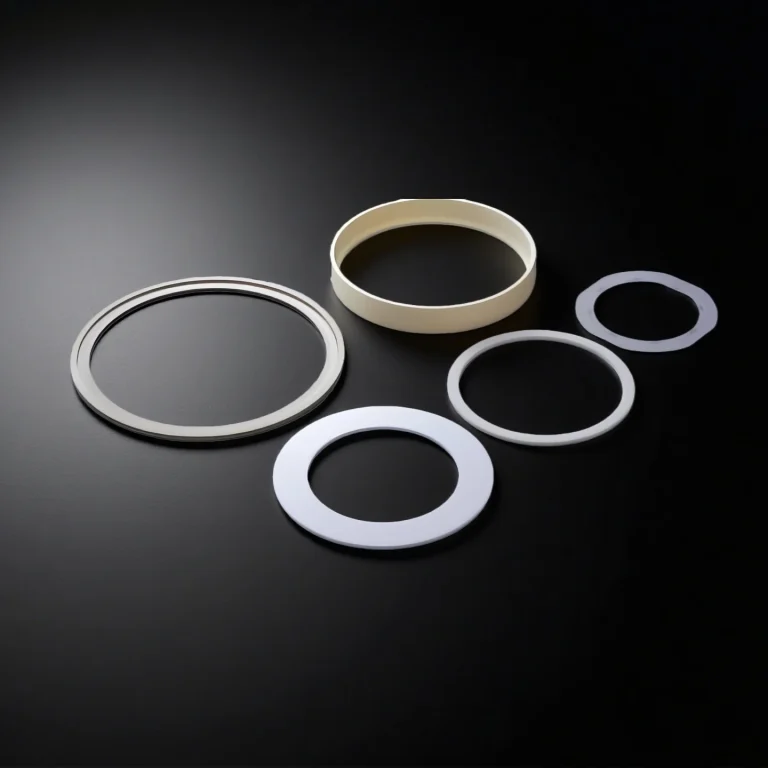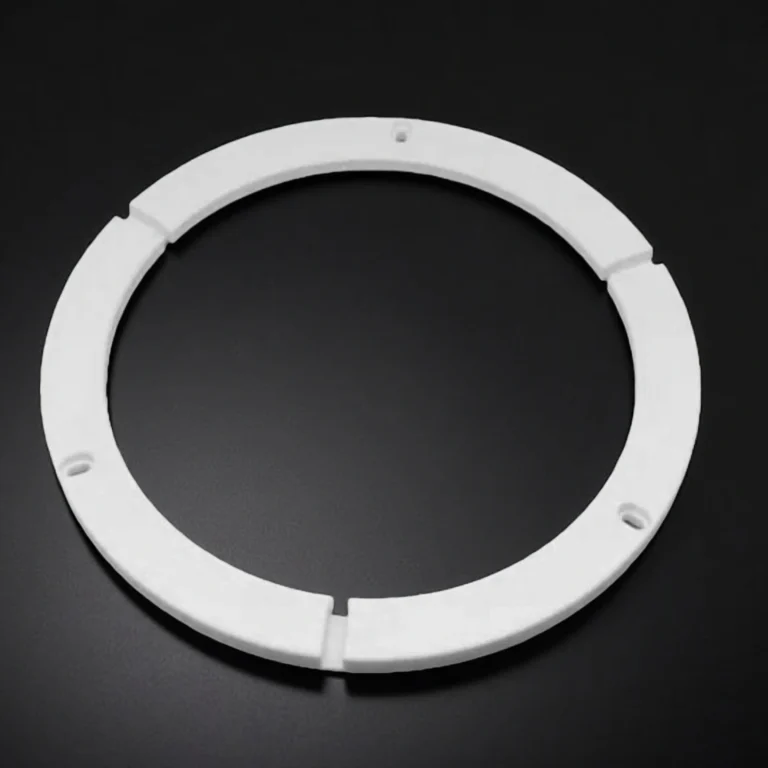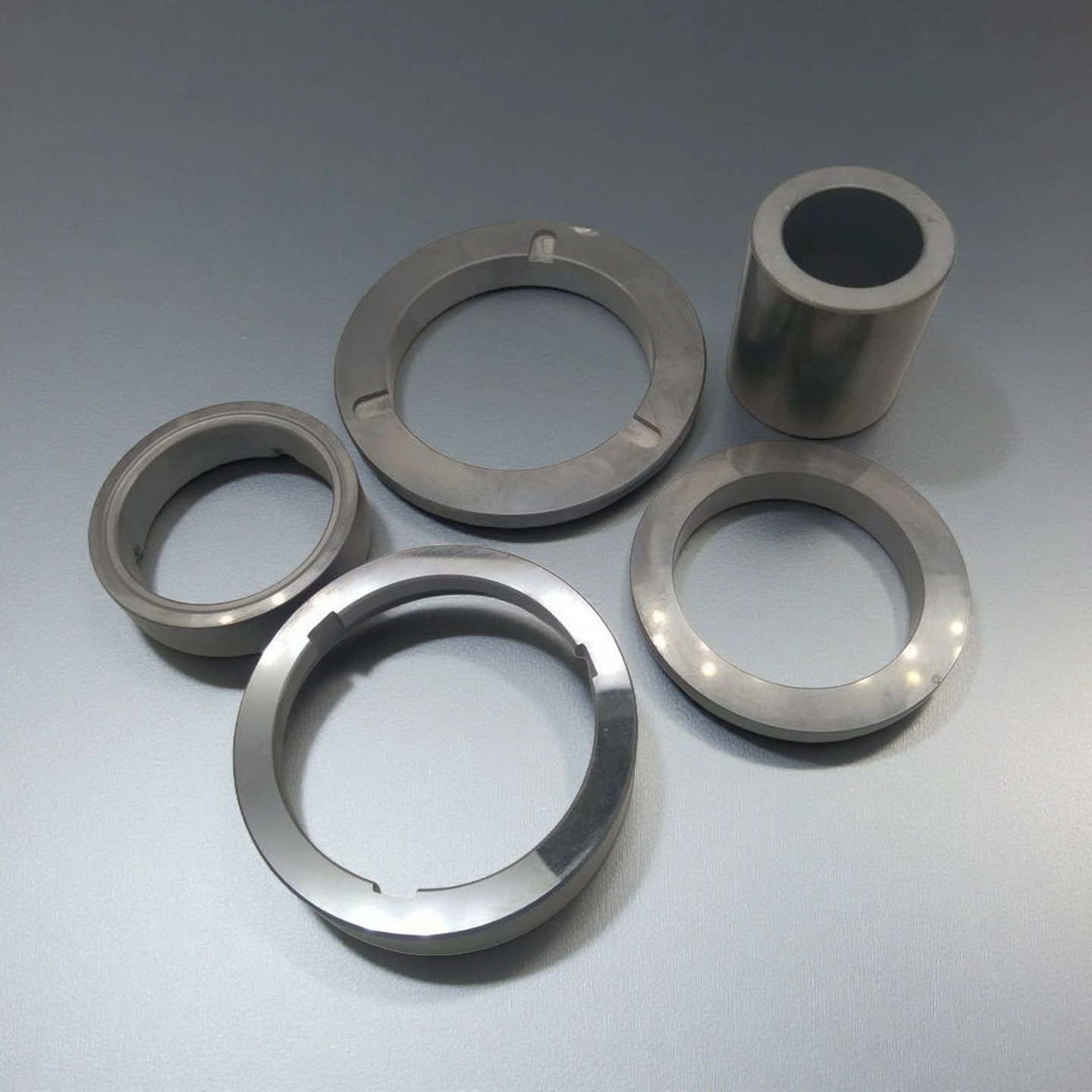
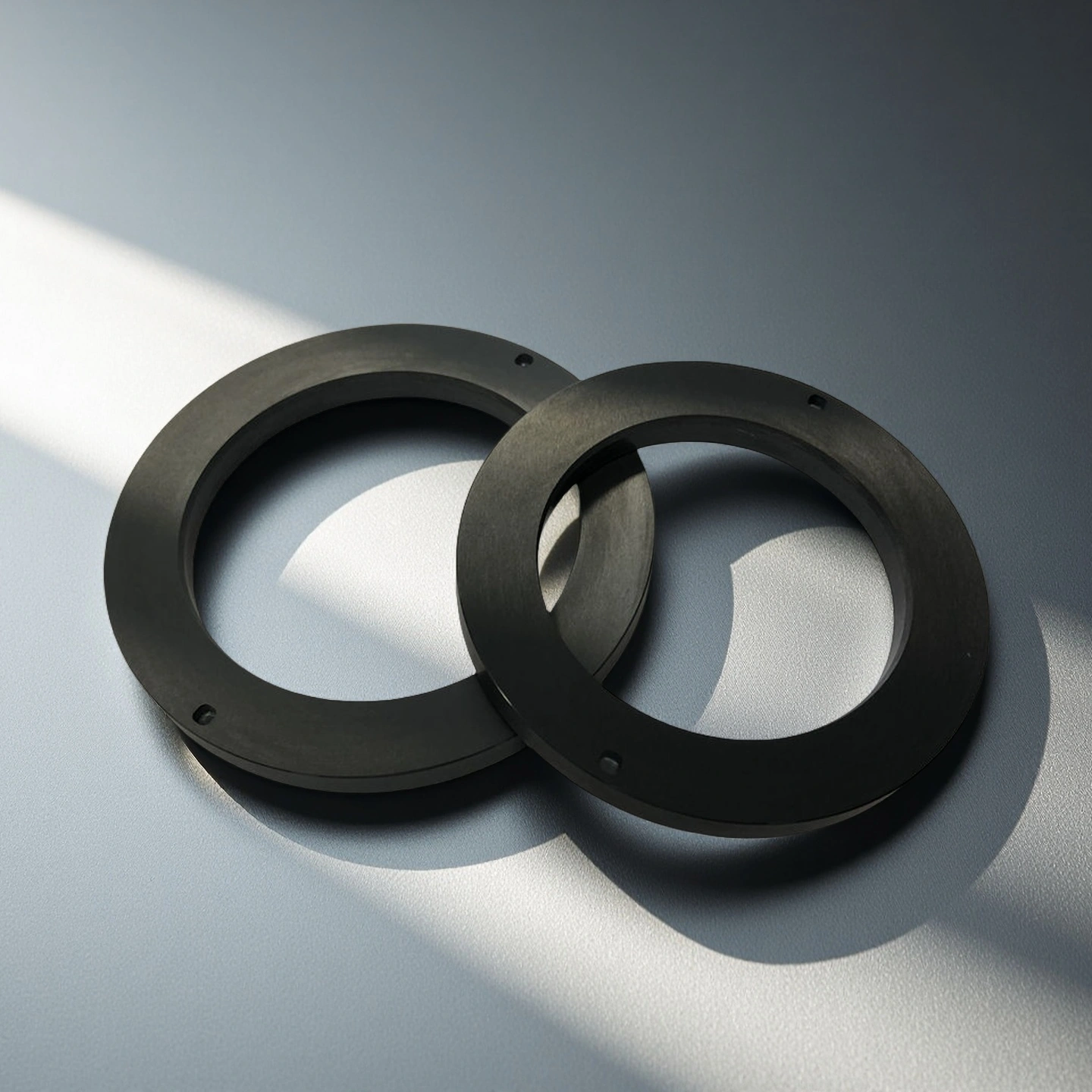
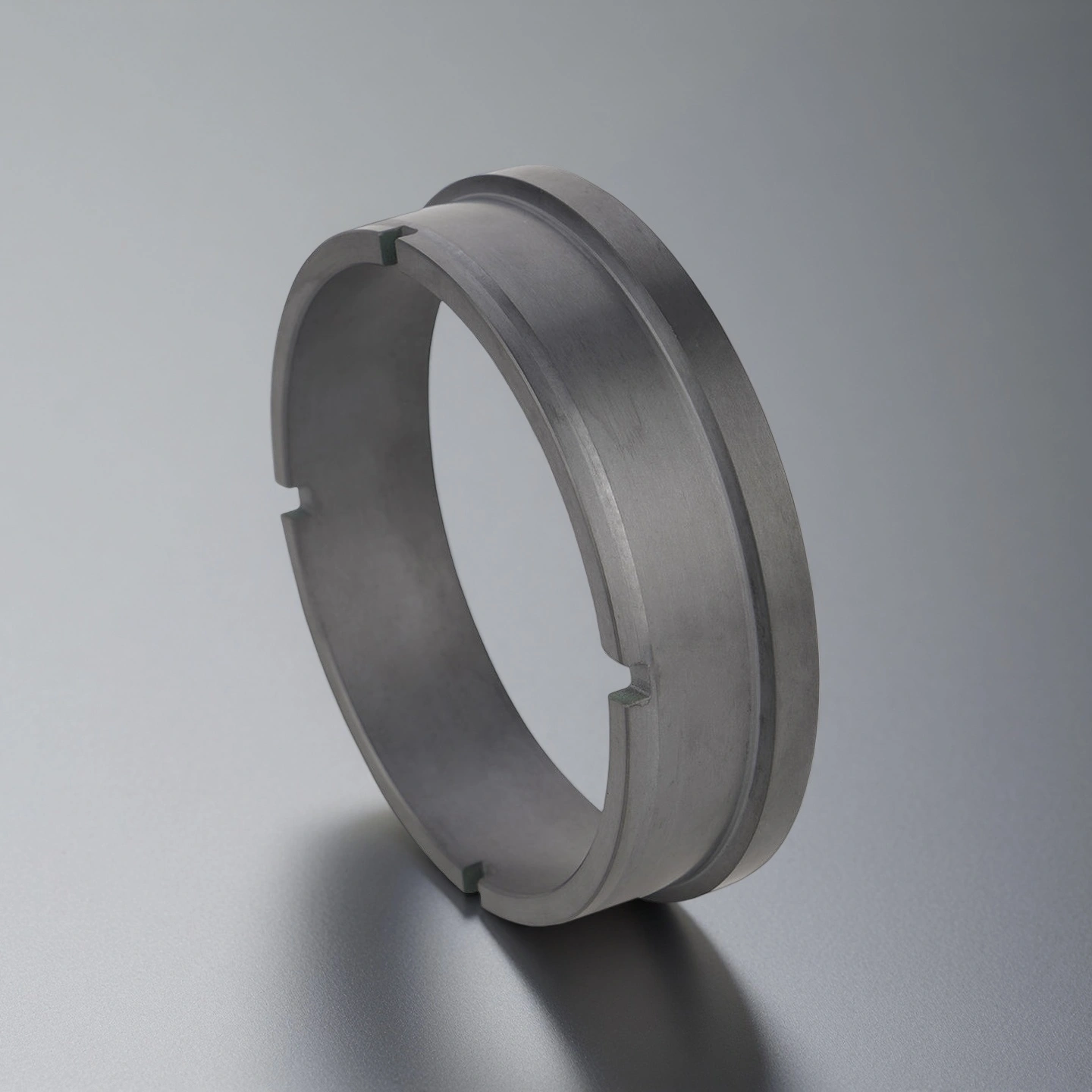
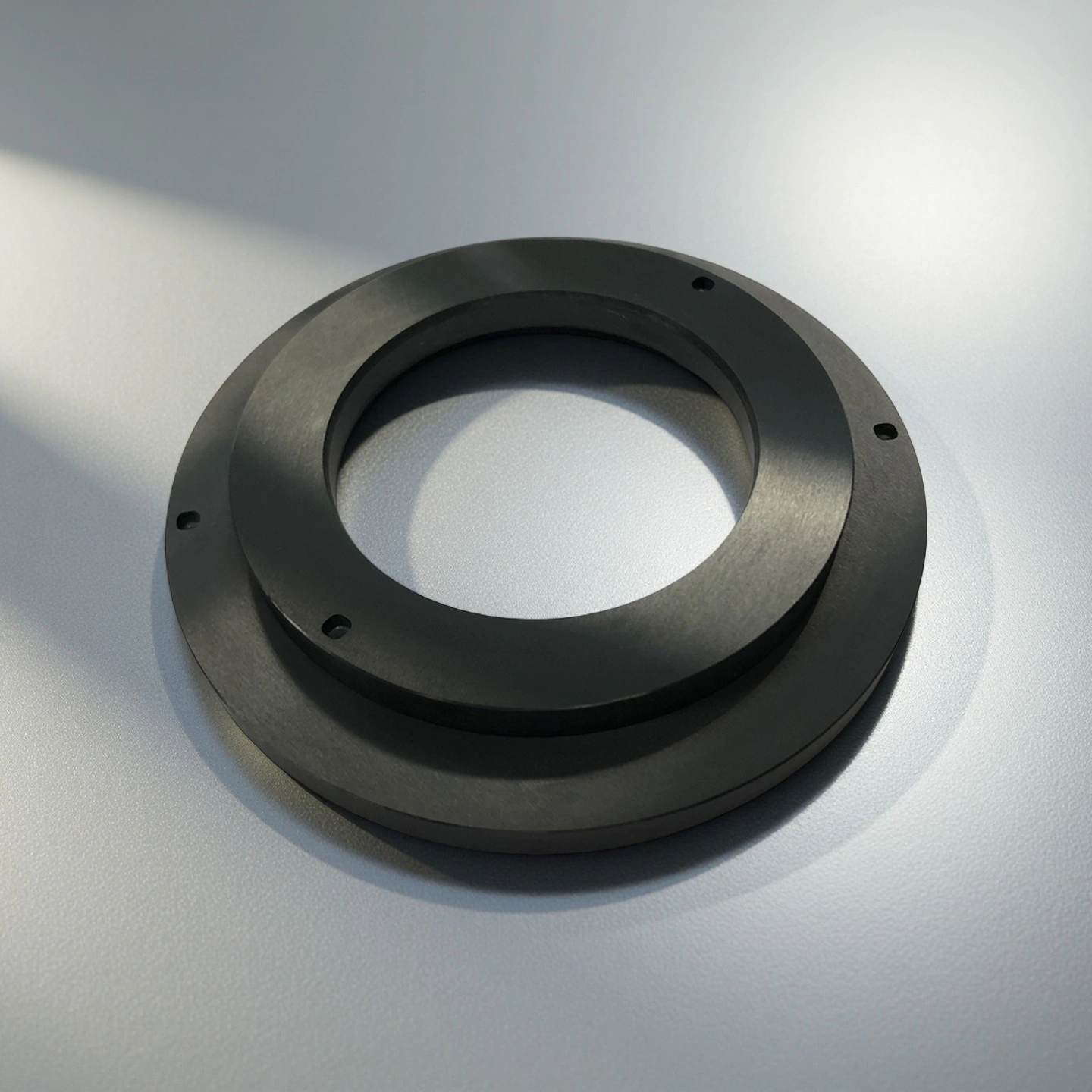
Silicon Nitride Seal Ring for Mechanical & Vacuum Sealing

Precision lapped silicon nitride seal rings in standard and custom geometries for cartridge/component mechanical seals, supplied as rotating or stationary faces with controlled flatness, parallelism, and runout to match the counterpart material set.

Catalogue No. AT-DHG-MF001
Material Silicon Nitride
Flexural Strength ≥ 600 MPa
Thermal Expansion Coefficient (25–1000°C) 3.1 × 10⁻⁶ /K
Achievable Face Finish Ra ≤ 0.02 μm
24H Standard Dispatch
Small Batch Support OEM
Factory Direct
Expert Engineering Support

Silicon Nitride Seal Ring is a precision-machined ceramic sealing component made from Si₃N₄ (silicon nitride), designed to serve as a rotating or stationary seal face in mechanical seals, pumps, compressors, and vacuum systems. Its function is to maintain a stable sealing interface under high pressure, temperature variation, and sliding velocity

Silicon Nitride Seal Ring Benefits

  • Stable Face Geometry
    Tight control of flatness (≤ 2 μm) and parallelism (≤ 3 μm) ensures minimal face gap variation under fluctuating pressure or axial load. This geometric stability prevents micro-opening during rapid start-stop cycles, maintaining steady leakage rates even under 20–25 bar differential pressure.

  • Low Rotating Mass
    The thin-wall Si₃N₄ structure achieves approximately 40 % lower density than tungsten carbide, significantly reducing torque demand during acceleration. Lower inertia lessens bearing load and vibration amplitude at surface speeds exceeding 20 m/s, extending both seal and motor life.

  • Edge-Chip Mitigation
    Optimized chamfer, fillet, and corner radius libraries (0.2–0.5 mm typical) prevent edge stress concentration and micro-crack initiation during installation or thermal expansion mismatch. This design approach reduces chip-related leakage failures and simplifies alignment in tight seal cavities.

  • Consistent Lapping Window
    Repeatable Ra ≤ 0.02 μm and Waviness Wt ≤ 0.15 μm parameters provide predictable initial face contact and fluid-film formation. Uniform lapping quality shortens run-in time, stabilizes friction torque, and keeps sealing faces cooler during the first 100 hours of operation.

  • Pairing Flexibility
    The Si₃N₄ seal ring design is validated with standard counterpart materials—silicon carbide (SiC), tungsten carbide (TC), carbon graphite, and Si₃N₄-vs-Si₃N₄ combinations—each supported by recommended pressure-velocity (PV) limits up to 2.5 MPa·m/s. This enables engineers to match the ring precisely to media type, load, and duty cycle without requalifying the entire seal assembly.

Silicon Nitride Ceramic Seal Ring Properties

Si3N4 Type Gas pressure sintering Si3N4 Hot pressing sintering Si3N4 High thermal conductivity Si3N4
Density (g/cm3) 3.2 3.3 3.25
Flexture strength (MPa) 700 900 600~800
Young Modulus (GPa) 300 300 300~320
Poisson's ratio 0.25 0.28 0.25
Compressive strength (MPa) 2500 3000 2500
Hardness (GPa) 15 16 15
Fracture toughness (MPa*m1/2) 5~7 6~8 6~7
Maximum working temperature (℃) 1100 1300 1100
Thermal conductivity (W/m*K) 20 25 80~100
Thermal expansion coefficient (/℃) 3*10-6 3.1*10-6 3*10-6
Thermal shock resistance (ΔT ℃) 550 800 /

Specifications of Si3N4 Seal Ring

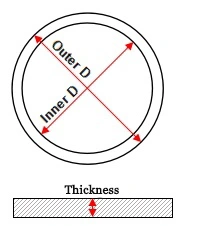
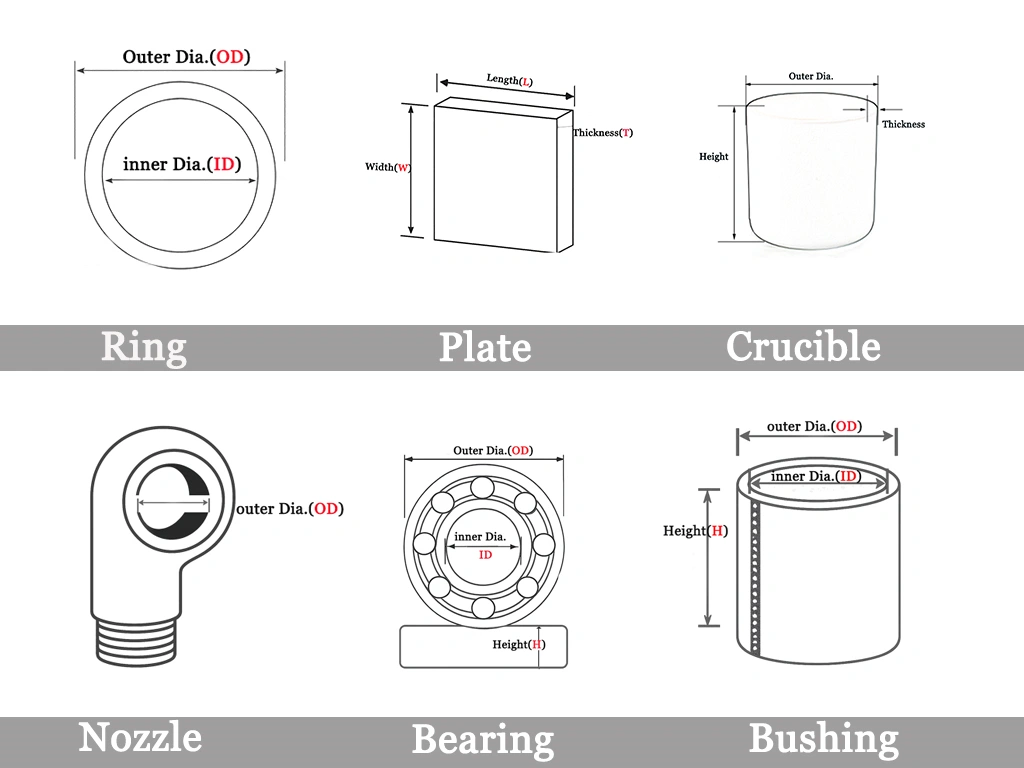
size for ring

Item Outer Diameter (mm) Inner Diameter (mm) Thickness (mm)
AT-DHG-MF001 10.0  5.0  2.5 
AT-DHG-MF002 15.0  9.0  3.0 
AT-DHG-MF003 20.0  12.9  3.5 
AT-DHG-MF004 25.0  15.0  2.0 
AT-DHG-MF005 28.0  20.0  2.5 
AT-DHG-MF006 31.0  25.0  3.0 
AT-DHG-MF007 36.5  27.0  4.5 
AT-DHG-MF008 48.0  38.0  4.8 
AT-DHG-MF009 50.0  39.0  5.0 
AT-DHG-MF010 50.0  40.0  5.0 
AT-DHG-MF011 50.0  38.5  5.5 
AT-DHG-MF012 50.0  30.0  10.0 
AT-DHG-MF013 51.0  40.5  5.1 
AT-DHG-MF014 55.5  51.5  2.0 
AT-DHG-MF015 62.0  51.0  5.5 
AT-DHG-MF016 65.0  53.8  5.5 
AT-DHG-MF017 68.0  57.0  5.5 
AT-DHG-MF018 90.0  18.0  6.0 
AT-DHG-MF019 102.0  63.0  19.4 
AT-DHG-MF020 120.0  112.8  8.5 
AT-DHG-MF021 1-150 0.5-140 0.25-50


Si3N4 Seal Ring Packaging

  • Clean room-grade pouch → anti-static tray → foam-lined carton. Single-piece separators prevent face rub.
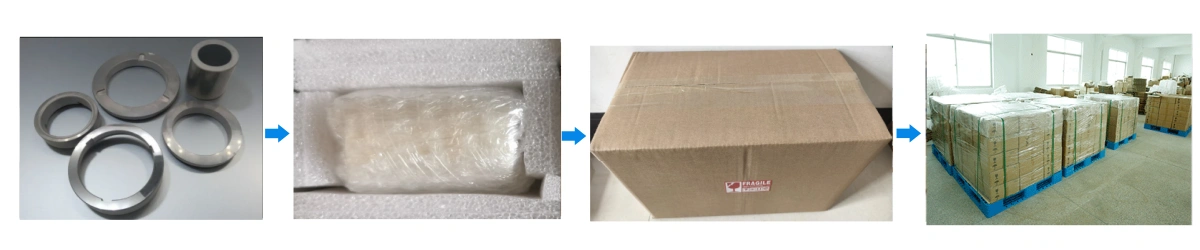
Si3N4 Seal Ring Packaging

Silicon Nitride Seal Ring Applications

  • Process Pumps & Compressors (chemical, water, pulp)

    ✅Key Advantages

    1. Thermal-swing stability — CTE ~3×10⁻⁶/K limits face distortion at 20–120 °C transients.
    2. Low inertia ring — thin-wall design reduces start-up torque and heat at >20 m/s surface speed.
    3. Wear pattern control — lapping window and face width maintain leakage within target bands.

    ✅ Problem Solved

    A multi-line chemical plant replaced SiC-vs-SiC with Si₃N₄-vs-SiC on slurry pumps. Mean time between repairs rose from 11.2 to 15.0 months (+34%); unplanned seal failures dropped from 6 to 3 events/year after standardizing face flatness ≤2 μm and Ra ≤0.02 μm on the Si₃N₄ ring across three pump frames.

  • Vacuum Systems (dry screw, roots, claw, rotary vane)

    ✅Key Advantages

    1. Particle tolerance — improved impact resistance reduces chip-induced leakage during powder handling.
    2. Temperature cycling — low CTE preserves mating during purge and bake cycles up to 150–180 °C.
    3. Low out-of-box run-in — consistent waviness lowers initial heat generation.

    ✅ Problem Solved

    A packaging line running dry claws adopted Si₃N₄ stationary ring + carbon rotating face; after qualification, base pressure recovery time improved ~18% and annual seal kit consumption reduced ~22% with unchanged cycle count.

  • Mixers & Agitators (batch reactors, coatings)

    ✅Key Advantages

    1. Edge durability — robust chamfer prevents micro-edge spalls during shaft alignment.
    2. Face width options — wide-track faces tolerate moderate axial run-out without early leakage.
    3. Pairing latitude — validated with TC/SiC/carbon options for solvent and abrasive duty.

    ✅ Problem Solved

    A coatings plant standardized Si₃N₄ ring + TC counterface on three agitator sizes. Start-up leakage events fell from 9 to 2 per quarter, and monthly maintenance time on seal faces decreased ~30% after adopting a common lapping recipe and face width.

Silicon Nitride Seal Ring Usage Instructions

  • Installation

    1. Inspect seat bore and shaft run-out: Verify Total Indicator Reading (TIR ≤ 0.02 mm) for shafts ≤50 mm diameter. Exceeding tolerance may cause uneven contact, increasing face load and thermal distortion.
    2. Handle with face protectors at all times: Avoid direct metal-to-face or face-to-face contact. Use PTFE gloves to prevent micro-scratch and oil contamination.
    3. Use alignment sleeves and jigs: Ensure axial preload and spring compression fall within design range; misalignment can generate edge loading and premature leakage.
    4. Confirm pairing material and flatness band: Match to SiC, TC, carbon, or Si₃N₄ counterparts. Verify both surfaces conform to required Ra band (≤0.02–0.05 μm) for consistent film formation.
    5. Tightening sequence: Secure bolts diagonally and progressively to maintain concentricity. Torque deviation should not exceed ±5% between bolts on the same flange.

  • Operation

    1. Stay within PV limits: Do not exceed the specified pressure-velocity product (≤ 2.5 MPa·m/s). Maintain proper flush pressure and flow to prevent dry-run and vapor locking.
    2. Monitor operational parameters: Track start-stop cycles, shaft vibration amplitude, and temperature gradient (ΔT) across the seal. Keep axial run-out below 0.05 mm at full speed.
    3. Predictive maintenance: Record leakage rate trends during commissioning and steady operation. A >20% increase from baseline may indicate wear or face distortion.
    4. Coolant and barrier plan: For dual seals, maintain barrier fluid pressure 1.5 bar above process side to prevent reverse leakage and heat buildup.

  • Storage

    1. Store rings in a dry, dust-free, temperature-stable environment (15–25 °C; RH < 60%).
    2. Keep face protectors on during all handling and transport stages.
    3. Avoid stacking rings face-to-face; use foam spacers or vacuum-sealed pouches to prevent contact micro-chipping.
    4. For long-term storage (>6 months), recheck flatness and Ra prior to assembly.

  • Cleaning

    1. Rinse components with filtered solvent or deionized (DI) water depending on process compatibility.
    2. Use lint-free microfiber wipes; do not use abrasive cloths, wire brushes, or ultrasonic cleaning without fixturing.
    3. Air-dry with oil-free compressed air (<0.1 μm filter); never bake above 120 °C to prevent micro-stress in the polished layer.
    4. Avoid acid/base cleaning agents that may etch the silicon nitride surface.

  • Common Misuse & Corrective Actions

    1. Chipped edge after assembly
    → Introduce a larger chamfer radius (0.3–0.5 mm); use protective sleeves during installation; check that shaft lead-in radius ≥ 1 mm.

    2. Early leakage during commissioning
    → Verify flatness mismatch ≤ 2 μm and preload distribution; increase flush rate or reduce barrier pressure differential; inspect for trapped air pocket at startup.

    3. Thermal discolouration or burn marks
    → Indicates dry running or inadequate lubrication film. Reassess PV load, ensure flush flow rate, and re-lap faces to correct micro-distortion. Replace O-rings if hardened by heat.

Silicon Nitride Seal Ceramic Ring FAQ

  1. Q: What are the main advantages of using a Silicon Nitride Seal Ring instead of SiC or tungsten carbide?
    A: Silicon nitride offers higher fracture toughness (6–8 MPa·m¹ᐟ²) and lower thermal expansion (~2.8×10⁻⁶/K), which means better resistance to thermal shock and edge cracking in high-speed or intermittent operations. It also has a 40% lower density, reducing rotational inertia and improving balance in high-RPM mechanical seals.
  2. Q: How do I determine if a Silicon Nitride Seal Ring is suitable for my mechanical seal design?
    A: Check your PV (pressure × velocity) conditions, temperature, and counterpart material. Si₃N₄ performs best when the PV ≤ 2.5 MPa·m/s, surface speed ≤ 25 m/s, and the counterpart face has a compatible hardness and flatness (SiC or TC preferred). Engineers typically verify fit through a short-term run-in test under target pressure.
  3. Q: What face finish and flatness should be specified for a Silicon Nitride Seal Ring?
    A: For mechanical and vacuum seals, the optimal flatness tolerance is ≤ 2 μm, with a surface roughness (Ra) between 0.02–0.05 μm depending on the fluid film thickness. This range minimizes leakage while preventing excessive friction during startup.
  4. Q: How should Silicon Nitride Seal Rings be paired with counterpart materials?
    A: They can be paired with silicon carbide, tungsten carbide, carbon graphite, or even another Si₃N₄ ring.

    a. Si₃N₄ vs SiC → best for slurry or high PV conditions.
    b. Si₃N₄ vs carbon → ideal for dry gas or vacuum.
    c. Si₃N₄ vs TC → preferred in oil and chemical duty.
    Pair selection depends on media abrasiveness, lubrication state, and operating temperature.

  5. Q: What are the failure modes of Silicon Nitride Seal Rings, and how can they be prevented?
    A: Typical failures include edge chipping, thermal cracking, and micro-spalling from misalignment or dry-run. Prevention measures include:

    a. Proper chamfering (0.3–0.5 mm).
    b. PV within limit.
    c. Stable flush or barrier fluid.
    d. Ensuring shaft run-out ≤ 0.02 mm.
    Routine vibration and leakage monitoring can predict early fatigue.

  6. Q: How are Silicon Nitride Seal Rings inspected for quality and geometry?
    A: Inspection involves interferometric flatness mapping, contact profilometry, and coordinate measuring for ID/OD concentricity.
    Each lot can be certified with a dimensional report including:
    a. Flatness deviation (μm).
    b. Ra / Rz roughness profile.
    c. Run-out and concentricity data.
    d. Density and microstructure verification per batch.

Silicon Nitride Seal Ring Reviews

  • ⭐️⭐️⭐️⭐️⭐️
    We replaced SiC vs. SiC with a silicon nitride seal ring against SiC on slurry pumps. Leakage stabilized after run-in and our service interval moved from 10 to 14 months.
    -- Laura Chen | Maintenance Lead, NorthRiver Chemicals
  • ⭐️⭐️⭐️⭐️⭐️
    or annual shut-down kits we needed predictable geometry and pricing. ADCERAX as a silicon nitride seal ring supplier met our drawing without extra machining and kept the project within budget.
    -- Diego Ramos | Procurement Manager, TecnoFluids Mexico
  • ⭐️⭐️⭐️⭐️⭐️
    On dry screw vacuum pumps the silicon nitride seal face reduced start-up friction. The qualification report with flatness and Ra data simplified internal approval.
    -- Emma Fischer | Project Engineer, Vakuumtechnik GmbH
  • ⭐️⭐️⭐️⭐️⭐️
    We run OEM and MRO. The factory could do thin-wall ID si3n4 seal rings and mirror-lapped faces. For a 300-piece lot the unit cost aligned with our forecast and delivery was consistent.
    -- Hiro Tanaka | Sourcing Supervisor, K-Process Equipment
customize size

Custom Silicon Nitride Seal Ring

Si3N4 Seal Rings are produced to drawing or sample with a controlled lapping recipe per face width and counterpart. The list below indicates common configurable items.

1. Dimensions

  • ID / OD / Thickness ranges: Ø10 – Ø120 mm typical, larger on request.
  • ID tolerance is achievable down to ±0.01–0.03 mm, depending on ring size and geometry.
  • Custom face width, land width, or undercut dimensions for specific seal housings.
  • Geometrics

2. Flatness /Parallelism /Runout targets are adjustable per sealing pressure and speed.

  • Custom chamfer size (0.2–0.8 mm × 45°) and edge radius for safe assembly.
  • Optional concentricity reference marks and axial alignment notches for assembly repeatability.

3. Face Engineering

  • Single-face or double-face lapping available, with Ra ≤ 0.02 μm / 0.05 μm bands.
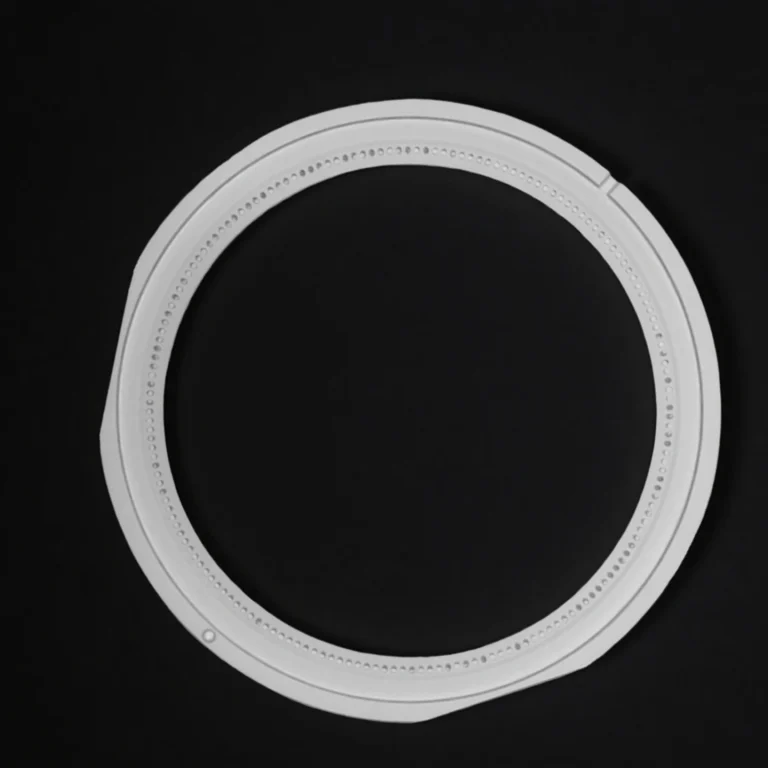
  • Optional micro-grooved or spiral hydrodynamic patterns for dry-gas or vapour-film sealing.
  • Cross-lapping and flatness mapping were provided for PV control and film stability validation.

4. Material Configuration

  • Pairing validated against SiC, tungsten carbide, carbon graphite, or Si₃N₄-vs-Si₃N₄ sets.
  • Consultation available for counterpart selection based on pressure-velocity ratio and media type (liquid, gas, slurry).
  • Custom sintering route (hot-pressed or pressureless-sintered) selectable for cost-performance optimization.

5. Thermal & Structural Strategy

  • Wall profile can be tuned for low inertia and controlled expansion under high ΔT.
  • Webbed, slotted, or split-ring designs available for hot-swap or cartridge seals.
  • Thermal gradient simulation data available upon request for critical duty seals.

Related Products

ADCERAX - Your Trusted Advanced Ceramics Manufacturing Partner

Direct factory manufacturing with comprehensive ceramic materials expertise and global supply capabilities

Direct Factory Manufacturing

China-based ceramic materials production facility with state-of-the-art equipment

Engineering Team

Experienced professionals in advanced ceramics applications and custom design

Quality Control

Strict quality control standards for technical ceramics manufacturing and quality management

Global Supply Chain

Serving customers worldwide with technical ceramics and rapid response

24/7 Technical Support

Round-the-clock support for ceramic components inquiries and technical assistance

500+ Satisfied Customers

Trusted by global customers for advanced ceramic materials and precision components

Get in touch with us

Our team will be happy to respond to you in less than 24 hours.

Adcerax's factory

Quick Quotation

*Our team will answer your inquiries within 24 hours.

*Your information will be kept strictly confidential.

Ready to Solve Your Engineering Challenge?

Partner with ADCERAX for reliable, high-performance advanced ceramic solutions. Our engineers are ready to discuss your project.

E-mail

info@adcerax.com

Phone

+(86) 0731-74427743 | WhatsApp: +(86) 19311583352

Response Time

Within 24 hours

Quick Quote

The more details you provide, the faster we can quote.

*We respond within 24 hours. All inquiries are confidential.

Download Catalog

Get Your Custom Sulution

The more details you provide, the faster we can respond.

customize size

*We respond within 24 hours. All inquiries are confidential.

Download Catalog