Alumina Trays fail quietly until warpage, contamination, or cracking disrupts runs. Consequently, engineers need Rectangular Alumina Trays that keep geometry stable, surfaces clean, and output repeatable.
This article consolidates selection logic, operating windows, deformation mechanics, and application practices for Rectangular Alumina Trays across sintering lines, furnace builders, materials teams, laboratories, and powder processing.
Accordingly, the discussion starts with system function and material fundamentals, then moves through temperature limits, geometry-driven stress, failure modes, and practical customization pathways.
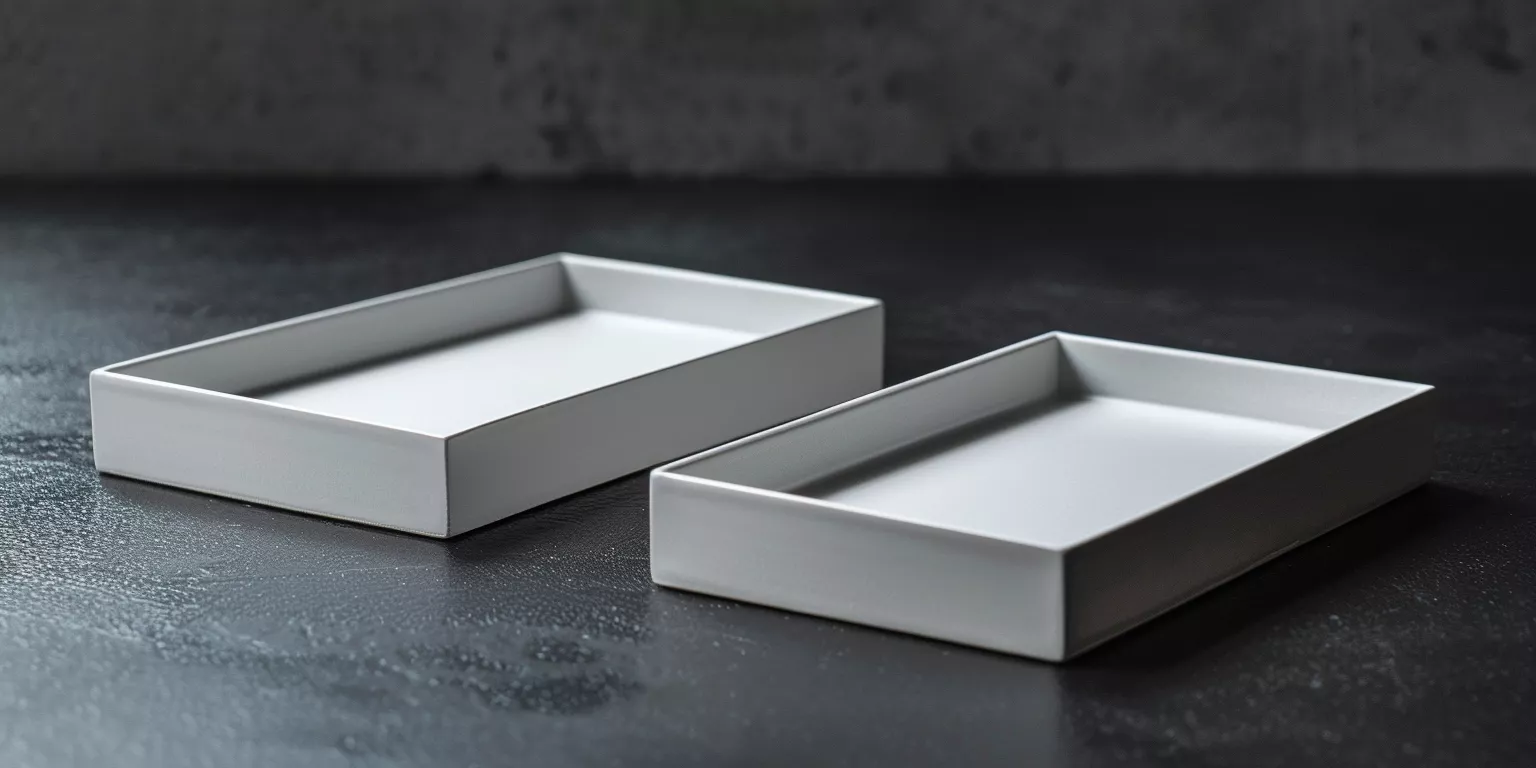
Before Rectangular Alumina Trays are compared, specifying their functional position clarifies what “good performance” means. Moreover, a shared system view prevents overbuying purity while underestimating geometry, load, and thermal gradients.
Functional Position of Alumina Rectangular Trays in Thermal Systems
Rectangular Alumina Trays are engineered containers that stabilize parts, powders, or test residues during high-temperature exposure. Therefore, they act as both thermal interfaces and geometric references inside furnaces, reactors, and lab heating tools.
-
Furnace-facing heat transfer interface
Rectangular Alumina Trays shape how heat enters a load because their flat base creates a repeatable contact area. Moreover, their thermal inertia moderates short transients when door openings or zone transitions occur. Consequently, engineers can interpret temperature profiles with fewer uncontrolled boundary changes. -
Geometry control during shrinkage and creep
Rectangular Alumina Trays restrain lateral drift of parts when shrinkage occurs during sintering and debinding. In practice, a tray with stable flatness reduces tilting that otherwise accumulates across a stacked payload. As a result, alignment errors decline when fixtures and trays behave predictably. -
Contamination barrier and reaction suppressor
Rectangular Alumina Trays isolate product surfaces from metallic shelves, soot, or flux residues that can migrate at elevated temperature. Additionally, alumina’s chemical inertia helps limit parasitic reactions with many oxide ceramics and common powder feeds. Accordingly, surface cleanliness improves when tray materials do not shed, smear, or volatilize. -
Workflow standardization for repeatable runs
Rectangular Alumina Trays simplify loading patterns because a rectangular footprint matches common furnace furniture and rack geometries. Furthermore, consistent tray geometry enables repeatable spacing, which supports stable gas flow and radiative view factors1 across runs. Therefore, process drift is easier to diagnose because the mechanical boundary condition stays constant.
- Cross-domain utility from lab to production
Rectangular Alumina Trays are used for ash preparation, calcination batches, pilot sintering trials2, and production-scale payloads. However, the acceptable tolerance for warpage, surface finish, and purity varies sharply by use case. Consequently, functional intent must be declared before specifying material grade, thickness, or machining level.
Functional Fit Matrix for Rectangular Alumina Trays
| Thermal workflow | Primary tray function | Dominant risk if mismatched | Typical performance priority |
|---|---|---|---|
| Production sintering | Geometry reference under load | Warpage driven yield loss | Flatness retention (mm), creep resistance |
| Furnace OEM integration | Interface with furniture and zones | Uneven heating and hot spots | Thermal gradient tolerance (°C), repeatable seating |
| Materials engineering trials | Controlled boundary for experiments | Data scatter and false conclusions | Chemical inertness, consistent heat flux |
| Laboratory ashing and prep | Clean containment of residues | Cross-sample contamination | Low shed rate, cleanable surfaces |
| Powder calcination batches | Batch containment and transfer | Sticking and residual carryover | Surface stability, release behavior |
Overall, Rectangular Alumina Trays should be specified by system function first; subsequently, material grade, geometry, and finishing can be matched to the dominant risk drivers.
Material Fundamentals Supporting Rectangular Alumina Tray Performance
Moreover, understanding why Rectangular Alumina Trays perform reliably requires moving beyond shape and into material behavior. Consequently, this section explains how alumina composition and microstructure sustain stability under prolonged thermal stress.
Rectangular Alumina Trays derive their performance from a balance between purity, grain structure, and thermal properties rather than from nominal composition alone. Therefore, material fundamentals explain why trays with similar appearance may behave very differently in service.
Alumina Purity and Microstructural Stability
Rectangular Alumina Trays are typically manufactured from alumina grades ranging from 95% to above 99.7% Al₂O₃, and this difference has measurable consequences at elevated temperature.
In practical sintering lines, trays below 96% purity often exhibit early glass-phase softening above 1400 °C, which gradually weakens grain boundaries. By contrast, trays exceeding 99.5% purity maintain grain boundary integrity up to 1550–1600 °C under continuous exposure, reducing creep-related distortion. Experienced engineers frequently observe that higher purity trays retain flatness over 20–40% more furnace cycles when operating near the upper thermal limit.
As a result, purity selection should follow thermal duty rather than catalog defaults, because marginal cost savings at lower purity frequently convert into shortened service life.
Thermal Conductivity Heat Capacity and Stress Distribution
Rectangular Alumina Trays exhibit thermal conductivity values typically between 20–30 W/m·K at room temperature, decreasing gradually above 1000 °C. Consequently, heat does not penetrate instantaneously across thick tray sections.
During real furnace operation, the tray bottom often heats faster than the upper surface, creating vertical thermal gradients exceeding 30–60 °C in rapid ramps. Moreover, alumina’s specific heat capacity of approximately 0.8–1.0 kJ/kg·K moderates temperature fluctuations, yet also delays equilibrium. Engineers accustomed to thin metal setters often underestimate this lag when transitioning to ceramic trays.
Therefore, tray thickness and heating rate must be coordinated to limit internal stress peaks that otherwise promote bending during repeated cycles.
Chemical Inertness in Reactive and Contaminated Atmospheres
Rectangular Alumina Trays remain chemically stable in air and many inert environments because alumina does not oxidize, volatilize, or catalyze reactions below 1600 °C. Consequently, they are widely adopted in oxide ceramics, catalyst supports, and analytical residue processing.
In chemical and powder processing lines, alumina trays demonstrate low reactivity toward most oxides, phosphates, and carbonates. However, prolonged exposure to alkali vapors or boron-containing fluxes can initiate surface glazing after 100–300 hours at temperature, subtly altering surface energy. Seasoned process engineers recognize this change when powders begin adhering more strongly during unloading.
Accordingly, chemical compatibility must be evaluated alongside temperature rating, particularly in mixed-atmosphere furnaces.
|Material Property Summary for Rectangular Alumina Trays
| Property | Typical range | Engineering relevance |
|---|---|---|
| Alumina purity (%) | 95.0–99.7+ | Determines creep resistance and max continuous temperature |
| Continuous service temperature (°C) | 1350–1600 | Sets safe operating window |
| Thermal conductivity (W/m·K) | 20–30 (RT) | Influences internal gradients |
| Specific heat capacity (kJ/kg·K) | 0.8–1.0 | Affects thermal lag |
| Chemical stability | High in oxidizing atmospheres | Limits contamination risk |
In brief, Rectangular Alumina Trays perform reliably only when purity, thermal properties, and chemical environment are aligned with real operating conditions rather than nominal specifications.
Temperature Operating Windows in Industrial and Laboratory Practice
Furthermore, temperature capability remains the first screening criterion when selecting Rectangular Alumina Trays for any high-temperature workflow. Accordingly, this section clarifies realistic operating windows derived from industrial use rather than theoretical melting limits.
Rectangular Alumina Trays are often specified by maximum temperature alone; however, long-term exposure, atmosphere, and ramp profiles jointly define safe operation. Therefore, engineers should interpret temperature ratings as conditional ranges tied to process behavior.
Continuous Exposure Ranges and Short Term Thermal Peaks
Rectangular Alumina Trays used in continuous sintering or calcination typically operate within 1300–1550 °C, depending on purity and load. In production furnaces running 8–24 hours per cycle, trays above 99.5% Al₂O₃ frequently sustain 1500 °C without measurable distortion for dozens of cycles.
Short-term thermal peaks, however, introduce different stresses. During debinding or zone transitions, peak temperatures may reach 50–100 °C above the nominal setpoint for less than 10 minutes. Experienced furnace operators note that trays tolerate such peaks when heating rates remain below 5–8 °C/min, yet identical peaks can trigger microcracking if ramps exceed 12 °C/min.
Therefore, continuous and transient temperatures must be evaluated together rather than independently.
Atmosphere Dependent Temperature Behavior
Rectangular Alumina Trays behave differently across oxidizing, inert, and mildly reducing atmospheres. In air, alumina remains stable up to 1600 °C, provided impurities are controlled. Consequently, air-fired kilns often represent the highest usable temperature scenario.
In nitrogen or argon environments, thermal conductivity drops slightly at elevated temperature, which increases internal gradients by approximately 10–15% compared with air. Conversely, hydrogen-containing or carbon-rich atmospheres may accelerate surface reactions when trace alkalis are present, lowering the practical limit by 30–50 °C over extended runs.
Thus, atmosphere selection directly modifies the tray’s thermal margin and should be treated as a primary specification parameter.
Heating and Cooling Rate Sensitivity
Rectangular Alumina Trays respond predictably to controlled heating but poorly to abrupt transitions. In controlled trials, trays subjected to ramp rates below 5 °C/min show negligible warpage even after 100 cycles between ambient and 1450 °C.
By contrast, cooling rates exceeding 10 °C/min through the 900–600 °C range often generate tensile stresses at the surface, especially in thick trays above 15 mm. Operators with long service histories frequently mitigate this risk by extending soak times or staging cooldown zones.
Consequently, ramp design is as critical as peak temperature when defining operating windows.
Practical Temperature Limits for Rectangular Alumina Trays
| Condition | Typical safe range (°C) | Dominant risk |
|---|---|---|
| Continuous air operation | 1400–1550 | Creep-driven warpage |
| Short-term peak exposure | +50–100 above setpoint | Thermal shock |
| Inert atmosphere operation | 1350–1500 | Gradient-induced bending |
| Rapid cooling (>10 °C/min) | <1200 recommended | Surface cracking |
In summary, Rectangular Alumina Trays should be rated by combined temperature, atmosphere, and ramp profile rather than by a single maximum value.
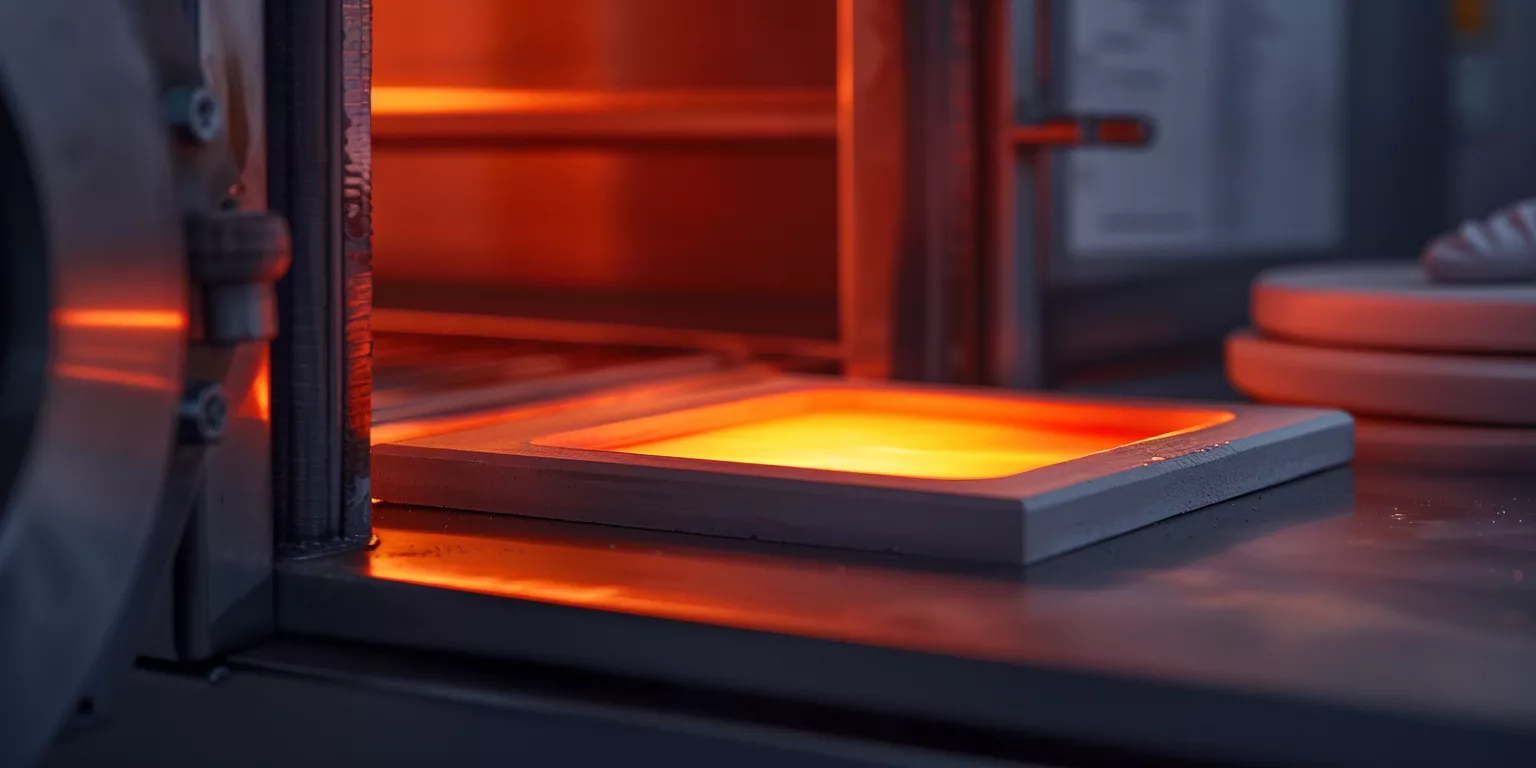
Structural Characteristics of Rectangular Geometry at High Temperature
Moreover, once temperature limits are understood, geometry becomes the dominant factor governing how Rectangular Alumina Trays behave in service. Consequently, rectangular form influences stress distribution, load transfer, and long-term dimensional stability.
Rectangular Alumina Trays are favored for their efficient use of furnace space; however, flat surfaces and sharp transitions also amplify thermal and mechanical sensitivity. Therefore, understanding geometry-driven behavior is essential before scaling tray size or load.
Load Distribution Across Flat Rectangular Surfaces
Rectangular Alumina Trays distribute weight across a planar base, which simplifies loading but concentrates stress along support lines. In furnaces using rail or shelf supports, contact often occurs along two or three edges rather than uniformly.
In repeated production runs carrying loads of 3–8 kg per tray, engineers frequently observe mid-span deflection when unsupported spans exceed 250–300 mm. Moreover, when load distribution deviates by more than 15% from symmetry, bending accelerates even at moderate temperatures near 1400 °C. These observations commonly emerge during capacity expansions when payload density increases without tray redesign.
Therefore, tray support geometry must be evaluated alongside load mass rather than assumed adequate by thickness alone.
Edge Corner and Wall Thickness Effects
Rectangular Alumina Trays introduce stress concentration at corners, particularly when sharp internal angles are used. Measurements show that stress intensity at 90-degree corners can exceed flat-wall regions by 1.6–2.0× under identical thermal gradients.
Experienced designers often specify corner radii of 3–8 mm to reduce peak stress without compromising usable volume. Similarly, wall thickness below 6–8 mm may improve heat response but increases edge fragility during handling. Conversely, walls above 15 mm raise thermal lag, intensifying internal gradients during ramps.
Accordingly, edge geometry and wall thickness must be balanced against both thermal and mechanical requirements.
Scaling Effects with Increasing Tray Dimensions
As Rectangular Alumina Trays increase in footprint, geometric sensitivity rises nonlinearly. For example, doubling tray length from 200 mm to 400 mm increases bending susceptibility by more than 4× under identical support conditions.
In pilot-scale trials, trays above 500 mm in length often require ribbing, segmented support, or increased thickness to maintain flatness beyond 20 cycles at 1450 °C. Engineers frequently learn this constraint during scale-up phases, when lab-proven trays are directly enlarged without geometric adaptation.
Thus, dimensional scaling demands structural compensation rather than proportional enlargement.
Geometry Driven Risk Summary for Rectangular Alumina Trays
| Geometric factor | Threshold range | Observed effect |
|---|---|---|
| Unsupported span (mm) | >250–300 | Mid-span sagging |
| Corner radius (mm) | <3 | Stress concentration |
| Wall thickness (mm) | <6 or >15 | Fragility or thermal lag |
| Tray length (mm) | >500 | Nonlinear warpage growth |
To sum up, rectangular geometry maximizes space efficiency but requires deliberate structural control to prevent stress amplification at high temperature.
Deformation Mechanisms and Warpage Behavior During Thermal Cycling
Furthermore, once geometry and temperature are established, deformation behavior becomes the decisive factor separating stable Rectangular Alumina Trays from short-lived ones. Consequently, warpage should be treated as a predictable response to coupled thermal and mechanical stresses rather than as random damage.
Rectangular Alumina Trays experience repeated thermal cycling that gradually alters shape through elastic bending, creep, and interaction with the loaded material. Therefore, understanding these mechanisms allows engineers to reduce distortion through design and operating discipline instead of relying on premature replacement.
Thermal Gradient Induced Bending
Rectangular Alumina Trays bend primarily due to temperature differences between the tray bottom and upper surface. In furnace measurements, vertical gradients of 25–50 °C commonly arise during ramp-up, especially in trays thicker than 12 mm.
In practical operation, the lower surface often receives direct radiative and conductive heat from shelves, while the upper surface lags behind. This imbalance creates tensile stress on the cooler side and compressive stress on the hotter side, producing curvature. Operators with long production histories observe that even modest gradients repeated over 30–60 cycles accumulate measurable permanent bowing.
Accordingly, minimizing vertical gradients through controlled ramp rates and support design remains one of the most effective deformation mitigation strategies.
Creep and Long Term Shape Drift
At sustained temperatures above 0.5–0.6 times the melting temperature, alumina exhibits time-dependent creep. For Rectangular Alumina Trays operating near 1450–1550 °C, creep strain develops slowly but persistently.
In sintering lines running continuous shifts, trays often remain under load for 6–12 hours per cycle. Over 50–100 cycles, even creep strains below 0.1% translate into visible edge sag or center depression. Engineers frequently encounter this phenomenon when trays initially pass flatness inspection but drift out of tolerance after weeks of service.
Therefore, creep resistance should be evaluated against expected duty hours rather than single-cycle performance.
Interaction Between Tray and Loaded Materials
Rectangular Alumina Trays do not deform in isolation; instead, interaction with the payload amplifies stress. Ceramic parts, powders, or setter stacks often shrink by 12–20% during sintering, imposing lateral forces on the tray surface.
In real production scenarios, uneven shrinkage causes localized friction, which anchors parts to specific tray regions. Over time, these anchored zones act as stress concentrators, accelerating distortion by up to 30–40% compared with unloaded trays. Process engineers often identify this effect when warpage patterns mirror product layout rather than support geometry.
Thus, load arrangement and release behavior are integral to controlling tray deformation.
Deformation Behavior Indicators for Rectangular Alumina Trays
| Mechanism | Typical trigger | Observable outcome |
|---|---|---|
| Thermal gradient bending | ΔT >25 °C across thickness | Reversible bowing becoming permanent |
| High-temperature creep | >1450 °C for long dwell | Gradual center sag |
| Load interaction stress | Shrinkage >12% | Localized distortion patterns |
Deformation in Rectangular Alumina Trays reflects cumulative exposure to gradients, load, and time, making predictive control more effective than reactive replacement.
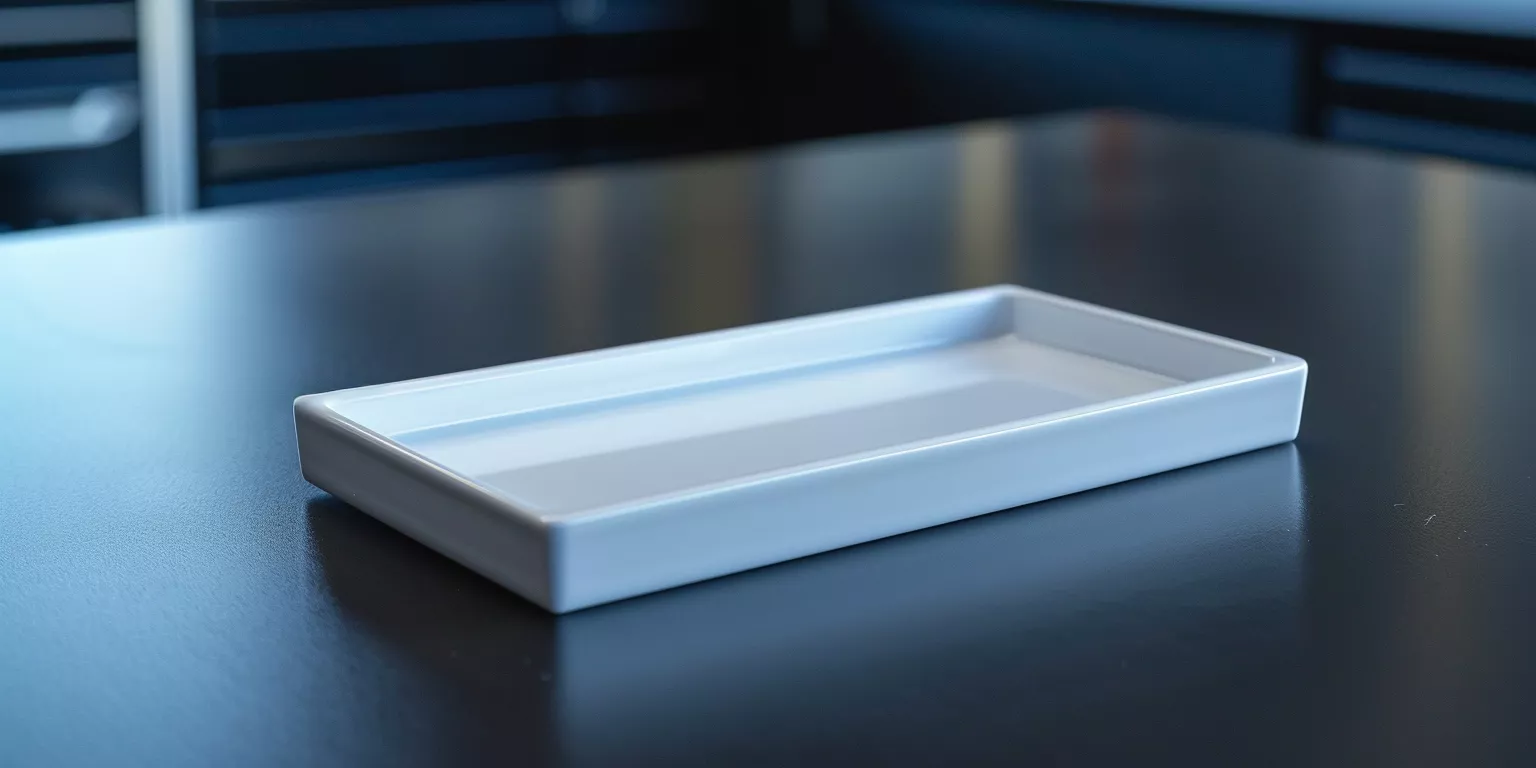
Application in Sintering Production Lines
Moreover, Rectangular Alumina Trays reach their highest technical relevance inside sintering production lines, where dimensional stability directly affects throughput and yield. Consequently, their role extends beyond containment into active process control.
Rectangular Alumina Trays in sintering lines serve as structural references that stabilize parts during shrinkage and phase transformation. Therefore, tray behavior influences not only individual components but also cumulative line performance over hundreds of cycles.
Dimensional Stability Requirements in Mass Sintering
Rectangular Alumina Trays used in mass sintering must preserve flatness within tight tolerances to avoid part tilt and contact shadowing. In high-volume ceramic and powder metallurgy lines, allowable tray warpage is often limited to ≤0.5–1.0 mm per 300 mm length.
During repeated cycles at 1400–1550 °C, trays supporting densely packed parts experience asymmetric loading that magnifies even small geometric deviations. Engineers with production experience frequently report that a 0.8 mm tray bow can translate into 2–3 mm part height variation after shrinkage. Such deviations accumulate across stacked layers, creating reject clusters rather than isolated defects.
Accordingly, tray flatness retention over time is a primary selection metric rather than initial inspection values.
Fixture Compatibility and Process Integration
Rectangular Alumina Trays rarely operate alone; instead, they integrate with setters, spacers, rails, or pusher systems. In continuous or semi-continuous furnaces, tray alignment tolerance typically falls within ±1.5 mm relative to guide rails to prevent edge binding.
In practice, trays with inconsistent edge straightness increase friction during movement, raising mechanical stress and localized heating. Operators often observe temperature deviations of 20–40 °C near jam-prone edges due to altered airflow and radiative exposure. These deviations, in turn, accelerate deformation and shorten tray life.
Thus, tray geometry must be matched to furnace handling mechanics as closely as to thermal parameters.
Yield Loss Linked to Tray Deformation
Rectangular Alumina Trays influence yield indirectly by shaping shrinkage pathways. When trays sag or twist, parts experience uneven contact pressure, leading to differential densification.
In sintering audits, production teams frequently correlate yield drops of 5–12% with gradual tray deformation rather than with powder or binder variation. Once trays exceed a critical distortion threshold, corrective actions such as powder reformulation or temperature tuning often fail to recover yield. Only tray replacement restores stability.
Therefore, monitoring tray deformation trends provides an early indicator of impending yield degradation.
Sintering Line Performance Factors Influenced by Rectangular Alumina Trays
| Parameter | Typical range | Process impact |
|---|---|---|
| Allowable tray warpage (mm/300 mm) | ≤0.5–1.0 | Controls part alignment |
| Part shrinkage (%) | 12–20 | Drives tray–load interaction |
| Tray alignment tolerance (mm) | ±1.5 | Prevents mechanical binding |
| Yield loss from tray distortion (%) | 5–12 | Accumulates over cycles |
Rectangular Alumina Trays function as long-term stability elements in sintering lines, where small geometric drift can propagate into substantial production losses.
Use in Furnace Manufacturing and Thermal System Integration
Additionally, Rectangular Alumina Trays play a critical role when furnaces are designed, assembled, and commissioned as integrated thermal systems. Consequently, tray behavior influences not only payload stability but also furnace uniformity, maintenance cycles, and system reliability.
Rectangular Alumina Trays used by furnace manufacturers are evaluated as interface components between heat sources, insulation structures, and moving mechanisms. Therefore, their geometry and material response must align with chamber design, airflow patterns, and mechanical handling from the outset.
Matching Tray Design to Furnace Chamber Geometry
Rectangular Alumina Trays must fit within chamber dimensions that often vary by ±2–5 mm due to refractory tolerances and thermal expansion. In batch furnaces, trays typically rest on shelves or posts arranged on grids with spacing between 200–400 mm, which defines effective support span.
During commissioning trials, furnace builders frequently observe that trays extending closer than 15–20 mm to hot walls experience asymmetric radiation exposure. This condition raises local surface temperatures by 30–60 °C, increasing edge creep and accelerating distortion. Designers with field experience often compensate by reducing tray footprint or introducing peripheral clearance zones.
Accordingly, tray geometry should be finalized only after chamber hot-zone mapping is completed.
Interaction with Handling Systems and Moving Mechanisms
In pusher and roller-hearth furnaces, Rectangular Alumina Trays interact continuously with mechanical systems. Typical pusher forces range from 50–150 N per tray, depending on load and friction conditions.
When tray edges lack straightness or exhibit uneven wear, contact friction increases measurably, sometimes by 20–35%. Operators report that this friction rise leads to localized heating due to prolonged dwell near burners or heating elements. Over extended operation, these hot spots induce differential creep that shortens tray service life.
Thus, mechanical compatibility between trays and handling systems is as important as thermal compatibility.
Maintenance Planning and Spare Strategy Integration
Rectangular Alumina Trays in furnace OEM projects are often specified with replacement intervals rather than indefinite use. Field data indicate that trays operating near 1500 °C under full load typically require rotation or replacement after 60–120 cycles, depending on support conditions.
Furnace manufacturers increasingly bundle trays as consumable modules, recommending spare quantities of 10–20% of installed capacity to avoid unplanned downtime. Engineers involved in after-sales support emphasize that standardized tray dimensions simplify logistics and reduce lead-time risk during maintenance events.
Therefore, tray specification should be integrated into lifecycle planning rather than treated as a one-time procurement.
Furnace Integration Considerations for Rectangular Alumina Trays
| Integration factor | Typical range | System-level effect |
|---|---|---|
| Chamber dimensional tolerance (mm) | ±2–5 | Clearance and radiation balance |
| Recommended wall clearance (mm) | 15–20 | Limits asymmetric heating |
| Pusher force per tray (N) | 50–150 | Influences frictional heating |
| Typical replacement cycle count | 60–120 | Drives spare planning |
Rectangular Alumina Trays become effective furnace components only when geometry, handling, and maintenance logic are coordinated within the overall thermal system.
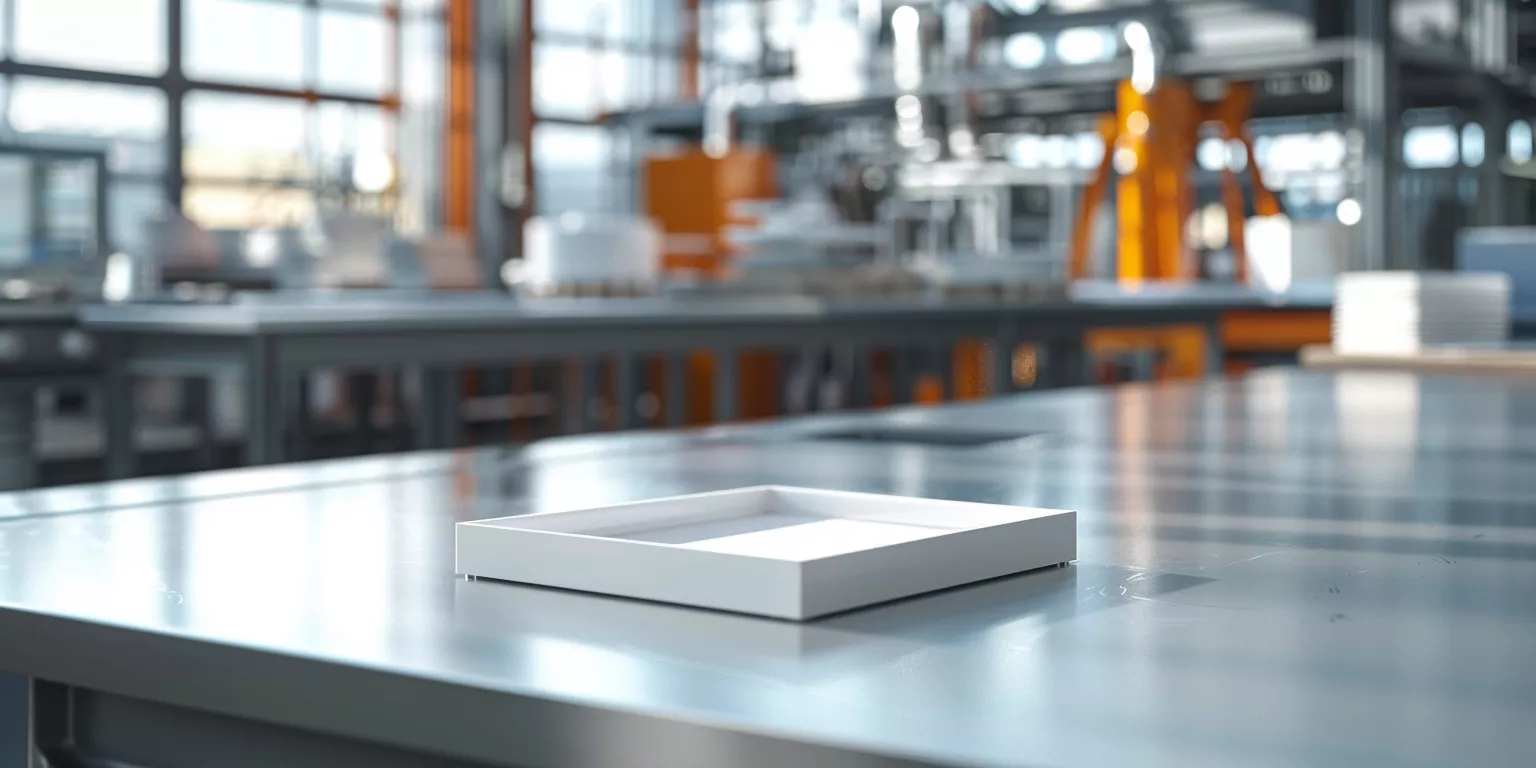
Performance in Laboratory and Analytical Thermal Procedures
Meanwhile, Rectangular Alumina Trays are widely adopted in laboratory and analytical environments where thermal consistency and chemical cleanliness are essential. Consequently, their role shifts from load-bearing infrastructure to controlled containment for precise thermal operations.
Rectangular Alumina Trays in laboratories support ash preparation, combustion residue handling, and pre-treatment steps for downstream analysis. Therefore, performance emphasis centers on repeatability, surface stability, and resistance to cross-sample interference rather than long-term structural endurance alone.
-
Controlled containment during ashing and combustion
Rectangular Alumina Trays provide stable platforms for organic removal and ash formation at temperatures commonly ranging from 500–1000 °C. In analytical workflows, consistent tray geometry ensures uniform exposure, which reduces variability in residual mass measurements by 3–6% across repeated runs. -
Thermal uniformity for batch sample preparation
In muffle furnaces and box furnaces, trays often hold multiple crucibles or powder beds simultaneously. Experienced laboratory technicians report that rectangular trays with thicknesses between 6–10 mm reach thermal equilibrium within 15–25 minutes, enabling synchronized heating across sample sets. Consequently, baseline drift during subsequent analysis is minimized. -
Surface cleanliness and chemical neutrality
Rectangular Alumina Trays resist oxidation and do not release volatile species under typical laboratory conditions. However, after 50–80 cycles, minor surface glazing may occur if flux-containing residues are present. In such cases, routine surface abrasion or controlled burn-off restores consistent release behavior.
As a result, laboratory users favor Rectangular Alumina Trays for procedures where reproducibility and low background interference outweigh the need for extreme mechanical robustness.
Role in Chemical and Powder Processing Operations
Subsequently, Rectangular Alumina Trays extend beyond ceramic sintering into chemical and powder processing, where batch uniformity and chemical resistance govern throughput and reproducibility. Accordingly, this section addresses operational behavior under reactive solids handling.
Rectangular Alumina Trays in chemical and powder workflows prioritize containment stability, release behavior, and resistance to aggressive residues. Therefore, selection criteria emphasize surface response and thermal exposure profiles rather than maximum structural load.
-
Batch calcination and solid-state reactions
Rectangular Alumina Trays are used to calcine powders and drive solid-state reactions at 800–1300 °C, where uniform exposure is essential. In practice, tray flatness helps maintain consistent bed depth, which limits reaction-rate variation to within ±5–8% across a batch. Consequently, downstream milling and classification show tighter particle-size distributions. -
Powder release and adhesion control
During repeated cycles, fine powders may partially sinter or adhere to tray surfaces. Operators report that trays with smoother as-fired finishes reduce residual carryover by 20–30% compared with rougher surfaces. As a result, cleaning intervals lengthen and cross-batch contamination risk declines. -
Resistance to chemically aggressive residues
Rectangular Alumina Trays tolerate many oxide, phosphate, and carbonate systems without reaction. However, alkali-rich or borate-containing powders can form surface films after 40–70 hours of exposure above 1100 °C. In such cases, scheduled surface conditioning preserves predictable release behavior.
Following these considerations, chemical and powder processors typically standardize tray geometry and maintenance intervals to stabilize batch outcomes while minimizing manual intervention.
Comparison with Alternative Tray Materials
However, Rectangular Alumina Trays are rarely selected in isolation; instead, engineers often evaluate them against other high-temperature tray materials during process optimization. Consequently, understanding comparative behavior clarifies when alumina represents the most balanced option.
Rectangular Alumina Trays occupy a middle ground between cost, temperature capability, and chemical stability. Therefore, comparisons should focus on performance boundaries under identical thermal and mechanical constraints rather than on isolated material properties.
Alumina Versus Mullite and Cordierite Trays
Rectangular Alumina Trays outperform mullite and cordierite trays in high-temperature stability, particularly above 1300 °C. Mullite trays typically soften or creep once sustained exposure exceeds 1350–1400 °C, while cordierite exhibits rapid thermal expansion mismatch beyond 1200 °C.
In furnace trials, alumina trays maintain flatness within ±0.6 mm per 300 mm length after 40 cycles at 1450 °C, whereas mullite trays often exceed 1.5 mm warpage under similar conditions. Engineers familiar with cordierite note that although thermal shock resistance is higher, dimensional drift becomes unacceptable in precision sintering. Thus, alumina is favored where geometric stability outweighs shock tolerance.
Accordingly, alumina trays serve applications demanding higher temperature margins and tighter dimensional control than silicate-based alternatives can provide.
Alumina Versus Silicon Carbide and Graphite Trays
Rectangular Alumina Trays differ fundamentally from silicon carbide and graphite trays in thermal conductivity and chemical behavior. Silicon carbide exhibits conductivity exceeding 120 W/m·K at room temperature, which minimizes gradients but introduces rapid heat transfer.
In continuous furnaces, this high conductivity can raise part heating rates beyond optimal limits, increasing distortion risk for delicate components. Graphite trays, although stable above 2000 °C in inert atmospheres, oxidize rapidly in air above 500–600 °C, limiting their use without protective measures. Engineers often recount costly early failures when graphite trays were inadvertently exposed to oxidizing conditions.
Therefore, alumina trays remain preferred where moderate conductivity, oxidation resistance, and operational simplicity are required.
Material Comparison Snapshot for High Temperature Trays
| Tray material | Practical temperature limit (°C) | Thermal conductivity (W/m·K) | Typical constraint |
|---|---|---|---|
| Alumina | 1400–1600 | 20–30 | Creep at extreme dwell |
| Mullite | 1300–1400 | 5–7 | Early softening |
| Cordierite | ≤1200 | 2–4 | Dimensional instability |
| Silicon carbide | ≥1600 | >120 | Overheating sensitivity |
| Graphite | ≥2000 (inert) | 100–150 | Oxidation in air |
Rectangular Alumina Trays emerge as a pragmatic choice when temperature, stability, and chemical robustness must be balanced without introducing atmosphere constraints or excessive heat flux.
Dimensional Selection Thickness and Design Principles
Additionally, after material and comparative choices are settled, dimensional design becomes the decisive lever for aligning Rectangular Alumina Trays with real furnace loads. Consequently, thickness and size rules translate thermal theory into stable operation.
Rectangular Alumina Trays fail more often from dimensional mismatch than from material deficiency. Therefore, engineers should approach thickness and footprint as coupled variables governed by load, temperature, and support geometry rather than by habit.
Thickness Selection Based on Load and Temperature
Rectangular Alumina Trays require thickness sufficient to resist bending while limiting internal thermal gradients. In production settings, trays carrying 2–5 kg per unit commonly perform well at thicknesses between 8–12 mm when operated below 1450 °C.
When operating temperatures rise toward 1500–1550 °C, creep sensitivity increases, and trays below 10 mm often show measurable deflection within 30–50 cycles. Experienced process engineers frequently upgrade to 12–16 mm thickness for these conditions, noting a 25–40% extension in usable cycle life. However, excessive thickness above 18–20 mm slows thermal response and elevates gradient-induced stress during ramps.
Thus, thickness should scale with both load mass and thermal duty rather than with perceived robustness alone.
Size Limits and Aspect Ratio Guidelines
Rectangular Alumina Trays exhibit nonlinear deformation as footprint increases. Empirical data from sintering lines show that trays with length-to-thickness ratios above 30:1 are significantly more prone to mid-span sagging.
For example, a tray measuring 450 × 300 mm performs consistently at 12 mm thickness, while expanding length to 600 mm under the same thickness increases deflection by nearly 2× after 40 cycles at 1450 °C. Engineers often mitigate this effect by increasing thickness by 20–30% or by reducing unsupported span through additional supports.
Accordingly, aspect ratio control is a primary design tool for maintaining flatness during scale-up.
Dimensional Design Reference for Rectangular Alumina Trays
| Design parameter | Typical guideline | Observed effect |
|---|---|---|
| Tray thickness (mm) | 8–12 | Balanced stiffness and thermal response |
| High-temperature thickness (mm) | 12–16 | Improved creep resistance |
| Length-to-thickness ratio | ≤30:1 | Limits mid-span deflection |
| Load per tray (kg) | 2–8 | Drives thickness requirement |
| Thickness above 20 mm | Use cautiously | Increased thermal gradients |
Rectangular Alumina Trays achieve predictable performance when thickness and footprint are selected together, ensuring mechanical stiffness without introducing excessive thermal stress.
Service Life Maintenance and Replacement Strategy
Subsequently, once Rectangular Alumina Trays are correctly specified and commissioned, service life management becomes the primary determinant of long-term process stability. Accordingly, maintenance and replacement strategies should be planned as part of routine operations rather than as corrective actions.
Rectangular Alumina Trays degrade progressively through creep accumulation, surface interaction, and handling damage. Therefore, predictable maintenance practices reduce unplanned interruptions and stabilize thermal performance across extended operating periods.
-
Service life progression under cyclic exposure
Rectangular Alumina Trays operating at 1400–1500 °C under full load commonly retain acceptable flatness for 40–80 cycles, depending on support conditions and ramp profiles. As cycles accumulate, gradual center sag and edge rounding become visible indicators of structural aging. Consequently, tracking cycle counts provides a more reliable replacement signal than visual inspection alone. -
Rotation and load redistribution practices
In multi-tray systems, periodic rotation of trays between high-load and low-load positions can extend average service life by 15–25%. Operators experienced with large furnaces often implement rotation every 10–15 cycles to equalize creep exposure. As a result, deformation patterns become more uniform and easier to manage. -
Cleaning and surface conditioning intervals
Rectangular Alumina Trays exposed to powders or reactive residues benefit from scheduled surface conditioning. Light abrasion or controlled burn-off after 20–30 cycles restores release behavior and limits surface glazing. Subsequently, consistent surface condition reduces localized sticking that otherwise accelerates deformation.
Following these practices, maintenance transitions from reactive replacement to structured lifecycle management, supporting stable throughput and predictable operating costs.
Typical Failure Patterns and Preventive Practices
However, even well-specified Rectangular Alumina Trays can fail prematurely when operating conditions drift or handling discipline weakens. Consequently, recognizing failure patterns early enables corrective action before distortion propagates into process instability.
Rectangular Alumina Trays exhibit repeatable failure signatures tied to temperature exposure, load interaction, and surface condition. Therefore, preventive practices should be aligned with the dominant failure mode rather than applied uniformly.
Surface Powdering Cracking and Edge Damage
Surface powdering on Rectangular Alumina Trays typically emerges after prolonged exposure above 1450 °C, especially when alkali-containing residues are present. In observed cases, micro-granular shedding begins after 30–60 cycles, increasing particulate generation by 2–4× compared with early-life trays.
Cracking often initiates at edges or corners where stress concentration is highest. Trays with corner radii below 3 mm show crack initiation rates nearly 1.8× higher than those with radii above 5 mm under identical cycling. Engineers with maintenance oversight frequently detect these cracks first during unloading, when thermal gradients remain elevated.
Accordingly, increasing corner radii and implementing post-run visual checks immediately after cooldown reduces the risk of catastrophic fracture during subsequent cycles.
Misuse Scenarios Leading to Premature Failure
Rectangular Alumina Trays fail rapidly when used outside their intended duty envelope. A common misuse involves stacking trays without adequate spacing, which traps heat and raises local temperatures by 40–70 °C relative to setpoints.
Another frequent scenario arises when trays designed for ≤1400 °C are intermittently exposed to 1500 °C peaks during process adjustments. Field experience shows that such excursions can halve service life, reducing usable cycles from 60 to fewer than 30. Handling damage also contributes, as impact forces above 15–20 J during loading can introduce microcracks that propagate under thermal stress.
Therefore, aligning operating discipline with tray design limits is as critical as material selection.
Failure Pattern Recognition and Prevention Matrix
| Failure pattern | Typical trigger | Preventive measure |
|---|---|---|
| Surface powdering | Alkali exposure, long dwell | Scheduled surface conditioning |
| Edge cracking | Sharp corners, rapid cooling | Larger corner radii, controlled cooldown |
| Mid-span sag | Excess load, long spans | Load redistribution, added supports |
| Sudden fracture | Handling impact, thermal shock | Improved handling protocols |
Rectangular Alumina Trays deliver predictable service only when failure indicators are recognized early and preventive practices are embedded into routine operation.
Engineering Considerations for Customized Alumina Rectangular Trays
Additionally, when standard sizes no longer satisfy process constraints, customization becomes the most effective path to stabilizing Rectangular Alumina Trays in demanding environments. Consequently, engineering-led customization aligns geometry, load paths, and thermal exposure with real operating conditions.
Rectangular Alumina Trays benefit from customization when variability in load, atmosphere, or handling introduces risks that catalog items cannot absorb. Therefore, this section clarifies when customization is justified and what information enables efficient engineering collaboration.
When Standard Trays Become Insufficient
Rectangular Alumina Trays reach functional limits when operating envelopes narrow. In practice, standard trays often underperform once unsupported spans exceed 300 mm, payloads surpass 6–8 kg, or continuous dwell approaches 1500 °C.
Process teams frequently encounter recurring issues such as progressive sag exceeding 1.0 mm per 300 mm, edge binding within guides tighter than ±1.5 mm, or localized hot zones raising surface temperatures by 30–60 °C. In such cases, incremental changes to ramps or loading rarely restore stability. Experienced engineers recognize these signals as indicators that geometry, not material grade, is the bottleneck.
Accordingly, customization should be initiated at the first appearance of repeatable distortion patterns rather than after yield loss escalates.
Information Engineers Should Prepare Before Customization
Rectangular Alumina Trays can be customized efficiently when inputs describe the operating envelope precisely. Critical parameters typically include maximum and continuous temperatures, atmosphere composition, ramp profiles, and payload mass distribution.
In field projects, providing a simple thermal map with zone setpoints and estimated gradients reduces iteration cycles by 30–40%. Likewise, specifying handling method—static shelf, pusher, or roller—helps engineers align edge straightness and thickness with mechanical contact forces typically ranging from 50–150 N per tray. Teams that supply payload layout drawings further shorten development timelines by clarifying contact and shrinkage interactions.
Therefore, structured inputs convert customization from trial-and-error into predictable engineering refinement.
Customization Levers and Expected Performance Gains
| Customization lever | Typical adjustment | Measurable benefit |
|---|---|---|
| Thickness zoning | +2–4 mm at spans | 20–35% reduction in sag |
| Corner radiusing (mm) | 5–10 | 1.5–2.0× crack resistance |
| Footprint clearance (mm) | +10–20 to walls | 30–60 °C edge cooling |
| Surface finish control | Finer as-fired | 20–30% less powder adhesion |
| Support interface tuning | Added ribs or seats | Improved flatness retention |
Rectangular Alumina Trays achieve the greatest reliability gains when customization targets the dominant stress drivers rather than applying uniform material upgrades.
ADCERAX Support for Application Oriented Tray Customization
Moreover, once customization requirements are clarified, execution quality determines whether Rectangular Alumina Trays deliver stable, repeatable performance. Accordingly, ADCERAX approaches tray supply as an engineering collaboration rather than a catalog transaction.
ADCERAX supports Rectangular Alumina Trays customization by aligning material selection, dimensional control, and process feedback within a single workflow. Therefore, engineering recommendations are derived from furnace conditions, payload behavior, and lifecycle targets rather than from generic specifications.
In practice, ADCERAX engineers review operating temperatures, atmosphere profiles, ramp rates, and support geometry before proposing tray thickness, footprint tolerances, and corner treatments. This front-loaded analysis typically reduces downstream iteration by 25–40%, because deformation risks are addressed before production tooling is committed. Moreover, small-batch prototyping allows validation under real furnace conditions prior to scale deployment.
Additionally, ADCERAX integrates quality inspection, dimensional verification, and packaging logic into the delivery process. Trays intended for production lines are often supplied with flatness benchmarks and recommended rotation schedules, which helps maintenance teams track performance degradation over 50–100 cycles. As a result, customers gain predictable service behavior rather than reactive replacement cycles.
By consolidating engineering support, controlled manufacturing, and logistics coordination, ADCERAX enables Rectangular Alumina Trays to function as stable process components instead of consumables with uncertain behavior.
Closing Perspective on Reliable Use of Alumina Rectangular Trays
Overall, Rectangular Alumina Trays perform best when material fundamentals, geometry, temperature exposure, and handling discipline are treated as a unified system. Consistent attention to these factors transforms trays into reliable contributors to thermal process stability.
If your process requires tailored Rectangular Alumina Trays with predictable high-temperature behavior, ADCERAX can provide engineering guidance and customization aligned with your operating conditions.
FAQ
What temperature range is suitable for Rectangular Alumina Trays in continuous use?
Rectangular Alumina Trays typically operate continuously between 1400–1550 °C, depending on alumina purity, load, and atmosphere, with short-term peaks tolerated when ramp rates remain controlled.
How does tray thickness influence deformation during sintering?
Thickness between 8–12 mm balances stiffness and thermal response for moderate loads, while 12–16 mm improves creep resistance at higher temperatures, reducing sag by up to 40% over repeated cycles.
When should standard trays be replaced with customized designs?
Customization is recommended when warpage exceeds 1.0 mm per 300 mm, payloads exceed 6–8 kg, or recurring distortion patterns persist despite stable operating parameters.
How can tray service life be extended in production furnaces?
Service life improves through controlled ramp rates, periodic tray rotation every 10–15 cycles, and scheduled surface conditioning, which together can extend usable cycles by 15–25%.
References: