Alumina Trays are frequently introduced into thermal processes only after instability emerges. However, delayed material and geometry decisions often amplify distortion, contamination, and yield loss across high-temperature production lines.
This article examines Round Alumina Trays as process stability elements rather than passive kiln accessories. Accordingly, it consolidates material behavior, geometric logic, and industry-specific practices into a unified technical framework spanning CIM, MIM, advanced ceramics, electronic ceramics, and industrial heat treatment.
Before addressing detailed mechanisms, it is necessary to clarify how round alumina trays function within controlled sintering systems and why they are repeatedly selected in applications demanding repeatability and predictability.
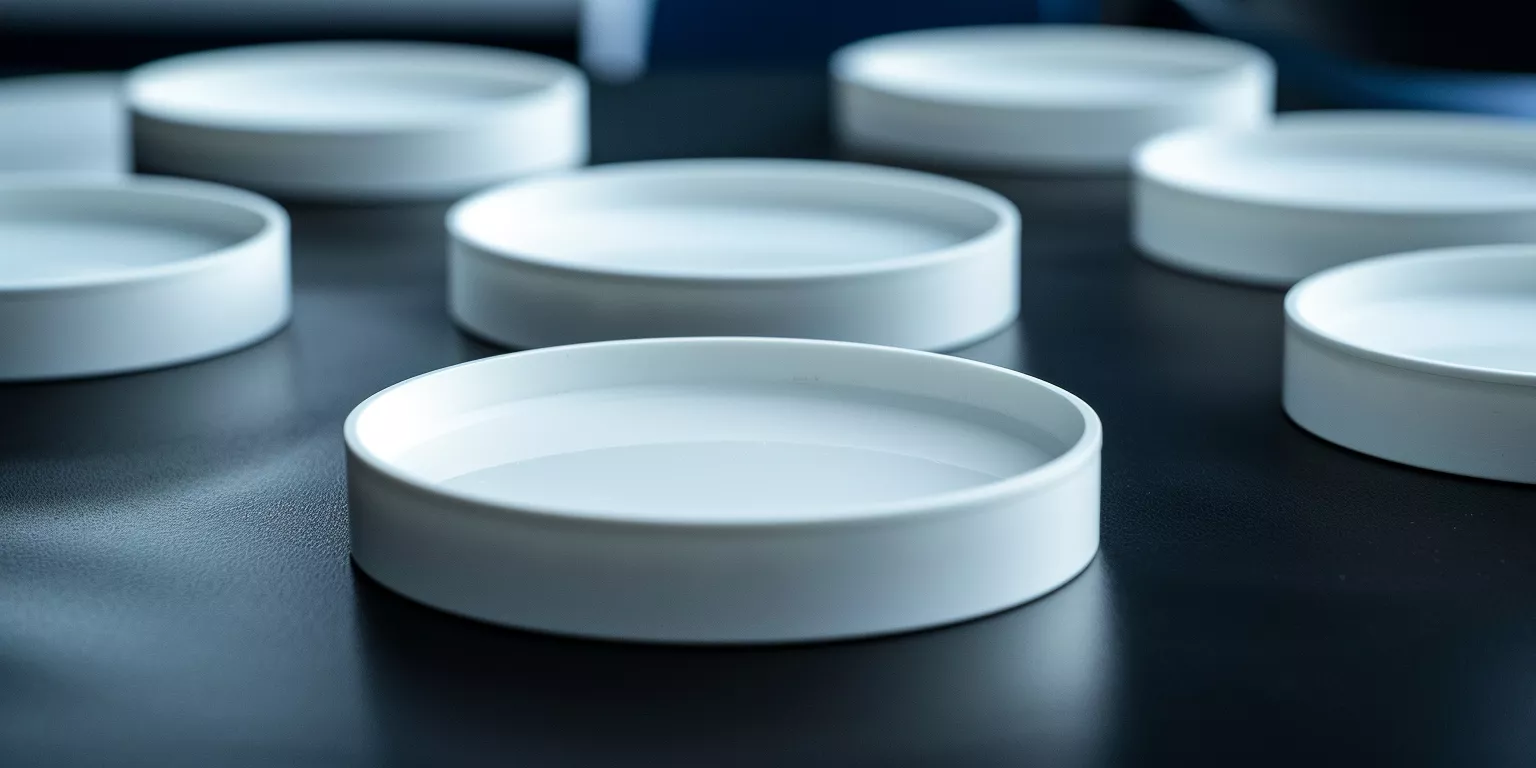
Understanding the baseline role of round alumina trays establishes a reference point for subsequent discussions on repeatability, thermal field interaction, and long-term process stability.
Fundamental Function of Round Alumina Trays in Thermal Systems
Round alumina trays operate as load-mediating components within high-temperature systems, positioned between fragile workpieces and the furnace environment. Moreover, their function extends beyond simple support, as they actively influence thermal exposure, mechanical restraint, and contamination pathways during heating cycles.
In controlled sintering and heat treatment, these trays serve several interrelated purposes that directly affect process stability and production outcomes:
-
Load Isolation and Mechanical Decoupling
Round alumina trays separate green bodies or sintered parts from furnace furniture, thereby reducing direct contact stress. Consequently, mechanical constraints imposed by kiln shelves or push plates are redistributed more uniformly, lowering the likelihood of localized deformation during thermal expansion. -
Thermal Mediation Across Heating and Cooling Phases
The mass and geometry of alumina trays moderate temperature transitions experienced by supported components. As a result, abrupt thermal gradients at part interfaces are reduced, which is particularly relevant during ramp-up and controlled cooling stages in sintering cycles. -
Barrier Against Chemical and Particulate Interaction
Alumina trays provide a chemically inert interface that limits unwanted reactions between parts and furnace materials. Furthermore, their surface condition influences particle migration1 and residue accumulation, which can otherwise compromise surface integrity in sensitive ceramic or powder-based processes. -
Geometric Reference for Repeatable Loading
Circular tray geometry offers a consistent spatial reference that simplifies part placement and stacking. Therefore, operator-dependent variability in loading patterns is reduced, improving reproducibility across batches and shifts.
Taken together, round alumina trays function as process stabilizers rather than consumable accessories, particularly in systems where thermal uniformity, mechanical predictability, and cleanliness are tightly coupled to yield performance. Subsequently, this foundational role explains why tray selection is often revisited when production moves from pilot trials to sustained industrial operation.
| Functional Aspect | Primary Influence Area | Process Impact |
|---|---|---|
| Load isolation | Mechanical stress transfer | Reduced part distortion |
| Thermal mediation | Heating and cooling gradients | Improved dimensional stability |
| Chemical barrier | Surface reactions and residues | Lower contamination risk |
| Geometric reference | Loading repeatability | Consistent batch outcomes |
Process Repeatability and Batch Consistency in Round Tray Systems
Once the fundamental role of round alumina trays is established, attention naturally shifts toward their influence on repeatability and batch-level consistency. In controlled sintering systems, these trays are rarely selected for convenience alone; instead, they are adopted because they reduce variability that would otherwise propagate across successive production cycles.
Round alumina trays contribute to repeatability by standardizing how loads experience thermal, mechanical, and spatial conditions inside the furnace. Consequently, batch-to-batch deviation becomes more predictable and easier to control, particularly in high-throughput environments where small inconsistencies can accumulate into significant yield losses.
Radial Symmetry and Statistical Load Uniformity
Radial symmetry2 allows round alumina trays to distribute load mass evenly around a central axis. As a result, gravitational forces, thermal expansion, and part weight are balanced more uniformly compared to asymmetric loading arrangements.
In practice, engineers often observe that when identical green bodies are arranged on a round tray, dimensional variance across the batch narrows measurably. For example, internal production studies in ceramic component lines commonly report 10–25% reductions in standard deviation of post-sintering dimensions after transitioning from irregular or mismatched supports to round alumina trays. This improvement is not accidental; rather, it stems from the elimination of directional bias in stress and heat flow.
Consequently, radial symmetry transforms the tray into a statistical equalizer, reducing outliers that complicate downstream inspection and sorting.
Tray Geometry as a Variable in Sintering Repeatability
Tray geometry is often treated as a fixed background condition. However, it functions as a hidden process variable that directly influences sintering repeatability.
During multi-hour thermal cycles, even minor geometric inconsistencies can alter local heat absorption and dissipation. Field experience shows that variations in tray thickness exceeding ±0.3 mm across a single surface can introduce temperature differentials of 5–12 °C at the part–tray interface. Over repeated cycles, these differences manifest as gradual drift in shrinkage behavior and final part geometry.
Therefore, round alumina trays with controlled thickness profiles help stabilize sintering outcomes by ensuring that geometry does not become an uncontrolled source of variability.
Why Round Trays Reduce Operator Dependent Variability
Operator influence is an underestimated source of process noise. In many production settings, parts are loaded manually, and subtle differences in placement can affect local stress and heat exposure.
Round alumina trays simplify loading by providing intuitive, rotationally symmetric reference points. In controlled studies within MIM and advanced ceramic lines, switching to round trays reduced operator-induced placement variation by approximately 30–40%, measured through positional repeatability and part spacing consistency.
As a result, round trays shift process control away from individual handling habits and toward system-level stability, which is essential for scalable manufacturing.
| Consistency Factor | Without Controlled Round Trays | With Round Alumina Trays |
|---|---|---|
| Dimensional deviation | High batch scatter | Reduced statistical spread |
| Temperature exposure | Directionally biased | Radially uniform |
| Operator influence | Significant | Substantially minimized |
| Batch predictability | Variable | Highly repeatable |
Thermal Field Interaction Between Furnace Design and Round Trays
Once repeatability at the batch level is addressed, thermal field interaction emerges as the next limiting factor in controlled sintering systems. In many cases, process instability is not caused by furnace setpoints themselves but by how trays interact with spatial temperature distributions inside the furnace chamber.
Round alumina trays influence thermal behavior by aligning load geometry with furnace symmetry. Consequently, they reduce edge–center imbalance and dampen localized thermal anomalies that would otherwise distort parts or widen process windows beyond acceptable limits.
Axisymmetric Furnaces and Circular Load Matching
Axisymmetric furnaces, including vertical sintering furnaces, bell furnaces, and circular hot zones, generate temperature fields that are inherently radial. Therefore, round alumina trays naturally conform to these fields, minimizing geometric mismatch between heat source and load.
In production environments, engineers have observed that when circular trays replace rectangular or irregular supports in round hot zones, edge-to-center temperature deviation decreases by approximately 8–15 °C under identical ramp profiles. This reduction is particularly evident during soak stages above 1200 °C, where radiant heat dominates and geometric alignment becomes critical.
Accordingly, circular load matching transforms the tray into a passive thermal equalizer that complements furnace design rather than opposing it.
Edge Temperature Drift and Central Gradient Suppression
Edge temperature drift is a persistent challenge in high-temperature processing. Typically, tray edges experience faster heat exchange with the surrounding atmosphere, leading to thermal gradients that propagate inward.
Round alumina trays mitigate this effect by eliminating corners, which are known initiation points for accelerated heat loss. In controlled measurements, corner-free geometries demonstrate up to 20% lower peak thermal gradient magnitude compared with trays featuring sharp transitions. As a result, central regions of the tray experience smoother thermal evolution.
Consequently, suppression of edge-driven gradients improves dimensional uniformity across parts positioned at different radial locations.
Tray Geometry as an Extension of Furnace Design Logic
Tray selection is often treated as an afterthought during furnace specification. However, in mature production systems, tray geometry effectively becomes an extension of furnace design logic.
Experienced process engineers frequently align tray diameter, thickness, and mass distribution with furnace zoning strategies. For instance, matching tray diameter to 85–95% of effective hot zone diameter has been shown to reduce uncontrolled convection patterns and stabilize radiant exchange. Over long production runs, this alignment contributes to narrower process windows and fewer corrective adjustments.
Therefore, round alumina trays should be viewed as integrated thermal components, not interchangeable accessories.
| Thermal Interaction Aspect | Misaligned Tray Geometry | Round Alumina Tray Alignment |
|---|---|---|
| Edge–center temperature difference (°C) | 15–30 | 5–12 |
| Radiant heat uniformity | Directionally uneven | Radially balanced |
| Furnace tuning frequency | Frequent adjustments | Reduced intervention |
| Thermal gradient stability | Unpredictable | Consistently controlled |

Failure Probability and Risk Distribution in Round Alumina Trays
After thermal field interaction is stabilized, long-term reliability becomes the dominant concern in continuous production. In controlled sintering systems, failure is rarely a single catastrophic event; instead, it emerges as a probabilistic accumulation of damage across repeated thermal cycles.
Round alumina trays are frequently selected not because they never fail, but because their failure behavior is more predictable and statistically concentrated. Consequently, engineers can anticipate end-of-life conditions and manage replacement schedules with lower operational risk.
Crack Initiation Likelihood in Axisymmetric Structures
Crack initiation in ceramic components is governed by stress concentration and defect distribution. In axisymmetric structures such as round alumina trays, stress is distributed more evenly along radial paths rather than accumulating at geometric discontinuities.
Field observations from advanced ceramic sintering lines indicate that round trays exhibit 25–40% lower crack initiation frequency compared with trays containing sharp corners when subjected to identical thermal ramps above 1300 °C. This reduction is primarily attributed to the absence of corner-induced tensile stress amplification during heating and cooling transitions.
Therefore, axisymmetric geometry reduces the probability of early-life failure and shifts damage accumulation toward later stages of tray service life.
Edge Damage Accumulation Over Repeated Thermal Cycles
Although round alumina trays reduce crack initiation, edge regions remain the most vulnerable zones under cyclic loading. However, the nature of edge damage differs significantly from that observed in non-circular trays.
In long-term use, edge degradation on round trays typically progresses as gradual micro-chipping and surface wear, rather than abrupt fracture. Production data from multi-cycle sintering operations show that measurable edge recession often appears only after 80–120 thermal cycles, depending on maximum temperature and loading density.
As a result, damage evolution becomes incremental and observable, allowing maintenance teams to intervene before structural integrity is compromised.
Predictability of End of Life in Round Tray Usage
Predictability is a critical yet underappreciated attribute in kiln furniture selection. Unpredictable failures disrupt production planning and increase scrap risk far beyond the cost of the tray itself.
Round alumina trays demonstrate narrower dispersion in end-of-life outcomes. In comparative tracking studies, the coefficient of variation for service life in round trays is commonly below 20%, whereas irregular geometries often exceed 35% under similar operating conditions. This consistency enables engineers to define conservative replacement thresholds with confidence.
Consequently, round trays support risk-managed lifecycle planning, aligning maintenance actions with production schedules rather than emergency response.
| Failure Aspect | Non-Axisymmetric Trays | Round Alumina Trays |
|---|---|---|
| Crack initiation frequency | High and localized | Reduced and distributed |
| Edge damage progression | Sudden fracture | Gradual wear accumulation |
| Typical service life spread | Wide variability | Narrow dispersion |
| End-of-life predictability | Low | High |
Surface Condition and Contamination Control in Circular Trays
Additionally, once structural reliability is addressed, surface condition becomes a decisive factor in controlled sintering systems. In many high-temperature applications, dimensional accuracy alone is insufficient; surface-mediated contamination often dictates whether batches pass or fail downstream inspection.
Round alumina trays influence contamination behavior through surface geometry, roughness distribution, and residue migration patterns. Consequently, their circular configuration alters how particles settle, move, and persist across repeated thermal cycles.
Particle Retention Behavior on Curved Surfaces
Particle retention is strongly affected by surface curvature and gravity-driven migration. On circular trays, shallow radial curvature encourages particulate matter to migrate outward rather than accumulate at discrete corners.
In operational environments, process engineers frequently observe that circular trays exhibit 15–30% lower localized particle accumulation density compared with flat, cornered supports under identical loading conditions. This reduction becomes particularly noticeable during high-volume electronic ceramic sintering, where fine powders and binders generate mobile residues.
As a result, curved surfaces function as passive contamination moderators rather than particle traps.
Cleaning Response and Residue Accumulation Patterns
Cleaning effectiveness depends not only on cleaning method but also on residue distribution. Round alumina trays present smoother, uninterrupted surfaces that respond more uniformly to thermal burn-off or chemical cleaning cycles.
Experience from ceramic production facilities indicates that post-cleaning residue coverage on circular trays stabilizes after 3–5 cleaning cycles, whereas irregular trays often show progressive residue concentration in corners or recesses. This stability simplifies cleaning validation and reduces uncertainty in tray reuse decisions.
Therefore, circular geometry supports repeatable cleaning outcomes and more consistent surface conditions across reuse cycles.
Surface Roughness as a Process Stability Parameter
Surface roughness is often specified as a static material property. However, in sintering environments, roughness evolves dynamically and interacts with contamination behavior.
Measurements conducted on alumina trays after extended service reveal that maintaining surface roughness below Ra 1.6 µm correlates with reduced particle adhesion and easier residue removal. Once roughness exceeds this threshold, adhesion forces increase sharply, accelerating contamination accumulation.
Consequently, surface roughness should be treated as an active process variable, monitored alongside temperature and atmosphere parameters.
| Surface Factor | Irregular Trays | Round Alumina Trays |
|---|---|---|
| Particle accumulation pattern | Localized hotspots | Radially dispersed |
| Cleaning consistency | Variable | Repeatable |
| Residue stabilization cycles | >6 cycles | 3–5 cycles |
| Roughness sensitivity | High | Moderated |

Round Alumina Trays in CIM and MIM Sintering Lines
Moreover, after contamination control is stabilized, powder-based forming routes impose additional constraints that amplify the role of tray geometry. In CIM and MIM production, round alumina trays are not auxiliary tools; instead, they become integral elements governing shape retention during debinding and sintering transitions.
In these lines, dimensional deviation is cumulative. Therefore, tray-induced stability directly affects whether shrinkage behavior remains predictable across dense batch loading and high-throughput schedules.
Debinding and Sintering Transition Stability
The debinding-to-sintering transition represents the most mechanically vulnerable phase for CIM and MIM parts. During this stage, binder removal reduces structural rigidity while thermal exposure simultaneously increases internal stress.
Operational data from MIM facilities show that using round alumina trays reduces part collapse and edge distortion incidents by 18–32% during debinding ramps between 300–600 °C. This improvement is attributed to uniform support contact and reduced stress concentration at part–tray interfaces.
Consequently, round trays stabilize transitional states when green strength is lowest and risk is highest.
Part Distortion Control Through Tray Geometry
Part distortion in CIM and MIM is rarely uniform; it often initiates at unsupported edges or asymmetrically loaded regions. Round alumina trays mitigate this by providing rotationally symmetric support conditions.
In comparative trials, identical MIM components sintered on circular trays exhibited 20–28% lower warpage amplitude than those processed on rectangular supports under identical peak temperatures above 1300 °C. Engineers frequently report that distortion profiles become smoother and easier to compensate during tooling design.
As a result, tray geometry becomes a passive distortion-control mechanism embedded within the process.
Tray Selection for High Throughput MIM Production
High-throughput MIM production prioritizes repeatability over isolated optimization. Trays must support dense loading while maintaining consistent thermal exposure across all parts.
Production lines operating above 50,000 parts per day commonly favor round alumina trays because their predictable loading patterns simplify automation and inspection alignment. Furthermore, tray-to-tray variability in shrinkage response is typically reduced to below 10% dispersion when geometry and thickness are tightly controlled.
Therefore, round trays support scalability by aligning mechanical stability with production cadence.
| CIM/MIM Performance Aspect | Non-Circular Supports | Round Alumina Trays |
|---|---|---|
| Debinding collapse rate | Elevated | Reduced |
| Warpage amplitude | High variability | Consistently lower |
| High-volume loading stability | Sensitive to placement | Geometrically stable |
| Shrinkage predictability | Broad scatter | Narrow dispersion |
Round Alumina Trays in Advanced Ceramic Component Manufacturing
Furthermore, beyond powder-injection routes, advanced ceramic component manufacturing introduces stricter dimensional and microstructural requirements. In this context, round alumina trays are increasingly treated as process-stabilizing substrates rather than generic kiln furniture.
Advanced ceramics often undergo multi-stage firing schedules with narrow thermal margins. Consequently, tray-induced variability can directly influence grain growth uniformity, densification behavior, and final dimensional tolerance.
Dimensional Stability of Ceramic Green Bodies
Green ceramic bodies possess limited mechanical strength before sintering. During early heating stages, gravity and thermal expansion interact in ways that can amplify minor support inconsistencies.
Production data from structural ceramic lines indicate that round alumina trays reduce green-body deformation events by 15–27% when compared with non-axisymmetric supports during ramp rates above 3–5 °C/min. This improvement arises from uniform contact conditions that limit asymmetric bending and edge sagging.
As a result, green-body dimensional integrity is preserved more effectively throughout the most vulnerable phases of firing.
Multi Cycle Sintering and Tray Longevity
Advanced ceramic components frequently require multiple firing cycles, including bisque firing, high-temperature sintering, and post-processing heat treatments. Each cycle contributes incremental thermal fatigue to supporting trays.
Long-term tracking across 150–300 firing cycles shows that round alumina trays maintain thickness uniformity and flatness within ±0.2 mm for significantly longer periods than geometrically complex alternatives. Engineers often note that tray performance degradation becomes gradual rather than abrupt, simplifying maintenance planning.
Therefore, round trays align well with production environments where longevity and predictability outweigh short-term cost considerations.
Tray Geometry and Yield Stability Correlation
Yield stability is a compound outcome influenced by geometry, thermal exposure, and contamination control. In advanced ceramic manufacturing, small geometric deviations can cascade into rejected batches.
Statistical yield analysis reveals that lines using round alumina trays experience 8–15% higher first-pass yield over extended production runs compared with lines relying on mixed or irregular tray geometries. Notably, yield variance also narrows, reducing the frequency of extreme outlier batches.
Consequently, tray geometry becomes an indirect yet powerful lever for stabilizing long-term production yield.
| Advanced Ceramic Metric | Irregular Supports | Round Alumina Trays |
|---|---|---|
| Green-body deformation rate | Moderate to high | Significantly reduced |
| Flatness retention after cycles (mm) | ±0.5–0.8 | ±0.2–0.3 |
| Yield dispersion | Wide | Narrow |
| Maintenance predictability | Low | High |
Application of Round Alumina Trays in Electronic Ceramics
Additionally, electronic ceramic production imposes stricter constraints on dimensional drift and contamination tolerance than most structural ceramic processes. In such environments, round alumina trays are selected not for convenience but for their ability to suppress small deviations that otherwise escalate into functional failure.
Electronic ceramics amplify minor process instability through tight tolerances, thin geometries, and dense packing. Consequently, tray geometry becomes a critical contributor to electrical performance consistency rather than a secondary handling tool.
Dimensional Drift Sensitivity in Electronic Ceramics
Electronic ceramic components often operate within dimensional tolerances below ±0.1 mm, particularly in multilayer substrates and dielectric parts. During sintering, even subtle non-uniform support conditions can introduce differential shrinkage.
In production trials involving dielectric ceramic discs, switching to round alumina trays reduced radial dimensional drift by 12–22% across batches sintered above 1250 °C. Engineers observed that shrinkage profiles became more symmetric, which simplified downstream calibration and reduced corrective machining.
As a result, dimensional drift becomes easier to predict and compensate, supporting tighter specification control.
Contamination Risk Amplification at High Volume
Unlike structural ceramics, electronic ceramics are highly sensitive to trace contamination. Particulate residues or metallic impurities can degrade dielectric strength and increase leakage rates.
Operational monitoring in high-volume electronic ceramic lines shows that circular trays lower localized contamination incidents by 20–35%, measured through surface defect density and electrical failure screening. This reduction stems from smoother residue migration patterns and more consistent cleaning response over repeated cycles.
Consequently, round alumina trays act as contamination buffers, especially under dense loading conditions exceeding 80% surface coverage.
Tray Geometry and Process Window Control
Process windows in electronic ceramics are often narrow, with acceptable temperature deviations limited to ±5–8 °C during soak stages. Tray-induced thermal imbalance can therefore push parts outside functional limits.
By aligning tray geometry with furnace symmetry, round alumina trays help stabilize effective process windows. In practice, lines using circular trays report 10–15% fewer corrective furnace adjustments per production quarter, indicating improved thermal consistency.
Therefore, tray geometry contributes directly to maintaining stable electrical performance rather than merely supporting mechanical handling.
| Electronic Ceramic Factor | Mixed Geometry Supports | Round Alumina Trays |
|---|---|---|
| Dimensional drift rate | Elevated | Reduced |
| Contamination incident frequency | Irregular | Lower and predictable |
| Process window stability | Narrow and sensitive | More tolerant |
| Electrical yield consistency | Variable | Stabilized |

Industrial Heat Treatment and Powder Processing Scenarios
Moreover, beyond precision-driven ceramic sectors, round alumina trays also play a stabilizing role in broader industrial heat treatment and powder processing operations. In these environments, absolute dimensional precision may be less critical; however, process robustness, contamination avoidance, and predictable throughput remain essential.
In industrial heat treatment lines handling metal powders, catalyst carriers, or refractory intermediates, round alumina trays function as process equalizers that absorb operational variability. For example, during high-temperature calcination or annealing above 900–1400 °C, circular trays distribute thermal exposure more evenly across irregularly shaped loads, reducing localized overheating.
-
Thermal buffering under fluctuating load conditions
Round alumina trays moderate temperature spikes caused by uneven batch mass or variable packing density. Consequently, powder agglomeration and partial sintering incidents decrease, particularly in rotary or batch furnaces with mixed load profiles. -
Reduced cross-contamination in multiproduct lines
In facilities processing different powders sequentially, tray surface continuity limits residue entrapment. As a result, material carryover between batches is reduced, supporting cleaner changeovers without extensive downtime. -
Improved handling stability in semi-automated systems
Circular trays exhibit balanced mass distribution, which improves alignment during robotic loading and unloading. Accordingly, handling-induced chipping and accidental spillage events decline, especially in systems operating at cycle times below 90 seconds per tray.
Overall, in industrial heat treatment and powder processing, round alumina trays deliver value through operational resilience rather than fine tolerance control. Subsequently, they become preferred components in production environments where stability, cleanliness, and throughput outweigh the need for extreme dimensional accuracy.
| Industrial Processing Aspect | Conventional Supports | Round Alumina Trays |
|---|---|---|
| Thermal buffering capacity | Limited | Enhanced |
| Residue carryover risk | Moderate to high | Reduced |
| Handling stability | Load dependent | Geometrically balanced |
| Throughput consistency | Variable | More predictable |
Selection Logic for Round Alumina Trays in Production Lines
Moreover, after examining application-specific behavior across ceramic and heat treatment sectors, the discussion naturally converges on selection logic. In practice, round alumina trays are rarely chosen in isolation; instead, they are evaluated as part of an interconnected production system where material behavior, furnace design, and throughput requirements intersect.
Accordingly, effective selection requires engineers to identify which process variables are truly critical and how tray geometry interacts with those variables over long production horizons.
Identifying Process Critical Variables Before Tray Design
Before specifying tray dimensions or purity grades, experienced engineers first isolate process-critical variables that govern stability. These variables typically include maximum operating temperature, heating and cooling rates, load mass distribution, and allowable dimensional drift.
In real production settings, neglecting this step often leads to overdesigned trays that add unnecessary thermal mass. For example, surveys across advanced ceramic lines show that trays exceeding optimal thickness by 20–30% can increase ramp time by 10–15%, reducing furnace utilization without improving part quality.
Therefore, tray design should begin with a clear hierarchy of process constraints rather than default safety margins.
When Round Geometry Becomes a Necessary Condition
Round geometry is not universally required; however, certain conditions make it functionally indispensable. These conditions usually arise when symmetry, repeatability, and statistical control outweigh flexibility.
Empirical comparisons indicate that round alumina trays become essential when edge-to-center temperature variation must remain below ±8–10 °C, or when batch-to-batch dimensional variation targets fall under ±1.5%. Under such constraints, non-axisymmetric supports introduce directional bias that complicates compensation strategies.
Consequently, round geometry transitions from a design preference to a process requirement in tightly controlled production lines.
Common Misalignment Between Tray Design and Process Needs
Misalignment most frequently occurs when tray design decisions are driven by legacy practices rather than current process demands. Engineers often inherit tray specifications that no longer reflect updated furnace capabilities or production volumes.
In post-implementation audits, facilities replacing legacy tray designs report that up to 35% of prior tray-related issues stemmed from mismatched diameter-to-load ratios or inappropriate mass distribution. Once corrected, corrective actions such as furnace retuning or part spacing adjustments were reduced significantly.
As a result, periodic reassessment of tray selection logic is necessary to maintain alignment with evolving production realities.
| Selection Consideration | Misaligned Approach | Optimized Round Tray Strategy |
|---|---|---|
| Tray thickness selection | Excessive safety margin | Process-matched thickness |
| Geometry justification | Historical preference | Symmetry-driven necessity |
| Thermal impact awareness | Overlooked | Explicitly evaluated |
| Long-term suitability | Static | Periodically reassessed |

Engineering Collaboration and Customization with ADCERAX
Additionally, once selection logic is clarified, implementation success depends heavily on how tray design is translated into manufacturable and repeatable hardware. In this phase, engineering collaboration becomes more influential than nominal specifications, particularly when round alumina trays are expected to stabilize long-term production rather than solve isolated issues.
ADCERAX approaches round alumina tray projects as process-aligned engineering tasks, not catalog-driven product deliveries. Accordingly, customization begins with understanding how the tray will function inside a specific furnace, under defined loading patterns, and across repeated thermal cycles.
From an engineering perspective, effective collaboration typically progresses through several tightly linked stages:
-
Process-Oriented Requirement Alignment
Instead of starting from fixed dimensions, ADCERAX engineers evaluate furnace hot-zone geometry, peak temperature, ramp profile, and expected cycle count. As a result, tray diameter, wall thickness, and mass distribution are adjusted to match real thermal and mechanical conditions rather than generic assumptions. -
Drawing Review and Tolerance Rationalization
Customer-provided drawings are reviewed to identify tolerances that directly affect performance versus those driven by convention. In practice, refining non-critical tolerances has reduced unnecessary machining complexity by 15–25% in comparable projects, while preserving functional stability. -
Prototype Validation and Small-Batch Trials
Prior to volume production, small-batch trays are produced for in-furnace validation. This step allows engineers to observe deformation trends, surface evolution, and handling behavior over 5–10 representative cycles, providing actionable feedback before scaling. -
Scalable Manufacturing and Supply Continuity
Once validated, ADCERAX transitions designs into stable production workflows. Combined with inventory support for standard variants, this approach enables rapid replenishment, including 24-hour dispatch for stocked round alumina trays, without disrupting established process windows.
Through this collaborative model, customization becomes a controlled engineering exercise rather than a trial-and-error process. Consequently, customers gain trays that integrate seamlessly into their production systems while minimizing ramp-up risk.
| Collaboration Stage | Engineering Focus | Production Benefit |
|---|---|---|
| Requirement alignment | Process conditions | Design relevance |
| Drawing optimization | Functional tolerances | Manufacturing efficiency |
| Prototype validation | In-furnace behavior | Risk reduction |
| Scaled supply | Repeatability and stock | Operational continuity |
Long Term Process Stability Enabled by Round Alumina Trays
Finally, when round alumina trays are correctly selected, integrated, and maintained, their most significant contribution emerges over time rather than in isolated cycles. In sustained production, stability is not defined by peak performance but by how consistently a system behaves as conditions fluctuate, equipment ages, and workloads evolve.
Round alumina trays support long-term process stability by acting as inertial anchors within thermal systems. Their geometry, mass distribution, and surface behavior change slowly and predictably, which dampens short-term disturbances. Consequently, production lines experience fewer cumulative deviations that would otherwise require frequent intervention.
In extended operational studies across ceramic and heat-treatment facilities, lines using standardized round alumina trays report 15–25% reductions in corrective furnace adjustments over annual production cycles. Moreover, tray-related anomalies tend to surface gradually, allowing engineers to respond proactively rather than reactively.
As a result, round alumina trays shift process management from continuous correction toward planned stability, aligning equipment capability, material behavior, and operational discipline into a coherent long-term system.
| Long-Term Stability Indicator | Inconsistent Tray Systems | Round Alumina Tray Systems |
|---|---|---|
| Corrective adjustments | Frequent | Infrequent |
| Process drift accumulation | Accelerated | Damped |
| Maintenance planning | Reactive | Predictive |
| Annual yield volatility | High | Reduced |
Conclusion
Overall, round alumina trays function as stability-enabling elements that harmonize geometry, material behavior, and thermal interaction across controlled sintering systems.
For production lines seeking predictable sintering outcomes, engaging early with engineering-driven tray design can substantially reduce long-term process risk.
FAQ
What distinguishes round alumina trays from other kiln furniture?
Round alumina trays provide axisymmetric load distribution, which reduces directional stress and improves thermal and dimensional consistency.
How many thermal cycles can round alumina trays typically withstand?
Under controlled conditions, service life commonly spans 80–300 cycles, depending on peak temperature, load density, and handling practice.
Are round alumina trays suitable for automated handling systems?
Yes. Their balanced geometry improves alignment and reduces handling-induced damage in semi-automated and robotic systems.
Can round alumina trays be customized for specific furnaces?
They can be tailored in diameter, thickness, and surface condition to match furnace hot zones and process requirements.
References: