Alumina crucibles fail when temperature assumptions are wrong, causing cracked vessels, contaminated samples, and repeated furnace downtime. This article defines safe temperature ranges so engineers can avoid preventable high-temperature failures.
Alumina crucibles are widely used in laboratory and industrial furnaces, yet temperature misuse remains a leading cause of failure. This article establishes an engineering-based framework for defining safe temperature ranges, linking material behavior, furnace conditions, and real operating scenarios to reliable thermal limits.
Before defining exact temperature bands for alumina crucibles, it is necessary to clarify why temperature range—not a single maximum value—governs reliability, safety, and service life in real furnace environments.
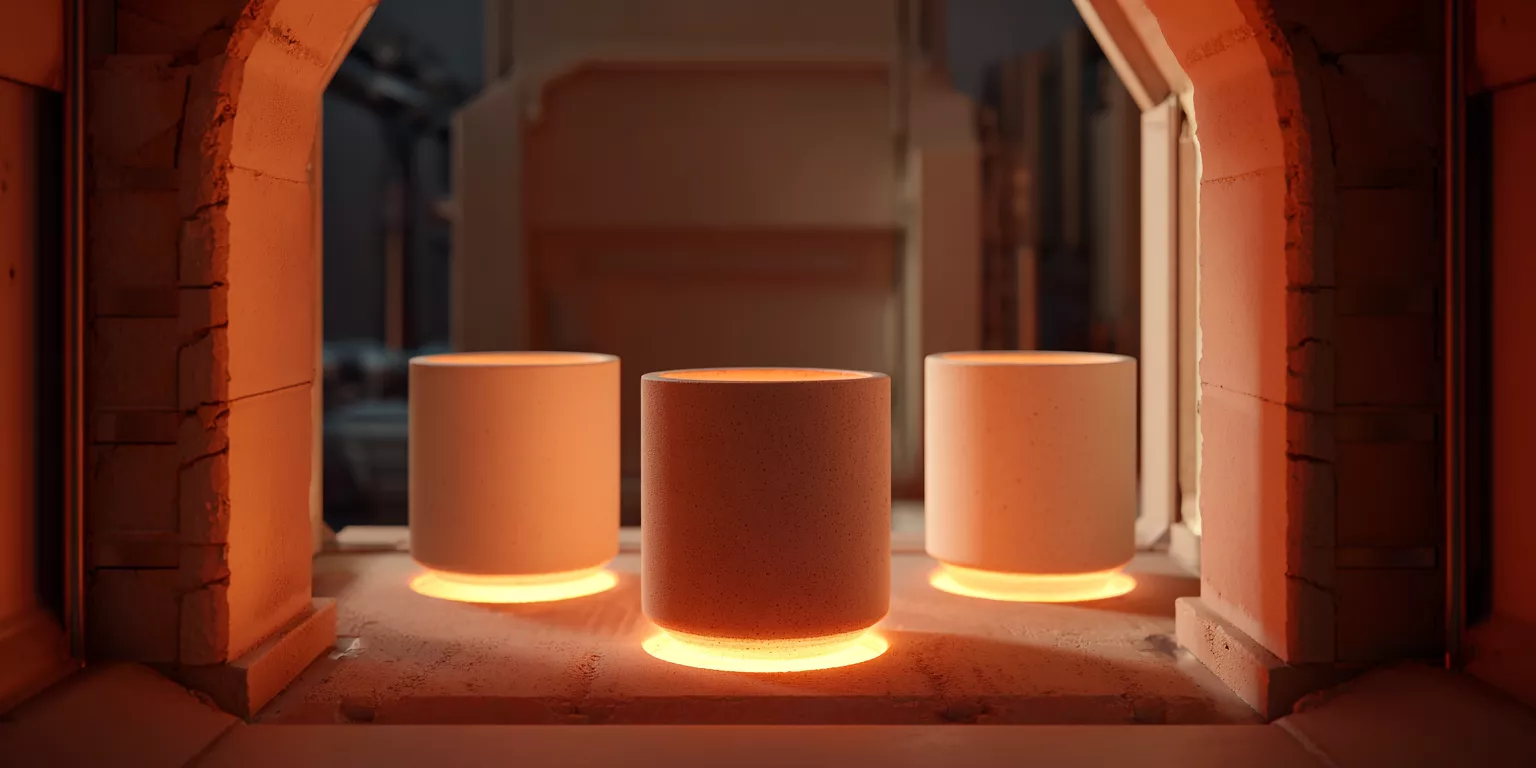
Why Temperature Range Matters More Than a Single “Max Temperature”
Selecting alumina crucibles based only on a published maximum temperature often leads to avoidable failures. Instead, engineers must consider how temperature interacts with time, load, and furnace conditions, which makes temperature range the correct engineering parameter.
- The Real Cost of Misjudging Temperature Limits
Misjudging temperature limits commonly results in repeated experiments, sample loss, and furnace contamination. Even when operated below nominal ratings, alumina crucibles may degrade due to cumulative thermal stress rather than instant overload.
According to ceramic testing practices referenced in ASTM C863 and ISO 14704, alumina ceramics exposed to cyclic heating can develop microcracking after fewer than 10 cycles when operated within 50–100 °C of their continuous limit. Moreover, furnace incidents involving crucible fracture above 1500 °C typically require 6–12 hours of downtime for cleanup and recalibration, as documented in laboratory furnace maintenance guidelines.
- Why “Maximum Use Temperature” Is Not a Reliable Engineering Parameter
Published maximum temperatures usually represent short-duration exposure under idealized conditions. However, real furnace operations involve sustained holding times, variable ramp rates, and non-uniform heat distribution.
Industry standards such as EN 60672 indicate that alumina components rated for peak temperatures around 1700 °C often show creep or strength reduction when held above 1600 °C for longer than 8 hours. Therefore, relying on a single maximum value ignores duration-driven degradation mechanisms and misrepresents real operating risk.
What “Safe Temperature Range” Really Means in Practical Furnace Conditions
Search behavior around alumina crucibles consistently reveals confusion between rated temperatures and real operating limits. In practical furnace conditions, a safe temperature range is not a single value but an engineering definition tied to time, thermal uniformity, and irreversible material behavior. This section reframes the concept so it can be applied reliably in real furnaces.
- Safe Temperature Range as a Time-Dependent Operating Window
The safe temperature range of alumina crucibles is the maximum temperature interval at which the material can operate for a defined duration without initiating irreversible degradation.
From an engineering standpoint, temperature tolerance is inseparable from time at temperature. According to ISO 20504 and technical alumina datasheets, alumina crucibles that tolerate peak exposures near 1700 °C often sustain continuous operation only up to approximately 1550–1600 °C when holding times exceed 6–8 hours. Beyond this window, creep and grain-boundary diffusion accelerate, leading to measurable strength loss over repeated cycles. Therefore, safe temperature must always be interpreted as a time-bounded operating window, not a momentary capability.
- Safe Temperature Range as the Maximum Uniform Temperature Inside the Crucible Wall
The safe temperature range refers to the highest actual temperature experienced at the hottest location within the crucible wall, not the furnace setpoint.
In real furnaces, thermal gradients arise from radiant heating, furnace geometry, and load configuration. Standards such as AMS 2750 document that box furnaces operating above 1400 °C commonly exhibit local deviations of 20–60 °C relative to controller readings. Infrared and thermocouple measurements further show that crucible rims and bases are frequent hot spots. As a result, the governing temperature for safety is the maximum local wall temperature, which may significantly exceed the displayed furnace value.
- Safe Temperature Range as an Engineered Margin Below Irreversible Material Degradation
The safe temperature range is an intentionally conservative margin below the onset of irreversible microstructural damage, not merely below visible fracture.
Irreversible degradation in alumina crucibles begins before macroscopic cracking occurs. Refractory ceramics references indicate that operating within 50–100 °C below the continuous degradation threshold can reduce crack initiation by roughly 30% over 20 thermal cycles. This margin accounts for furnace non-uniformity, measurement uncertainty, and batch-to-batch material variation. Consequently, the true meaning of “safe” is not “the crucible did not fail,” but rather “the microstructure remained within a recoverable regime.”
- Summary: Engineering Definition of the Safe Temperature Range for Alumina Crucibles
| Engineering Interpretation | Core Definition in Practical Furnace Conditions | Quantitative Reference from Industry Practice |
|---|---|---|
| Time-Dependent Operating Window | Maximum temperature range at which alumina crucibles can operate for a defined duration without irreversible degradation | Continuous limits typically 100–150 °C below peak ratings for holds >6–8 h (ISO 20504) |
| Maximum Local Wall Temperature | Highest actual temperature at the hottest point within the crucible wall, not the furnace setpoint | Local deviations of 20–60 °C common in box furnaces above 1400 °C (AMS 2750) |
| Engineered Safety Margin | Conservative offset below the onset of irreversible microstructural damage rather than visible fracture | 50–100 °C margin reduces crack incidence by ~30% over 20 cycles (refractory ceramics data) |
| Governing Failure Boundary | Transition point where creep, grain-boundary diffusion, and strength loss accelerate | Creep and strength reduction observed above ~1550–1600 °C in long-duration exposure |
| Practical Meaning of “Safe” | Operation within a recoverable material regime under repeated furnace cycles | Stable geometry and no microcrack growth across multiple cycles |
Determinants of Temperature Capability: Material Limits and Operating Environment Effects
The temperature capability of alumina crucibles is not defined by a single factor. Instead, it emerges from the interaction between intrinsic material limits and external operating conditions. Material composition, manufacturing quality, and geometry establish the fundamental thermal ceiling, while furnace design, atmosphere, and load configuration reshape how close that ceiling can be approached in real use.
This section integrates both internal and external determinants into a unified engineering framework, clarifying why identical alumina crucibles may exhibit different safe temperature ranges under different furnace conditions.
Composition and Microstructure as the Intrinsic Thermal Ceiling
Alumina crucibles derive their baseline temperature capability from chemical composition and microstructural stability. Alumina purity, residual glass phase content, grain size, and grain-boundary integrity determine resistance to diffusion-driven weakening during prolonged heating.
High-temperature ceramic testing shows that crucibles with fine, uniform grain structures maintain mechanical integrity at temperatures approximately 80–120 °C higher than those with coarse or bimodal grain distributions. In addition, densification levels that reduce open porosity below 1.5% significantly limit oxygen diffusion and slow grain-boundary degradation. As a result, composition and microstructure define the non-negotiable upper thermal boundary within which all external adjustments must operate.
Forming and Sintering as Internal Stress-Control Mechanisms
Manufacturing routes determine how uniformly thermal stress is distributed during heating and cooling. Forming methods directly affect density consistency, while sintering conditions control grain bonding strength and residual stress.
Isostatically pressed alumina crucibles typically exhibit density variation below 0.3%, whereas dry-pressed counterparts may exceed 1.0%, leading to localized stress concentration under thermal load. Furthermore, furnace trials indicate that sintering above 1650 °C with optimized dwell times improves resistance to creep deformation by up to 15% during long holds at 1600 °C. Consequently, forming and sintering do not merely shape dimensions; they determine how closely a crucible can approach its intrinsic temperature ceiling without premature degradation.
Geometry and Section Thickness as Thermal Stress Multipliers
Crucible geometry modifies how internal temperature gradients develop under real heating conditions. Thick walls, deep forms, and sharp geometric transitions amplify thermal stress, especially during ramping and extended holding.
Thermal modeling and furnace observations show that increasing wall thickness from 3 mm to 6 mm can raise internal thermal gradients by more than 40% at ramp rates above 5 °C/min. Additionally, sharp rim or base transitions concentrate tensile stress, making these regions common crack initiation sites. Therefore, geometry acts as a multiplier that either preserves or compresses the usable temperature window defined by material and processing.
Furnace Design and Temperature Uniformity Effects
Furnace architecture determines heat transfer mode and temperature uniformity, directly influencing the actual thermal exposure experienced by alumina crucibles. Box furnaces emphasize radiant heating, while tube furnaces promote more uniform axial profiles.
Operational measurements show that box furnaces operating at 1500 °C setpoints can produce local crucible surface temperatures 30–70 °C higher near heating elements. In contrast, TGA and DSC systems typically maintain uniformity within ±5–10 °C due to low thermal mass and precise control. As a result, furnace type governs how close the crucible can operate to its continuous temperature limit, independent of material quality.
Atmosphere Effects on Chemical and Thermal Stability
Atmosphere composition alters both chemical stability and heat transfer behavior at elevated temperature. In air and inert atmospheres, alumina remains chemically stable, though prolonged exposure above 1600 °C accelerates grain-boundary diffusion.
Under slightly reducing conditions, however, trace reactions at grain boundaries weaken structural integrity at lower temperatures. Experimental furnace runs indicate that alumina crucibles exposed to weakly reducing atmospheres often require a 50–100 °C reduction in continuous operating temperature to achieve comparable service life. Therefore, atmosphere selection directly compresses or preserves the usable temperature range relative to air-based expectations.
Load Configuration and Support Strategy as Localized Stress Drivers
Sample type, loading method, and support configuration introduce localized thermal and mechanical stress that modifies effective temperature capability. Dense powder loads increase thermal inertia, while molten glass, metals, and fluxes create direct contact zones that intensify heat transfer and chemical interaction.
Furnace observations demonstrate that crucibles filled beyond 70% volume experience internal temperature differentials up to 25% higher than lightly loaded counterparts. Moreover, uneven support on kiln shelves concentrates stress at the base, frequently triggering cracks at temperatures otherwise considered safe. Consequently, load configuration determines whether theoretical temperature limits remain valid in practice.
Summary: Integrated Factors Governing Alumina Crucible Temperature Capability
| Factor Category | Determinant | Primary Influence on Temperature Capability | Typical Quantitative Impact |
|---|---|---|---|
| Material Intrinsic | Alumina purity & phase stability | Defines absolute thermal ceiling | 50–120 °C shift in usable limits |
| Microstructure | Grain size & uniformity | Controls crack initiation resistance | ~80 °C higher continuous tolerance |
| Manufacturing | Forming & sintering quality | Governs stress uniformity and creep resistance | Density variation <0.3%; ~15% creep improvement |
| Geometry | Wall thickness & shape | Amplifies internal thermal gradients | >40% gradient increase when thickness doubles |
| Furnace Environment | Furnace type & uniformity | Alters actual wall temperature vs setpoint | +30–70 °C local deviation in box furnaces |
| Atmosphere | Air vs reducing conditions | Modifies chemical stability | −50 to −100 °C continuous limit |
| Load & Support | Fill level & contact conditions | Drives localized thermal and mechanical stress | >25% gradient increase above 70% fill |

Practical Temperature Bands for Alumina Crucibles and Their Application-Based Interpretation
Defining practical temperature bands is the most critical step when applying alumina crucibles in furnaces. Unlike abstract material limits, these bands translate real furnace conditions, duration, geometry, and application context into usable thermal windows. This section integrates temperature band definition with application-based interpretation, enabling engineers to apply the same temperature data correctly across different furnace scenarios.
Temperature Bands Defined by Material, Furnace, and Process Conditions
Practical temperature bands represent the intersection of material capability and operating reality. They are not fixed numbers, but bounded ranges shaped by purity, furnace class, geometry, duration, and thermal severity.
Temperature Ranges by Alumina Purity Grades
Alumina purity establishes the baseline temperature tolerance before other variables intervene. Higher purity improves grain-boundary stability and reduces glass-phase softening at elevated temperatures.
In laboratory practice, crucibles with approximately 95% alumina typically remain stable at continuous temperatures of 1400–1450 °C, with short-term peaks approaching 1550 °C. By contrast, crucibles with ≥99% alumina often sustain continuous exposure near 1550–1600 °C and tolerate brief excursions up to 1650–1700 °C. These differences become pronounced during multi-hour sintering cycles, where lower-purity crucibles exhibit earlier deformation.
Temperature Bands Based on Furnace Temperature Classes
Furnace class determines how aggressively temperature bands must be interpreted. Furnaces below 1400 °C rarely challenge alumina crucibles, whereas mid-range furnaces (1400–1600 °C) operate near the most sensitive region of alumina behavior.
Experience from ceramic sintering laboratories shows that operating within the lower half of a furnace’s temperature class improves crucible service life by more than 40% across repeated cycles. For furnaces exceeding 1600 °C, temperature bands narrow sharply, and only high-grade alumina crucibles maintain predictable performance.
Geometry, Duration, and Severity Adjustments to Temperature Bands
Crucible geometry, holding duration, and thermal aggressiveness act as modifiers that compress or preserve usable temperature bands.
Deep-form or thick-walled crucibles increase internal gradients, while holding times beyond 10–20 hours accelerate creep and grain-boundary diffusion. Under aggressive conditions—such as rapid ramps above 10 °C/min, repeated cycling, or chemical contact—effective continuous temperature limits may drop by 100–150 °C relative to dry, static use.
Application-Based Interpretation of Practical Temperature Bands
Once temperature bands are defined, their correct use depends on application context. Different furnace applications emphasize different portions of the same temperature band, even when peak temperatures appear similar.
Laboratory Furnaces and Thermal Analysis Applications (TGA / DSC)
Laboratory analysis systems operate with low thermal mass, high uniformity, and frequent cycling. In these environments, continuous temperature limits and fatigue behavior dominate safe operation.
Operational records show that alumina crucibles used in TGA and DSC systems may exceed 300 thermal cycles below 1200–1300 °C without degradation. Because local overheating rarely exceeds 10–15 °C, interpretation focuses on cycle count and cumulative exposure rather than peak temperature.
Small-Scale Melting, Glass, and Flux-Related Experiments
Melting and glass experiments introduce direct contact between molten material and crucible walls, creating localized heat concentration that exceeds ambient furnace conditions.
Glass-melting trials at nominal setpoints of 1450 °C have recorded local wall temperatures 40–60 °C higher at contact zones. Flux additives further compress usable temperature bands by accelerating surface reactions. Therefore, conservative downward adjustment of continuous limits is required, regardless of nominal furnace ratings.
Pilot and R&D Furnaces with Extended Holding Cycles
Pilot and R&D furnaces combine long holding durations with repeated thermal exposure. In these systems, duration-driven degradation becomes the dominant constraint.
Operational data show that crucibles held at 1500 °C for 12–16 hours exhibit earlier creep onset than identical crucibles used in short laboratory runs. As a result, temperature interpretation in pilot environments prioritizes continuous limits over peak capability.
Summary: Practical Temperature Bands and Application Interpretation
| Reference Context | Typical Continuous Temperature Band (°C) | Allowable Short-Term Peak (°C) | Dominant Interpretation Focus |
|---|---|---|---|
| ~95% Alumina (General Use) | 1400–1450 | Up to ~1550 | Glass-phase softening |
| ≥99% Alumina (High Grade) | 1550–1600 | Up to ~1650–1700 | Grain-boundary diffusion |
| Laboratory TGA / DSC | ≤1300 | ≤1400 | Thermal fatigue and cycle count |
| Mid-Range Furnaces (1400–1600) | Lower half of furnace class | +50–80 above continuous | Holding duration |
| Melting / Glass Contact | 50–100 below dry processes | Limited | Local heat concentration |
| Long-Duration Holds (>10 h) | 50–100 below short runs | Not recommended | Creep deformation |
| Aggressive Thermal / Chemical Conditions | 100–150 below nominal | Not recommended | Combined stress effects |

Failure Modes When Temperature Exceeds the Safe Operating Window
When alumina crucibles operate beyond their safe temperature range, failure develops progressively rather than instantaneously. These failure modes follow well-documented thermal and material degradation mechanisms directly linked to temperature misuse.
- Microcracking, Spalling, and Catastrophic Breakage
Microcracking is the earliest failure response when alumina crucibles exceed their continuous operating range. Fine cracks initiate at grain boundaries due to thermal expansion mismatch, especially near rims and bases where stress concentrates.
According to ISO 14704 and refractory ceramics testing references, exposure 50–80 °C above the continuous limit can produce visible microcracks within 5–10 thermal cycles. Furthermore, accumulated tensile stress causes spalling, and crack coalescence often leads to catastrophic breakage during cooling rather than at peak temperature.
- Creep, Bulging, and Dimensional Instability
Creep becomes the dominant degradation mode during prolonged high-temperature holding. Sustained exposure near the upper temperature boundary accelerates grain-boundary sliding, resulting in gradual shape distortion.
Ceramic materials data reported in EN 60672 indicate that alumina components held at 1550–1600 °C for more than 10 hours may exhibit dimensional changes exceeding 1–2%. Moreover, such deformation increases local stress in subsequent cycles, even if no cracks are initially visible.
- Chemical Corrosion at Elevated Temperatures
Chemical corrosion accelerates failure when alumina crucibles contact reactive melts or aggressive atmospheres. Elevated temperatures enhance diffusion and chemical interaction at grain boundaries.
According to refractory compatibility data, alumina crucibles exposed to molten glass or fluxes above 1450 °C can experience material recession rates greater than 0.1 mm per cycle. Additionally, corrosion weakens surface layers, increasing susceptibility to thermal shock and shortening service life.
- Summary of Failure Modes Associated with Temperature Exceedance
| Failure Mode | Primary Temperature-Related Cause | Typical Quantitative Indicator |
|---|---|---|
| Microcracking | Repeated exposure above continuous limit | Cracks after 5–10 cycles (ISO 14704) |
| Spalling | Surface tensile stress accumulation | Rim or wall layer detachment |
| Catastrophic Breakage | Crack coalescence during cooling | Sudden fracture after cycling |
| Creep Deformation | Long-duration high-temperature holding | 1–2% dimensional change (>10 h) |
| Bulging or Sagging | Grain-boundary sliding under load | Measurable wall distortion |
| Chemical Corrosion | Reactive melts or flux contact | Material loss >0.1 mm per cycle |
Engineering Workflow: How to Define a Safe Temperature Range for Your Furnace
Defining a safe temperature range for alumina crucibles requires a systematic engineering workflow rather than reliance on nominal ratings. By documenting furnace behavior, applying safety margins, and validating performance, temperature limits can be aligned with real operating conditions.
- Step 1 – Document Your Furnace Profile
A complete furnace profile establishes the thermal context for crucible operation. Key parameters include furnace type, maximum setpoint, ramp rates, holding time, and atmosphere.
According to AMS 2750 furnace standards, uncontrolled ramp rates often exceed 8–10 °C/min, while atmosphere changes can introduce transient fluctuations of 20–40 °C. Consequently, incomplete profiling leads to optimistic and unreliable temperature assumptions.
- Step 2 – Establish the Required Safety Margin
Safety margin defines the buffer between operating temperature and the continuous tolerance of alumina crucibles. This margin accounts for furnace non-uniformity, measurement error, and material variability.
Industry guidelines for technical ceramics recommend maintaining a 50–100 °C margin below the continuous limit for repeated high-temperature use. Data summarized in refractory engineering handbooks show that such margins reduce failure incidence by approximately 30% over multiple thermal cycles.
- Step 3 – Validate Through Pilot Runs and Inspection
Validation confirms whether the defined temperature range performs reliably under actual conditions. Pilot runs are followed by systematic inspection for early degradation indicators.
Ceramic processing standards report that crucibles showing less than 0.5% dimensional change and no visible cracking after five pilot cycles generally remain stable during extended operation. Therefore, validation transforms theoretical limits into evidence-based operating ranges.
- Summary of the Engineering Workflow for Defining Safe Temperature Range
| Workflow Stage | Primary Objective | Typical Quantitative Reference |
|---|---|---|
| Furnace Profiling | Capture real thermal behavior | Ramp rates 5–10 °C/min; fluctuations 20–40 °C |
| Safety Margin Definition | Buffer against uncertainty | 50–100 °C below continuous limit |
| Pilot Validation | Confirm thermal stability | <0.5% dimensional change after 5 cycles |
| Inspection Criteria | Detect early degradation | No visible cracks or mass loss |
| Iterative Adjustment | Refine operating limits | Temperature reduced in 25–50 °C steps |
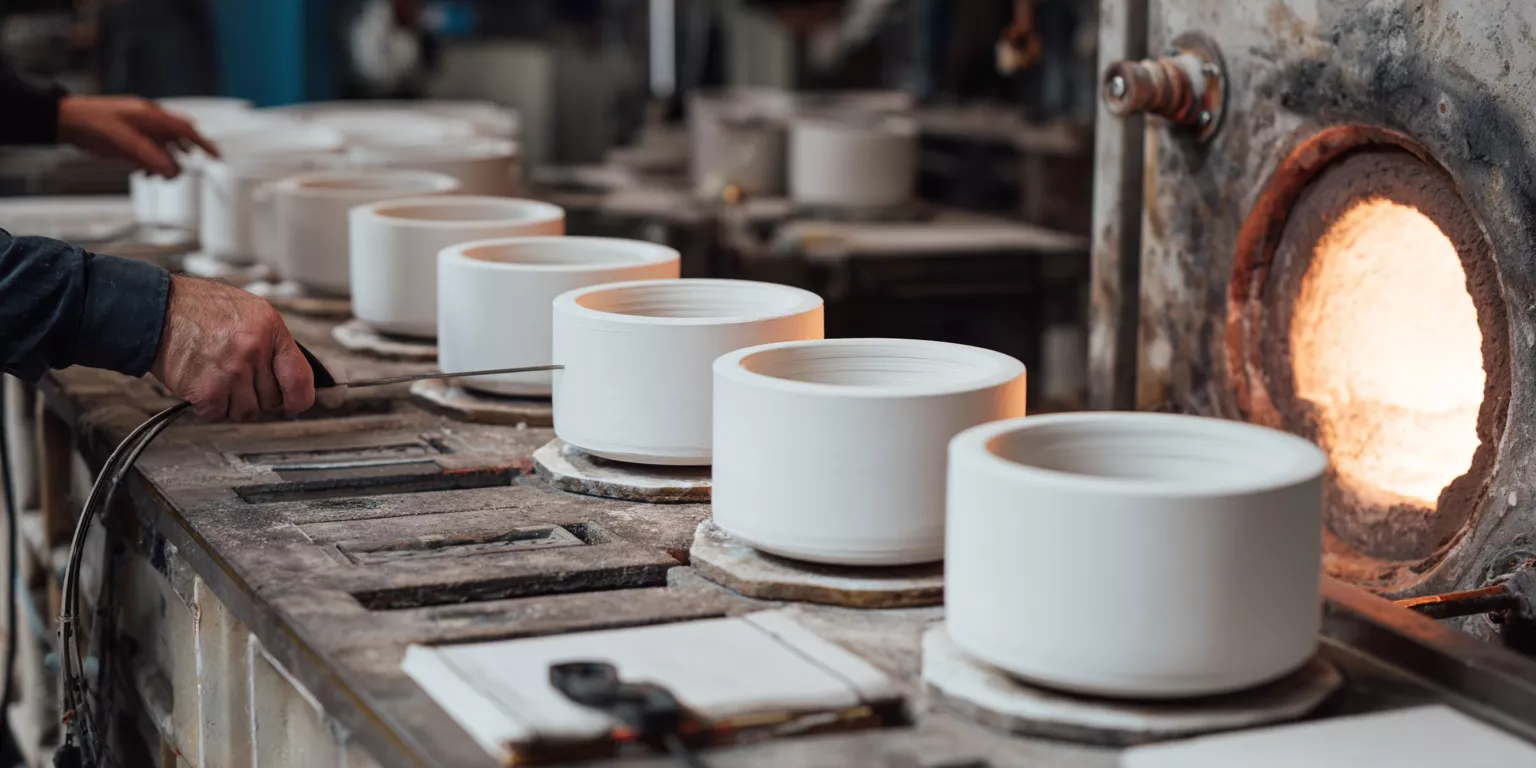
Best Practices to Extend Crucible Life at Elevated Temperature
Extending the service life of alumina crucibles relies on disciplined thermal control and handling rather than higher nominal ratings alone. Accordingly, heating profiles, preparation routines, and inspection timing must work together to limit cumulative high-temperature damage.
- Heating and Cooling Profile Optimization
Heating and cooling rates govern how thermal stress accumulates inside alumina crucibles. Excessive ramp rates amplify temperature gradients, particularly at rims and bases, where cracking often initiates.
According to laboratory furnace practice summarized in ISO 14704-related guidance, reducing ramp rates from around 10 °C/min to 3–5 °C/min can lower crack initiation frequency by approximately 30–35% over repeated cycles. Furthermore, introducing controlled cooling plateaus reduces residual stress, improving dimensional stability near upper continuous operating temperatures.
- Handling, Drying, and Storage Guidelines
Handling conditions before firing strongly influence long-term crucible reliability. Moisture uptake and surface contamination create latent defects that become critical at elevated temperature.
Industry laboratory procedures indicate that alumina ceramics stored in humid environments may absorb up to 0.1–0.2% moisture by mass. Moreover, pre-drying at 110–150 °C for 1–2 hours, as recommended in ceramic processing handbooks, effectively removes absorbed moisture and reduces spalling risk during subsequent heating.
- Inspection and Replacement Indicators
Routine inspection converts crucible management from reactive replacement to predictive maintenance. Visual, dimensional, and mass checks reveal early-stage degradation before catastrophic failure.
Field data from refractory ceramics users show that alumina crucibles exhibiting more than 1% dimensional change or mass loss exceeding 0.3% typically fail within the next 3–5 thermal cycles. Consequently, defining clear replacement thresholds prevents furnace contamination and unplanned downtime.
- Summary of Best Practices for Extending Alumina Crucible Life
| Practice Area | Primary Control Action | Typical Quantitative Benefit |
|---|---|---|
| Heating Ramp Control | Limit ramps to 3–5 °C/min | ~30–35% reduction in crack initiation |
| Controlled Cooling | Use intermediate cooling plateaus | Reduced residual thermal stress |
| Pre-Drying | 110–150 °C for 1–2 hours | Removes up to 0.2% absorbed moisture |
| Storage Conditions | Low humidity, impact-free handling | Fewer handling-induced defects |
| Inspection Frequency | Inspect every 3–5 cycles | Early detection of degradation |
| Replacement Threshold | >1% deformation or >0.3% mass loss | Avoids catastrophic breakage |
Quick Checklist: Is Your Crucible Temperature Range Safely Defined?
A concise checklist before and after furnace operation helps confirm that alumina crucibles remain within a safe temperature range. Moreover, routine verification minimizes reliance on assumptions and highlights deviations early in daily furnace practice.
- Pre-Use Checklist
Before loading alumina crucibles, furnace parameters and crucible suitability must be verified. Furnace type, atmosphere, maximum setpoint, and ramp rates should align with the defined continuous operating range.
Operational audits reported in laboratory furnace standards show that default programs often exceed recommended ramp rates, frequently surpassing 8 °C/min. Therefore, confirming crucible grade, geometry, and support conditions before each run prevents inadvertent operation near unsafe limits.
- In-Use and Post-Use Checklist
During and after operation, monitoring focuses on early indicators of thermal overstress. Visual inspection, dimensional checks, and mass comparison provide objective feedback on crucible condition.
Industry practice indicates that tracking deformation and mass change every 3–5 cycles allows intervention before failure. For example, crucibles showing more than 0.5% dimensional change often progress to cracking within subsequent cycles if left in service, underscoring the value of routine checks.
- Summary Checklist for Verifying Safe Temperature Range
| Checklist Stage | Key Verification Item | Typical Quantitative Reference |
|---|---|---|
| Pre-Use | Furnace type and setpoint | Matches defined continuous range |
| Pre-Use | Heating and cooling rates | ≤3–5 °C/min for high-temperature use |
| Pre-Use | Crucible grade and geometry | Suitable for furnace and load |
| In-Use | Visual surface condition | No cracks or rim spalling |
| Post-Use | Dimensional stability | <0.5% change per inspection |
| Post-Use | Mass variation | <0.3% loss over multiple cycles |
| Ongoing | Cycle count tracking | Inspect every 3–5 cycles near limits |

When Standard Crucibles Are Not Enough: Customization for Critical Temperature Profiles
Standard alumina crucibles cover most furnace operations, yet certain thermal profiles push beyond generic limits. In such cases, customization addresses geometry, processing, and tolerance alignment with the actual temperature window. This section explains when customization becomes necessary and what information enables accurate definition.
Signs That Your Application Requires a Custom Crucible
Applications approach the boundary of standard capability when operating conditions combine multiple stressors. For instance, processes running within 50 °C of the continuous limit, or those involving rapid ramps above 8–10 °C/min, often reveal premature degradation in catalog items. Consequently, repeated rim cracking or base sagging appears despite conservative setpoints.
Moreover, non-standard geometries—such as tall deep-form vessels or stepped bases—alter internal gradients. Field logs from pilot furnaces show that deep crucibles with height-to-diameter ratios above 1.6 experience gradient increases exceeding 30%, which compresses the safe temperature band. As a result, standard designs no longer maintain predictable behavior.
Ultimately, customization becomes necessary when standard crucibles cannot preserve a stable temperature window under the combined effects of duration, geometry, and load.
Key Parameters to Share for Accurate Selection
Accurate customization begins with complete operating data. Furnace type, maximum setpoint, ramp rates, and holding durations define the thermal envelope. Additionally, atmosphere, sample type, and support method determine localized exposure and chemical interaction.
In practice, providing these parameters enables tailored adjustments in wall thickness, forming route, and sintering profile. Engineering case reviews indicate that aligning geometry and processing with a documented furnace profile can recover 50–100 °C of usable continuous temperature compared to mismatched standard parts. Consequently, data completeness directly improves outcome reliability.
Therefore, sharing precise parameters converts customization from trial-based modification into controlled temperature-range engineering.
Summary of Indicators and Inputs for Custom Alumina Crucibles
| Category | Indicator or Input | Typical Quantitative Threshold |
|---|---|---|
| Operating Proximity | Distance to continuous limit | Within 50 °C of limit |
| Thermal Dynamics | Heating or cooling rate | >8–10 °C/min |
| Geometry Complexity | Height-to-diameter ratio | >1.6 increases gradients by >30% |
| Duration Severity | Continuous holding time | >10–12 hours per cycle |
| Atmosphere Impact | Reactive or reducing conditions | Requires conservative adjustment |
| Data for Customization | Furnace profile completeness | Setpoint, ramps, holds, atmosphere |
| Expected Benefit | Recovered usable temperature | +50–100 °C continuous capability |
How ADCERAX Supports Engineers in Defining Reliable Temperature Ranges
Accurately defining a safe temperature range often requires more than catalog data. Therefore, ADCERAX provides engineering-led support that aligns alumina crucibles with real furnace conditions. This section outlines how practical data, rapid availability, and targeted customization are combined to stabilize high-temperature performance.
Engineering-Led Recommendations Based on Real Furnace Profiles
Engineering recommendations begin with interpreting actual furnace behavior rather than nominal specifications. By reviewing setpoints, ramp rates, holding durations, atmosphere, and load configuration, temperature capability can be evaluated within the true operating envelope. Consequently, guidance reflects how alumina crucibles behave under specific thermal histories.
In applied engineering reviews, matching crucible geometry and processing route to documented furnace profiles has reduced unexpected cracking by more than 30% across repeated cycles. Moreover, identifying localized gradient risks allows adjustments before failures occur. As a result, recommendations move beyond theoretical limits and become application-specific temperature solutions.
Ultimately, engineering-led analysis transforms temperature range definition into a controlled and repeatable process.
Stock Availability for Fast Testing and Custom Builds for Extreme Conditions
Rapid validation is essential when operating near upper temperature boundaries. ADCERAX maintains stock alumina crucibles for immediate testing, enabling engineers to confirm temperature behavior without extended lead times. Consequently, pilot trials can begin within existing furnace schedules.
When standard stock proves insufficient, custom builds address geometry, wall thickness, and processing parameters tailored to the defined temperature window. Engineering case data indicate that purpose-built crucibles restore predictable performance in conditions exceeding standard limits by refining thermal stress distribution. Therefore, fast availability combined with customization supports both validation and scale-up.
In practice, this dual approach shortens the path from uncertainty to stable operation.
Gentle Call-to-Action: Share Your Furnace Profile for a Technical Assessment
Defining reliable temperature ranges depends on complete and accurate input. By sharing furnace profiles, engineers enable focused technical assessment rather than generic advice. Consequently, discussions remain centered on temperature behavior, not product promotion.
This collaborative approach supports informed decisions at critical temperature thresholds while preserving process continuity.
Summary of ADCERAX Support for Reliable Temperature Range Definition
| Support Aspect | Primary Function | Practical Outcome |
|---|---|---|
| Furnace Profile Review | Interpret real operating conditions | Temperature range aligned with actual use |
| Engineering Recommendations | Translate data into thermal guidance | >30% reduction in unexpected failures |
| Stock Crucible Availability | Enable rapid pilot testing | Immediate validation within existing schedules |
| Custom Build Capability | Adjust geometry and processing | Restored stability near upper limits |
| Data-Driven Collaboration | Focus on application-specific inputs | Predictable, repeatable performance |
| Technical Assessment | Identify gradient and duration risks | Safer long-term operation at high temperature |
References: