
High-Reliability Silicon Carbide Balls for Precision Bearings and Industrial Grinding by ADCERAX®
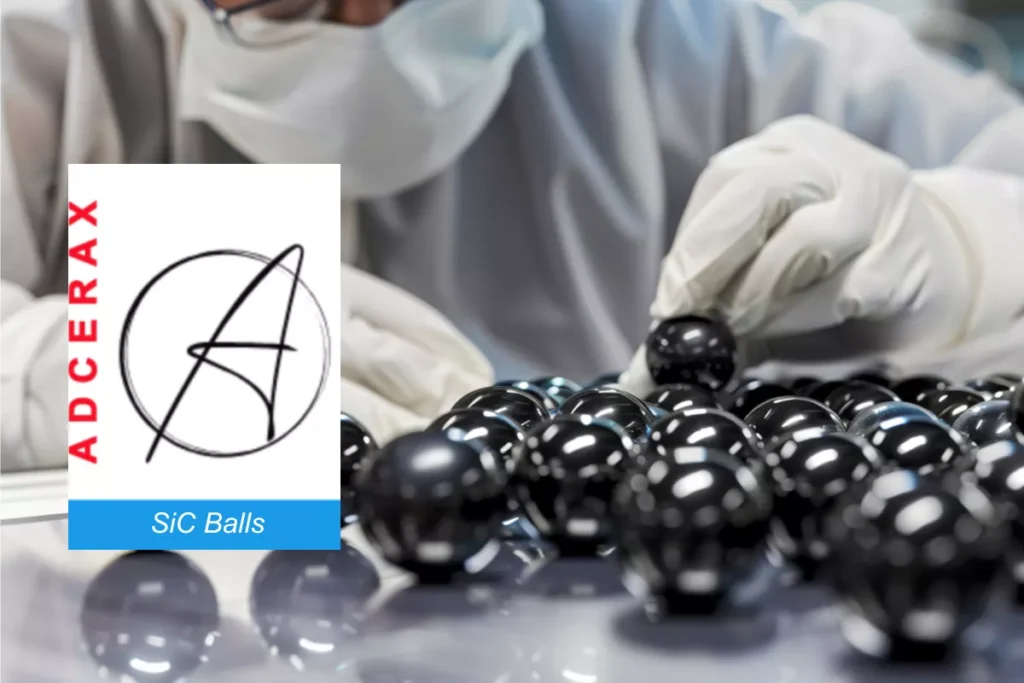
High-reliability Silicon Carbide Balls support precision bearings and high-intensity grinding where stability, purity, and dimensional consistency determine system performance.
Their mechanical strength and wear resistance maintain accuracy and efficiency across demanding thermal and abrasive environments.
Contact ADCERAX® for application-matched solutions today.
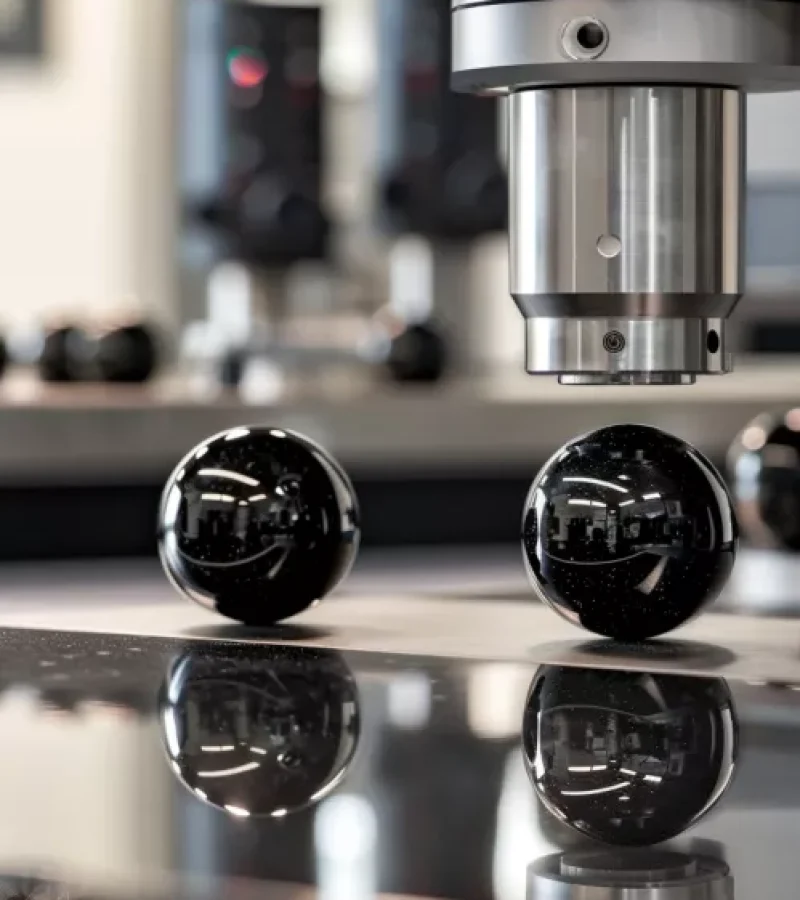
2200 MPa
Load Capacity
What Is a Silicon Carbide Balls?
A Silicon Carbide Balls is a high-strength ceramic sphere made from sintered or reaction-bonded silicon carbide, used in precision bearings and high-intensity grinding systems. A silicon carbide ball maintains dimensional stability under thermal and mechanical load, enabling consistent performance in demanding industrial operations.
The fine-grained microstructure of a silicon carbide ceramic ball supports low wear and predictable behavior across long duty cycles. These SiC ceramic balls are preferred when purity, stiffness, and corrosion resistance are essential to engineering reliability.
Technical Specification of ADCERAX® Silicon Carbide Balls
The technical specifications below consolidate the fundamental material and performance parameters governing the behavior of Silicon Carbide Balls in precision bearing systems and high-energy milling environments.
| Specification Item | Technical Value / Range | Engineering Notes |
|---|---|---|
| 1. Density | 3.10–3.15 g/cm³ | High packing density supports stable Hertzian contact loads. |
| 2. Vickers Hardness (HV) | 22–25 GPa | Essential for minimizing wear in long-cycle milling and bearing fatigue. |
| 3. Flexural Strength | 360–450 MPa | Ensures structural integrity under bending and dynamic impact stresses. |
| 4. Compressive Strength | > 2200 MPa | Critical for high-speed ceramic bearing operation with minimal deformation. |
| 5. Thermal Conductivity | 95–120 W/m·K | Promotes rapid heat dissipation, reducing thermal gradients in spindle bearings. |
| 6. Coefficient of Thermal Expansion (CTE) | 4.2–4.5 ×10⁻⁶/K | Prevents dimensional drift in high-temperature milling and bearing environments. |
| 7. Chemical Resistance | Stable in strong acids/alkalis (H₂SO₄, HCl, HNO₃, NaOH) | Maintains purity when processing battery and ceramic powder systems. |
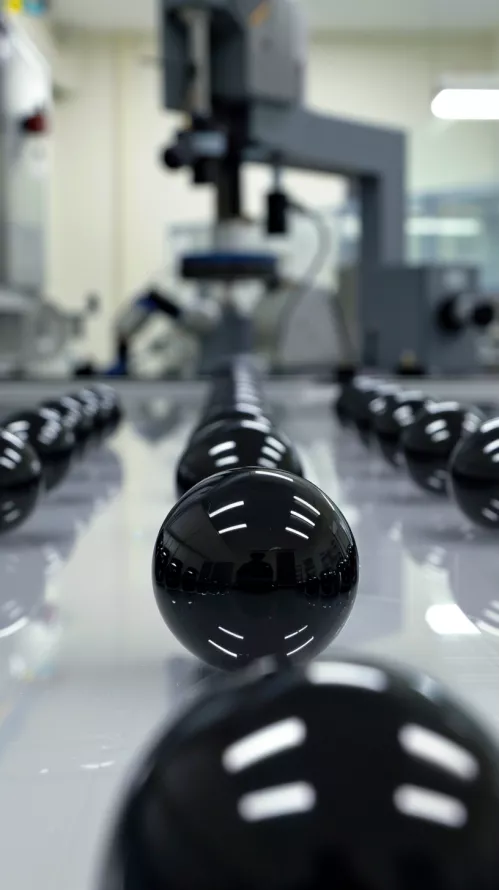
Properties of ADCERAX® Silicon Carbide Balls
Silicon Carbide Balls exhibit a unique combination of thermal stability, mechanical strength, and chemical robustness, making them suitable for both precision bearings and powder-processing environments.
Chemical Stability
A silicon carbide ball remains chemically inert in corrosive or moisture-rich environments.
-
Acid and Alkali Resistance:
Stable in acid and alkali. -
Oxidation Stability:
Withstands 1400°C oxidizing service. -
No Ionic Contamination:
Ensures zero metallic contamination.
Physical Properties
SiC ceramic balls maintain stable physical performance across wide temperature variations.
-
Low Thermal Expansion:
CTE 4.2×10⁻⁶/K verified. -
High Thermal Conductivity:
Conductivity reaches 120 W/m·K. -
Thermal Shock Resistance:
Endures rapid temperature cycling.
Mechanical Performance
SiC balls configuration demonstrates strong mechanical resistance under demanding loads.
-
High Hardness:
Hardness 25 GPa under load. -
Strong Load Capacity:
Compressive strength 2200 MPa maintained. -
Impact Fatigue Resistance:
Resists repeated impact fatigue.
Microstructural Uniformity
Silicon carbide ceramic balls are supported by a dense and uniform microstructure.
-
Fine Grain Distribution:
Grain size near 3 μm. -
Low Internal Defects:
Porosity typically <1% closed. -
Stable Batch Behavior:
Ensures predictable operational consistency.
ADCERAX® Silicon Carbide Balls Product Range
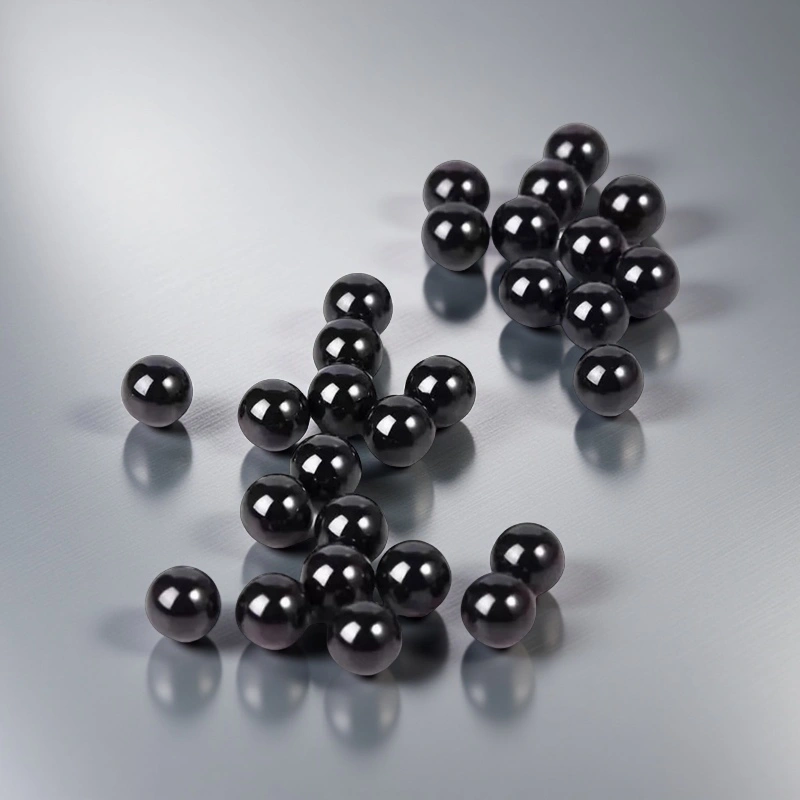
The silicon carbide bearing ball delivers consistent geometry and surface stability for high-speed and high-temperature bearing assemblies.
- High hardness reaching 25 GPa consistently
- Roundness maintained within 0.02 millimeters tolerance
- Surface roughness ensures Ra 0.03 μm operation
- Low CTE preserves geometry under thermal gradients
- High conductivity improves spindle heat transfer efficiency
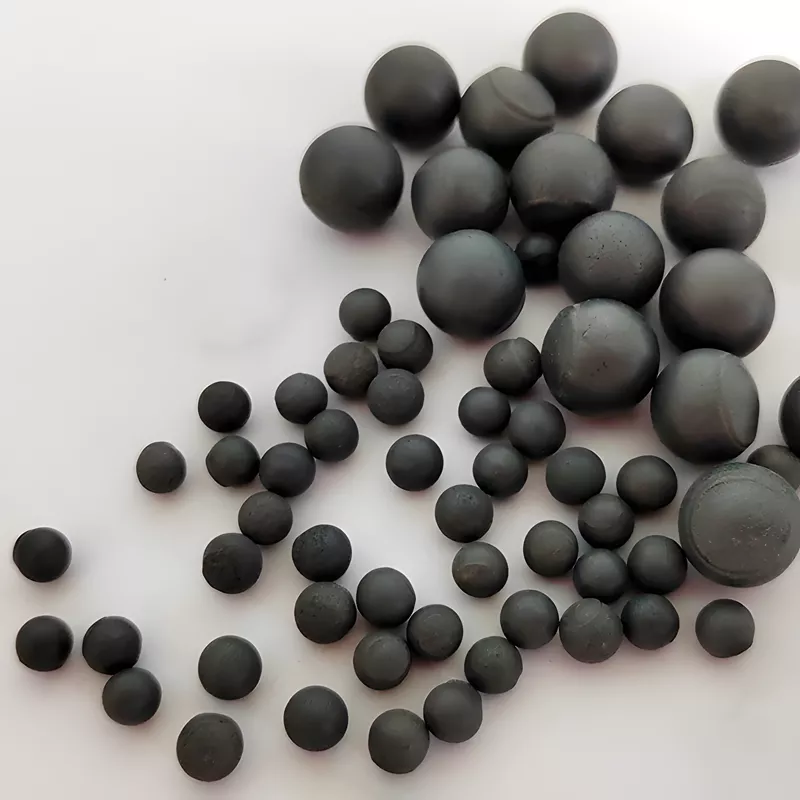
The SiC grinding ball provides aggressive abrasion resistance and shape retention during long-duration dry or wet milling cycles.
- Wear rate controlled below 0.03 percent daily
- Mohs hardness measured consistently around 9.5
- Dimensional stability maintains PSD curve uniformity
- Chemical inertness prevents powder metallic contamination
- High-density structure improves collision impact effectiveness
Ready to Discuss Your Silicon Carbide Balls Requirements?
Technical evaluation for silicon carbide balls often requires precise alignment between material selection, geometry control, and application performance targets.
Comprehensive support from ADCERAX® enables fast specification confirmation, drawing review, sample preparation, and batch-level consistency verification, ensuring that each solution fits the operational expectations of advanced industrial environments. Immediate consultation facilitates optimized performance decisions and reduces delays across engineering validation stages.
Industrial Applications of ADCERAX® Silicon Carbide Balls
Silicon Carbide Balls are utilized in highly demanding environments that require extreme hardness, thermal stability, and chemical resistance. Their microstructural uniformity supports predictable long-cycle performance across precision bearing platforms and high-energy powder-processing systems.
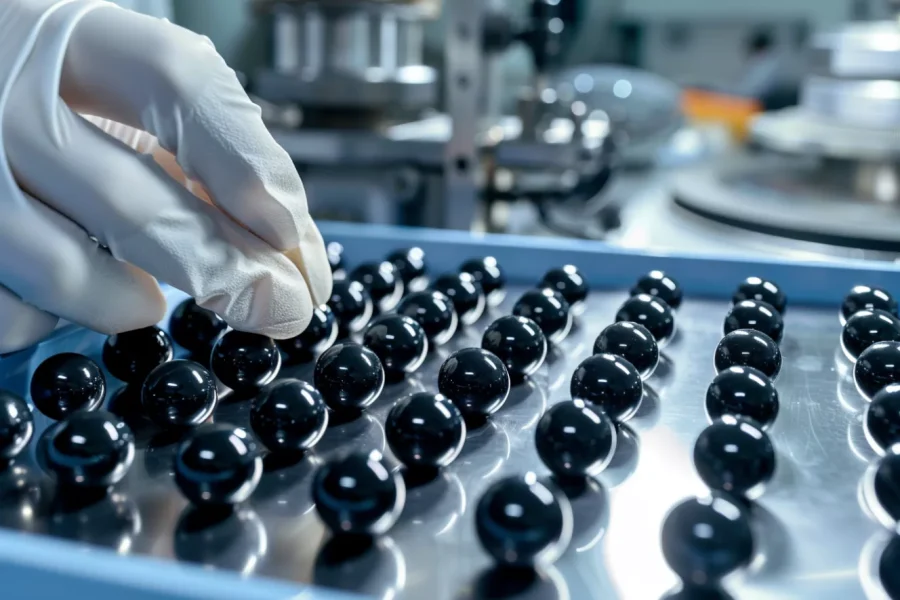
High-Speed Spindle Bearings
A silicon carbide ceramic ball stabilizes spindle behavior under extreme rotational and thermal loads.
- Roundness remains within 0.02–0.05 mm during continuous high-RPM operation.
- Ra maintains 0.02–0.03 μm to reduce friction and vibration spikes.
- Geometry stays stable at 1100–1400°C in thermally stressed zones.
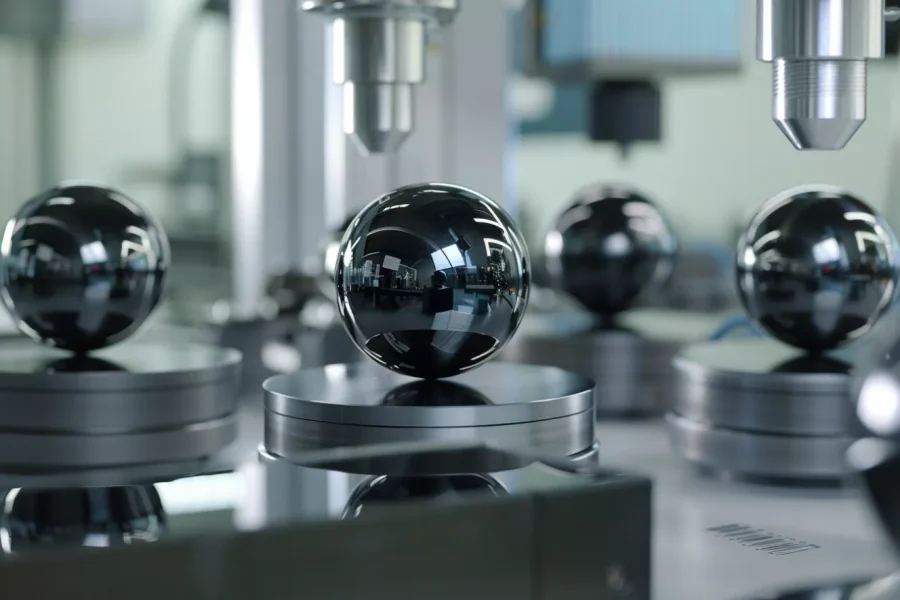
Precision Instrument Bearings
A silicon carbide ball ensures low noise and minimal drift in metrology and optical instrument bearings.
- Ra 0.02–0.03 μm maintains ultra-low signal noise.
- CTE 4.2×10⁻⁶/K reduces geometric drift under ambient fluctuation.
- Flexural strength 360–450 MPa preserves alignment during micro-impacts.
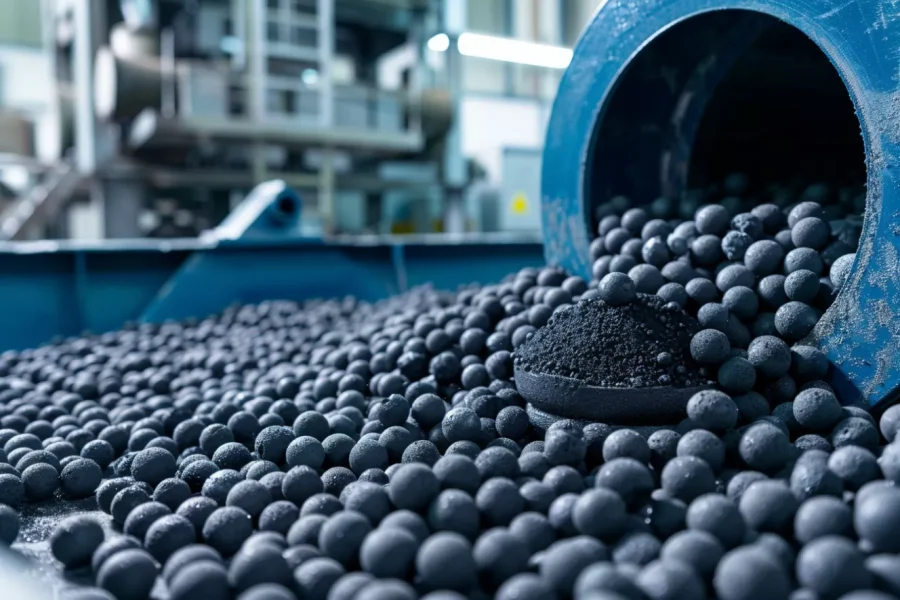
Battery & Ceramic Powder Milling
A silicon carbide ceramic ball maintains low wear and stable geometry during long-cycle ultrafine milling.
- Wear rate remains 0.01–0.03% per 24 h under high-energy milling.
- Mohs hardness near 9.5 sustains aggressive abrasion forces.
- Density 3.10–3.15 g/cm³ improves impact transfer efficiency.
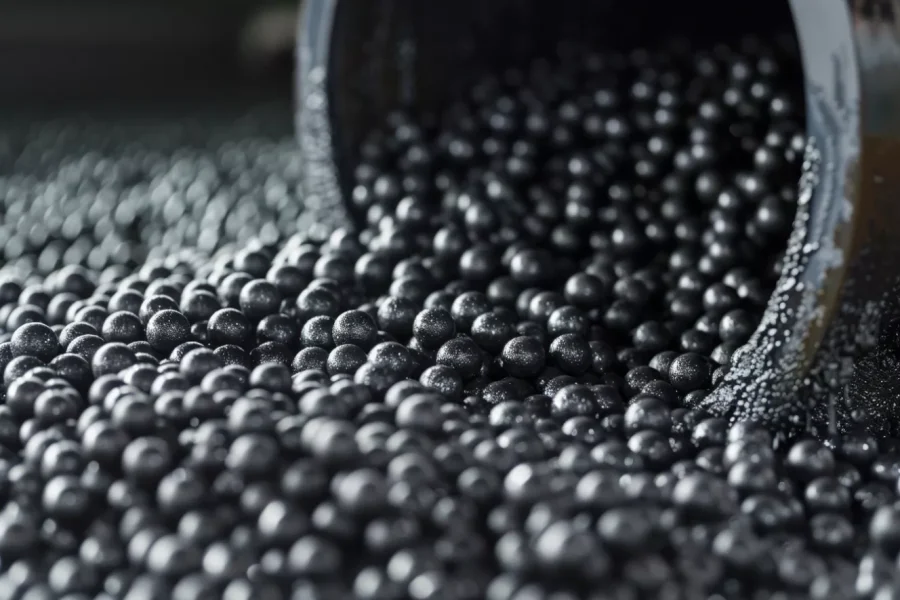
High-Energy Wet or Dry Attrition Grinding
A silicon carbide ceramic ball supports consistent collision behavior in intense wet-slurry and high-shear dry-attrition systems.
- Density 3.10–3.15 g/cm³ increases collision energy delivery.
- Porosity <1% prevents slurry absorption and contamination.
- Conductivity 95–120 W/m·K stabilizes thermal gradients during cycling.
One-Stop Engineering & Supply Capability by ADCERAX®
Integrated One-Stop Engineering Support Service
A complete engineering-support framework is applied to ensure that silicon carbide ceramic balls meet demanding precision, thermal, and wear conditions across bearing and milling platforms. This one-stop model reduces verification delays, eliminates supplier-switching risks, and supports long-cycle stability for global industrial buyers.
-
Precision Drawing Alignment:
Dimensional intent is interpreted accurately to avoid tolerance conflict. -
Material System Justification:
RBSiC or SSiC is matched to stress and contamination limits. -
Thermal–Mechanical Feasibility Check:
High-temperature distortion risks are reviewed before production. -
Surface Integrity Planning:
Ra targets are assigned to prevent vibration growth or PSD drift. -
Batch-to-Batch Stability Mapping:
Statistical controls maintain uniformity across production cycles. -
Failure-Mode Anticipation Analysis:
Rolling fatigue or collision degradation patterns are modeled in advance. -
Cleanliness & Contamination Control:
Media–powder interaction risks are pre-evaluated for Fe ppm limits.


Manufacturing Capabilities Supporting High-Consistency Silicon Carbide Balls
Manufacturing strength for silicon carbide balls relies on a controlled process chain combining precision shaping, ultra-high-temperature sintering, and metrology-grade inspection. Consistency delivered by leading silicon carbide ball factories is sustained through equipment accuracy, batch-tracking discipline, and tightly monitored microstructural uniformity.
| Manufacturing Capabilities Overview | |||
|---|---|---|---|
| Category | Capability Description | Representative Data / Equipment Metric | |
| Production Line Scale | Continuous production for bearing & milling grades | 4 independent SSiC/RBSiC lines; 1.8-ton/day total capacity | |
| Precision Shaping | CNC multi-axis forming for silicon carbide ceramic ball geometry | Shaping tolerance ≤ ±0.02–0.05 mm | |
| Sintering Capacity | High-temperature furnaces for SiC densification | Maximum furnace temperature 2100°C; multi-zone ±3°C uniformity | |
| Surface Finishing | Automated lapping & polishing for Ra stabilization | Achievable Ra 0.02–0.03 μm for bearing-grade spheres | |
| Microstructure Control | Closed-porosity and density stabilization | Porosity <1%; density 3.05–3.15 g/cm³ | |
| Metrology Inspection | High-resolution measurement of ball geometry | Laser gauge accuracy ±0.001 mm; interferometer Ra resolution 0.001 μm | |
customized silicon carbide balls supplier
We specialize in customizing silicon carbide balls with special sizes, tight tolerances, and complex features. OEM and small-batch support available.
Customization Options
Extra-large / Extra-small diameters, non-standard thicknesses, and ultra-long / ultra-short lengths.
Provide higher - level dimensional accuracy and concentricity control than the standard.
Flanges, steps, threads, drilling holes, grooves, etc.
Adjust the material according to the application requirements.
Polish and grind the surface to achieve a specific surface roughness.
Customization Process
Send us your drawing, CAD file, or physical sample with material grade, dimensions, tolerances, and quantity. Our engineers will evaluate the design and provide a detailed quotation with lead time and pricing.
Once the quote is approved, we proceed with sample prototyping (1–50 pcs) if needed, for testing and validation.
After sample approval or direct confirmation, we begin batch manufacturing using CNC machining, sintering, and polishing. All parts undergo dimensional checks, material purity testing, and surface finish inspection.
Finished products are securely packed and shipped via DHL/FedEx/UPS or your preferred method. We support global delivery with full documentation.
FAQs About ADCERAX® Silicon Carbide Balls
The compressive strength of silicon carbide balls typically exceeds 2200 MPa, allowing the material to withstand extreme Hertzian contact loads found in high-speed and high-temperature bearings. This elevated strength prevents micro-pitting, early-stage crack nucleation, and lubrication-film collapse under cyclic loading. As a result, bearing assemblies sustain lower vibration growth and longer L10 service life. Such load tolerance directly reduces unexpected downtime and production losses.
3mm silicon carbide balls provide a high contact-area concentration, enabling intense collision efficiency in ultrafine milling applications such as battery cathode materials and carbide powders. Their Mohs hardness of approximately 9.5 keeps shape loss minimal, even under prolonged attrition cycles. The small diameter also enhances PSD control by producing finer breakage patterns. This combination supports high-throughput nano-scale powder refinement.
Silicon carbide 6mm balls deliver a balanced ratio between impact energy and chamber coverage, making them suitable for both wet circulation mills and dry high-energy setups. With a density of 3.05–3.15 g/cm³, each impact transfers sufficient force to fracture hard materials without increasing contamination. Their wear rate of 0.01–0.03% per 24 hours minimizes material loss during long-duty cycles. This ensures predictable PSD curves across multiple batches.
The low thermal expansion coefficient of silicon carbide ceramic balls (4.2–4.5×10⁻⁶/K) prevents distortion during rapid temperature fluctuations. This stability is critical in bearings that operate above 1000°C or experience intermittent heating. The microstructure remains phase-stable, avoiding creep deformation. Long-term dimensional integrity directly protects spindle accuracy and high-speed rotation smoothness.
Although zirconia exhibits high fracture toughness, its thermal softening begins at significantly lower temperatures than SiC. Silicon carbide balls maintain hardness above 2200 HV even near 1200–1400°C, preventing flattening of contact points. Their superior thermal conductivity also dissipates heat more effectively, limiting local hot-spot formation. These combined factors result in longer bearing life in furnace, conveyor, and hot-end machinery.
Silicon carbide ceramic balls are electrically insulating, preventing EDM discharge paths that commonly erode metal rolling elements. In inverter-driven motors, high-frequency switching causes stray currents capable of damaging steel balls. The high resistivity of SiC interrupts this current path entirely. This eliminates arc cratering, significantly extending bearing service intervals.
The wear rate of silicon carbide balls is governed by grain boundary strength, density uniformity, and the absence of metallic phases. With porosity typically below 1%, fracture propagation is minimal even under repeated high-energy collisions. The SSiC microstructure offers superior abrasion resistance compared to oxide ceramics. As a result, contamination remains far below iron-sensitive limits used in battery and powder metallurgy industries.
Uniform geometry ensures consistent collision dynamics throughout the milling chamber. Silicon carbide ceramic balls maintain shape precision over long cycles, avoiding the PSD drift caused by worn oxide or metal media. Their hardness minimizes unpredictable fragmentation that can introduce coarse residues. The result is a reproducible and narrow PSD curve that reduces downstream sintering defects.
Get in touch with us
We believe that Adcerax will become your best partner!
Please fill in your contact information in the form or call us.
*Our team will answer your inquiries within 24 hours.
*Your information will be kept strictly confidential.
Partner with ADCERAX for Silicon Carbide Balls
Looking for a reliable silicon carbide ball supplier? Let us help you with your next project.
info@adcerax.com
Tel.:
+(86) 0731-74427743
WhatsApp:
+(86)19311583352
Within 24 hours
