What Is a Canned Motor Pump with SSiC Bearings?
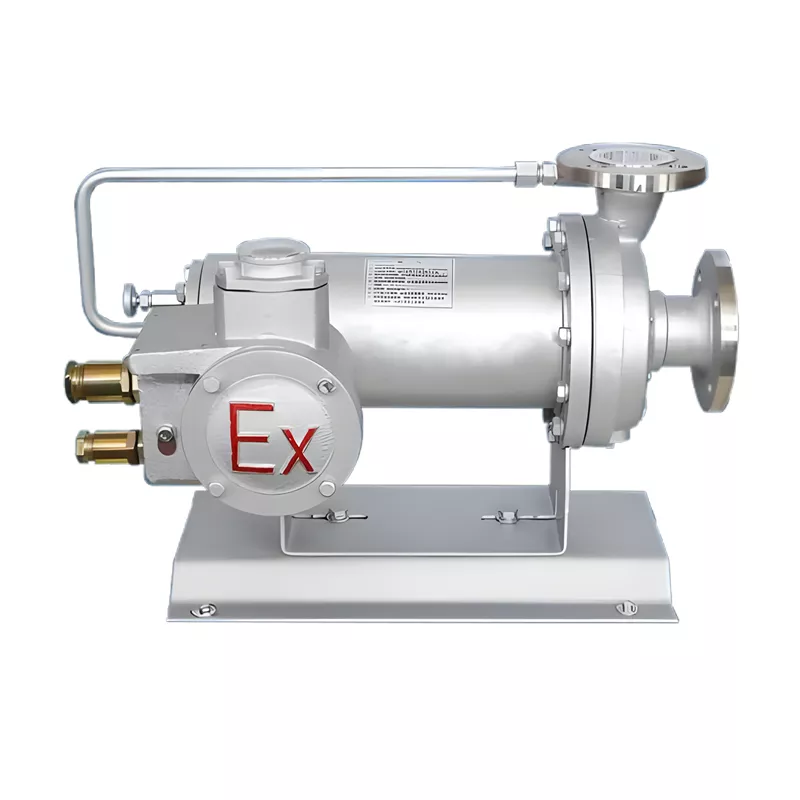
A canned motor pump with SSiC bearings is a sealless pump design in which the motor and pump are integrated inside a hermetically sealed structure. Instead of using an external mechanical seal, the pumped fluid helps lubricate internal sliding components, while sintered silicon carbide bearing surfaces support wear resistance, corrosion stability and rotor alignment.
This type of pump is often reviewed for chemical processes where leakage control, solvent compatibility, bearing durability and compact installation are more important than using a conventional mechanically sealed pump.
Why SSiC Bearings Matter in Canned Motor Pumps
Sealless Structure Helps Reduce Leakage Risk
The canned motor design removes the dynamic shaft seal, which helps reduce external leakage paths in chemical transfer systems. This structure is especially useful when the handled fluid is hazardous, volatile, corrosive or moisture-sensitive.
SSiC Bearing Surfaces Support Wear and Corrosion Resistance
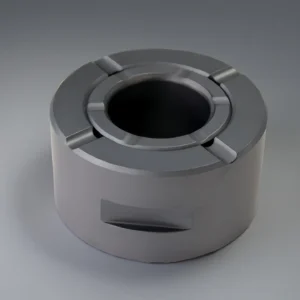
SSiC bearing surfaces provide high hardness, corrosion resistance and dimensional stability in many chemical media. Before selection, the actual fluid chemistry, concentration, temperature, solids content and lubrication conditions should be reviewed.
Process-Fluid Lubrication Requires Stable Operating Conditions
Internal bearings rely on the pumped fluid to form a lubricating film during operation. Dry running should be avoided, and the media should be checked to confirm whether it can support stable bearing lubrication and heat removal.
Compact Installation Fits Enclosed Process Systems
The integrated motor-pump structure can simplify equipment layouts in closed chemical lines, compact process skids and enclosed circulation systems. Connection type, installation orientation, cable routing and maintenance access should be confirmed before final configuration.
Chemical Compatibility Review Is Essential
Material selection should match the actual process fluid, not only the general fluid name. SDS, concentration, viscosity, temperature, cleaning method and operating cycle should be provided before quotation, so the wetted materials and SSiC bearing system can be reviewed more accurately.
Technical Specifications of Canned Motor Pump with SSiC Bearings
The specifications are for preliminary review only. Final pump selection depends on fluid chemistry, temperature, viscosity, flow, head and installation layout.
| Property |
Specification |
Engineering Review Note |
| Casing Material |
SS304 or SS316 stainless steel |
The casing material should be selected according to the handled fluid, concentration, temperature and cleaning procedure. |
| Bearing Material |
Sintered silicon carbide, also called SSiC |
SSiC is used for its hardness, corrosion resistance and dimensional stability in fluid-lubricated bearing systems. |
| Bearing Hardness |
>2000 HV |
High hardness helps the bearing surface resist sliding wear under compatible lubrication and media conditions. |
| Bearing Flexural Strength |
>400 MPa |
Flexural strength supports bearing stability under internal load, but final suitability still depends on shaft alignment and operating duty. |
| Bearing Wear Rate |
<1 × 10⁻⁷ mm³/N·m |
This value should be treated as reference material data and should not be presented as guaranteed pump-life performance. |
| Canned Housing Pressure Capacity |
1.6–2.5 MPa |
Pressure capacity should be confirmed according to the pump model, housing design, fluid temperature and system pressure fluctuation. |
| Stainless Steel Tensile Strength |
>520 MPa |
Tensile strength indicates the mechanical capability of the stainless housing material under normal structural loading. |
| Motor Efficiency Class |
IE2 or IE3 |
The motor efficiency class can be selected according to energy-consumption requirements, regional standards and project budget. |
| Ingress Protection |
IP68 hermetic construction |
Hermetic protection helps support enclosed operation, but cable routing and electrical sealing still need project-specific review. |
| Cooling Method |
Process-medium circulation |
The pumped fluid helps remove heat from internal components, so sufficient flow and priming should be maintained during operation. |
| Vibration Level |
<2.8 mm/s rms |
Lower vibration supports smoother operation, but actual vibration depends on installation, piping stress, alignment and fluid condition. |
| Noise Reduction |
Up to 8 dB lower due to fanless cooling |
This can help reduce operating noise in compact process areas, but the final noise level depends on system layout and pump size. |
| Chemical Compatibility |
Organic solvents, acids, alkalis and chloride solutions |
Compatibility must be reviewed using actual fluid name, concentration, temperature, impurities and cleaning chemistry. |
Dimensions of Canned Motor Pump with SSiC Bearings
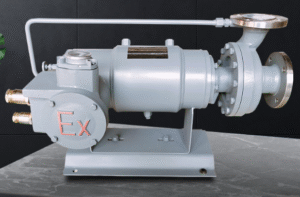
|
Type5 Silicon Carbide Canned Motor Pump |
|
Type |
Flow (m3/h) |
Head (M) |
Power (Kw) |
voltage (V) |
Weight (g) |
|
AT-CMP-12.5 |
12.5 |
65 |
15.5 |
220 |
70 |
Canned Motor Pump vs Magnetic Drive Pump
| Comparison Point |
Canned Motor Pump with SSiC Bearings |
Magnetic Drive Pump |
| Sealing concept |
The motor and pump are integrated in a sealed canned structure. |
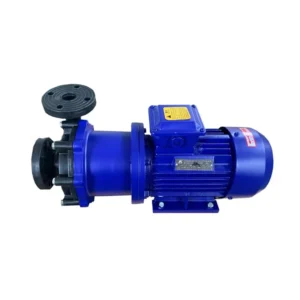
Torque is transmitted through magnetic coupling without a shaft seal. |
| Bearing lubrication |
Internal bearings are usually lubricated by the process fluid. |
Internal bearings may also depend on fluid lubrication, depending on design. |
| Installation profile |
It can support compact layouts where integrated motor-pump construction is preferred. |
It is often selected where magnetic coupling and separate motor arrangement are preferred. |
| Review focus |
Media compatibility, bearing lubrication, cooling flow and electrical feed-through integrity should be checked. |
Magnetic coupling torque, containment shell, temperature rise and bearing material should be checked. |
| ADCERAX recommendation |
Suitable for sealless chemical transfer when a canned motor structure matches the process conditions. |
Suitable when magnetic drive structure is preferred for the process layout or maintenance strategy. |
Protective Packaging for ADCERAX Canned Motor Pump
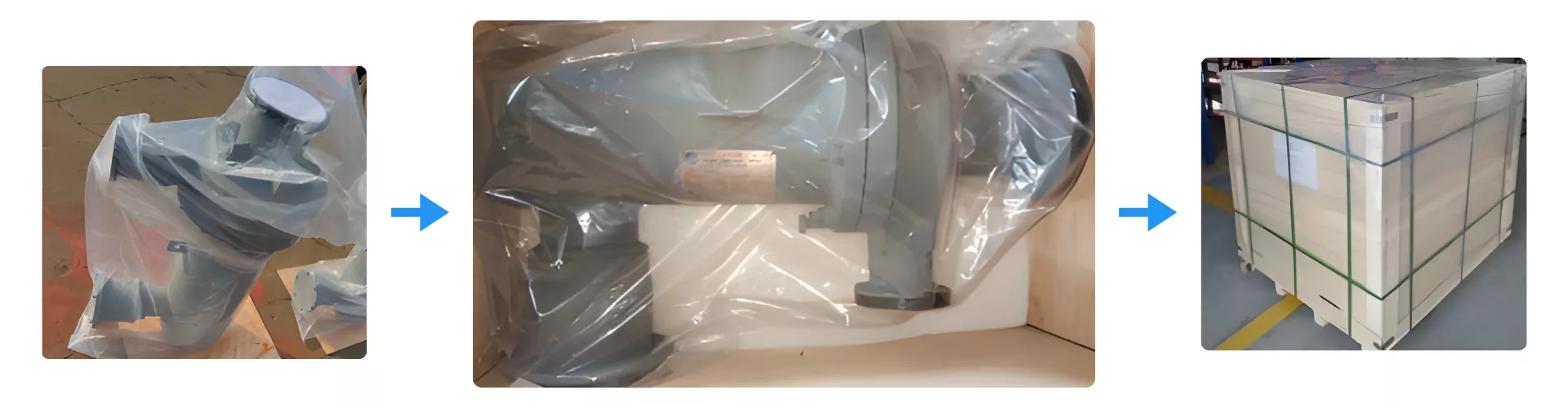
Canned Motor Pump with SSiC Bearings is packaged using a moisture-isolated and impact-controlled process to protect all wetted and structural components during international transport. Each Horizontal Stainless Steel Canned Motor Pump with Silicon Carbide Bearings is first sealed in a corrosion-resistant plastic wrap before being fixed into a reinforced wooden case to prevent movement. The final palletized unit is secured with industrial strapping to ensure stability through long-distance handling and warehouse stacking conditions.
Applications for Canned Motor Pumps with SSiC Bearings
Canned motor pumps with SSiC bearings are commonly reviewed for chemical transfer, solvent circulation, electrolyte handling and closed-loop process systems where external seal leakage, bearing wear, fluid compatibility and compact installation need to be carefully controlled. The final suitability should be reviewed according to the actual media, operating temperature, viscosity, suction condition and required flow and head.
-
Chemical Transfer and Solvent Circulation
Canned motor pumps with SSiC bearings are often reviewed for chemical transfer lines where mechanical seal leakage, solvent vapor escape or frequent seal replacement can create operating risk. The sealless canned motor structure helps reduce external leakage paths, while SSiC bearing surfaces support wear resistance and corrosion stability in compatible fluid-lubricated conditions.
This configuration is suitable for processes that require enclosed fluid transfer, cleaner pump-room operation and reduced seal-maintenance complexity. Before selection, the handled fluid, concentration, vapor pressure, viscosity, temperature and cleaning method should be reviewed to confirm wetted-part compatibility and bearing lubrication safety.
Application review focus:
The key points are chemical compatibility, dry-running prevention, suction stability, internal cooling flow and whether the fluid can provide enough lubrication for the SSiC bearing system.
-
Battery Electrolyte and Moisture-Sensitive Fluid Handling
For battery electrolyte preparation, solvent circulation and lithium-salt-related process fluids, leakage control and contamination reduction are often more important than using a conventional mechanically sealed pump. A canned motor pump with SSiC bearings can be reviewed when the process requires enclosed transfer, stable circulation and reduced exposure to air or moisture.
Because electrolyte-related fluids may be sensitive to moisture, impurities and temperature changes, the pump should not be selected only by flow rate. ADCERAX reviews the solvent system, salt composition, filtration level, moisture sensitivity, temperature range and cleaning procedure before recommending the pump configuration.
Application review focus:
The key points are media purity, seal-free transfer, internal material compatibility, bearing lubrication, filtration level and whether the pump can operate safely under the actual circulation duty.
-
Fine Chemical and Pharmaceutical Intermediate Processing
Fine chemical and pharmaceutical intermediate processing often involves corrosive solvents, high-value materials and enclosed transfer requirements. In these systems, seal leakage, external vapor release and unplanned maintenance can affect process stability and operator safety. A canned motor pump with SSiC bearings can be considered when a compact sealless structure is preferred for transfer, circulation or dosing-support lines.
The SSiC bearing system is useful when the fluid is compatible and the process can maintain stable lubrication and cooling. For variable-viscosity fluids or temperature-sensitive media, ADCERAX recommends reviewing the full duty condition instead of selecting the pump by standard model alone.
Application review focus:
The key points are fluid compatibility, solvent vapor control, cleaning method, temperature change, viscosity range, installation layout and maintenance access.
-
Modular Skids and Process Equipment Integration
Canned motor pumps with SSiC bearings are also suitable for compact chemical skids, pilot systems and integrated process equipment where space, leakage control and simplified installation are important. The integrated motor-pump structure can reduce external alignment requirements and help support cleaner equipment layouts.
For skid-mounted systems, the pump must match the piping direction, flange standard, cable routing, control system and maintenance space. ADCERAX can review the interface requirements according to drawings, process diagrams or equipment layout information.
Application review focus:
The key points are footprint, connection standard, installation orientation, suction condition, electrical interface, control compatibility and whether the pump can be accessed safely for inspection or replacement.
Using the ADCERAX Canned Motor Pump with SSiC Bearings Safely
The ADCERAX canned motor pump with SSiC bearings should be installed, started and monitored according to the actual process conditions. Stable suction, proper priming, sufficient process-medium circulation and fluid compatibility are essential for safe operation.
-
Installation Checks
Before operation, the pump should be mounted on a rigid and level foundation to reduce vibration and piping stress. The suction line should be clean, properly aligned and free of restrictions, because poor inlet conditions may increase cavitation risk and affect internal bearing lubrication.
Electrical feed-throughs, cable routing and grounding should be checked during installation. Any moisture intrusion or damaged sealing interface may affect the hermetic structure and increase operational risk.
-
Startup and Initial Operation
The pump casing should be fully filled with process fluid before energizing. Running the pump without enough fluid can reduce lubrication around the SSiC bearing surfaces and may cause rapid wear or temperature rise.
During startup, confirm the flow direction, discharge pressure and temperature behavior. If abnormal vibration, unstable pressure or rapid temperature increase occurs, the pump should be stopped and the suction condition, air entrainment and fluid circulation path should be checked.
-
Routine Monitoring
Routine inspection should focus on vibration, temperature, pressure stability and bearing lubrication conditions. Any gradual increase in vibration may indicate suction restriction, hydraulic imbalance, air entrainment or internal wear.
The process fluid should remain clean enough for the bearing system. If deposits, particles or crystallization are found in the circulation path, the system should be cleaned according to the process procedure.
-
Operational Safety Notes
Avoid dry running, rapid valve closure and sudden pressure surges. The process medium must be compatible with the wetted materials, including stainless steel housing and SSiC bearing surfaces.
For corrosive, volatile, high-value or moisture-sensitive fluids, ADCERAX recommends reviewing the fluid name, concentration, temperature, viscosity, vapor pressure, cleaning method and operating cycle before final pump selection.