Silicon Carbide Ceramic Tray for Sintering Furnaces

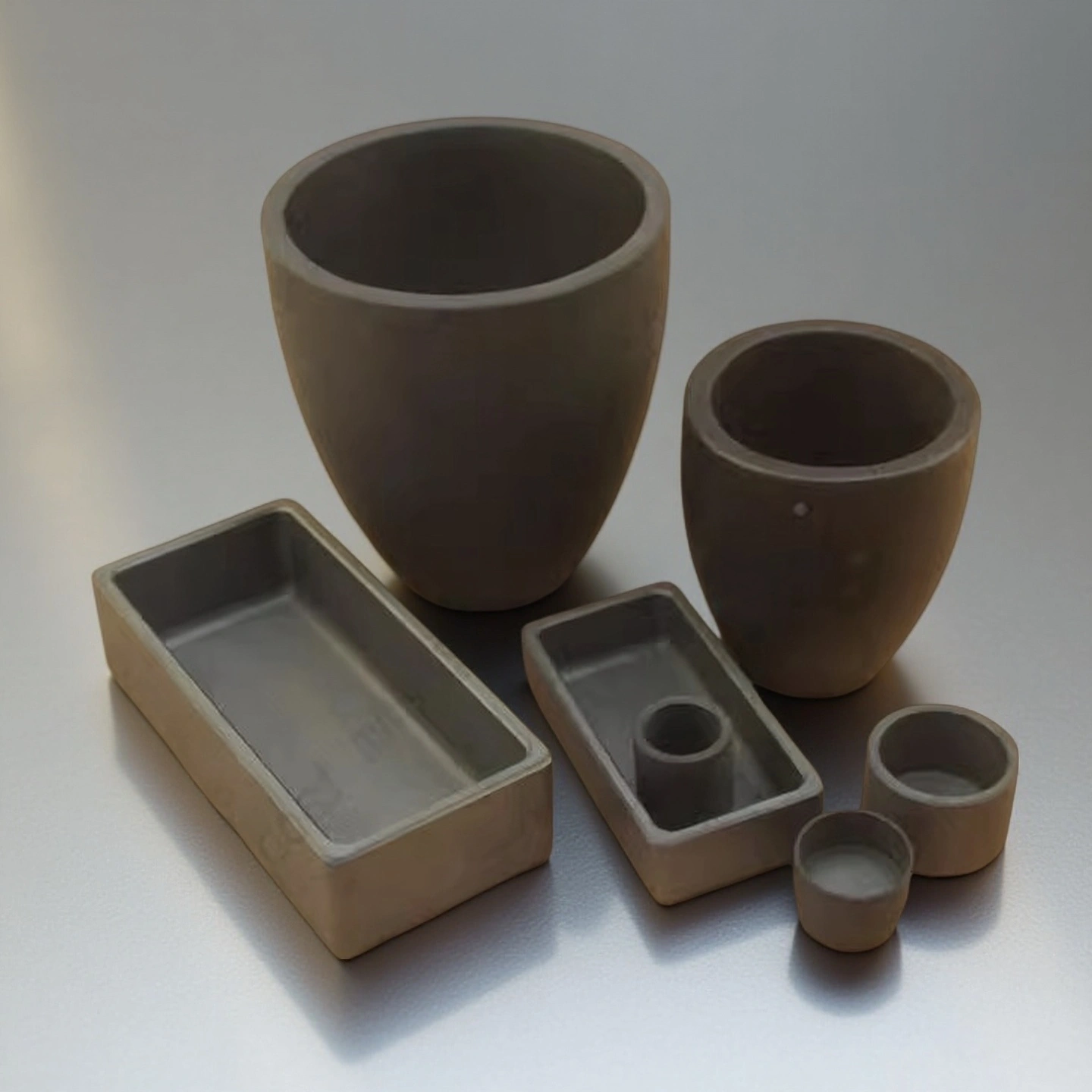
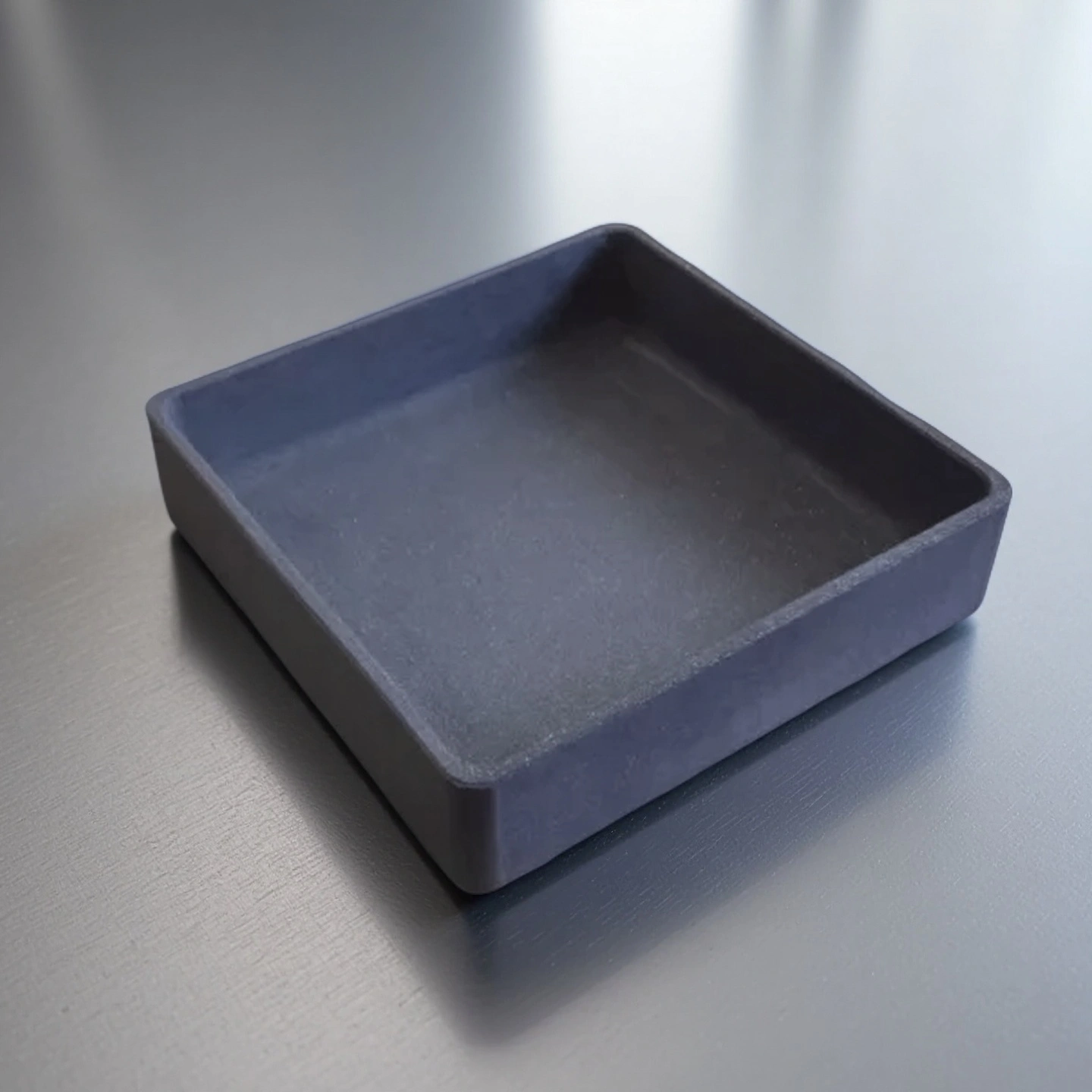
Silicon carbide ceramic tray is designed to carry ceramic or metallic parts through sintering cycles inside high-temperature furnaces. Available in standard and custom sizes, ADCERAX SiC trays provide high mechanical strength, controlled flatness, and strong resistance to oxidation and thermal shock, making them suitable for batch furnaces, tunnel kilns, shuttle kilns and continuous thermal-processing lines.

Catalogue No. AT-SIC-G1037
Material Silicon Carbide Ceramic (SiC)
Density ≥ 2.65g/cm³
Max Operating Temp 1600°C
Engineering RFQ Review
Small-Batch Custom Support
Factory-Direct Manufacturing
Drawing & Process Review

What Is a Silicon Carbide Ceramic Tray?

Silicon carbide ceramic trays are high-temperature support components used to carry ceramic parts, metal powder compacts, electronic ceramic substrates, oxide ceramic parts and other workpieces through sintering, firing, calcination or heat-treatment cycles. Compared with common alumina trays, SiC trays provide higher thermal shock resistance, stronger hot strength and better dimensional stability under repeated furnace loading.

ADCERAX supplies standard rectangular and round SiC ceramic trays, as well as drawing-based custom trays for batch furnaces, tunnel kilns, shuttle kilns, roller kilns, vacuum furnaces and controlled-atmosphere thermal processing lines. Tray size, wall thickness, support ribs, surface finish, edge design and loading pattern can be adjusted after reviewing the working temperature, atmosphere, workpiece weight and furnace structure.

Why Use SiC Trays in High-Temperature Sintering?

In sintering and firing processes, the tray is not only a carrier. It affects heat transfer, part flatness, contamination risk and loading stability. Silicon carbide ceramic trays are selected when standard refractory trays deform, crack, release particles or shorten maintenance intervals under repeated high-temperature cycles.

Engineering Requirement Why SiC Ceramic Helps
High-temperature loading SiC maintains better strength and rigidity at elevated temperature than many standard oxide ceramic supports.
Thermal cycling Low thermal expansion and good thermal shock resistance help reduce cracking during repeated heating and cooling.
Flat part support Properly designed tray geometry helps reduce warping risk for substrates, discs and compacted parts.
Low contamination risk Dense SiC surfaces can reduce particle shedding when the material and surface finish are correctly selected.
Furnace integration Rectangular, round, notched, ribbed or custom trays can be designed for different kiln loading systems.

Advantages of Silicon Carbide Ceramic Trays

  • Controlled dimensional accuracy – Tray size, thickness and flatness can be reviewed according to furnace layout, support span and drawing requirements.
  • Repeated furnace cycle stability – SiC ceramic trays are suitable for repeated high-temperature use when loading weight, heating rate and cooling conditions are properly controlled.
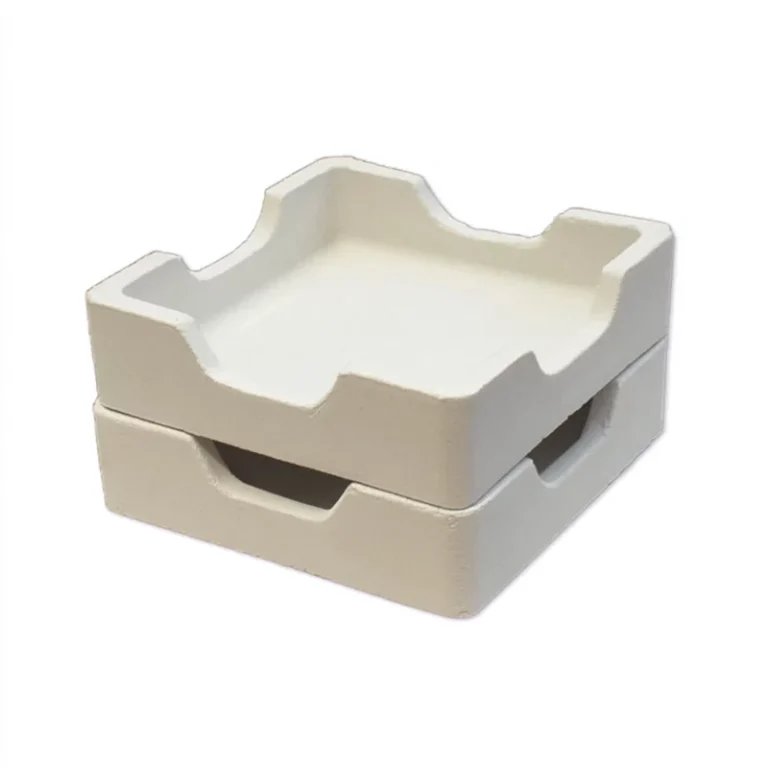
  • Custom geometry support – Rectangular, round, grooved, notched, ribbed, stepped and drawing-based tray designs are available for different furnace systems.
  • Lower defect risk – Proper material selection and surface finish help reduce warping, particle release and contact-related defects during sintering.
  • Strong ceramic body – Dense SiC ceramic structure helps reduce edge abrasion, handling damage and crack-initiation risk during furnace loading and unloading.

SiC Ceramic Tray Properties

Property

Unit

Reaction-sintered SiC (SiSiC)

Nitride-Bonded Silicon Carbide (NBSiC) Pressureless Sintered Silicon Carbide (SSiC)
Free Silicon Content

%

85

80

99

Free  Silicon Content

%

15

0

0

Density

g/cm3

3.02

2.72

3.1-3.15

Max. Service Temp.

≤1380

1550

≤1600

Vickers Hardness

kg/mm2(HV)

2500

2500

2800

Coefficient of Thermal Expansion

K-1×10⁻⁶

4.5

5

4.1

Bending Strength

Mpa(20℃)

250

160

380

Mpa(1200℃)

280

180

400

Modulus of Elasticity

Gpa(20℃)

330

220

420

Gpa(1200℃)

300

/

/

Thermal Conductivity

W/m.k(1200℃)

45

15

74

Porosity

%

<0.1

12

<0.1

Standard SiC Tray Shapes and Size Options

ADCERAX provides both standard SiC tray formats and custom dimensions. Standard trays are suitable for quick replacement or sample testing, while custom trays are recommended when the furnace has fixed loading rails, limited chamber space, special stacking methods or strict part-flatness requirements.


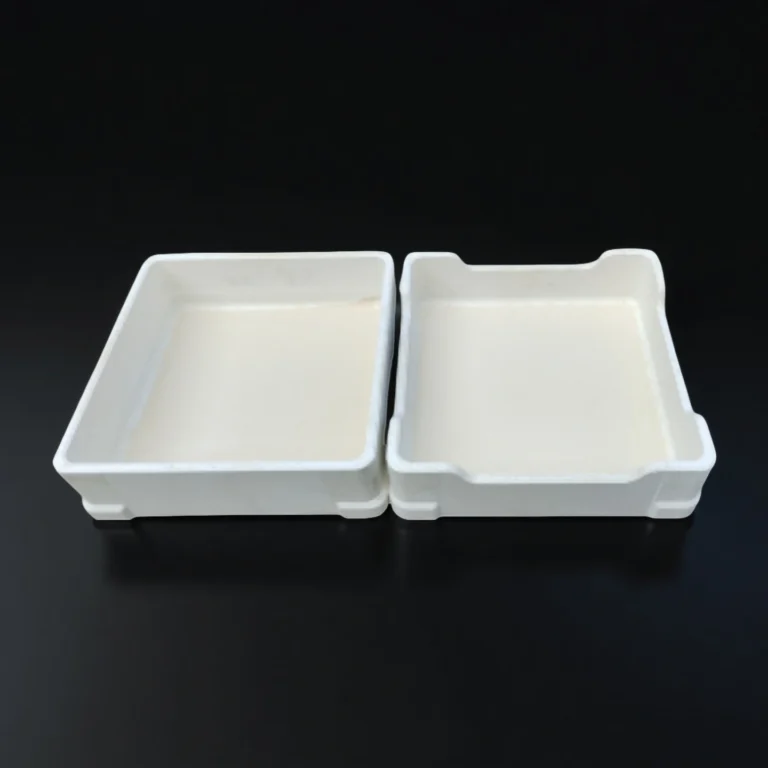
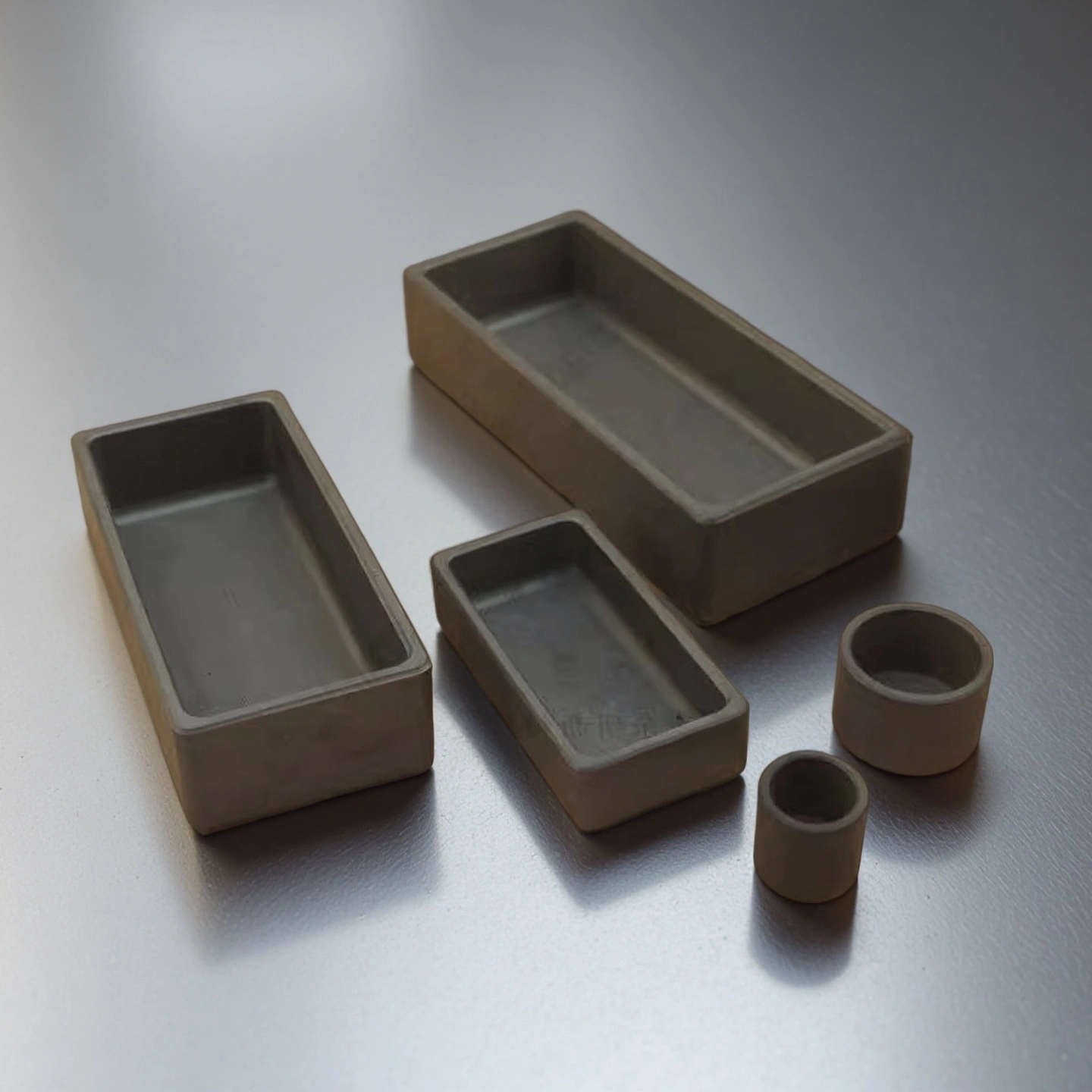
Type 1-Rectangular SIC Ceramic Trays
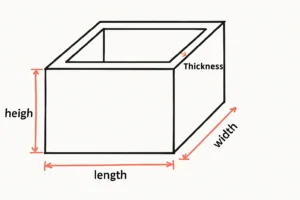
Size for tray

Item Length(mm) Width(mm) Height(mm) Thickness(mm)
AT-SIC-G1037 51.5 25.5 20.5 3.5
AT-SIC-G1038 70 70 25 5
AT-SIC-G1039 80.5 67.5 21 5
AT-SIC-G1040 100 100 30 4
AT-SIC-G1041 100 30 25 5
AT-SIC-G1042 122 49 37 5
AT-SIC-G1043 150 150 80 5.5
AT-SIC-G1044 160 160 72 7
AT-SIC-G1045 175 175 50 6
AT-SIC-G1046 180 70 35 5.5
AT-SIC-G1047 190 80 40 6
AT-SIC-G1048 200 35 8 5.5
AT-SIC-G1049 265 175 20 8
AT-SIC-G1050 300 300 110 6
AT-SIC-G1051 300 300 150 6.5
AT-SIC-G1052 300 300 175 7.5
AT-SIC-G1053 320 320 110 6.5
AT-SIC-G1054 320 320 48 5.5
AT-SIC-G1055 320 320 60 6
AT-SIC-G1056 320 320 75 6
AT-SIC-G1057 320 320 80 7
AT-SIC-G1058 320 320 85 8
AT-SIC-G1059 490 255 50 10


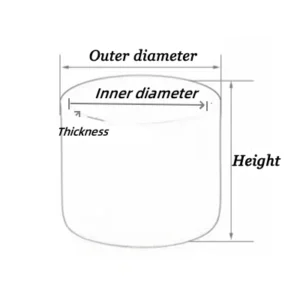
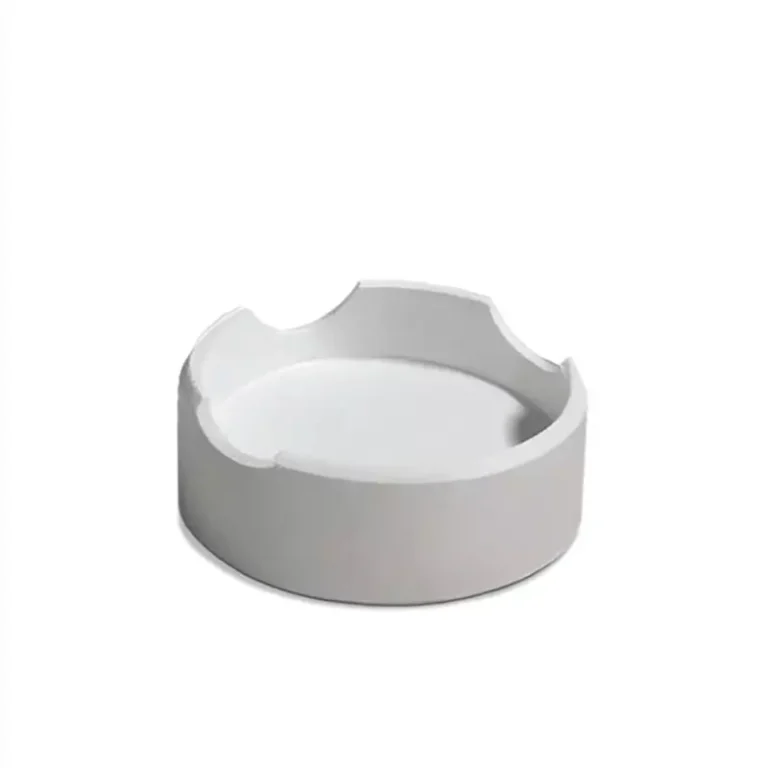
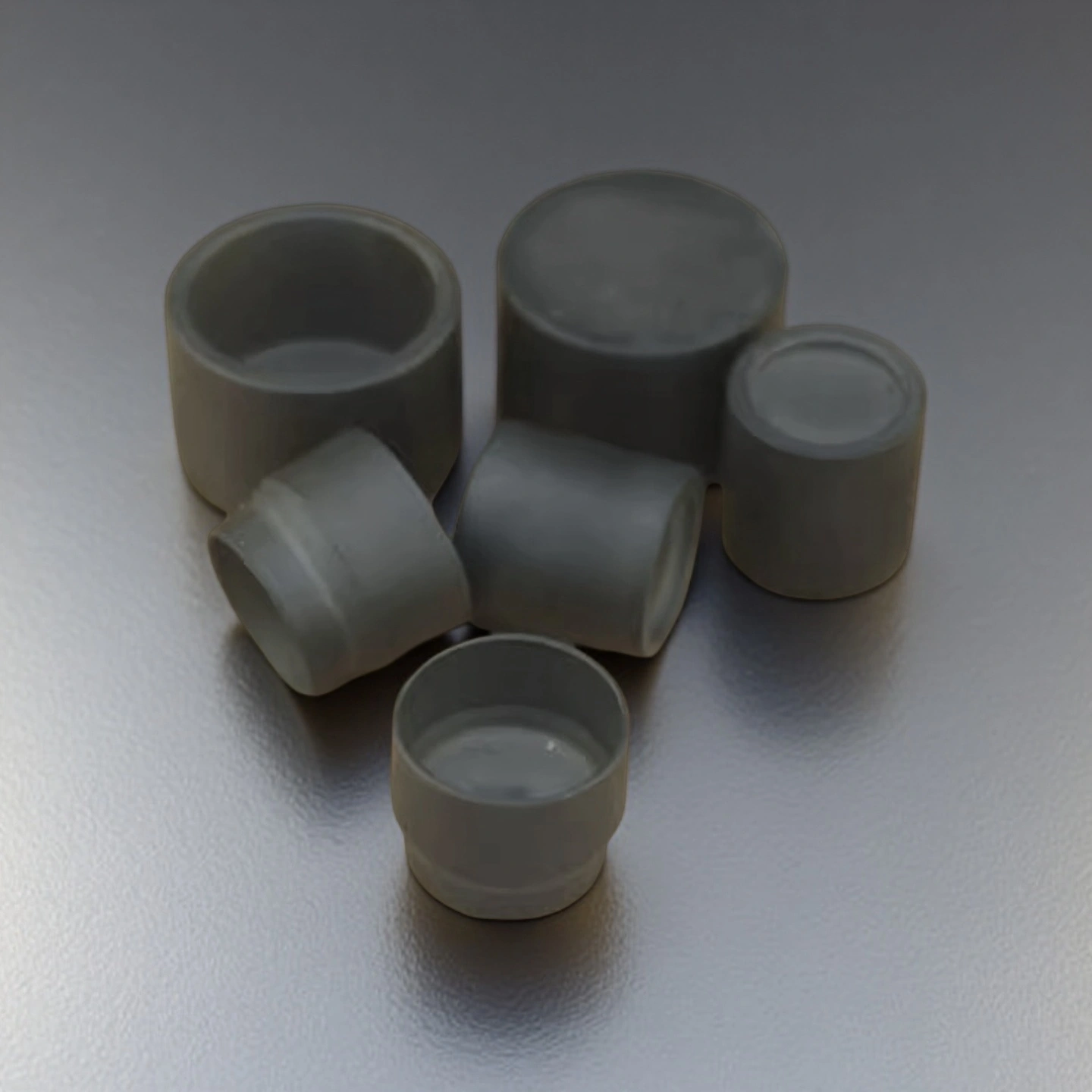
Type 2-Round SIC Ceramic Trays

size for tray

Item Outer Diameter(mm) Inner Diameter(mm) Height(mm) Thickness(mm)
AT-SIC-G1001 10.0  7.8  19.0  1.1
AT-SIC-G1002 12 8 26 2
AT-SIC-G1003 14.5 10.5 33.5 2
AT-SIC-G1004 20 16 31 2
AT-SIC-G1005 22 16 80 3
AT-SIC-G1006 23 19 81 2
AT-SIC-G1007 28 21 110 3.5
AT-SIC-G1008 29 22 17.5 3.5
AT-SIC-G1009 29 24 19.7 2.5
AT-SIC-G1010 32.5 26.5 29 3
AT-SIC-G1011 38 29 32.5 4.5
AT-SIC-G1012 38 29.8 45 4.1
AT-SIC-G1013 41 33 71.5 4
AT-SIC-G1014 42 33 73 4.5
AT-SIC-G1015 45 38 18 3.5
AT-SIC-G1016 47.5 38 74 4.75
AT-SIC-G1017 51 41 122 5
AT-SIC-G1018 51 44 73 3.5
AT-SIC-G1019 52 39 144 6.5
AT-SIC-G1020 53 42 124 5.5
AT-SIC-G1021 60 51 100 4.5
AT-SIC-G1022 61 51 102 5
AT-SIC-G1023 61 52 102 4.5
AT-SIC-G1024 61.5 53 122 4.25
AT-SIC-G1025 63 52 103.5 5.5
AT-SIC-G1026 65 55 64.5 5
AT-SIC-G1027 71 61 111 5
AT-SIC-G1028 72.5 62.5 113 5
AT-SIC-G1029 73 62.5 125.5 5.25
AT-SIC-G1030 80 58 91 11
AT-SIC-G1031 93 83 103 5
AT-SIC-G1032 94 83.5 104.5 5.25
AT-SIC-G1033 100 92 132 4
AT-SIC-G1034 104 90 182 7
AT-SIC-G1035 105 95 135.5 5
AT-SIC-G1036 380 344 255 18


How to Select the Right SiC Tray Material?

Different silicon carbide material systems behave differently under furnace temperature, atmosphere and loading conditions. Before confirming the tray design, ADCERAX reviews whether reaction-bonded SiC, nitride-bonded SiC or pressureless sintered SiC is more suitable for the application.

Material Option Better For Selection Note
Reaction-Bonded SiC General high-temperature trays, kiln furniture, structural supports and larger custom shapes. Suitable when dimensional stability, thermal shock resistance and cost control are balanced.
Nitride-Bonded SiC Kiln furniture and thermal-processing supports where oxidation behavior and mechanical stability are both important. Often used for repeated firing cycles and industrial furnace support parts.
Pressureless Sintered SiC Higher-density applications requiring stronger chemical resistance and lower porosity. Recommended when corrosion, high purity or aggressive process media are major concerns.

For heavy loading, wide-span tray support or repeated rapid heating cycles, tray thickness and reinforcement design are often more important than material grade alone.


Silicon Carbide Ceramic Tray Packing

Each tray is individually packed using PE foam surfaces and double-corrugated cartons.
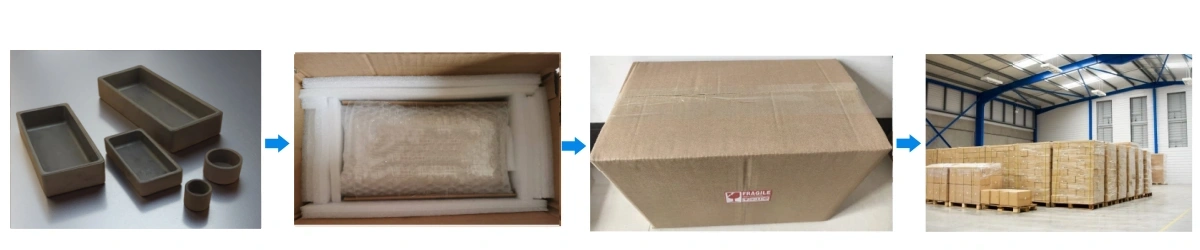
Silicon Carbide Ceramic Tray Packing

Applications of Silicon Carbide Ceramic Trays

Silicon carbide ceramic trays are used in furnace positions where the support surface must remain stable under repeated heating, cooling and loading. They are commonly selected for electronic ceramic firing, powder metallurgy sintering, oxide ceramic processing, kiln loading systems and controlled-atmosphere heat treatment.

Electronic Ceramic and Substrate Firing

SiC trays provide a rigid support surface for ceramic substrates, discs, insulating parts and small precision components. A stable tray helps reduce uneven shrinkage, local warping and contact-related defects during high-temperature firing.

Powder Metallurgy and Compact Sintering

For powder metallurgy parts and compacted green bodies, tray flatness and thermal stability are critical. Proper SiC tray design helps maintain part positioning while reducing tray deformation during repeated furnace cycles.

Kiln Loading and Batch Furnace Support

In shuttle kilns, tunnel kilns and batch furnaces, SiC trays can be customized for stacking, rail loading or tray-to-tray spacing. Edge geometry, tray height and support ribs should be matched to the kiln furniture layout.

Vacuum and Controlled-Atmosphere Furnaces

SiC trays can be used in vacuum, inert or controlled-atmosphere furnace environments after material compatibility review. ADCERAX recommends confirming the operating atmosphere, contact material and cleaning method before final selection.

Advanced Oxide Ceramic Processing

For alumina, zirconia and other oxide ceramic parts, SiC trays can support high-temperature firing where dimensional stability and repeated-use durability are required.

Usage Guidelines for Longer Tray Stability

Proper use directly affects the service stability of silicon carbide ceramic trays. Thermal shock, uneven support, overloading, improper cleaning and direct cold contact can shorten tray life even when the material is correctly selected.

Heating

Use a controlled ramp rate before the tray enters high-temperature zones. Gradual heating helps reduce thermal shock, especially when the tray is loaded with dense ceramic parts, metal powder compacts or unevenly distributed workpieces.

Cooling

Avoid sudden cold air, water contact or direct placement on cold metal surfaces when the tray is still hot. Rapid cooling may create thermal stress between the tray surface and internal structure, increasing the risk of cracking.

Loading

Keep the workpiece load evenly distributed across the tray surface. Avoid concentrated point loading, sharp contact edges or heavy parts placed only on unsupported areas, as these conditions may cause local stress and deformation.

Support

Match tray thickness and support span to the furnace rail, setter plate or kiln furniture structure. Wide trays, heavy loads or high-temperature cycles may require reinforced bottoms, ribs or additional support points.

Cleaning

Remove deposits by suitable dry cleaning methods after the tray cools naturally. Avoid aggressive scraping, strong chemical cleaning or impact cleaning unless material compatibility has been confirmed for the specific SiC grade and process residue.

Handling

Handle the tray carefully during loading, unloading and stacking. Avoid impact on edges, corners and thin walls, because small chips may expand into cracks during repeated heating and cooling cycles.

Silicon Carbide Ceramic Tray FAQ

  1. Q: What is a silicon carbide ceramic tray used for?
    A silicon carbide ceramic tray is used to support ceramic parts, metal powder compacts, substrates and other workpieces during sintering, firing, calcination or high-temperature heat treatment. It is commonly used in batch furnaces, tunnel kilns, shuttle kilns, roller kilns, vacuum furnaces and controlled-atmosphere furnace systems.
  2. Q: Why choose a SiC ceramic tray instead of an alumina tray?
    A: SiC ceramic trays are usually selected when the process requires better thermal shock resistance, higher hot strength, better dimensional stability or longer repeated-use performance than standard alumina trays. Alumina trays are still suitable for many clean firing and laboratory processes, but SiC is preferred for harsher thermal cycling or heavier loading conditions.
  3. Q: Can silicon carbide trays be customized to my furnace size?
    A: Yes. ADCERAX can manufacture SiC ceramic trays according to customer drawings, samples or furnace layout requirements. Length, width, height, wall thickness, support ribs, holes, grooves, notches, edge design and surface finish can be reviewed according to the furnace chamber, loading method and part geometry.
  4. Q: Which SiC material is suitable for my tray application?
    A: The best material depends on temperature, atmosphere, loading weight, contact material and cleaning method. Reaction-bonded SiC is commonly used for structural kiln furniture and larger tray shapes, nitride-bonded SiC is suitable for repeated kiln furniture use, and pressureless sintered SiC is preferred when higher density or stronger chemical resistance is required.
  5. Q: Can SiC trays be used in vacuum or inert atmosphere furnaces?
    A: Yes, SiC trays can be used in vacuum, inert gas and controlled-atmosphere furnaces when the material system is compatible with the process. Before quotation, ADCERAX recommends confirming the atmosphere, peak temperature, contact material and cleaning method to avoid unexpected reaction, oxidation behavior or contamination risk.
  6. Q: How can I reduce cracking or warping during tray use?
    A: Cracking and warping can be reduced by selecting proper tray thickness, avoiding sudden thermal shock, distributing the load evenly, matching the tray support span to the furnace structure and avoiding cold water contact when the tray is hot. For wide trays or heavy loads, reinforced bottom structures or support ribs may be recommended.
customize size

Custom SiC Tray Design for Furnace and Kiln Integration

Custom SiC ceramic trays are recommended when standard tray sizes do not match the furnace chamber, loading fixture, support rail or part layout. ADCERAX can review customer drawings, samples or furnace layout information to adjust tray length, width, height, wall thickness, corner radius, support ribs, holes, grooves, notches and surface finish.

Custom Item Why It Matters
Length, width and height Determines furnace fit, stacking method and loading density.
Wall thickness Affects tray stiffness, heat capacity and resistance to cracking.
Support ribs or reinforced base Helps reduce deformation when the tray carries heavier workpieces.
Surface finish Influences part sticking, contamination risk and cleaning method.
Edge and corner design Helps avoid chipping during loading, unloading and handling.
Holes, slots or notches Supports airflow, positioning, fixture integration or robot loading.

Related Products

ADCERAX - Your Trusted Advanced Ceramics Manufacturing Partner

Direct factory manufacturing with comprehensive ceramic materials expertise and global supply capabilities

China-Based Manufacturer

ADCERAX supplies ceramic components for overseas OEMs, equipment builders, and labs.

Custom Drawing Support

We review drawings, dimensions, materials, and application conditions before quotation.

Ceramic Process Control

Forming, sintering, machining, grinding, and finishing are arranged by part requirements.

Pre-Shipment Inspection

Dimensional checks, visual inspection, and packaging review help reduce procurement risk.

Get in Touch with Us

Our team will be happy to respond to you in less than 24 hours.

Pingxiang Factory — Silicon carbide, silicon nitride, high-temperature ceramics

Quick Quotation

*Our team will answer your inquiries within 24 hours.

*Your information will be kept strictly confidential.

Ready to Solve Your Engineering Challenge?

Partner with ADCERAX for reliable, high-performance advanced ceramic solutions. Our engineers are ready to discuss your project.

E-mail

info@adcerax.com

Phone

+(86) 0731-74427743 | WhatsApp: +(86) 19311583352

Response Time

Within 24 hours

Quick Quote

The more details you provide, the faster we can quote.

*We respond within 24 hours. All inquiries are confidential.

Get Your Custom Solution

The more details you provide, the faster we can respond.

customize size

*We respond within 24 hours. All inquiries are confidential.

Download Catalog