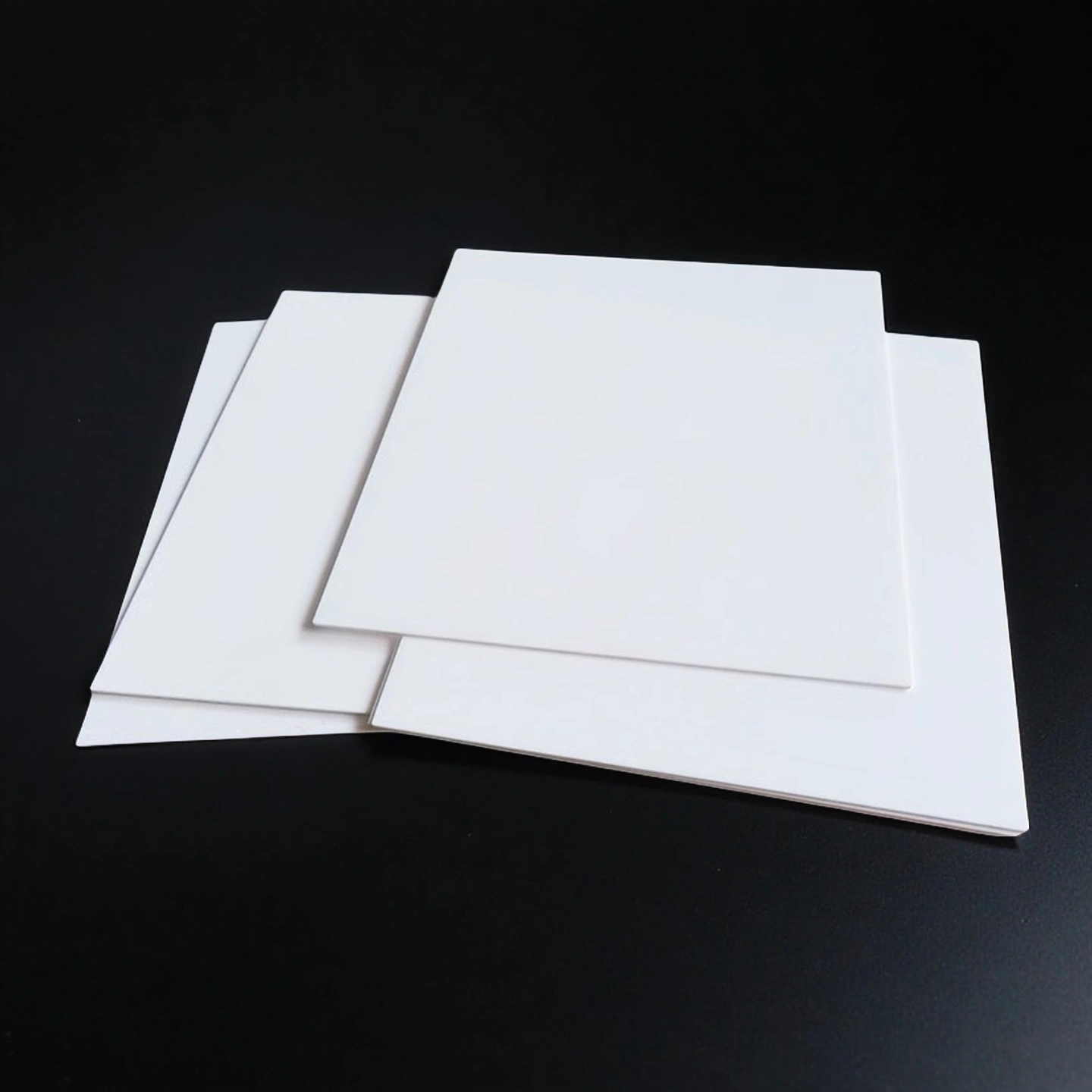
High-Reflectance ZTA Substrate for UV/LED COB, Low Warp, Laser-Scribed Outline

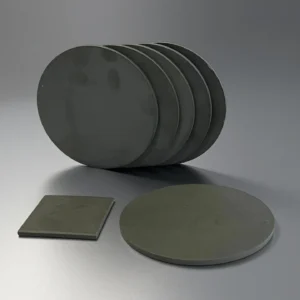
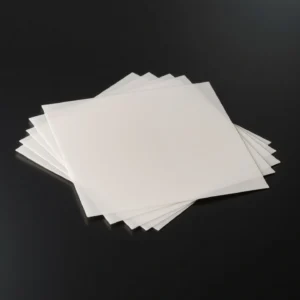
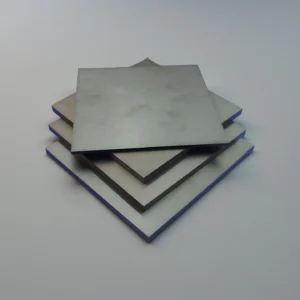
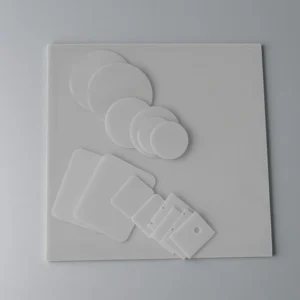
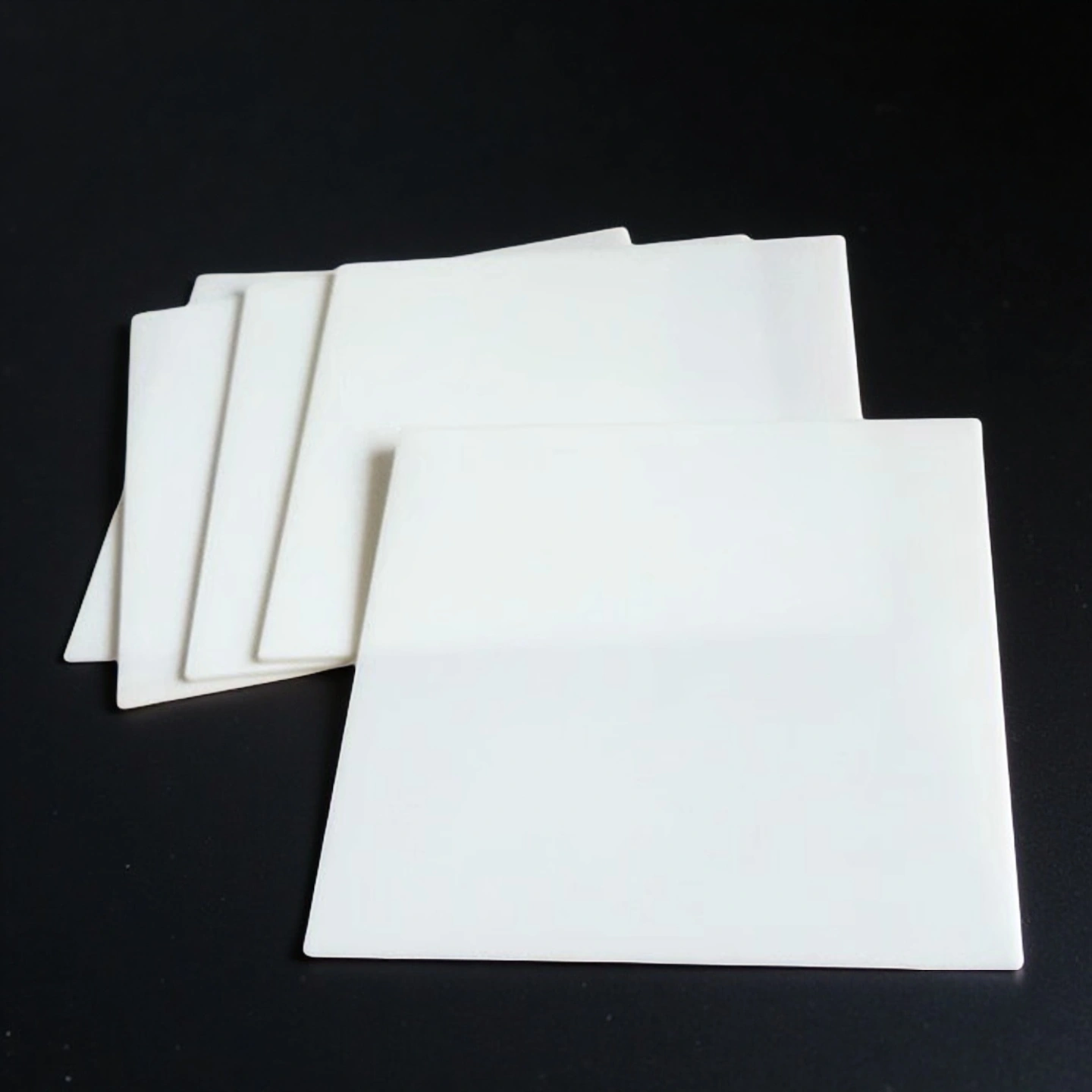
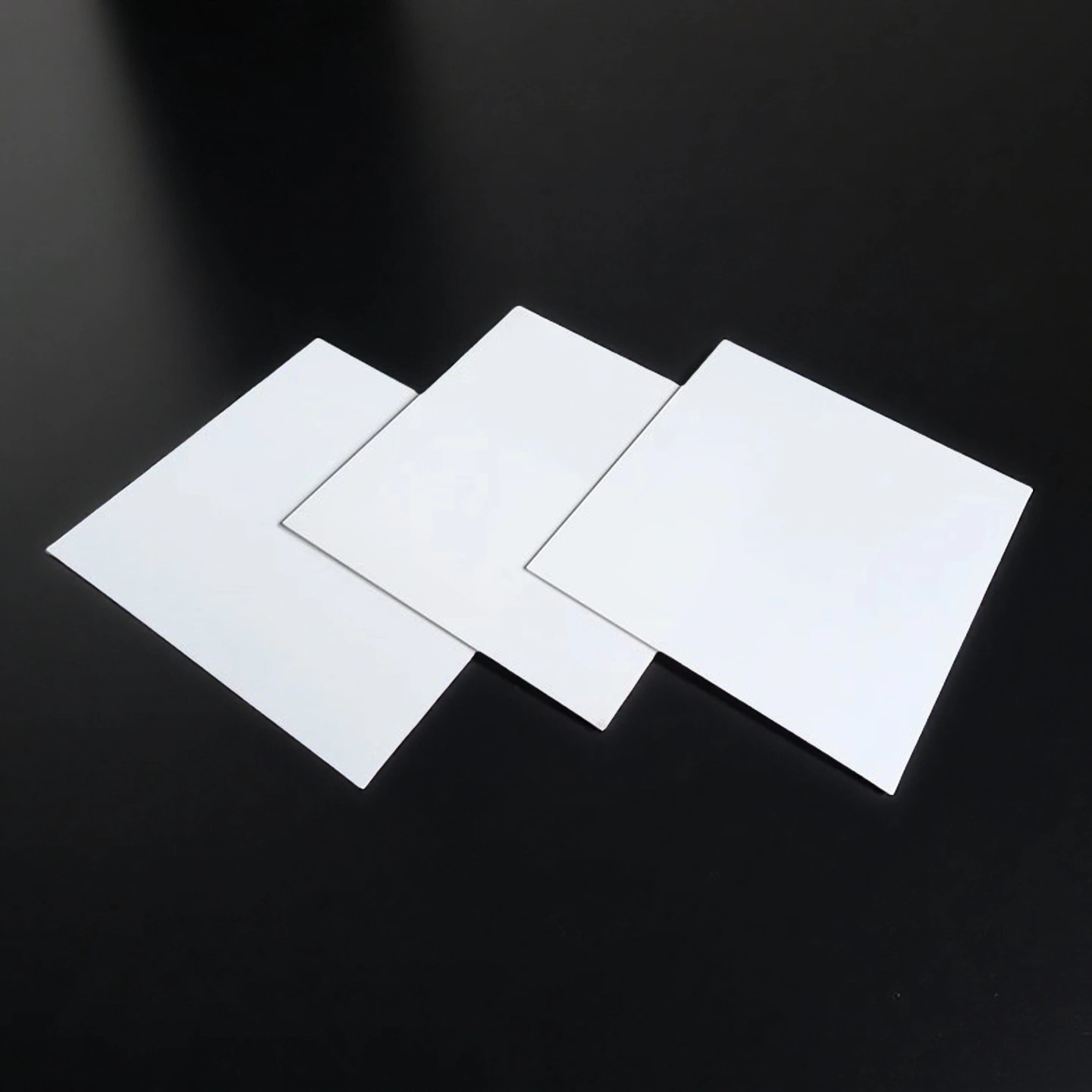
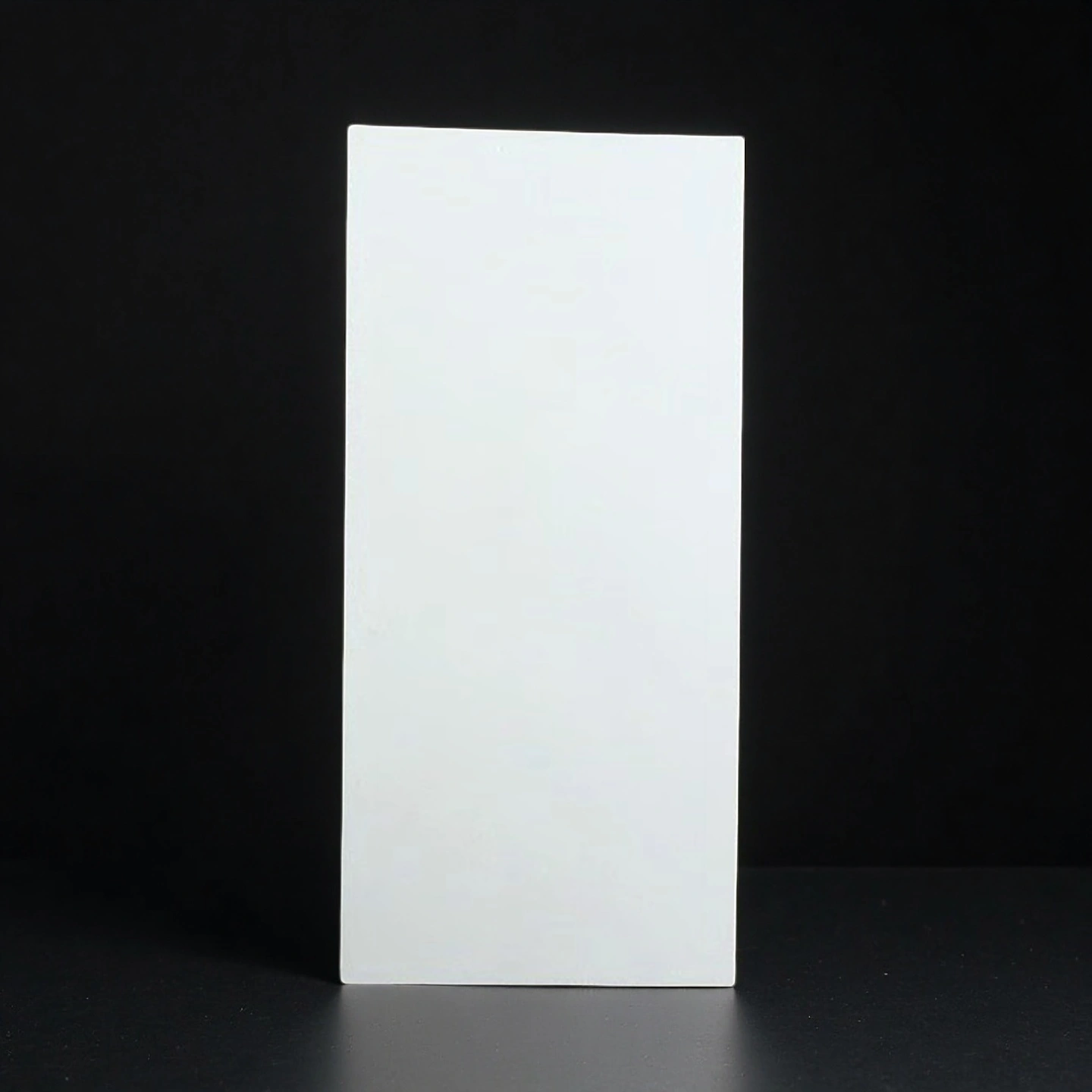
ZTA ceramic substrate is an insulating carrier with enhanced edge strength, supporting features such as micro-holes and slots, which facilitate thick-film printing, bonding, and assembly in heaters, sensors, LED/UV modules, and control boards. Standard blanks from 10×10 mm to 150×150 mm and 0.25–2.0 mm thickness; custom outlines, vias, slots, countersinks, and localized Ra per drawing. Laser scribing and serialization are available.

Catalogue No. AT-ZTA-CS001
Material ZrO₂+Al₂O₃
Thickness tolerance ±0.05–±0.10 mm (size-dependent)
Flatness ≤0.05–0.15 mm per 50 mm span
Dimensions/Sizes Download PDF
24H Standard Dispatch
Small Batch Support OEM
Factory Direct
Expert Engineering Support

Zirconia-toughened alumina (ZTA) substrates are ceramic insulating base plates made by dispersing fine zirconia (ZrO₂) particles into an alumina (Al₂O₃) matrix. The zirconia phase arrests crack growth and improves edge strength, while alumina provides electrical insulation, chemical stability, and dimensional control. This balance makes ZTA substrates well-suited for laser-drilled vias/slots, lapped surfaces, and repeatable screen printing in heaters, sensors, LED/UV modules, and control electronics.


ZTA Substrates Advantages

  • Edge integrity on micro-features — reduced chipping on laser-drilled vias/slots.
  • Print-ready surface — controlled Ra and flatness for screen printing and bonding.
  • Dimensional stability — consistent thickness and geometry across batches.
  • White/reflective option — uniform appearance for optical/LED modules.
  • Traceable cleanliness — cleaned, bagged, labeled for immediate line use.

ZTA Ceramic Substrate Properties

Property Unit Alumina (99%) ZTA (Zirconia Toughened Alumina) Y-TZP Zirconia
Fracture Toughness (KIC) MPa·m¹⁄² 5 7 – 9 6 – 10
Hardness (HV10) GPa 8.9 9 – 10 (≈ 90 HV) 12 – 14
Flexural Strength MPa 400 650 – 800 800 – 1200
Density g/cm³ 3.9 4.0 – 4.3 6.0
Relative Wear Rate 1.0 0.45 – 0.55 0.2
Thermal Expansion Coefficient (RT – 800 °C) ×10⁻⁶ /K 8.0 8.5 – 9.0 10 – 11
Thermal Conductivity (RT) W/m·K 25 22 – 24 2 – 3
Maximum Working Temperature °C 1600 1450 – 1500 1000 – 1200
Dielectric Strength kV/mm 12 11 – 13 9 – 11
Surface Roughness (Ground face) µm Ra 0.4 – 1.2 0.3 – 0.8 0.2 – 0.6
Flatness (after grinding) mm/300 mm ≤ 0.4 ≤ 0.3 ≤ 0.2


Specifications of Zirconia Toughened Alumina Substrates

Item Length(mm) Width(mm) Thickness(mm) Purity (Al₂O₃+ZrO₂)
AT-ZTA-CS001 10 10 0.5 74%+23.5%
AT-ZTA-CS002 10 10 1 74%+23.5%
AT-ZTA-CS003 15 11 1.5 74%+23.5%
AT-ZTA-CS004 18 13 1.5 74%+23.5%
AT-ZTA-CS005 20 20 2 74%+23.5%
AT-ZTA-CS006 20 20 2 74%+23.5%
AT-ZTA-CS007 25 25 1 74%+23.5%
AT-ZTA-CS008 30 30 0.5 74%+23.5%
AT-ZTA-CS009 30 30 1 74%+23.5%
AT-ZTA-CS010 30 30 2 74%+23.5%
AT-ZTA-CS011 35 35 1 74%+23.5%
AT-ZTA-CS012 40 40 1 74%+23.5%
AT-ZTA-CS013 40 40 3 74%+23.5%
AT-ZTA-CS014 50 30 0.5 74%+23.5%
AT-ZTA-CS015 50 50 0.5 74%+23.5%
AT-ZTA-CS016 50 50 1 74%+23.5%
AT-ZTA-CS017 50 50 1.5 74%+23.5%
AT-ZTA-CS018 50 50 2 74%+23.5%
AT-ZTA-CS019 60 60 1 74%+23.5%
AT-ZTA-CS020 65 35 0.5 74%+23.5%
AT-ZTA-CS021 65 48 1 74%+23.5%
AT-ZTA-CS022 70 70 1.2 74%+23.5%
AT-ZTA-CS023 70 70 3 74%+23.5%
AT-ZTA-CS024 76.2 76.2 1.5 74%+23.5%
AT-ZTA-CS025 80 80 3 74%+23.5%
AT-ZTA-CS026 80 80 2 74%+23.5%
AT-ZTA-CS027 80 70 1.5 74%+23.5%
AT-ZTA-CS028 84 84 0.8 74%+23.5%
AT-ZTA-CS029 100 100 0.5 74%+23.5%
AT-ZTA-CS030 100 100 1 74%+23.5%
AT-ZTA-CS031 100 100 1.2 74%+23.5%
AT-ZTA-CS032 100 100 1.5 74%+23.5%
AT-ZTA-CS033 100 100 2 74%+23.5%
AT-ZTA-CS034 100 90 1.5 74%+23.5%
AT-ZTA-CS035 100 80 1.8 74%+23.5%
AT-ZTA-CS036 100 75 2 74%+23.5%
AT-ZTA-CS037 10-400 10-400 0.5-2.5 74%+23.5%


ZTA Ceramic Substrate Packaging

  • All ceramic substrates are individually wrapped in anti-static, padded sheets, sealed, and placed in custom-cut foam-lined boxes to ensure maximum protection.
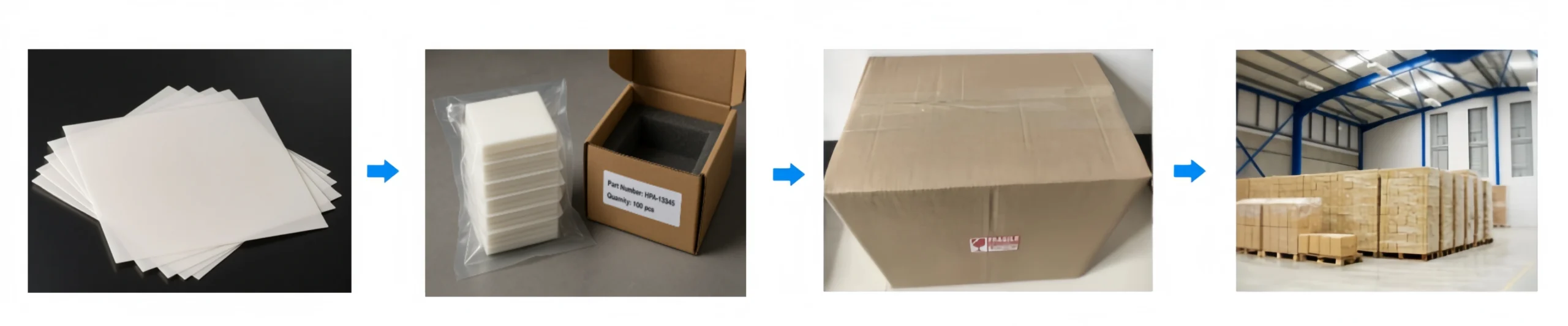

ZTA Ceramic Substrate Packaging


Applications of Zirconia Toughened Alumina Substrates

  • Power Electronics & Control (drivers, inverters, servo/PLC)

    ✅Key Advantages

    1. Edge-robust micro-features — supports vias/slots with lower chip risk in assembly.
    2. Stable print base — flatness/Ra window enhances thick-film pattern uniformity.
    3. Insulating carrier — maintains dielectric margin with mechanical strength balance.

    ✅ Problem Solved

    A control-board supplier shifted from standard alumina to ZTA for a slotted outline with multiple locator holes. After DFM and Ra/flatness alignment, rework related to edge chips and mis-prints dropped across pilot lots, and assembly takt normalized with consistent pick-and-place registration.

  • LED/UV Modules (COB, UV curing, disinfection)

    ✅Key Advantages

    1. Edge-robust micro-features — supports vias/slots with lower chip risk in assembly.
    2. Stable print base — flatness/Ra window enhances thick-film pattern uniformity.
    3. Insulating carrier — maintains dielectric margin with mechanical strength balance.

    ✅ Problem Solved

    A control-board supplier shifted from standard alumina to ZTA for a slotted outline with multiple locator holes. After DFM and Ra/flatness alignment, rework related to edge chips and mis-prints dropped across pilot lots, and assembly takt normalized with consistent pick-and-place registration.

  • Thick-Film Heaters & Sensors

    ✅Key Advantages

    1. Printability — Ra window compatible with thick-film pastes and resistor networks.
    2. Thermo-mechanical balance — toughness aids handling during post-fire steps.
    3. Laser versatility — micro-holes and scribe lines for assembly jigs and routing.

    ✅ Problem Solved

    A heater program needed fine resistor geometry and repeatable burn-in. ZTA substrates with lapped Ra and tight warp limits improved line yield during screen printing and reduced post-fire dimensional drift checks.


Usage Instructions of ZTA Substrates

  • Install

    1. Verify flatness/warp vs. fixture plan; shim only within specified range.
    2. Align fiducials before printing/placement; confirm vacuum chuck contact on lapped side.
    3. Use edge-safe grippers; avoid point loads at micro-holes or slot ends.

  • Use

    1. Match Ra and paste type; run a short DOE for print speed/snap-off and bake profile.
    2. For laser operations, validate pulse energy and pitch on sacrificial pieces first.
    3. If metallizing, control pre-clean, bake-out, and cure windows per paste and surface.

  • Store

    1. Keep in original clean bags; control humidity and dust.
    2. Stack with interleaves; avoid cantilevered storage that induces warp over time.

  • Clean

    1. Non-ionic detergent or solvent compatible with downstream paste/adhesive.
    2. DI water rinse and lint-free dry; avoid abrasive wipers on polished surfaces.

  • Cautions

    1. Do not exceed specified clamp force on thin sections.
    2. Avoid thermal shock beyond validated ramp/soak profiles.
    3. Re-inspect Ra/flatness if re-lapping or rework occurs.

  • Typical user pitfalls & fixes

    1. Issue: Print voids near slots → Fix: Reduce snap-off, adjust squeegee hardness, confirm local Ra.
    2. Issue: Lens misalignment on large panels → Fix: Tighten warp limit, use full-contact vacuum chuck.
    3. Issue: Edge chips at micro-holes → Fix: Add micro-chamfer, tune laser parameters, update handling jaws.

Zirconia Toughened Alumina Ceramic Substrate

  1. Q: How should I define the minimum hole diameter for a ZTA ceramic substrate?
    A: For stability, the minimum laser-drilled via is typically ≥0.2 mm; smaller holes require pre-test to evaluate edge chipping and shape tolerance.
  2. Q: Can ZTA ceramic substrates be used with both screen printing and DPC metallization?
    A: Yes, they are compatible with thick-film screen printing and can be post-processed for direct plated copper (DPC) after surface preparation.
  3. Q: What is the typical dielectric strength of zirconia toughened alumina ceramic substrate?
    A: Average dielectric breakdown voltage is around 12–15 kV/mm, suitable for high-voltage insulation and multi-layer heater structures.
  4. Q: Is there a color difference between standard alumina and ZTA substrates?
    A: ZTA has a slightly cream-white tone, while alumina is bright white; the difference does not affect reflectivity or optical uniformity in LED modules.
  5. Q: Can the zirconia toughened alumina substrate be brazed or soldered directly?
    A: It can be metalized and plated (Ni/Au) for brazing or soldering; direct metal contact on bare ceramic is not recommended.
  6. Q: What information should be included when requesting a quotation for ZTA substrates?
    A: Provide drawing with outline, thickness, tolerance, hole/slot data, Ra target, and quantity; note any metallization or inspection requirements for accurate cost evaluation.

What our Clients Say about Zirconia Toughened Alumina Ceramic Substrate

  • ⭐️⭐️⭐️⭐️⭐️
    We qualified zirconia toughened alumina ceramic substrate panels with controlled warp for COB. ADCERAX supported laser fiducials and lapped Ra, which kept lens alignment within our tolerance window.
    -- Maria Alvarez, Sourcing Manager, Lumena Optics
  • ⭐️⭐️⭐️⭐️⭐️
    Our heater build moved to a ZTA ceramic substrate to reduce edge chips at micro-holes. After DFM, screen printing stabilized and post-fire measurements stayed within plan.
    -- Daniel Chen, Process Engineer, Vector Motion Systems
  • ⭐️⭐️⭐️⭐️⭐️
    ADCERAX as a factory supplier provided clean packaged ZTA blanks and quick engineering feedback. Dimensional reports matched our sampling plan, so release to line was straightforward.
    -- Hannah Cole, Operations Director, Northline Controls
  • ⭐️⭐️⭐️⭐️⭐️
    For sensor carriers, the ZTA substrate with Ra control improved bonding repeats. The team handled serialization and small batches during pilot without disrupting our schedule.
    -- Takumi Sato, R&D Lead, Kairo Instruments
customize size

Customize Ceramic ZTA Substrates

Provide your drawing or target window and select from the options below; our engineers will review DFM, tolerance stack, and inspection plan. What you can specify:

1. Outline & Size
• Max outline: up to 200 × 200 mm
• Thickness range: 0.25 – 2.0 mm
• Custom shapes: rectangular, circular, or irregular per drawing

2. Tolerances
• Thickness / linear: ±0.05 – ±0.10 mm
• Edge chamfer: C- or R-type, adjustable width
• Hole/slot position: laser aligned, repeatability ±0.05 mm

3. Features
• Options: through-vias, blind holes, slots, countersinks
• Locator steps and fiducials for precision alignment
• Laser-engraved ID marks or QR codes for tracking

4. Surface Options
• Finishes: as-fired / ground / lapped/polished
• Roughness: target Ra ≤ 0.8 µm, single or both sides
• Optical use: controlled whiteness and gloss uniformity

5. Laser Processes
• Operations: scribing, micro-drilling, edge trimming
• Quality: burr-free control on slots and micro-holes
• Optional serialization or marking for batch traceability

6. Metallization Readiness
• Compatible with Ag/Pd, Pt, Au paste systems
• Optional Ni/Au plating after joint process approval
• Surface energy controlled for bonding and solder adhesion

Related Products

ADCERAX - Your Trusted Advanced Ceramics Manufacturing Partner

Direct factory manufacturing with comprehensive ceramic materials expertise and global supply capabilities

Direct Factory Manufacturing

China-based ceramic materials production facility with state-of-the-art equipment

Engineering Team

Experienced professionals in advanced ceramics applications and custom design

Quality Control

Strict quality control standards for technical ceramics manufacturing and quality management

Global Supply Chain

Serving customers worldwide with technical ceramics and rapid response

24/7 Technical Support

Round-the-clock support for ceramic components inquiries and technical assistance

500+ Satisfied Customers

Trusted by global customers for advanced ceramic materials and precision components

Get in touch with us

Our team will be happy to respond to you in less than 24 hours.

Adcerax's factory

Quick Quotation

*Our team will answer your inquiries within 24 hours.

*Your information will be kept strictly confidential.

Ready to Solve Your Engineering Challenge?

Partner with ADCERAX for reliable, high-performance advanced ceramic solutions. Our engineers are ready to discuss your project.

E-mail

info@adcerax.com

Phone

+(86) 0731-74427743 | WhatsApp: +(86) 19311583352

Response Time

Within 24 hours

Quick Quote

The more details you provide, the faster we can quote.

*We respond within 24 hours. All inquiries are confidential.

Download Catalog

Get Your Custom Sulution

The more details you provide, the faster we can respond.

customize size

*We respond within 24 hours. All inquiries are confidential.

Download Catalog