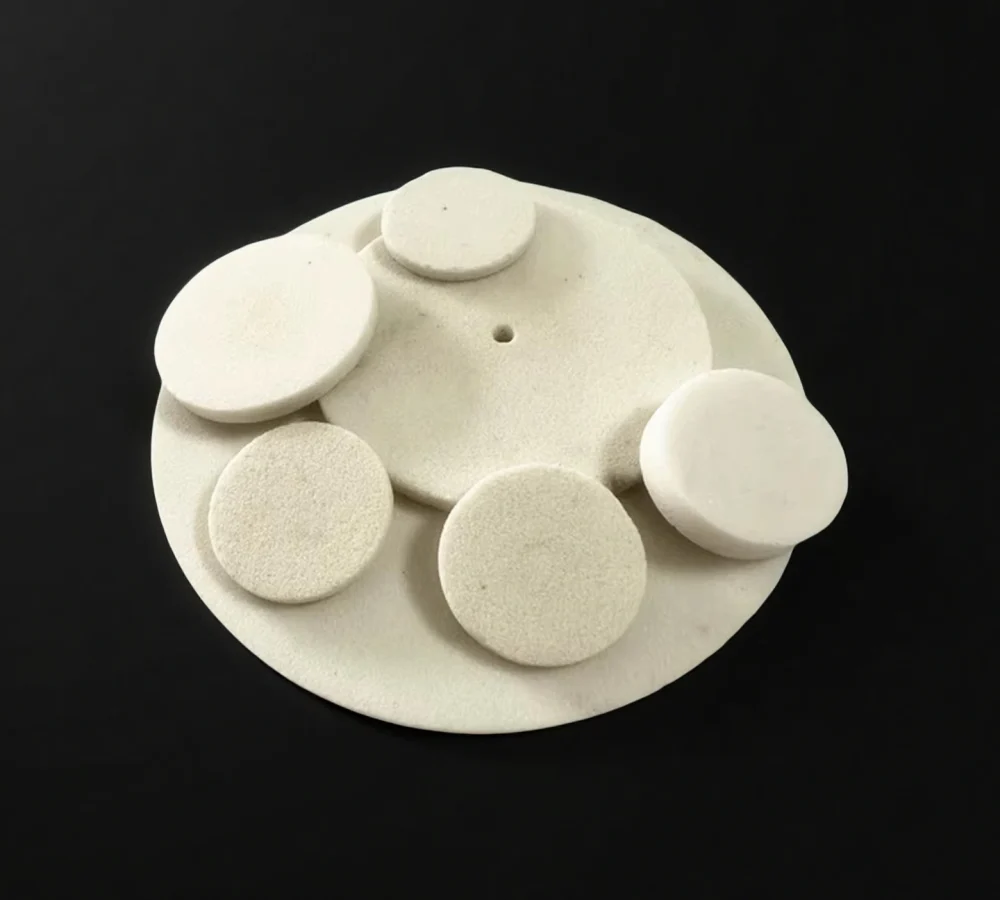
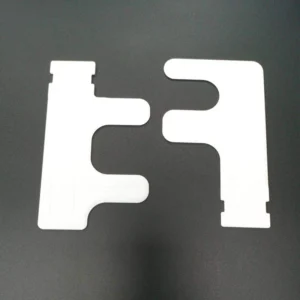
A microporous alumina plate is an alumina-based ceramic component with a pore network intended to allow gas or liquid to pass through a defined area. It may be described as a porous alumina plate, porous ceramic disc or porous alumina sheet, depending on its outline and intended function.
The pore structure and the complete construction determine how the part is evaluated. A vacuum-chuck face, a bonded filter plate and a flat-sheet membrane need different specifications. Their density, porosity and strength data are not interchangeable.
A dense alumina plate is selected for structural or insulating duties where through-flow is not required. See the high dense alumina plate.
Browse the listed specifications by item number, diameter, thickness and pore size. To request a quotation, send the item number, required quantity and intended application. For dimensions not shown below, share your drawing and requirements for review.
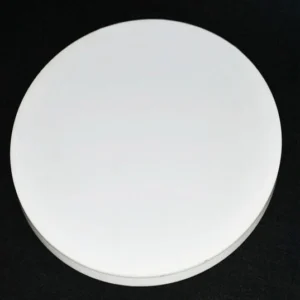
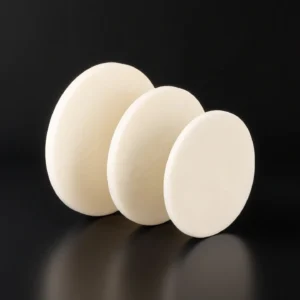
Type 1 – Porous Alumina Disc
| Porous Alumina Disc | ||||
| Item No. | Diameter(mm) | Thickness(mm) | Hole Diameter(μm) | Purity (%) |
| AT-FT-5001 | 5.5 | 3 | 0.1 | 96 |
| AT-FT-5002 | 15 | 3 | 25 | 96 |
| AT-FT-5003 | 15 | 3 | 0.2 | 96 |
| AT-FT-5004 | 20 | 2 | 2 | 96 |
| AT-FT-5005 | 20.5 | 4 | 0.8 | 96 |
| AT-FT-5006 | 21 | 1 | 0.2 | 96 |
| AT-FT-5007 | 21 | 1 | 0.1 | 96 |
| AT-FT-5008 | 21 | 1 | 1 | 96 |
| AT-FT-5009 | 22 | 2 | 2 | 96 |
| AT-FT-5010 | 22 | 2 | 0.1 | 96 |
| AT-FT-5011 | 22 | 2 | 0.05 | 96 |
| AT-FT-5012 | 26.2 | 3 | 1 | 96 |
| AT-FT-5013 | 28 | 3 | 10 | 96 |
| AT-FT-5014 | 28 | 4 | 1 | 96 |
| AT-FT-5015 | 28.5 | 3 | 0.8 | 96 |
| AT-FT-5016 | 28.5 | 3 | 1 | 96 |
| AT-FT-5017 | 28.5 | 5 | 1 | 96 |
| AT-FT-5018 | 29 | 2 | 0.8 | 96 |
| AT-FT-5019 | 29 | 3 | 0.5 | 96 |
| AT-FT-5020 | 29 | 6 | 0.2 | 96 |
| AT-FT-5021 | 31.5 | 3.5 | 0.2 | 96 |
| AT-FT-5022 | 31.5 | 4.5 | 1 | 96 |
| AT-FT-5023 | 38 | 2 | 2 | 96 |
| AT-FT-5024 | 38 | 2 | 0.1 | 96 |
| AT-FT-5025 | 38 | 2 | 0.05 | 96 |
| AT-FT-5026 | 38.5 | 3 | 1 | 96 |
| AT-FT-5027 | 47 | 5 | 30 | 96 |
| AT-FT-5028 | 47.5 | 3 | 0.2 | 96 |
| AT-FT-5029 | 47.5 | 4 | 30 | 96 |
| AT-FT-5030 | 47.7 | 2.5 | 0.2 | 96 |
| AT-FT-5031 | 47.7 | 3.5 | 0.2 | 96 |
| AT-FT-5032 | 47.7 | 4.5 | 50 | 96 |
| AT-FT-5033 | 48.5 | 3 | 0.2 | 96 |
| AT-FT-5034 | 48.5 | 5 | 0.2 | 96 |
| AT-FT-5035 | 49.5 | 4.5 | 30 | 96 |
| AT-FT-5036 | 49.5 | 4.5 | 50 | 96 |
| AT-FT-5037 | 50 | 2 | 0.2 | 96 |
| AT-FT-5038 | 52 | 3 | 2 | 96 |
| AT-FT-5039 | 52 | 3 | 0.1 | 96 |
| AT-FT-5040 | 52 | 3 | 0.05 | 96 |
| AT-FT-5041 | 66 | 3 | 2 | 96 |
| AT-FT-5042 | 66 | 3 | 0.1 | 96 |
| AT-FT-5043 | 66 | 3 | 0.05 | 96 |
| AT-FT-5044 | 88 | 3 | 2 | 96 |
| AT-FT-5045 | 88 | 3 | 0.1 | 96 |
| AT-FT-5046 | 88 | 3 | 0.05 | 96 |
| AT-FT-5047 | 108 | 3.5 | 2 | 96 |
| AT-FT-5048 | 108 | 3.5 | 0.1 | 96 |
| AT-FT-5049 | 108 | 3.5 | 0.05 | 96 |
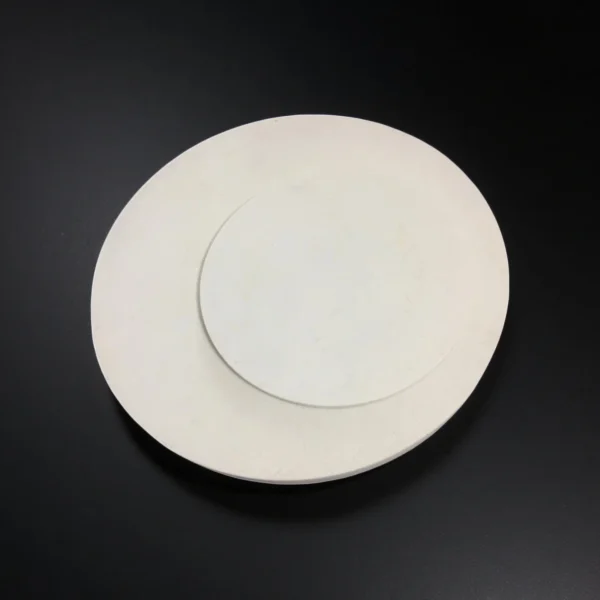
Type2 – Porous Alumina Ceramic Sheet
| Porous Alumina Ceramic Sheet | |||||
| Item No. | Length(mm) | Width(mm) | Thickness(mm) | Hole Diameter (μm) | Purity (%) |
| AT-FT-6001 | 10 | 10 | 1 | 0.05 | 96-98 |
| AT-FT-6002 | 20 | 20 | 1 | 25 | 96-98 |
| AT-FT-6003 | 25 | 25 | 3 | 0.2 | 96-98 |
| AT-FT-6004 | 30 | 30 | 1 | 2 | 96-98 |
| AT-FT-6005 | 30 | 30 | 2 | 0.8 | 96-98 |
| AT-FT-6006 | 35 | 35 | 1 | 0.2 | 96-98 |
| AT-FT-6007 | 40 | 40 | 1 | 0.1 | 96-98 |
| AT-FT-6008 | 40 | 40 | 5 | 1 | 96-98 |
| AT-FT-6009 | 50 | 50 | 1.5 | 2 | 96-98 |
| AT-FT-6010 | 50 | 50 | 5 | 0.1 | 96-98 |
| AT-FT-6011 | 60 | 60 | 1 | 0.05 | 96-98 |
| AT-FT-6012 | 70 | 70 | 2 | 1 | 96-98 |
| AT-FT-6012 | 70 | 70 | 3 | 10 | 96-98 |
| AT-FT-6013 | 80 | 80 | 3 | 1 | 96-98 |
| AT-FT-6014 | 80 | 80 | 5 | 0.8 | 96-98 |
| AT-FT-6015 | 80 | 110 | 5 | 1 | 96-98 |
| AT-FT-6016 | 100 | 70 | 1.2 | 1 | 96-98 |
| AT-FT-6017 | 100 | 84 | 1.5 | 0.8 | 96-98 |
| AT-FT-6018 | 100 | 90 | 2.2 | 0.5 | 96-98 |
| AT-FT-6019 | 100 | 100 | 2.5 | 0.2 | 96-98 |
| AT-FT-6020 | 100 | 100 | 3.5 | 0.2 | 96-98 |
| AT-FT-6021 | 108 | 100 | 1.5 | 1 | 96-98 |
| AT-FT-6022 | 100 | 100 | 2.5 | 2 | 96-98 |
| AT-FT-6023 | 100 | 100 | 3.2 | 0.1 | 96-98 |
| AT-FT-6024 | 100 | 100 | 3.5 | 0.05 | 96-98 |
| AT-FT-6025 | 100 | 100 | 4 | 1 | 96-98 |
| AT-FT-6026 | 100 | 100 | 5 | 30 | 96-98 |
| AT-FT-6027 | 109 | 109 | 1 | 0.2 | 96-98 |
| AT-FT-6028 | 110 | 80 | 4 | 1 | 98 |
| AT-FT-6029 | 110 | 110 | 5 | 0.2 | 96-98 |
| AT-FT-6030 | 114 | 114 | 1 | 0.2 | 96-98 |
| AT-FT-6031 | 120 | 120 | 1 | 0.5 | 96-98 |
| AT-FT-6032 | 120 | 120 | 3 | 0.2 | 96-98 |
| AT-FT-6033 | 125 | 125 | 2 | 0.2 | 96-98 |
| AT-FT-6034 | 127 | 127 | 1 | 0.8 | 96-98 |
| AT-FT-6035 | 127 | 127 | 1.5 | 0.8 | 96-98 |
| AT-FT-6036 | 138 | 190 | 1 | 0.2 | 96-98 |
| AT-FT-6037 | 138 | 190 | 1 | 2 | 96-98 |
| AT-FT-6038 | 150 | 150 | 1.8 | 0.1 | 96-98 |
| AT-FT-6039 | 150 | 150 | 1 | 0.05 | 96-98 |
| AT-FT-6040 | 150 | 150 | 1.5 | 2 | 96-98 |
| AT-FT-6014 | 150 | 150 | 2 | 0.1 | 96-98 |
| AT-FT-6042 | 150 | 150 | 3 | 0.5 | 96-98 |
| AT-FT-6042 | 150 | 150 | 5 | 2 | 96-98 |
| AT-FT-6043 | 160 | 170 | 2.5 | 0.1 | 96-98 |
| AT-FT-6044 | 180 | 180 | 2 | 0.8 | 96-98 |
| AT-FT-6045 | 180 | 180 | 3 | 2 | 96-98 |
| AT-FT-6046 | 180 | 180 | 5 | 0.1 | 96-98 |
| AT-FT-6047 | 200 | 140 | 2 | 0.5 | 96-98 |
| AT-FT-6048 | 200 | 165 | 3 | 30 | 96-98 |
| AT-FT-6049 | 200 | 200 | 5 | 50 | 96-98 |
| AT-FT-6050 | 220 | 220 | 2 | 1 | 96-98 |
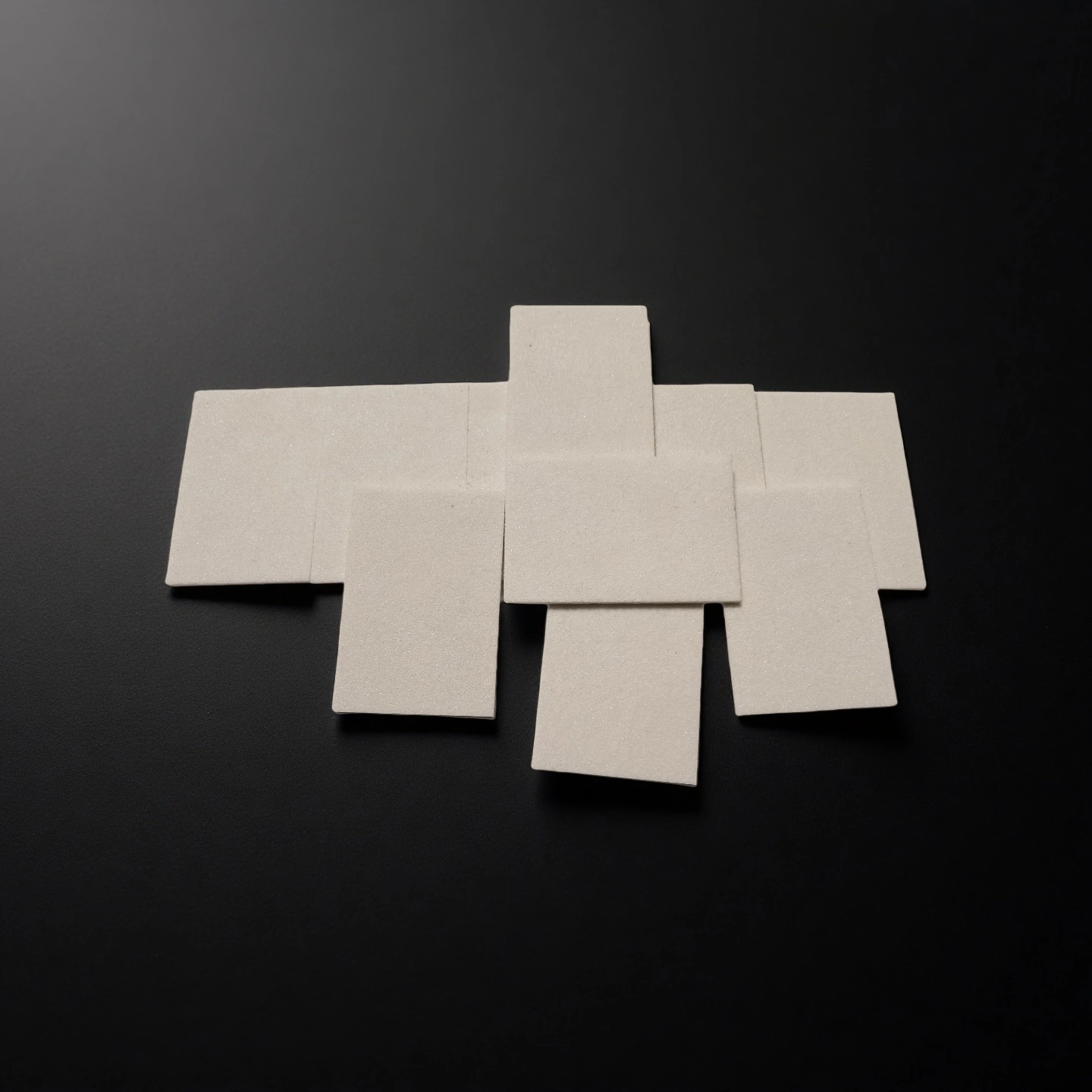
Type3-Black porous alumina sheet
| Black Microporous Alumina Plate | |||
| Item No. | size(inches) | Hole Diameter | Porosity |
| AT-AO-WK001 | 2、3、4、5、6、8、12 | 1-100um | 30-50% |
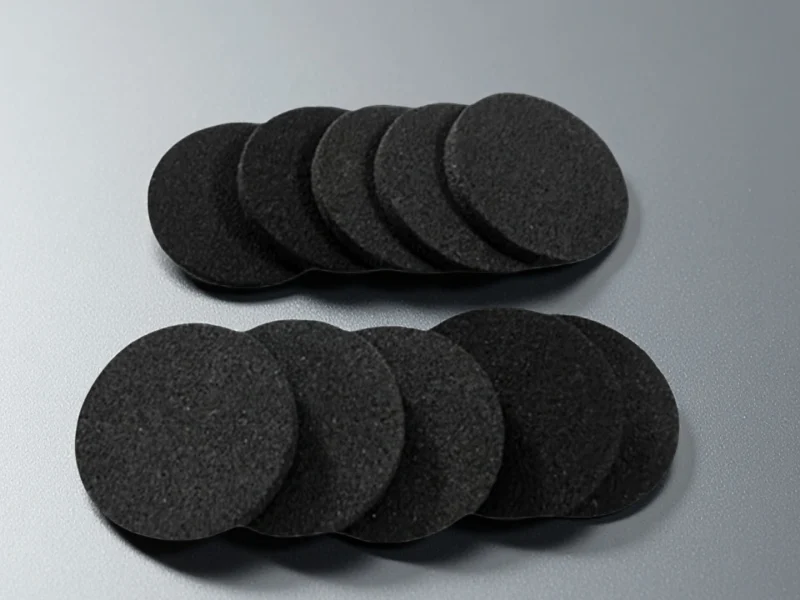
Note: We offer custom dimensions, shapes, and specifications to meet your specific requirements. Contact our engineering team for consultation.
Pore size, open porosity and permeability answer different questions. Compare values only when the product architecture, test method and operating conditions are stated.
| Selection item | What it tells you | What to pair it with |
|---|---|---|
| Pore metric | How the pore structure is described by the stated measurement or designation. A nominal pore size is not automatically an absolute filtration rating. | The measurement method and the functional result needed: holding, gas distribution or separation. |
| Open porosity | Open pore volume expressed as a fraction of the component’s bulk volume, using the stated test method. It does not, by itself, state the installed flow or pressure drop. | Product architecture, pore structure, thickness and the flow test. |
| Flow / pressure drop | The passage of a specified fluid through the tested component under a defined pressure difference. | Fluid, temperature, flow direction, exposed area, thickness, pressure conditions and sealing. |
| Flatness / parallelism | The working face and the relationship between relevant faces. These are different from a surface-roughness value. | Drawing datum, measurement area, inspection condition and installed support. |
| Strength / support | The load assessment for the selected porous architecture and geometry. | Unsupported span, pressure difference, contact or clamping load and the applicable acceptance method. |
For vacuum workholding, the exposed porous area, workpiece coverage and seal are part of the flow path. For gas distribution, the plate and inlet arrangement must be evaluated together. For filtration, specify whether the acceptance requirement concerns pore structure, particle retention or a membrane layer.
Material composition, pore size, porosity and mechanical strength guide the selection of microporous alumina plates. These properties should be evaluated alongside the flow requirements and operating conditions of your application.
| Property | Unit | Typical Value |
|---|---|---|
| Bulk Density | g/cm³ | 1.4–1.6 |
| Nominal Pore Size | µm | 10–500 |
| Compressive Strength | MPa | 12–16 |
| Flexural Strength | MPa | ≥5.3 |
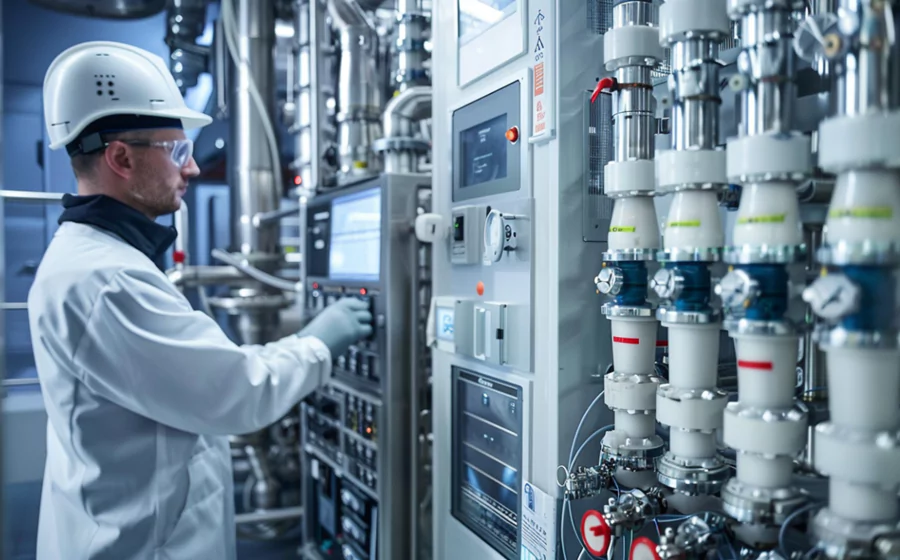
Microporous alumina plates are used in vacuum workholding, gas distribution and liquid filtration, where controlled flow through a defined working area is required. Selecting the appropriate specification involves matching pore structure, flow resistance, plate geometry and installation conditions to the intended application.
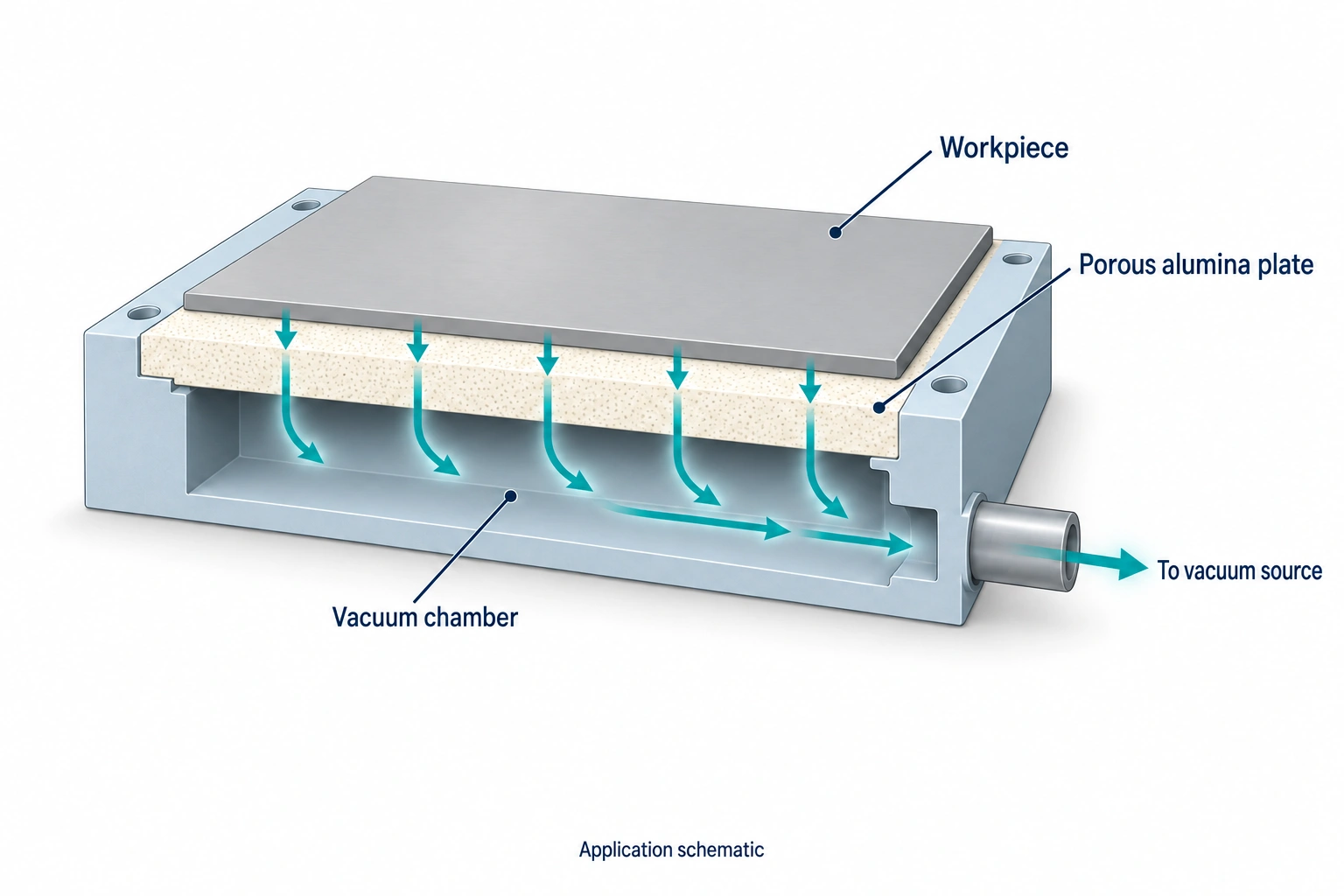
A porous face forms part of the vacuum path for holding thin sheets, films or other workpieces.
Selection inputs
Workpiece footprint and coverage, vacuum source, exposed area, support, seal and working-face requirements.
Sample check
Evaluate holding and release, leakage, surface effects and deformation in the intended fixture, including changes in coverage.
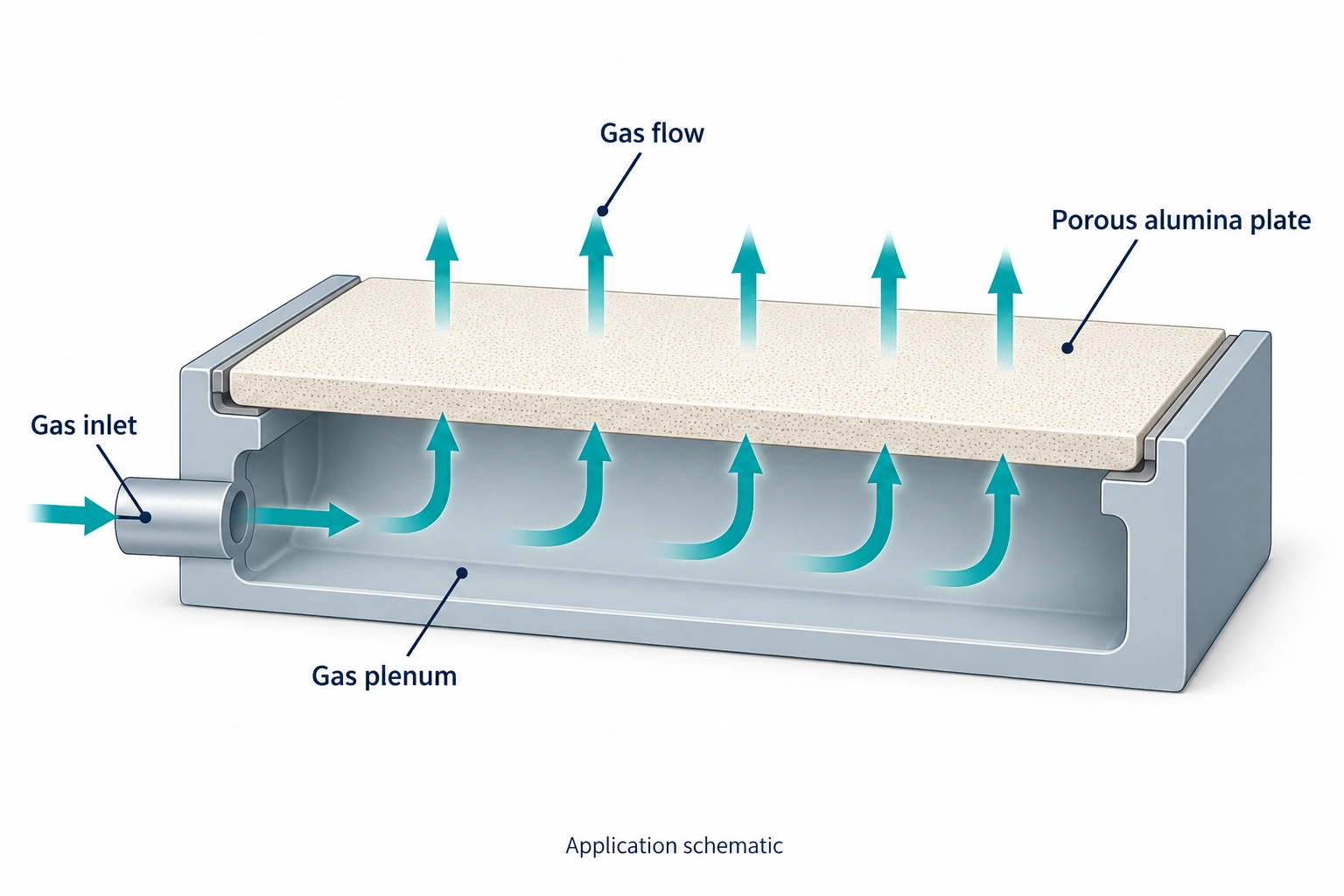
A porous plate can distribute gas across an area defined by the plate, plenum and surrounding seals.
Selection inputs
Gas, temperature, supply conditions, area and flow target. For powder duties, add powder properties and bed depth.
Sample Check
Compare flow and pressure drop, then evaluate face distribution in the assembly and with the intended powder bed where applicable.
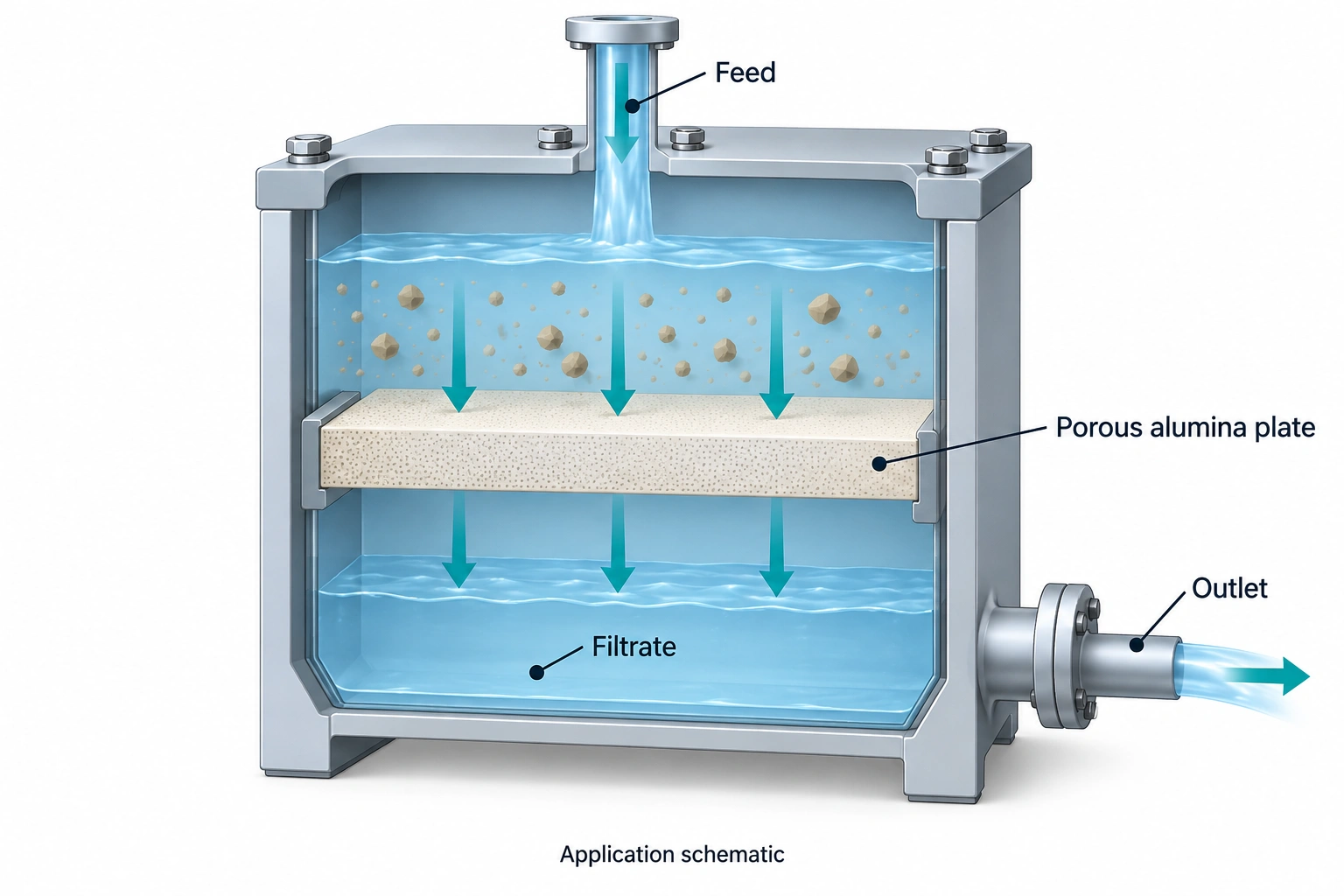
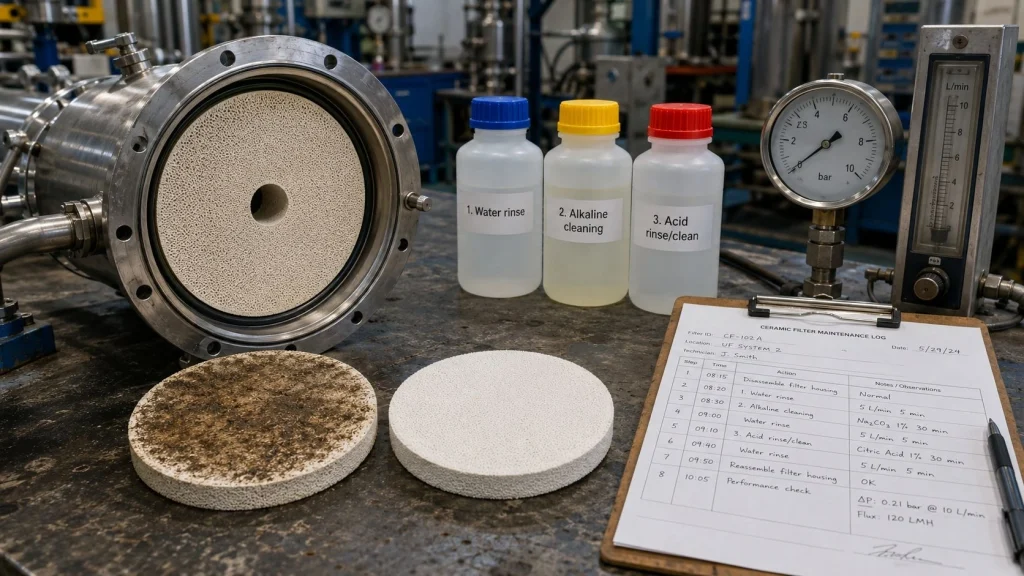
The separation duty determines whether the requirement concerns a porous filter body or a membrane with a selective layer.
Selection inputs
Liquid and solids, retention target, flow direction, active area, pressure difference, sealing and proposed cleaning.
Sample Check
Use representative feed to assess retention, stable flux, bypass leakage and integrity before and after the agreed cleaning cycle.
Specify the shape, dimensions, pore requirements and working surface for your application. Custom specifications are confirmed through drawing and application review.
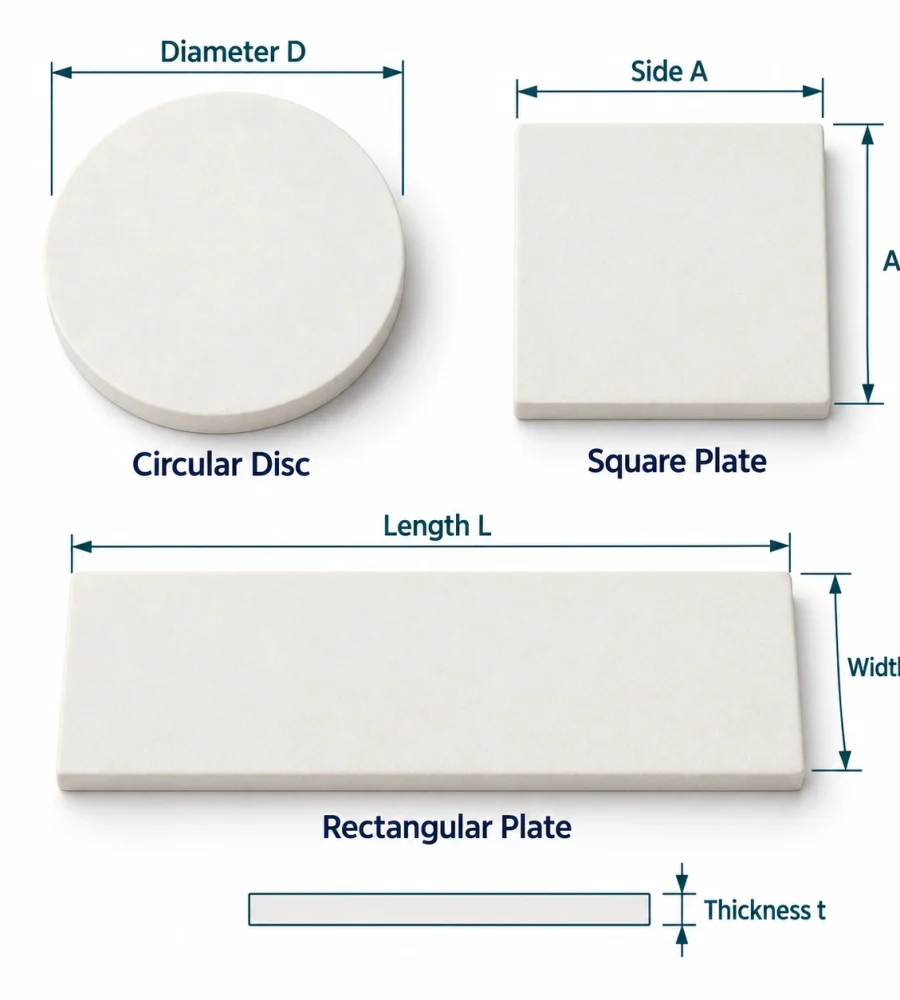
Send your drawing, application details and required quantity. A sketch with key dimensions can support an initial review.
Specify diameter or length × width, thickness and dimensional tolerances. Identify the dimensions that control fit and alignment.
Define the target pore size and the required vacuum holding, gas distribution or filtration performance. Pore selection is reviewed alongside plate thickness and operating conditions.
Specify flatness, parallelism and surface-finish requirements where needed. Mark the active working area, sealing boundary and support positions on your drawing.
Agree the geometry and acceptance criteria before evaluating a sample. Use the intended sealing and support arrangement.
Record the part form, product construction, drawing revision, working area and sealing/support arrangement.
State the geometry and face requirements, then the fluid, pressure, temperature and functional target used for evaluation. Match each result to its test conditions.
Keep the accepted drawing revision, selected configuration and agreed inspection criteria with the order. Identify any change in medium, cleaning process or mounting arrangement.
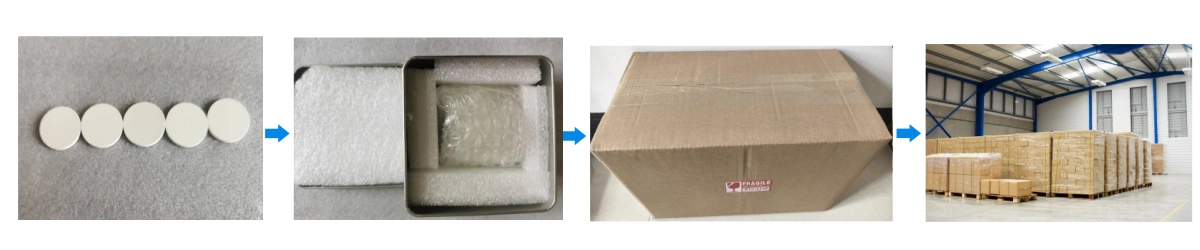
Confirm sample quantity, inspection records, supply scope and timing for the specific requirement. State any cleanliness, handling or packing requirements with your enquiry.
Before installation
Before cleaning or reuse
Avoid positive-pressure blowback on an assembled vacuum chuck unless it is designed for it. Do not heat-clean a chuck while it is mounted on an aluminium base.
Answers to common questions about pore size, product selection, customization and use.
No. Porous plates are evaluated for a defined flow path and working task. Dense alumina plates do not have the same intended through-flow function. Compare the selected porous construction using its own geometry, pore and test data.
Start with the task. Vacuum workholding depends on coverage, vacuum flow and the contact face. Gas distribution depends on the flow–pressure-drop relationship. Filtration requires a defined separation target. State the pore metric and test method alongside the functional requirement.
No. A nominal pore designation alone does not establish particle-removal efficiency. Define the challenge particles, concentration, fluid, flow, pressure and required retention result. An integrity or bubble-point test answers a different question from a retention test.
Partial coverage changes the exposed flow path and leakage demand. Assess the actual porous construction, vacuum source, seal and workpiece coverage together. Use a sample test in the intended fixture to establish holding and release behaviour.
Mark the working area, datums and seal boundary on the drawing. Give flatness and any parallelism requirement with the measurement area and free or mounted condition. Specify surface roughness separately.
A membrane element may use an active layer supported by a porous body. Define layer material, layer pore metric, effective membrane area and module connection separately. A bare porous plate does not automatically provide the same separation function.
Reuse depends on the contaminant, ceramic construction, seals, mounting base and cleaning method. Agree the cleaning process for that configuration and check integrity and functional recovery afterwards. There is no single cleaning temperature, duration or frequency for every assembly.
Send the application, shape or drawing, known dimensions, quantity and intended result. Add pore, flow, pressure, face requirements and inspection needs when available. Price, sample scope and delivery timing can then be discussed for the specific requirement.
We believe that Adcerax will become your best partner!
Please fill in your contact information in the form or call us.
*Our team will answer your inquiries within 24 hours.
*Your information will be kept strictly confidential.
info@adcerax.com
Tel:+86-0731-84428843
WhatsApp:+86 19311583352
Within 24 hours
Send RFQ on WhatsApp
The more details you provide, the faster we can quote.
*All inquiries are confidential.
The more details you provide, the faster we can respond.

*We respond within 24 hours. All inquiries are confidential.