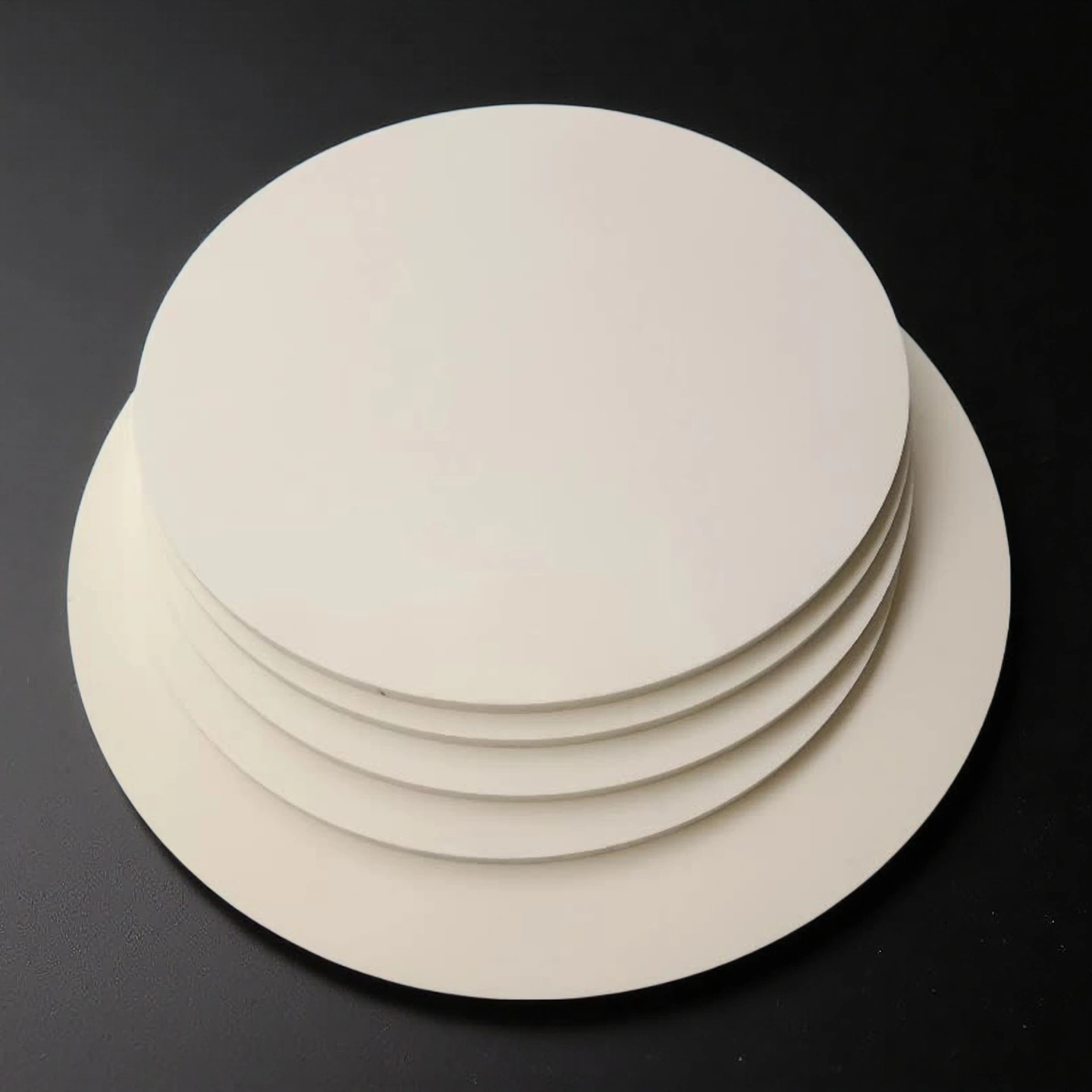
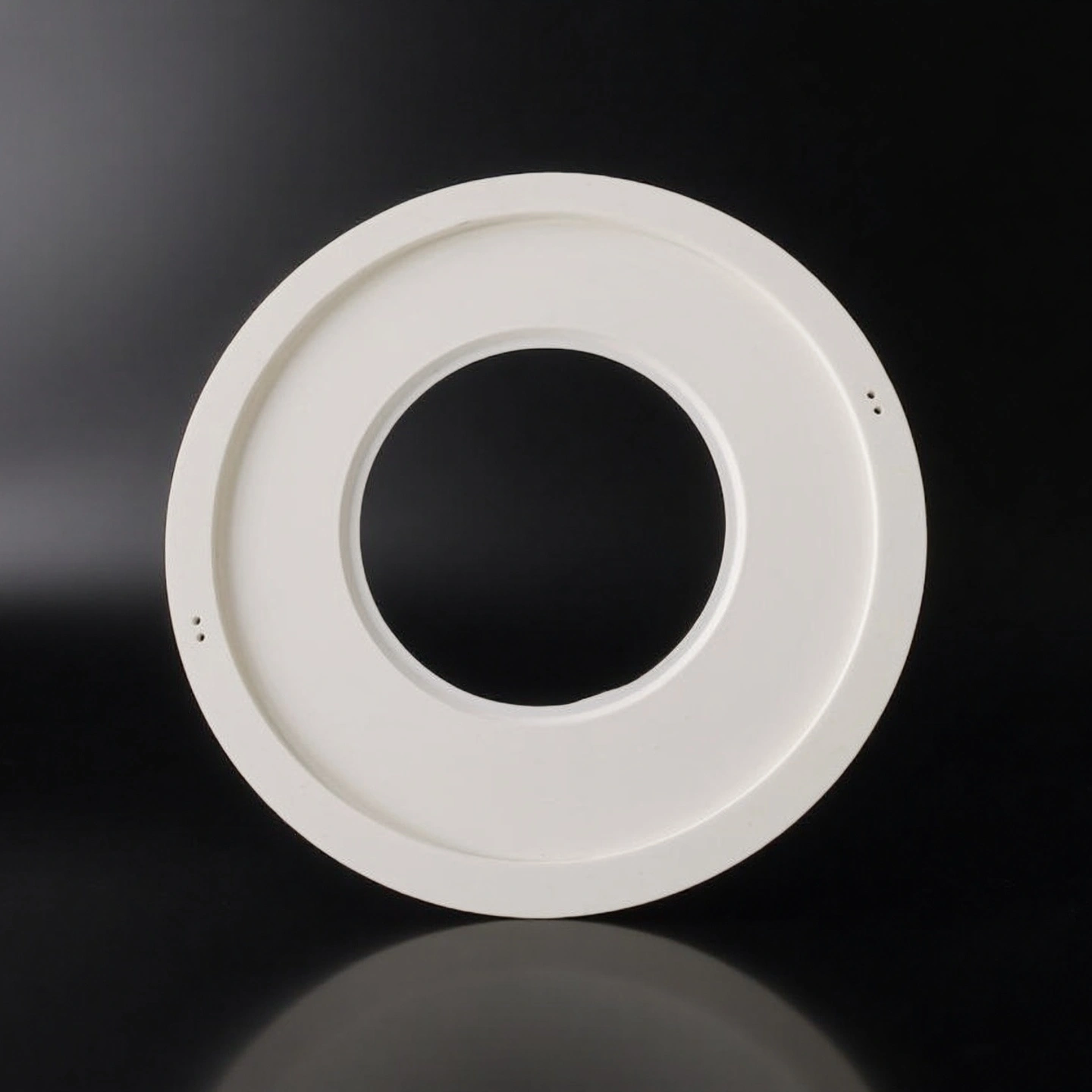
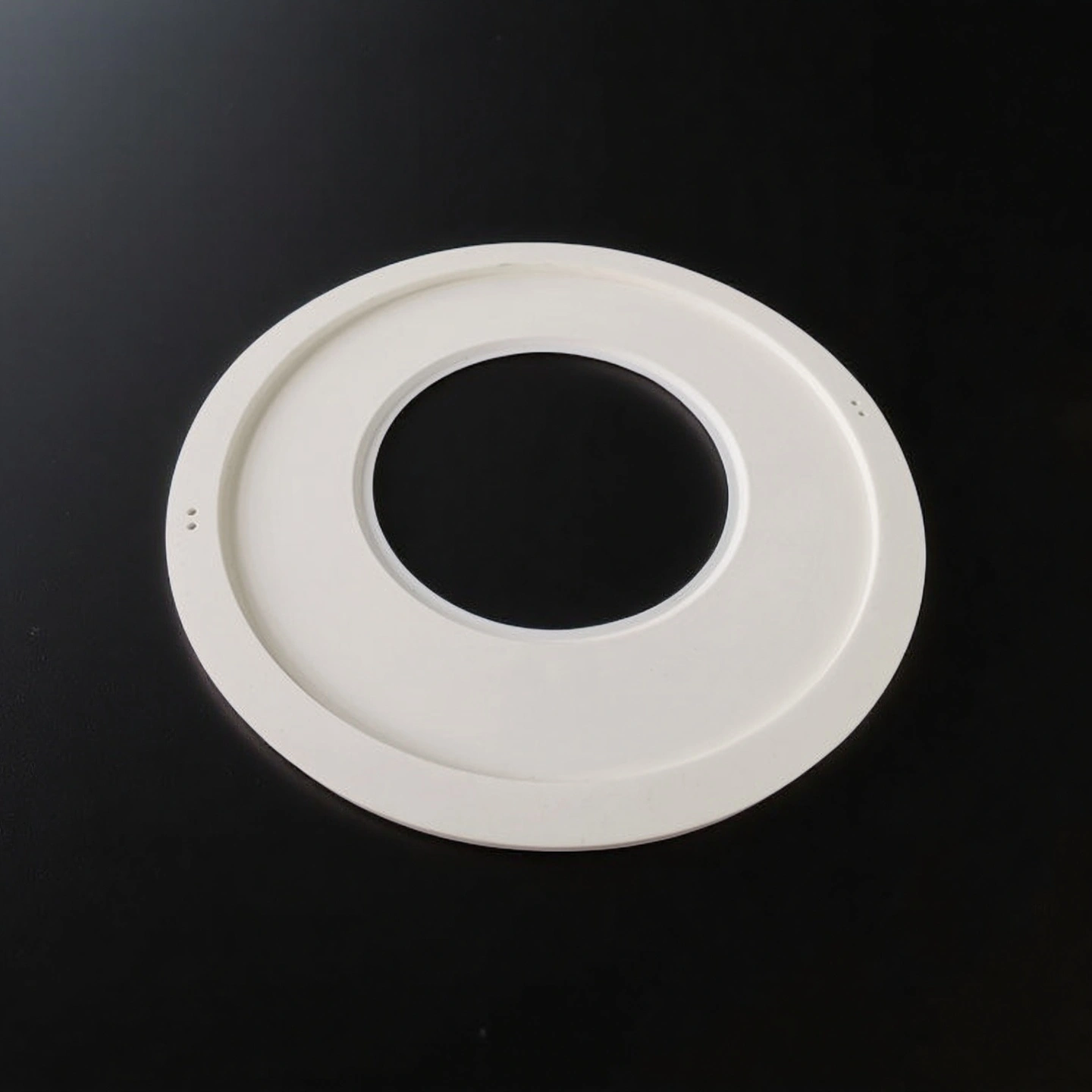
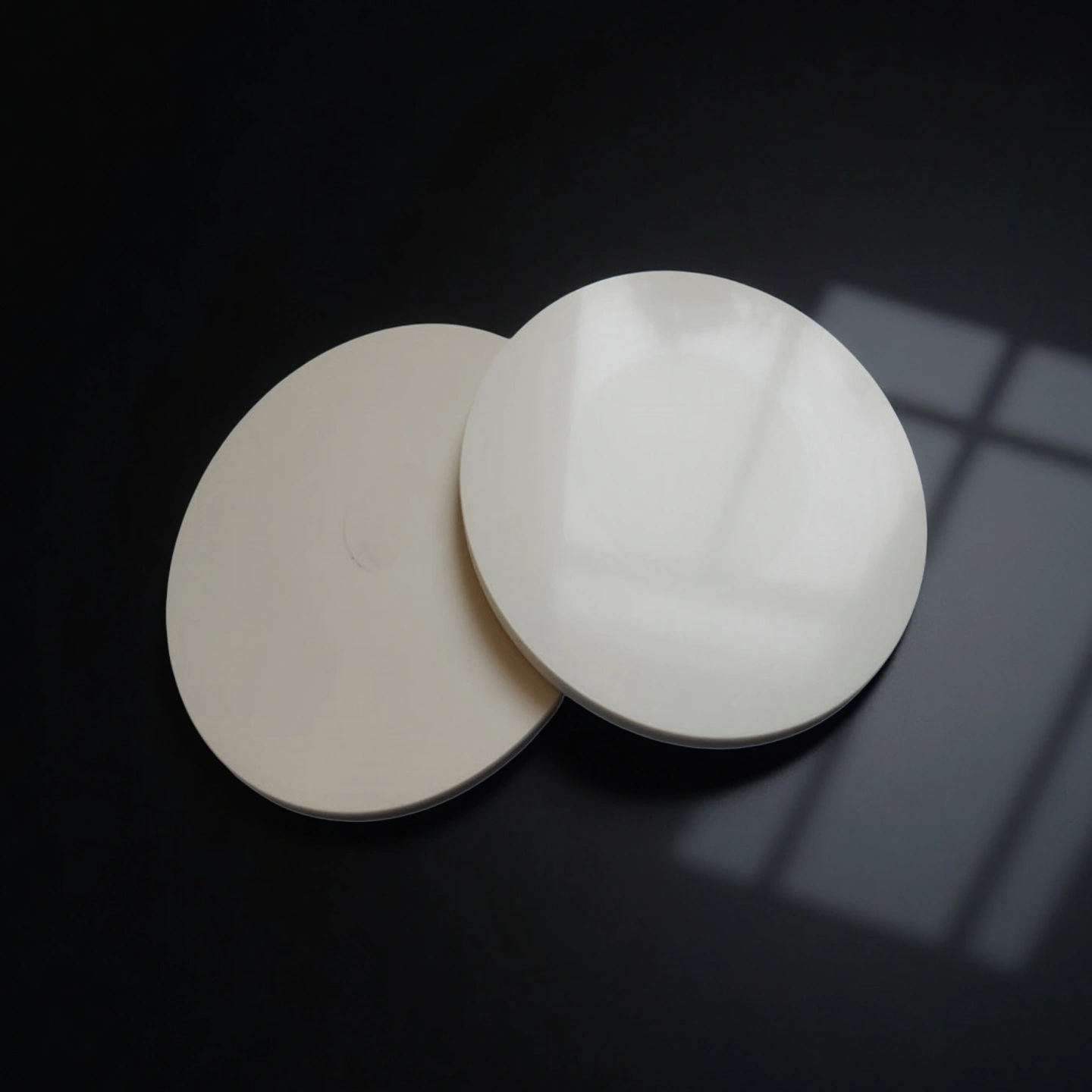
High Precision Alumina Polishing Pad for Optical, Metallographic and Ceramic Finishing

The alumina polishing pad series combines uniform Al₂O₃ abrasives with tailored backings to balance flatness, cut rate, and surface integrity. Standard sizes cover common platens and hand-sheets, while custom hole patterns, edge chamfers, and backing hardness support special jigs and fixtures.

Catalog No. AT-YHL-YMP001
Material ≥ 96% Al2O3
Abrasive Particle Size (μm) 9 / 5 / 3 / 1 / 0.5 / 0.3 (tight grading for stepwise finishing)
Pad Backing & Bond PET / PU / non-woven; PSA-backed or plain (affects flatness, compliance, and changeover speed)
Dimensions/Sizes Download PDF
24H Standard Dispatch
Small Batch Support OEM
Factory Direct
Expert Engineering Support

An alumina polishing pad is a finishing medium that uses aluminum oxide (Al₂O₃) particles uniformly distributed on a flexible backing to achieve controlled surface preparation. Unlike general abrasive papers, these pads are designed with graded grit sizes (from coarse 9 μm to ultra-fine 0.3 μm) to deliver stepwise material removal and consistent surface roughness.

Alumina Polishing Pad Benefits

  • Predictable scratch pattern: Tight AO grading reduces outlier scratches and supports consistent surface metrology.
  • Process window control: Multiple fine grades (down to 0.3 μm) enable step-down finishing without over-polishing.
  • Substrate compatibility: Performs well on oxide ceramics, glass-ceramics, optical glass, and hard coatings at moderate loads.
  • Clean edges: Optimized pad compliance helps mitigate micro-chips on brittle parts.
  • Stable adhesion: PSA option improves fixture repeatability and swap efficiency.


Alumina Polishing Pad Properties

Property Unit 99.5% Al₂O₃ 99.6% Al₂O₃ 99.7% Al₂O₃ 99.8% Al₂O₃ 99.9% Al₂O₃ 99.99% Al₂O₃
Alumina content % 99.5 99.6 99.7 99.8 99.9 99.99
Density g/cm³ 3.89 3.91 3.92 3.93 3.94 3.98
Open porosity % 0
Color Ivory Ivory Ivory Ivory Ivory Ivory
Water absorption % 0 0 0 0 0
Young’s modulus (Elastic modulus) GPa 375 356 357 358 359 362
Shear modulus GPa 152
Bulk modulus GPa 228
Poisson’s ratio 0.22
Compressive strength MPa 2600 2552 2554 2556 2558 2570
Flexural strength MPa 379 312 313 314 315 320
Fracture toughness MPa·m¹ᐟ² 4
Hardness GPa 14.1 (≈1440 kg/mm²) 23 24 25 26 30
Thermal conductivity W/m·K 35 32–37 33–38 34–39 35–40 36–42
Thermal shock resistance ΔT °C 222 223 224 225 228
Maximum use temperature (no load) °C ≤1750 1755 1760 1765 1770 1800
Coefficient of thermal expansion 10⁻⁶/°C 8.4
Specific heat J/kg·K 880
Volume resistivity Ω·cm >1×10¹⁴ >1×10¹⁴ >1×10¹⁴ >1×10¹⁴ >1×10¹⁴ >1×10¹⁴
Dielectric constant (relative permittivity) 9.8 9.83 9.84 9.85 9.86 9.92
Dielectric strength kV/mm 16.9 23.2 23.4 23.6 23.8 24
Dissipation factor (loss factor @ 1 kHz) 0.0002


Alumina Polishing Pad Specifications

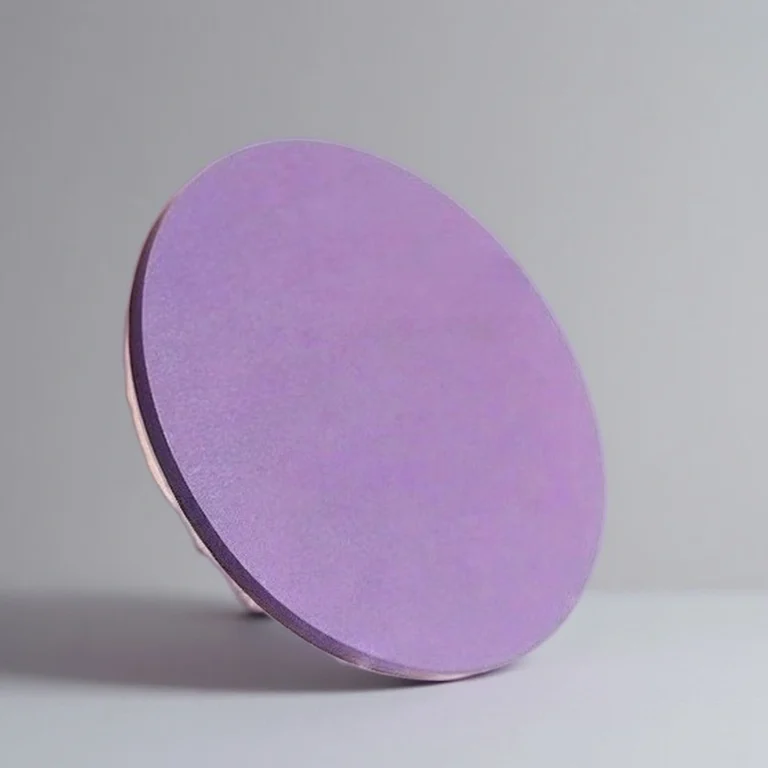
Alumina Polishing Pad
Item No. Diameter(mm) Thickness (mm)
AT-YHL-YMP001 100 15
AT-YHL-YMP002 120 15
AT-YHL-YMP003 130 20
AT-YHL-YMP004 150 15
AT-YHL-YMP005 150 20
AT-YHL-YMP006 160 15
AT-YHL-YMP007 160 20
AT-YHL-YMP008 180 15
AT-YHL-YMP009 190 20
AT-YHL-YMP010 200 15
AT-YHL-YMP011 200 20
AT-YHL-YMP012 240 15
AT-YHL-YMP013 280 15
AT-YHL-YMP014 300 15
AT-YHL-YMP015 350 15
AT-YHL-YMP016 360 16
AT-YHL-YMP017 400 15
AT-YHL-YMP018 450 20
AT-YHL-YMP019 480 30
AT-YHL-YMP020 500 30
AT-YHL-YMP021 550 30
AT-YHL-YMP022 600 35
AT-YHL-YMP023 650 35
AT-YHL-YMP024 700 40
AT-YHL-YMP025 750 45
AT-YHL-YMP026 850 45


Alumina Polishing Pad Packaging

Packed in shockproof foam layers and placed in reinforced cartons
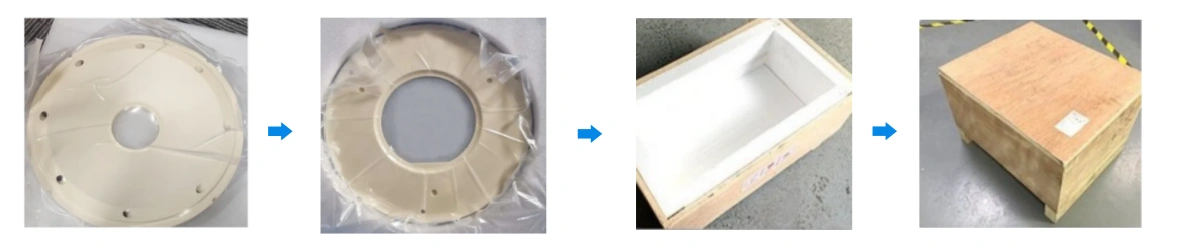
Alumina Polishing Pad Packaging

Alumina Polishing Pad Applications

Alumina polishing pads are applied across telecommunications, research laboratories, and advanced ceramics manufacturing, where controlled finishing is critical.The following are the specific advantages and application cases:

  • Optical Connector End-Face Finishing (Photonics Industry)

    ✅ Key Advantages

    1. Multi-step AO grades (5→3→1→0.3 μm) support stable geometry and low residual scratches.
    2. PSA discs keep end-face alignment consistent across fixtures, reducing rework loops.
    3. Fine grade 0.3 μm enables glossy finish while protecting against over-polish.

    ✅ Problem Solved

    For a data-communication connector line, switching to a four-step AO pad stack reduced rework by ~18% over two months. End-face variability narrowed, and daily pad changeovers dropped from 6 to 4, helping technicians maintain consistent return loss targets under normal shift pressure.

  • Metallographic Specimen Preparation (Materials Science & Research Laboratories)

    ✅ Key Advantages

    1. Defined grit ladder enables repeatable transitions from pre-polish to final inspection.
    2. Backing compliance balances flatness and edge retention on multi-phase materials.
    3. Low-shed formulation keeps the microscope field cleaner between steps.

    ✅ Problem Solved

    In routine lab work, adopting AO pads with 9/3/1 μm steps cut average sample prep time by ~12% while keeping Ra within the lab’s acceptance window. Fewer wipe-downs between steps improved throughput during semester peaks.

  • Technical Ceramic Edge Finishing (Advanced Ceramics & Electronics Manufacturing)

    ✅ Key Advantages

    1. Consistent cut rate on alumina/zirconia edges with reduced micro-chip risk.
    2. Custom hole/slot patterns align with fixtures, improving operator repeatability.
    3. Durable backing extends pad life on hard substrates under moderate pressure.

    ✅ Problem Solved

    On a ceramic parts cell, custom-slotted AO pads stabilized edge finishing. Scrap from edge micro-chips fell from ~4.2% to ~2.9% over one quarter, and operators reported more stable handling on complex carriers.

Alumina Polishing Pad Usage Instructions

  • Use

    1. Select the grit sequence: Plan a 3–4 step ladder (e.g., 5→3→1→0.3 μm) aligned with your Ra/Rz requirements. For optical connectors, ensure each step matches the inspection standard.
    2. Mount the pad correctly: Place PSA or plain alumina pad on a clean, flat platen. For hole or slot designs, verify alignment with carrier pins to prevent uneven wear.
    3. Control process parameters: Apply moderate downforce and fixed dwell time. Avoid excessive load, which may shorten pad life or cause random scratches. Record cut times by material type to standardize your workflow.
    4. Step progression: Move to finer grit only after scratches from the previous step are fully removed. Inconsistent step transitions often cause inspection failures.
    5. Surface wipe-downs: Clean the work surface between each step to prevent contamination from larger grit residues.

  • Storage

    1. Keep pads sealed, flat, and away from dust, moisture, and direct sunlight.
    2. Avoid high heat or UV exposure that may warp the backing or weaken adhesives.
    3. Store in original packaging with lot labels visible, enabling traceability across production batches.

  • Cleaning

    1. Use compressed air to blow off loose debris after each use.
    2. Wipe platens and fixtures with lint-free cloths to avoid particle carryover.
    3. Regularly inspect pad surfaces for embedded contaminants; replace immediately if contamination is found.
    4. For magnetic base setups, check for metallic dust accumulation around edges and remove before reuse.

  • Cautions & Troubleshooting

    1. Issue: Random deep scratches
    Action: Replace contaminated pad; verify part and platen pre-clean before next run.

    2. Issue: Uneven finish near edges
    Action: Confirm platen flatness and check backing hardness; reduce pressure or select a thicker backing pad.

    3. Issue: Pad life too short
    Action: Lower pressure, ensure correct dwell times, or adjust step sequence. Review whether abrasive grade matches the substrate hardness.

    4. Issue: Adhesive not holding securely
    Action: Ensure platen is dry and clean before applying PSA pad; store pads at stable room temperature to preserve adhesive strength.

    5. Issue: Finish not reaching Ra/Rz target
    Action: Verify grit sequence, extend dwell time on finer grades, and check operator consistency in step transitions.


Alumina Polishing Pads FAQ

  1. Q: What grit sequence works for optical connectors?
    A: For optical connectors, a four-step alumina polishing pad sequence (5→3→1→0.3 μm) is widely used to maintain low insertion loss and stable return loss.
  2. Q: PSA or non-adhesive—how to choose?
    A: PSA-backed alumina polishing pads provide quick swaps and repeatability for production; non-adhesive discs are flexible for labs, trials, or magnetic carriers.
  3. Q: PSA or non-adhesive—how to choose?
    A: PSA-backed alumina polishing pads provide quick swaps and repeatability for production; non-adhesive discs are flexible for labs, trials, or magnetic carriers.
  4. Q: How do alumina polishing pad compare with diamond film?
    A: Compared with diamond films, an alumina polishing pad cuts more gently, avoids over-polish on fragile edges, and offers a cost-effective solution for bulk production.
  5. Q: Do you supply mixed-grit kits for method setup?
    A: Yes. Mixed-grit kits of alumina polishing pads (9/5/3/1/0.3 μm) are available to help labs finalize polishing methods before bulk orders.
  6. Q: Typical Ra/Rz outcomes?
    A: Using a three- or four-step alumina polishing pad process, Ra values often reach 0.05–0.2 μm, depending on fixture stability and inspection method.

Customer Reviews about Alumina Polishing Pad

  • ⭐️⭐️⭐️⭐️⭐️
    “Stable scratch pattern across 5→3→1→0.3 μm steps; our alumina polishing pads kept end-face metrics within target and reduced repeat work.”
    — E. Martin, Process Engineer, UK
  • ⭐️⭐️⭐️⭐️⭐️
    “The PSA-backed alumina polishing pad aligned perfectly with our fixtures, making operator changeovers faster and consistency much higher.”
    — K. Tanaka, Production Supervisor, Japan
  • ⭐️⭐️⭐️⭐️⭐️
    “On alumina ceramic edges, the alumina polishing pads delivered cleaner finishes, and we observed fewer micro-chips during inspection.”
    — S. Becker, QA Manager, Germany
  • ⭐️⭐️⭐️⭐️⭐️
    “The mixed-grit kit of alumina polishing pads helped our lab lock polishing parameters before bulk orders; the supplied documentation matched our records.”
    A. Nguyen, Lab Technician, Canada
customize size

Customize Alumina Polishing Pad

Our alumina polishing pads can be tailored to your exact process requirements, from disc size and grit sequence to backing type and finish targets, ensuring a precise fit and reliable results. What You Can Specify:

  • Dimensions: Disc diameter (3–12″), sheet 9×11″ or custom shape; edge chamfer or radius.
  • Grits: 9 / 5 / 3 / 1 / 0.5 / 0.3 μm step plan; mixed-grit kits for method setup.
  • Backing: PET / PU / non-woven; thickness tiers to tune compliance and pad life.
  • Bonding: PSA-backed or non-adhesive; magnetic carrier compatibility on request.
  • Patterns: Centre-hole / slots for alignment, serial ID printing for traceability.
  • Finish Goal: Target Ra / Rz ranges so we can suggest step counts and pressures.

Related Products

ADCERAX - Your Trusted Advanced Ceramics Manufacturing Partner

Direct factory manufacturing with comprehensive ceramic materials expertise and global supply capabilities

Direct Factory Manufacturing

China-based ceramic materials production facility with state-of-the-art equipment

Engineering Team

Experienced professionals in advanced ceramics applications and custom design

Quality Control

Strict quality control standards for technical ceramics manufacturing and quality management

Global Supply Chain

Serving customers worldwide with technical ceramics and rapid response

24/7 Technical Support

Round-the-clock support for ceramic components inquiries and technical assistance

500+ Satisfied Customers

Trusted by global customers for advanced ceramic materials and precision components

Get in touch with us

Our team will be happy to respond to you in less than 24 hours.

Adcerax's factory

Quick Quotation

*Our team will answer your inquiries within 24 hours.

*Your information will be kept strictly confidential.

Ready to Solve Your Engineering Challenge?

Partner with ADCERAX for reliable, high-performance advanced ceramic solutions. Our engineers are ready to discuss your project.

E-mail

info@adcerax.com

Phone

+(86) 0731-74427743 | WhatsApp: +(86) 19311583352

Response Time

Within 24 hours

Quick Quote

The more details you provide, the faster we can quote.

*We respond within 24 hours. All inquiries are confidential.

Download Catalog

Get Your Custom Sulution

The more details you provide, the faster we can respond.

customize size

*We respond within 24 hours. All inquiries are confidential.

Download Catalog