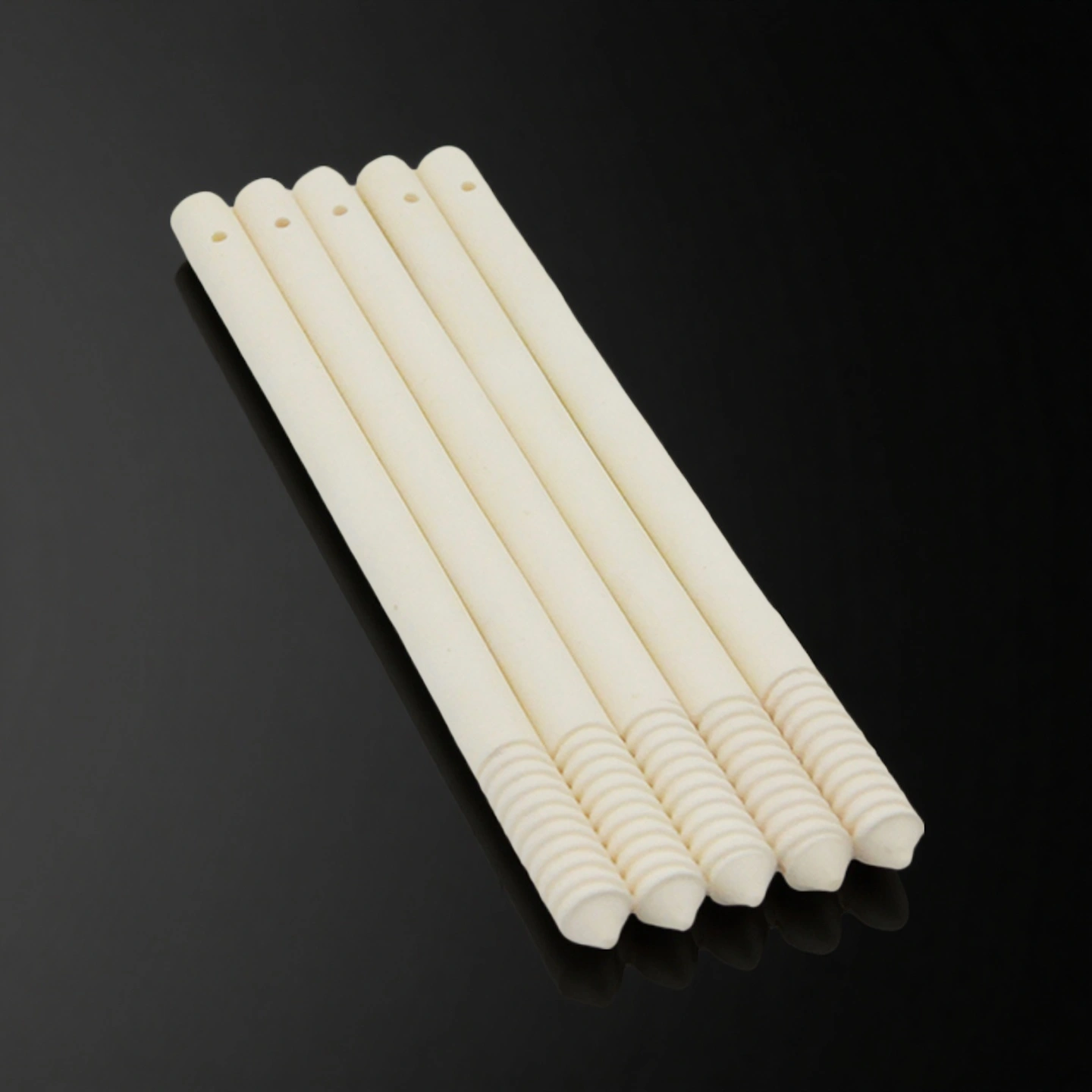
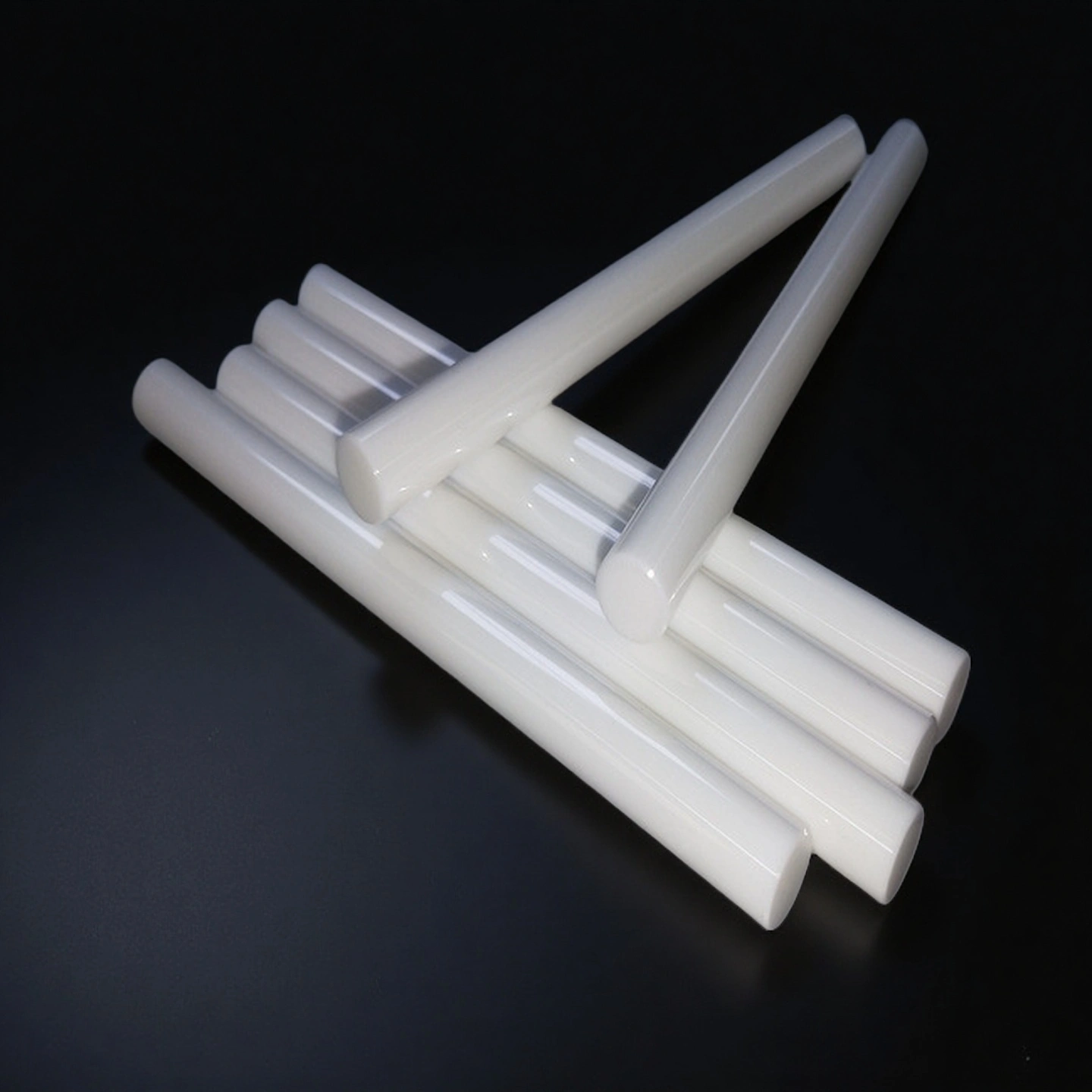
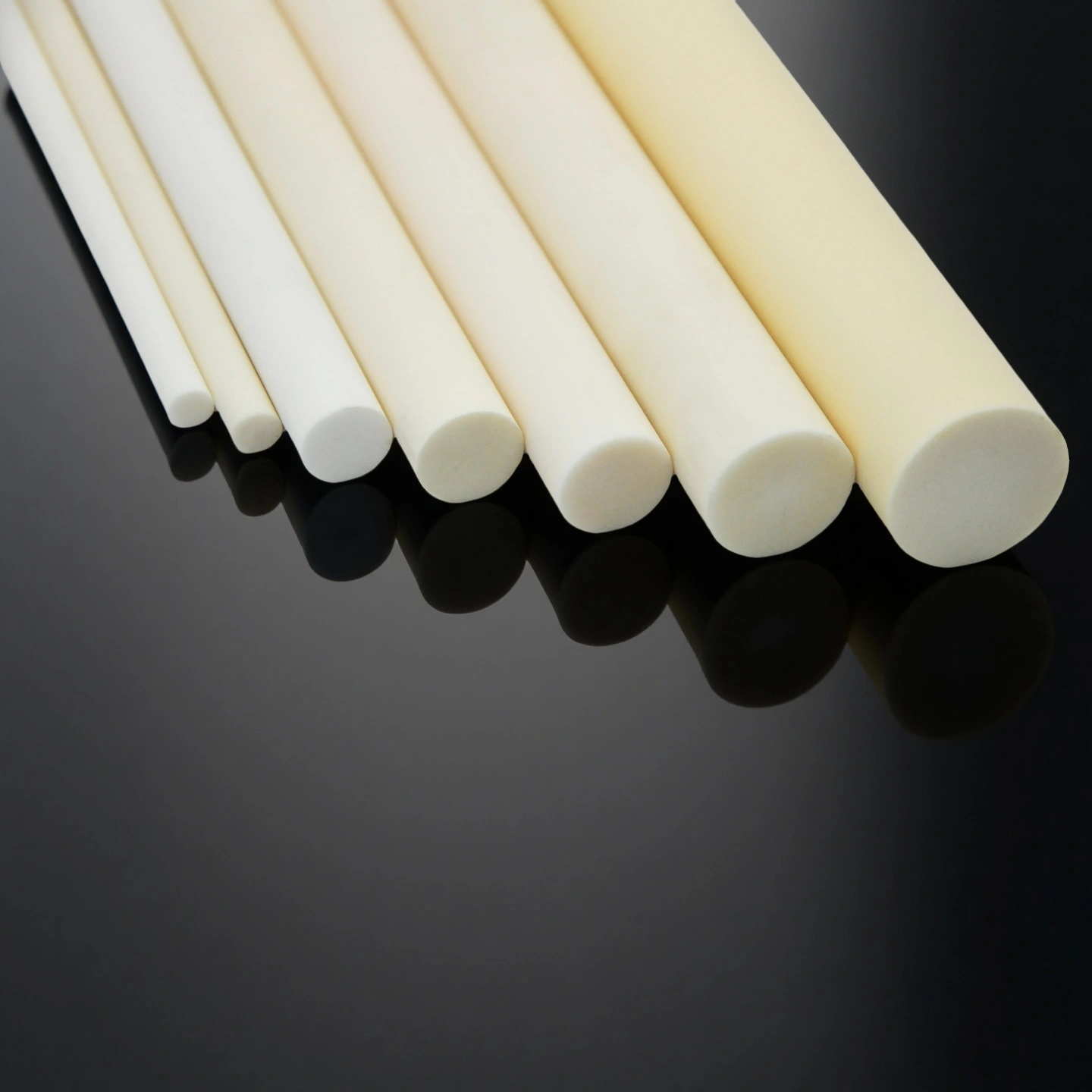
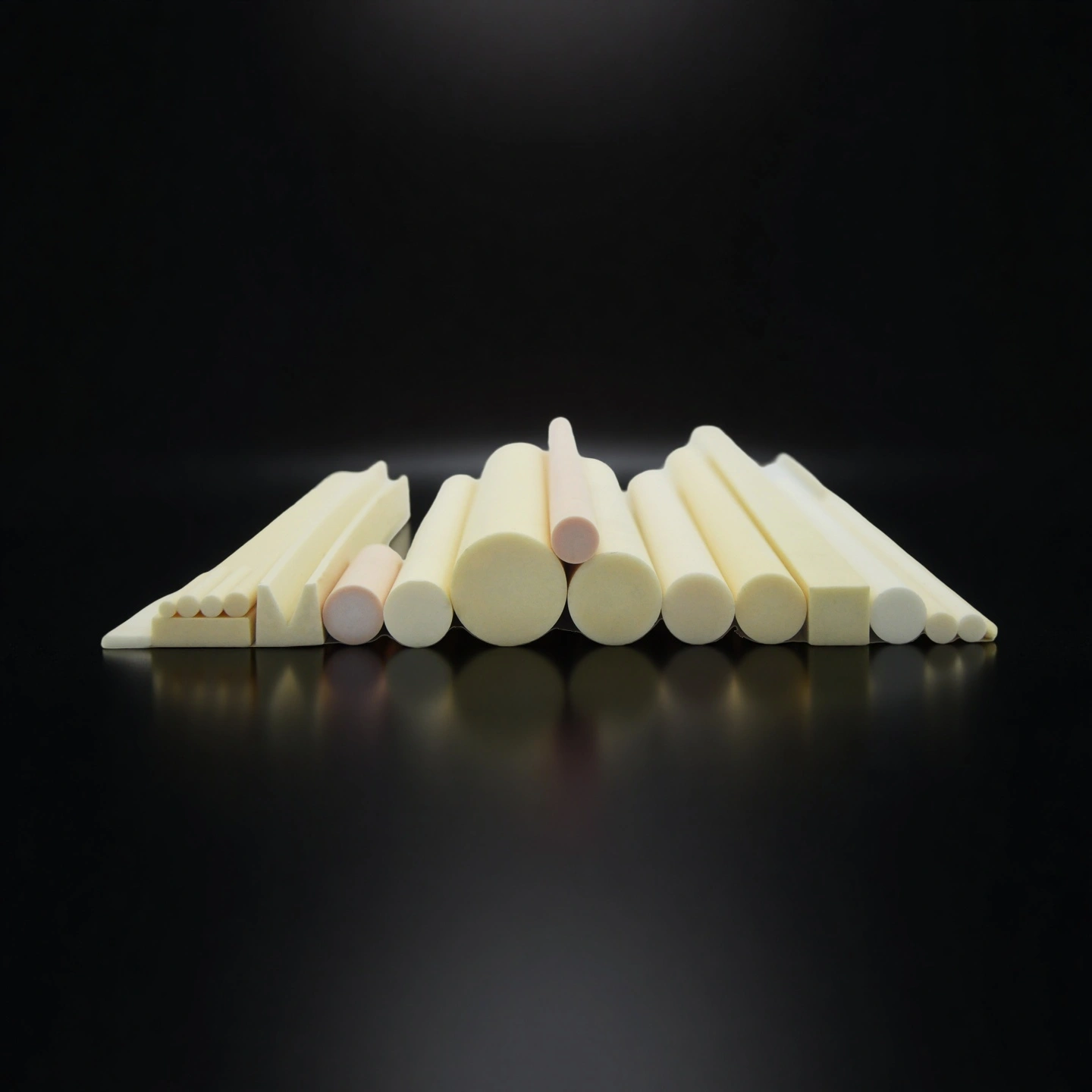
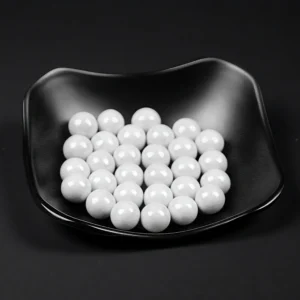
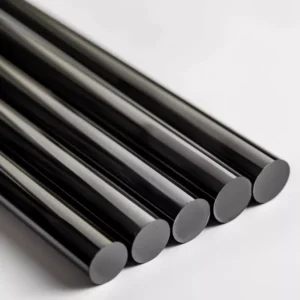
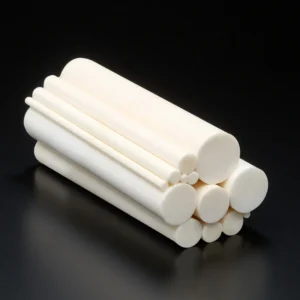
Zirconia Toughened Alumina (ZTA) rod is a structural ceramic made from an alumina (Al₂O₃) matrix dispersed with zirconia (ZrO₂) particles. The zirconia is stabilized (often yttria-stabilized) so that, when microcracks start, zirconia particles transform and expand at the crack tip (transformation toughening). This arrests crack growth and gives the rod higher fracture toughness than pure alumina while keeping high hardness and wear resistance.
ZTA Ceramic Rod Advantages for Industrial Assemblies
Improved Edge Stability During Assembly
ZTA rods are often selected when alumina rods have a risk of edge chipping during press-fit, clamping, handling or repeated installation. The zirconia toughening phase helps slow crack growth, which is useful for small shafts, locating pins and rod ends with chamfers or precision-ground edges.
Wear-Resistant Rod Surfaces for Sliding or Locating Contact
For guide rods, sealing pins and positioning shafts, surface wear can change clearance and alignment over time. A ground or polished ZTA rod can help maintain a stable contact surface in abrasive, dry-sliding or lightly lubricated assemblies where metal rods may score, corrode or generate particles.
Balanced Material Choice Between Alumina and Zirconia
ZTA is useful when standard alumina is too brittle for the assembly condition, but full zirconia may be unnecessary for cost, temperature or stiffness reasons. This makes ZTA rods suitable for applications that need stronger toughness than alumina while keeping good hardness and insulation behavior.
Custom Geometry for Functional Fit
ADCERAX can review rod features such as OD, length, flat section, groove, through-bore, chamfer, radius, stepped end and polished contact zone. These details matter because ceramic rods usually fail from stress concentration, poor edge design or incorrect mating clearance rather than from material strength alone.
Inspection-Oriented Supply for Repeat Orders
For repeatable industrial use, the most important values are not only material properties but also controlled diameter, straightness, surface finish, end quality and lot traceability. ADCERAX® can define key inspection points based on the drawing and the rod’s function in the assembly.
ZTA Ceramic Rods Properties
The following values are typical reference properties for material comparison. Final values may vary by grade, forming method, sintering condition and machining requirement.
|
Property |
Unit |
Alumina (99%) |
ZTA (Zirconia Toughened Alumina) |
Y-TZP Zirconia |
|
Fracture Toughness (KIC) |
MPa·m¹⁄² |
5 |
7 – 9 |
6 – 10 |
|
Vickers Hardness |
HV10 |
1600-1800 |
1400-1600 |
1100-1300 |
|
Flexural Strength |
MPa |
400 |
650 – 800 |
800 – 1200 |
|
Density |
g/cm³ |
3.9 |
4.0 – 4.3 |
6.0 |
|
Relative Wear Rate |
— |
1.0 |
0.45 – 0.55 |
0.2 |
|
Thermal Expansion Coefficient (RT – 800 °C) |
×10⁻⁶ /K |
8.0 |
8.5 – 9.0 |
10 – 11 |
|
Thermal Conductivity (RT) |
W/m·K |
25 |
22 – 24 |
2 – 3 |
|
Maximum Working Temperature |
°C |
1600 |
1450 – 1500 |
1000 – 1200 |
|
Dielectric Strength |
kV/mm |
12 |
11 – 13 |
9 – 11 |
|
Surface Roughness (Ground face) |
µm Ra |
0.4 – 1.2 |
0.3 – 0.8 |
0.2 – 0.6 |
|
Flatness (after grinding) |
mm/300 mm |
≤ 0.4 |
≤ 0.3 |
≤ 0.2 |
Zirconia Toughened Alumina Rods Specifications
ZTA Rods Packaging
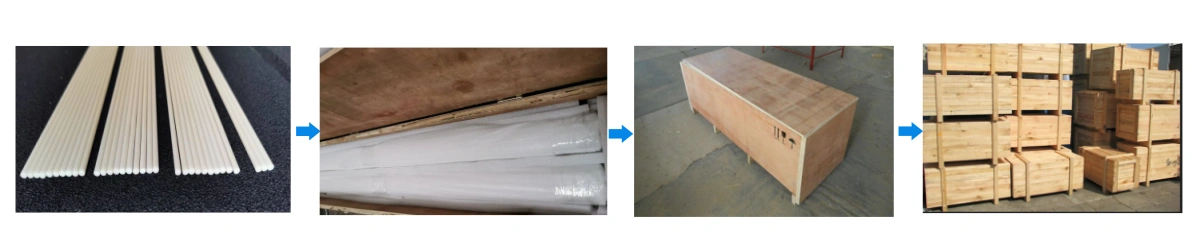
ZTA ceramic rods are packed to reduce edge chipping, bending stress, surface scratches and mixed-size confusion during international transport.
- Each rod is wrapped or placed in foam slots, plastic tubes or separated trays according to diameter, length and surface finish.
- Ground or polished rods are protected from loose metal parts, abrasive dust and direct contact with other rods.
- Different diameters and item numbers are separated to reduce mixing risk during incoming inspection.
- Long or fragile rods are packed with reinforced outer cartons or wooden cases when needed.
ZTA Ceramic Rod Applications
ZTA ceramic rods are used in industrial assemblies where the rod must provide wear resistance, dimensional stability and improved edge toughness under mechanical contact. Compared with standard alumina rods, ZTA rods are often selected when the part is exposed to assembly pressure, vibration, sliding contact, repeated positioning or moderate impact risk. The following application areas show how the material can support practical engineering decisions.
Pump and Valve Pins
ZTA ceramic rods can be used as guide pins, wear pins, valve pins, seal supports or small shaft elements in pumps and valves handling abrasive, corrosive or particle-containing media. In these assemblies, metal pins may suffer from corrosion, surface scoring or clearance change, while standard alumina pins may chip if the seat design or assembly force is not well controlled.
The zirconia toughened alumina structure helps provide a harder and more wear-resistant contact surface while offering better resistance to edge damage than conventional alumina. This makes ZTA rods suitable for designs where stable alignment, reduced wear debris and longer sealing contact life are important. For pump or valve use, the rod diameter, chamfer, mating seat, sliding condition and medium compatibility should be reviewed before production.
Precision Locating Pins and Guide Rods
In automation fixtures, inspection equipment, assembly jigs and positioning systems, ZTA ceramic rods can serve as locating pins or guide rods that maintain repeatable position under mechanical contact. The material is useful when stainless steel or tool steel pins may wear, deform, corrode or contaminate the part surface after repeated use.
ZTA rods are especially suitable when the locating surface must remain hard, smooth and electrically insulating. Ground or polished surfaces can help reduce friction and support more consistent contact with mating components. For precision locating applications, buyers should define the OD tolerance, straightness, end shape, surface finish and whether the rod will be fixed, sliding, replaceable or exposed to side load.
Ceramic Shafts for Sliding or Rotating Interfaces
ZTA ceramic rods may be used as ceramic shafts in light-duty sliding, rotating, metering or adjustment mechanisms. These applications usually require a rod surface that can resist abrasion, maintain clearance and avoid corrosion in contact with process media or cleaning chemicals. ZTA provides a useful balance when alumina is too brittle for the assembly condition and full zirconia is not necessary for the working load.
When used as a shaft, the rod should be evaluated together with the bearing material, seal material, lubricant, contact pressure and expected speed. A polished ZTA surface can reduce counterface wear in selected designs, but the mating material must still be checked carefully. Unsupported bending loads, sharp shoulders and poor alignment should be avoided because ceramic shafts remain sensitive to tensile stress and impact.
Furnace Fixture and Hot-Zone Support Rods
ZTA ceramic rods can be used as support rods, spacer rods, insulating rods or positioning members in selected furnace fixtures and hot-zone assemblies. They are useful when the design requires better chipping resistance than standard alumina while still needing ceramic insulation, hardness and dimensional stability under repeated heating cycles.
In furnace-related applications, ZTA rods may support small fixtures, separate components, hold alignment or reduce direct metal contact in heated areas. The final material choice should consider working temperature, thermal cycling speed, atmosphere, load direction and whether the rod is constrained by metal hardware. For high thermal shock or very aggressive furnace conditions, alumina, zirconia or silicon carbide alternatives may also need to be compared.
Electrical Insulating Rods in Mechanical Assemblies
ZTA ceramic rods can function as insulating support rods, standoffs or alignment members in mechanical assemblies that require both structural support and electrical separation. They can help isolate conductive parts while providing higher wear resistance and improved edge toughness compared with many standard insulating ceramics.
This application is common in equipment where the rod is not only an insulator but also a mechanical positioning element. Buyers should review creepage distance, clearance, contact pressure, mounting method and operating temperature before selecting the rod size. If the rod will be clamped by metal parts, the fixture should avoid point loading and allow enough clearance for thermal expansion differences.
Wear Rods for Abrasive Contact Areas
ZTA ceramic rods can also be used as wear rods or replaceable contact elements in equipment exposed to repeated rubbing, abrasive particles or guide contact. Instead of replacing a larger assembly, the ceramic rod can be designed as a controlled wear component that protects the surrounding metal or polymer structure.
This approach is useful when the contact area is narrow, cylindrical or difficult to protect with a flat ceramic plate. The rod can be ground to the required diameter and installed as a sleeve-supported or mechanically retained component. For this type of design, the installation method, counterface material, impact risk and replacement access should be considered during the drawing review stage.
ZTA Ceramic Rod Usage Instructions
Installation
1. Check rod diameter, length, straightness, chamfer and end condition before assembly. Do not force a ceramic rod into a metal seat if the interference or alignment has not been reviewed.
2. Use soft jaws, polymer pads or supported fixtures when clamping the rod. Point loading from hard metal tools can create small edge defects that later grow during operation.
3. For press-fit or shrink-fit designs, review ceramic-to-metal expansion difference, interference value and edge chamfer before production. A small design change at the rod end can significantly reduce chipping risk.
Operation
1. Keep bending, side impact and cantilever loading as low as possible. ZTA improves toughness compared with alumina, but it remains a ceramic material and should not be treated like steel.
2. For sliding contact, confirm counterface hardness, surface finish, lubrication condition and particle contamination. Incorrect counterface design can increase wear even when the ceramic rod itself is suitable.
3. In heated assemblies, avoid sudden thermal shock, direct flame impingement and strong temperature gradients unless the fixture design has been validated.
Cleaning
1. Clean rods with lint-free cloth, DI water, alcohol or approved process cleaning methods. Dry the rods fully before storage or assembly.
2. Avoid cleaning methods that may attack the alumina phase, contaminate the surface or damage polished contact zones.
Storage and Transport
1. Store ZTA rods in padded trays, foam slots or separated tubes. Long rods should be supported along their length to reduce bending stress during handling.
2. Keep precision-ground or polished rods away from metal hardware, abrasive dust and loose parts that may scratch the surface during transport.