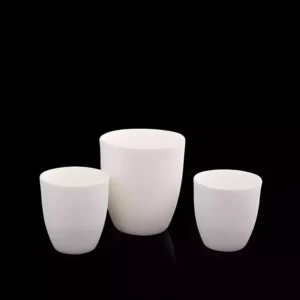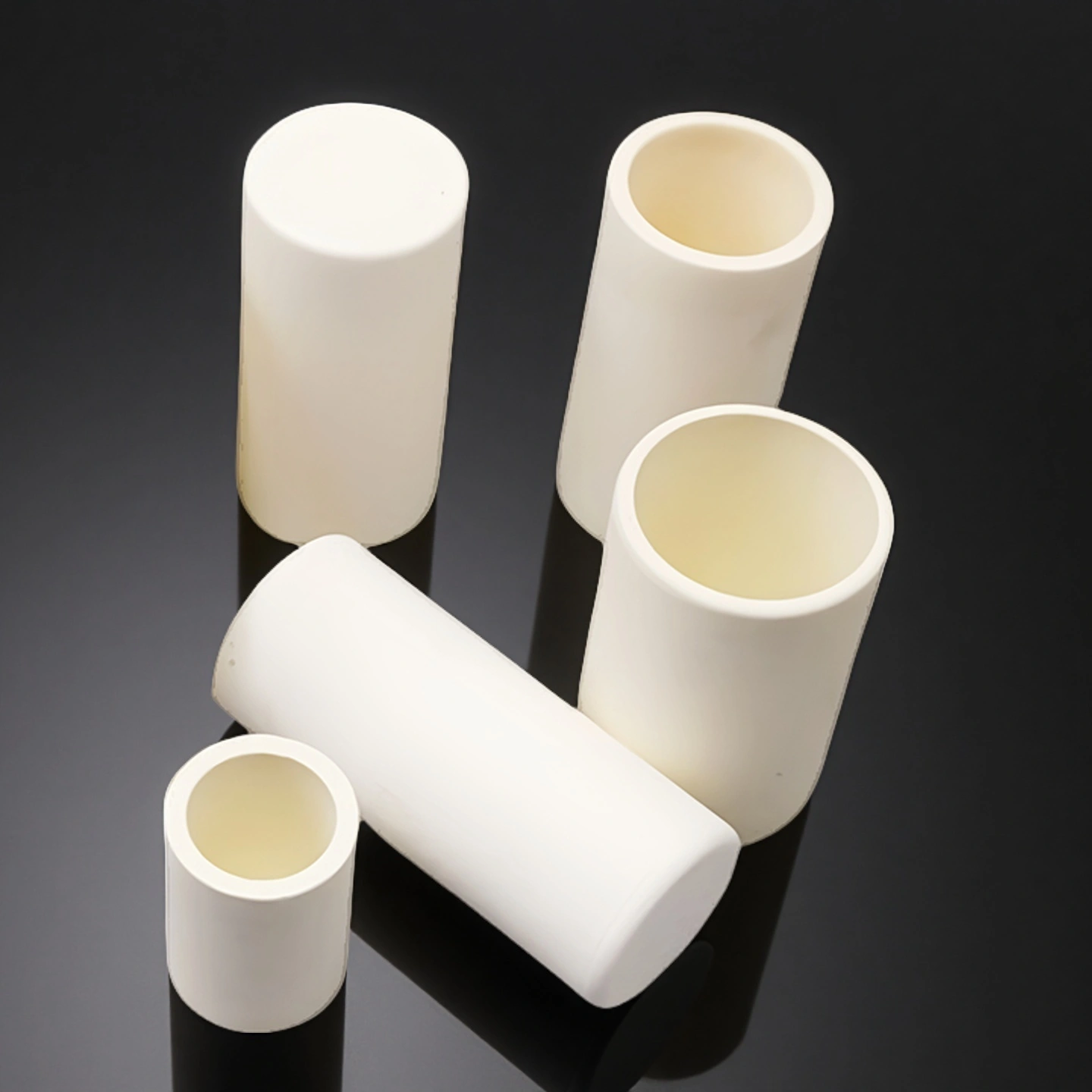
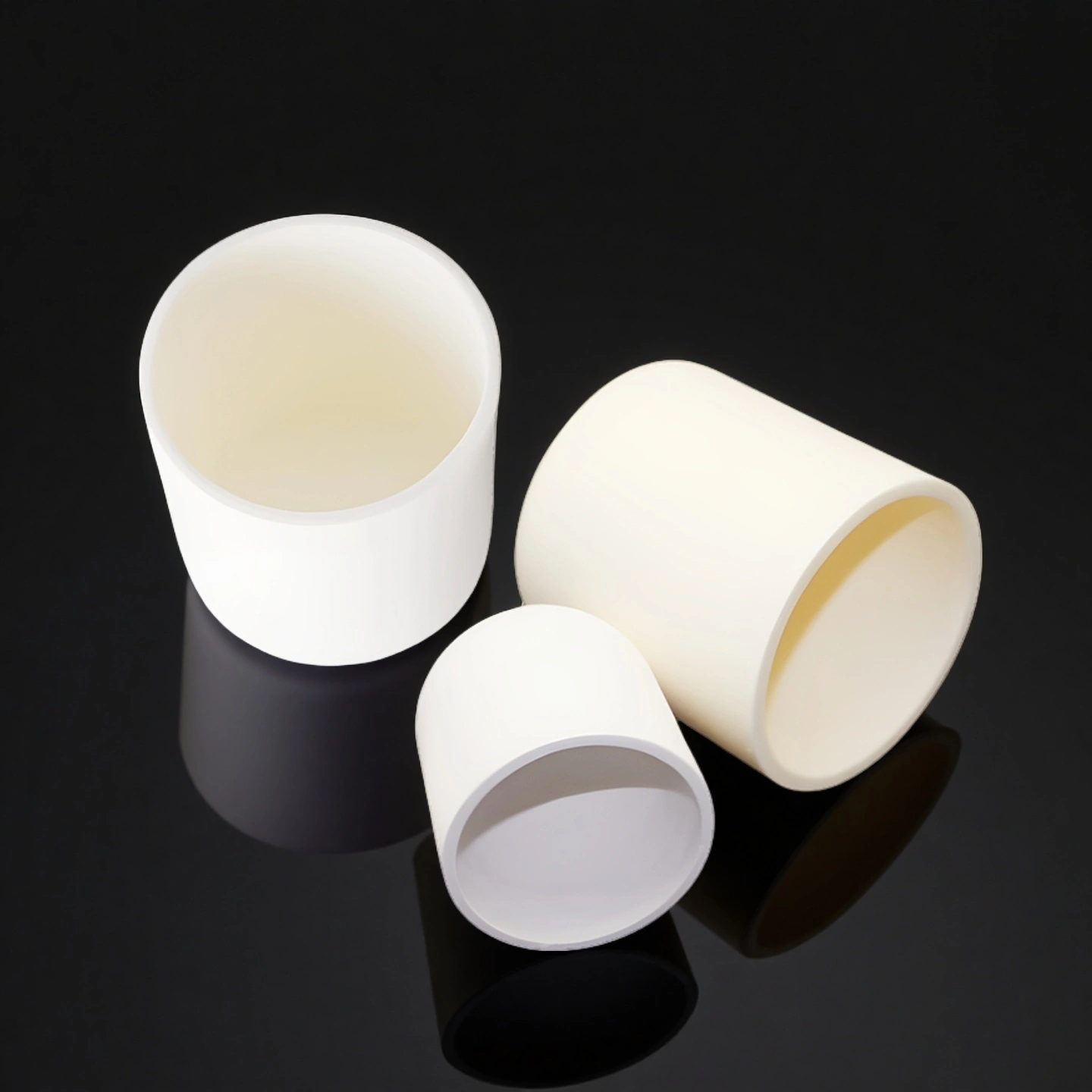
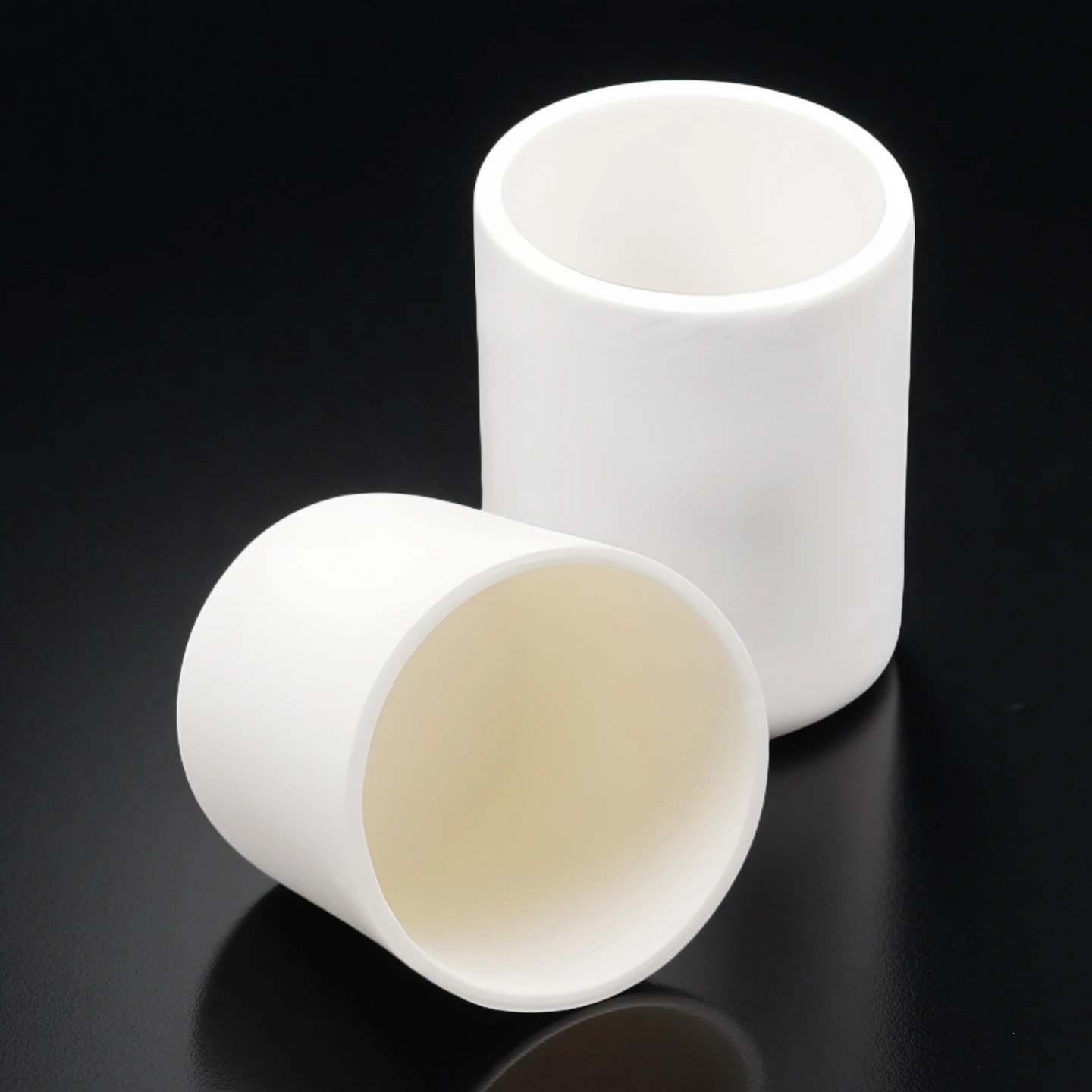
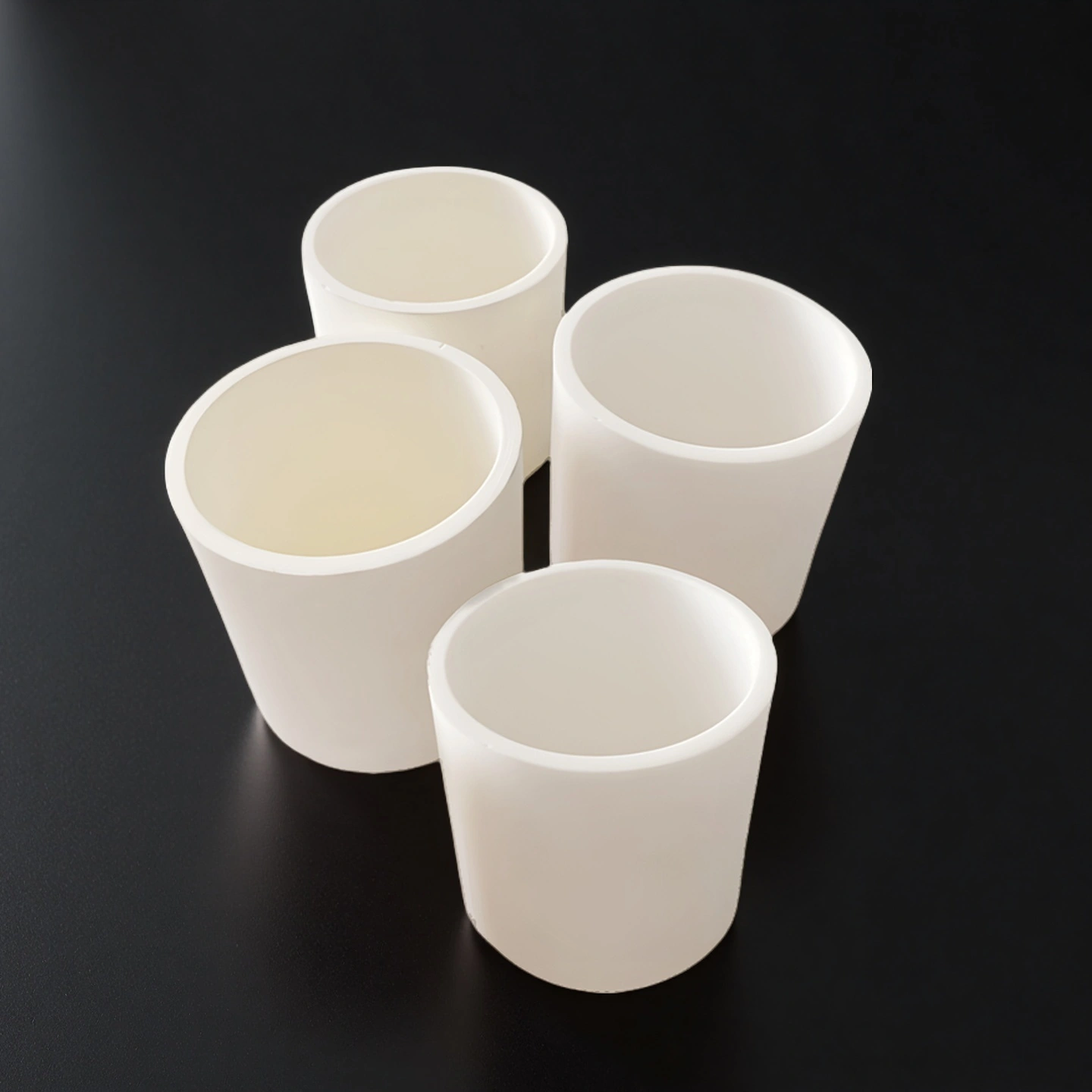
Cylindrical Zirconia Crucible for Precious Metal Melting

The Cylindrical Zirconia Crucible provides measurable advantages in thermal performance, material stability, and industrial reliability. Its properties are validated by physical and chemical data, making it a trusted choice for refining, alloy melting, and laboratory applications.

Catalogue No. AT-YHG-Y001
Material Zirconia (≥92% ZrO₂)
Max Working Temperature Up to 2200 °C
Bulk Density ≥4.5 g/cm³
Apparent Porosity ≤0.5%


24H Standard Dispatch
Small Batch Support OEM
Factory Direct
Expert Engineering Support

ADCERAX® Cylindrical Zirconia Crucible is designed for demanding high-temperature processes where purity, stability, and durability are critical. With resistance up to 2200 °C, it ensures reliable melting of precious metals and superalloys under aggressive conditions. The dense zirconia structure minimizes contamination, extending service life in continuous operations. Industrial users and research laboratories select the Cylindrical Zirconia Crucible for consistent performance across refining, alloy development, and advanced thermal applications.

Features of Cylindrical Zirconia Crucible

  • The Cylindrical Zirconia Crucible withstands continuous service at 2200 °C, ensuring safe use in high-temperature furnaces. This capacity reduces downtime caused by premature failure in conventional crucibles.
  • Thermal shock resistance has been tested to endure rapid cycles between room temperature and 1500 °C. This prevents cracking and extends service intervals in demanding operations.
  • The Cylindrical Zirconia Crucible contains ≥92% ZrO₂ with Fe₂O₃ and SiO₂ each ≤0.5%. This composition guarantees minimal reaction with molten alloys.
  • Low porosity of ≤0.5% limits contamination risks during refining. This specification supports consistent purity in aerospace and jewelry applications.
  • With a bulk density of ≥4.5 g/cm³, the Cylindrical Zirconia Crucible maintains structural integrity under heavy load. This enables reliable handling in industrial furnaces.

Technical Properties for Cylindrical Zirconia Crucible

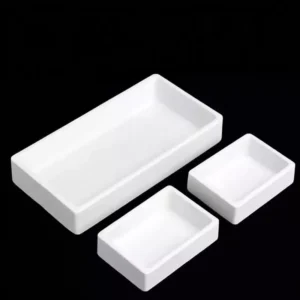
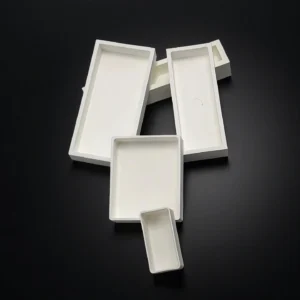
Zirconia Ceramic Tray is designed for demanding sintering environments where performance consistency is critical.

Property Specification
Chemical Composition ZrO₂ ≥ 92%, Fe₂O₃ ≤ 0.5%, SiO₂ ≤ 0.5%
Bulk Density ≥ 4.5 g/cm³
Apparent Porosity ≤ 0.5%
Maximum Temperature  Continuous use up to 2200 °C
Thermal Shock Resistance  Stable after cycles RT → 1500 °C
Hardness Mohs scale ~ 8.5–9
Mechanical Strength Fracture toughness ~ 7–10 MPa·m½

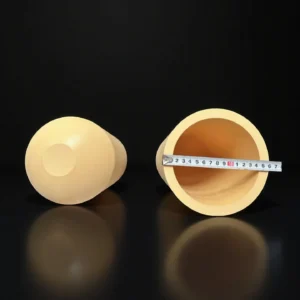
Dimensions of Cylindrical Zirconia Crucible
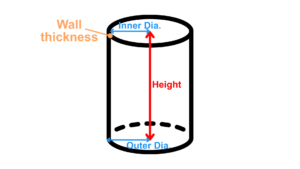
 

Dimensions of Cylindrical Zirconia Crucible
Cylindrical ZrO2 Crucible
Item No. Outer Diamete(mm) Inner Diameter(mm) Height(mm) Wall Thickness(mm) Volume(ml) Purity(%)
AT-YHG-Y001 20.0  16.0  19.0  2.0  95
AT-YHG-Y002 24.0  20.0  50.0  2.0  15  95
AT-YHG-Y003 29.5  22.7  29.6  3.4  11  95
AT-YHG-Y004 32.0  24.0  26.0  4.0  11  95
AT-YHG-Y005 32.0  23.0  30.0  4.5  12  95
AT-YHG-Y006 33.5  27.0  59.0  3.3  33  95
AT-YHG-Y007 33.5  27.5  69.5  3.0  40  95
AT-YHG-Y008 35.0  28.0  31.0  3.5  18  95
AT-YHG-Y009 39.0  34.0  62.0  2.5  55  95
AT-YHG-Y010 40.0  31.0  55.0  4.5  40  95 
AT-YHG-Y011 42.5  34.0  59.0  4.3  52  95
AT-YHG-Y012 29.5  23.0  100.0  3.3  41  95 
AT-YHG-Y013 44.8  36.0  30.0  4.4  28  95
AT-YHG-Y014 45.0  37.0  103.0  4.0  109  95
AT-YHG-Y015 50.0  40.0  106.0  5.0  130  95
AT-YHG-Y016 50.5  42.0  71.0  4.3  95  95 
AT-YHG-Y017 51.0  42.0  84.3  4.5  114  95
AT-YHG-Y018 51.0  42.0  84.0  4.5  113  95 
AT-YHG-Y019 51.0  44.0  102.0  3.5  152  95 
AT-YHG-Y020 59.0  51.0  91.0  4.0  182  95 
AT-YHG-Y021 62.0  55.0  97.0  3.5  226  95
AT-YHG-Y022 69.0  50.0  118.0  9.5  222  95
AT-YHG-Y023 70.0  50.0  200.0  10.0  383  95 
AT-YHG-Y024 70.0  60.0  12.0  5.0  27  95
AT-YHG-Y025 72.5  50.0  135.0  11.3  254  95 
AT-YHG-Y026 77.0  69.0  85.0  4.0  310  95
AT-YHG-Y027 78.0  57.0  89.0  10.5  214  95 
AT-YHG-Y028 80.0  59.0  143.0  10.5  377  95
AT-YHG-Y029 85.0  75.0  109.0  5.0  471  95 
AT-YHG-Y030 86.0  69.0  160.0  8.5  582  95 
AT-YHG-Y031 87.0  69.0  165.0  9.0  600  95 
AT-YHG-Y032 107.0  82.0  128.0  12.5  643  95 
AT-YHG-Y033 118.0  83.0  133.0  17.5  672  95
AT-YHG-Y034 59.0  51.0  92.0  4.0  184  95 
AT-YHG-Y035 23.0  18.0  94.0  2.5  24  95 
AT-YHG-Y036 11.5  8.8  55.6  1.4  95
AT-YHG-Y037 11.5  8.8  45.8  1.4  95
AT-YHG-Y038 16.8  9.2  9.2  3.8  95
AT-YHG-Y039 15.0  12.0  13.0  1.5  95 
AT-YHG-Y040 51.0  43.0  85.0  4.0  121  95 
AT-YHG-Y041 40.0  35.0  32.0  2.5  30  95 
AT-YHG-Y042 43.0  34.0  102.0  4.5  91  95 
AT-YHG-Y043 29.0  25.0  30.0  2.0  14  95
AT-YHG-Y044 42.0  35.0  102.0  3.5  96  95 
AT-YHG-Y045 50.0  40.0  118.0  5.0  145  95 
AT-YHG-Y046 26.0  21.0  85.0  2.5  29  95 
AT-YHG-Y047 41.0  35.0  58.0  3.0  54  95
AT-YHG-Y048 29.0  25.0  42.0  2.0  20  95 
AT-YHG-Y049 31.0  26.0  76.0  2.5  40  95
AT-YHG-Y050 32.0  23.0  30.0  4.5  12  95
AT-YHG-Y051 37.0  28.0  33.0  4.5  19  95
AT-YHG-Y052 62.0  55.0  97.0  3.5  226  95
AT-YHG-Y053 85.0  76.0  110.0  4.5  489  95
AT-YHG-Y054 10.5  7.7  25.0  1.4  95
AT-YHG-Y055 13.0  10.2  25.0  1.4  95
AT-YHG-Y056 18.0  16.0  26.0  1.0  95
AT-YHG-Y057 22.0  18.8  33.0  1.6  95
AT-YHG-Y058 15.0  11.0  100.0  2.0  95
AT-YHG-Y059 50.0  44.0  80.0  3.0  120  95
AT-YHG-Y060 30.0  26.0  60.0  2.0  35  95
AT-YHG-Y061 42.0  38.0  53.0  2.0  37  95
AT-YHG-Y062 57.0  53.0  65.0  2.0  100  95
AT-YHG-Y063 48.0  44.0  52.0  2.0  50  95
AT-YHG-Y064 38.0  34.0  45.0  2.0  30  95
AT-YHG-Y065 9.0  6 15.0  1.5 2 95
AT-YHG-Y066 16.0  11.0  12.0  2.5  95
AT-YHG-Y067 16.0  11.0  95.0  2.5  10  95 
AT-YHG-Y068 32.0  26.0  80.0  3.0  40  95 
AT-YHG-Y069 34.0  28.0  80.0  3.0  50  95
AT-YHG-Y070 36.0  30.0  80.0  3.0  60  95
AT-YHG-Y071 40.0  34.2  50.0  2.9  50  95
AT-YHG-Y072 40.0  34.2  80.0  2.9  70  95
AT-YHG-Y073 45.0  39.2  50.0  2.9  50  95
AT-YHG-Y074 50.0  42.0  80.0  4.0  100  95 
AT-YHG-Y075 57.0  49.0  75.0  4.0  120  95
AT-YHG-Y076 66.0  59.4  66.0  3.3  120  95
AT-YHG-Y077 80.0  73.0  80.0  3.5  300  95

Packaging of Cylindrical Zirconia Crucible

Each Cylindrical Zirconia Crucible is carefully wrapped with protective film and cushioned by foam partitions to avoid surface damage during transit. The packed Cylindrical ZrO2 Crucible units are then secured in reinforced wooden cases with clear fragile labels. This packaging method ensures that every Cylindrical Zirconia Ceramic Crucible arrives intact and ready for immediate industrial use.
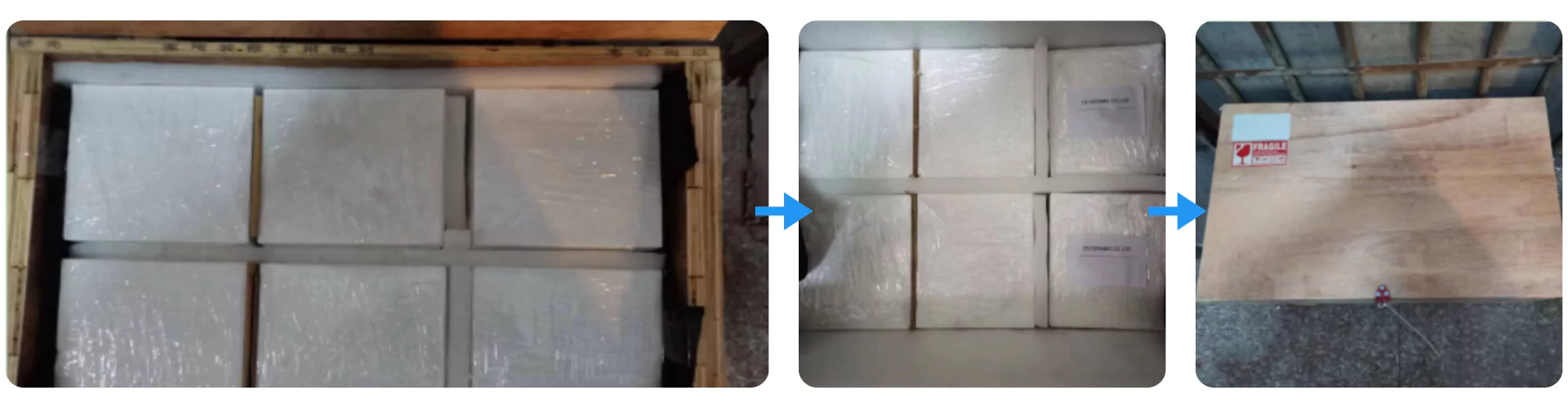

ADCERAX® Packaging Cylindrical Zirconia Crucible


Solving Application Challenges with ADCERAX® Cylindrical Zirconia Crucible for Precious Metal and Superalloy Melting

The Cylindrical Zirconia Crucible for Precious Metal and Superalloy Melting is developed for industries where high temperatures, chemical reactivity, and material purity create critical barriers. Its engineered properties directly resolve performance gaps in refining, alloy production, and research, ensuring stable output and cost efficiency.


  • Platinum Group Metal Melting

    ✅Key Advantages

    1. 2200 °C continuous stability — Rated for service up to 2200 °C, covering Pt (1768 °C) and Ir (2446 °C melting point margins). Thermal-cycle endurance validated RT↔1500 °C to limit crack initiation in repeated heats.
    2. Ultra-low porosity ≤0.5% — Dense body limits metal infiltration and slag entrapment. Supports >99% recovery targets by reducing carryover between batches.
    3. High-purity matrix (ZrO₂ ≥ 92%; Fe₂O₃/SiO₂ ≤ 0.5%) — Low leachable oxides reduce Fe/Si pickup into the melt. Helps preserve catalytic activity and electrical properties in refined PGM outputs.

    ✅ ️Problem Solved

    A refinery-class Pt–Pd melt runs at 2050–2150 °C with strict recovery goals ≥99%. Prior crucibles showed hairline cracking after multi-cycle use and visible slag inclusions, forcing partial re-melts and recovery swings of ±0.3 %. With ADCERAX® Cylindrical Zirconia Crucible (porosity ≤0.5%, density ≥4.5 g/cm³), consecutive heats completed without crack propagation during RT↔1500 °C thermal cycling, and visual inclusions were suppressed. As an ROI illustration, a 0.3 % recovery delta on a 6 kg Pt batch equals 0.018 kg; at $30,000/kg, that is ≈$540 safeguarded per batch when variance is avoided. Results depend on charge chemistry and furnace discipline but demonstrate the leverage of stability and purity at PGM temperatures.

  • Nickel-Based Superalloy Processing

    ✅Key Advantages

    1. Low inclusion risk (≤0.5% porosity) — Minimizes ceramic spall and entrainment into Ni melts (1400–1550 °C). Supports fatigue-critical parts by reducing defect initiators in cast structures.
    2. Thermal-cycle endurance RT↔1500 °C — Multi-heat campaigns proceed with reduced unplanned stops. Stable microstructure limits crack growth under repeated charge/hold/pour profiles.
    3. High density ≥4.5 g/cm³ — Structural robustness under heavy charge and tongs handling. Maintains geometry during long high-temp soaks typical of superalloy refining.

    ✅ ️Problem Solved

    A foundry casting Ni-base alloys for hot-section hardware targeted fewer inclusions and fewer mid-campaign changeouts. Legacy cups cracked during extended holds, driving re-melts and 1–2 % monthly rejections. After switching to ADCERAX® Cylindrical Zirconia Crucible (density ≥4.5 g/cm³, porosity ≤0.5%), thermal-cycle stability RT↔1500 °C enabled longer campaigns with fewer stoppages and cleaner pours. For a 1,000 kg/month program, trimming rejects by 1 % removes 10 kg of scrap exposure and associated melt energy/time losses, contingent on gating and furnace practice.

  • Cobalt & Specialty Alloy Melting

    ✅Key Advantages

    1. Slag/salt corrosion resistance — ZrO₂ matrix remains stable against borate/silicate slags and chloride-bearing salts at >1400 °C. Reduces wall thinning and compositional drift across cycles.
    2. Chemically inert to Co-based meltsZrO₂ ≥ 92% with Fe₂O₃/SiO₂ each ≤0.5% lowers risk of alloy contamination. Helps maintain hardness/toughness targets in tool and wear alloys.
    3. Extended campaign life — Crack-free requirement with RT↔1500 °C cycling supports multi-heat operation. Fewer replacements decrease thermal-up/down losses and consumable spend.

    ✅ ️Problem Solved

    Producers of Co-based wear alloys reported wall erosion and slag-borne residues when using conventional ceramics, causing batch contamination and frequent cup changes. Operating 1450–1600 °C, they sought cleaner melts and longer intervals between changeouts. ADCERAX® Cylindrical Zirconia Crucible, specified at porosity ≤0.5% and ZrO₂ purity ≥92%, held geometry through repeated thermal cycles and resisted slag attack, reducing visible residue transfer. If a line runs 20 heats per month, eliminating even 1–2 emergency replacements saves full heat-up/cool-down hours while stabilizing alloy chemistry and downstream hardness targets.

User Guide for Cylindrical Zirconia Crucible

The Cylindrical Zirconia Crucible is a precision component used in high-temperature alloy and refining processes. To maximize service life and protect your operations, users should follow essential guidelines on preparation, heating cycles, handling, and storage. This section provides practical instructions to help buyers avoid premature wear and ensure consistent performance.

  • Preparation Before First Use

    1. Initial Drying — Place the Cylindrical Zirconia Crucible in a drying oven at approximately 105 °C for at least two hours before first use. This step removes residual moisture that could cause thermal shock cracks when exposed to high heat. Always allow the crucible to cool naturally after drying.
    2. Visual Inspection — Check the crucible for visible cracks, chips, or surface irregularities prior to installation. Even minor damage can propagate under thermal stress and lead to early failure. Replace damaged crucibles immediately to avoid risk.
    3. Correct Placement — When installing into a furnace, ensure the crucible is positioned evenly on a stable support. Avoid direct contact with heating elements or the furnace bottom to allow proper airflow and thermal balance.

  • Heating and Cooling Practices

    1. Gradual Temperature Ramp — The Cylindrical Zirconia Crucible should be heated at controlled rates: less than 5 °C/min below 1200 °C and less than 4 °C/min above 1200 °C. Faster heating rates can cause thermal stress and cracking. Controlled heating ensures uniform expansion.
    2. Avoiding Flame Contact — Never expose the crucible directly to fuel torches such as gasoline burners or acetylene flames. Such direct heat creates uneven stress and weakens structural stability. Always use regulated furnace environments for temperature rise.
    3. Cooling Procedure — Allow crucibles to cool gradually inside the furnace chamber after use. Forced air cooling or quenching in liquids should be avoided. Controlled cooling reduces microfracture risks and extends service life.

  • Handling During Operations

    1. Safe Loading — Add charge material without tightly packing the crucible. Overfilling or compressing metals can lead to expansion-related cracking when molten. Maintain safe fill ratios appropriate for the crucible’s design.
    2. Metal Extraction — Use ladles or pouring methods rather than clamping tools wherever possible. If clamps are used, ensure they match the crucible’s profile to avoid localized stress points. Poor handling reduces lifespan significantly.
    3. Protective Measures — Always wear heat-resistant gloves, protective eyewear, and suitable clothing when operating with the Cylindrical Zirconia Crucible. Proper safety equipment prevents personal injury in high-temperature workspaces.

  • Storage and Maintenance

    1. Dry Storage Environment — Store the Cylindrical Zirconia Crucible in a well-ventilated, dry environment when not in use. Moisture absorption can weaken the ceramic structure and create failure risk during reheating.
    2. Surface Protection — Prevent contact with sharp or abrasive tools that could scratch the crucible surface. Scratches act as stress concentrators under heat and shorten usable lifespan. Handle carefully during storage.
    3. Regular Review — Conduct periodic checks after several melt cycles to assess wall condition and slag buildup. Replace crucibles that show thinning or surface erosion. Proactive replacement reduces risk of batch contamination or downtime.

FAQs about Cylindrical Zirconia Crucible

  1. Q: Why is the Cylindrical Zirconia Crucible preferred for platinum group metal melting?
    A: The Cylindrical Zirconia Crucible withstands continuous exposure up to 2200 °C, covering the melting points of platinum, palladium, and iridium. Its ultra-low porosity of ≤0.5% prevents contamination, ensuring high recovery yields. This stability reduces financial loss from re-melts and improves batch consistency.
  2. Q: How does the Cylindrical Zirconia Crucible handle thermal shock during repeated cycles?
    A: The Cylindrical Zirconia Crucible is tested for rapid temperature changes between room temperature and 1500 °C. Its dense microstructure prevents crack propagation under frequent thermal cycling. This extends campaign life and reduces downtime for foundries and labs.
  3. Q: What advantage does the Cylindrical Zirconia Crucible offer in nickel-based superalloy processing?
    A: Nickel alloys are sensitive to inclusions, which reduce fatigue resistance in turbine parts. The Cylindrical Zirconia Crucible provides high density ≥4.5 g/cm³ to minimize spalling and impurities. This ensures cleaner alloys and fewer part rejections in aerospace and energy sectors.
  4. Q: How does the Cylindrical Zirconia Crucible reduce slag erosion problems?
    A: Conventional ceramics degrade quickly under aggressive slags, contaminating molten metals. The Cylindrical Zirconia Crucible has high resistance to molten salts and oxides, protecting melt integrity. This durability lowers replacement frequency and improves cost efficiency.
  5. Q: Why is purity important in the Cylindrical Zirconia Crucible composition?
    A: The Cylindrical Zirconia Crucible uses ≥92% ZrO₂ with Fe₂O₃ and SiO₂ ≤0.5%. Low impurity levels prevent unwanted reactions during melting. This guarantees cleaner outputs, especially critical for refining precious metals and advanced alloys.

Client Experiences with ADCERAX® Cylindrical Zirconia Crucible


  • ⭐️⭐️⭐️⭐️⭐️
    “The Cylindrical Zirconia Crucible solved our recurring problem with contamination in platinum melts. We achieved consistent purity across multiple refining cycles, and the crucibles remained intact after extended high-temperature use. This stability reduced re-melts and directly improved our recovery rates.”
    – J. Müller, Materials Division, [Name Withheld] GmbH
  • ⭐️⭐️⭐️⭐️⭐️
    “Our facility used to experience frequent downtime due to crucible cracking during nickel superalloy processing. Since adopting the Cylindrical Zirconia Crucible, thermal shock issues have disappeared, and campaign lengths increased noticeably. The reduction in alloy rejections has made a measurable difference to our output.”
    – T. Anderson, Metallurgy Department, [Name Withheld] Aerospace
  • ⭐️⭐️⭐️⭐️⭐️
    “In cobalt alloy melting, slag erosion was a constant issue with alumina crucibles. The Cylindrical Zirconia Crucible provided resistance to aggressive slags and significantly extended service life. It lowered our replacement frequency and gave us cleaner batches for critical wear-resistant components.”
    – K. Suzuki, Engineering Team, [Name Withheld] Manufacturing Co.
  • ⭐️⭐️⭐️⭐️⭐️
    “As a research lab conducting thermal analysis, reproducibility is critical for our experiments. The Cylindrical Zirconia Crucible gave us uniform heating and eliminated background contamination, which improved data accuracy. It has become a standard part of our high-temperature test protocols.”
    – Dr. L. Carter, Advanced Materials Lab, [Name Withheld] University
customize size

Customization Services for Cylindrical ZrO2 Crucible

ADCERAX® provides tailored solutions for the Cylindrical Zirconia Crucible, addressing unique industrial and research requirements. Our customization services ensure precise alignment with client processes, from furnace integration to material-specific applications.

Material Formulations

Select stabilized zirconia types suitable for different alloys and melts.

  • Stabilizer Choice — Options tailored for thermal and chemical resistance.
  • Purity Levels — Material grades aligned with contamination control.
  • Microstructure — Dense body engineered for durability under stress.

Geometry Adjustments

Adapt crucible dimensions to fit specialized furnace systems.

  • Outer Shape — Modified profiles for seamless furnace placement.
  • Wall Design — Balanced thickness to optimize thermal performance.
  • Capacity Options — Flexible volumes to match material batch sizes.

Surface Treatments

Enhance crucible performance with specialized finishing techniques.

  • Polished Walls — Reduced slag adhesion for easier cleaning cycles.
  • Textured Base — Improved stability during repeated heating processes.
  • Protective Layer — Added resistance to corrosive slag interaction.

Related Products

ADCERAX - Your Trusted Advanced Ceramics Manufacturing Partner

Direct factory manufacturing with comprehensive ceramic materials expertise and global supply capabilities

Direct Factory Manufacturing

China-based ceramic materials production facility with state-of-the-art equipment

Engineering Team

Experienced professionals in advanced ceramics applications and custom design

Quality Control

Strict quality control standards for technical ceramics manufacturing and quality management

Global Supply Chain

Serving customers worldwide with technical ceramics and rapid response

24/7 Technical Support

Round-the-clock support for ceramic components inquiries and technical assistance

500+ Satisfied Customers

Trusted by global customers for advanced ceramic materials and precision components

Get in touch with us

Our team will be happy to respond to you in less than 24 hours.

Adcerax's factory

Quick Quotation

*Our team will answer your inquiries within 24 hours.

*Your information will be kept strictly confidential.

Ready to Solve Your Engineering Challenge?

Partner with ADCERAX for reliable, high-performance advanced ceramic solutions. Our engineers are ready to discuss your project.

E-mail

info@adcerax.com

Phone

+(86) 0731-74427743 | WhatsApp: +(86) 19311583352

Response Time

Within 24 hours

Quick Quote

The more details you provide, the faster we can quote.

*We respond within 24 hours. All inquiries are confidential.

Download Catalog

Get Your Custom Sulution

The more details you provide, the faster we can respond.

customize size

*We respond within 24 hours. All inquiries are confidential.

Download Catalog