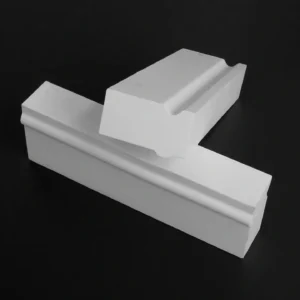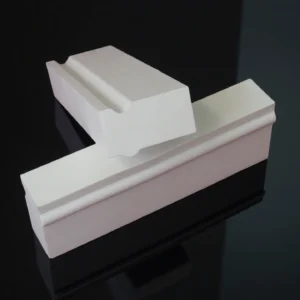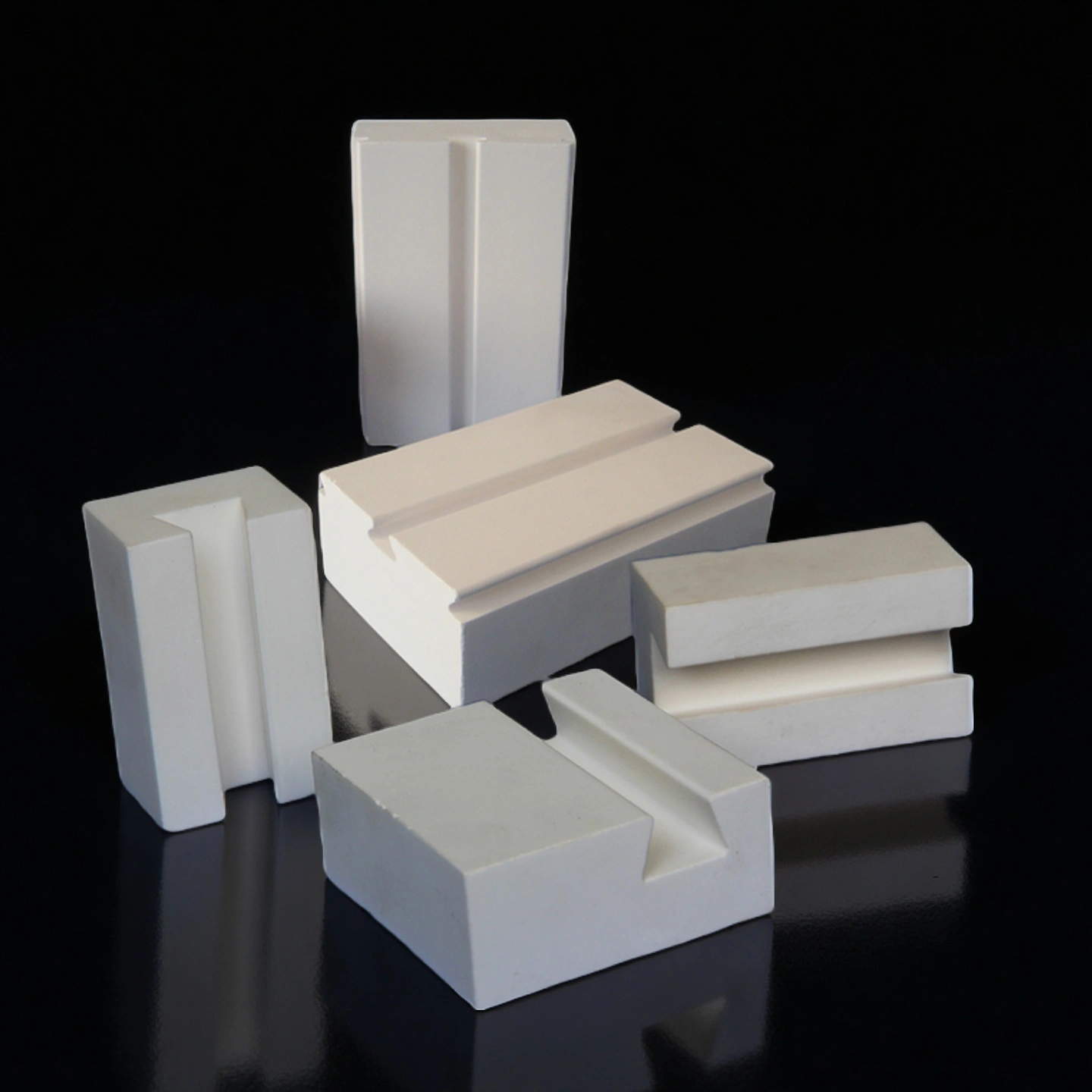
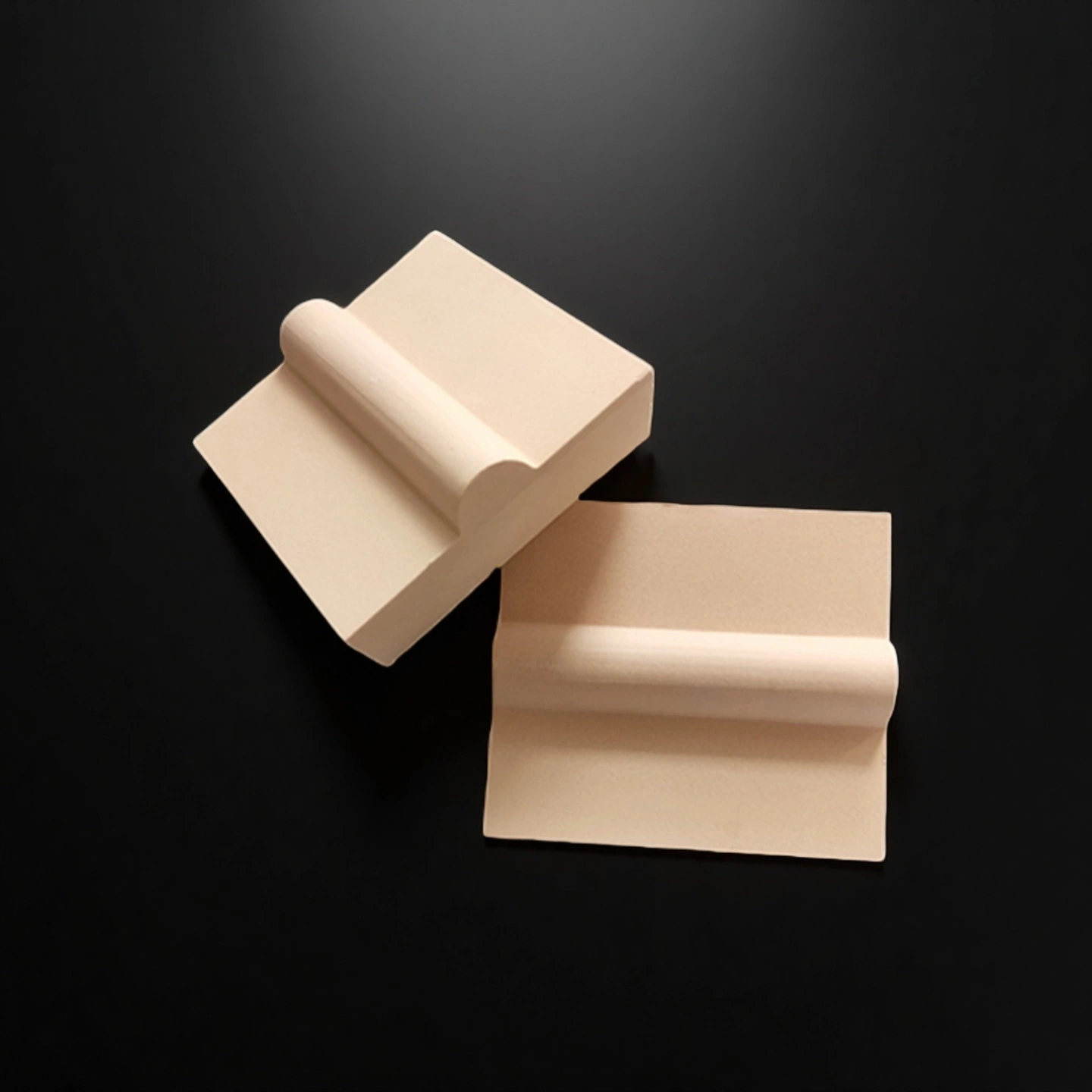
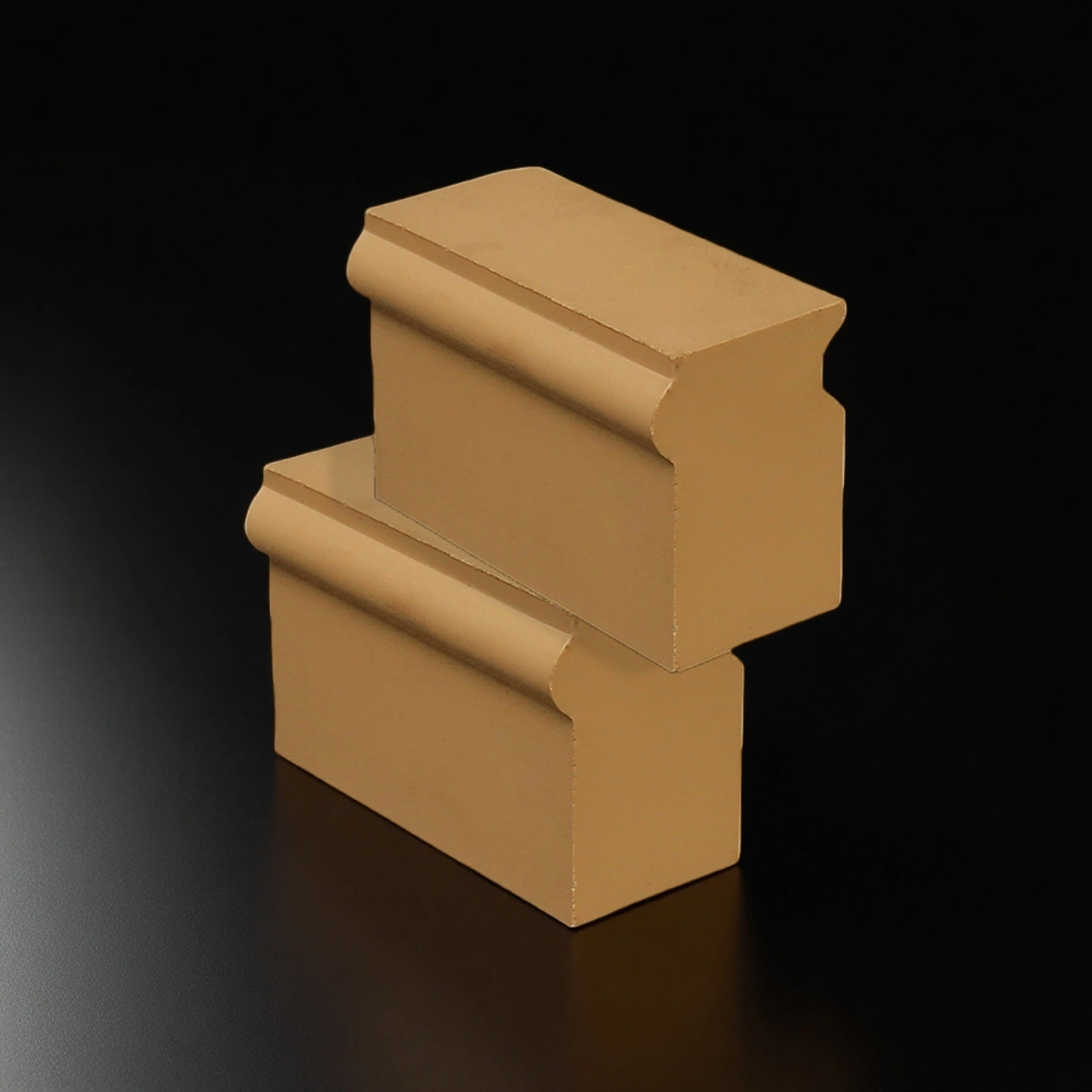
Zirconia liner bricks are dense Y-TZP ceramic wear-lining bricks that armor the inside of ball mills, bead mills, attritors, chutes and hoppers — they protect the steel shell from abrasion and keep the ground product free of iron contamination. They are wear-resistant lining bricks, not refractory / fire bricks, not fused-cast zirconia-corundum furnace bricks, not building bricks, not dental zirconia blocks, and not grinding balls.
Why a zirconia (Y-TZP) liner brick:
- High hardness + toughness — resists abrasion from grinding media while its high fracture toughness (a top-tier value among technical ceramics) helps resist edge chipping and impact cracking.
- Low contamination — dense, low-porosity, iron-free ceramic surface helps keep high-purity powders clean (electronic ceramics, lithium battery, pigments).
- Low powder adhesion — smooth machined surface reduces build-up in chutes and mill walls.
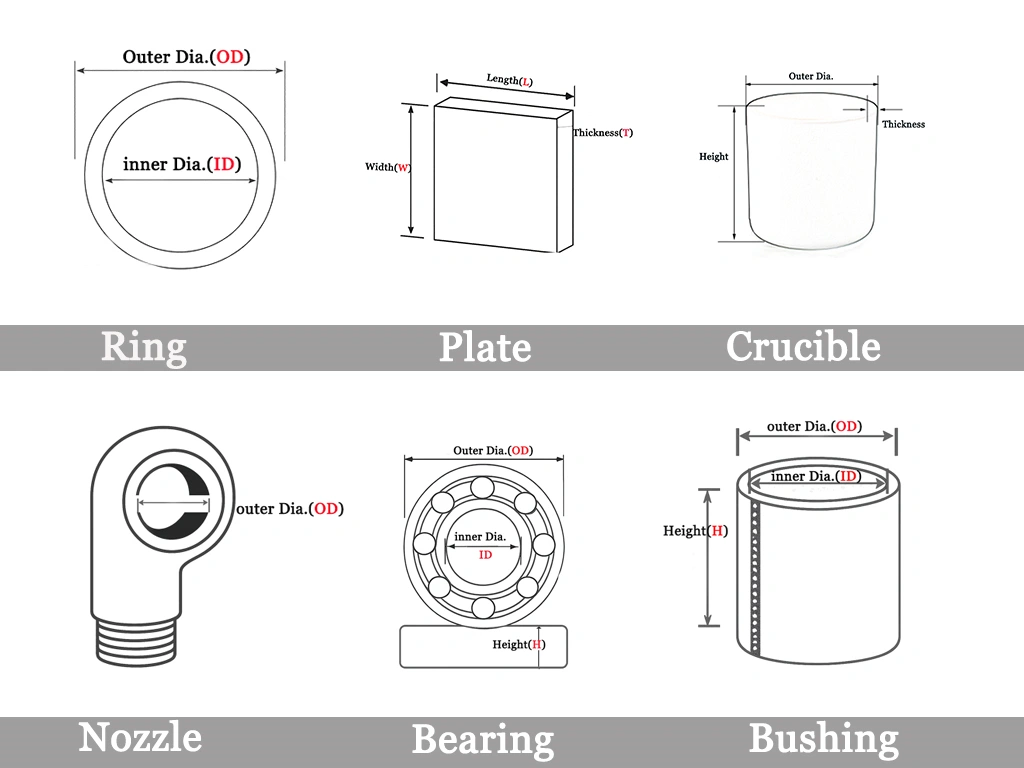
- Custom mill fit — bricks are shaped to your mill inner diameter, shell layout and openings for tight joints.
- Zirconia typically lasts longer than alumina in high-wear service, but actual wear life depends on media, material, load, speed, wet/dry duty and installation — we assess it per case rather than promise a fixed multiple or lifetime.
Zirconia Liner Brick vs. Alumina Liner — Typical Reference
| Property | Zirconia liner brick (Y-TZP) | Alumina liner (reference) | Note |
|---|---|---|---|
| Main material | YSZ / Y-TZP, ~94–95% ZrO₂ | 92–95% Al₂O₃ | Grade confirmed per order |
| Density (g/cm³) | ~6.0 (5.8–6.05) | ~3.6–3.7 | Zirconia is heavier—check mill loading |
| Vickers hardness (HV) | ~1100–1300 | ~1100–1500 | Method-dependent |
| Fracture toughness (MPa·m½) | ~6–10 | ~3–4 | Zirconia’s key advantage for chip and impact resistance |
| Flexural strength (MPa) | ~800–1000 | ~275–350 | Configuration- and size-dependent |
| Compressive strength (MPa) | ~2000–2500 | — | Typical dense zirconia |
| Elastic modulus (GPa) | ~200–210 | — | — |
| Water absorption/porosity | ~0 / <0.01% | ~0 / <0.01% | Supports low-contamination processing |
| Thermal conductivity (W/m·K) | ~2–3 | ~20–30 | Wear liners normally operate from near-ambient to medium temperatures |
| CTE (10⁻⁶/K) | ~10–11 | ~7–8 | — |
Specifications of Zirconia Liner Brick
| Zirconia Liner Brick | ||||
| Item No. | Height(mm) | Upper width/Lower width(mm) | Length (mm) | Shape |
| AT-YHG-CZ1001 | 15 | 45/50 | 150 | Oblique Brick |
| AT-YHG-CZ1002 | 25 | 45/50 | 150 | |
| AT-YHG-CZ1003 | 35 | 45/50 | 150 | |
| AT-YHG-CZ1004 | 40 | 45/50 | 150 | |
| AT-YHG-CZ1005 | 50 | 45/50 | 150 | |
| AT-YHG-CZ1006 | 60 | 45/50 | 150 | |
| AT-YHG-CZ1007 | 70 | 45/50 | 150 | |
| AT-YHG-CZ1008 | 90 | 45/50 | 150 | |
| AT-YHG-CZ1009 | 100 | 45/50 | 150 | |
| AT-YHG-CZ1010 | 15 | 50 | 75 | Straight Half |
| AT-YHG-CZ1011 | 25 | 50 | 75 | |
| AT-YHG-CZ1012 | 35 | 50 | 75 | |
| AT-YHG-CZ1013 | 40 | 50 | 75 | |
| AT-YHG-CZ1014 | 50 | 50 | 75 | |
| AT-YHG-CZ1015 | 60 | 50 | 75 | |
| AT-YHG-CZ1016 | 70 | 50 | 75 | |
| AT-YHG-CZ1017 | 90 | 50 | 75 | |
| AT-YHG-CZ1018 | 100 | 50 | 75 | |
| AT-YHG-CZ1019 | 15 | 45/50 | 75 | Straight Half |
| AT-YHG-CZ1020 | 25 | 45/50 | 75 | |
| AT-YHG-CZ1021 | 35 | 45/50 | 75 | |
| AT-YHG-CZ1022 | 40 | 45/50 | 75 | |
| AT-YHG-CZ1023 | 50 | 45/50 | 75 | |
| AT-YHG-CZ1024 | 60 | 45/50 | 75 | |
| AT-YHG-CZ1025 | 70 | 45/50 | 75 | |
| AT-YHG-CZ1026 | 90 | 45/50 | 75 | |
| AT-YHG-CZ1027 | 100 | 45/50 | 75 | |
| AT-YHG-CZ1028 | 15 | 25 | 150 | Thin Brick |
| AT-YHG-CZ1029 | 25 | 25 | 150 | |
| AT-YHG-CZ1030 | 35 | 25 | 150 | |
| AT-YHG-CZ1031 | 40 | 25 | 150 | |
| AT-YHG-CZ1032 | 50 | 25 | 150 | |
| AT-YHG-CZ1033 | 60 | 25 | 150 | |
| AT-YHG-CZ1034 | 70 | 25 | 150 | |
| AT-YHG-CZ1035 | 90 | 25 | 150 | |
| AT-YHG-CZ1036 | 100 | 25 | 150 | |
| AT-YHG-CZ1037 | 15 | 22.5/25 | 150 | Oblique Thin |
| AT-YHG-CZ1038 | 25 | 22.5/25 | 150 | |
| AT-YHG-CZ1039 | 35 | 22.5/25 | 150 | |
| AT-YHG-CZ1040 | 40 | 22.5/25 | 150 | |
| AT-YHG-CZ1041 | 50 | 22.5/25 | 150 | |
| AT-YHG-CZ1042 | 60 | 22.5/25 | 150 | |
| AT-YHG-CZ1043 | 70 | 22.5/25 | 150 | |
| AT-YHG-CZ1044 | 90 | 22.5/25 | 150 | |
| AT-YHG-CZ1045 | 100 | 22.5/25 | 150 | |
Zirconia vs other liners — choose by wear, contamination, weight, budget:
- Zirconia (Y-TZP): highest hardness + toughness + low contamination — best for high-wear, contamination-sensitive powder grinding (electronic ceramics, lithium battery, pigments).
- Alumina brick: lower cost for ordinary wear — often the economical choice.
- ZTA: a cost/performance middle ground.
- Rubber/steel: high-impact/low-noise (rubber) or heavy-duty (steel), where contamination isn't the concern.
We won't push zirconia where alumina or ZTA fits your wear and budget better — we review your case first.
Packaging of Zirconia Liner Brick
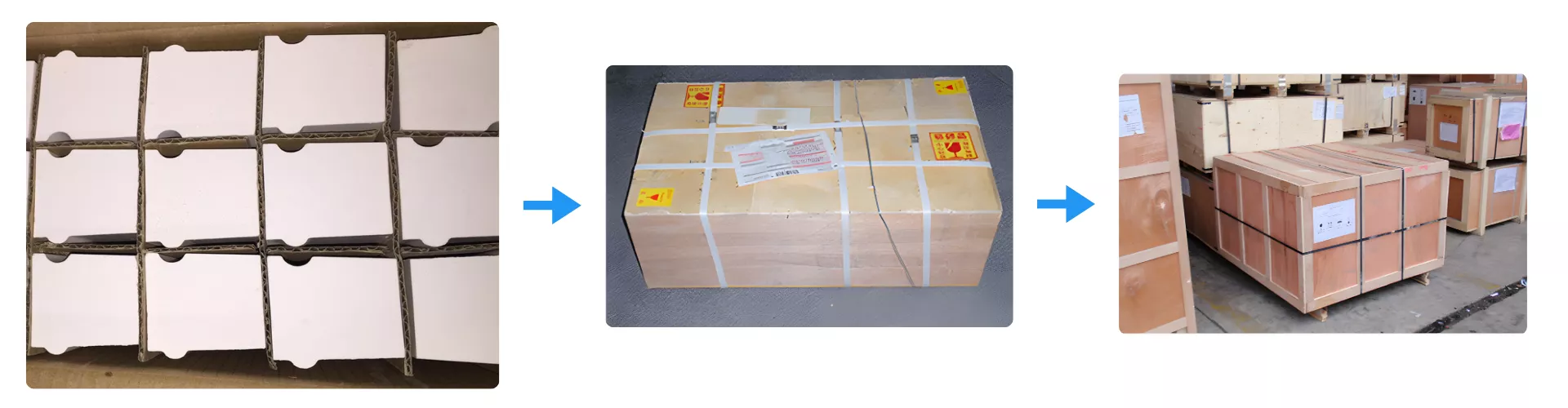
Zirconia Liner Brick is first individually separated with corrugated dividers to avoid surface contact damage during transit. Each set is securely sealed in a reinforced inner carton, then further protected by shock-resistant wooden crates. This multi-layer packaging ensures structural integrity and cleanliness from factory dispatch to end-user delivery.