What Is a SiC Lined Magnetic Drive Pump?
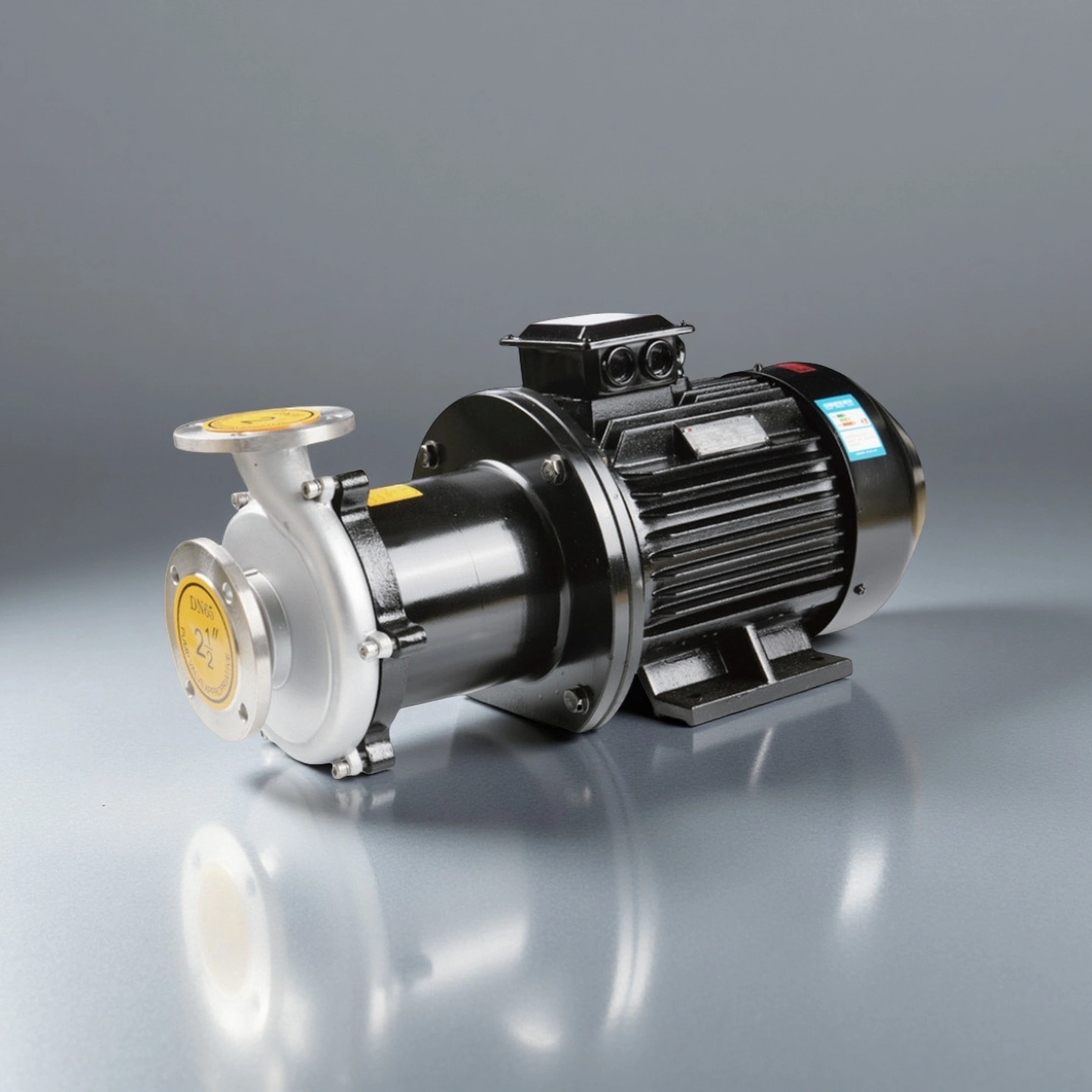
A SiC lined magnetic drive pump is a sealless chemical transfer pump that uses magnetic coupling instead of a mechanical shaft seal. In ADCERAX CQ pump configurations, stainless steel wetted parts are combined with SiC or SSiC bearing components to support corrosive media transfer, plating bath circulation, solvent handling and wastewater dosing systems. The design is suitable for applications where leakage control, bearing wear resistance and material compatibility must be reviewed before pump selection.
Key Engineering Design Factors for SiC Lined Magnetic Drive Pumps
1. Sealless Magnetic Drive Structure
The magnetic drive structure eliminates the mechanical shaft seal, reducing leakage risk in chemical transfer systems where acids, alkalis, solvents or vapor-forming media may attack conventional seal faces.
2. SiC Bearing and Sleeve Support
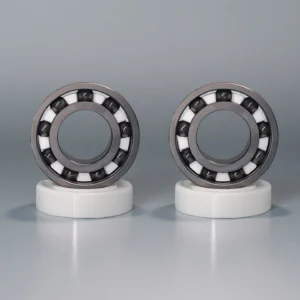
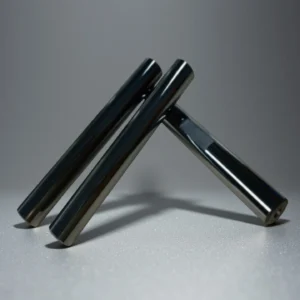
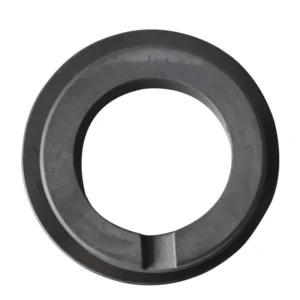
SiC and SSiC bearing components provide high hardness, wear resistance and dimensional stability for rotating pump assemblies. This is important in chemical circulation loops where small particles, crystallization or boundary lubrication may accelerate bearing wear.
3. Stainless Steel Wetted-Part Options
SS304, SS316, CF8 and CF8M options allow the wetted structure to be reviewed according to corrosion behavior, chloride exposure, operating temperature and cleaning requirements.
4. Chemical Transfer and Dosing Stability
The pump can be reviewed for continuous circulation, batch transfer, plating bath agitation and wastewater dosing where steady flow behavior and correct material selection are more important than using a generic pump model.
5. Application-Based Configuration Review
Final selection should be based on media composition, flow rate, head, NPSH, viscosity, particle load, temperature, installation layout and motor requirements.
Technical Specifications of CQ Stainless Steel Magnetic Drive Pump
The CQ Stainless Steel Magnetic Drive Pump integrates a sealless magnetic-drive structure with stainless-steel wetted components and SiC-supported rotating elements, enabling the SiC Lined CQ Series Stainless Steel Magnetic Drive Chemical Pump to maintain chemical stability, thermal endurance, and long-cycle operational reliability across demanding industrial media.
| Property | Specification | Engineering Selection Note |
|---|---|---|
| Wetted Material Type | SS304 / SS316 / CF8 / CF8M | Material selection should be reviewed according to chemical media, chloride exposure, temperature and corrosion risk. |
| Bearing Material | SSiC or carbon-enhanced SiC | SiC-based bearing materials support wear resistance and dimensional stability in chemically demanding pump service. |
| Maximum Operating Temperature | 90–120 °C depending on media | Final temperature suitability depends on media composition, sealing structure, bearing clearance and operating cycle. |
| Corrosion Resistance Rating | Compatible with pH 1–14 media | Chemical compatibility should be confirmed by media concentration, temperature and exposure time before final selection. |
| Max Fluid Density | Up to 1.9 g/cm³ | Higher-density fluids may require review of motor power, coupling torque, flow rate and startup condition. |
| Allowable Viscosity Range | Up to 150 cP chemical solutions | Viscosity affects flow performance, motor load and pump efficiency, so actual operating data should be checked. |
| Magnetic Coupling Torque Rating | Inner–outer coupling endurance >20,000 h | Coupling selection should match torque demand, fluid density, viscosity and continuous-duty requirements. |
| Cavitation Performance (NPSH Stability) | Stable operation down to 1.5–2.0 m NPSHa | NPSH should be reviewed with suction height, pipe layout, vapor pressure and tank level to reduce cavitation risk. |
| Abrasion Resistance (SiC Bearings) | Wear loss <0.02 g/100h in slurry simulations | Abrasive service requires review of particle size, concentration, filtration and bearing lubrication condition. |
| Chemical Vapor Tolerance | Stable under vapor fraction <30% | Vapor-forming media should be reviewed carefully because gas content may affect bearing lubrication and pump stability. |
| Pressure Endurance | Pump casing verified to 1.5× design pressure | Pressure rating should be checked against system pressure, pipe resistance, valve condition and safety margin. |
| Motor Integration Standard | IEC / UL / NEMA compatible motors | Motor configuration can be matched to regional voltage, frequency, installation standard and control requirements. |
| Isolation Sleeve Type | Non-metallic or stainless-steel barrier rated to >1,000 V dielectric strength | Sleeve material affects magnetic efficiency, isolation performance, corrosion resistance and thermal behavior. |
| Hydraulic Efficiency Band | 48–62% for typical flow–head profiles | Efficiency depends on model selection, impeller design, flow range, head requirement and operating point. |
| Surface Hardness (SiC Internal Components) | >2,200 HV micro-hardness | High hardness helps improve wear resistance for bearing, sleeve and internal contact components. |
Dimensions of CQ Stainless Steel Magnetic Drive Pump
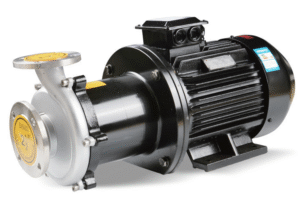
| Type1: CQ Stainless Steel Magnetic Drive Pump | |||||||
| Type | Import (DN) | Export (DN) | Head (L/min) | Head (M) | Power (Kw) | Speed (r/min) | Voltage (V) |
| AT-1600-8P | 16 | 12 | 30/1.8 | 8 | 0.18 | 2900 | 380/220 |
| AT-2000-12P | 20 | 16 | 50/3.0 | 12 | 0.37 | 2900 | 380/220 |
| AT-2500-15P | 25 | 20 | 110/6.6 | 15 | 1.1 | 2900 | 380/220 |
| AT-3200-15P | 32 | 25 | 110/6.6 | 15 | 1.1 | 2900 | 380/220 |
| AT-3200-25P | 32 | 25 | 110/6.6 | 25 | 1.1 | 2900 | 380/220 |
| AT-3200-25PN | 32 | 25 | 110/6.6 | 25 | 1.5 | 2900 | 380/220 |
| AT-4000-20P | 40 | 32 | 180/10.8 | 20 | 2.2 | 2900 | 380 |
| AT-4000-25P | 40 | 32 | 180/10.8 | 25 | 3 | 2900 | 380 |
| AT-4000-35P | 40 | 32 | 180/10.8 | 35 | 4 | 2900 | 380 |
| AT-5000-25P | 50 | 40 | 240/14.4 | 25 | 4 | 2900 | 380 |
| AT-5000-35P | 50 | 35 | 240/14.4 | 35 | 4 | 2900 | 380 |
| AT-50C0-35PN | 50 | 35 | 240/14.4 | 35 | 5.5 | 2900 | 380 |
| AT-5000-50P | 50 | 32 | 240/14.4 | 50 | 7.5 | 2900 | 380 |
| AT-6500-25P | 65 | 50 | 450/27 | 25 | 5.5 | 2900 | 380 |
| AT-6500-35P | 65 | 50 | 450/27 | 35 | 7.5 | 2900 | 380 |
| AT-8000-25P | 80 | 65 | 850/51 | 25 | 7.5 | 2900 | 380 |
| AT-8000-35P | 80 | 65 | 850/51 | 35 | 11 | 2900 | 380 |
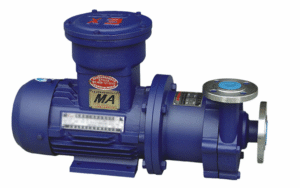
| Type2: CQ Stainless Steel Magnetic Drive Pump | ||||||||
| Type | Import (DN) | Export (DN) | Flow (m3/h) | Head (M) | (NPSH)r(m) | Power (Kw) | Speed (r/min) | Voltage (V) |
| AT-16CQ-8 | 16 | 12 | 1.8 | 8 | 6 | 0.18 | 2900 | 220/380 |
| AT-20CQ-12 | 20 | 12 | 3 | 12 | 6 | 0.37 | 2900 | 220/380 |
| AT-25CQ-15 | 25 | 20 | 5.4 | 15 | 6 | 1.1 | 2900 | 380 |
| AT-32CQ-15 | 32 | 25 | 6.6 | 15 | 6 | 1.1 | 2900 | 380 |
| AT-32CQ-25 | 32 | 25 | 4.8 | 25 | 5.5 | 1.1 | 2900 | 380 |
| AT-40CQ-20 | 40 | 32 | 10.8 | 20 | 4 | 2.2 | 2900 | 380 |
| AT-40CQ-32 | 40 | 32 | 12 | 32 | 4 | 4 | 2900 | 380 |
| AT-50CQ-25 | 50 | 40 | 14.4 | 25 | 4 | 4 | 2900 | 380 |
| AT-50CQ-40 | 50 | 40 | 13.2 | 40 | 4 | 4 | 2900 | 380 |
| AT-50CQ-50 | 50 | 32 | 78 | 50 | 4 | 5.5 | 2900 | 380 |
| AT-65CQ-25 | 65 | 50 | 16.8 | 25 | 4 | 5.5 | 2900 | 380 |
| AT-65CQ-35 | 65 | 50 | 27 | 35 | 4 | 7.5 | 2900 | 380 |
| AT-80CQ-20 | 80 | 65 | 50 | 20 | 4 | 7.5 | 2900 | 380 |
| AT-80CQ-35 | 80 | 65 | 50 | 35 | 4 | 11 | 2900 | 380 |
Packaging Method for CQ Stainless Steel Magnetic Drive Pump
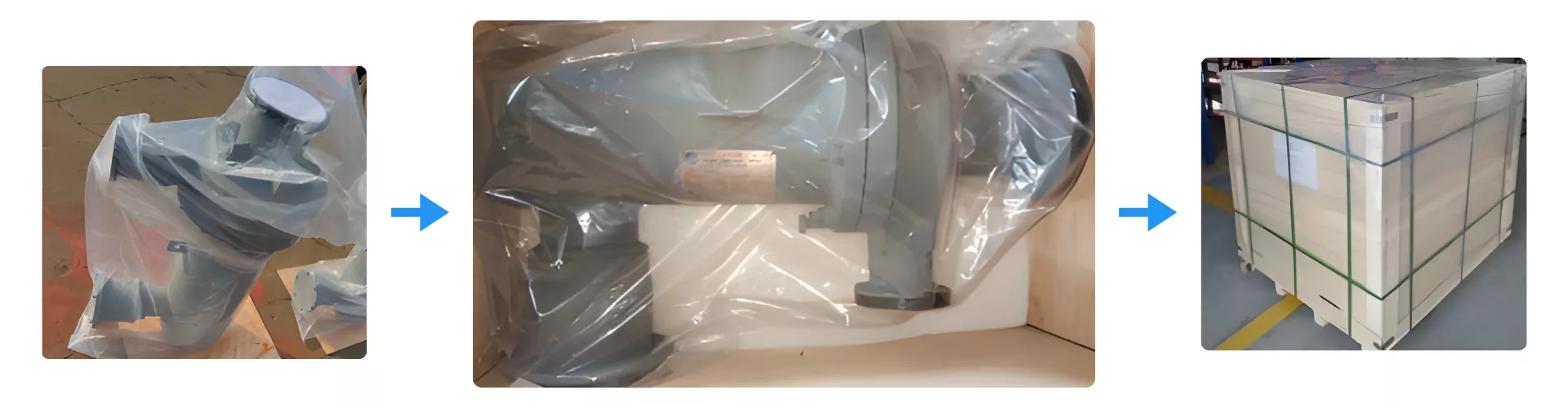
CQ Stainless Steel Magnetic Drive Pump units are individually sealed in protective polymer film to prevent moisture exposure and safeguard the SiC Lined CQ Series Stainless Steel Magnetic Drive Chemical Pump surfaces during transit. Each pump is then stabilized with custom internal supports to minimize vibration and ensure structural integrity throughout long-distance shipping. The packaged units are finally secured in reinforced export-grade wooden crates for reliable handling in international freight conditions.