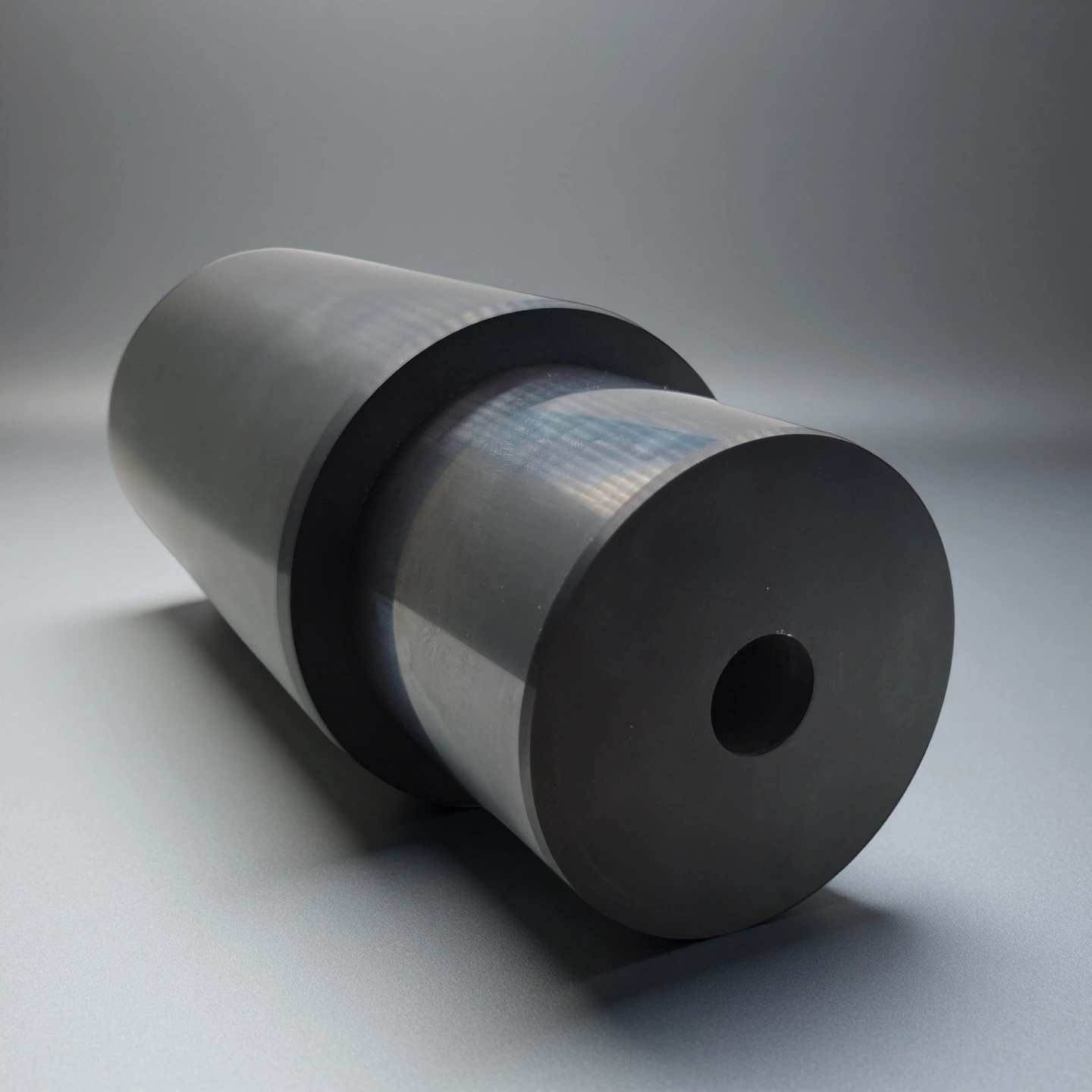
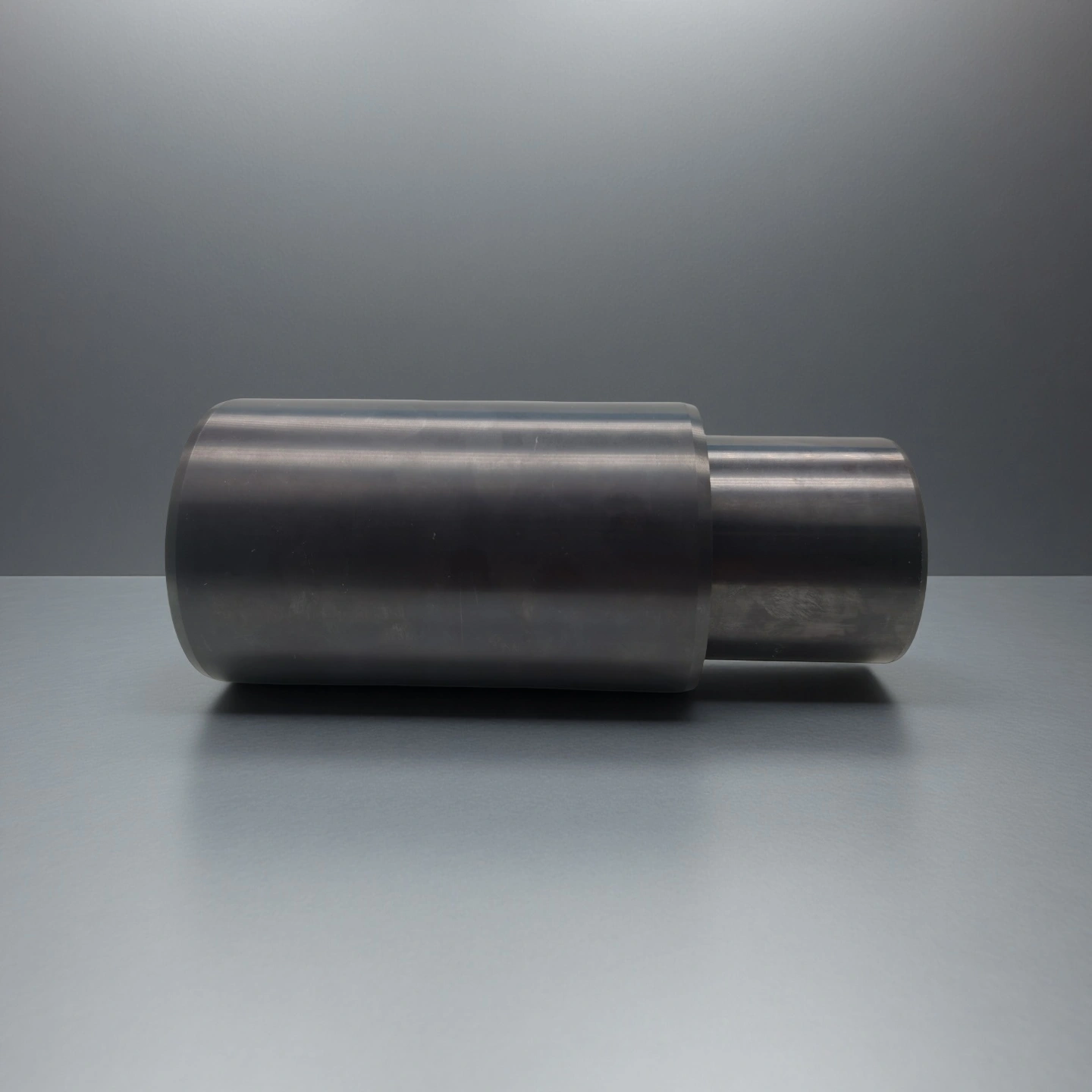
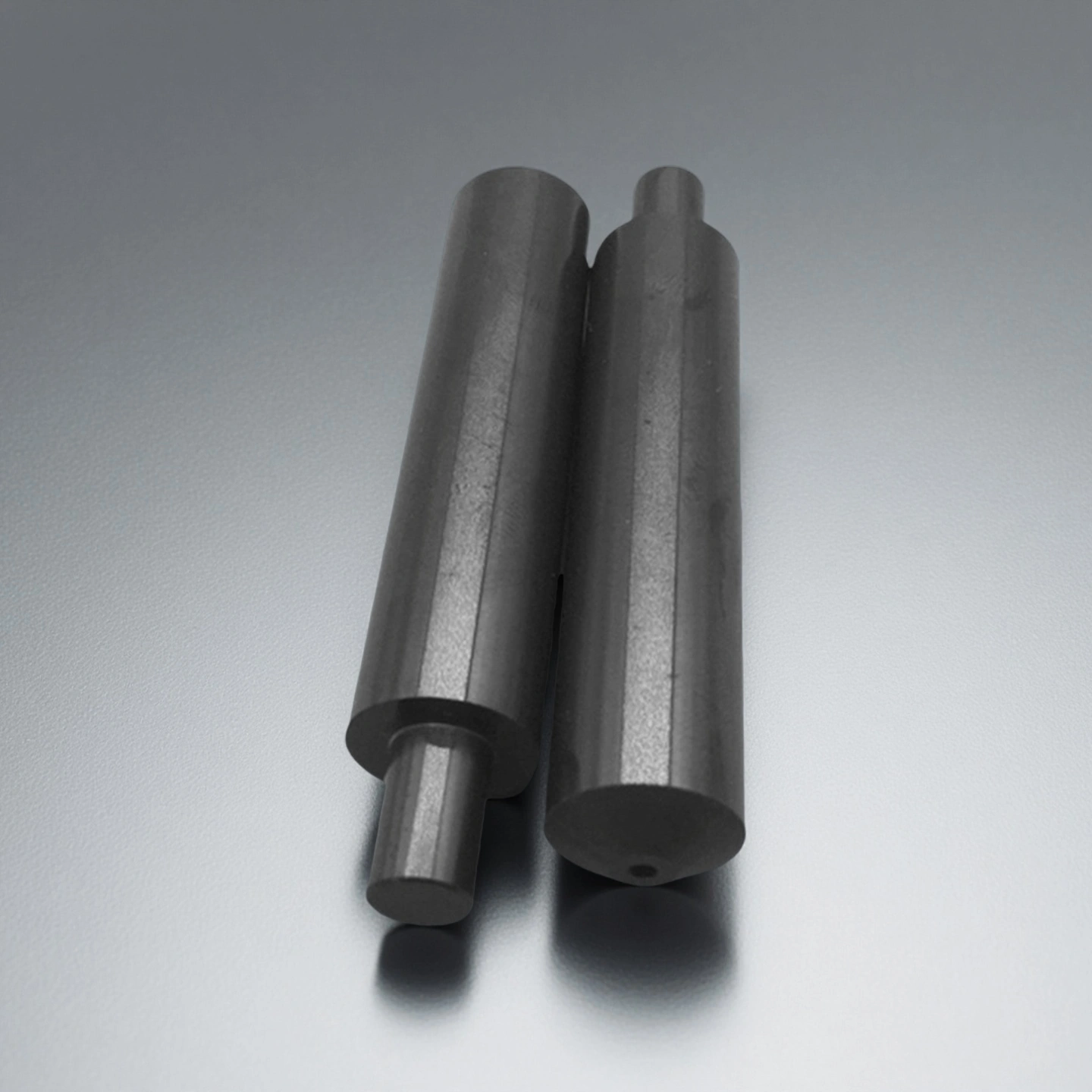
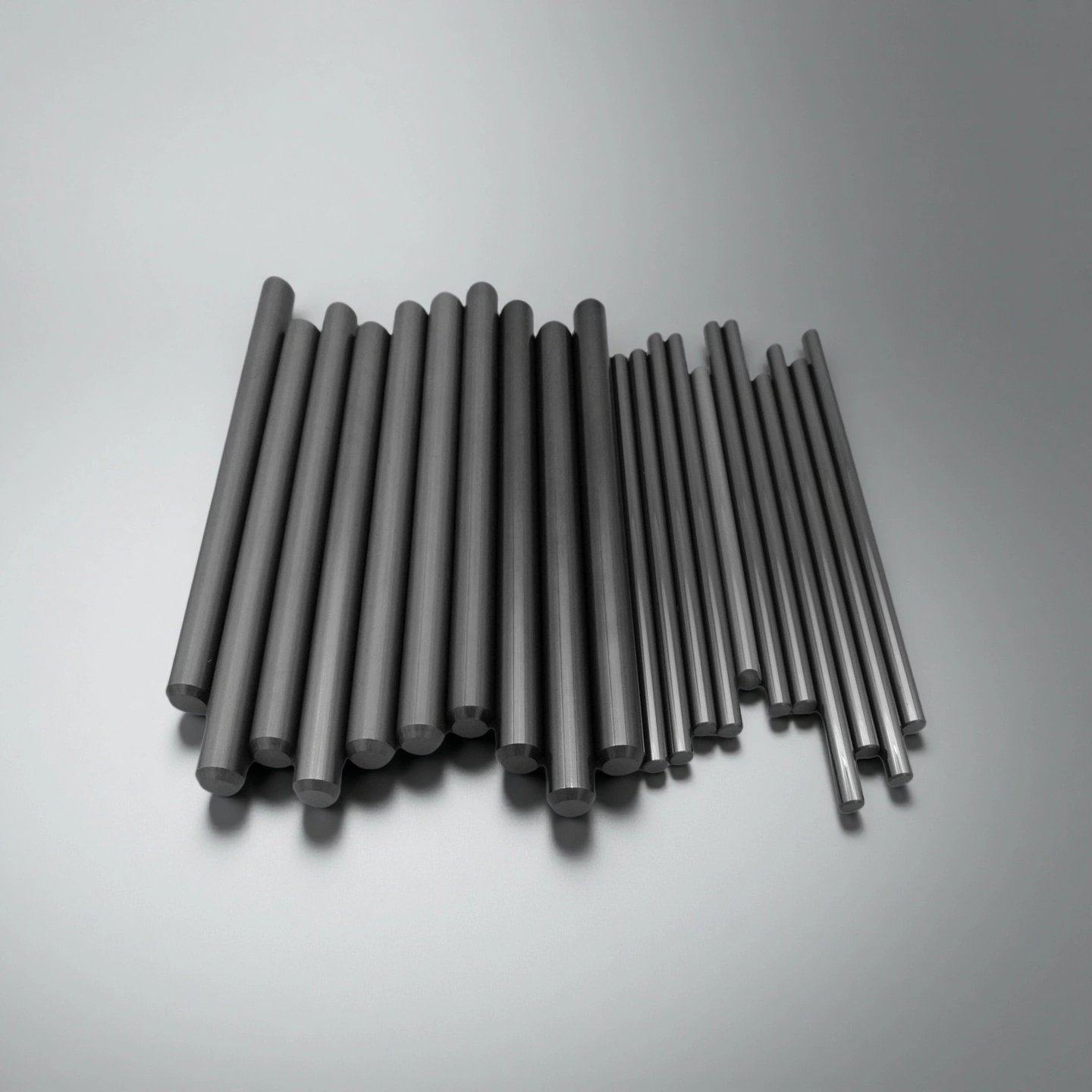
Silicon Nitride Plunger for High-Pressure Plunger Pumps (200–3000 bar Duty)

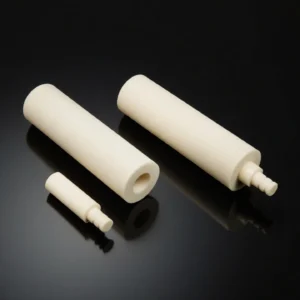
We supply silicon nitride plungers in diameters typically from 6 mm up to 40 mm and lengths from 20 mm to 650 mm, with options for straight, stepped or shouldered designs; non-standard sizes and transition geometries can be produced according to customer drawings or samples.

Catalogue No. AT-SIC-ZS001
Material Silicon Nitride
Flexural Strength  ≥ 800 MPa
Surface Roughness Ra ≤ 0.2μm
Flexural strength @ 25 °C 700–900 MPa
24H Standard Dispatch
Small Batch Support OEM
Factory Direct
Expert Engineering Support

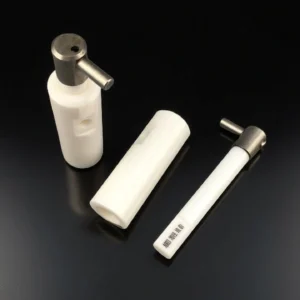
Silicon nitride plunger is a precision Si₃N₄ ceramic piston rod used in high-pressure pumps, metering pumps and filling equipment, designed with polished working surfaces, tight clearance control and custom shoulders to match OEM pump heads and packing systems.


Silicon Nitride Plunger Benefits

  • Extended service life in high-pressure duty
    In many pump applications, silicon nitride plungers show service life roughly 7–12 times longer than metal plungers under comparable conditions, reducing change-out frequency and packing damage.

  • Tight clearance and leakage control
    Precision grinding allows plunger–bushing gaps to be set in the order of a few micrometres, supporting stable volumetric efficiency and controlled leakage in high-pressure pump heads.

  • Polished surface for seal and packing stability
    The working surface of the silicon nitride plunger can be finished to about Ra 0.1 μm, limiting friction peaks and helping elastomer, PTFE or composite packings maintain sealing performance over large cycle counts.

  • Wear and corrosion behaviour suited to demanding media
    The high hardness and chemical stability of Si₃N₄ ceramics make the plunger suitable for water, salt solutions, many chemicals, epoxy resin and other fluids where metal plungers are prone to wear tracks and corrosion.

  • Strength retention at elevated temperature
    Silicon nitride maintains significant mechanical strength up to around 1000–1200 °C, so the plunger can tolerate heat generated in the pump head without sudden loss of integrity when operated within design limits.

Silicon Nitride Ceramic Plunger Properties

Si3N4 Type Gas pressure sintering Si3N4 Hot pressing sintering Si3N4 High thermal conductivity Si3N4
Density (g/cm3) 3.2 3.3 3.25
Flexture strength (MPa) 700 900 600~800
Young Modulus (GPa) 300 300 300~320
Poisson's ratio 0.25 0.28 0.25
Compressive strength (MPa) 2500 3000 2500
Hardness (GPa) 15 16 15
Fracture toughness (MPa*m1/2) 5~7 6~8 6~7
Maximum working temperature (℃) 1100 1300 1100
Thermal conductivity (W/m*K) 20 25 80~100
Thermal expansion coefficient (/℃) 3*10-6 3.1*10-6 3*10-6
Thermal shock resistance (ΔT ℃) 550 800 /


Silicon Nitride Plunger Specifications

Silicon Nitride Plunger
Item No. Diameter (mm) Length (mm) Purity (mm)
AT-SIC-ZS001 2 20 85-99
AT-SIC-ZS002 2 50 85-99
AT-SIC-ZS003 3 50 85-99
AT-SIC-ZS004 4 50 85-99
AT-SIC-ZS005 5 50 85-99
AT-SIC-ZS006 6 60 85-99
AT-SIC-ZS007 6.75 50 85-99
AT-SIC-ZS008 7.5 100 85-99
AT-SIC-ZS009 8 30 85-99
AT-SIC-ZS010 10 40 85-99
AT-SIC-ZS011 12 10 85-99
AT-SIC-ZS012 12 40 85-99
AT-SIC-ZS013 15 10 85-99
AT-SIC-ZS014 15 40 85-99
AT-SIC-ZS015 20 80 85-99
AT-SIC-ZS016 20 40 85-99
AT-SIC-ZS017 25 50 85-99
AT-SIC-ZS018 30 80 85-99
AT-SIC-ZS019 2-80 20-200 85-99


Si3N4 ceramic plunger Packing

  • Each silicon nitride plunger is individually wrapped in soft protective material to prevent contact damage and micro-chipping.
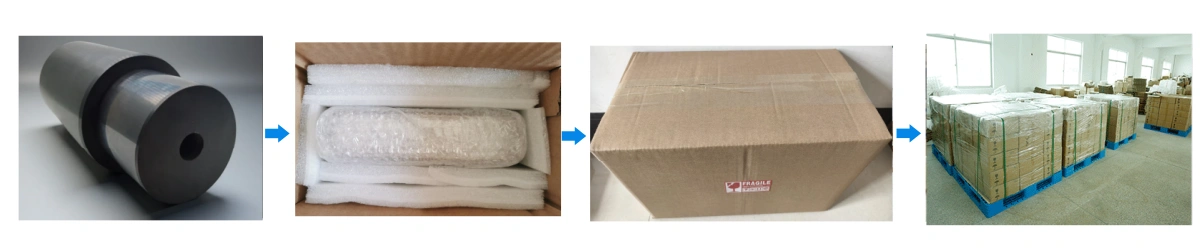

Si3N4 ceramic plunger Packing

Silicon Nitride Plunger Applications

  • High-Pressure Plunger Pumps & Waterjet Systems

    ✅Key Advantages

    1. High-cycle fatigue resistance in 200–3000 bar service
    Flexural strength in the 700–900 MPa range supports repeated high-pressure cycles in triplex and quintuplex plunger pumps.
    2. Controlled clearance for stable volumetric efficiency
    Micrometre-level plunger–bushing clearances help maintain flow rate and pressure over long operating periods.
    3. Service life is typically several times for metal plungers
    In many high-pressure water and cleaning systems, silicon nitride plungers can remain in service for multiple replacement intervals of metal plungers.

    ✅ Problem Solved

    A high-pressure cleaning system operating two shifts previously required metal plunger replacement three to four times per year due to wear tracks and seal damage. After switching to silicon nitride plungers with polished working surfaces and controlled clearances, change-outs dropped to once per year while pump output remained within the original pressure and flow specifications. The reduction in maintenance hours and unplanned stoppages lowered the effective cost per operating hour, even though the ceramic plungers have a higher individual purchase price.

  • Chemical Metering & Dosing Pumps

    ✅Key Advantages

    1. Dimensional stability for repeatable dosing
    High hardness and modulus help the silicon nitride plunger maintain diameter and roundness under load, supporting consistent stroke volume over long campaigns.
    2. Resistance to aggressive fluids
    Silicon nitride plungers are used in contact with various solvents, salt solutions and process chemicals where corrosion or erosion shortens metal plunger life.
    3. Refined surface for seal life and dosing accuracy
    A fine-ground and polished working band creates a stable contact zone for PTFE and composite seals, helping maintain dosing accuracy and reduce leakage drift over time.

    ✅ Problem Solved

    A plant running metering pumps on a corrosive additive experienced gradual dosing drift and frequent seal changes with metal plungers. After adopting silicon nitride plungers with matched clearances and a polished sealing band, the plant was able to extend seal replacement intervals and keep dosing closer to the target setting throughout the campaign. Less off-spec product and fewer pump strip-downs compensated for the higher initial cost of the ceramic plungers.

  • Filling & Dosing Equipment

    ✅Key Advantages

    1. Smooth surface for low particle generation
    The polished silicon nitride plunger surface reduces asperities that can shed particles into filled liquids or viscous media.
    2. Wear performance in short-stroke high-cycle duty
    In filling machines that run millions of short strokes per year, Si₃N₄ plungers help maintain stroke length and sealing performance.
    3. Compatibility with varied filling media
    Silicon nitride plungers are used with water-based products, viscous adhesives and epoxy systems, providing flexibility across product variants on the same machine platform.

    ✅ Problem Solved

    A filling line for viscous epoxy previously used metal plungers that developed wear marks and surface staining after repeated cleaning cycles, leading to more frequent plunger replacement. A change to silicon nitride plungers with a stable polished surface allowed the line to run more cycles between replacements and simplified inspection, as wear could be detected visually without complex measurement. The longer service intervals improved line availability and reduced the total number of plungers consumed each year.

Silicon Nitride Plunger Usage Instructions

  • Installation

    1. Inspect each silicon nitride plunger for chips, cracks or surface damage before installation.
    2. Clean the plunger and mating bushing with lint-free wipes and a compatible solvent to remove dust or machining residues.
    3. Align the plunger axis carefully with the crosshead or drive connection to avoid bending loads.
    4. Tighten coupling elements progressively by hand tools; do not strike the ceramic shaft with a hammer or apply local point loads.

  • Operation

    1. Commission the pump at reduced speed and pressure first, observing for vibration, abnormal noise or leakage.
    2. Gradually ramp up to full operating pressure once motion is smooth and all joints are checked.
    3. Avoid dry running; ensure adequate fluid on the suction side to prevent cavitation and lubrication loss at the plunger–packing interface.
    4. Keep the operating pressure, temperature, stroke frequency and media within the limits agreed for the silicon nitride plunger design.

  • Storage

    1. Store plungers individually in padded trays or sleeves, with no hard contact between ceramic parts.
    2. Keep them in a clean, dry cabinet or crate away from impact and vibration.
    3. Retain identification labels for each plunger so installation records can trace back to the manufacturing batch and drawing revision.

  • Cleaning

    1. Perform routine cleaning with soft cloths and suitable fluids that match the process medium; avoid strong mechanical abrasion of the working surface.
    2. For hardened deposits, use non-metallic scrapers or brushes and work gradually to avoid scratching the sealing band.
    3. Do not use blasting or coarse abrasives directly on the working band, as this may change surface roughness and shorten seal life.

  • Typical user errors and remedies

    1. Misalignment causing edge chipping
    Symptom: Chips or micro-cracks near one shoulder or at one side of the working band.
    Remedy: Check crosshead alignment, coupling concentricity and bearing condition, correct the alignment and replace the damaged plunger if the chipped area lies within the stroke zone.
    Packing selection not adapted to ceramic plungers

    2. Symptom: Rapid seal wear or scoring marks on the plunger.
    Remedy: Use packing formulations recommended for ceramic plungers, and adjust pre-load according to supplier guidelines; avoid using packings meant only for rougher metal surfaces.
    Incorrect cleaning method

    3. Symptom: Dull, scratched look on the working surface and increased leakage.
    Remedy: Replace the plunger in critical duties and adopt non-abrasive cleaning procedures; train maintenance staff on handling of ceramic plungers.

Silicon Nitride Ceramic Plunger FAQ

  1. Q: What is a silicon nitride plunger in pump and dosing systems?
    A: A silicon nitride plunger is a reciprocating Si₃N₄ ceramic piston rod that pressurises or meters fluid in plunger pumps, metering pumps and filling units, used in place of metal plungers to improve wear and corrosion behaviour.
  2. Q: How does silicon nitride plunger life compare to metal plungers?
    A: In many documented applications, silicon nitride plungers achieve service life roughly 7–12 times longer than comparable metal plungers, depending on pressure, medium and maintenance conditions.
  3. Q: What surface finish can be achieved on a silicon nitride plunger?
    A: The working area of a silicon nitride plunger can be precision ground and polished to a surface roughness around Ra 0.1 μm, supporting stable contact with seals and packings.
  4. Q: What is the recommended plunger–bushing clearance for silicon nitride plungers?
    A: For high-pressure duty, target clearances are normally in the range of a few micrometres, often around 0.002–0.003 mm, adjusted for fluid viscosity, temperature and speed.
  5. Q: Which media are suitable for silicon nitride plungers?
    A: Silicon nitride plungers are used with water, salt solutions, various chemicals, slurries and viscous products such as epoxy or adhesives. Compatibility should be checked for each specific formulation and temperature.
  6. Q: What diameter and length range can silicon nitride plungers cover?
    A: Typical ranges are diameters from about 6 mm to around 40–60 mm and lengths from 20 mm up to about 650 mm per piece; larger or more slender geometries can be assessed individually.

Silicon Nitride Plunger Reviews

  • ⭐️⭐️⭐️⭐️⭐️
    We upgraded one of our high-pressure pump platforms to silicon nitride plungers. After more than a year of operation, wear marks and leakage have been reduced compared with the metal design, and our service interval for the plunger set has been adjusted accordingly.
    -- Michael R., Engineering Manager, FlowPro Pumps GmbH
  • ⭐️⭐️⭐️⭐️⭐️
    Our epoxy filling line now runs with silicon nitride ceramic plunger rods supplied by ADCERAX. Stroke volume has stayed consistent over long runs, and the seals are lasting longer than with the metal plungers used previously.
    -- Laura Chen, Production Supervisor, Pacific Fill Systems Inc.
  • ⭐️⭐️⭐️⭐️⭐️
    We introduced Si₃N₄ ceramic plunger and bushing sets on several dosing pumps in a treatment unit. The new plungers have reduced the number of planned replacements, and spare parts planning for these pumps is now more predictable.
    -- Javier Morales, Maintenance Planner, EcoTreat Water Solutions
  • ⭐️⭐️⭐️⭐️⭐️
    For a compact metering pump series, we worked with a ceramic supplier to develop a custom silicon nitride plunger. The polished working band and tight tolerance helped us meet our dosing accuracy target without redesigning the packing arrangement.”
    -- Hiroshi Tanaka, Senior Design Engineer, Nippon Process Pumps Co.
customize size

Custom Si3N4 Silicon Nitride Plunger

Most silicon nitride plungers are engineered parts, so customization focuses on dimensions, end details and surface specification to fit the target pump platform.

1. Outer diameter range
Common outside diameters from 6–40 mm; other sizes can be evaluated according to stroke length and load.

2. Length range
Approximate single-piece lengths from 20–650 mm for compact dosing pumps up to long-stroke plunger pumps.

3. End details

  • Plain cylindrical ends
  • Threaded or tapped ends for nuts, couplings or yokes
  • Shouldered ends for crossheads and piston shoes
  • Radiused or tapered transitions to reduce stress concentration

4. Cross-section options

  • Standard round plunger
  • Modified sections with flats, keyways or drive features on non-working areas

5. Working surface finish

  • Ground surface for general duty
  • Polished surface on the sealing band, targeting Ra around 0.1 μm

6. Tolerance and clearance

  • Diameter tolerance in the order of ±0.001–0.005 mm on sealing zones, depending on size
  • Target operating clearance between plunger and bushing in the approximate range of 0.002–0.003 mm, adjusted for medium viscosity and temperature

7. Material pairing

  • Si₃N₄ plunger with ceramic bushing (such as SiC or zirconia) for abrasive or corrosive fluids
  • Si₃N₄ plunger with metal bushing for general high-pressure water or light chemical duty

Related Products

ADCERAX - Your Trusted Advanced Ceramics Manufacturing Partner

Direct factory manufacturing with comprehensive ceramic materials expertise and global supply capabilities

Direct Factory Manufacturing

China-based ceramic materials production facility with state-of-the-art equipment

Engineering Team

Experienced professionals in advanced ceramics applications and custom design

Quality Control

Strict quality control standards for technical ceramics manufacturing and quality management

Global Supply Chain

Serving customers worldwide with technical ceramics and rapid response

24/7 Technical Support

Round-the-clock support for ceramic components inquiries and technical assistance

500+ Satisfied Customers

Trusted by global customers for advanced ceramic materials and precision components

Get in touch with us

Our team will be happy to respond to you in less than 24 hours.

Adcerax's factory

Quick Quotation

*Our team will answer your inquiries within 24 hours.

*Your information will be kept strictly confidential.

Ready to Solve Your Engineering Challenge?

Partner with ADCERAX for reliable, high-performance advanced ceramic solutions. Our engineers are ready to discuss your project.

E-mail

info@adcerax.com

Phone

+(86) 0731-74427743 | WhatsApp: +(86) 19311583352

Response Time

Within 24 hours

Quick Quote

The more details you provide, the faster we can quote.

*We respond within 24 hours. All inquiries are confidential.

Download Catalog

Get Your Custom Sulution

The more details you provide, the faster we can respond.

customize size

*We respond within 24 hours. All inquiries are confidential.

Download Catalog