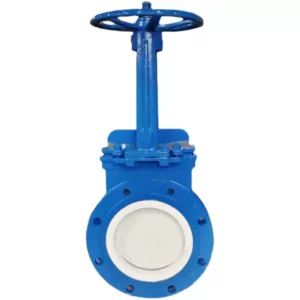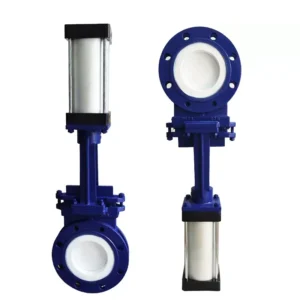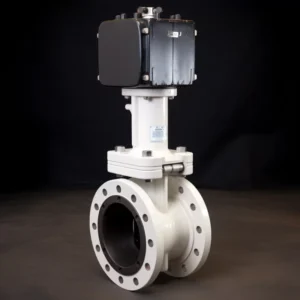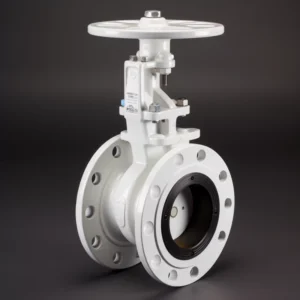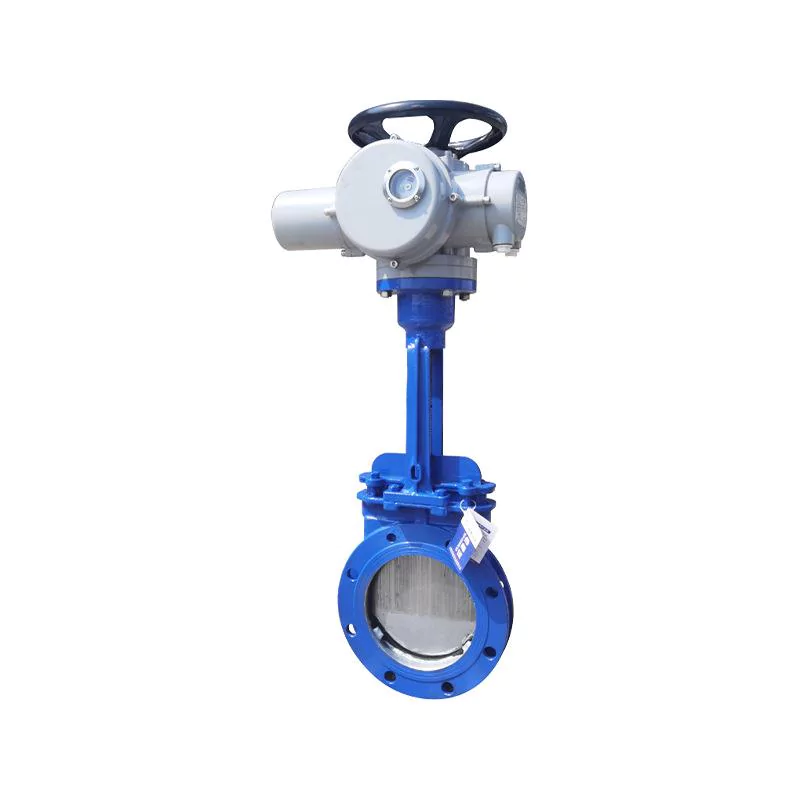
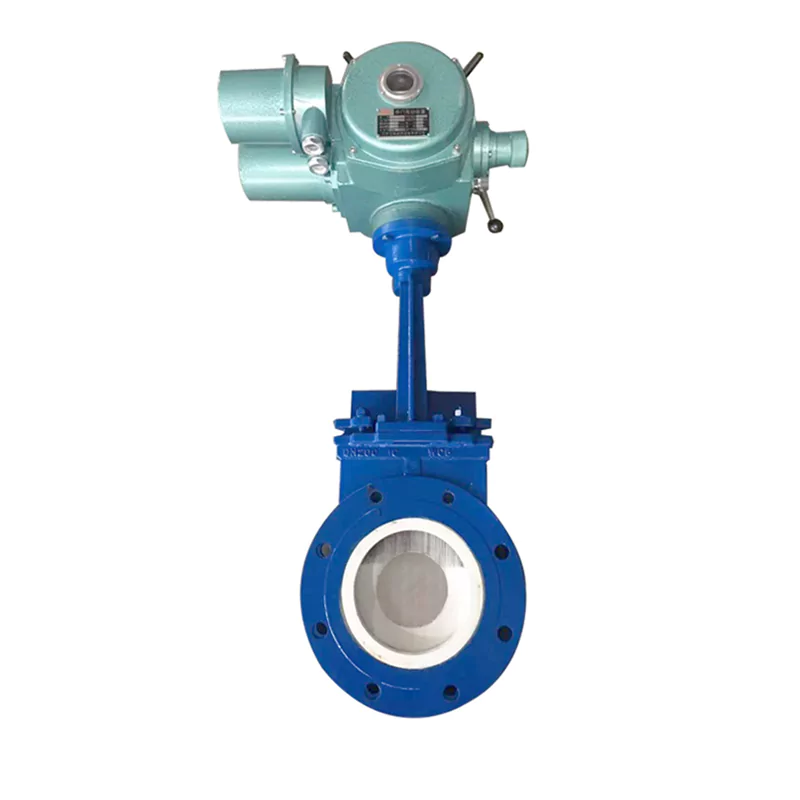
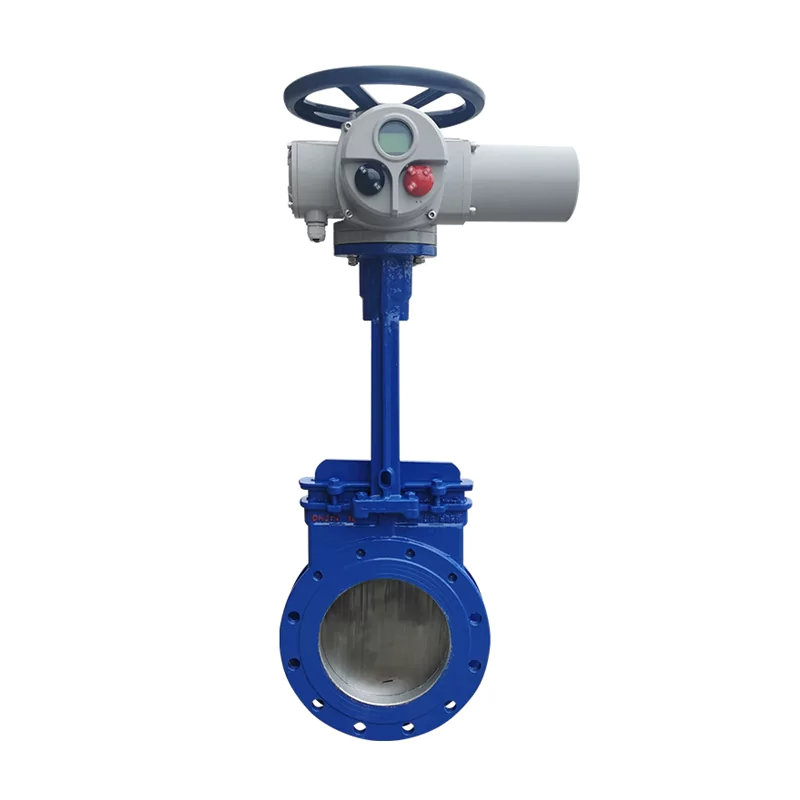
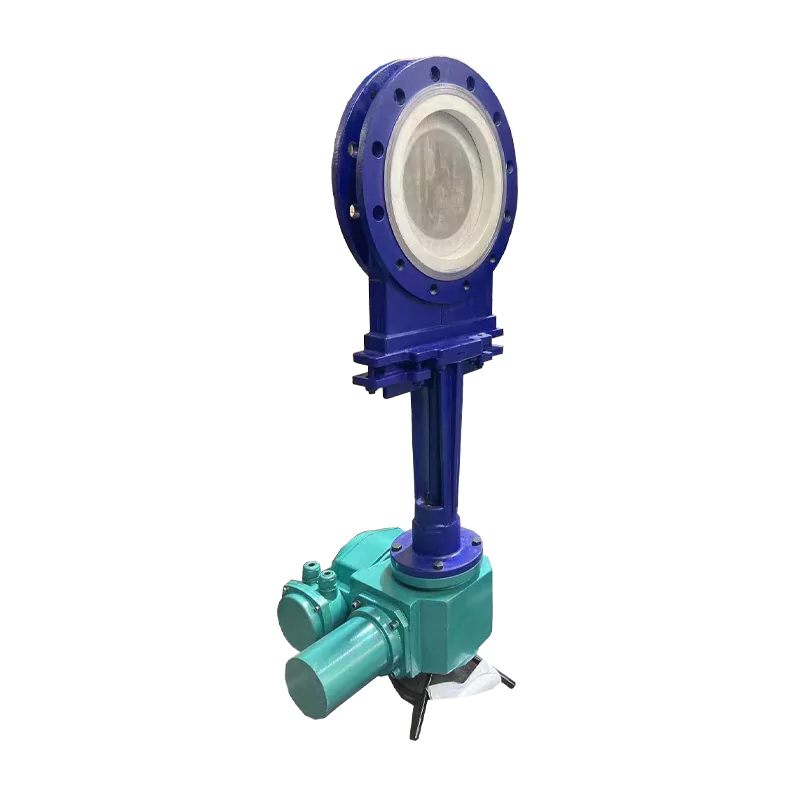
Electric Actuated Ceramic Knife Gate Valve with ZrO2 Sealing

ADCERAX electric actuated ceramic knife gate valves are designed for abrasive slurry, fly ash, wastewater sludge and chemical process media where metal sealing surfaces may wear or corrode. Zirconia ceramic sealing components support wear-resistant shut-off, while electric actuation enables remote operation and control-system integration.

Before quotation, each valve should be reviewed according to medium, solid content, pipeline size, pressure class, flange standard, actuator voltage and control signal.

Catalog No. AT-ZV1-D024
Material Zirconia ceramic sealing components
Valve Type Electric actuated ceramic knife gate valve
Typical Media Abrasive slurry, fly ash, wastewater sludge, pulp and particle-loaded process media
Actuator Review Voltage, control signal, feedback requirement, enclosure protection and installation space should be confirmed before quotation.
Engineering RFQ Review
Small-Batch Custom Support
Factory-Direct Manufacturing
Drawing & Process Review

What Is an Electric Actuated Ceramic Knife Gate Valve?

An electric actuated ceramic knife gate valve is an automated isolation valve used in pipelines that carry abrasive, corrosive or particle-loaded media. The knife gate moves vertically to open or close the flow path, while ceramic sealing components help resist wear from slurry, ash, sludge or powder-containing fluids.

For applications where manual operation is unsafe, slow or difficult to access, electric actuation allows the valve to be controlled from a panel, PLC or plant monitoring system. This makes the valve suitable for fly ash discharge, mining slurry lines, wastewater sludge treatment, pulp processing and chemical process pipelines.

ADCERAX supplies electric actuated ZrO2 ceramic knife gate valves for industrial users who need ceramic sealing support, automated operation and drawing-based size review.

Key Features of Electric Actuated ZrO2 Ceramic Knife Gate Valve
Zirconia Ceramic Sealing Parts

ZrO2 ceramic sealing components help improve wear resistance when the valve is used with abrasive slurry, fly ash, sludge and particle-loaded media. This makes the valve suitable for process lines where metal sealing surfaces may wear quickly or lose sealing stability.

Electric Actuation

The electric actuator allows remote open-close operation and can be reviewed for position feedback or control-system integration. It is suitable for pipelines where manual operation is inconvenient, unsafe or difficult to access.

Knife Gate Isolation Design

The knife gate structure is suitable for media that may contain solids, fibers or suspended particles. It helps provide practical shut-off control in slurry, ash handling, wastewater and process media applications.

Corrosion-Resistant Ceramic Contact Area

Ceramic sealing surfaces can be reviewed for acidic, alkaline or chemically aggressive media. Final material suitability should be confirmed according to medium composition, concentration, temperature and operating conditions.

Drawing-Based Size Review

Valve dimensions, flange standards, actuator orientation and installation clearance can be checked according to drawings or site requirements. This helps reduce fitting issues before production and installation.

Technical Properties for Electric Actuated ZrO2 Ceramic Knife Gate Valve

The Electric Actuated Zirconia Ceramic Knife Gate Valve is engineered with zirconia ceramic sealing components that deliver proven reliability under abrasive, corrosive, and high-temperature conditions.

Property Pure Zirconia (Monoclinic) - Unstabilized Yttria-Stabilized Zirconia (YSZ) Magnesia-stabilized zirconia (Mg-PSZ)
Typical Purity High-purity raw material, but unstabilized for the final product High purity High purity
Crystal Phases (at RT) Monoclinic (stable up to ~1170°C); Tetragonal and Cubic at higher temperatures. Primarily, Metastable Tetragonal can have a Cubic phase. Partially stabilized with tetragonal precipitates in a cubic matrix.
Density (g/cm³) 5.65–6.05 5.85-6.1 ~5.7
Melting Point (°C) ~2700-2715 Very High (similar to pure zirconia, but phase stability is key) Very High
Thermal Conductivity (W/m·K) Low (approx. 2-3) Low (approx. 2.5-3) Low (approx. 3)
Thermal Expansion Coefficient (10⁻⁶/K) ~10 9.5-10 10
Flexural Strength (MPa) Poor (due to phase transformation and brittleness) Up to 1000, 710-900 500
Compressive Strength (MPa) Not typically used structurally ~2000 ~2500
Fracture Toughness (MPa·m^0.5) Low (inherently brittle) Up to 10 (exceptionally high for ceramics due to transformation toughening), 8-9 6
Hardness (Vickers, HV1) Moderate 11-13 GPa, 1100-1220 kg/mm² 1100 kg/mm²
Chemical Inertness Excellent in acids and alkalis Excellent Excellent
Biocompatibility Generally good, but stabilized forms are preferred for medical use Excellent, widely used in dental and medical implants Good
Typical Applications Refractories (at high temperatures) Structural ceramics, dental implants, oxygen sensors, cutting tools, thermal barrier coatings Refractories, structural components requiring specific thermal properties

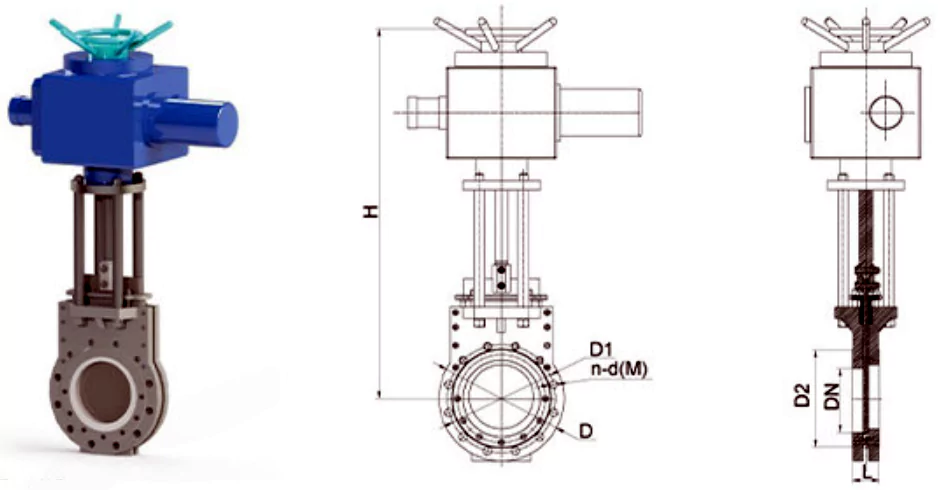
Specifications of Electric Actuated ZrO2 Ceramic Knife Gate Valve

Specifications of Electric Actuated ZrO2 Ceramic Knife Gate Valve

Item Name Model DN(mm) L D D1 D2 n-d(M) H
Electric Actuated ZrO2 Knife Gate Valve-P10 AT-ZV1-D024 50 60 165 125 100 4-18(16) 635
Electric Actuated ZrO2 Knife Gate Valve-P10 AT-ZV1-D025 65 60 185 145 120 4-18(16) 655
Electric Actuated ZrO2 Knife Gate Valve-P10 AT-ZV1-D026 80 65 200 160 135 8-18(16) 675
Electric Actuated ZrO2 Knife Gate Valve-P10 AT-ZV1-D027 100 65 220 180 135 8-18(16) 725
Electric Actuated ZrO2 Knife Gate Valve-P10 AT-ZV1-D028 125 65 250 210 185 8-18(16) 760
Electric Actuated ZrO2 Knife Gate Valve-P10 AT-ZV1-D029 150 65 285 240 210 8-22(20) 780
Electric Actuated ZrO2 Knife Gate Valve-P10 AT-ZV1-D030 200 75 340 295 265 8-22(20) 910
Electric Actuated ZrO2 Knife Gate Valve-P10 AT-ZV1-D031 250 75 395 350 320 12-22(20) 1115
Electric Actuated ZrO2 Knife Gate Valve-P10 AT-ZV1-D032 300 80 445 400 370 12-22(20) 1230
Electric Actuated ZrO2 Knife Gate Valve-P10 AT-ZV1-D033 350 85 505 460 428 16-22(20) 1320
Electric Actuated ZrO2 Knife Gate Valve-P10 AT-ZV1-D034 400 85 565 515 480 16-26(22) 1410
Electric Actuated ZrO2 Knife Gate Valve-P10 AT-ZV1-D035 450 95 615 565 530 20-26(22) 1550
Electric Actuated ZrO2 Knife Gate Valve-P10 AT-ZV1-D036 500 100 670 620 582 20-26(22) 1700
Electric Actuated ZrO2 Knife Gate Valve-P16 AT-ZV1-D037 50 60 165 125 100 4-18(16) 635
Electric Actuated ZrO2 Knife Gate Valve-P16 AT-ZV1-D038 65 60 185 145 120 4-18(16) 655
Electric Actuated ZrO2 Knife Gate Valve-P16 AT-ZV1-D039 80 65 200 160 135 8-18(16) 675
Electric Actuated ZrO2 Knife Gate Valve-P16 AT-ZV1-D040 100 65 220 180 135 8-18(16) 725
Electric Actuated ZrO2 Knife Gate Valve-P16 AT-ZV1-D041 125 65 250 210 185 8-18(16) 760
Electric Actuated ZrO2 Knife Gate Valve-P16 AT-ZV1-D042 150 65 285 240 210 8-22(20) 780
Electric Actuated ZrO2 Knife Gate Valve-P16 AT-ZV1-D043 200 75 340 295 265 12-22(20) 910
Electric Actuated ZrO2 Knife Gate Valve-P16 AT-ZV1-D044 250 75 405 355 320 12-26(22) 1115
Electric Actuated ZrO2 Knife Gate Valve-P16 AT-ZV1-D045 300 80 460 410 370 12-26(22) 1230
Electric Actuated ZrO2 Knife Gate Valve-P16 AT-ZV1-D046 350 85 520 470 428 16-26(22) 1320
Electric Actuated ZrO2 Knife Gate Valve-P16 AT-ZV1-D047 400 85 580 525 480 16-30(27) 1410
Note: Nominal Diameter: DN50–DN500; Nominal Pressure: 1.0 MPa–1.6 MPa; Operating Temperature: -20 °C–250 °C; Connection Type: Wafer; Actuation Method: Electric

Electric vs Pneumatic vs Manual Ceramic Knife Gate Valves

Valve Type Suitable Use Main Buyer Consideration
Manual Ceramic Knife Gate Valve Suitable for simple isolation points, low operation frequency and locations where operators can safely access the valve. Lower control complexity, but not ideal for remote or frequent operation.
Pneumatic Ceramic Knife Gate Valve Suitable for fast cycling and plants with existing compressed air systems. Requires stable air supply and pneumatic control accessories.
Electric Actuated Ceramic Knife Gate Valve Suitable for remote operation, automated process control, position feedback and locations where manual access is difficult. Requires confirmation of voltage, control signal, actuator protection and installation space.

Electric actuation is often selected when the valve must be integrated into a controlled process line rather than operated locally. For abrasive slurry or ash systems, the ceramic sealing design should be reviewed together with the actuator configuration to avoid selecting a valve based only on DN size.

Electric Actuator and Control Options

The actuator configuration should be selected according to site power supply, control method, safety requirements and installation environment. ADCERAX can review electric actuator options based on project drawings and control requirements.

Review Item What to Confirm
Power Supply Confirm voltage, phase and frequency before quotation.
Control Signal Confirm whether the system requires open-close control, position feedback, analog signal or communication interface.
Protection Requirement Outdoor, humid, dusty or corrosive environments may require suitable actuator enclosure protection.
Manual Override Confirm whether emergency manual operation is needed.
Installation Space Check actuator height, orientation, access space and cable routing.
Control System Confirm whether the valve will connect to PLC, DCS, SCADA or local control panels.

Packaging of Electric Actuated Ceramic Knife Gate Valve

Electric actuated ceramic knife gate valves are packed based on valve size, actuator configuration and shipping method. Ceramic sealing areas, actuator parts and flange faces are protected during transport.

Large or heavy valves can be packed with reinforced cartons, pallets or plywood cases according to quantity, destination and freight method.


ADCERAX® Packaging of Electric Actuated ZrO2 Ceramic Knife Gate Valve

Applications for Electric Actuated ZrO2 Ceramic Knife Gate Valves

Electric actuated ZrO2 ceramic knife gate valves are used in process lines where abrasive particles, corrosive media, remote operation and repeated shut-off control appear together. Compared with conventional metal-seated valves, the ceramic sealing structure is especially valuable when slurry, ash, sludge or particle-loaded fluids can wear the sealing area and reduce closure stability.

  • Automated Fly Ash and Ash Slurry Discharge

    Fly ash discharge lines and ash slurry systems often expose valves to fine abrasive particles, unstable flow and frequent isolation requirements. In these conditions, metal sealing surfaces may experience wear, scratching or sealing instability over time.

    An electric actuated ZrO2 ceramic knife gate valve helps support automated ash discharge by combining wear-resistant ceramic sealing parts with remote open-close operation. It can be reviewed for ash handling systems, silo outlet lines, pneumatic conveying discharge points and power plant slurry pipelines.

    For proper selection, engineers should confirm ash particle size, solid concentration, working pressure, temperature, flange standard, actuator voltage and control signal requirements.

  • Remote Slurry Isolation in Mining and Mineral Processing

    Mining slurry and mineral processing pipelines often contain hard particles, high solid content and long transport distances. Manual valve operation may be difficult in tunnels, elevated pipelines or areas with limited maintenance access.

    Electric actuation allows the valve to be operated from a control panel or automation system, while zirconia ceramic sealing parts help resist wear from abrasive slurry. This makes the valve suitable for tailings pipelines, ore slurry transfer, thickener discharge, backfill slurry systems and other mineral processing lines.

    Before quotation, the slurry composition, particle hardness, flow direction, pressure class, DN size, installation orientation and cycling frequency should be reviewed.

  • Wastewater Sludge and Chemical Effluent Control

    Wastewater sludge and chemical effluent lines may contain suspended solids, corrosive chemicals and irregular flow conditions. A valve in this type of service must handle both abrasion and chemical exposure while maintaining practical shut-off performance.

    ZrO2 ceramic sealing components can be reviewed for sludge channels, chemical wastewater lines, neutralization systems and industrial effluent treatment pipelines. Electric actuation is useful when operators need remote control, position feedback or integration with PLC, DCS or SCADA systems.

    Material selection should be reviewed according to pH range, chemical concentration, solid content, operating temperature and cleaning method.

  • Pulp, Paper and Fiber-Containing Media

    Pulp, paper and fiber-containing process media can create valve selection challenges because the flow may include suspended fibers, abrasive fillers and variable consistency. A knife gate structure is often preferred where straight-through isolation is needed in media containing solids or fibers.

    The ceramic sealing area helps improve wear resistance, while the electric actuator supports controlled operation in production lines where frequent manual operation is not practical. This valve can be reviewed for pulp transfer, stock preparation, wastewater handling and process isolation points.

    Selection should consider fiber content, medium consistency, valve orientation, cleaning access and actuator protection requirements.

  • Automated Process Lines with Limited Manual Access

    In many industrial plants, valves are installed in elevated positions, enclosed areas, dusty environments or process zones where manual operation is inconvenient. In these cases, electric actuation can reduce the need for local hand operation and provide better control visibility.

    An electric actuated ceramic knife gate valve is suitable for automated isolation points where the process requires remote operation, open-close status feedback and ceramic sealing support. It is especially useful when abrasion, corrosion and access limitations must be considered together.

    To avoid selection errors, ADCERAX recommends reviewing installation drawings, actuator height, available clearance, cable routing, control signal and maintenance access before production.

User Guide for Electric Actuated ZrO2 Ceramic Knife Gate Valve

The following user guide helps operators understand how to handle, install, operate, and maintain the Electric Actuated ZrO2 Ceramic Knife Gate Valve. Clear guidance ensures safe performance, reduced downtime, and extended service life in demanding industrial environments.

  • Pre-Installation Check

    Before installation, check the valve body, actuator housing, ceramic sealing surfaces and flange faces for visible damage. Confirm that the gasket, bolts and flange standard match the pipeline design. The valve should be stored in a dry and protected area before installation to avoid impact or actuator moisture exposure.

  • Installation Review

    The valve should be aligned with the pipeline and installed according to the marked flow direction and project drawings. Flange faces should be clean and parallel before tightening. For larger valve sizes, suitable lifting equipment should be used to avoid actuator misalignment or ceramic sealing damage.

  • Operation and Monitoring

    Electric operation should follow the actuator control instructions. If the valve is connected to PLC, DCS or SCADA systems, position feedback, torque status and fault signals should be checked during commissioning. Any abnormal load increase, slow movement or incomplete closure should be reviewed before continuous operation.

  • Maintenance Planning

    Inspection frequency should be set according to medium abrasiveness, solid content, operating cycle, temperature and process criticality. Maintenance should focus on ceramic sealing surfaces, gate movement, actuator enclosure, cable glands, gasket condition and bolt tightness.

FAQs About Electric Actuated Ceramic Knife Gate Valves

  1. What is an electric actuated ceramic knife gate valve used for?
    An electric actuated ceramic knife gate valve is used for automated isolation in pipelines that carry abrasive, corrosive or particle-loaded media. Common applications include fly ash discharge, mining slurry, wastewater sludge, pulp processing and chemical process lines where remote operation and wear-resistant sealing are required.
  2. Why is zirconia ceramic used in a knife gate valve?
    Zirconia ceramic is used for sealing components because it offers high hardness, wear resistance and corrosion resistance compared with many metal sealing surfaces. In abrasive slurry or ash systems, the ceramic contact area can help reduce sealing surface wear, but final suitability depends on medium composition, pressure, temperature and cycling conditions.
  3. Can an electric actuated ceramic knife gate valve connect to PLC or SCADA systems?
    Yes, electric actuators can be selected for remote control, open-close feedback and plant automation requirements. The exact control method should be confirmed according to site voltage, signal type, actuator model, enclosure requirement and control system interface.
  4. What information is needed before selecting this valve?
    The main information needed includes medium type, solid content, particle size, working pressure, operating temperature, DN size, flange standard, actuator voltage, control signal and installation drawing. These details help determine whether the ceramic sealing structure and actuator configuration are suitable for the application.
  5. How is an electric actuated ceramic knife gate valve different from a pneumatic one?
    An electric actuated valve is usually selected when remote control, position feedback and integration with plant control systems are important. A pneumatic valve is often selected where fast operation and compressed air supply are already available. The better choice depends on operation frequency, control system, site utilities and maintenance access.
  6. Can ADCERAX customize the valve according to drawings?

    Yes, ADCERAX can review custom electric actuated ceramic knife gate valves based on drawings, samples or operating conditions. Custom review can include DN size, flange standard, ceramic sealing structure, valve body material, actuator configuration, control signal and installation layout.

Information Needed for a Faster Engineering Review

To help ADCERAX recommend a suitable electric actuated ceramic knife gate valve, please provide the following information when sending an inquiry.

RFQ Information Example
Medium Fly ash slurry, tailings slurry, sludge, pulp, chemical wastewater or other media.
Solid Content Approximate percentage, particle size and particle hardness if available.
Pipeline Size DN size, pipe schedule or drawing.
Pressure and Temperature Working pressure, peak pressure and operating temperature.
Flange Standard ANSI, DIN, JIS or project-specific standard.
Actuator Requirement Voltage, open-close control, position feedback, signal type and enclosure requirement.
Installation Drawing Pipeline layout, installation orientation and available actuator clearance.
Quantity and Project Stage Sample, replacement, maintenance project or repeat production requirement.
customize size

Customization Services for Electric ZrO2 Knife Gate Valve

ADCERAX® customization services for the Electric Actuated ZrO2 Ceramic Knife Gate Valve are designed to address diverse industrial applications where standard configurations cannot fully meet performance requirements. Customers can request tailored solutions in materials, actuation, sealing, and system integration to achieve optimal results.

Sealing and Flow Design

Harsh flow environments require adapted sealing and geometry for efficiency.

  • Seat Profile – Knife edge sealing designed for fiber-rich slurry
  • Flow Path – Optimized channel reduces turbulence and erosion
  • Dual Seals – Bidirectional shut-off for demanding applications

Actuator and Control Integration

Automation systems demand flexibility in actuator setup and signal compatibility.

  • Signal Types – Multiple output signals for PLC/SCADA integration
  • Control Modes – Local, remote, or hybrid operation supported
  • Safety Features – Overload protection ensures reliable valve actuation

System Installation Adaptation

Different industries need installation-ready solutions for unique plant setups.

  • Flange Standards – Adaptable connection to global piping systems
  • Mounting Layout – Flexible positions to match space limitations
  • Support Accessories – Optional fittings for simplified commissioning

Related Products

ADCERAX - Your Trusted Advanced Ceramics Manufacturing Partner

Direct factory manufacturing with comprehensive ceramic materials expertise and global supply capabilities

China-Based Manufacturer

ADCERAX supplies ceramic components for overseas OEMs, equipment builders, and labs.

Custom Drawing Support

We review drawings, dimensions, materials, and application conditions before quotation.

Ceramic Process Control

Forming, sintering, machining, grinding, and finishing are arranged by part requirements.

Pre-Shipment Inspection

Dimensional checks, visual inspection, and packaging review help reduce procurement risk.

Get in Touch with Us

Our team will be happy to respond to you in less than 24 hours.

Pingxiang Factory — Silicon carbide, silicon nitride, high-temperature ceramics

Quick Quotation

*Our team will answer your inquiries within 24 hours.

*Your information will be kept strictly confidential.

Ready to Solve Your Engineering Challenge?

Partner with ADCERAX for reliable, high-performance advanced ceramic solutions. Our engineers are ready to discuss your project.

E-mail

info@adcerax.com

Phone

+(86) 0731-74427743 | WhatsApp: +(86) 19311583352

Response Time

Within 24 hours

Quick Quote

The more details you provide, the faster we can quote.

*We respond within 24 hours. All inquiries are confidential.

Get Your Custom Solution

The more details you provide, the faster we can respond.

customize size

*We respond within 24 hours. All inquiries are confidential.

Download Catalog