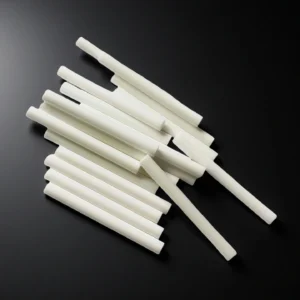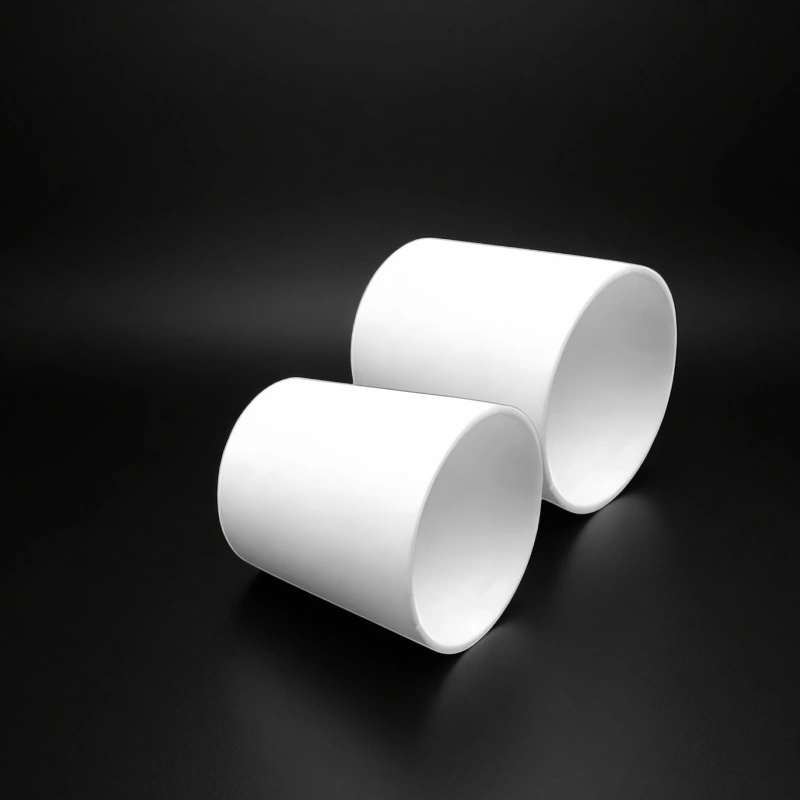
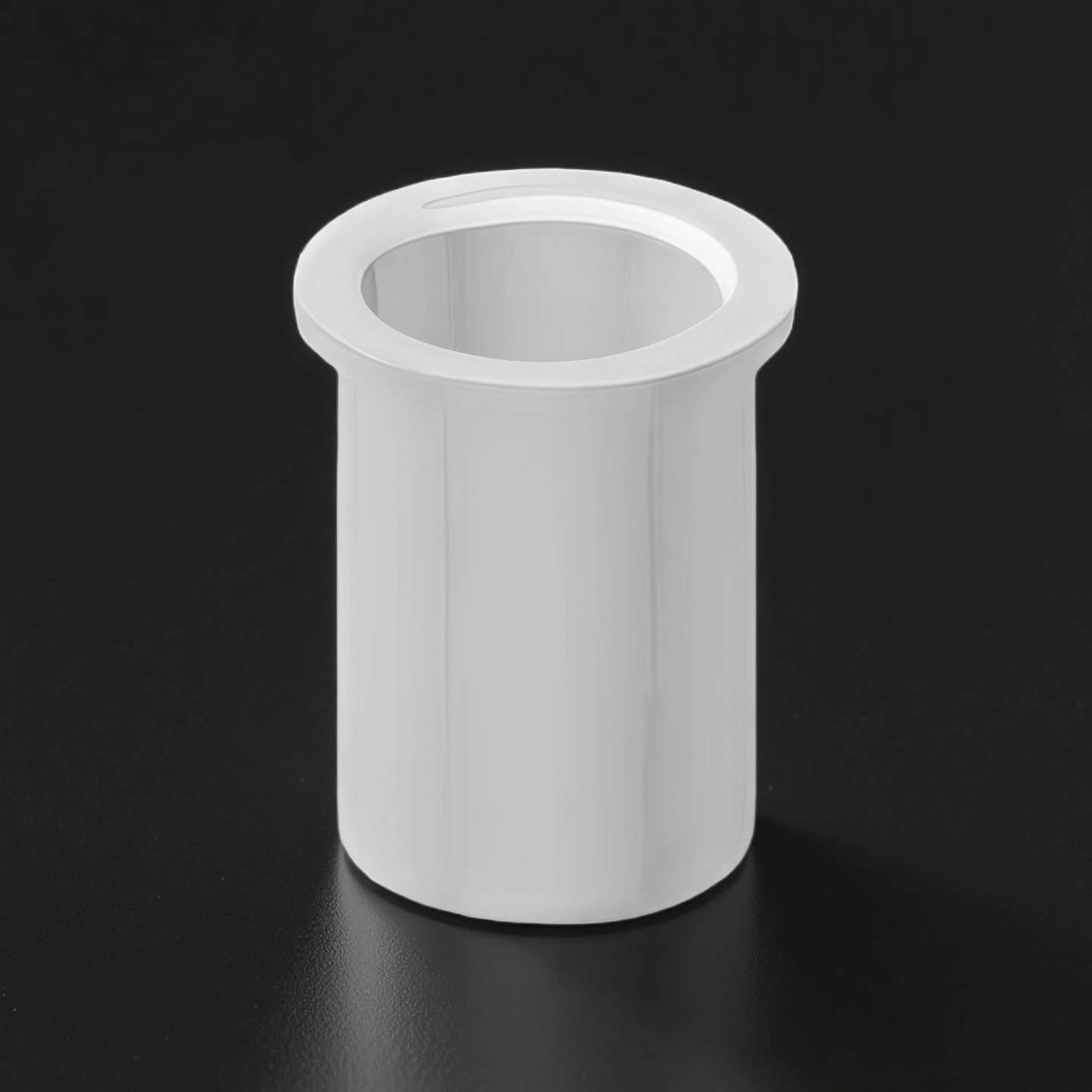
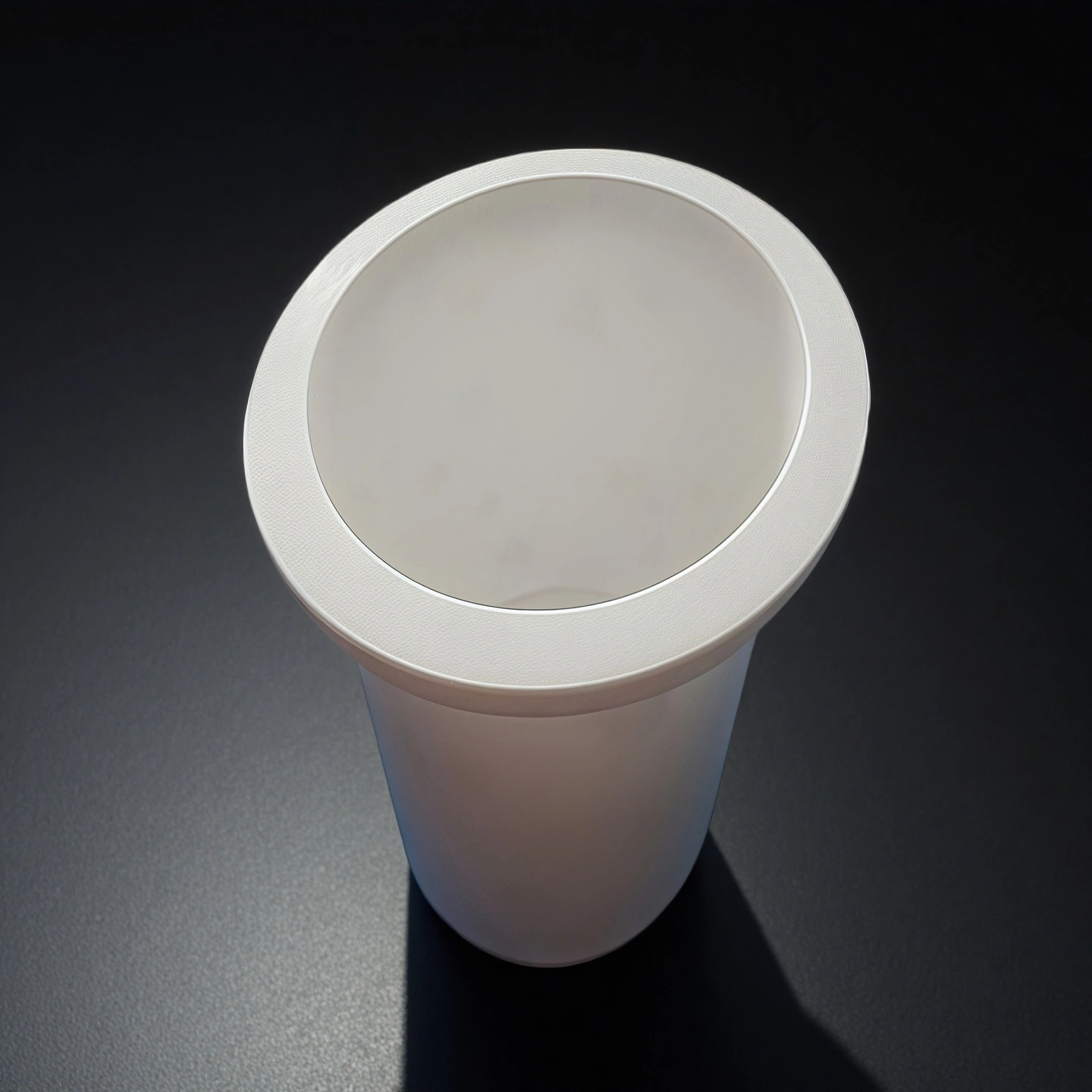
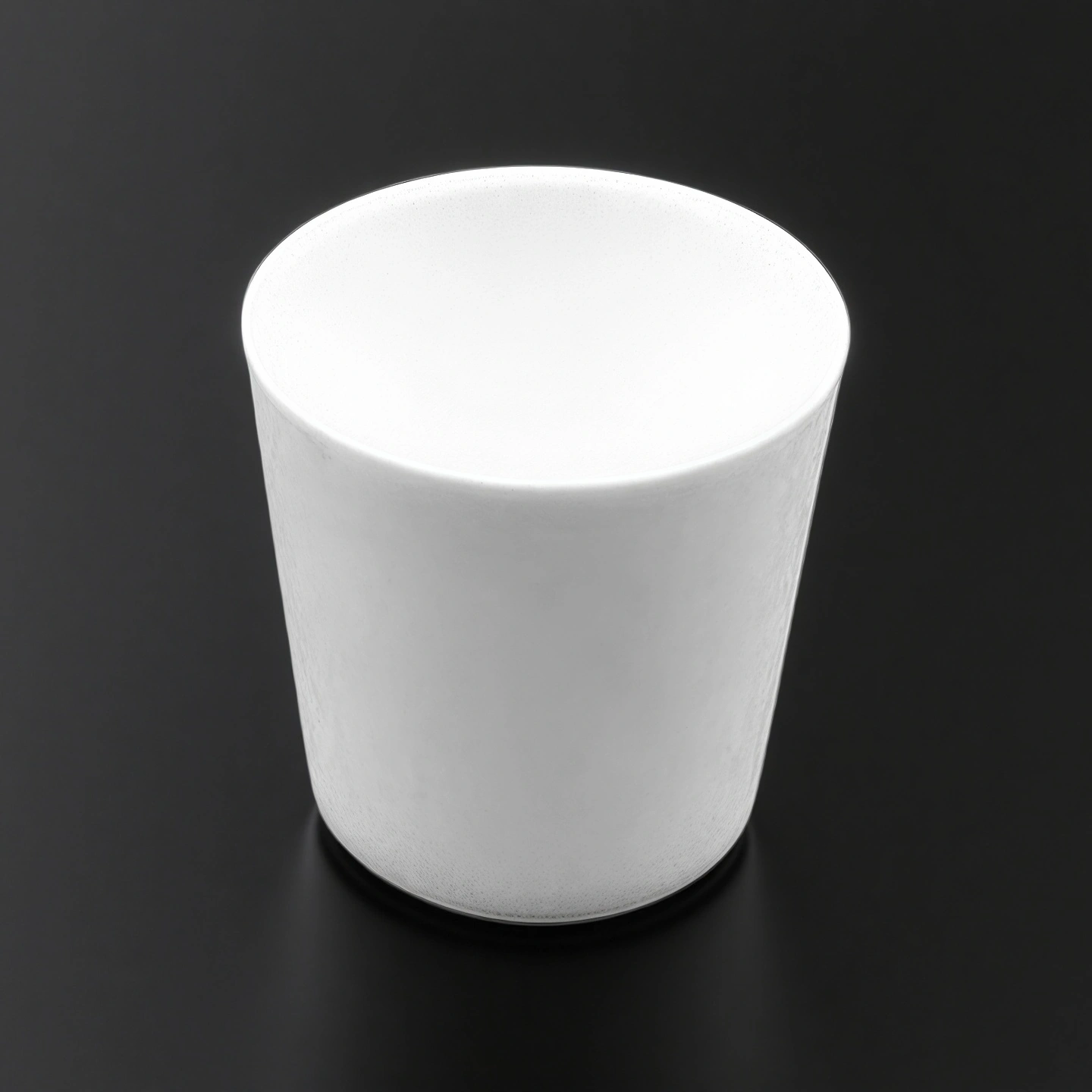
Beryllium oxide crucible is a high-performance ceramic vessel made from beryllium oxide (BeO) for high-temperature operations that demand very high thermal conductivity together with strong electrical insulation. It is a purpose-built component optimized to move heat rapidly and uniformly while maintaining dielectric integrity in vacuum or controlled atmospheres.
Safety Notice for BeO Use
Finished and fully sintered BeO crucibles should be handled as intact ceramic components. Users must not grind, sand, drill, machine, or abrade BeO parts, because respirable BeO dust can create serious health risks. Use local HSE procedures, proper labeling, ventilation, protective equipment, and licensed disposal methods for damaged parts.
Beryllium Oxide Crucible Benefits
- Heat-flow geometry: thin/thick wall tuning and stepped seats to shape thermal gradients.
- Surface options: fine-ground or polished inner wall to limit particle retention.
- Atmosphere features: lid/port designs to manage purge, sampling, or pressure balance.
- Dimensional control: tight ID/OD concentricity and flatness on support planes.
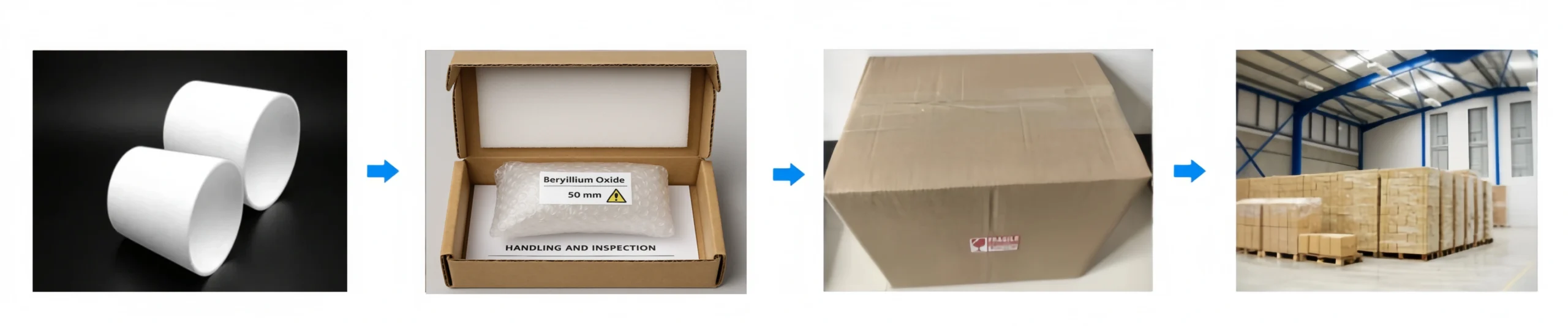
- Traceable batches with visible HSE labels on the part packaging.
Beryllium Oxide Crucible Properties
| Property | Be-97 | Be-99 |
| BeO Purity | ≧97% | ≧99% |
| Density (g/cm3) | ≧2.85 | ≧2.85 |
| Hardness (Hv) | 1200 | 1250 |
| Maximum Working Temperature (℃) | 1600 | 1650 |
| Flexural Strength (MPa) | 170 | 190 |
| Fracture Toughness (MPa*m1/2) | 2.5~3.5 | 2.5~3.5 |
| Dielectric Constant (at 1MHz) | 6.5 | 7 |
| Breakdown Voltage (kV/mm) | 15 | 20 |
| Thermal Conductivity (W/m*K) | 220-240 | 260-310 |
| Thermal Expansion Coefficient (/℃) | 7~8.5*10-6 | 7~8.5*10-6 |
BeO vs Alumina vs Zirconia Crucibles
| Material | Best Fit | Limitation | Benefit |
|---|---|---|---|
| BeO Crucible | High heat transfer + electrical insulation | Requires strict HSE handling; do not machine or abrade | Thermal gradients and insulation both matter |
| Alumina Crucible | General lab heating, sintering, ashing, calcination | Lower thermal conductivity than BeO | Cost-effective high-temperature use is the priority |
| Zirconia Crucible | Corrosion resistance and toughness | Lower heat transfer and higher thermal expansion than BeO | Chemical resistance or fracture toughness is more important |
| BN Crucible | Non-wetting molten metal and thermal shock use | Softer and more machinable; different atmosphere limits | Molten metal release and machinability matter |
BeO Crucible Specifications
| Item No. | Diameter (mm) | Thickness (mm) | Purity |
| AT-BeO-G1001 | Customize | ||
When to Choose BeO Crucibles
| When you need | Why BeO May Fit |
|---|---|
| Fast heat transfer | BeO offers much higher thermal conductivity than common oxide ceramics. |
| Electrical isolation | BeO can support thermal transfer while maintaining dielectric insulation. |
| Vacuum or inert heating | Suitable for controlled-atmosphere thermal processing when compatibility is confirmed. |
| Compact furnace fixtures | Custom geometry can improve heat flow and fixture seating. |
| Cleaner alloy trials | Polished surfaces may help reduce residue retention and particle adherence. |
BeO Crucible Packaging
- Each crucible is individually packed in anti-static foam and sealed in a polyethylene (PE) bag.