Canfield Crucible Sets for Materials Research Labs and R&D Crystal Growth Lines

Alumina growth crucible, catch crucible and perforated frit disc — a Canfield-style set for repeatable solid–liquid separation in flux growth. Custom-fit to your ampoule ID, capacity and frit hole pattern, or supplied as an alternative to standard 1.7/2/5 mL sets.

Catalog No. AT-ACP-CCS
Material Alumina (Al₂O₃) crucible set architecture
Purity 99% 99.5% 99.7%
Set Capacity Standard small-volume sets such as 2 mL/5 mL
Demonstrated Process Temperature Growth workflows using alumina CCS heated to about 1150 °C
Engineering RFQ Review
Small-Batch Custom Support
Factory-Direct Manufacturing
Drawing & Process Review

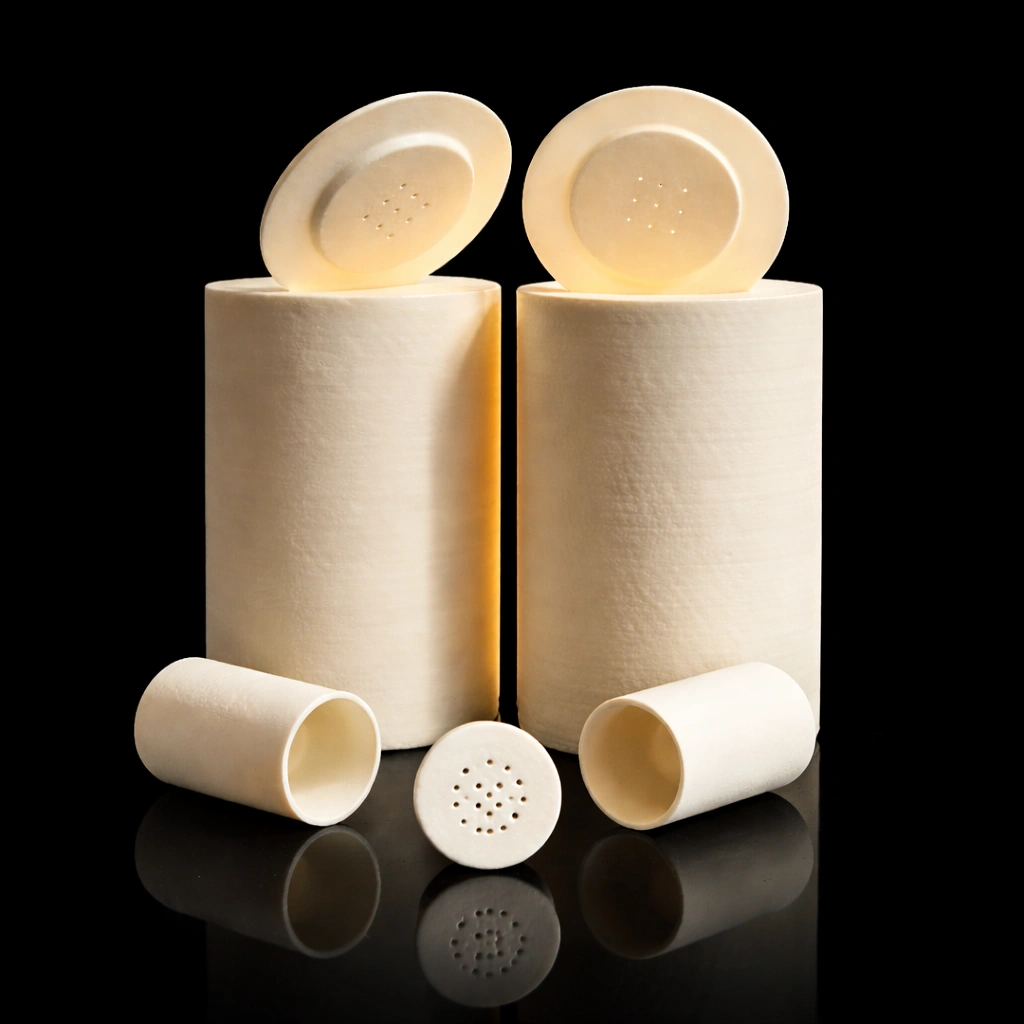
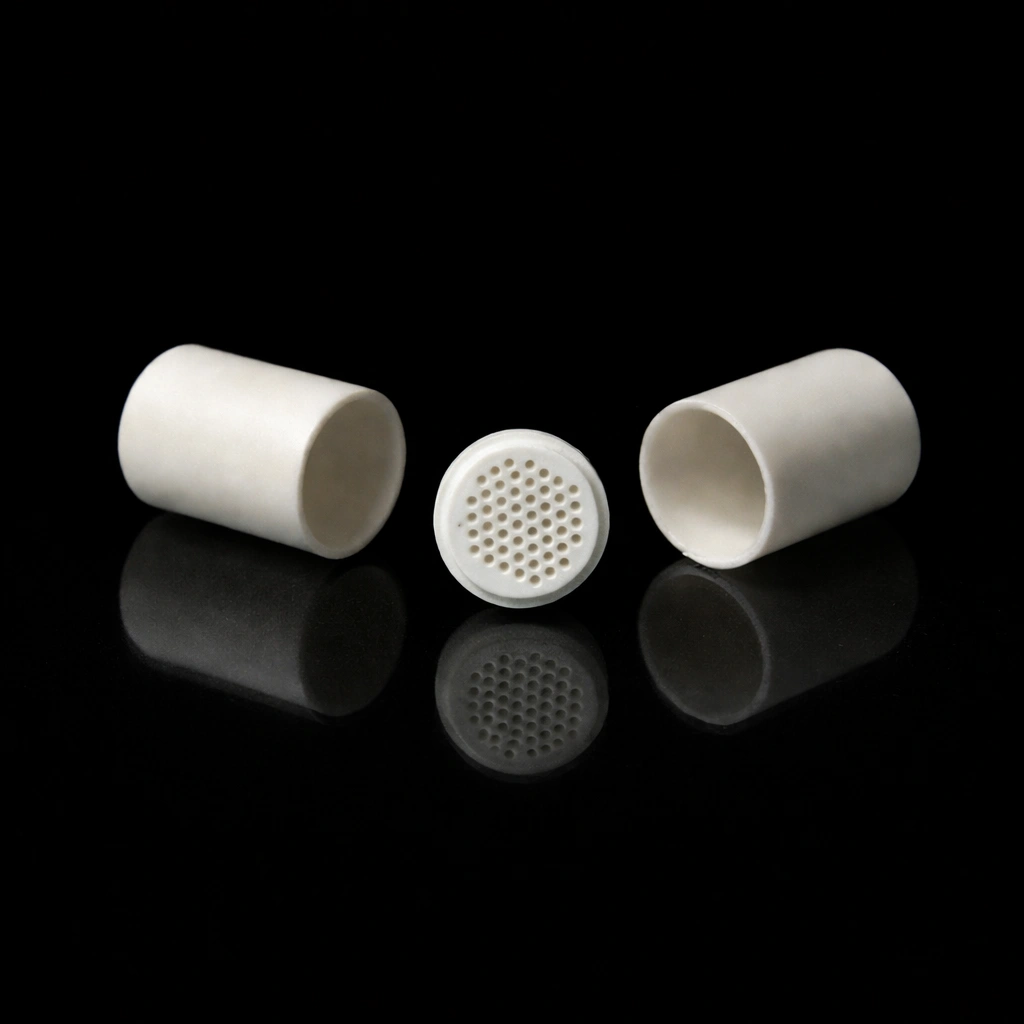
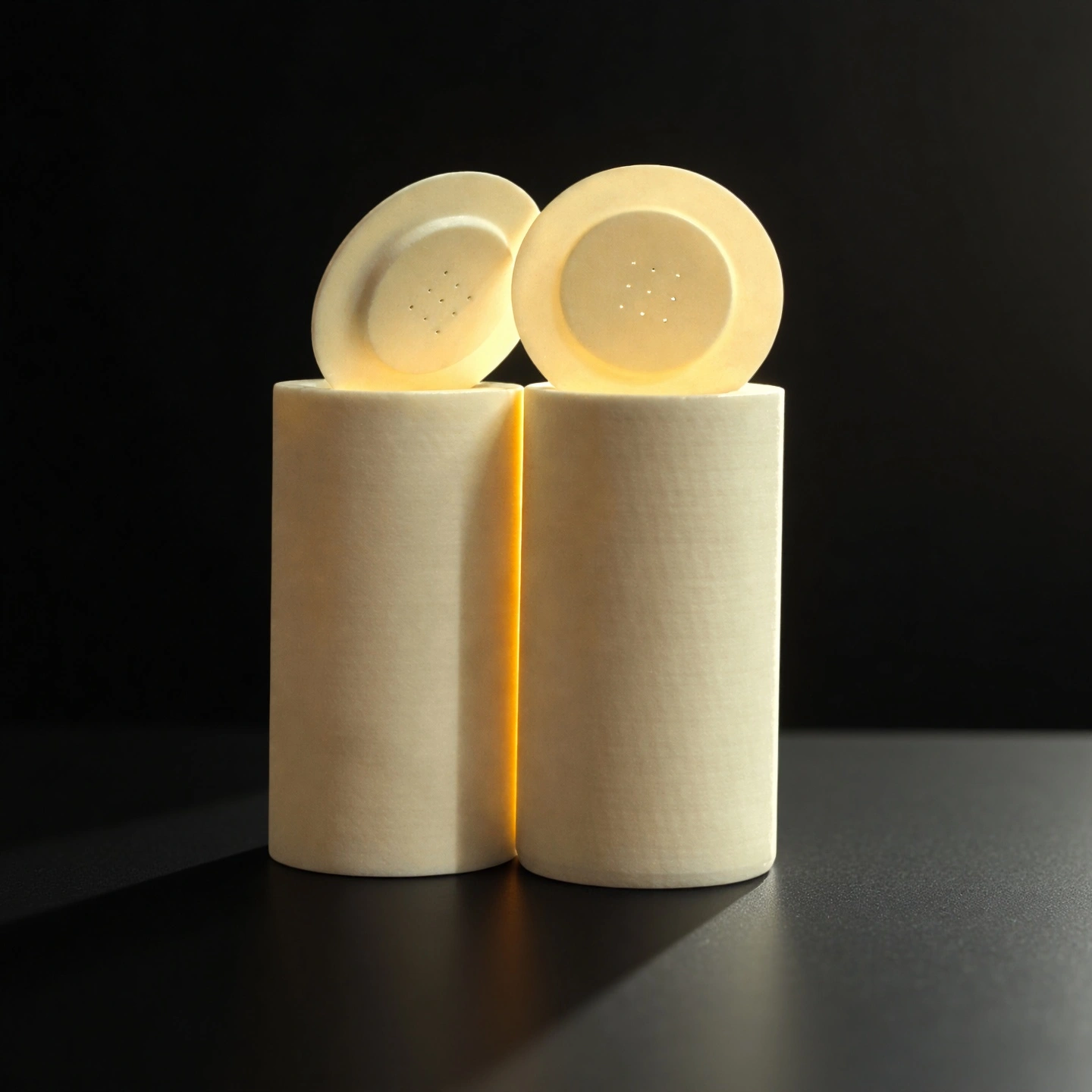
A Canfield Crucible Set (CCS) is a two-crucible alumina assembly with a perforated frit disc between them, used for high-temperature solution/flux crystal growth where a solid crystal must be separated from the remaining liquid melt.

How CCS is built

  • Growth crucible (top): holds the charge and is where crystals form.
  • Catch crucible (bottom): collects the liquid after separation.
  • Frit disc (between): a ceramic disc with holes that acts like a rigid “filter interface.”

Canfield Crucible Sets Benefits

  • Frit-disc separation interface
    The integrated frit disc forms a defined separation layer between the growth crucible and catch crucible. Molten flux passes through the holes while solid crystals remain above, enabling controlled liquid–solid separation during decanting.
  • Cleaner recovery of the liquid phase
    Because separation occurs through a rigid ceramic frit disc rather than fiber filters, the recovered melt remains free of external fiber contamination. This allows the liquid phase to be reused for additional growth experiments or compositional analysis.
  • Stable stacked crucible structure
    The frit disc is positioned between two matched crucibles, forming a stable stacked assembly. This configuration helps maintain alignment during high-temperature heating, handling, and decanting operations.
  • Optional threaded containment design
    A threaded CSCS-style interface can be specified for processes requiring improved containment of liquids or vapors. This structure provides additional stability during synthesis and separation steps.
  • Designed for sealed-tube growth workflows
    Canfield Crucible Sets are commonly used inside quartz or fused-silica ampoules under inert gas conditions. The compact assembly fits typical sealed-tube crystal growth setups used in many research laboratories.

Canfield Crucible Sets Properties

Property Unit 96% Al₂O₃ 99% Al₂O₃ 99.5% Al₂O₃ 99.6% Al₂O₃ 99.7% Al₂O₃ 99.8% Al₂O₃ 99.9% Al₂O₃ 99.99% Al₂O₃
Alumina content % 96 99 99.5 99.6 99.7 99.8 99.9 99.99
Density g/cm³ 3.6-3.75 3.83 3.89 3.91 3.92 3.93 3.94 3.98
Color – white Ivory Ivory Ivory Ivory Ivory Ivory Ivory
Water absorption % 0 0 – 0 0 0 0 0
Young’s modulus (Elastic modulus) GPa 300 350 375 356 357 358 359 362
Shear modulus GPa – – 152 – – – – –
Bulk modulus GPa – – 228 – – – – –
Poisson’s ratio – – – 0.22 – – – – –
Compressive strength MPa 1910 2210 2500 2552 2554 2556 2558 2570
Flexural strength MPa 260 300 340 345 346 347 348 365
Fracture toughness MPa·m¹ᐟ² – – 4 – – – – –
Hardness GPa 14.5 17 17 23 24 25 26 30
Thermal conductivity W/m·K 20 31 31 31-33 31-33 31-33 31-35 31-35
Thermal shock resistance ΔT °C – – – 222 223 224 225 228
Maximum use temperature (no load) °C 1450 1680 ≤1750 1755 1760 1765 1770 1800
Coefficient of thermal expansion 10⁻⁶/°C 7.6 7.6 7.6 7.6 7.5 7.5 7.4 7.4
Volume resistivity Ω·cm >1×10¹⁴ >1×10¹⁴ >1×10¹⁴ >1×10¹⁴ >1×10¹⁴ >1×10¹⁴ >1×10¹⁴ >1×10¹⁴
Dielectric constant (relative permittivity) – 9.2 9.5 9.8 9.83 9.84 9.85 9.86 9.92
Dielectric strength kV/mm 15 19 16.9 23.2 23.4 23.6 23.8 24
Dissipation factor (loss factor @ 1 kHz) – – – 0.0002 – – – – –

Common Canfield Crucible Set Reference Sizes

Use these common reference sizes as a starting point for CCS selection. Final dimensions and frit geometry should be reviewed against your ampoule ID, centrifuge fixture clearance and process requirements.

Model Nominal Capacity Reference Size (OD × H) Frit-Disc Reference
AT-ACP-CCS-1.7 1.7 mL 10.5 mm × 25 mm 25 holes
AT-ACP-CCS 2 mL 13 mm × 25 mm 25 holes
AT-ACP-CCS-5 5 mL 18 mm × 25 mm 50 holes
Custom by drawing To be reviewed OD, ID, height and wall thickness to be reviewed Hole count, diameter and open area to be reviewed

Engineering note: These values are common reference sizes, not a stock, certified-dimension or availability guarantee. Final dimensions, tolerances, frit geometry and assembly fit are confirmed during engineering review.

Canfield Crucible Sets (CCS) Packaging

  • Individual compartment protection: each crucible and frit-disc is separated to prevent edge chipping during transit
  • Set integrity control: components packed as matched sets to avoid mixing interfaces between batches
  • Shock management: foam + rigid outer carton to reduce impact transmission to the frit edge
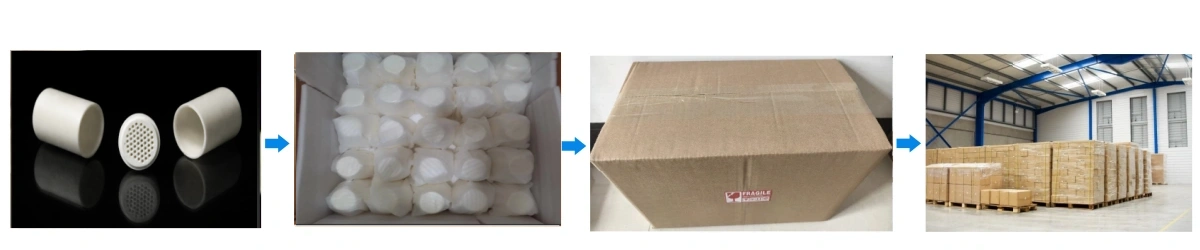
Canfield Crucible Sets (CCS) Packaging

Applications for Canfield Crucible Sets

Canfield Crucible Sets are used in flux and high-temperature solution growth workflows where crystals must be separated from residual liquid during centrifuge decanting. Application fit depends on the flux chemistry, frit geometry, ampoule, fixture and temperature cycle.

  • Academic and National Laboratory Crystal Growth Programs

    A rigid alumina frit disc creates a defined separation interface between the growth and catch crucibles. During decanting, crystals are retained above the frit while residual liquid passes into the catch crucible. Compared with a loose silica-wool filter, this configuration may reduce external fiber contamination and support cleaner liquid recovery for reuse or analysis.

  • Materials Synthesis and Crystal Growth R&D

    For research programs that repeat compositions or thermal profiles, a matched three-component CCS provides a controlled starting geometry for the growth crucible, frit disc and catch crucible. The assembly can be reviewed against the available ampoule space and centrifuge fixture.

  • Shared Research Facilities and Multi-User Labs

    Common 1.7, 2 and 5 mL reference configurations—and drawing-based custom geometry—can help facilities define a shared starting specification across users and repeat orders. Each configuration must still be reviewed for the facility’s ampoules, fixtures and process conditions.

User Guide — Canfield Crucible Sets

  • Installation / Setup

    1. Confirm the growth crucible / catch crucible orientation and that the frit-disc seats flat.
    2. Verify the stack height fits your ampoule ID and fixture clearance before loading precursors.
    3. Dry-run the assembly to confirm no rocking at the interface and no edge contact with supports.

  • Operation

    1. Load solids/flux into the growth crucible, assemble the set, then place into your sealed-tube or controlled-atmosphere workflow as defined by your method.
    2. During separation, keep handling consistent with your protocol so the frit-disc interface functions as intended (liquid passes; solids remain captured).
    3. If your process is sensitive to vapour/liquid retention, consider specifying a containment-focused interface (threaded variant concept).

  • Storage

    1. Store components separated (do not keep frit pressed against the crucible edge).
    2. Keep in a dry cabinet with impact protection to prevent rim/frit chipping.

  • Cleaning

    1. Clean residues using a method compatible with your flux chemistry and lab safety rules.
    2. Avoid abrasive actions on the frit seating surfaces; preserve fit and flow behaviour.

  • Common Questions During Use

    1. Issue: Liquid does not pass through the frit as expected.
    Likely cause: Hole pattern/open area not matched to melt viscosity or solids loading.
    Fix: Specify a different hole pattern strategy or reduce solids carryover into the interface.
    2. Issue: Solids appear in the catch crucible after separation.
    Likely cause: Overfilled growth crucible or unstable seating causing bypass.
    Fix: Reduce fill level and confirm flat seating/alignment features in your next build.
    3. Issue: Chipping at the rim or frit edge during handling.
    Likely cause: Contact with hard fixtures or stacking stored under pressure.
    Fix: Use separated storage compartments and confirm fixture clearances before heating.

FAQ — Canfield Crucible Sets

  1. What is a Canfield Crucible Set (CCS) and how does the frit-disc separate liquid from solids?
    A Canfield Crucible Set is a two-crucible alumina assembly with a perforated frit disc placed between them. During decanting, molten flux flows through the holes of the frit disc into the lower crucible while the solid crystals remain in the upper crucible.
  2. When should I choose a step-edge frit-disc Canfield Crucible Set instead of wool-based filtering?
    A step-edge frit-disc CCS is preferred when a stable and repeatable separation interface is required. It reduces contamination risk from external filter materials and keeps the frit disc correctly positioned during high-temperature handling.
  3. Which Canfield Crucible Sets sizes (2 mL vs 5 mL) should I start with for flux growth trials?
    A 2 mL CCS is typically used for small experimental batches and rapid screening. A 5 mL CCS is more suitable when a larger melt volume or higher crystal yield is required.
  4. Can Canfield Crucible Sets be used in sealed silica ampoules with partial inert gas pressure?
    Yes. Canfield Crucible Sets are commonly placed inside sealed quartz or silica tubes under inert gas conditions. The compact stacked structure allows them to fit typical sealed-tube crystal growth setups.
  5. What hole-pattern variables matter most in a frit-disc for Canfield Crucible Sets?
    Important variables include hole diameter, hole distribution, and total open area of the frit disc. These parameters influence how easily molten flux passes through while still retaining the solid crystals.
  6. What is the difference between Canfield Crucible Sets (CCS) and Canfield–Svanidze Crucible Sets (CSCS)?
    Standard CCS designs rely on stacked crucibles with a seated frit disc. CSCS variants add a threaded interface between crucibles to improve containment during growth or decanting processes.
  7. How does clean liquid recovery from a Canfield Crucible Set support reuse or multi-step fractionation?
    Because separation occurs through a rigid ceramic frit disc, the recovered melt remains relatively free of foreign filter material. This allows the liquid phase to be reused or analyzed for further growth experiments.
  8. What dimensions do I need to provide to custom-fit Canfield Crucible Sets to my ampoule ID and fixture stack?
    Typical inputs include ampoule inner diameter, maximum assembly height, and required crucible outer diameter. Providing these dimensions helps ensure the CCS assembly fits correctly inside your furnace or sealed tube system.
customize size

Customization — Canfield Crucible Sets Configuration

ADCERAX supports custom Canfield Crucible Sets configuration to ensure the crucible assembly fits your crystal growth system, including ampoule diameter, furnace fixtures, and decanting setup while maintaining the frit-disc separation structure.

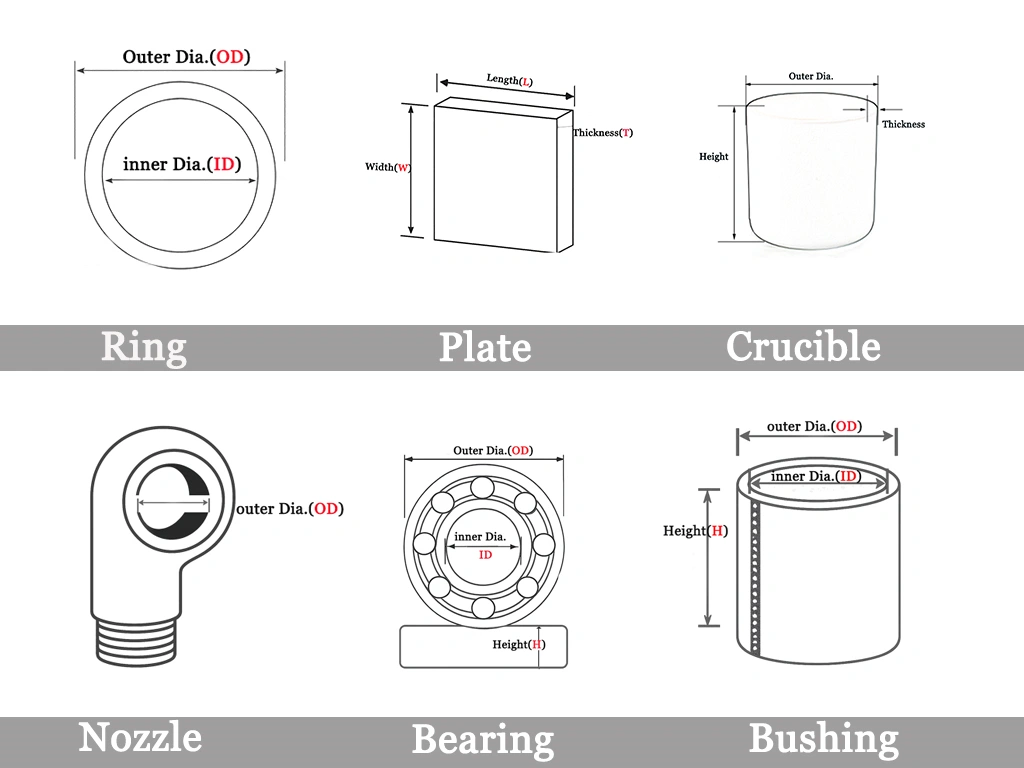
Crucible dimensions
Outer diameter (OD), inner diameter (ID), crucible height, wall thickness, rim profile, and stacking depth between the growth crucible and catch crucible.

• Frit-disc interface design
Frit disc diameter, thickness, step-edge seating geometry, disc positioning structure, and interface tolerance between the crucible and the frit disc.

• Hole pattern configuration
Number of holes, hole diameter range, hole distribution layout, and open-area ratio to match different melt viscosity and separation requirements.

• Assembly alignment features
Shoulder step design, anti-tilt seating surface, concentric alignment control, and stable engagement between upper and lower crucibles.

• Containment structure options
Optional threaded interface configuration for CSCS-style assemblies to improve containment of melt or vapor during high-temperature growth.

• System compatibility inputs
Ampoule inner diameter, support fixture clearance, centrifuge holder dimensions, and overall stack height limitations.

• Surface and edge finishing
Edge chamfering, seating surface finishing, interface flatness control, and optional polished contact surfaces.

• Inspection priorities
Critical diameter tolerances, frit disc seating flatness, concentricity between crucibles, hole pattern consistency, and visual quality inspection criteria.

Related Products

ADCERAX - Your Trusted Advanced Ceramics Manufacturing Partner

Direct factory manufacturing with comprehensive ceramic materials expertise and global supply capabilities

China-Based Manufacturer

ADCERAX supplies ceramic components for overseas OEMs, equipment builders, and labs.

Custom Drawing Support

We review drawings, dimensions, materials, and application conditions before quotation.

Ceramic Process Control

Forming, sintering, machining, grinding, and finishing are arranged by part requirements.

Pre-Shipment Inspection

Dimensional checks, visual inspection, and packaging review help reduce procurement risk.

Get in Touch with Us

Our team will be happy to respond to you in less than 24 hours.

Pingxiang Factory — Silicon carbide, silicon nitride, high-temperature ceramics

Quick Quotation

*Our team will answer your inquiries within 24 hours.

*Your information will be kept strictly confidential.

Ready to Solve Your Engineering Challenge?

Partner with ADCERAX for reliable, high-performance advanced ceramic solutions. Our engineers are ready to discuss your project.

E-mail

info@adcerax.com

Phone

Tel: +86-0731-84428843 WhatsApp: +86 19311583352

Response Time

Within 24 hours

A Canfield Crucible Set (CCS) is a two-crucible alumina assembly with a perforated frit disc between them, used for high-temperature solution/flux crystal growth where a solid crystal must be separated from the remaining liquid melt.

How CCS is built

  • Growth crucible (top): holds the charge and is where crystals form.
  • Catch crucible (bottom): collects the liquid after separation.
  • Frit disc (between): a ceramic disc with holes that acts like a rigid “filter interface.”

Canfield Crucible Sets Benefits

  • Frit-disc separation interface
    The integrated frit disc forms a defined separation layer between the growth crucible and catch crucible. Molten flux passes through the holes while solid crystals remain above, enabling controlled liquid–solid separation during decanting.
  • Cleaner recovery of the liquid phase
    Because separation occurs through a rigid ceramic frit disc rather than fiber filters, the recovered melt remains free of external fiber contamination. This allows the liquid phase to be reused for additional growth experiments or compositional analysis.
  • Stable stacked crucible structure
    The frit disc is positioned between two matched crucibles, forming a stable stacked assembly. This configuration helps maintain alignment during high-temperature heating, handling, and decanting operations.
  • Optional threaded containment design
    A threaded CSCS-style interface can be specified for processes requiring improved containment of liquids or vapors. This structure provides additional stability during synthesis and separation steps.
  • Designed for sealed-tube growth workflows
    Canfield Crucible Sets are commonly used inside quartz or fused-silica ampoules under inert gas conditions. The compact assembly fits typical sealed-tube crystal growth setups used in many research laboratories.

Canfield Crucible Sets Properties

Property Unit 96% Al₂O₃ 99% Al₂O₃ 99.5% Al₂O₃ 99.6% Al₂O₃ 99.7% Al₂O₃ 99.8% Al₂O₃ 99.9% Al₂O₃ 99.99% Al₂O₃
Alumina content % 96 99 99.5 99.6 99.7 99.8 99.9 99.99
Density g/cm³ 3.6-3.75 3.83 3.89 3.91 3.92 3.93 3.94 3.98
Color – white Ivory Ivory Ivory Ivory Ivory Ivory Ivory
Water absorption % 0 0 – 0 0 0 0 0
Young’s modulus (Elastic modulus) GPa 300 350 375 356 357 358 359 362
Shear modulus GPa – – 152 – – – – –
Bulk modulus GPa – – 228 – – – – –
Poisson’s ratio – – – 0.22 – – – – –
Compressive strength MPa 1910 2210 2500 2552 2554 2556 2558 2570
Flexural strength MPa 260 300 340 345 346 347 348 365
Fracture toughness MPa·m¹ᐟ² – – 4 – – – – –
Hardness GPa 14.5 17 17 23 24 25 26 30
Thermal conductivity W/m·K 20 31 31 31-33 31-33 31-33 31-35 31-35
Thermal shock resistance ΔT °C – – – 222 223 224 225 228
Maximum use temperature (no load) °C 1450 1680 ≤1750 1755 1760 1765 1770 1800
Coefficient of thermal expansion 10⁻⁶/°C 7.6 7.6 7.6 7.6 7.5 7.5 7.4 7.4
Volume resistivity Ω·cm >1×10¹⁴ >1×10¹⁴ >1×10¹⁴ >1×10¹⁴ >1×10¹⁴ >1×10¹⁴ >1×10¹⁴ >1×10¹⁴
Dielectric constant (relative permittivity) – 9.2 9.5 9.8 9.83 9.84 9.85 9.86 9.92
Dielectric strength kV/mm 15 19 16.9 23.2 23.4 23.6 23.8 24
Dissipation factor (loss factor @ 1 kHz) – – – 0.0002 – – – – –

Common Canfield Crucible Set Reference Sizes

Use these common reference sizes as a starting point for CCS selection. Final dimensions and frit geometry should be reviewed against your ampoule ID, centrifuge fixture clearance and process requirements.

Model Nominal Capacity Reference Size (OD × H) Frit-Disc Reference
AT-ACP-CCS-1.7 1.7 mL 10.5 mm × 25 mm 25 holes
AT-ACP-CCS 2 mL 13 mm × 25 mm 25 holes
AT-ACP-CCS-5 5 mL 18 mm × 25 mm 50 holes
Custom by drawing To be reviewed OD, ID, height and wall thickness to be reviewed Hole count, diameter and open area to be reviewed

Engineering note: These values are common reference sizes, not a stock, certified-dimension or availability guarantee. Final dimensions, tolerances, frit geometry and assembly fit are confirmed during engineering review.

Canfield Crucible Sets (CCS) Packaging

  • Individual compartment protection: each crucible and frit-disc is separated to prevent edge chipping during transit
  • Set integrity control: components packed as matched sets to avoid mixing interfaces between batches
  • Shock management: foam + rigid outer carton to reduce impact transmission to the frit edge
Canfield Crucible Sets (CCS) Packaging

Quick Quote

The more details you provide, the faster we can quote.

*All inquiries are confidential.

Get Your Custom Solution

The more details you provide, the faster we can respond.

customize size

*We respond within 24 hours. All inquiries are confidential.

Download Catalog