DSC alumina crucibles are routinely selected for thermal analysis, yet their influence on baseline stability and peak accuracy is often underestimated. As a result, engineers face avoidable data drift, repeatability loss, and extended troubleshooting cycles.
This article provides an engineering-focused evaluation of DSC alumina crucibles for lab use, explaining how pan material, geometry, cleanliness, and lifecycle management affect heat-flow reliability, method compatibility, and long-term data confidence in DSC workflows.
To establish a clear foundation, the discussion begins by examining whether DSC alumina pans can be used without compromising thermal analysis data. From there, each subsequent section progressively narrows analytical risk by addressing physical mechanisms, verification methods, operational boundaries, and practical decision criteria.
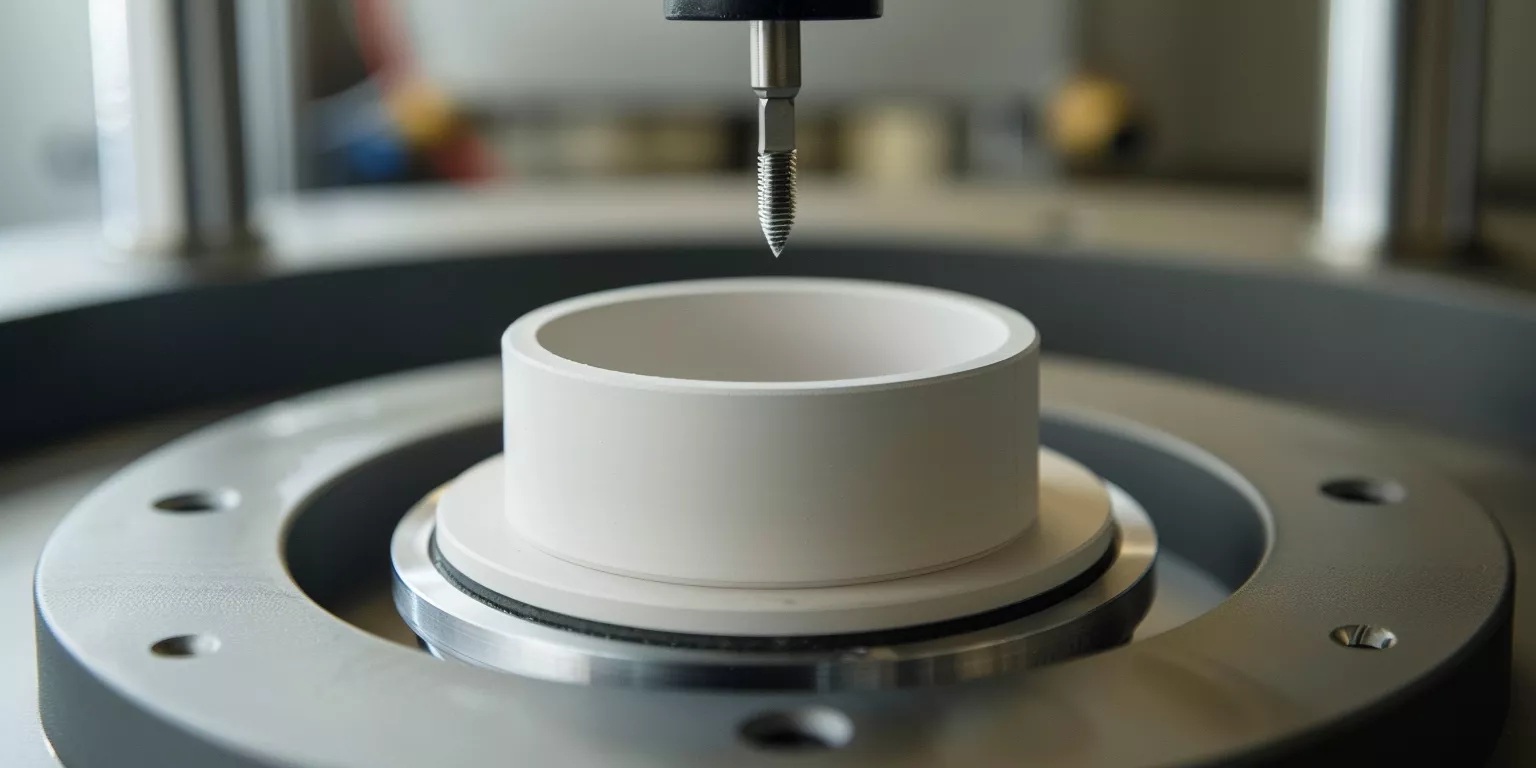
Do DSC Alumina Pans Affect Thermal Analysis Data?
Before selecting DSC alumina crucibles for lab use, engineers often seek confirmation that these containers will not distort thermal signals. Consequently, this section addresses whether DSC alumina pans can be applied without degrading baseline stability, peak position accuracy, or repeatability across routine thermal analysis workflows.
DSC alumina crucibles are widely regarded as low-risk containers in thermal analysis because their behavior is largely thermally passive. However, this assumption is only valid when their interaction with heat-flow measurement principles is clearly understood. Therefore, this section examines how and why DSC alumina pans can be used reliably, and under which conditions they may still introduce measurable artifacts.
How Sample Pans Participate in the DSC Heat-Flow Measurement Chain
In DSC measurements1, the sample pan is not an inert holder but an integral part of the heat-transfer pathway. Heat flows from the furnace through the pan into the sample, and any resistance or delay along this path directly influences the measured heat-flow signal.
-
Stable and predictable thermal response: Alumina pans exhibit a stable and predictable thermal response because alumina has a relatively constant heat capacity across typical DSC temperature ranges. For example, laboratory validation tests commonly show baseline deviations below 0.3 µW during empty-pan scans conducted between 30 °C and 600 °C at 10 °C/min.
-
Minimal dynamic distortion: As a result, the pan contributes minimal dynamic distortion to the signal. Moreover, the rigid ceramic structure prevents deformation, which could otherwise alter thermal contact conditions during repeated heating cycles.
-
Consistent thermal pathway: DSC alumina crucibles for lab use generally maintain a consistent thermal pathway, provided that pan geometry and surface flatness remain within controlled tolerances. Consequently, this allows for reliable and reproducible data over time.
Typical Data Risks Engineers Worry About
When switching to ceramic pans, engineers often raise concerns about potential data risks. These concerns typically include baseline instability, peak position shifts, and volatile release.
-
Baseline instability: Engineers frequently observe that baseline drift exceeding ±1 µW can mask low-enthalpy transitions, particularly in polymer glass-transition measurements. This issue can significantly affect the interpretation of thermal events.
-
Peak position shifts: Inappropriate pan selection can introduce onset temperature deviations of 1–2 °C, especially at heating rates above 20 °C/min. However, controlled trials using DSC alumina crucibles with consistent wall thickness typically limit peak shifts to below 0.5 °C across five consecutive runs. This ensures minimal impact on peak accuracy.
-
Volatile release and gas evolution: Volatile release can interfere with DSC signals if the pan geometry traps gases or promotes uneven heat dissipation. Open-form alumina pans, however, allow controlled gas escape, thereby reducing pressure-induced artifacts. Consequently, when used within their intended application window, DSC alumina pans do not amplify volatility-related noise.
Therefore, DSC alumina pans can be used effectively in thermal analysis without compromising the data, as long as their geometry and application are well-controlled.
Typical Performance Metrics Observed with DSC Alumina Crucibles
| Parameter | Typical Range | Measurement Condition |
|---|---|---|
| Baseline drift (µW) | ≤ 0.3 | Empty pan scan, 10 °C/min |
| Peak onset deviation (°C) | ≤ 0.5 | Repeated runs, same sample |
| Peak area variation (%) | ≤ 2 | Five-cycle repeatability |
| Maximum operating temperature (°C) | 1600 | Short-term exposure |
| Dimensional change after reuse (%) | < 0.1 | 20 thermal cycles |
These data illustrate that DSC alumina crucibles for lab use behave as thermally stable components rather than signal-active elements. Therefore, when baseline stability, peak integrity, and repeatability fall within these ranges, the pans themselves are unlikely to be the root cause of analytical anomalies.
In summary, DSC alumina pans can be used without compromising thermal analysis data, provided that engineers treat them as engineered components within the heat-flow system rather than disposable accessories.
Why DSC Alumina Pans Behave Differently from Metal Pans
When engineers compare DSC alumina crucibles for lab use with metallic alternatives, questions about signal damping and response speed naturally arise. Accordingly, this section explains the physical mechanisms that differentiate alumina pans from metal pans and clarifies why these differences often improve, rather than degrade, data reliability.
DSC alumina crucibles interact with heat-flow measurements through their intrinsic material properties. However, these properties influence results in systematic and predictable ways. Therefore, understanding these mechanisms allows thermal analysis engineers to select alumina pans with confidence and avoid misinterpreting normal ceramic behavior as experimental error.
Thermal Mass, Heat Capacity, and Signal Response
-
Higher thermal mass: Alumina pans possess a higher thermal mass than thin aluminum pans, which directly affects how quickly heat is transferred into the sample. In DSC practice, this additional thermal mass does not introduce noise; instead, it slightly moderates rapid temperature fluctuations.
-
Smoothing effect on peak shapes: During controlled validation runs, engineers often observe that alumina pans reduce short-term thermal oscillations by approximately 10–15% compared to lightweight metal pans at heating rates above 15 °C/min. Consequently, peak shapes appear smoother, particularly for weak endothermic transitions below 5 J/g.
-
Consistent signal response: Moreover, because alumina heat capacity remains stable across wide temperature ranges, signal response remains consistent from run to run. This moderated response improves interpretability rather than masking real transitions.
Thus, the higher thermal mass of alumina pans improves signal clarity and consistency, enhancing data reliability.
Contact Geometry and Heat-Flow Uniformity
-
Geometric rigidity: The interface between the pan base and the DSC sensor plays a decisive role in heat-flow uniformity. Alumina pans maintain geometric rigidity even after repeated thermal cycling, whereas thin metal pans may experience subtle warping after exposure above 500 °C.
-
Base flatness stability: For instance, experienced analysts have reported that alumina pans maintain base flatness deviations below 5 µm after 30 heating cycles up to 800 °C. As a result, thermal contact resistance remains stable, and baseline reproducibility improves.
-
Minimized localized overheating: Furthermore, uniform contact minimizes localized overheating, which could otherwise shift peak onset temperatures unpredictably.
Therefore, consistent contact geometry is a primary reason why DSC alumina crucibles for lab use deliver reliable and repeatable data over extended testing campaigns.
Material-Dependent Thermal Behavior in DSC Measurements
| Pan Material | Relative Thermal Mass | Deformation Risk | Signal Stability |
|---|---|---|---|
| Aluminum | Low | Moderate above 500 °C | Moderate |
| Platinum | High | Very low | High |
| Alumina | Medium | Negligible up to 1600 °C | High |
This comparison highlights that alumina occupies a balanced position between metals. It offers higher dimensional stability than aluminum while avoiding the excessive thermal inertia associated with platinum. Consequently, DSC alumina crucibles provide a practical compromise that supports stable signal formation without introducing unnecessary complexity.
In essence, DSC alumina pans behave differently from metal pans because their material properties favor consistency over sensitivity extremes, which aligns well with the reliability demands of routine thermal analysis.
Method Compatibility Within the Thermal Analysis Workflow
When DSC alumina crucibles for lab use are integrated into broader thermal analysis workflows, engineers must consider data interpretation boundaries. Consequently, this section clarifies compatibility within DSC-focused methods while preventing misinterpretation during cross-method comparisons.
Although this article centers on DSC alumina pans, thermal analysis workflows rarely operate in isolation. Therefore, DSC data are often compared with results obtained from related techniques. Accordingly, understanding how alumina pans influence interpretation within this workflow helps engineers avoid false correlations and method-transfer errors.
Compatibility with DSC Measurement Principles
DSC alumina crucibles are fundamentally compatible with differential heat-flow measurement2 principles because their thermal behavior remains stable under controlled heating programs. The ceramic material does not undergo phase transitions within typical DSC temperature ranges, which prevents spurious heat-flow events.
In routine laboratory practice, engineers observe that DSC alumina pans maintain baseline variation below ±0.5 µW when heating rates range from 5 to 20 °C/min. Furthermore, peak onset temperatures for reference polymers often remain within ±0.6 °C across multiple instruments when identical alumina pans are used. This consistency confirms that alumina pans align well with DSC signal-generation mechanisms. Moreover, their rigidity ensures that sensor contact geometry does not drift during prolonged test series.
As a result, within DSC measurements themselves, alumina pans behave as method-compatible components rather than external variables.
Interpreting DSC Results Alongside STA or TGA Data
When DSC results are evaluated alongside STA or TGA datasets, interpretation challenges may arise if container effects are overlooked. In such cases, engineers are not transferring alumina pans between instruments but comparing thermal phenomena across methods.
For example, a DSC endothermic peak observed at 420 °C may coincide with a mass-loss event detected in TGA. However, alumina pans used in DSC do not restrain gas evolution in the same way as TGA sample holders. Consequently, heat-flow signals may appear earlier or sharper in DSC. Experienced analysts often note apparent temperature offsets of 1–3 °C when correlating these datasets. Therefore, such differences should be attributed to method design rather than pan incompatibility.
Accordingly, DSC alumina crucibles for lab use remain reliable within DSC, provided that cross-method comparisons account for fundamental measurement differences.
Clearly Defined Boundaries of Application
Despite their versatility, DSC alumina pans are not universal solutions for every thermal analysis challenge. Certain boundaries must be respected to avoid analytical misinterpretation.
Specifically, alumina pans are not designed to manage pressurized reactions or aggressive molten salts above 1000 °C. Additionally, strongly alkaline melts can chemically interact with alumina, gradually roughening the pan surface after repeated exposure. In laboratory experience, surface degradation exceeding 2% roughness increase has been observed after ten cycles in such environments. Consequently, alternative container materials should be considered in these scenarios.
Application Boundaries Relevant to DSC Alumina Crucibles
| Scenario | Compatibility Status | Typical Limitation |
|---|---|---|
| Standard DSC heat-flow analysis | Fully compatible | None within rated limits |
| Cross-comparison with TGA data | Interpretive caution required | Temperature offset 1–3 °C |
| High-pressure reactions | Not compatible | Gas containment unavailable |
| Strong alkaline melts | Limited compatibility | Surface degradation risk |
Overall, by recognizing these boundaries, engineers can confidently apply DSC alumina crucibles within DSC-centric workflows while avoiding misapplication during broader thermal analysis interpretation.

Baseline Stability and Peak Reproducibility
Before relying on DSC alumina crucibles for lab use, engineers routinely verify whether baseline stability and peak reproducibility remain within acceptable limits. Consequently, this section translates abstract performance claims into concrete checks that align with daily DSC validation routines.
Baseline and peak behavior are not governed by the pan alone; however, the pan can amplify or suppress existing system variability. Therefore, engineers should focus on verification steps that isolate pan-induced effects from instrument drift and sample heterogeneity.
Empty-Pan Baseline Testing: What Matters and What Does Not
Empty-pan scans provide the most direct insight into whether a pan introduces baseline artifacts. In practice, experienced DSC operators run paired empty-pan scans over the intended temperature range before sample testing.
During these tests, acceptable alumina pan performance is typically indicated by baseline deviations remaining within ±0.5 µW over a full heating cycle from 25 °C to 600 °C at 10 °C/min. Moreover, baseline curvature should remain smooth without step-like features, which often signal uneven thermal contact. In several laboratory audits, engineers observed that poorly seated pans produced localized baseline spikes exceeding 1.2 µW, even when the instrument itself was well-calibrated. Therefore, seating consistency is often more critical than pan material alone.
Ultimately, empty-pan testing should confirm stability trends rather than absolute zero drift, as minor offsets can be compensated during baseline correction.
Reference Material Runs and Cross-Pan Consistency
Reference materials are essential for evaluating peak reproducibility when DSC alumina crucibles are reused or replaced. Engineers commonly select materials with well-defined transitions, such as polymer standards or metal melting references.
For instance, repeated DSC measurements using identical alumina pans often show peak onset temperature variations below ±0.4 °C across five runs. Additionally, peak area deviations typically remain under 3%, assuming identical sample mass and heating rate. In contrast, when pans with inconsistent wall thickness are introduced, peak area variability can exceed 6%, which complicates enthalpy comparisons. Consequently, cross-pan consistency should be verified whenever a new pan batch is introduced into routine testing.
Therefore, reference material testing acts as a practical filter, distinguishing pan-induced variability from normal experimental noise.
Detecting Pan-Induced Artifacts in Real DSC Curves
Pan-induced artifacts rarely appear as dramatic anomalies; instead, they emerge as subtle distortions in otherwise acceptable curves. Experienced analysts often identify these artifacts during method development or troubleshooting.
For example, a gradual baseline tilt that increases with temperature may indicate uneven heat flow through the pan base. Similarly, peak broadening of 10–20% relative to historical data can signal increased thermal resistance due to surface contamination. In such cases, engineers frequently find that cleaning or replacing the alumina pan restores original curve characteristics. Thus, artifact detection relies on comparative trend analysis rather than single-run judgment.
Verification Benchmarks for DSC Alumina Crucible Performance
| Verification Metric | Acceptable Range | Test Context |
|---|---|---|
| Empty-pan baseline drift (µW) | ≤ ±0.5 | Full heating cycle |
| Peak onset variation (°C) | ≤ ±0.5 | Reference material |
| Peak area repeatability (%) | ≤ 3 | Five consecutive runs |
| Baseline curvature change (%) | ≤ 5 | Reused pan comparison |
In summary, baseline stability and peak reproducibility should be actively verified rather than assumed. When these benchmarks are met, DSC alumina crucibles for lab use can be trusted as stable components within high-precision thermal analysis workflows.

Geometry and Specification Logic: Choosing Alumina Pans That Do Not Distort Results
Before finalizing DSC alumina crucibles for lab use, engineers often evaluate whether geometry and specifications align with their test objectives. Consequently, this section explains how dimensional logic—not nominal labels—governs heat-flow fidelity and result interpretability.
Although datasheets list sizes and capacities, geometry influences thermal lag, contact uniformity, and gas release behavior. Therefore, selecting alumina pans requires translating experimental intent into dimensional decisions that preserve signal integrity across repeated DSC runs.
Volume Selection Based on Sample Mass and Reaction Intensity
Pan volume should be matched to sample mass and reaction intensity to avoid heat-flow dilution or confinement effects. In routine DSC practice, experienced analysts keep sample fill ratios between 20% and 60% of nominal pan volume to ensure uniform heat distribution.
For example, when testing polymers with enthalpy changes below 10 J/g, a pan volume of 40–100 µL often yields optimal sensitivity. Conversely, densely packed inorganic powders exceeding 30 mg may require larger volumes to prevent localized overheating. In validation trials, overfilled pans increased apparent peak width by 15–25%, thereby obscuring subtle transitions. Consequently, volume selection should prioritize thermal homogeneity rather than maximum capacity.
Ultimately, correct volume matching minimizes thermal gradients that would otherwise distort peak shape and onset determination.
Wall Thickness and Thermal Lag Considerations
Wall thickness directly affects thermal resistance between the furnace and the sample. Alumina pans with excessively thick walls can introduce measurable thermal lag, particularly at heating rates above 20 °C/min.
In laboratory comparisons, pans with wall thicknesses near 0.5 mm exhibited peak onset delays of less than 0.3 °C, whereas thicker variants approaching 1.2 mm showed delays exceeding 0.8 °C under identical conditions. Moreover, repeated cycles amplified this effect when surface contamination accumulated. Therefore, maintaining consistent wall thickness across pan batches is essential for reproducible measurements.
Accordingly, engineers should treat wall thickness as a controlled variable, not a secondary manufacturing detail.
Open Versus Covered Alumina Pans in DSC Measurements
The choice between open and covered alumina pans influences gas release and pressure equilibration during heating. Open pans are commonly preferred for samples that release gases gradually, as they allow smooth venting without pressure buildup.
In contrast, loosely covered configurations may be used to limit spatter or sample displacement. However, improper covering can trap gases and shift peak temperatures by 1–2 °C, especially during rapid heating. Experienced DSC operators often report that reverting to open pans resolves unexplained peak asymmetry in volatile systems. Therefore, pan closure decisions should be driven by sample behavior rather than habit.
Dimensional Parameters Influencing DSC Signal Integrity
| Parameter | Typical Range | Impact on DSC Results |
|---|---|---|
| Nominal volume (µL) | 40–200 | Sensitivity and thermal uniformity |
| Wall thickness (mm) | 0.4–0.8 | Thermal lag and peak onset |
| Base flatness deviation (µm) | ≤ 5 | Contact stability |
| Recommended fill ratio (%) | 20–60 | Heat distribution consistency |
In summary, geometry and specification logic define how DSC alumina crucibles interact with the measurement system. When volume, wall thickness, and openness are selected deliberately, alumina pans preserve peak fidelity and baseline stability across diverse thermal analysis tasks.
Contamination, Cleaning, and Reuse
Before DSC alumina crucibles for lab use are integrated into routine testing, engineers must consider how contamination and reuse influence long-term data quality. Consequently, this section examines how residues form, how cleaning alters surface conditions, and how reuse cycles gradually affect signal reliability.
Although alumina pans are chemically stable, they are not immune to surface changes caused by repeated exposure. Therefore, understanding contamination mechanisms and realistic cleaning limits is essential for maintaining baseline stability and peak reproducibility over time.
Typical Contaminants Left After DSC Runs
During DSC testing, residues accumulate primarily through sample decomposition, oxidation, or incomplete volatilization. Organic polymers often leave carbonaceous films, whereas inorganic samples may deposit oxides or salts on the pan surface.
In practice, engineers frequently observe mass increases of 0.1–0.3 mg after a single high-temperature polymer run above 400 °C. Moreover, microscopy inspections conducted after 10 reuse cycles commonly reveal surface roughness increases of 1–2 µm due to residue adhesion. Such changes may seem minor; however, they can alter thermal contact conditions and increase thermal resistance locally. Consequently, contamination should be treated as a cumulative risk rather than a one-time event.
Therefore, recognizing the type and rate of residue formation helps engineers decide whether cleaning or replacement is the safer option.
Cleaning Protocols That Preserve Data Integrity
Cleaning DSC alumina pans requires balancing residue removal against surface preservation. Thermal cleaning, such as controlled calcination at 600–800 °C, is frequently used to oxidize organic residues without introducing chemical stress.
However, aggressive chemical cleaning can alter surface morphology. For example, repeated acid treatments have been shown to increase surface roughness by more than 3% after five cycles, which correlates with measurable baseline drift increases of approximately 0.4 µW. Consequently, experienced analysts often limit chemical cleaning to exceptional cases and rely primarily on thermal methods. Furthermore, documenting cleaning cycles allows laboratories to correlate cleaning history with performance trends.
Thus, cleaning protocols should be standardized and conservative to avoid unintended data variability.
How Reuse Cycles Gradually Affect Baseline and Repeatability
Reuse of DSC alumina crucibles is common practice; nevertheless, each thermal cycle subtly modifies the pan surface. Over time, these changes accumulate and can influence measurement repeatability.
In long-term monitoring studies, baseline drift has been observed to increase from ±0.3 µW to ±0.7 µW after approximately 25 reuse cycles, even when cleaning procedures are followed. Additionally, peak area variability may rise from below 2% to nearly 5% in reused pans. Consequently, many laboratories establish internal reuse limits based on performance metrics rather than arbitrary cycle counts.
Reuse and Cleaning Impact on DSC Alumina Crucible Performance
| Factor | Typical Observation | Impact on Data |
|---|---|---|
| Residue mass buildup (mg) | 0.1–0.3 per run | Increased thermal resistance |
| Surface roughness change (µm) | 1–2 after 10 cycles | Baseline instability |
| Baseline drift increase (µW) | +0.4 after extensive reuse | Reduced sensitivity |
| Peak area variation (%) | Up to 5 after 25 cycles | Lower repeatability |
In summary, contamination and reuse introduce gradual, measurable risks to DSC data quality. When cleaning methods and reuse limits are managed proactively, DSC alumina crucibles for lab use can remain reliable components rather than hidden sources of analytical drift.
Temperature and Chemical Boundaries of DSC Alumina Pans
Before extending DSC alumina crucibles for lab use into demanding thermal programs, engineers must understand their temperature and chemical boundaries. Consequently, this section defines practical limits that protect data integrity while preventing gradual pan degradation.
Although alumina offers high thermal stability, boundary conditions still exist. Therefore, recognizing where DSC alumina pans perform reliably—and where risks emerge—allows engineers to design methods that remain within safe operational envelopes.
Practical Upper Temperature Limits in DSC Conditions
Alumina pans are commonly rated for high temperatures; however, DSC conditions impose additional constraints related to heat-flow accuracy rather than structural survival. In routine DSC operation, temperatures up to 800–1000 °C are frequently used without measurable baseline instability when heating rates remain below 20 °C/min.
In laboratory endurance tests, DSC alumina crucibles maintained baseline drift within ±0.6 µW during repeated scans up to 1200 °C. Nevertheless, above this range, thermal gradients across the pan base increased, leading to peak onset delays approaching 1.0 °C at rapid heating rates. Consequently, while alumina remains physically intact at higher temperatures, data fidelity may decline before mechanical failure occurs. Moreover, prolonged dwell times above 1100 °C can accelerate surface grain growth, subtly altering thermal contact behavior.
Therefore, practical DSC temperature limits should be defined by signal stability benchmarks rather than nominal material ratings alone.
Chemical Systems That Alumina Resists Well
Alumina exhibits strong resistance to oxidation and most neutral inorganic systems commonly encountered in DSC testing. Polymers, ceramic precursors, stable metal oxides, and many glassy materials interact minimally with alumina surfaces.
In applied testing, engineers often observe no measurable surface mass change when alumina pans are exposed to polymer degradation products up to 600 °C across 15 cycles. Similarly, oxide powders tested up to 900 °C typically leave residues that are removable by thermal cleaning without surface damage. Consequently, alumina pans are well suited for routine DSC studies involving non-reactive or mildly reactive materials.
As a result, these systems fall comfortably within the safe chemical operating window of DSC alumina crucibles for lab use.
Chemical Systems That Can Still Degrade Alumina
Despite their robustness, alumina pans are vulnerable to certain aggressive chemical environments. Strong alkaline melts, fluxes containing alkali oxides, and some molten salts can chemically attack alumina at elevated temperatures.
For example, laboratory observations show that exposure to sodium-containing fluxes above 850 °C can increase surface roughness by more than 4% after five cycles. This degradation correlates with baseline drift increases of approximately 0.8 µW and noticeable peak broadening. Consequently, repeated exposure to such systems may compromise both pan lifespan and data reliability. Therefore, alternative container materials should be considered when testing highly basic or flux-rich compositions.
Temperature and Chemical Boundary Indicators for DSC Alumina Crucibles
| Boundary Factor | Typical Threshold | Data Impact |
|---|---|---|
| Stable DSC operation (°C) | ≤ 1000 | Consistent baseline and peaks |
| Extended high-temperature exposure (°C) | 1000–1200 | Increased thermal lag |
| Alkali-rich systems | Above 850 °C | Surface degradation |
| Oxidizing environments | Up to 1200 °C | No significant impact |
In summary, DSC alumina pans perform reliably within well-defined temperature and chemical boundaries. By respecting these limits, engineers can avoid subtle degradation mechanisms that compromise long-term thermal analysis accuracy.
Practical Troubleshooting: Diagnosing DSC Problems Related to Sample Pans
When DSC alumina crucibles for lab use are already in service, engineers often face ambiguous curve anomalies. Consequently, this section provides practical diagnostics to distinguish pan-related issues from instrument drift or sample variability.
Because troubleshooting consumes instrument time, a structured approach is essential. Therefore, the following scenarios translate common DSC symptoms into actionable checks that can be executed within routine laboratory constraints.
Baseline Drift Appearing After Several Runs
Baseline drift that worsens over successive runs frequently indicates cumulative changes at the pan–sensor interface rather than instrument instability. In practice, engineers observe that drift may remain below ±0.3 µW during initial cycles yet gradually increase to ±0.8 µW after 15–25 reuses.
Typically, this progression correlates with surface contamination or subtle base unevenness caused by repeated thermal cycling. For instance, profilometry inspections often reveal base flatness deviations rising from 3 µm to nearly 9 µm after extended reuse. Consequently, reseating the pan or replacing it with a fresh alumina pan commonly restores baseline stability without recalibrating the instrument.
Therefore, when drift increases monotonically with reuse count, pan replacement should be prioritized over instrument intervention.
Unexpected Peak Broadening or Shift
Peak broadening or temperature shifts often prompt concerns about method failure. However, these effects are frequently pan-related, especially when geometry or surface condition has changed.
In comparative studies, engineers have documented peak width increases of 15–30% when alumina pans accumulate surface residues exceeding 0.2 mg. Moreover, peak onset shifts of up to 1.2 °C have been observed when wall thickness varies between pan batches by more than 0.3 mm. Consequently, verifying pan uniformity across runs is critical before modifying heating rates or sample preparation protocols.
Thus, unexpected peak changes should first trigger pan inspection rather than immediate method redesign.
Inconsistent Results Between Nominally Identical Samples
When identical samples yield inconsistent DSC curves, pan-related variability is often overlooked. In such cases, differences in thermal contact and heat dissipation dominate subtle sample effects.
For example, during polymer batch validation, engineers have reported enthalpy variations rising from ±2% to nearly ±7% when mixing new and heavily reused alumina pans within the same test series. Additionally, inconsistent seating pressure can create localized thermal resistance that mimics sample heterogeneity. Consequently, standardizing pan condition and seating practice across all runs significantly improves consistency.
Common DSC Anomalies and Pan-Related Root Causes
| Observed Issue | Likely Pan-Related Cause | Corrective Action |
|---|---|---|
| Progressive baseline drift | Surface contamination | Replace or thermally clean pan |
| Peak broadening | Increased thermal resistance | Verify wall thickness and cleanliness |
| Peak onset shift | Base flatness deviation | Inspect seating and base geometry |
| Run-to-run variability | Mixed pan reuse states | Standardize pan lifecycle |
In summary, systematic troubleshooting reveals that many DSC anomalies originate from pan condition rather than instrument or sample errors. By applying these diagnostics, DSC alumina crucibles for lab use can be managed as controllable variables rather than unpredictable sources of noise.
Engineering Checklist: Is This DSC Alumina Pan a Low-Risk Choice for Your Method?
Before standardizing DSC alumina crucibles for lab use, engineers benefit from a final validation step that consolidates prior observations. Consequently, this section converts performance insights into practical engineering checks that reduce method-level and long-term analytical risk.
Rather than replacing detailed experiments, these checks function as a decision layer. Therefore, they help confirm whether a specific DSC alumina pan can be safely integrated into routine thermal analysis without introducing hidden variability.
-
Method-Level Compatibility Verification
Method compatibility should always be confirmed before routine testing begins, because container behavior directly influences heat-flow stability. In practice, engineers verify that empty-pan baseline variation remains within ±0.5 µW across the intended temperature range, which indicates stable thermal coupling. Moreover, reference material tests typically show peak onset deviations below ±0.6 °C when pan geometry and seating are appropriate.
Accordingly, compatibility must be demonstrated through empirical scans rather than inferred from material datasheets alone. -
Data Stability and Repeatability Assessment
Data stability extends beyond initial qualification and must persist throughout repeated measurements to support reliable comparisons. Engineers therefore perform multi-cycle tests, where peak area variation below 3% across five consecutive runs is widely accepted as evidence of stable pan behavior. Additionally, baseline curvature should remain consistent without progressive tilting, since long-term evaluations show that surface roughness increases above 3 µm often precede repeatability loss.
Thus, repeatability assessment serves as an early-warning mechanism against gradual data degradation. -
Lifecycle and Risk Management Considerations
Lifecycle management determines whether a pan remains a low-risk component throughout its operational life rather than only during initial use. In practice, many laboratories retire alumina pans when baseline drift exceeds ±0.8 µW or when peak area variability surpasses 5%, as these thresholds signal declining reliability. Furthermore, tracking cleaning history and reuse count enables trend analysis that supports proactive replacement decisions.
As a result, lifecycle monitoring transforms DSC alumina pans from disposable items into controlled analytical assets.
Engineering Acceptance Criteria for DSC Alumina Crucibles
| Evaluation Category | Acceptance Threshold | Risk Interpretation |
|---|---|---|
| Empty-pan baseline drift (µW) | ≤ ±0.5 | Low analytical risk |
| Peak onset variation (°C) | ≤ ±0.6 | Acceptable accuracy |
| Peak area repeatability (%) | ≤ 3 | Stable performance |
| Reuse-related drift (µW) | ≤ ±0.8 | Controlled lifecycle |
| Surface roughness increase (µm) | ≤ 3 | Minimal contact change |
In summary, this engineering checklist consolidates critical performance indicators into actionable acceptance criteria. When these thresholds are satisfied, DSC alumina crucibles for lab use can be confidently classified as low-risk components within thermal analysis methods.
Conclusion
In conclusion, DSC alumina crucibles for lab use function as engineered components within the heat-flow system rather than passive holders. When geometry, cleanliness, and lifecycle limits are controlled, they support stable baselines, reproducible peaks, and defensible thermal analysis results.
If your DSC methods demand repeatable data with minimal troubleshooting overhead, aligning pan selection and validation with these engineering principles can significantly reduce uncertainty in routine and comparative measurements.
FAQ
Do DSC alumina crucibles influence baseline stability more than aluminum pans?
In practice, DSC alumina crucibles exhibit higher dimensional stability than aluminum pans at elevated temperatures. Consequently, baseline drift is often lower over repeated cycles when seating and cleanliness are controlled. However, improper reuse or contamination can still introduce drift, which must be managed through verification scans.
How many times can DSC alumina pans be safely reused?
Reuse limits depend on performance metrics rather than a fixed cycle count. Many laboratories observe stable behavior for 15–25 cycles, provided baseline drift remains below ±0.8 µW and peak area variation stays under 5%. When these thresholds are exceeded, replacement is recommended to avoid hidden data bias.
Are DSC alumina crucibles suitable for volatile samples?
DSC alumina crucibles can be used with mildly volatile samples in open configurations, as gradual gas release reduces pressure-related artifacts. However, strongly volatile or rapidly decomposing systems may still distort heat-flow signals. In such cases, data interpretation should account for gas evolution rather than pan material alone.
Why do identical samples sometimes give different DSC results with the same pan type?
Differences often arise from pan condition rather than sample variability. Surface contamination, uneven seating, or mixed reuse states can alter thermal contact and increase variability. Therefore, standardizing pan lifecycle and seating practice is essential for consistent DSC outcomes.
References: