TGA alumina crucibles can trap iron residues; consequently, TGA curves drift and repeatability degrades. Therefore, this guide delivers safe removal steps and clear stop rules.
This article focuses on practical iron-removal workflows for alumina crucibles used in TGA. Moreover, it explains contamination limits, verification thresholds, and prevention routines that protect baseline stability and reproducible mass-loss profiles.
Before any cleaning chemistry is selected, the contamination mechanism and measurement impact must be mapped. Accordingly, the next section starts with where iron comes from, why it sticks, and what that means for daily TGA operation.
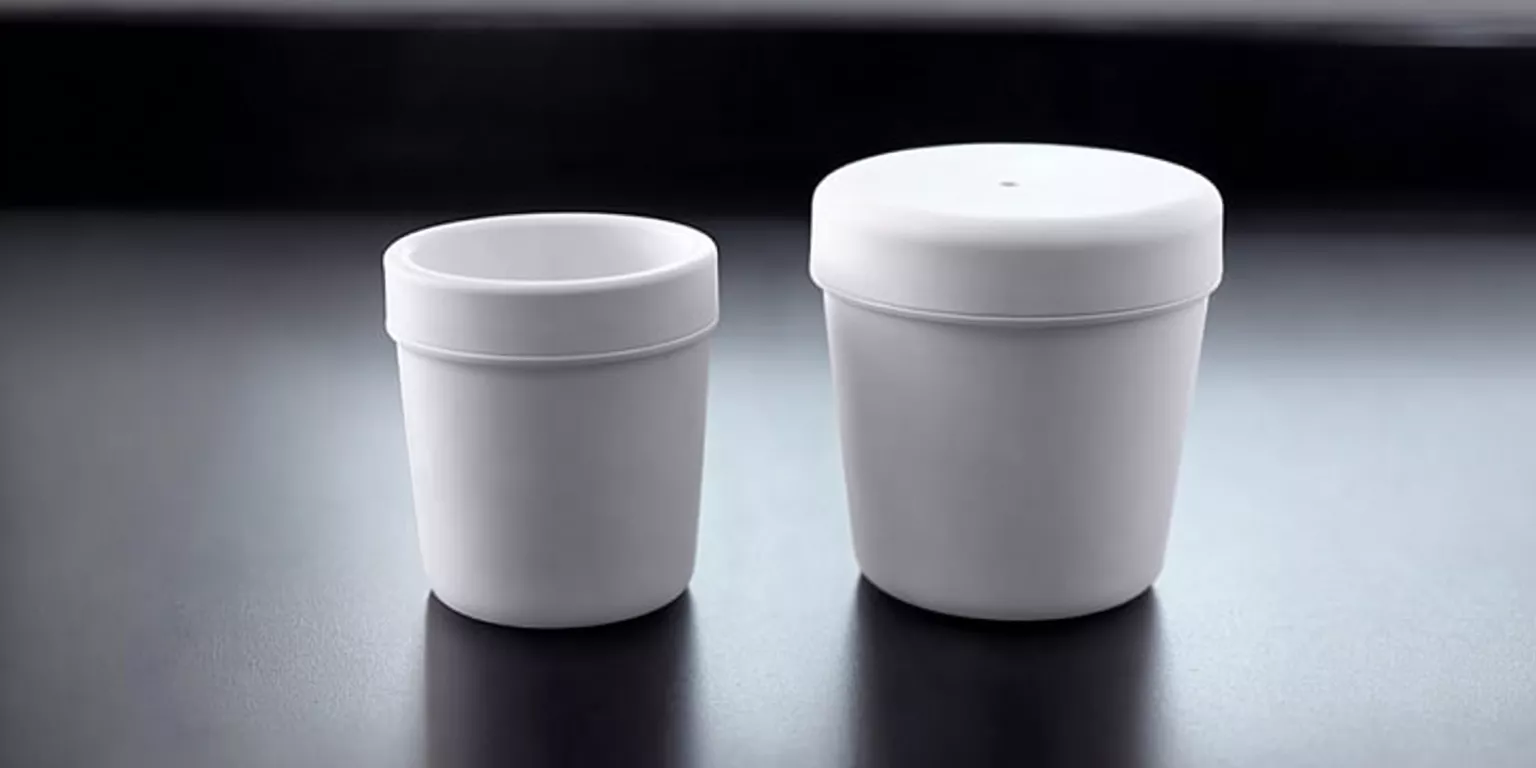
Why Iron Contamination Happens in Alumina Crucibles During TGA
Iron contamination rarely appears suddenly; instead, it develops progressively across repeated TGA cycles within TGA alumina crucibles. Therefore, recognizing how iron enters and accumulates in alumina crucibles helps engineers intervene before data quality is compromised.
-
Common Iron Sources in TGA Testing
Iron most frequently originates from iron oxides, metal-containing catalysts1, fillers, or ash residues present in samples. Moreover, polymer additives2 and aged composite materials may release trace iron during heating above 600 °C. Consequently, even low-iron samples can contribute to cumulative contamination over 10–30 routine test cycles. -
Why Alumina Crucibles Are Susceptible to Iron Residues
Alumina crucibles are sintered ceramics with interconnected micro-porosity, typically in the 1–5 % range. Therefore, iron oxides softened at elevated temperatures can lodge within grain boundaries rather than remaining on the surface. As a result, repeated exposure above 800 °C promotes gradual penetration instead of removable surface staining. -
How Repeated Thermal Cycles Accelerate Contamination
Each heating and cooling cycle slightly enlarges accessible pore pathways through thermal expansion mismatch. Subsequently, iron-bearing residues migrate deeper with every run, even when visual discoloration appears minor. Ultimately, contamination becomes embedded well before obvious visual damage is observed.
How Iron Contamination Affects TGA Accuracy and Reproducibility
Once iron residues accumulate in alumina crucibles, measurement errors begin to emerge subtly. Consequently, data distortion often goes unnoticed until reproducibility checks fail or baselines drift beyond acceptable limits.
-
Baseline Drift and Abnormal Mass Change
Iron contamination can cause empty-crucible baselines to deviate by ±0.01–0.05 mg across standard heating programs. Therefore, apparent mass gain or loss may appear even without a sample present. As a result, subsequent sample measurements inherit systematic error that skews interpretation. -
Catalytic Effects of Iron on Thermal Decomposition
Iron and iron oxides can act as catalysts during thermal decomposition. For example, onset temperatures may shift by 5–20 °C, while reaction rates accelerate unnaturally. Consequently, kinetic parameters derived from TGA curves become unreliable. -
Long-Term Risks of Reusing Iron-Contaminated Crucibles
With continued reuse, contamination intensifies rather than stabilizes. Eventually, run-to-run deviation exceeds 2–5 %, violating common laboratory acceptance criteria. Thus, prolonged reuse undermines data comparability across projects and reporting periods.
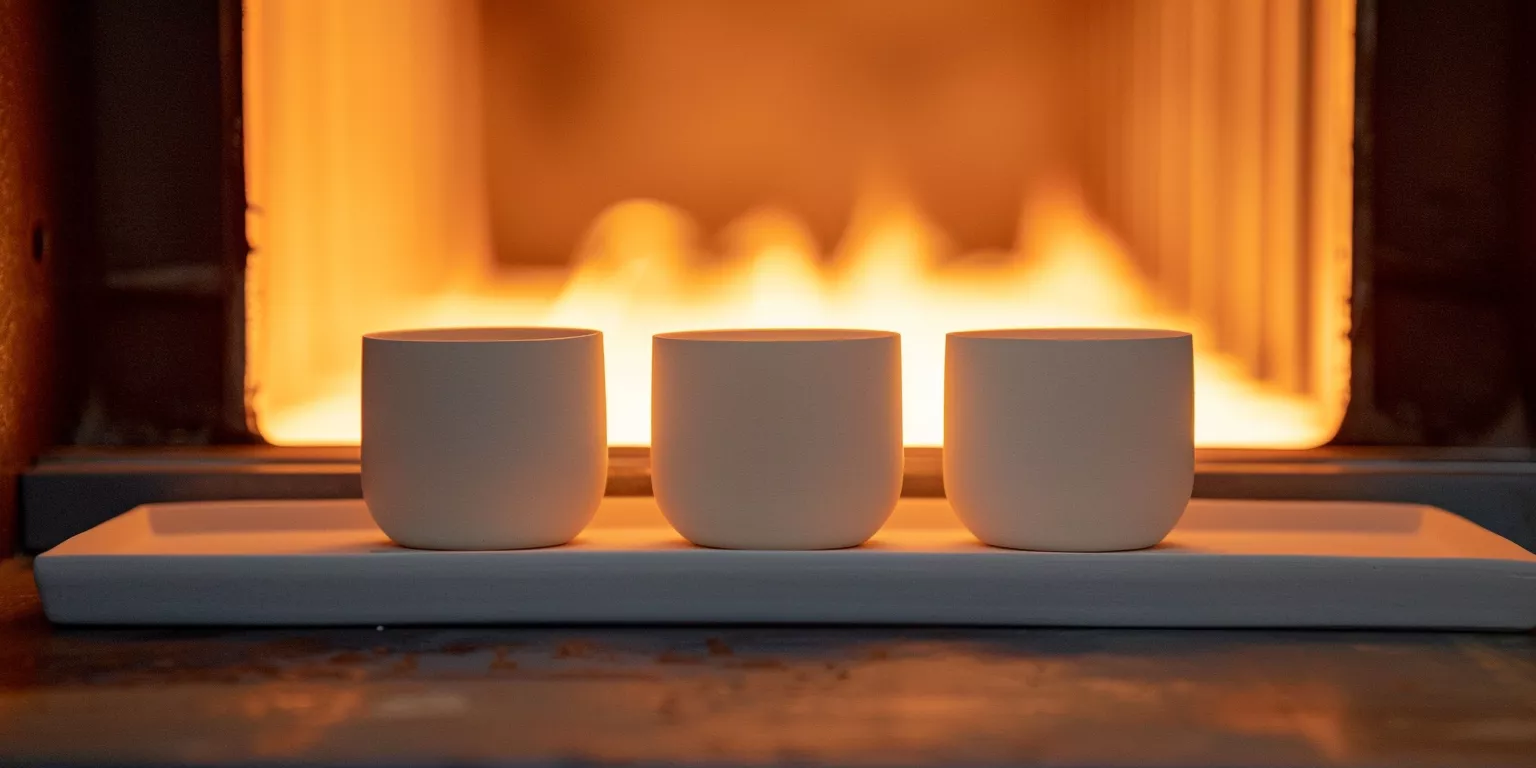
Before Cleaning: Can Iron Really Be Removed from an Alumina Crucible?
Before selecting any cleaning method, it is necessary to determine whether iron contamination is reversible. Moreover, understanding this boundary prevents excessive cleaning that consumes time yet fails to restore TGA reliability. Therefore, this evaluation step directly affects both data quality and laboratory efficiency.
Iron removal depends on how deeply residues interact with the alumina structure. Consequently, surface contamination and embedded contamination must be distinguished early. Otherwise, repeated cleaning attempts may create false confidence while baseline drift persists.
Porosity of Alumina Crucibles and Iron Penetration
Alumina crucibles used for TGA typically exhibit open porosity between 1% and 5%, depending on forming and sintering conditions. Initially, iron oxides adhere to the surface and remain removable. However, once exposure exceeds 10–20 thermal cycles above 800 °C, diffusion into grain boundaries becomes likely.
In practice, engineers often observe that light reddish stains disappear after initial acid treatment, yet baseline drift remains measurable. In one laboratory scenario, a crucible exposed to iron-rich catalyst samples for approximately 25 runs showed baseline deviation of ±0.03 mg despite repeated cleaning attempts.
Ultimately, iron penetration beyond the surface layer indicates that removal will be incomplete. Under those circumstances, replacement is usually the only reliable solution.
| Parameter | Typical Range |
|---|---|
| Open porosity (%) | 1–5 |
| Iron diffusion onset temperature (°C) | 800–900 |
| Cycles before penetration risk | 10–20 |
Surface Residue vs Irreversible Chemical Interaction
Surface-bound iron residues are primarily physical deposits and dissolve readily in oxidizing acids. By contrast, iron that reacts with alumina forms stable mixed oxides that resist dissolution. Therefore, chemical interaction depth defines removability.
During routine work, some laboratories report full mass stability recovery after 2–4 hours of nitric acid soaking. Conversely, crucibles used with iron silicate or ash-rich materials often show no improvement even after extended cleaning. This contrast highlights the importance of early assessment.
Thus, if a single controlled cleaning cycle fails to reduce baseline drift below ±0.01 mg, further attempts rarely succeed. At that point, continued cleaning increases risk without restoring accuracy.
| Contamination Type | Removal Feasibility |
|---|---|
| Surface iron oxide | High |
| Pore-embedded iron | Low |
| Iron–alumina compounds | Very low |
Step-by-Step: How to Remove Iron from Alumina Crucible for TGA
Once iron contamination is assessed as potentially reversible, cleaning should proceed in a structured and conservative sequence. Moreover, starting with the least aggressive method reduces the risk of damaging the alumina matrix. Therefore, each step must be followed by verification before escalation.
Effective cleaning is not about maximizing chemical strength; rather, it is about restoring baseline stability efficiently. Consequently, the methods below are ordered by increasing intensity and should not be applied indiscriminately.
Method 1: Thermal Burn-Off
Thermal burn-off is designed to remove organic residues and lightly bound iron compounds. Typically, crucibles are heated in air to 900–1000 °C for 1–2 hours, which oxidizes residual organics completely.
In routine laboratory use, this method often resolves contamination after polymer or binder-rich samples. For instance, engineers frequently observe baseline recovery to within ±0.01 mg after a single burn-off cycle when iron exposure was limited to fewer than 10 runs.
However, thermal burn-off cannot dissolve metallic iron or deeply embedded oxides. Therefore, if baseline drift remains above tolerance, chemical cleaning is required.
| Parameter | Typical Value |
|---|---|
| Burn-off temperature (°C) | 900–1000 |
| Holding time (h) | 1–2 |
| Acceptable baseline drift (mg) | ≤0.01 |

Method 2: Acid Cleaning for Iron and Iron Oxides
Acid cleaning targets iron oxides through controlled chemical dissolution. Nitric acid is commonly used because it oxidizes iron while leaving alumina largely unaffected. Typical concentrations range from 10% to 20%.
In practice, soaking for 2–6 hours removes visible red or brown residues in most cases. Engineers often report that extending soaking beyond 8 hours yields minimal additional benefit. Consequently, prolonged exposure should be avoided to limit handling risks.
After soaking, crucibles must be rinsed at least three times with deionized water and dried thoroughly. Otherwise, residual acid may influence subsequent mass measurements.
| Parameter | Typical Range |
|---|---|
| Nitric acid concentration (%) | 10–20 |
| Soaking duration (h) | 2–6 |
| DI water rinses | ≥3 |
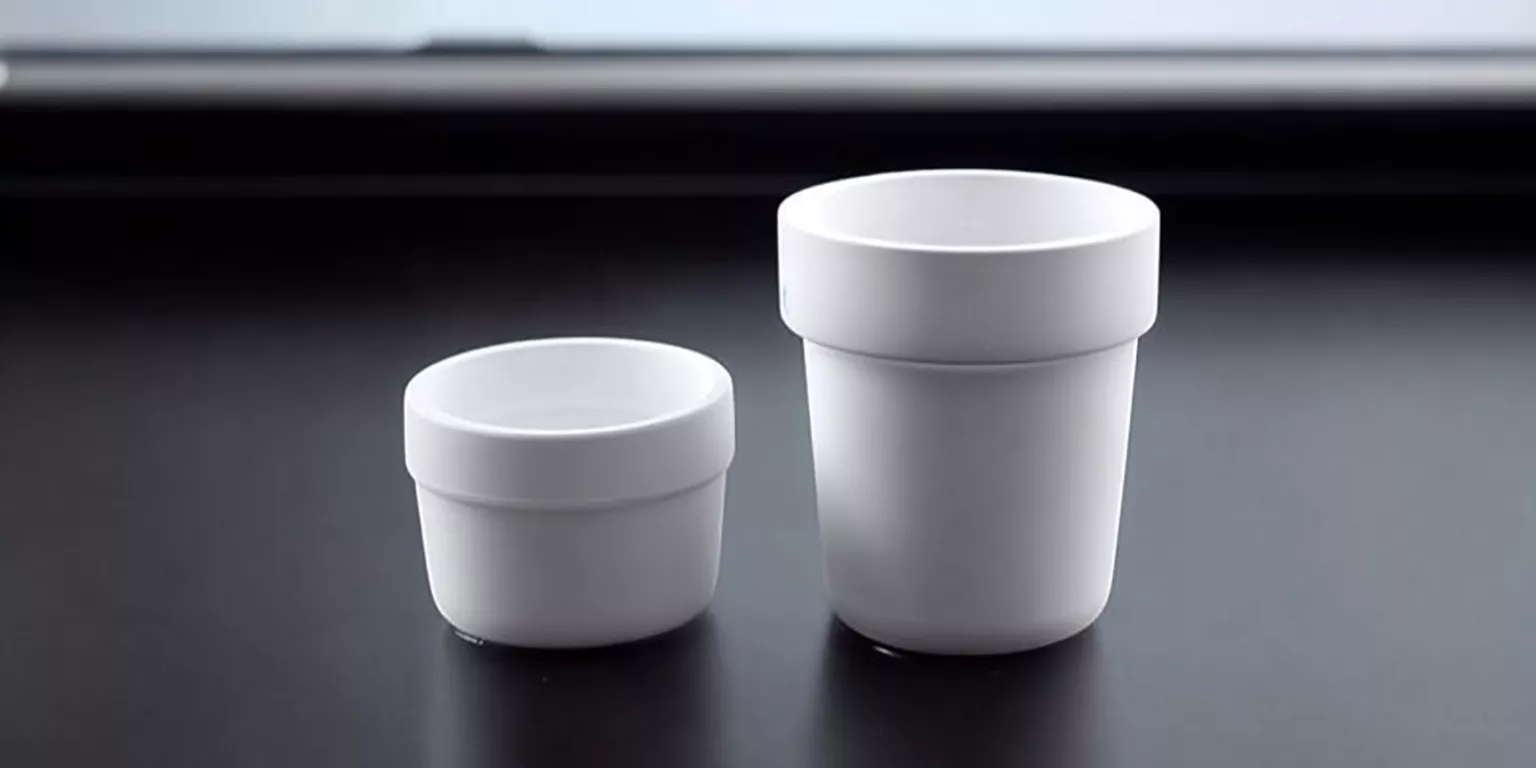
Method 3: Combined Acid + Heat Cleaning Strategy
When single-step methods fail, a combined approach may restore performance. First, acid soaking removes surface iron oxides. Subsequently, thermal burn-off eliminates residual organics and weakly bound compounds.
In one documented laboratory case, this sequence reduced baseline drift from ±0.03 mg to ±0.008 mg after iron-rich catalyst testing. This demonstrates the effectiveness of methodical escalation.
Nevertheless, repeated combined cycles increase mechanical and thermal stress. Therefore, more than two combined attempts are rarely justified before replacement is considered.
| Step | Condition |
|---|---|
| Acid soak | 15% HNO₃, 4 h |
| Rinse | DI water, 3× |
| Burn-off | 950 °C, 1 h |
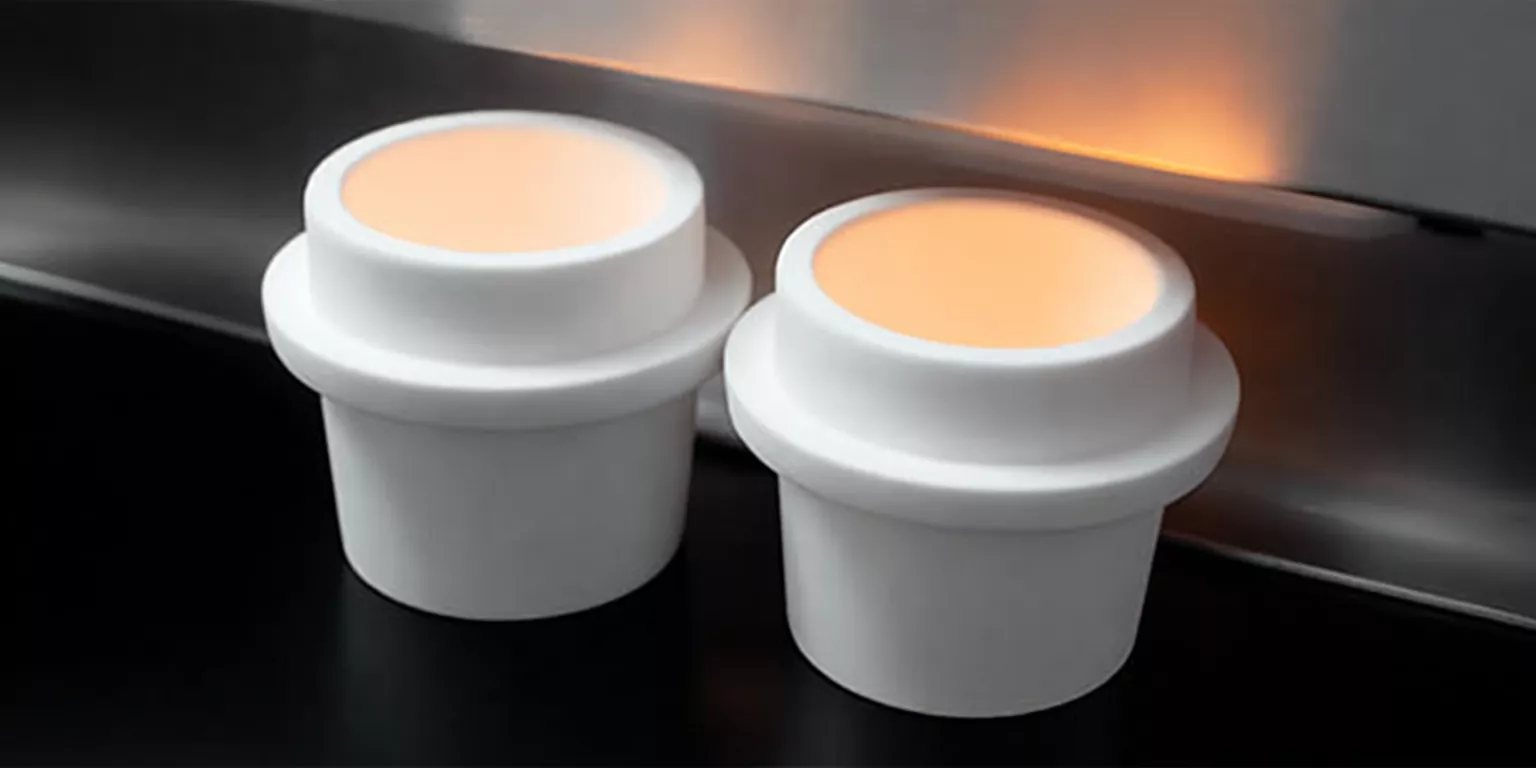
Methods to Avoid: HF and Aggressive Mechanical Cleaning
Hydrofluoric acid reacts directly with alumina, dissolving the crucible itself. Therefore, it permanently compromises structural integrity and introduces severe safety hazards.
Mechanical scraping or polishing enlarges surface pores and increases future contamination rates. As a result, these methods shorten crucible life and should never be used for TGA alumina crucibles.
How to Verify Whether the Crucible Is Clean Enough for TGA Reuse
After cleaning, verification is essential because visual improvement alone does not guarantee measurement reliability. Moreover, iron residues may persist below the surface; therefore, quantitative checks must confirm whether reuse is technically justified.
Verification should progress from simple screening to performance-based confirmation. Consequently, the steps below help engineers decide whether a crucible can safely return to routine TGA operation or should be retired.
Visual Inspection Is Not Sufficient
At first glance, a cleaned alumina crucible may appear uniformly white. However, surface color recovery does not reflect internal contamination depth. Therefore, relying solely on appearance introduces risk.
In laboratory practice, engineers often report visually clean crucibles that still produce unstable baselines. In one case, a crucible showed no visible staining yet generated ±0.02 mg drift during an empty run, exceeding internal acceptance limits.
Thus, visual inspection should only serve as a preliminary screen, not a final decision criterion.
| Inspection Aspect | Reliability |
|---|---|
| Color uniformity | Low |
| Surface smoothness | Low |
| Absence of stains | Moderate |
Empty-Crucible Baseline Test
The empty-crucible baseline test is the most direct verification method. First, the cleaned crucible is placed in the TGA and run under the same temperature program used for samples.
Typically, acceptable baseline stability falls within ±0.01 mg across the full heating range. If drift exceeds this value, contamination likely remains. Consequently, further cleaning or replacement should be considered.
Engineers often find this test decisive because it reflects real operating conditions rather than indirect indicators.
| Criterion | Acceptance Threshold |
|---|---|
| Baseline drift (mg) | ≤0.01 |
| Noise amplitude (mg) | ≤0.005 |
| Curve smoothness | No step changes |
Repeatability Check with Reference Sample
When baseline stability is acceptable, a reference sample confirms functional recovery. Commonly used references include calcium oxalate or polymer standards with well-characterized decomposition steps.
In practice, acceptable deviation is within ±2% mass loss and ≤3 °C shift in onset temperature compared with historical data. For example, one laboratory observed consistent recovery only after crucible replacement, despite repeated cleaning attempts.
Therefore, if repeatability criteria are not met, reuse should be avoided to prevent systematic error propagation.
| Metric | Acceptable Range |
|---|---|
| Mass loss deviation (%) | ≤2 |
| Onset temperature shift (°C) | ≤3 |
| Step reproducibility | Stable |

When You Should Stop Cleaning and Replace the Alumina Crucible
At a certain point, continued cleaning no longer improves performance and instead increases risk. Therefore, recognizing clear replacement thresholds helps protect TGA data integrity and prevents unnecessary downtime. Moreover, timely replacement is often the most cost-effective engineering decision.
Replacement decisions should be based on measurable criteria rather than visual judgment alone. Consequently, the following indicators define when cleaning efforts should stop and a new alumina crucible should be introduced.
Signs That Iron Contamination Is Irreversible
Irreversible contamination is typically indicated by persistent baseline instability after controlled cleaning attempts. In practice, if baseline drift remains above ±0.01 mg after two complete cleaning cycles, embedded iron is likely present.
Engineers often encounter this scenario after repeated testing of iron-rich catalysts or ash samples. In one laboratory case, a crucible exposed to over 30 high-temperature runs continued to show ±0.025 mg drift despite acid and thermal treatment.
Thus, when quantitative performance fails to recover, replacement becomes the only reliable option.
| Indicator | Typical Observation |
|---|---|
| Baseline drift after cleaning (mg) | ≥0.02 |
| Number of failed cleaning cycles | ≥2 |
| Visual pore staining | Persistent |
Cost of Over-Cleaning vs Cost of Replacement
Although cleaning appears economical, repeated attempts consume time and instrument availability. Moreover, extended troubleshooting delays experiments and increases scheduling pressure.
For example, a single additional cleaning-verification cycle may occupy 4–6 hours of furnace and balance time. Consequently, cumulative delays quickly exceed the cost of replacing a crucible.
Therefore, replacing a compromised crucible often reduces overall operational risk and preserves consistent TGA throughput.
| Factor | Cleaning | Replacement |
|---|---|---|
| Time consumption (h) | 4–12 | <1 |
| Baseline reliability | Uncertain | High |
| Data risk | Elevated | Minimal |
Preventing Iron Contamination in Future TGA Experiments
Preventive control is more effective than repeated cleaning because it stabilizes long-term TGA performance. Moreover, simple procedural adjustments can significantly reduce iron carryover; therefore, preventive strategies should be embedded into routine laboratory workflows.
-
Sample Segregation Strategy for Iron-Rich Materials
Iron-containing samples should be tested separately from clean polymer or organic materials. Consequently, cross-contamination risk is reduced before it accumulates. In practice, laboratories that segregate iron-rich samples report fewer baseline failures over 20–40 test cycles. Therefore, segregation directly improves reproducibility. -
Dedicated Crucibles for Iron-Containing Samples
Assigning specific alumina crucibles exclusively to iron-bearing samples limits contamination spread. Moreover, this approach localizes cleaning effort to a defined subset of crucibles. As a result, average crucible lifetime for non-iron samples can increase by 30–50% in routine operation. -
Choosing the Right Alumina Crucible Quality and Density
Higher-density alumina crucibles exhibit lower open porosity, which restricts iron penetration. Consequently, iron residues remain closer to the surface and are easier to remove. In laboratories using ≥99% alumina crucibles with consistent batch quality, contamination-related drift incidents decrease markedly over long-term use.
Conclusion
In essence, iron contamination in TGA alumina crucibles is manageable only within clear physical limits. Therefore, disciplined cleaning, quantitative verification, and timely replacement together ensure reliable thermal analysis results.
If stable baselines and repeatable TGA data matter, establish clear crucible verification rules and replace iron-compromised alumina crucibles before hidden contamination undermines critical measurements.
FAQ
Can iron permanently damage an alumina crucible used for TGA?
Iron can become permanently embedded after repeated high-temperature exposure. Consequently, solid-state interactions may form that cannot be removed by acid or thermal cleaning. Therefore, permanent baseline drift is a clear risk.
Does iron contamination always affect TGA results immediately?
Not necessarily. Initially, effects may be subtle; however, drift typically increases after 10–30 cycles. As a result, delayed failure is common if verification is not performed regularly.
Is a platinum crucible a better option for iron-rich samples?
Platinum resists iron interaction more effectively. Nevertheless, it introduces higher cost and compatibility limits. Therefore, selection should depend on temperature range and atmosphere.
How many times can an alumina crucible be reused after iron exposure?
Reuse varies with exposure severity. In practice, 5–20 cycles are common before performance degrades. Consequently, routine verification determines safe reuse limits.
References: