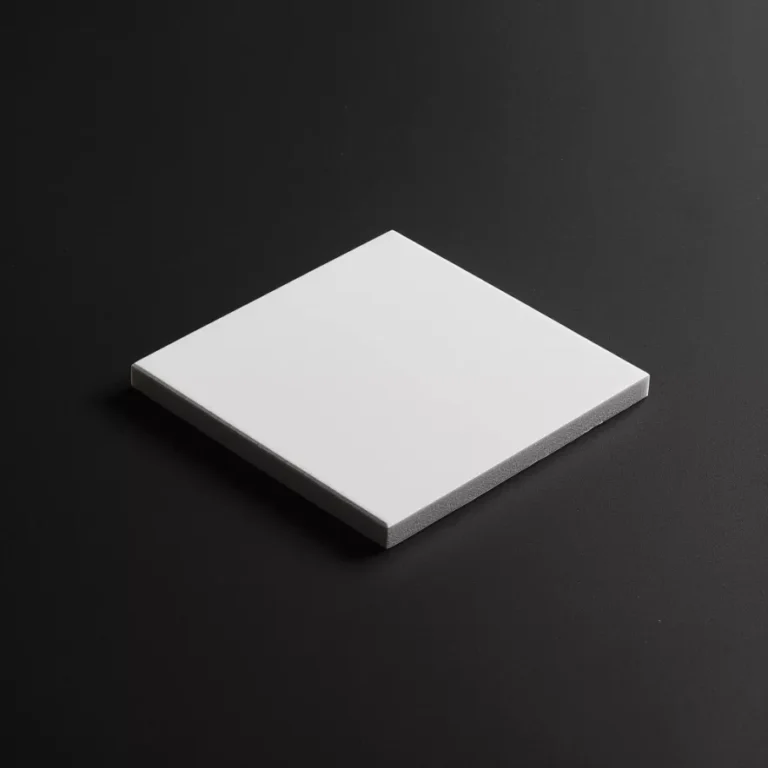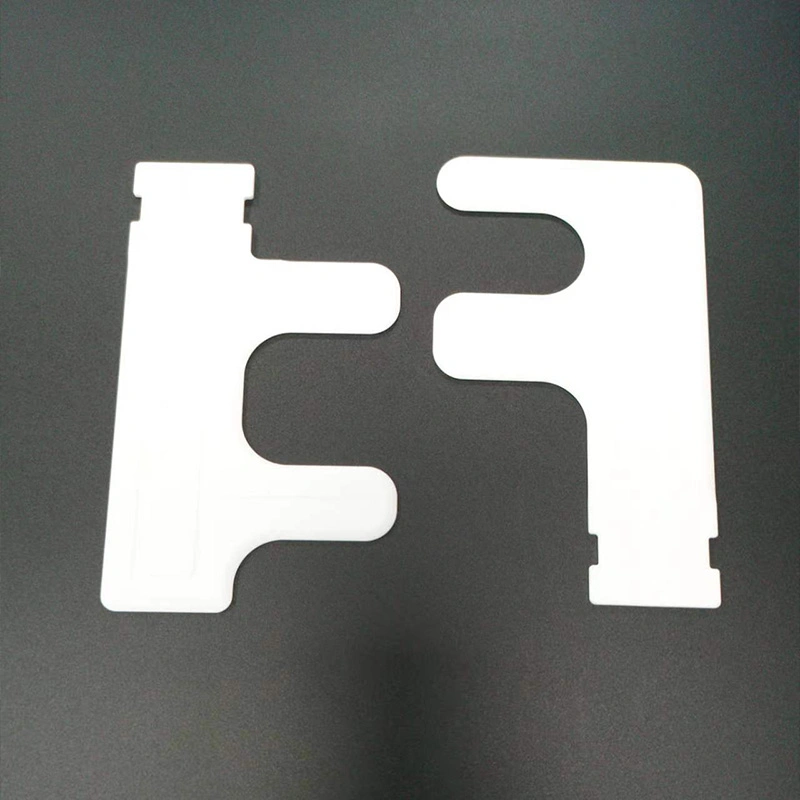
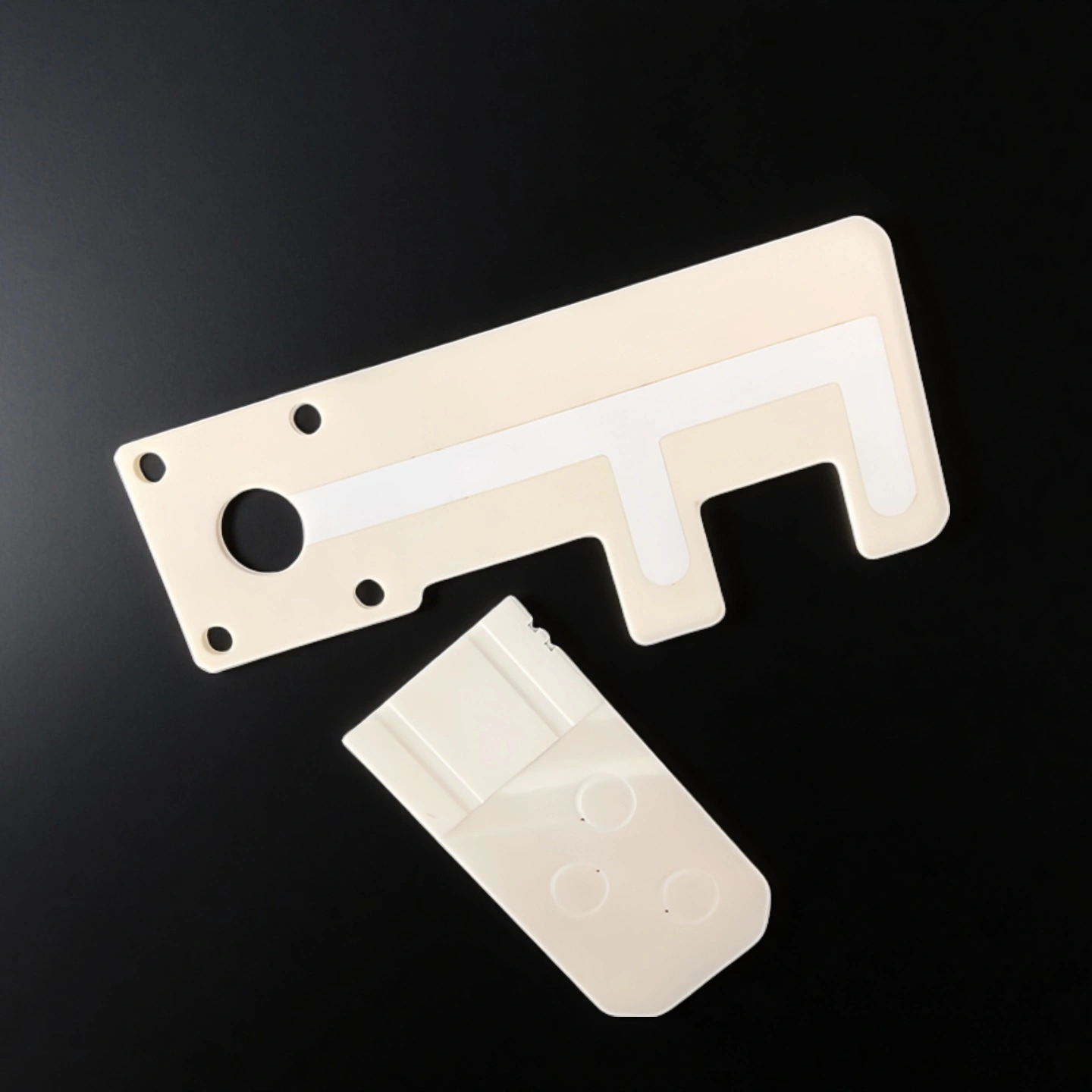
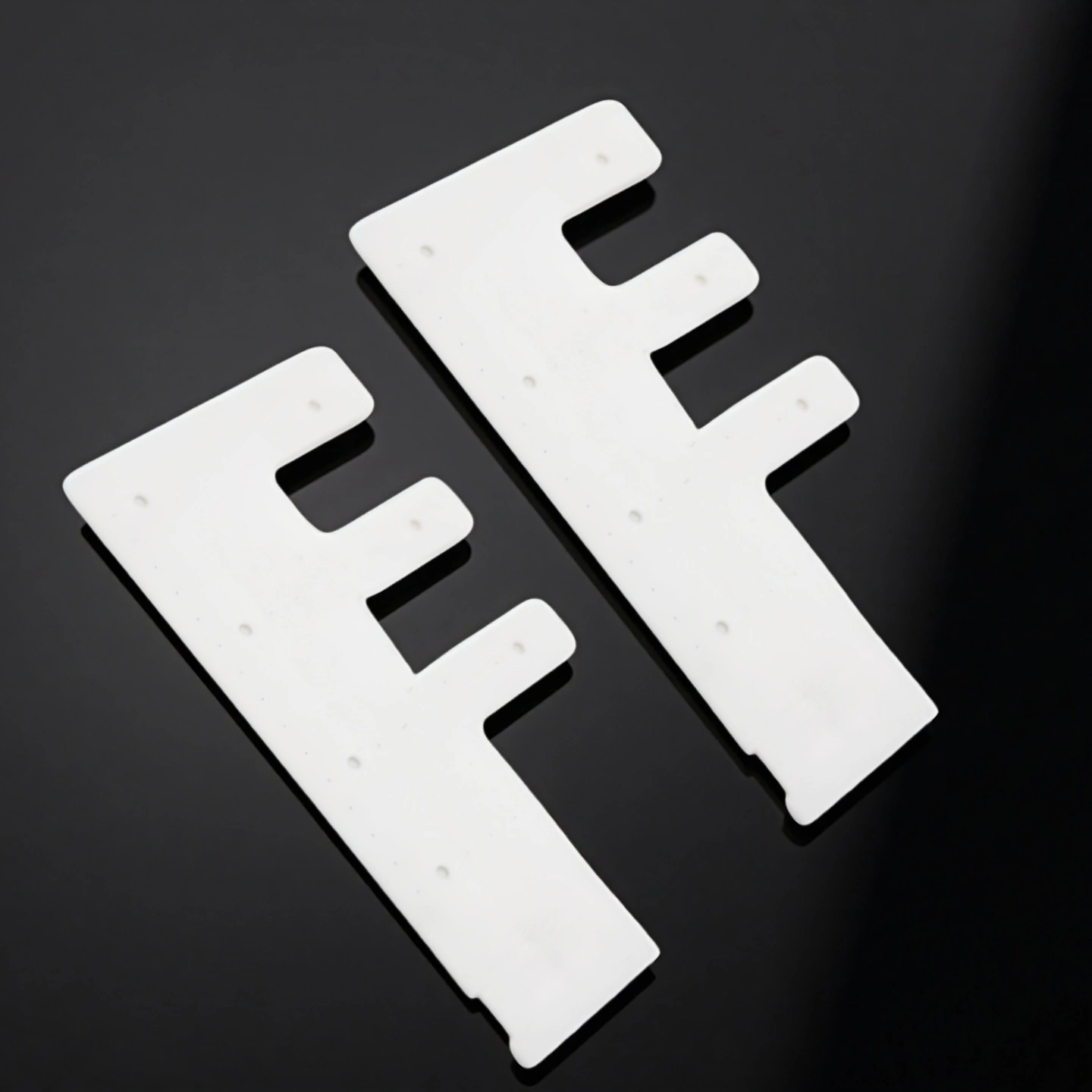
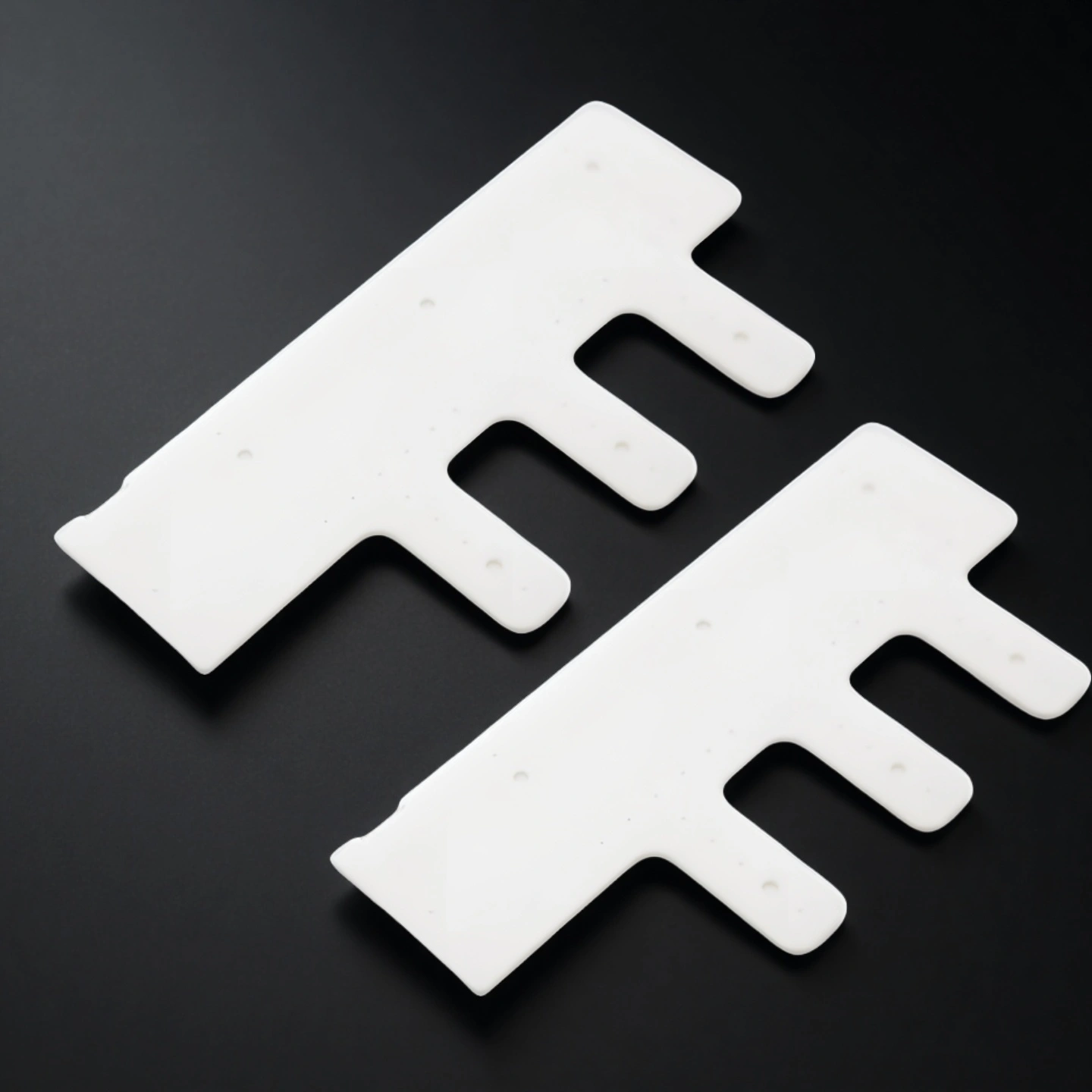
Alumina Ceramic Vacuum Suction Plate for Wafer, Small-Parts & Solar Cell Handling

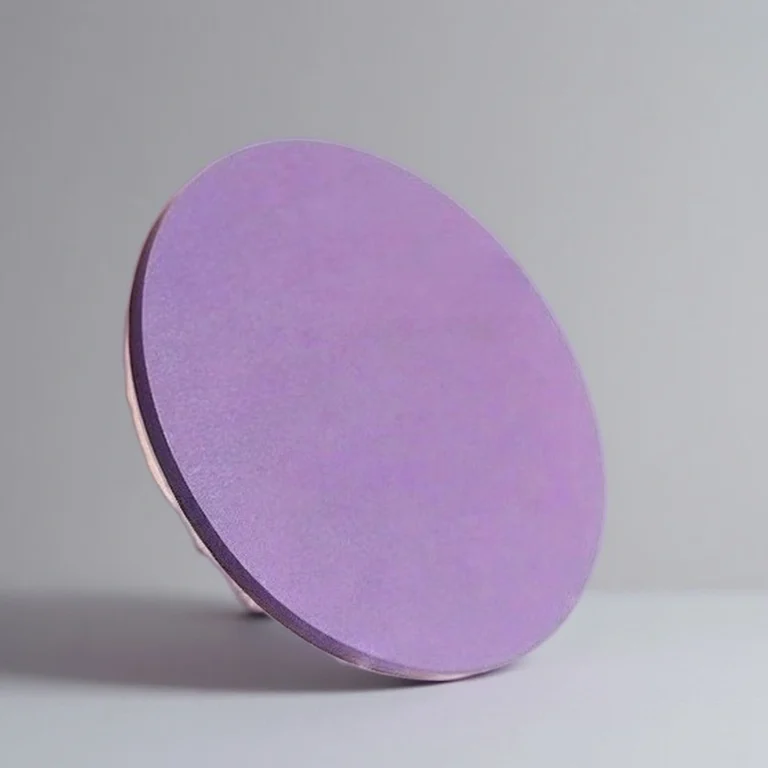
Alumina ceramic vacuum suction plate providing even vacuum hold for wafers, small electronic parts, and solar cells; pore window and flatness are built to drawing with optional zoning and ESD range.

Catalog No. AT-PV-C001
Material ≥ 96% Al2O3
Surface Flatness ≤0.03mm
Dimensional Tolerance ±0.05mm
Dimensions/Sizes Download PDF
24H Standard Dispatch
Small Batch Support OEM
Factory Direct
Expert Engineering Support

The alumina ceramic vacuum suction plate is a microporous vacuum chuck designed for wafer handling in chip manufacturing, precision pick-and-place of small electronic parts, and solar cell transfer in photovoltaic lines.

Alumina Ceramic Vacuum Suction Plate Benefits

  • Uniform suction on fragile substrates to reduce pressure marks and micro-cracks during transfer/placement.
  • Engineered flatness to maintain inspection/placement accuracy and repeatability.
  • Zoned vacuum architecture to stabilize edges, thin corners, or sensitive regions.
  • Low-particle surface options for clean handling steps.
  • ESD-aware design with selectable surface resistivity or grounding path.


Alumina Ceramic Vacuum Suction Plate Properties

Property Unit 99.5% Al₂O₃ 99.6% Al₂O₃ 99.7% Al₂O₃ 99.8% Al₂O₃ 99.9% Al₂O₃ 99.99% Al₂O₃
Alumina content % 99.5 99.6 99.7 99.8 99.9 99.99
Density g/cm³ 3.89 3.91 3.92 3.93 3.94 3.98
Open porosity % 0
Color Ivory Ivory Ivory Ivory Ivory Ivory
Water absorption % 0 0 0 0 0
Young’s modulus (Elastic modulus) GPa 375 356 357 358 359 362
Shear modulus GPa 152
Bulk modulus GPa 228
Poisson’s ratio 0.22
Compressive strength MPa 2600 2552 2554 2556 2558 2570
Flexural strength MPa 379 312 313 314 315 320
Fracture toughness MPa·m¹ᐟ² 4
Hardness GPa 14.1 (≈1440 kg/mm²) 23 24 25 26 30
Thermal conductivity W/m·K 35 32–37 33–38 34–39 35–40 36–42
Thermal shock resistance ΔT °C 222 223 224 225 228
Maximum use temperature (no load) °C ≤1750 1755 1760 1765 1770 1800
Coefficient of thermal expansion 10⁻⁶/°C 8.4
Specific heat J/kg·K 880
Volume resistivity Ω·cm >1×10¹⁴ >1×10¹⁴ >1×10¹⁴ >1×10¹⁴ >1×10¹⁴ >1×10¹⁴
Dielectric constant (relative permittivity) 9.8 9.83 9.84 9.85 9.86 9.92
Dielectric strength kV/mm 16.9 23.2 23.4 23.6 23.8 24
Dissipation factor (loss factor @ 1 kHz) 0.0002


Alumina Ceramic Vacuum Suction Plate Specifications

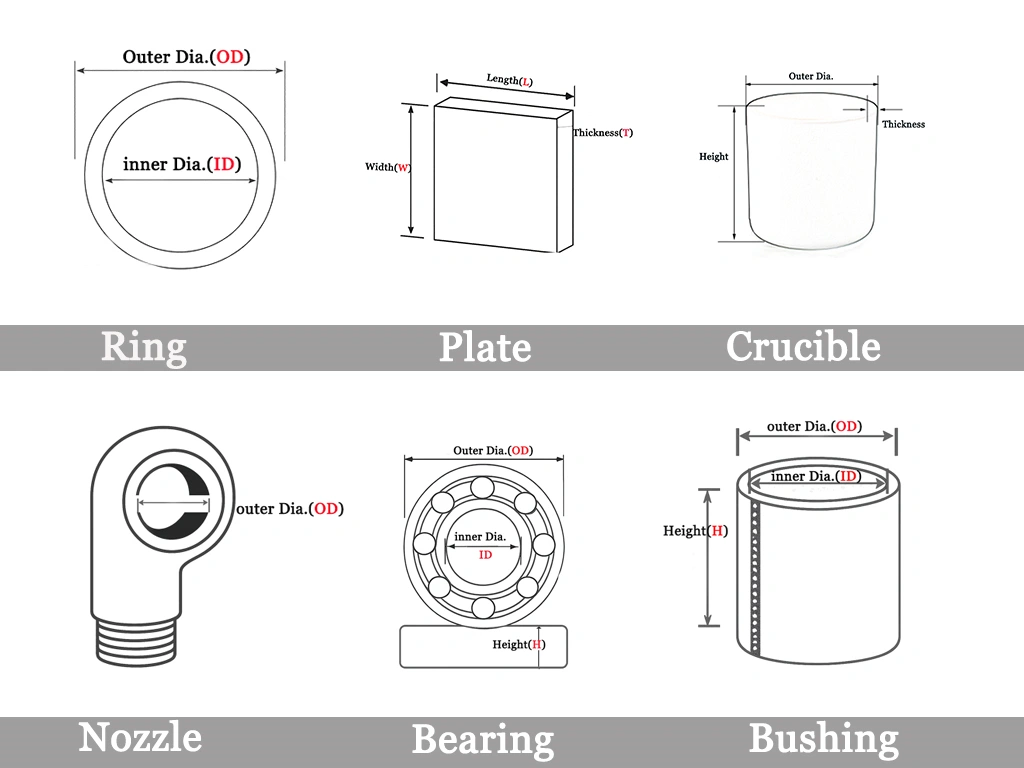
Item No. Diameter (mm) Thickness (mm) Purity
AT-PV-C001 Customize


Alumina Ceramic Vacuum Suction Plate Packaging

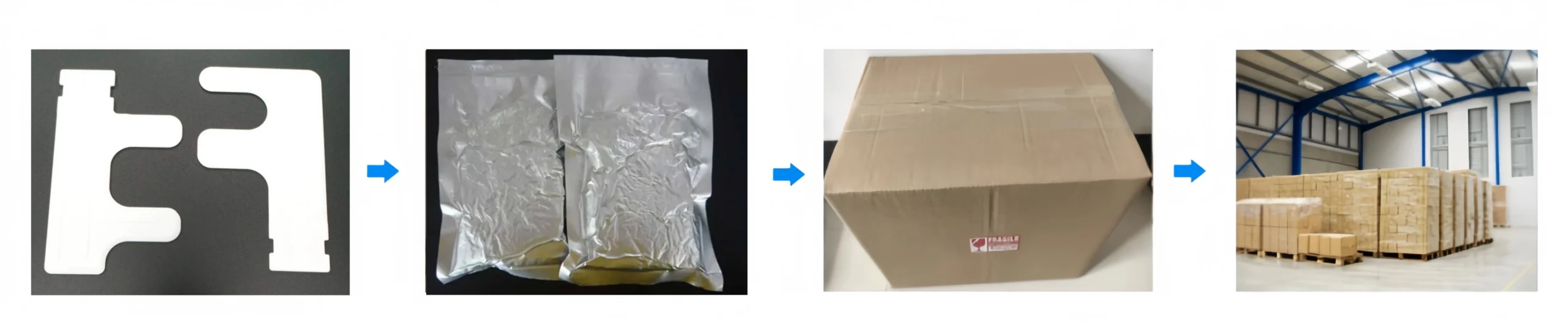
  • Double-layer foam tray housing each chuck individually
  • Dust-proof vacuum package
  • Wooden crate packaging for export safety

Alumina Ceramic Vacuum Suction Plate Packaging

 Alumina Ceramic Vacuum Suction Plate Applications

  • Solar Cell Handling & Inspection

    ✅Key Advantages

    1. Zoned suction prevents edge lift, reducing breakage rates by up to 1.2% in cell transfer.
    2. Flatness tolerance ≤10 μm stabilizes inspection results and IV curve measurements.
    3. Balanced pore distribution lowers local pressure peaks, cutting micro-crack formation.

    ✅ Problem Solved

    In a PV module line, uneven suction on older jigs caused edge chipping and ~0.8% yield loss. After switching to an alumina ceramic vacuum suction plate with tighter flatness and two-zone control, breakage incidents dropped, IV curve rework decreased, and daily output improved without additional takt time.

  • Wafer Cleaning & Metrology

    ✅Key Advantages

    1. Microporous alumina surface supports wafers evenly, reducing focus drift during metrology.
    2. Flatness ≤10 μm across effective area cuts re-scan frequency by more than 30%.
    3. Low-particle surface finish minimizes contamination in post-clean inspection.

    ✅ Problem Solved

    In wafer inspection, out-of-plane support caused repeated scans and tool downtime. A vacuum suction plate specified at ≤10 μm flatness with polished Ra finish reduced re-scan counts, improved repeatability, and recovered ~12% tool throughput, stabilizing overall metrology efficiency.

  • Thin Glass / Film Printing & Laser Micromachining

    ✅Key Advantages

    1. Full-surface suction with tuned pore window prevents flutter of ultra-thin substrates.
    2. Multi-zone vacuum control balances ΔP-flow, ensuring consistent edge stability.
    3. Process yield improved with reduced misprints and rework, raising first-pass rate by 15–18%.

    ✅ Problem Solved

    A thin-film printing line struggled with substrate lift and misprints, causing frequent rework. By implementing a multi-zone alumina ceramic suction plate with a tailored pore window, sheet stability improved, print defects dropped, and first-pass yield rose by ~17%, while takt time normalized to planned cycle rates.

Alumina Ceramic Vacuum Suction Plate Applications

  • Install

    1. Mount the suction plate on a flat, stable datum surface; avoid over-tightening bolts that may induce warpage.
    2. Connect manifold ports and zoning channels according to the layout; confirm sealing with appropriate gaskets or O-rings.
    3. Perform a leak check with filters in place before bringing the system online.

  • Operate

    1. Ramp up the vacuum gradually to avoid a sudden snap-down that could damage thin wafers or cells.
    2. For large or fragile substrates, enable zones sequentially from the centre outward to stabilize the edges.
    3. Continuously monitor vacuum levels and particle counters in critical process steps.
    4. Adjust ΔP-flow and zone distribution based on substrate size and stiffness to maintain stable holding.

  • Clean & Maintain

    1. Use lint-free wipes and approved solvents to clean the working surface; avoid abrasive cloths.
    2. Prevent slurry, chemical residues, or foreign particles from entering the porous network.
    3. Replace inline filters at defined intervals; clogged filters increase ΔP and reduce suction stability.
    4. Purge channels with dry, clean air before extended downtime or shutdown.
    5. Store in a protective, clean bag or flat case to maintain surface flatness and cleanliness.

  • Avoid Misuse

    1. Edge lift: Increase outer-zone flow or install a perimeter gasket to improve sealing.
    2. Surface marks: Lower vacuum setpoint, refine surface Ra, or confirm backside substrate smoothness.
    3. Vacuum instability: Check for leaks, replace clogged filters, and verify manifold sealing.
    4. Flatness drift: Avoid storing under uneven load; always support evenly across the base.

Alumina Ceramic Vacuum Suction Plate FAQ

  1. Q: Can alumina ceramic vacuum suction plate support thin-film vacuum deposition?
    A: Yes, its electro-insulating nature and chemical stability make it suitable for PVD/CVD applications.
  2. Q: Can I use alumina ceramic vacuum suction plate under vacuum + heating cycles?
    A: Yes, the alumina vacuum suction plates are stable under combined vacuum and up to medium temperatures (~1000°C).
  3. Q: What flatness tolerance can be achieved?
    A: Flatness is engineered to the drawing over the effective area; typical ranges are ≤10 μm for wafer inspection or ≤20 μm for larger solar cells, verified with a surface map.
  4. Q: Can the alumina vacuum suction plate be customized for my process?
    A: Yes. Buyers can specify pore size window, zoning layout, port interfaces, surface finish (Ra), ESD range, and optional cooling/purge channels to match their application.
  5. Q: Does alumina ceramic vacuum suction plate support ESD-sensitive operations?
    A: Yes. A surface resistivity window can be built into the alumina matrix, and grounding paths or coatings can be added for static-sensitive wafer or chip processes.
  6. Q: How do I avoid marks or cracks on fragile plates?
    A: Use a lower initial vacuum setpoint with a gradual ramp-up, select a finer pore window, and request a smoother Ra finish. Zoned vacuum control also reduces edge stress.
  7. Q: What industries commonly use alumina ceramic vacuum suction plates?
    A: They are widely applied in semiconductor wafer processing, photovoltaic module lines, electronics assembly, thin-film printing, and laser micromachining.

What Our Clients Say about Alumina Ceramic Vacuum Suction Plate

  • ⭐️⭐️⭐️⭐️⭐️
    “The alumina ceramic vacuum suction plate held wafers consistently flat. Our metrology scans dropped from multiple repeats to a single pass, saving several hours per week in tool downtime.”
    -- Daniel K., Process Engineer, Wafer Metrology (USA)
  • ⭐️⭐️⭐️⭐️⭐️
    “We changed to a customized alumina ceramic vacuum suction plate with two-zone control. Small electronic parts stayed in place without over-vacuum, and placement accuracy improved by nearly 20%.”
    -- Sophie M., Assembly Engineer, Electronics Manufacturing (Germany)
  • ⭐️⭐️⭐️⭐️⭐️
    “Edge chips on solar cells disappeared after adopting an alumina ceramic vacuum suction plate with balanced pore distribution. Output stabilized and our first-pass yield rose by around 1.5%.”
    -- Hiroshi T., PV Module Equipment Specialist (Japan)
  • ⭐️⭐️⭐️⭐️⭐️
    “The low-particle surface of the alumina ceramic vacuum suction plate made thin-film printing far more predictable. Traceable ID markings simplified reorders, and the layout matched perfectly with our process.”
    -- Luca R., Thin Glass Line Supervisor (Italy)
customize size

Customize Alumina Ceramic Vacuum Suction Plate

The alumina ceramic vacuum suction plate can be tailored to your process needs, and the options below show what you can specify for precise integration.

  • Size & effective area: L×W×T, keep-out zones, datum faces, edge chamfer radius
  • Pore & flow behaviour: pore window, porosity concept, target ΔP-flow curve, local density tuning
  • Zoned vacuum: zone count, layout map, individual ports/valves, centre-to-edge enable sequence
  • Surface finish: Ra target (polished / fine-ground / sandblasted working face)
  • Interface: manifold type, port size/position, gasket/O-ring groove, alignment pins
  • Optional channels: cooling or purge channels with connectors
  • ESD window: surface resistivity range or grounding scheme
  • Traceability: ID/QR marking and inspection reference marks

Related Products

ADCERAX - Your Trusted Advanced Ceramics Manufacturing Partner

Direct factory manufacturing with comprehensive ceramic materials expertise and global supply capabilities

Direct Factory Manufacturing

China-based ceramic materials production facility with state-of-the-art equipment

Engineering Team

Experienced professionals in advanced ceramics applications and custom design

Quality Control

Strict quality control standards for technical ceramics manufacturing and quality management

Global Supply Chain

Serving customers worldwide with technical ceramics and rapid response

24/7 Technical Support

Round-the-clock support for ceramic components inquiries and technical assistance

500+ Satisfied Customers

Trusted by global customers for advanced ceramic materials and precision components

Get in touch with us

Our team will be happy to respond to you in less than 24 hours.

Adcerax's factory

Quick Quotation

*Our team will answer your inquiries within 24 hours.

*Your information will be kept strictly confidential.

Ready to Solve Your Engineering Challenge?

Partner with ADCERAX for reliable, high-performance advanced ceramic solutions. Our engineers are ready to discuss your project.

E-mail

info@adcerax.com

Phone

+(86) 0731-74427743 | WhatsApp: +(86) 19311583352

Response Time

Within 24 hours

Quick Quote

The more details you provide, the faster we can quote.

*We respond within 24 hours. All inquiries are confidential.

Download Catalog

Get Your Custom Sulution

The more details you provide, the faster we can respond.

customize size

*We respond within 24 hours. All inquiries are confidential.

Download Catalog