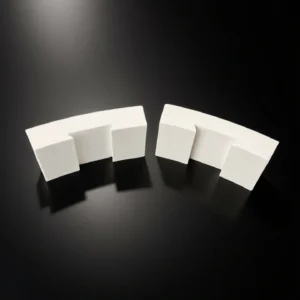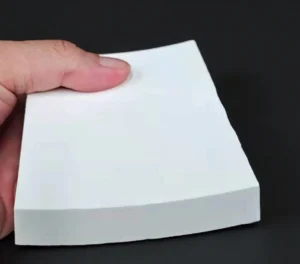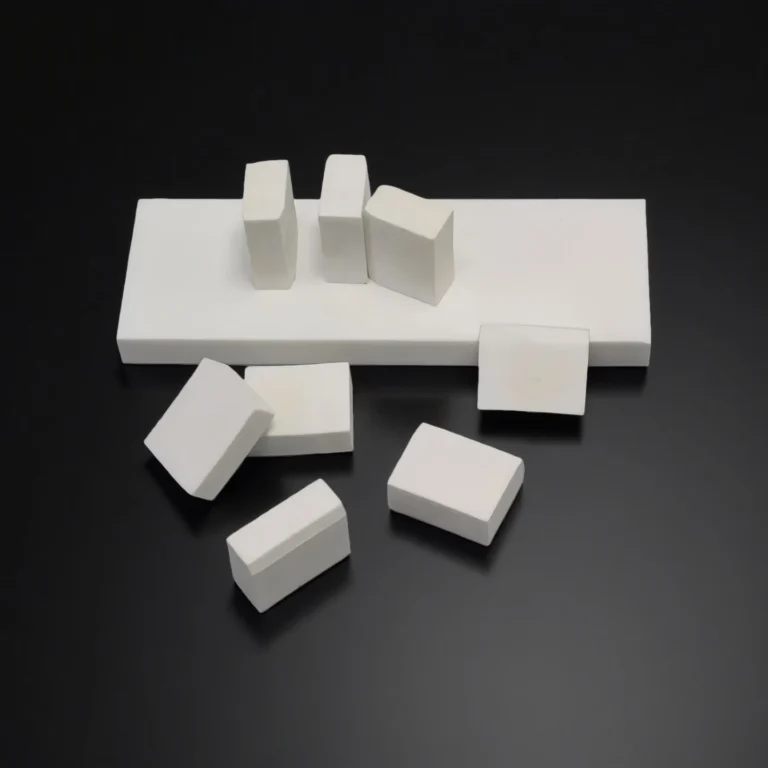
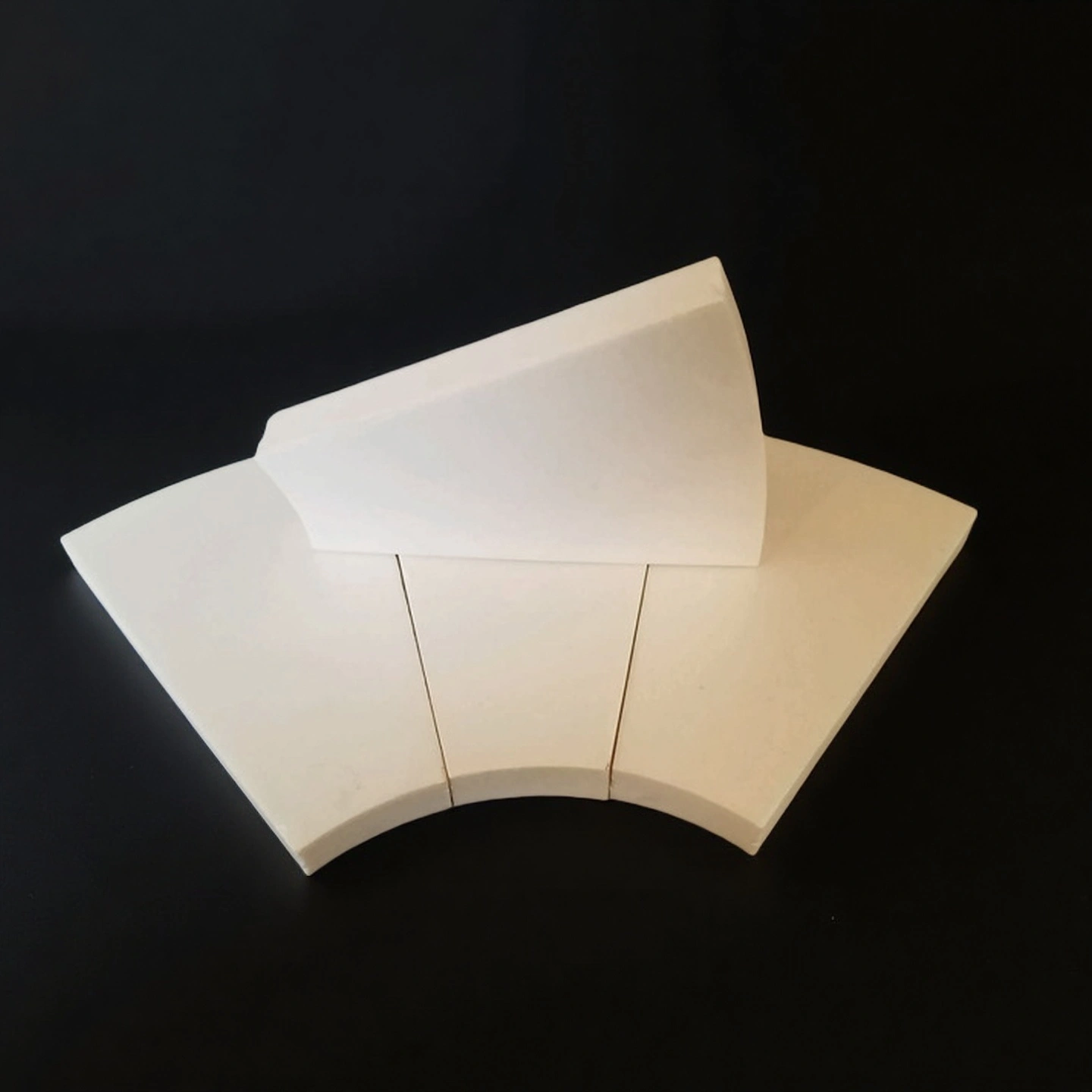
Custom Alumina Lining Board for Ball Mills, Kilns & Cyclones | High Wear & Thermal Resistance

Alumina lining plates are high-hardness ceramic wear liners used to protect chutes, hoppers, cyclones, transfer points, and ducting in mining, cement, power, and chemical plants. Standard sizes ship fast; drawings for custom shapes and curved panels are supported.

Catalog No. AT-YHL-CB001
Material 92–99.5% (high-alumina grade)
Hardness (Mohs)  ~9
Flexural Strength ≥ 340 MPa
Dimensions/Sizes Download PDF
24H Standard Dispatch
Small Batch Support OEM
Factory Direct
Expert Engineering Support

Alumina lining plate is a type of wear-resistant ceramic plate made primarily from alumina (Al₂O₃) with high hardness, density, and chemical stability. These plates are widely used to protect equipment surfaces in industries such as mining, cement, power generation, and bulk material handling.

Alumina Lining Board Benefits

  • Wear engineering by zone: Hexagonal tiles for high-energy impact; larger rectangular plates for low-to-medium abrasion runs to control cost.
  • Mounting choices: Direct epoxy bonding, rubber-ceramic bonding, or steel-back welded modules meet different outage plans.
  • Edge shaping & holes: Chamfered edges, countersunk holes, and ID markings simplify alignment and traceability during relines.
  • Thermal compatibility: Stable structure for typical process duct temperatures; consistent thickness minimises turbulence at joints.
  • Panel mapping & traceability: Plates can be supplied with coded layouts and serialized IDs, reducing installation errors and cutting fit-up time by up to 20%.
  • Hybrid layout integration: Designed to combine with rubber or steel sections in one chute or duct, allowing cost optimisation and targeted reinforcement in severe wear zones.


Alumina Lining Plate Properties

Property Unit 99.5% Al₂O₃ 99.6% Al₂O₃ 99.7% Al₂O₃ 99.8% Al₂O₃ 99.9% Al₂O₃ 99.99% Al₂O₃
Alumina content % 99.5 99.6 99.7 99.8 99.9 99.99
Density g/cm³ 3.89 3.91 3.92 3.93 3.94 3.98
Open porosity % 0
Color Ivory Ivory Ivory Ivory Ivory Ivory
Water absorption % 0 0 0 0 0
Young’s modulus (Elastic modulus) GPa 375 356 357 358 359 362
Shear modulus GPa 152
Bulk modulus GPa 228
Poisson’s ratio 0.22
Compressive strength MPa 2600 2552 2554 2556 2558 2570
Flexural strength MPa 379 312 313 314 315 320
Fracture toughness MPa·m¹ᐟ² 4
Hardness GPa 14.1 (≈1440 kg/mm²) 23 24 25 26 30
Thermal conductivity W/m·K 35 32–37 33–38 34–39 35–40 36–42
Thermal shock resistance ΔT °C 222 223 224 225 228
Maximum use temperature (no load) °C ≤1750 1755 1760 1765 1770 1800
Coefficient of thermal expansion 10⁻⁶/°C 8.4
Specific heat J/kg·K 880
Volume resistivity Ω·cm >1×10¹⁴ >1×10¹⁴ >1×10¹⁴ >1×10¹⁴ >1×10¹⁴ >1×10¹⁴
Dielectric constant (relative permittivity) 9.8 9.83 9.84 9.85 9.86 9.92
Dielectric strength kV/mm 16.9 23.2 23.4 23.6 23.8 24
Dissipation factor (loss factor @ 1 kHz) 0.0002


Alumina Lining Plate Size

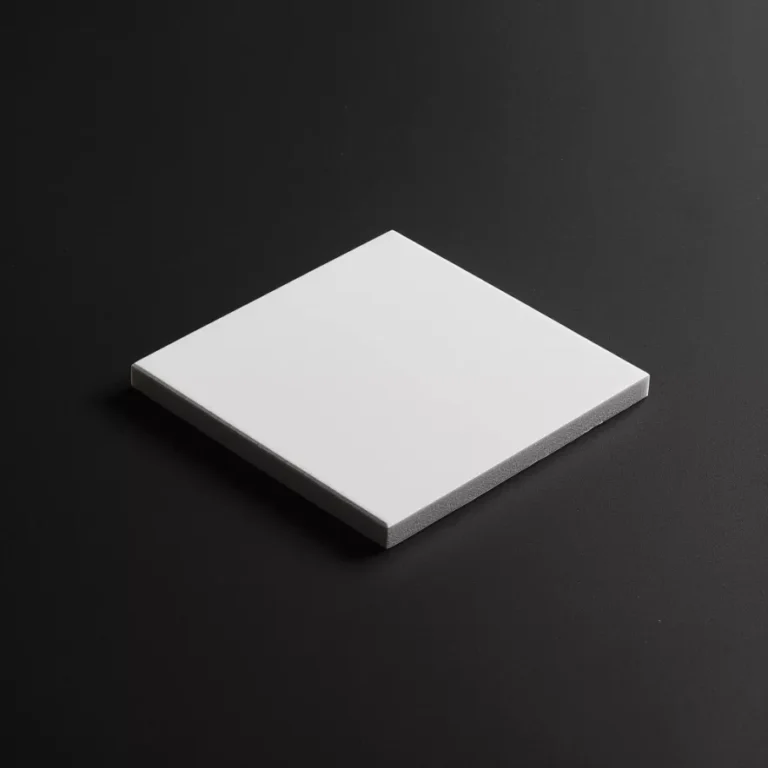
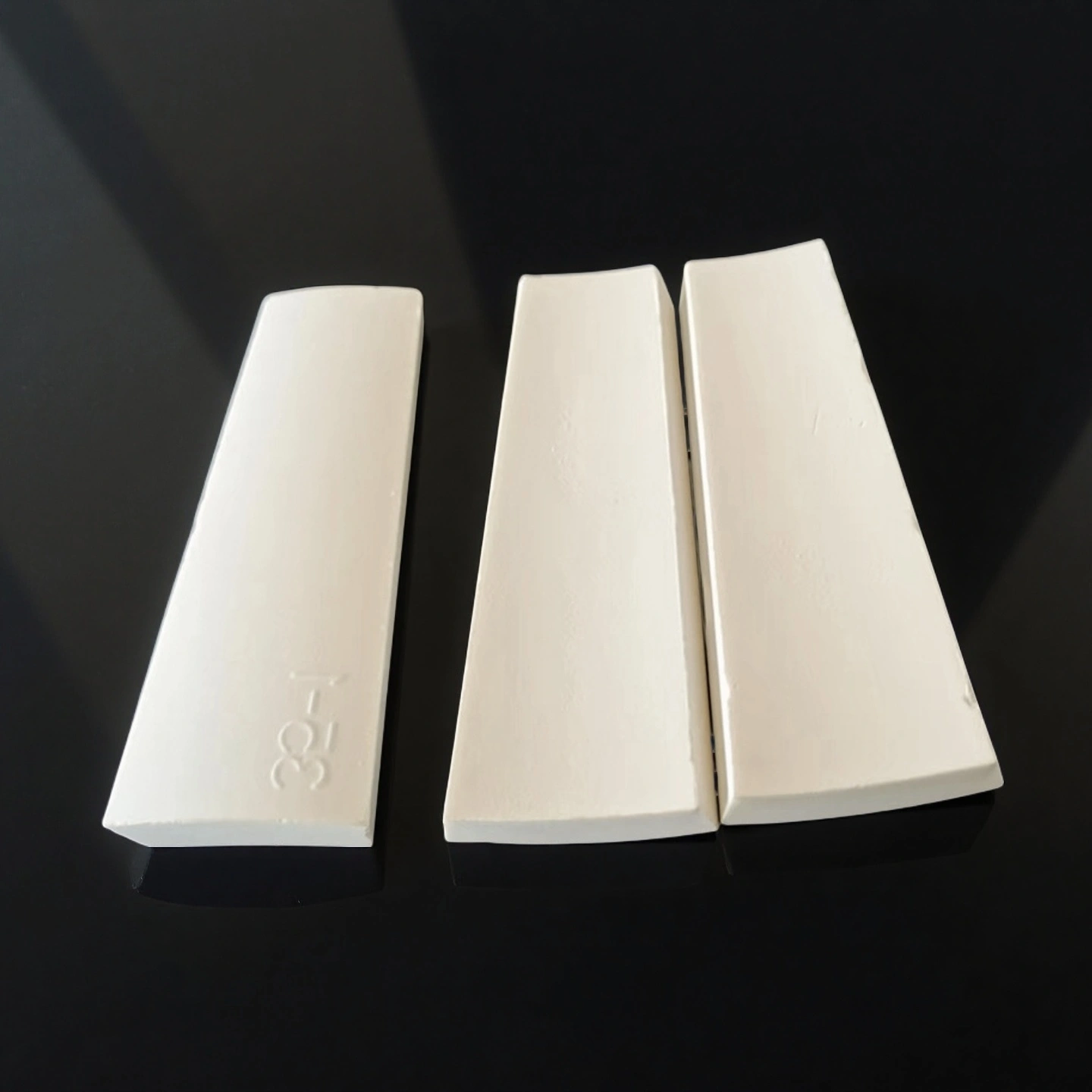
Type 1: Flat alumina ceramic lining tile

Alumina Lining Board1

Alumina Lining Board
Item No. Length (mm) Width (mm) Thickness (mm)
AT-YHL-CB001 50 25 5-12
AT-YHL-CB002 50 50 5-20
AT-YHL-CB003 100 100 6-30
AT-YHL-CB004 120 80 8-30
AT-YHL-CB005 150 100 6-50
AT-YHL-CB006 100 25 5-15
AT-YHL-CB007 100 50 6-30
AT-YHL-CB008 100 75 12-50
AT-YHL-CB009 150 50 6-50
AT-YHL-CB010 70 70 10-25
AT-YHL-CB011 75 50 6-15
AT-YHL-CB012 120 100 6-25
AT-YHL-CB013 120 50 6-25
AT-YHL-CB014 100 80 6-25
AT-YHL-CB015 150 75 6-50
AT-YHL-CB016 27 27 5-18
AT-YHL-CB017 37.5 37.5 5-18
AT-YHL-CB018 39.2 39.2 6-18
AT-YHL-CB019 50 30 5-15


Type 2:  Alumina Ceramic Soldering Plate
Alumina Ceramic Soldering Plate

Alumina Ceramic Soldering Plate
Item No. Length(mm) Width(mm) Thickness(mm)
AT-YHL-CB020 100 100 6/10/16/20/25/30/40
AT-YHL-CB021 100 45 9.5/10
AT-YHL-CB022 100 50 6/8/10/20/30
AT-YHL-CB023 100 50/48 8
AT-YHL-CB024 120 100 15
AT-YHL-CB025 120 50 15
AT-YHL-CB026 120 80 8/10/15/20/30/35
AT-YHL-CB027 150 100 10/12/12.5/13/15/18/20/25/28/30/35/40/50
AT-YHL-CB028 150 50 10/12/12.5/12.7/13/14/15/20/28/30/40
AT-YHL-CB029 150 50/47 13/15
AT-YHL-CB030 150 50/48 10
AT-YHL-CB031 150 60/58 8
AT-YHL-CB032 150 70/68 10
AT-YHL-CB033 150 75/72.5 8
AT-YHL-CB034 156 102.5/99 25
AT-YHL-CB035 60 40 7/10
AT-YHL-CB036 70 70 10+5
AT-YHL-CB037 70 70 20+5
AT-YHL-CB038 70 70 25+5
AT-YHL-CB039 70 70 20
AT-YHL-CB040 70 70 30+5
AT-YHL-CB041 70 50 15
AT-YHL-CB042 75 50/47 20
AT-YHL-CB043 80 80 20


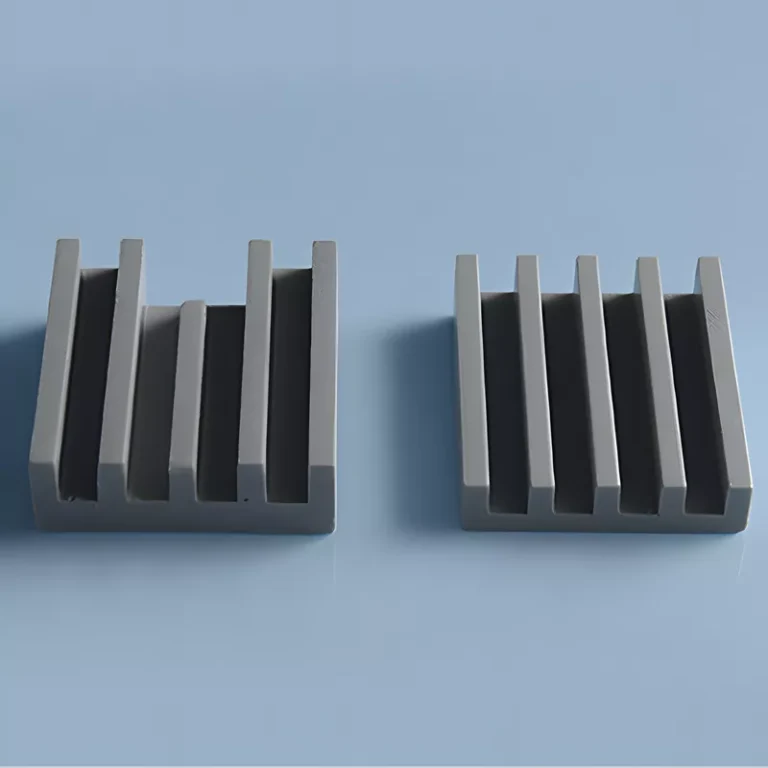
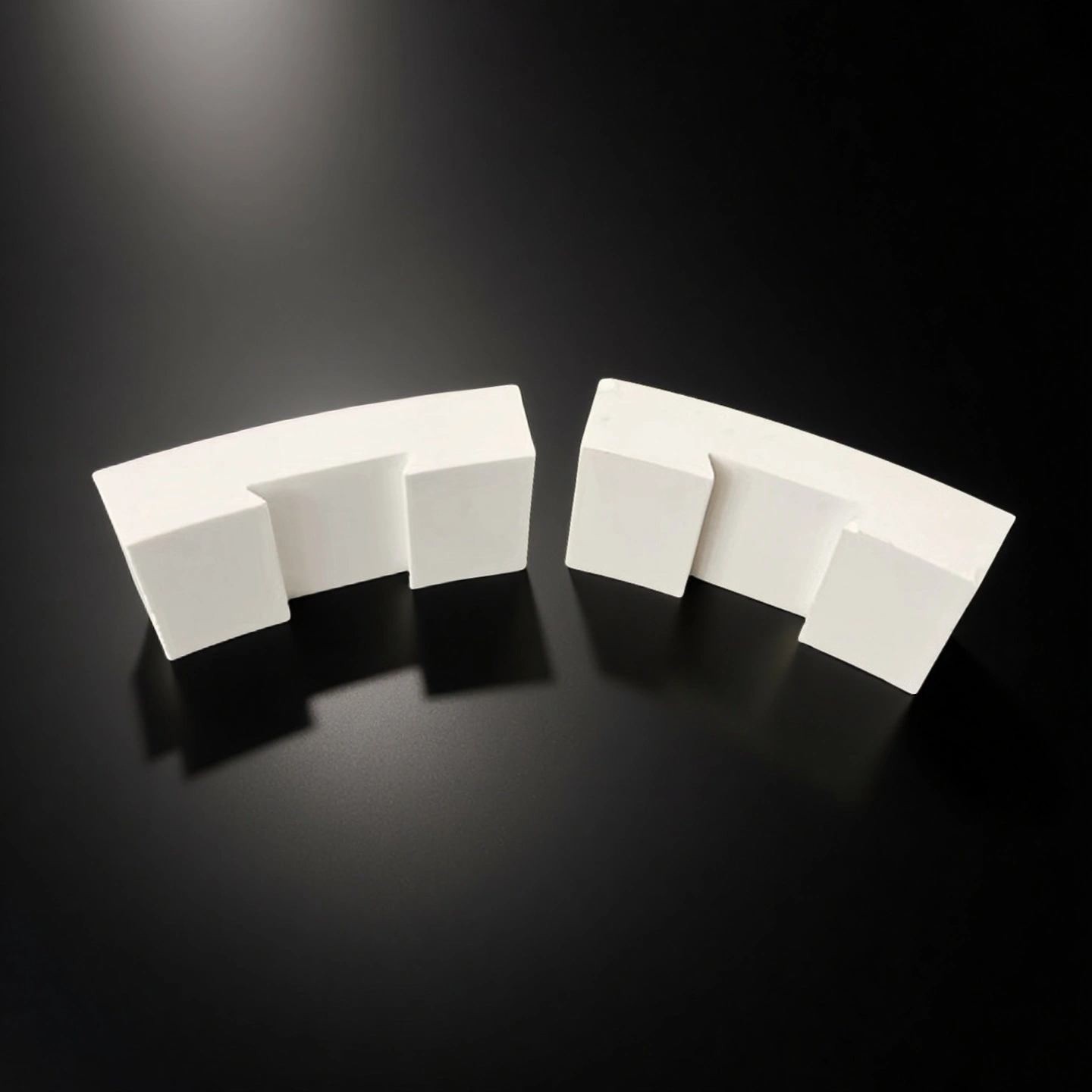
Type 3: Card slot alumina lining board
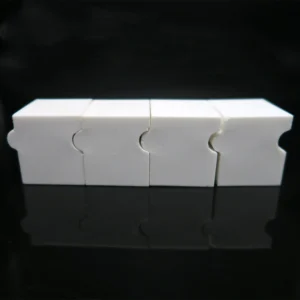
alumina ceramic lining tile for industrial wear protection

Alumina Lining Board Card Slot
Item No. Length (mm) Width (mm) Thickness (mm)
AT-YHL-KC001 25 25 25
AT-YHL-KC002 50 30 5
AT-YHL-KC003 50 30 8
AT-YHL-KC004 50 30 10
AT-YHL-KC005 60 40 10
AT-YHL-KC006 70 50 15
AT-YHL-KC007 80 60 20
AT-YHL-KC008 90 60 30
AT-YHL-KC009 150 100 20
AT-YHL-KC010 150 100 30


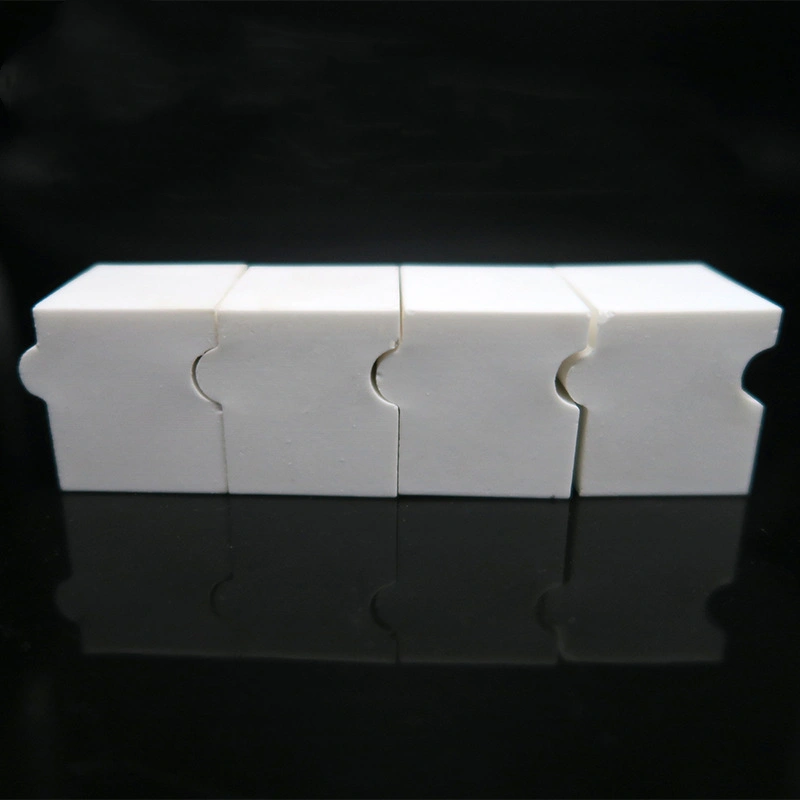
Type 4: Dovetail alumina lining plate

high-alumina lining plate inside rotary grinding equipment

Dovetail Shaped Alumina Lining Board
Item No. Length (mm) Width (mm) Thickness (mm)
AT-YHL-YW001 25 25 15
AT-YHL-YW002 50 30 10
AT-YHL-YW003 50 30 15
AT-YHL-YW004 60 40 10
AT-YHL-YW005 70 50 10
AT-YHL-YW006 80 60 10
AT-YHL-YW007 90 70 10
AT-YHL-YW008 100 60 10
AT-YHL-YW009 100 60 12
AT-YHL-YW010 110 70 15
AT-YHL-YW011 120 90 10
AT-YHL-YW012 130 110 10
AT-YHL-YW013 140 120 20
AT-YHL-YW014 150 130 20


Type 5: Alumina lining plate for pipe

Alumina lining plate for pipe

Alumina lining plate for pipe
Item No. Length(mm) Width(mm) Thickness(mm)
AT-YHL-CB044 50 25/24 7


Alumina Lining Plate Packaging

  • Alumina Lining Board wrapped with cushioning foam and moisture-resistant packaging
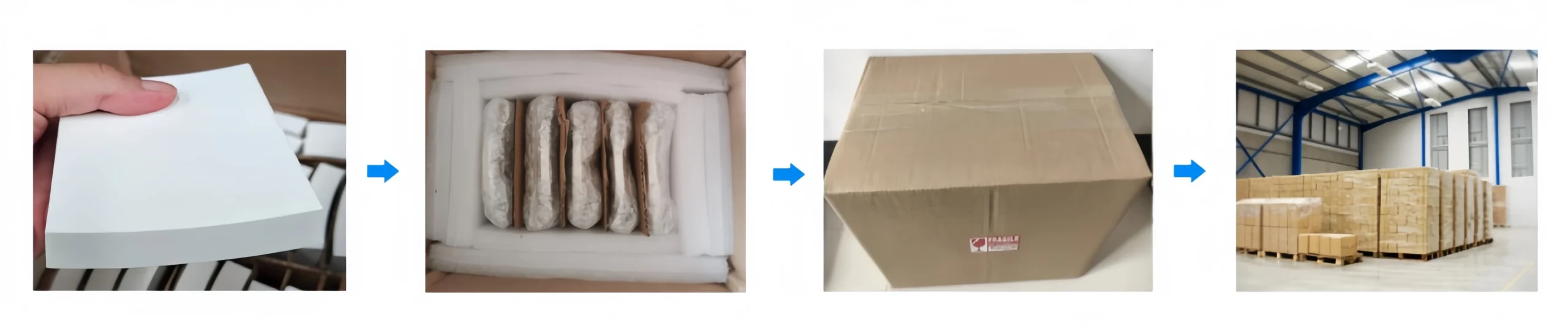
Alumina Lining Plate Packaging

Alumina Lining Board Applications

  • Mining & Quarry — Chute/Hopper Transfer Points

    ✅Key Advantages

    1 — Impact-zone longevity: Hex mosaic at the drop zone cuts localized wear rate, extending reline intervals by ~2× in high-energy impact.
    2 — Mixed pattern economy: Combining mosaic and large tiles reduces liner cost per tonne without sacrificing uptime.
    3 — Predictable maintenance: Stable wear profile enables scheduled swaps during planned outages.

    ✅ Problem Solved

    A gold-ore chute experienced unscheduled shutdowns every 4–6 weeks due to rapid wear at the impact toe. Switching to a mixed layout (20 mm hex mosaic at impact; 15 mm large tiles downstream) extended service intervals to 10–12 weeks and cut emergency stoppages by ~35%. Annual lost-time costs fell by a mid-five-figure amount, while liner spend stayed within budget.

  • Cement Plant — Separator/Duct & Cyclone Inlet

    ✅Key Advantages1 — Smooth internal flow: Tight joint control (<2 mm grout lines) reduces eddies that accelerate powder erosion.
    2 — Temperature-ready: Consistent plate thickness and backing selection suit preheater/duct sections with steady thermal loads.
    3 — Fast alignment: ID marking and panel maps shorten fit-up time during short shutdowns.

    ✅ Problem Solved

    A kiln preheater duct with uneven grout lines created dust eddies and hot-spot wear. Precision-cut plates with chamfered edges and 1–2 mm spacers improved flow uniformity; liner life moved from 6–8 to 14–16 months. Planned outage duration remained unchanged, but unplanned inspections dropped significantly.

  • Power & Coal Handling — Transfer Points/Elbows

    ✅Key Advantages1 — Steel-back modules: Weld-on assemblies allow rapid exchange in tight windows.
    2 — Rubber-ceramic damping: Composite plates mitigate particle impact ringing and reduce adhesive dependence in oily environments.
    3 — Traceable batches: Lot code + plate ID pairing simplifies QA root-cause checks.

    ✅ Problem Solved

    A power station’s transfer elbow suffered premature wear and adhesive failure due to surface oil. Converting to rubber-ceramic bolt-on plates stabilized service life at 12–15 months and eliminated bond-line failures; the station aligned liner swaps with quarterly inspections.

Alumina Lining Board Usage Instructions

  • Installation

    1. Substrate prep: Remove old liners and residue; grind to a uniform profile; degrease; achieve 60–80-grit surface.
    2. Dry fit & mapping: Lay out plates per panel map; confirm joint gaps (target 1–2 mm).
    3. Adhesive bonding: Mix two-part adhesive; apply 1–2 mm wet bond line; press plates from the reference edge; use spacers; clean squeeze-out.
    4. Cure & check: Hold at 20–25 °C to full cure; tap-test and visually inspect joints; remove spacers and grout if required.
    5. Alternative fixings: For high-impact or oily areas, use rubber-ceramic bolt-on or steel-back welded modules.

  • Storage

    1. Keep boxed plates flat, dry, and off the ground; avoid stacking that applies direct pressure on edges or corners.
    2. Maintain a stable environment of 5–30 °C with low humidity to prevent adhesive degradation and surface moisture.
    3. Store steel-backed or rubber-backed modules separately with protective sheets to avoid corrosion or compression marks.
    4. For long-term storage, apply protective film or shrink wrap around crates to keep out dust and prevent accidental chipping.

  • Cleaning & Inspection

    1. During planned outages, vacuum or blow off accumulated dust to keep surfaces free of debris that may accelerate joint wear.
    2. Inspect joint lines, impact zones, and grout edges for cracks, lifted corners, or gaps larger than 2 mm.
    3. Replace isolated damaged or missing tiles immediately to prevent undercutting and progressive failure of adjacent plates.
    4. Check for discoloration or adhesive bond weakness as signs of overheating or chemical exposure.
    5. Document wear patterns with photos or thickness measurements to build a maintenance record for predicting replacement cycles.

  • Common Misuse & Remedies

    1. Issue: Adhesive failure on oily steel → Remedy: Switch to rubber-ceramic bolt-on or sandblast to white metal + solvent wipe before bonding.
    2. Issue: Gaps >3 mm create eddies → Remedy: Re-cut edge tiles; maintain 1–2 mm joints with spacers.
    3. Issue: Random wear spots at impact → Remedy: Upgrade to a hex mosaic or a thicker plate just in the impact footprint.

Alumina Ceramic Lining Plate FAQ

  1. Q: Is your lining board suitable for ball mill use?
    A: Yes, we supply alumina liner plates that are tested for both batch-type and continuous ball mills.
  2. Q: Are drilling or complex contours possible?
    A: We support CAD-based hole positioning, profiling, and special shapes.
  3. Q: How long will the liner last under abrasive use?
    A: Service life varies, but generally 6–12 months, depending on operating intensity.
  4. Q: What thickness should I choose for alumina lining plate?
    A: Most transfer points use 15–25 mm; impact toes may use 20–40 mm or mosaic. Choose thickness by particle size, drop height, and belt speed.
  5. Q: How do I select a fixing method (adhesive, rubber-ceramic, steel-back)?
    A: Use adhesive for clean, stable ducts; rubber-ceramic bolt-on for oily or high-impact zones; steel-back weld-on for fastest swaps and heavy duty.
  6. Q: What is the typical service life versus rubber or PU?
    A: In comparable duty, alumina lining plate commonly achieves ~1.8–2.4× longer intervals; exact results depend on ore, velocity, and impact energy.
  7. Q: Do you supply steel-backed or rubber-ceramic composite liners?
    A: Yes. Both are available for bolt-on or weld-on installations where adhesive is not preferred.
  8. Q: What information is required for a alumina lining plate quotation?
    A: Provide drawings or dimensions, thickness, pattern (mosaic/plate), fixing method, quantity by zone, and any curvature data.
  9. Q: When should alumina lining plate replacement be carried out?
    A: Replacement is usually required when joint gaps exceed 2–3 mm, tiles show cracks or lifted corners, or the impact zone wears down by more than 30% of its original thickness. Timely alumina lining plate replacement prevents undercutting of adjacent panels and avoids unexpected downtime.

Reviews alumina lining plate

  • ⭐️⭐️⭐️⭐️⭐️
    “We placed a wholesale order for mixed mosaic and 20 mm plates. The China manufacturer followed our panel map; the line finished on schedule, and intervals nearly doubled.”
    -- Maintenance Planner, Ironstone Mining (AU)
  • ⭐️⭐️⭐️⭐️⭐️
    “Custom curved alumina lining plates matched our cyclone radius. Marked IDs made fit-up straightforward, and dust build-up at joints decreased.”
    -- Production Manager, Cement Works (DE)
  • ⭐️⭐️⭐️⭐️⭐️
    “We received alumina lining boards directly from the ADCERAX factory with clear layout and lot codes. After six months, the impact zone shows uniform wear, while downstream plates remain stable.”
    -- Project Engineer, Bulk Terminal (ES)
  • ⭐️⭐️⭐️⭐️⭐️
    “Working with ADCERAX was straightforward. The factory team quickly reviewed our drawings and confirmed tolerances before production. The alumina lining boards were shipped directly from the plant, and the clear communication saved us time during the procurement process.”
    -- Asset Superintendent, Power Plant (CA)
customize size

Customize Alumina Lining Plate

Every order can be tailored—from geometry and surface finish to backing style and marking—ensuring the lining plate fits both technical and maintenance requirements. What You Can Specify

  • Geometry & tolerance: Length/width/thickness; flat, curved, or conical segments; chamfers; hole count/position; typical thickness 10–50 mm, tolerance ±0.5 mm (thk), ±1 mm (L/W).
  • Pattern: Hex mosaic, large rectangular panels, mixed layouts for impact vs. sliding sections.
  • Backings & fixing: Plain ceramic for epoxy bonding; rubber-ceramic for bolting; steel-back ceramic for welding.
  • Surface finish: Raw, fine-ground.

Related Products

ADCERAX - Your Trusted Advanced Ceramics Manufacturing Partner

Direct factory manufacturing with comprehensive ceramic materials expertise and global supply capabilities

Direct Factory Manufacturing

China-based ceramic materials production facility with state-of-the-art equipment

Engineering Team

Experienced professionals in advanced ceramics applications and custom design

Quality Control

Strict quality control standards for technical ceramics manufacturing and quality management

Global Supply Chain

Serving customers worldwide with technical ceramics and rapid response

24/7 Technical Support

Round-the-clock support for ceramic components inquiries and technical assistance

500+ Satisfied Customers

Trusted by global customers for advanced ceramic materials and precision components

Get in touch with us

Our team will be happy to respond to you in less than 24 hours.

Adcerax's factory

Quick Quotation

*Our team will answer your inquiries within 24 hours.

*Your information will be kept strictly confidential.

Ready to Solve Your Engineering Challenge?

Partner with ADCERAX for reliable, high-performance advanced ceramic solutions. Our engineers are ready to discuss your project.

E-mail

info@adcerax.com

Phone

+(86) 0731-74427743 | WhatsApp: +(86) 19311583352

Response Time

Within 24 hours

Quick Quote

The more details you provide, the faster we can quote.

*We respond within 24 hours. All inquiries are confidential.

Download Catalog

Get Your Custom Sulution

The more details you provide, the faster we can respond.

customize size

*We respond within 24 hours. All inquiries are confidential.

Download Catalog