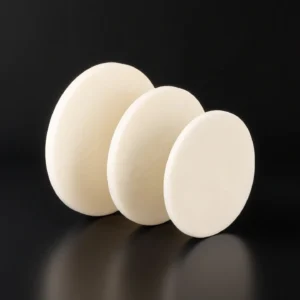
Custom Alumina Sand Mill Agitator Disc for Bead Mill Wear Parts

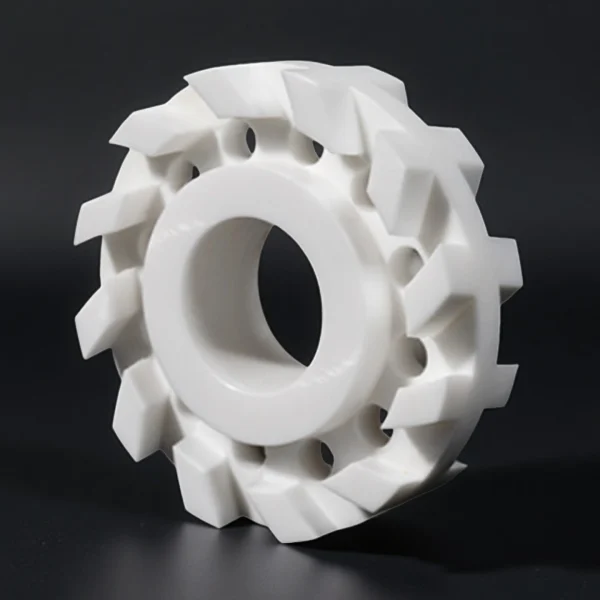
ADCERAX supplies custom alumina sand mill agitator discs for horizontal sand mills, bead mills and wet grinding systems used in coatings, inks, pigments, ceramic slurry and battery material processing. The disc geometry, bore, keyway, thickness and mounting interface can be reviewed according to your existing mill shaft, chamber design and grinding media conditions.

Catalog No. AT-SM-001
Material ≥95% to 99.5% Al₂O₃
Diameter Range Ø40mm to Ø180mm
Surface Flatness Tolerance ≤0.02mm
Recommended service temperature Up to 1200–1300 °C in wet grinding systems
Engineering RFQ Review
Small-Batch Custom Support
Factory-Direct Manufacturing
Drawing & Process Review

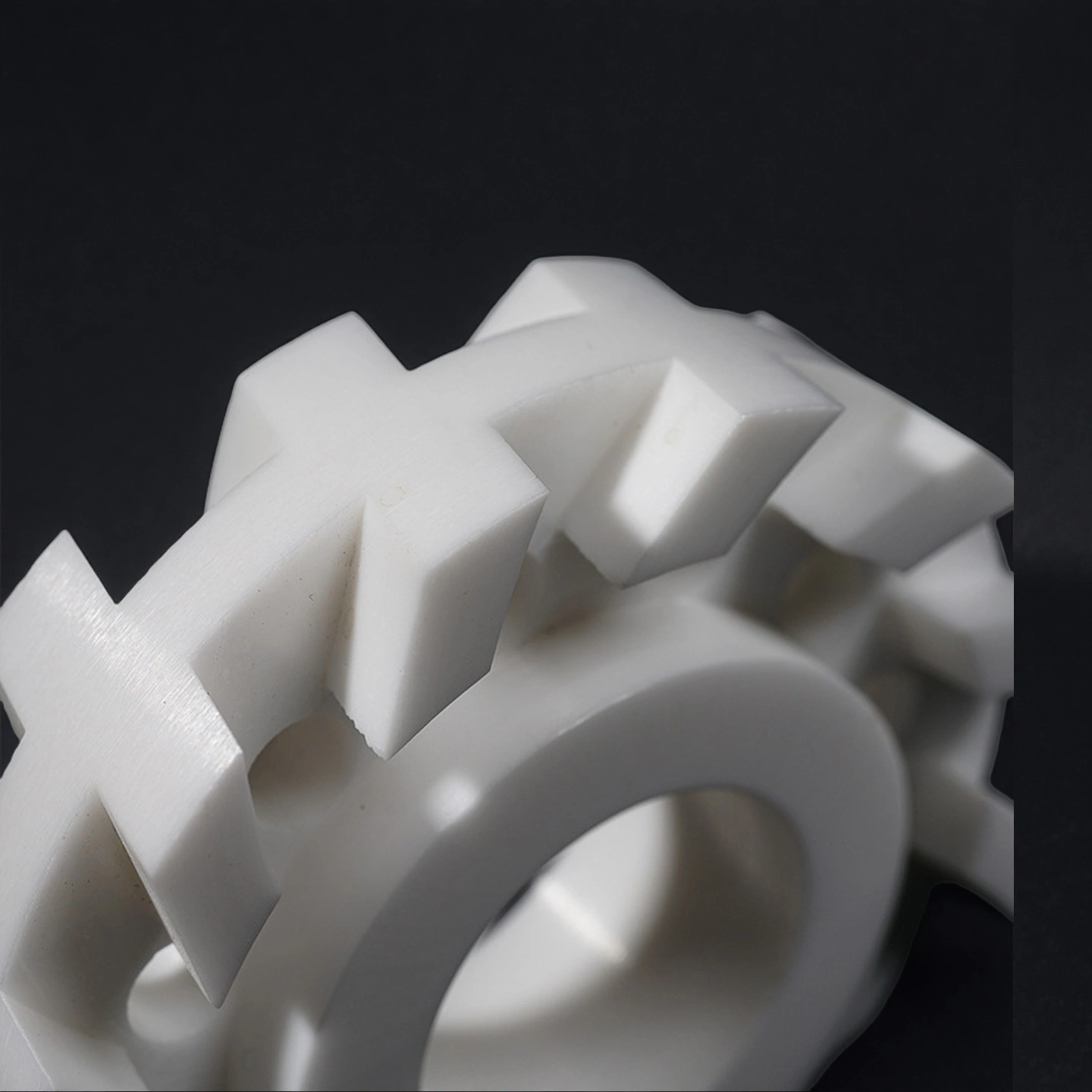
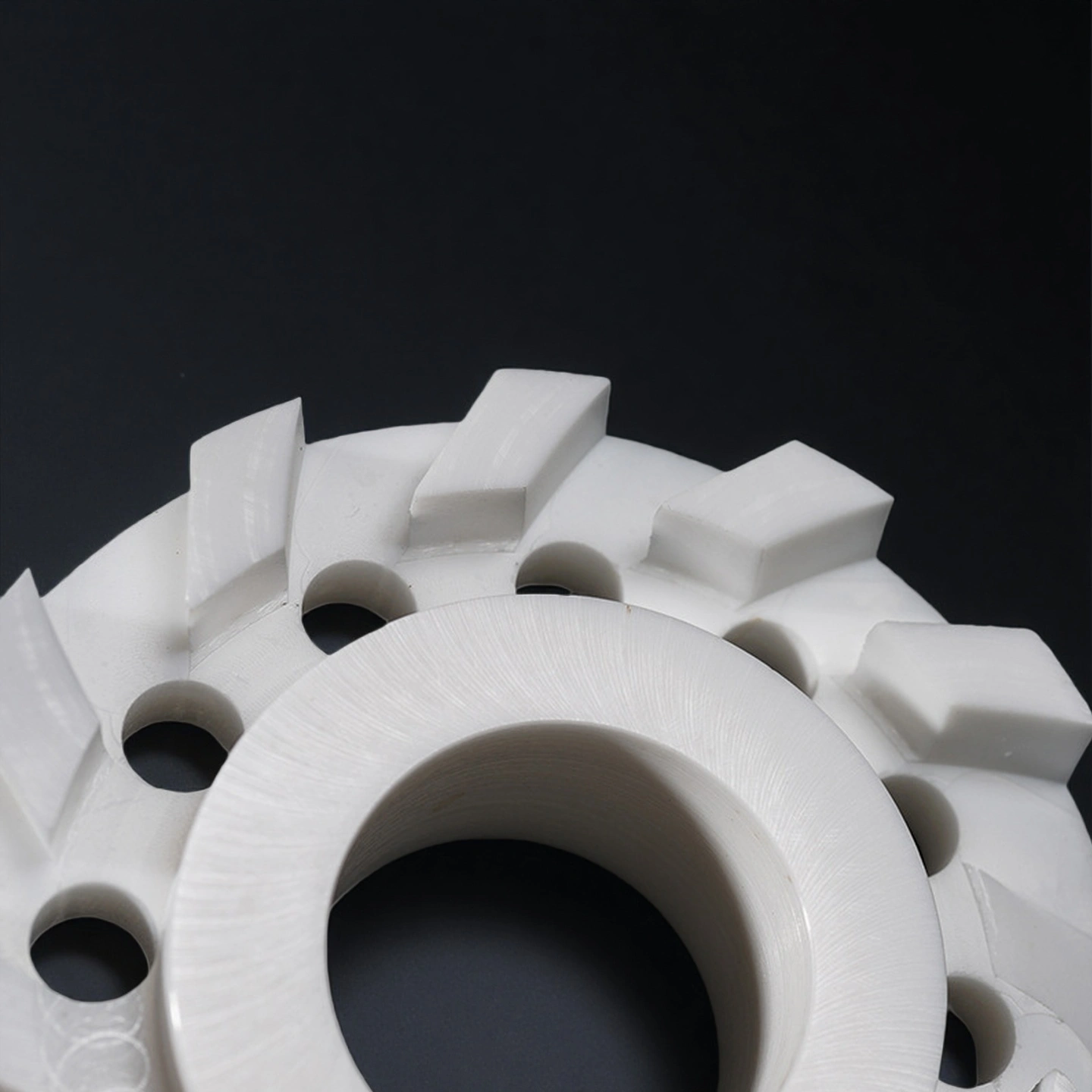
An alumina sand mill agitator disc is a ceramic wear part mounted on the mill shaft to transfer grinding energy to beads and slurry. It is selected when metal agitator discs cause fast wear, metallic contamination, unstable particle size or frequent replacement in wet grinding systems.

Why Alumina Ceramic Agitator Discs Are Used in Sand Mills

Alumina ceramic agitator discs are used in sand mills and bead mills when the grinding process requires wear resistance, lower metallic contamination and stable energy transfer. They are especially suitable for wet grinding systems used in coatings, inks, pigments, ceramic slurry and selected battery material processing.

Lower Metal Contamination

The alumina ceramic body helps reduce iron or alloy contamination compared with metallic agitator discs. This is important for light-colored coatings, high-strength pigments and electrochemical slurry systems where metallic wear debris may affect product quality.

Wear-Resistant Grinding Contact

High hardness and a dense ceramic structure help the disc resist abrasive contact with grinding beads, fillers and pigment particles. This makes alumina suitable for slurry systems where metal discs may wear quickly under repeated grinding cycles.

Stable Energy Transfer

Drawing-based disc geometry, bore fit and keyway design support repeatable energy transfer from the shaft to the grinding media. A properly matched ceramic agitator disc helps maintain bead movement, slurry circulation and grinding consistency.

Replacement-Friendly Design

ADCERAX can review the original disc sample or drawing to match the outer diameter, bore, keyway, thickness and mounting structure. This helps replacement projects reduce fitting risk before ceramic parts are produced.

Suitable for Ceramic-Lined Systems

Alumina discs can be used with ceramic-lined chambers and ceramic grinding media to reduce metallic wear sources in the grinding path. This is useful when the complete wet grinding system is designed for cleaner media contact and longer wear performance.

Material Properties Relevant to Wet Grinding Wear Parts

For sand mill agitator discs, alumina material should be evaluated by wear resistance, density, hardness, chemical stability and contamination control rather than by high-temperature insulation performance alone. Final suitability should be confirmed according to slurry chemistry, bead type, mill speed, shaft design and cleaning method.

Property Unit 96% Al₂O₃ 99% Al₂O₃ 99.5% Al₂O₃ 99.6% Al₂O₃ 99.7% Al₂O₃ 99.8% Al₂O₃ 99.9% Al₂O₃ 99.99% Al₂O₃
Alumina content % 96 99 99.5 99.6 99.7 99.8 99.9 99.99
Density g/cm³ 3.6-3.75 3.83 3.89 3.91 3.92 3.93 3.94 3.98
Color white Ivory Ivory Ivory Ivory Ivory Ivory Ivory
Water absorption % 0 0 0 0 0 0 0
Young’s modulus (Elastic modulus) GPa 300 350 375 356 357 358 359 362
Shear modulus GPa 152
Bulk modulus GPa 228
Poisson’s ratio 0.22
Compressive strength MPa 1910 2210 2600 2552 2554 2556 2558 2570
Flexural strength MPa 260 300 379 312 313 314 315 320
Fracture toughness MPa·m¹ᐟ² 4
Hardness GPa 14.5 17 17 23 24 25 26 30
Thermal conductivity W/m·K 22 24 35 32–37 33–38 34–39 35–40 36–42
Thermal shock resistance ΔT °C 222 223 224 225 228
Maximum use temperature (no load) °C 1450 1680 ≤1750 1755 1760 1765 1770 1800
Coefficient of thermal expansion 10⁻⁶/°C 7.6 7.6 8.4
Volume resistivity Ω·cm >1×10¹⁴ >1×10¹⁴ >1×10¹⁴ >1×10¹⁴ >1×10¹⁴ >1×10¹⁴ >1×10¹⁴ >1×10¹⁴
Dielectric constant (relative permittivity) 9.2 9.5 9.8 9.83 9.84 9.85 9.86 9.92
Dielectric strength kV/mm 15 19 16.9 23.2 23.4 23.6 23.8 24
Dissipation factor (loss factor @ 1 kHz) 0.0002


Reference Sizes for Alumina Sand Mill Agitator Disc

The following sizes are reference examples for initial review. Final dimensions should be confirmed according to the original disc drawing, shaft interface, keyway structure and disc stack arrangement.

Alumina Ceramic Disc
Item No. Outer Diameter(mm) Inner Diameter  (mm) Height (mm) Purity
AT-SM-001 90 30 26 95%-99%
AT-SM-002 90 36 24 95%-99%
AT-SM-003 100 45 30 95%-99%
AT-SM-004 140 80 45 95%-99%
AT-SM-005 165 85 50 95%-99%


Packaging and Inspection for Alumina Sand Mill Agitator Disc

  • Each alumina sand mill agitator disc should be separated and protected to avoid edge impact, bore damage and ceramic-to-ceramic contact during transport. Parts with thin walls, keyways, slots or precision hub surfaces require additional foam positioning and reinforced outer packaging.
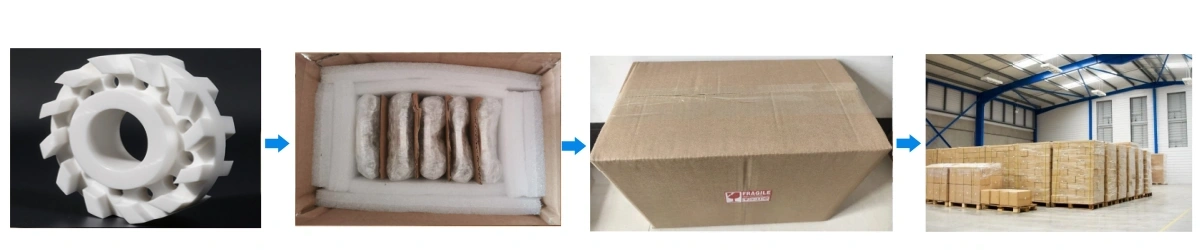

Alumina Agitator Disc For Sand Mill Packaging

Applications of Alumina Sand Mill Agitator Disc

Alumina sand mill agitator discs are used in wet grinding systems where wear, contamination control, particle size stability and repeated production reliability are important. The final disc design should be matched to the mill type, grinding media, slurry viscosity and required particle size range.

  • Industrial Coatings and Paint Grinding

    Alumina agitator discs are suitable for architectural coatings, industrial paints, enamel systems and high-solids coating formulations where metallic wear debris may affect color, gloss or batch consistency.

    Key review points:
    1. The disc geometry should support stable bead circulation and consistent energy distribution.
    2. The ceramic material helps reduce metal pickup in light-colored or sensitive formulations.
    3. Bore fit, disc spacing and chamber clearance should be checked before replacement.

  • Printing Ink and Pigment Dispersion

    In ink and pigment dispersion lines, alumina ceramic agitator discs help support stable color development, fine grinding and cleaner media contact in horizontal bead mills.

    Key review points:
    1. The disc design should match viscosity, pigment loading and target particle size.
    2. Low metallic contamination helps maintain shade stability in concentrated pigment systems.
    3. Slot and port geometry should be reviewed when changing from metal to ceramic discs.

  • Battery Material and Functional Slurry Processing

    Alumina sand mill agitator discs can be used in selected battery material slurry, ceramic slurry and functional powder dispersion processes where metallic contamination and wear debris must be controlled.

    Key review points:
    1. The full grinding path should be reviewed together, including chamber lining, grinding media and separator parts.
    2. The slurry chemistry and cleaning method should be confirmed before material selection.
    3. Installation stress and shaft alignment are important because ceramic parts should not be forced during assembly.

  • Ceramic Powder and Specialty Chemical Slurry Grinding

    For ceramic powder, filler, specialty chemical and mineral slurry processing, alumina agitator discs provide a wear-resistant ceramic contact surface in abrasive wet milling conditions.

    Key review points:
    1. Bead type, bead size and filling ratio should be checked together with disc geometry.
    2. Alumina grade should be selected according to abrasion level and contamination requirement.
    3. Dry running, insufficient slurry level and sudden impact should be avoided.

Alumina Sand Mill Agitator Disc Usage Instructions

  • Installation

    1. Check the shaft, keyway and hub surfaces for damage, burrs or contamination before mounting the alumina sand mill agitator disc.
    2. Align the disc bore and keyway carefully with the shaft key, and slide the disc gently into position without applying impact to the ceramic edges.
    3. Follow the original equipment tightening sequence for hub clamps, nuts or locking elements to secure the disc in its final position.
    4. Verify disc stack spacing and total length against the mill drawing so that chamber clearances are maintained.

  • Operation

    1. Start the sand mill according to the manufacturer’s procedure, ensuring slurry is present in the chamber before the agitator reaches normal speed.
    2. Monitor vibration, noise and power draw after installing a new alumina ceramic agitator disc; unusual changes may indicate misalignment or foreign matter.
    3. Use grinding media size and filling ratio recommended for disc-type sand mills to avoid overloading the alumina disc surface.

  • Storage

    1. Store spare alumina sand mill agitator discs in dry indoor conditions, away from direct sunlight and strong temperature fluctuations.
    2. Keep discs in their original packaging or on padded racks to avoid contact between ceramic parts and metal shelves.
    3. Label storage locations with disc size, alumina grade and matching mill model to support fast and correct selection during maintenance.

  • Cleaning

    1. Clean used discs with compatible cleaning agents that do not attack alumina ceramic or corrode any metallic hub inserts.
    2. Avoid impact tools and sharp metal scrapers on the disc surface; use soft brushes or plastic tools to remove residues.
    3. Rinse and dry discs thoroughly if they are removed for inspection and will be reused.

  • Precautions and Common Misuse Points

    1. Do not hammer or force the alumina disc onto the shaft; gradual and aligned mounting helps avoid microcracks.
    2. Do not mix discs from different designs or thicknesses in a single stack unless the configuration is verified by engineering.
    3. Avoid running the mill with insufficient slurry or media, because dry running increases stress on the alumina ceramic disc and other components.

  • Troubleshooting Checks

    Issue: Disc cracking at the hub after installation
    Likely cause: Misalignment or excessive force during mounting.
    Handling: Inspect shaft and keyway, verify tolerances and use controlled mounting tools; replace any disc with visible cracks.

    Issue: Higher vibration with a new alumina agitator disc
    Likely cause: Incorrect disc orientation, tolerance mismatch or imbalance.
    Handling: Check bore and keyway fit, confirm disc stack order and orientation, and perform a static balance check if required.

    Issue: Slurry performance changes after switching from metal disc
    Likely cause: Different flow pattern or energy input.
    Handling: Adjust media size, filling ratio or mill speed step by step, and record settings until target particle size and rheology are reached.

FAQ – Alumina Sand Mill Agitator Disc

  1. What is an alumina sand mill agitator disc used for?
    An alumina sand mill agitator disc is mounted on the shaft of a disc-type sand mill or bead mill to transfer grinding energy to the beads and slurry. It is used in wet grinding systems for coatings, inks, pigments, ceramic slurry, battery materials and other abrasive suspensions.
  2. Can alumina ceramic agitator discs replace metal agitator discs?
    Yes, alumina ceramic agitator discs can often be produced as replacement parts when the original disc dimensions, bore, keyway, thickness and disc profile are confirmed. The ceramic design should also be reviewed against mill speed, slurry viscosity, grinding media and chamber clearance.
  3. Why choose alumina instead of metal for sand mill agitator discs?
    Alumina is selected when the process needs better wear resistance and lower metallic contamination than steel or alloy discs. It is especially useful for light-colored coatings, high-strength pigments, ceramic powders and selected battery slurry systems.
  4. What information is needed for a custom alumina agitator disc?
    Useful information includes the mill model, original disc drawing, outer diameter, bore diameter, keyway size, disc thickness, slot or port design, shaft structure, grinding media type, slurry composition, operating speed and failure mode of the existing disc.
  5. Will changing from metal to alumina affect grinding performance?
    It may affect grinding performance if the disc geometry, surface profile, slot design or stack spacing is changed. For replacement projects, ADCERAX reviews the original disc structure and process condition to help maintain compatible bead movement and slurry circulation.
  6. What causes an alumina agitator disc to crack during use?
    Common causes include forced installation, shaft mismatch, excessive locking stress, poor keyway fit, impact during handling, dry running or abnormal vibration. Proper bore fit, controlled mounting and chamber clearance checks are important before operation.
  7. Can ADCERAX make alumina agitator discs from a used sample?
    Yes, ADCERAX can review a used sample, drawing or measurement record. For worn parts, the original dimensions should be confirmed carefully because wear may change the OD, slot profile, bore edge and hub contact surfaces.
customize size

Custom Alumina Sand Mill Agitator Disc

ADCERAX provides customization for alumina sand mill agitator disc so that the disc geometry, dimensions and interface details match your specific bead mill shaft and chamber design.

1. Disc dimensions

  • Outer diameter, inner bore diameter and disc thickness
  • Tolerance options for bore and critical faces (for example, ±0.02–0.05 mm depending on size)

2. Hub and shaft connection

  • Straight bore, keyed bore, spline bore or clamping hub interface
  • Keyway width and depth, flat sections or drive pins

3. Disc geometry and openings

  • Number and shape of pumping slots or ports
  • Front and rear face profiles for flow guidance
  • Disc spacing and stack configuration along the shaft

4. Material and grade options

  • 95% alumina or higher alumina grades for different abrasion and contamination requirements
  • Optional surface finish on media-contact areas

5. Quality and inspection details

  • Dimensional inspection points and reports
  • Static balance or balance-ready requirements

Related Products

ADCERAX - Your Trusted Advanced Ceramics Manufacturing Partner

Direct factory manufacturing with comprehensive ceramic materials expertise and global supply capabilities

China-Based Manufacturer

ADCERAX supplies ceramic components for overseas OEMs, equipment builders, and labs.

Custom Drawing Support

We review drawings, dimensions, materials, and application conditions before quotation.

Ceramic Process Control

Forming, sintering, machining, grinding, and finishing are arranged by part requirements.

Pre-Shipment Inspection

Dimensional checks, visual inspection, and packaging review help reduce procurement risk.

Get in Touch with Us

Our team will be happy to respond to you in less than 24 hours.

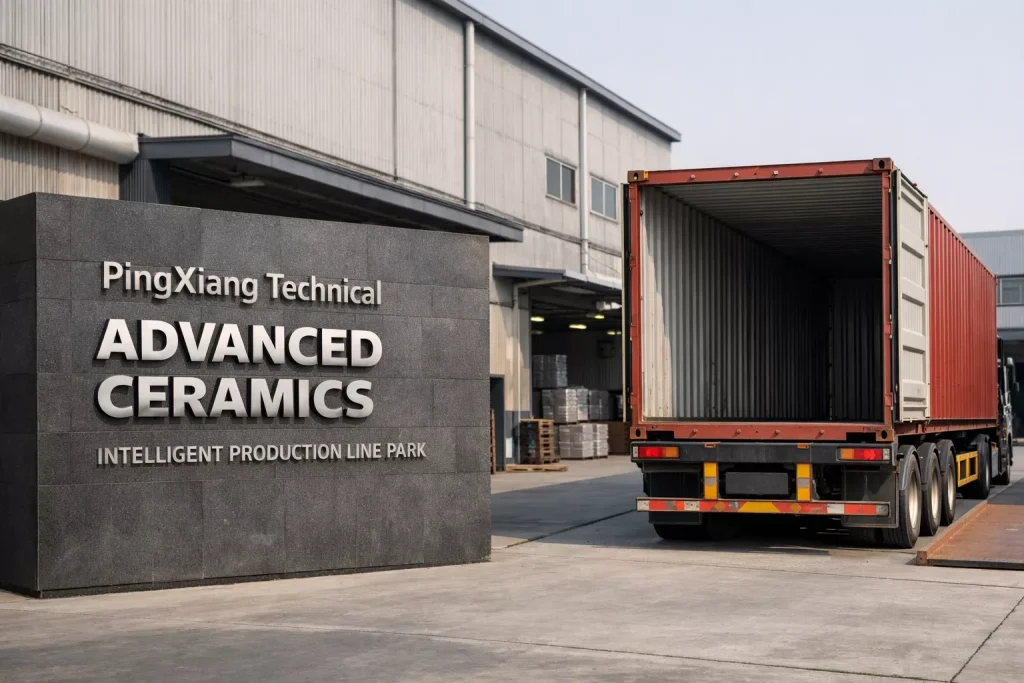
Pingxiang Factory — Silicon carbide, silicon nitride, high-temperature ceramics

Quick Quotation

*Our team will answer your inquiries within 24 hours.

*Your information will be kept strictly confidential.

Ready to Solve Your Engineering Challenge?

Partner with ADCERAX for reliable, high-performance advanced ceramic solutions. Our engineers are ready to discuss your project.

E-mail

info@adcerax.com

Phone

+(86) 0731-74427743 | WhatsApp: +(86) 19311583352

Response Time

Within 24 hours

Quick Quote

The more details you provide, the faster we can quote.

*We respond within 24 hours. All inquiries are confidential.

Get Your Custom Solution

The more details you provide, the faster we can respond.

customize size

*We respond within 24 hours. All inquiries are confidential.

Download Catalog