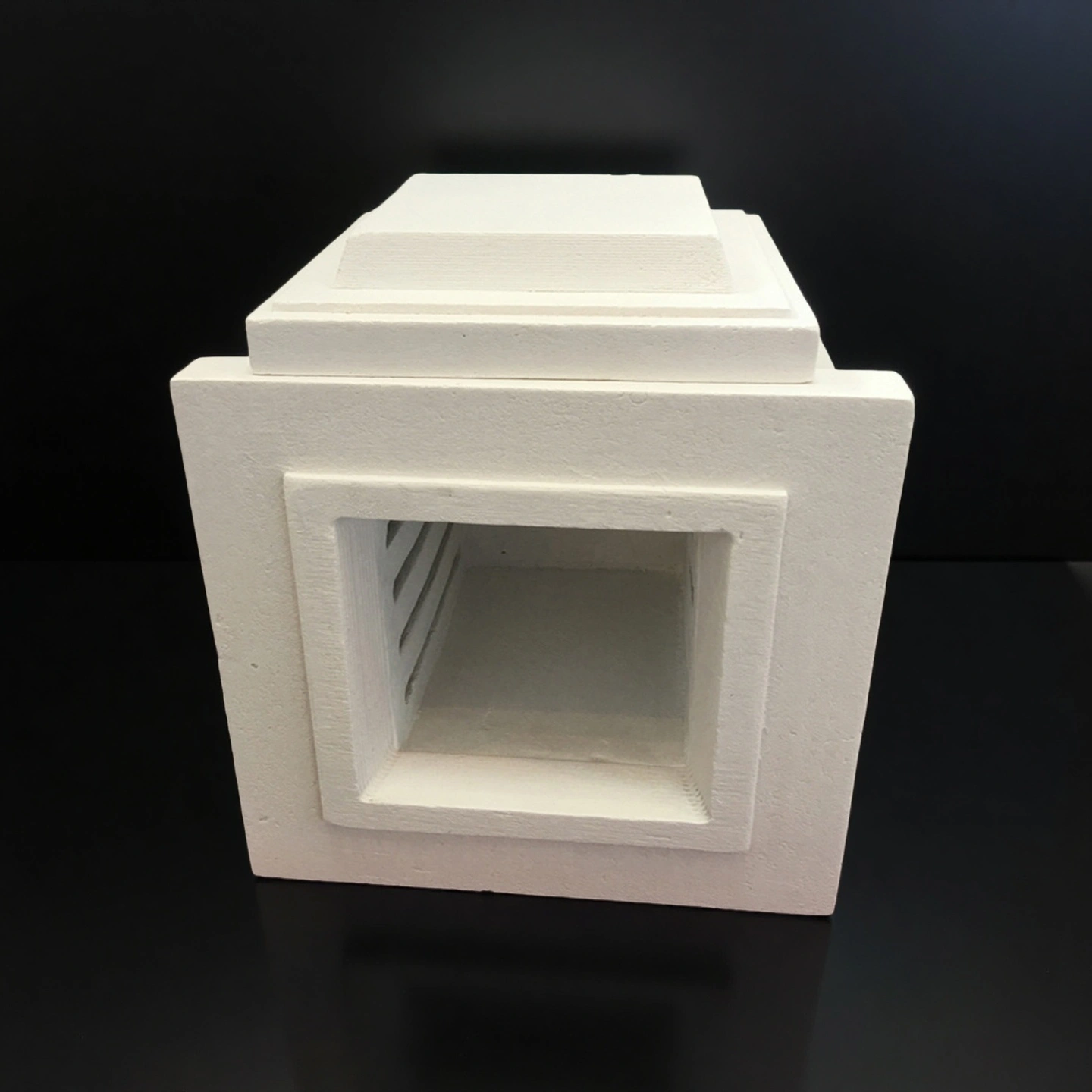
Custom Aluminum Silicate Ceramic Fiber Shaped Parts for Foundry Equipment

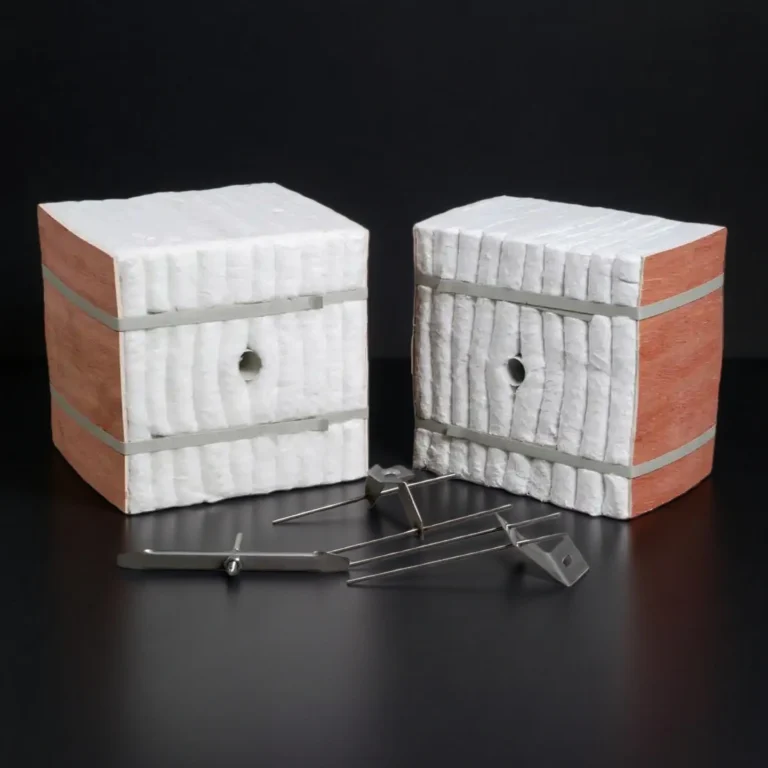
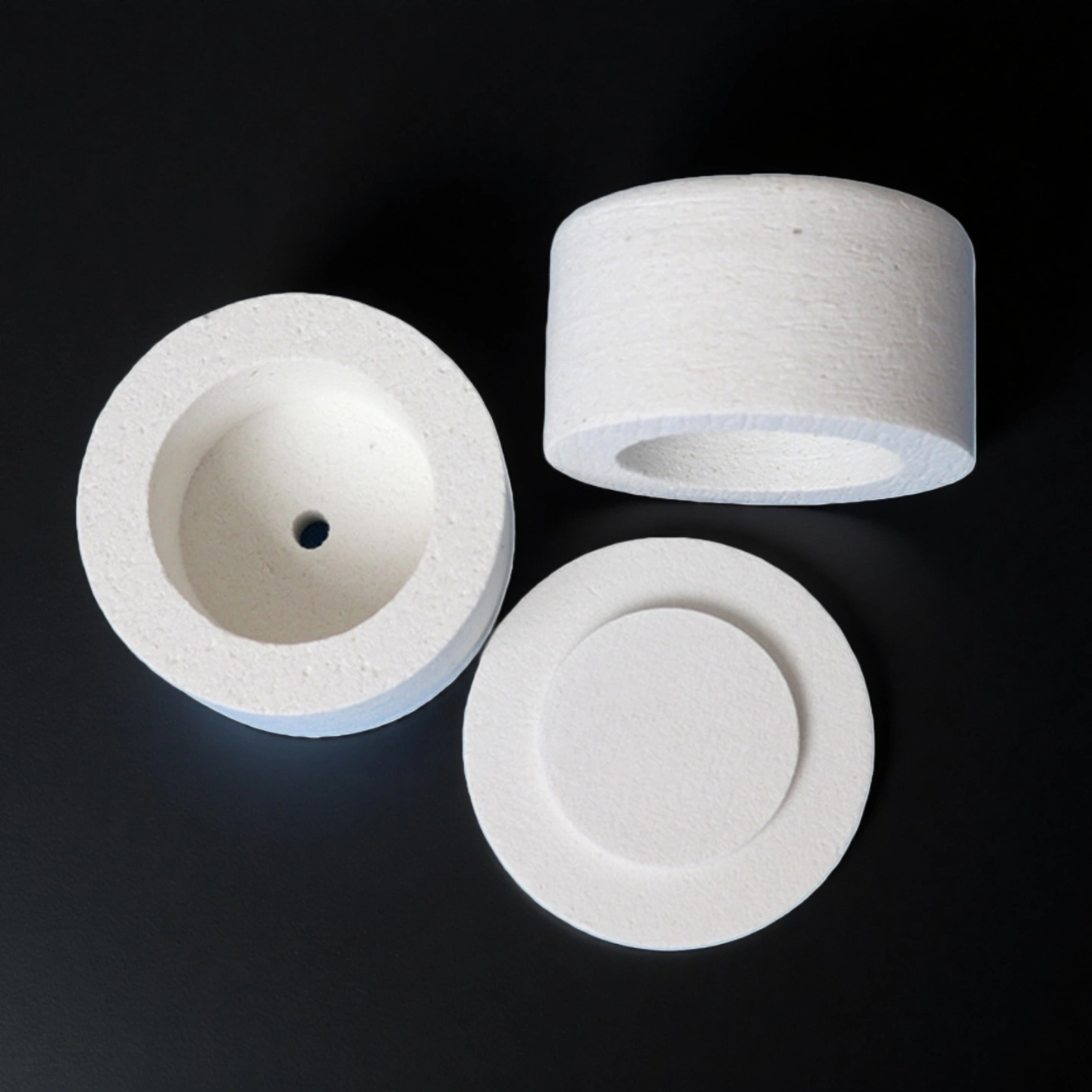
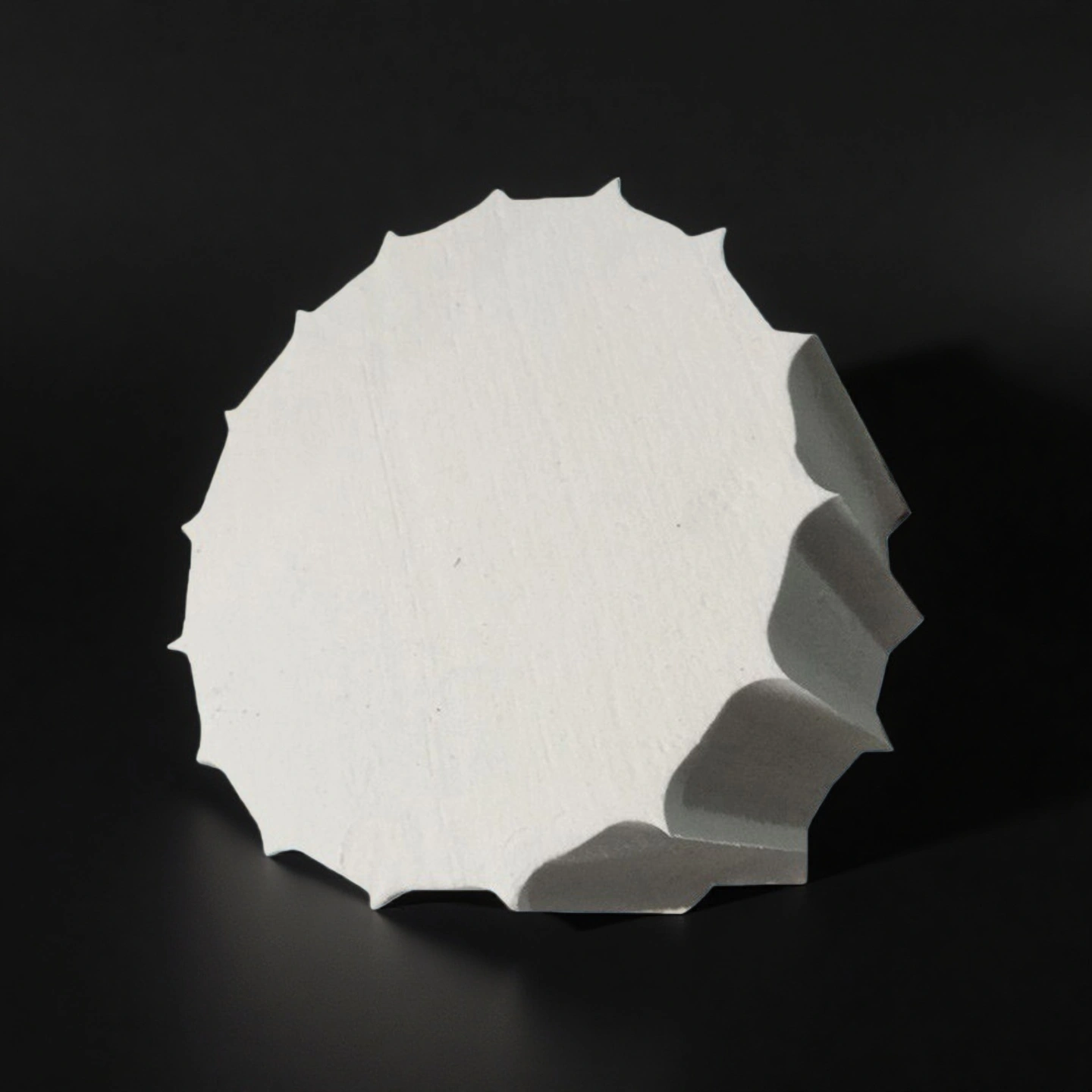
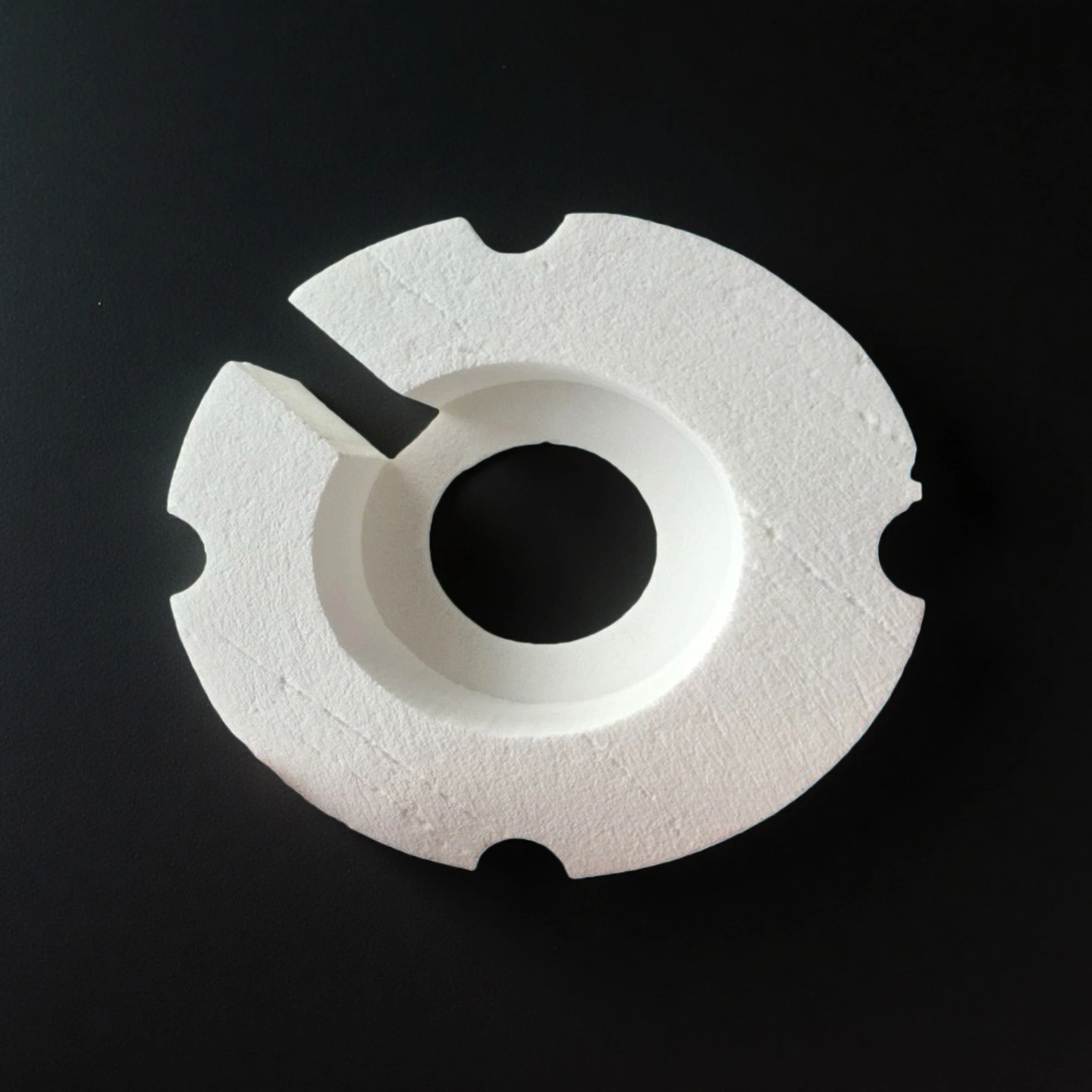
Aluminum silicate fiber shaped parts are designed for continuous use in high-temperature equipment up to 1260–1430°C. They are supplied as custom-made blocks, cones, tubes, boxes, plugs and special geometries that integrate directly into burner zones, furnace doors, peep sights and lining transitions.

Catalogue No. AT-GSL-BZ1001
Material Al2O3+SiO₂
Classification temperature 1260–1430 °C
Bulk density 220–500 kg/m³
hermal conductivity (400–1000 °C) ~0.09–0.22 W/m·K (depending on grade)
24H Standard Dispatch
Small Batch Support OEM
Factory Direct
Expert Engineering Support

Aluminum silicate fiber shaped parts are rigid, vacuum-formed ceramic fiber components made from alumino-silicate (Al₂O₃–SiO₂) fibers and small amounts of binders. Instead of being supplied as flat blanket or board, the fiber slurry is formed in a mold by vacuum to create three-dimensional shapes.

Aluminum Silicate Ceramic Fiber Shaped Parts Benefits

  • Near-net-shape furnace components
    Complex burner blocks, door plugs, inspection blocks and transition pieces are formed to shape, reducing on-site cutting of boards and blankets and shortening installation time.

  • Low thermal mass and energy savings
    The low density matrix stores far less heat than brick or castable, which helps shorten heating and cooling cycles and reduces fuel or power consumption in batch and cyclic furnaces.

  • High temperature stability with controlled shrinkage
    Grades matched to 1260–1430 °C service exhibit limited permanent linear change after long-term exposure, maintaining fit in burner tiles, doors and peep holes.

  • Improved lining life at critical interfaces
    Carefully designed shaped parts protect steel shells and castable back-up at openings where gas velocity, mechanical impact or thermal gradients are most severe.

  • Flexibility across multiple processes
    The same family of aluminum silicate fiber shaped parts can be used in heat-treatment furnaces, aluminum melting lines, glass forehearths, boilers and incinerators, simplifying spares management.


Aluminum Silicate Fiber Shaped Parts Properties

Aluminum Silicate Ceramic
Parameter Typical Value Notes / Industrial Relevance
Material Composition Al₂O₃–SiO₂ Silicate-based refractory matrix
Working Temperature 1000–1400°C Depends on density & grade
Bulk Density 200–400 kg/m³ Lower density = better insulation
Thermal Conductivity 0.08–0.22 W/m·K Measured at 600–1000°C
Linear Shrinkage ≤ 2% at 1000–1300°C Ensures dimensional stability
Cold Crushing Strength 0.6–1.2 MPa Resistance to mechanical load
Thermal Shock Resistance High Suitable for rapid heating cycles
Water Absorption Low Supports clean installation
Available Thickness 10–75 mm Custom thickness on request
Available Forms Boards, blocks, custom-machined shapes Supports OEM engineering designs


Aluminum Silicate Ceramic Fiber Shaped Parts Specifications

Item No. Chemical Composition Diameter (mm) Thickness (mm) Purity
AT-GSL-BZ1001 Standard Customize
AT-GSL-GC1001 High-Purity Customize
AT-GSL-GL1001 High-Alumina Customize
AT-GSL-HG1001 Zirconia-Containing Customize


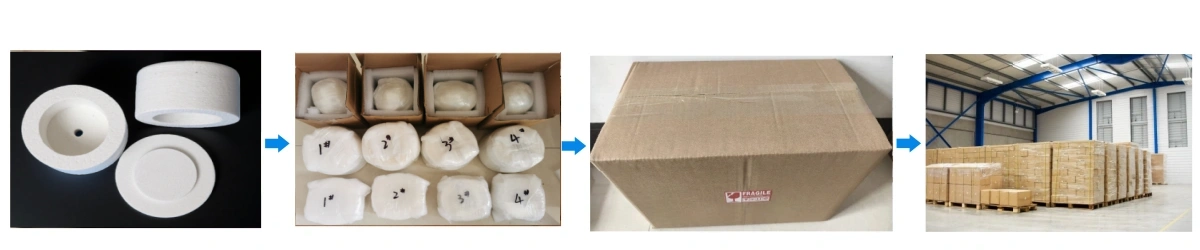
Aluminum Silicate Fiber Shaped Parts Packaging

  • Each aluminum silicate fiber shaped part is wrapped in plastic or shrink film to control dust and moisture during transport.

Aluminum Silicate Fiber Shaped Parts Packaging

Application Scenarios – Aluminum Silicate Fiber Shaped Parts

  • Aluminum Silicate Fiber Shaped Parts in Aluminum Melting and Non-Ferrous Casting

    ✅Key Advantages

    1. Pre-formed burner and launder blocks
    Aluminum silicate fiber shaped parts used as burner tiles and launder cover blocks reduce shell temperature by up to 80–120 °C compared with dense refractories at the same operating temperature, supporting lower energy usage.

    2. Non-wetting configurations for molten aluminum
    Properly selected fiber grades and surface treatments provide non-wetting behavior to molten aluminum, helping reduce metal build-up and cleaning time at launders and filter boxes.

    3. Lightweight ladle inserts and sample spoons
    Rigid shaped inserts reduce the weight of ladles and sampling tools, improving ergonomics in manual casting stations while maintaining dimensional stability through multiple heats.

    ✅ Problem Solved

    In a typical aluminum melting furnace operating around 700–750 °C, brick-lined burner fronts and door blocks can drive shell temperatures above 150 °C, forcing additional external insulation and leading to slow heating cycles. By replacing these critical areas with aluminum silicate fiber shaped parts designed at suitable density and classification temperature, users have reported shell temperature reductions of around 80–100 °C and cycle time improvements of 5–10% during alloy change or batch operations. Maintenance crews also note that shaped fiber parts are quicker to remove and reinstall during repairs, cutting planned outage duration by several hours over a full maintenance shutdown.

  • Aluminum Silicate Fiber Shaped Parts in Heat-Treatment and General Industrial Furnaces

    ✅Key Advantages

    1. Precision burner tiles and door seals
    Vacuum-formed tiles and door blocks integrate directly into new furnace designs, keeping hot-face temperatures while limiting heat leakage around moving doors and burner throats.

    2. Reduced thermal mass at batch furnaces
    Using fiber shaped parts at doors, roofs and transition zones lowers thermal storage, which helps shorten heating and cooling phases in batch heat-treatment cycles.

    3. Higher gas velocity resistance than blanket
    Compared with loose ceramic fiber blanket, rigid shaped parts resist higher gas velocities near burners and exhaust ports without fiber erosion into the workspace.

    ✅ Problem Solved

    A furnace OEM replacing castable burner quarls and door linings with aluminum silicate fiber shaped parts in a line of batch furnaces observed shorter installation time per unit and improved cycle control. With classification temperatures matched to 1260–1350 °C and densities around 280–350 kg/m³, gas-side heat loss decreased and door edges cooled more quickly between cycles. Internal reports from similar projects indicate fuel savings in the range of several percent on heat-treatment lines when fiber modules and shaped parts are combined in hot-face linings, along with a reduction in door seal maintenance frequency over a 2–3 year period.

  • Aluminum Silicate Fiber Shaped Parts in Waste Incinerators and Boilers

    ✅  Key Advantages

    1. Replaceable lightweight panels at inspection and access points
    Shaped blocks and panels enable faster removal and re-installation at inspection ports and access doors, reducing exposure times during hot inspections.

    2. Thermal shock resistance in cycling operation
    Aluminum silicate fiber matrix tolerates frequent temperature cycling better than some dense refractories used at walls and duct transitions, lowering spalling risk.

    3. Adaptability to complex steel structures
    Tailored shapes follow the contours of ducts, burners and expansion joints, improving coverage without the need for multiple layers of cut board and blanket.

    ✅  Problem Solved

    In waste-to-energy units and biomass boilers, inspection doors and burner access points are exposed to frequent opening and high thermal gradients. Plants using brick or castable around these openings often report chipping, cracking and the need for regular patch repairs. After switching to custom aluminum silicate fiber shaped parts at critical door areas, operators have documented longer intervals between repairs, with several campaigns exceeding one to two operating seasons without major replacement. The lighter weight shapes also reduce manual handling loads, making door assemblies easier to service during short outages.


Usage Guide – Aluminum Silicate Fiber Shaped Parts

  • Installation

    1. Check each aluminum silicate fiber shaped part against the drawing number and orientation mark before installation.
    2. Position parts on clean, flat back-up refractory or steel shell surfaces, removing loose debris and dust.
    3. Use designated anchors, pins or mechanical supports where specified, avoiding excessive local compression that could crush the fiber matrix.
    4. Seal joints between shaped parts and adjacent linings with compatible ceramic fiber paper, felt or high-temperature mastic where required.

  • Operation

    1. Heat the lining according to a controlled start-up curve recommended by the furnace designer, allowing gradual removal of any residual moisture and binder.
    2. Avoid exposing aluminum silicate fiber shaped parts to direct flame impingement at temperatures above their rated classification temperature for extended periods.
    3. Monitor shell temperature and critical zones during early operation to verify that parts are seated correctly and not subject to abnormal hot spots.

  • Storage

    1. Store parts in dry, covered areas on pallets or shelves, protected from rain and standing water.
    2. Keep packages closed until shortly before installation to minimize dust generation and moisture pick-up.
    3. Avoid stacking heavy items on top of thinner or fragile shapes to prevent deformation of edges and surfaces.

  • Cleaning

    1. Remove loose dust or debris from exposed surfaces with a soft brush or vacuum cleaner fitted with a suitable filter.
    2. Do not wash aluminum silicate fiber shaped parts with water or solvents; if contamination occurs, consider replacing the affected part rather than attempting wet cleaning.

  • Precautions and service life optimisation

    1. Follow local regulations and safety guidance for handling ceramic fiber products, including suitable personal protective equipment.
    2. Avoid mechanical impact at corners and edges during transport and installation; use lifting devices or two-person handling for larger blocks.
    3. When upgrading from brick or castable, re-check burner settings and control loops, as lower thermal mass can affect heat-up rates and furnace tuning.

  • Typical user issues and solutions

    1. Issue – Gaps visible between shaped parts after first firing
    Cause: Expected shrinkage at classification temperature or insufficient joint packing.
    Solution: Fill gaps with compatible fiber paper or mastic on the next outage and verify temperature profile; specify tighter joint control and allowance in future designs.

    2. Issue – Localized erosion or glazing near burner outlets
    Cause: High gas velocity or direct flame impingement beyond the design assumption.
    Solution: Increase density and/or upgrade to a higher temperature or coated surface grade in the burner tile region; adjust burner flame pattern if possible.

    3. Issue – Cracked corners around door openings after repeated cycling
    Cause: Mechanical impact from door movement and thermal shock at sharp corners.
    Solution: Redesign the aluminum silicate fiber shaped parts with larger radii, split sections or removable corner pieces, and review door hardware alignment to reduce impact.

FAQ – Aluminum Silicate Fiber Shaped Parts

  1. Q: What are aluminium silicate fiber shaped parts made of?
    A: Aluminum silicate fiber shaped parts are vacuum formed from alumino-silicate ceramic fibers, water and small amounts of binders, then dried and sometimes fired to create rigid high-temperature insulation components.
  2. Q: What is the maximum service temperature for aluminium silicate fiber shaped parts?
    A: Standard aluminum silicate fiber shaped parts are offered with classification temperatures from 1260 °C up to around 1430 °C, with working temperatures selected below these values according to the specific grade and operating conditions.
  3. Q: How do aluminum silicate fiber shaped parts differ from ceramic fiber blanket or board?
    A: Compared with blanket or flat board, aluminum silicate fiber shaped parts are formed on a tool to create rigid three-dimensional burner blocks, cones, tubes, plugs and complex profiles that keep their geometry under load.
  4. Q: Can aluminum silicate fiber shaped parts be used in direct contact with molten aluminium?
    A: Certain aluminum silicate fiber shaped parts, especially when combined with suitable fiber chemistry and surface treatments, are used in launders, trough covers and filter box linings where molten aluminum contact occurs, provided the product data confirms non-wetting behavior for the specific alloy.
  5. Q: How accurate are the dimensions of aluminium silicate fiber shaped parts?
    A: Vacuum formed aluminium silicate fiber shaped parts are typically manufactured to tolerances suitable for refractory linings, and critical dimensions can often be controlled within approximately ±1–2 mm depending on size and geometry.
  6. Q: How long do aluminum silicate fiber shaped parts typically last in service?
    A: Service life depends on temperature, chemical environment and mechanical load; in well-designed furnaces many aluminum silicate fiber shaped parts run through several maintenance cycles before replacement, while heavily eroded burner zones may need more frequent change-out.

  7. Q: What information should I send to get a quotation for aluminum silicate fiber shaped parts?
    A: For accurate pricing, you should provide a drawing or sketch, operating temperature, desired classification temperature, approximate annual volume, target density range and any special requirements such as coatings or anchor designs.

Customer Reviews – Aluminum Silicate Fiber Shaped Parts

  • ⭐️⭐️⭐️⭐️⭐️
    We switched several burner tiles and door plugs to aluminum silicate fiber shaped parts and the installation time during shutdown dropped noticeably. The new shapes fit our existing steelwork well and have held up across multiple campaigns.
    -- Michael R., Maintenance Manager, Delta Alloy Foundry
  • ⭐️⭐️⭐️⭐️⭐️
    Our design team integrated custom aluminum silicate fiber shaped parts from ADCERAX into a new batch furnace line. The low thermal mass around the doors has helped us tune faster cycles without compromising lining integrity.
    -- Elena K., Technical Director, NordTherm Furnace Systems
  • ⭐️⭐️⭐️⭐️⭐️
    The lightweight ceramic fiber shaped parts at inspection doors made it easier for the crew to open and close access points during hot inspections. We have seen fewer cracked corners compared with the previous brick solution.
    -- David P., Operations Engineer, GreenFlame Waste Energy Plant
  • ⭐️⭐️⭐️⭐️⭐️
    Working with ADCERAX as a factory supplier of aluminum silicate fiber shaped parts has simplified our spare parts purchasing. Custom shapes are delivered according to our drawings and the cost level is competitive for repeat orders.
    -- Satoshi M., Procurement Manager, Hikari Heat Processing Co.
customize size

Custom Aluminum Silicate Fiber Shaped Parts

Aluminum silicate fiber shaped parts can be tailored to individual furnace designs or retrofit projects, from small peep-sight plugs to large burner blocks and box modules. Custom shapes are produced according to drawings, 3D models or physical samples, allowing direct replacement of existing brick, castable or metallic components.

1. Outer dimensions

  • Length, width, height up to approx. 1000 × 600 × 300 mm (project-dependent)

2. Inner geometry

  • Through-holes, stepped bores, tapered passages for burners and lances
  • Recesses for thermocouples, peep sight glass or fixing hardware

3. Cross-section and overall shape

  • Cylindrical, conical, rectangular, wedge, dome and multi-part assemblies

4. Density and grade

  • Bulk density selection within approx. 220–500 kg/m³ for rigidity vs. weight
  • 1260 °C, 1350 °C or 1430 °C classification temperature grades

5. Edge and end details

  • Square ends, bevels, radii, rebates and tongue-and-groove interfaces

6. Surface options

  • As-formed surface
  • Surface hardened or treated with refractory coating in erosion areas

7. Fitting features

  • Slots or recesses for steel anchors and retaining hardware
  • Split designs for installation around existing pipes or nozzles

Related Products

ADCERAX - Your Trusted Advanced Ceramics Manufacturing Partner

Direct factory manufacturing with comprehensive ceramic materials expertise and global supply capabilities

Direct Factory Manufacturing

China-based ceramic materials production facility with state-of-the-art equipment

Engineering Team

Experienced professionals in advanced ceramics applications and custom design

Quality Control

Strict quality control standards for technical ceramics manufacturing and quality management

Global Supply Chain

Serving customers worldwide with technical ceramics and rapid response

24/7 Technical Support

Round-the-clock support for ceramic components inquiries and technical assistance

500+ Satisfied Customers

Trusted by global customers for advanced ceramic materials and precision components

Get in touch with us

Our team will be happy to respond to you in less than 24 hours.

Adcerax's factory

Quick Quotation

*Our team will answer your inquiries within 24 hours.

*Your information will be kept strictly confidential.

Ready to Solve Your Engineering Challenge?

Partner with ADCERAX for reliable, high-performance advanced ceramic solutions. Our engineers are ready to discuss your project.

E-mail

info@adcerax.com

Phone

+(86) 0731-74427743 | WhatsApp: +(86) 19311583352

Response Time

Within 24 hours

Quick Quote

The more details you provide, the faster we can quote.

*We respond within 24 hours. All inquiries are confidential.

Download Catalog

Get Your Custom Sulution

The more details you provide, the faster we can respond.

customize size

*We respond within 24 hours. All inquiries are confidential.

Download Catalog