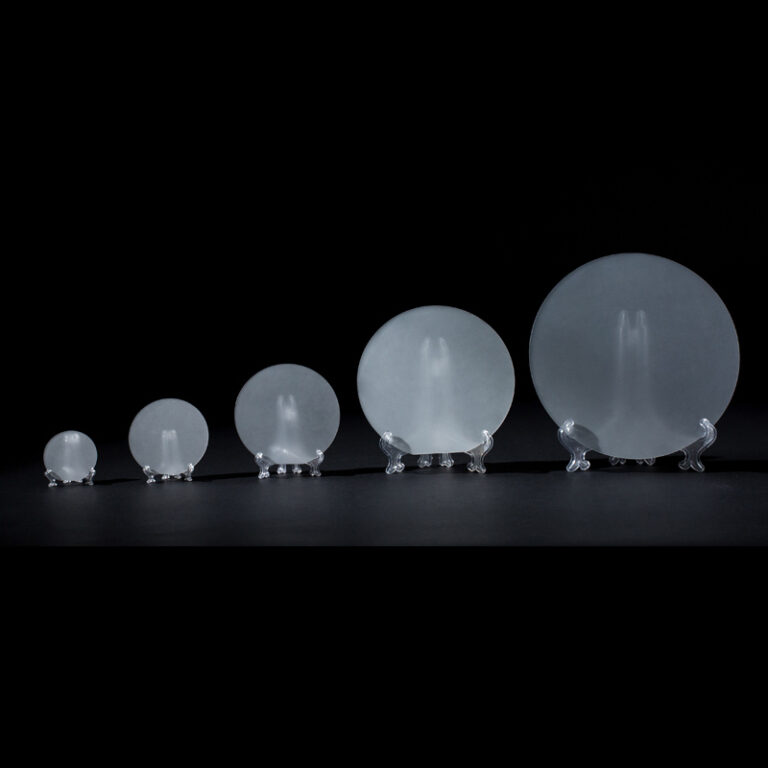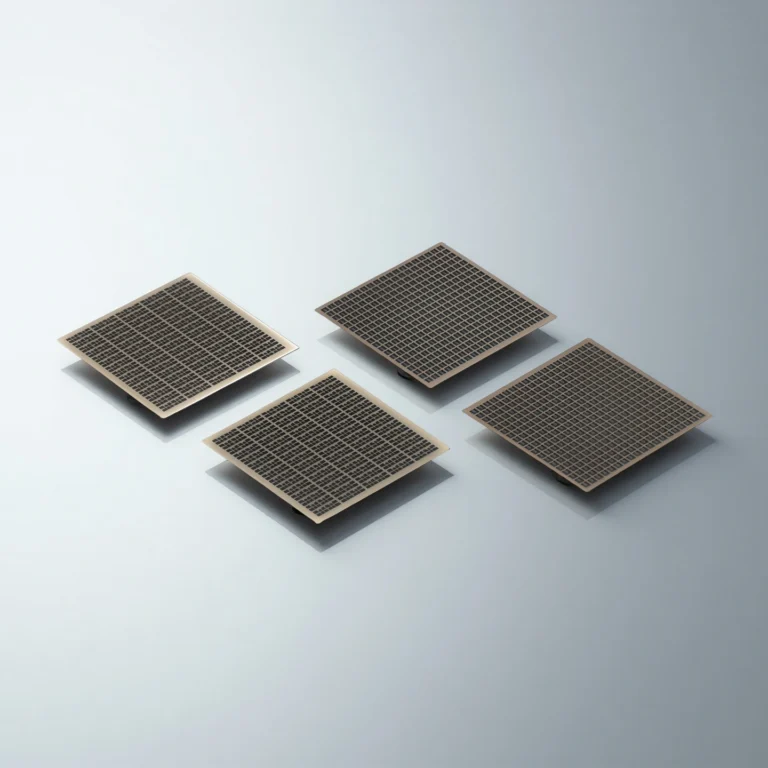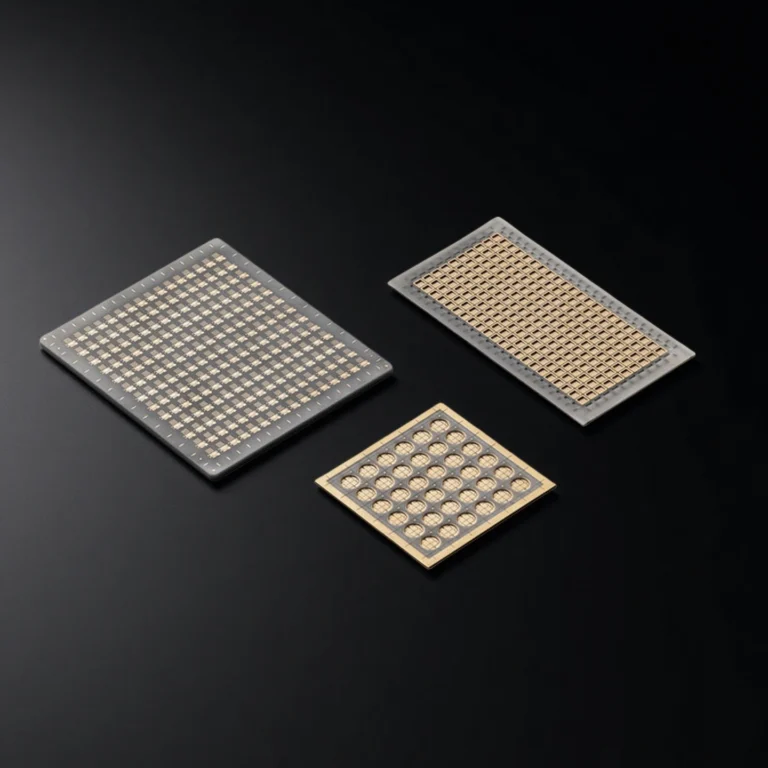
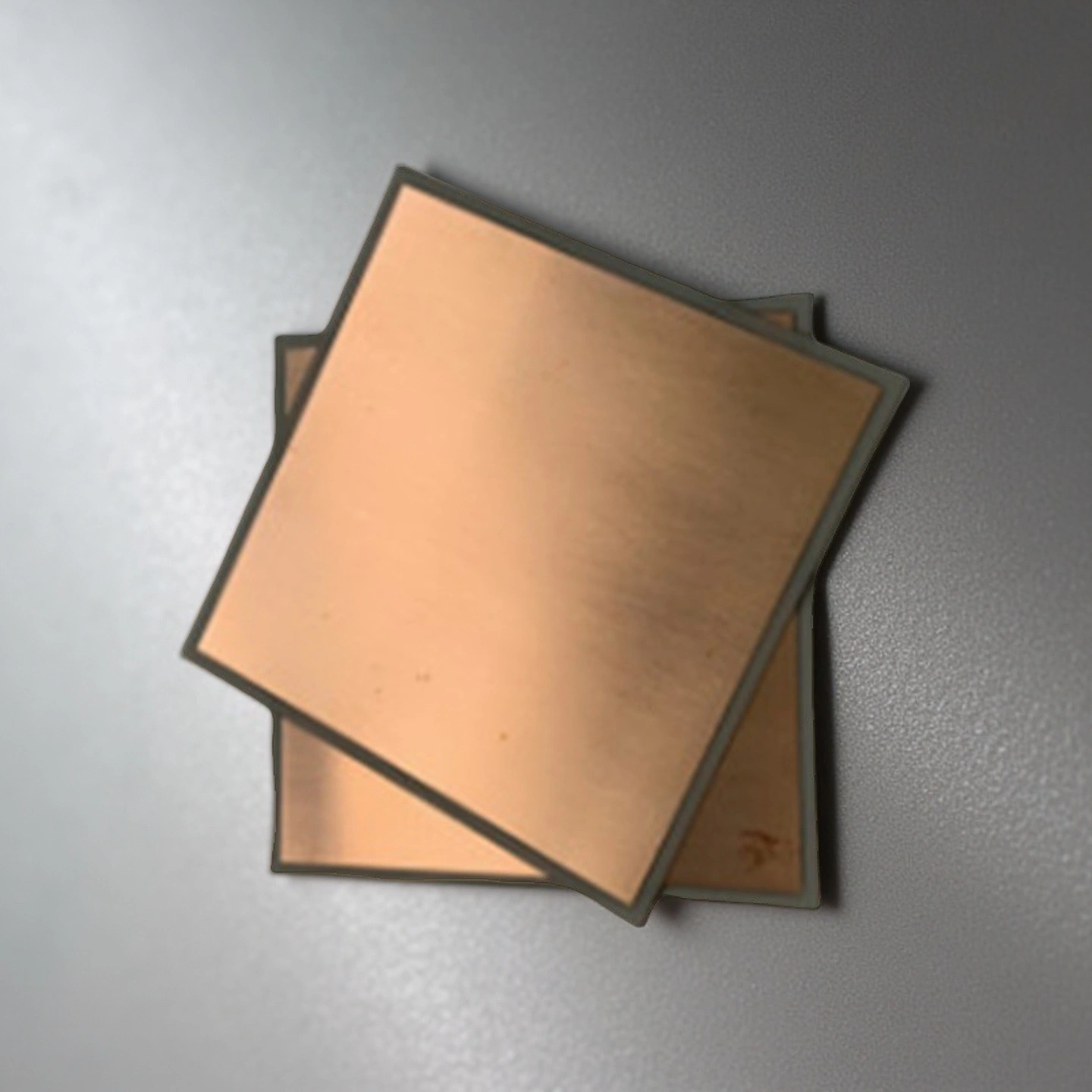
AMB Silicon Nitride (Si₃N₄) Substrate for Automotive Traction Inverters and DC/DC Converters

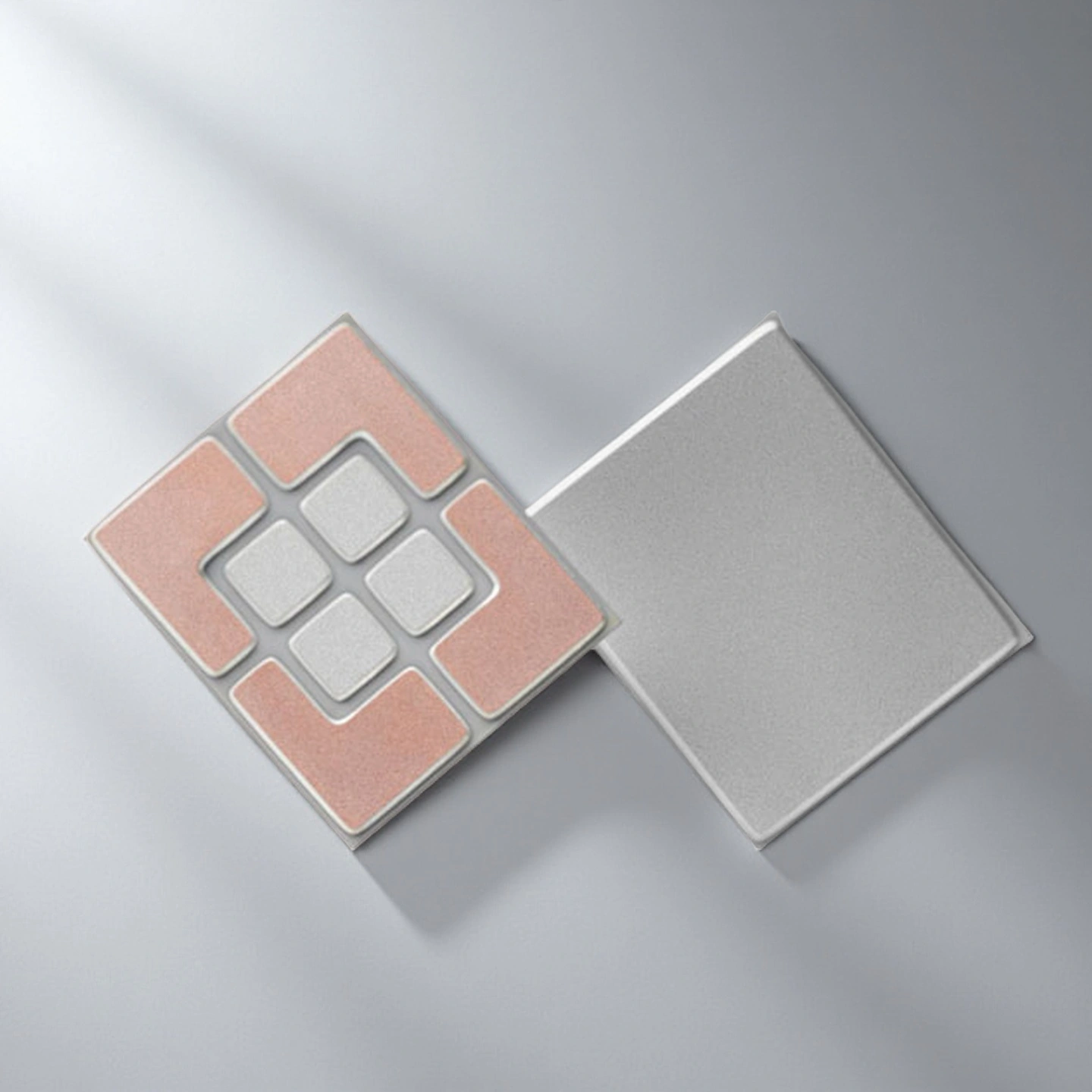
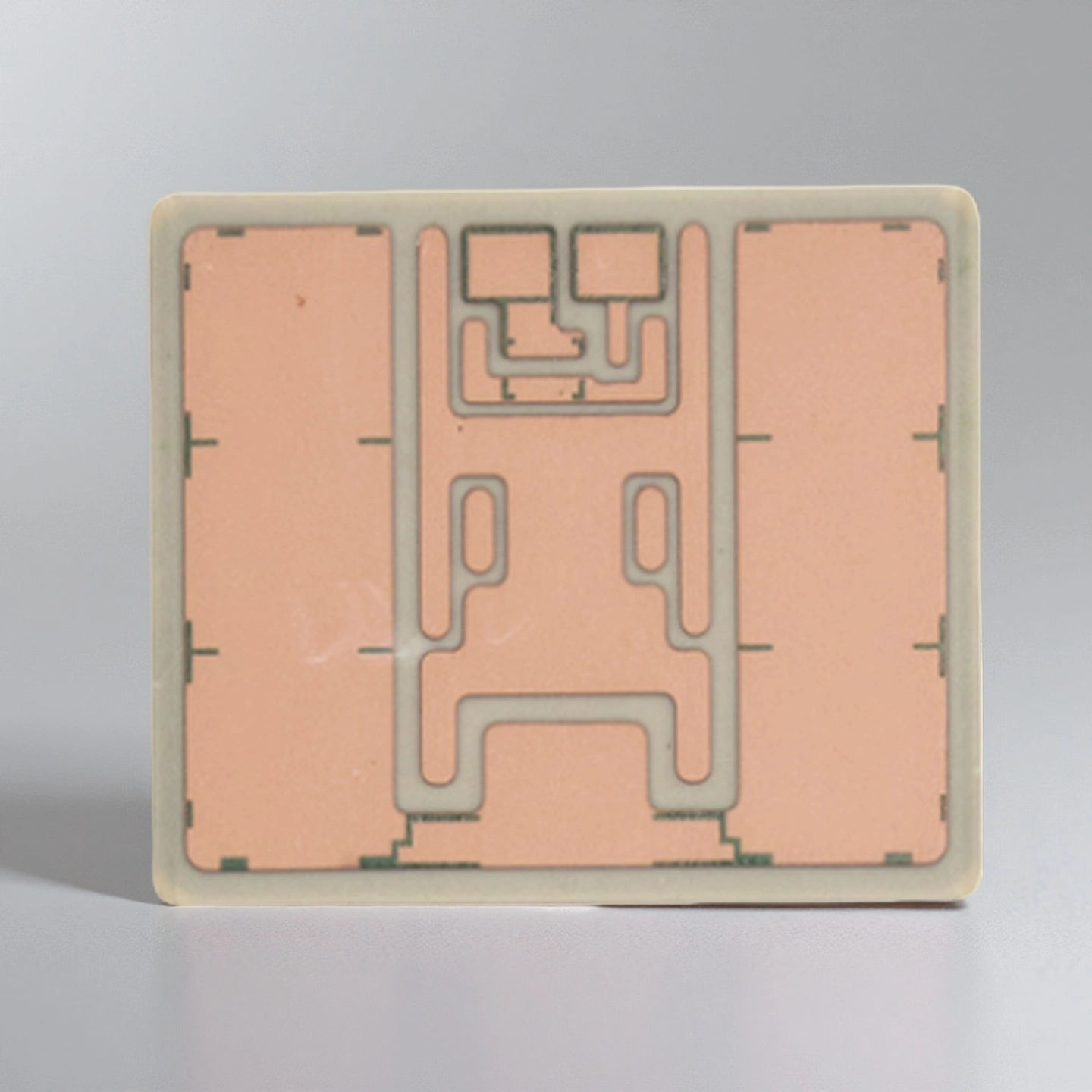
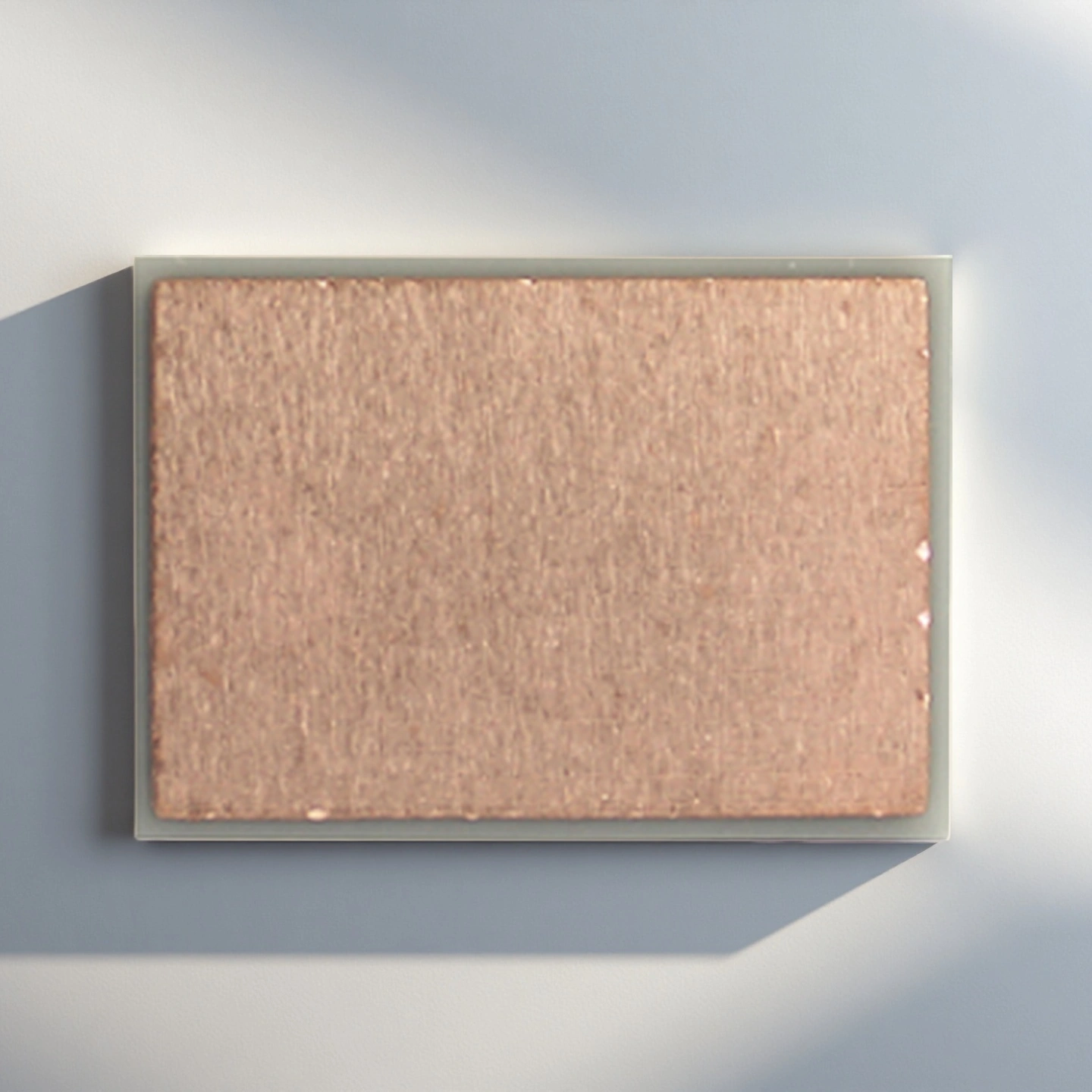
Silicon nitride AMB substrate is a copper-clad ceramic board manufactured by active metal brazing between Si₃N₄ and oxygen-free copper. It is available in thicknesses from 0.25 to 0.63 mm and supports customized copper thickness from 70 µm to 500 µm. It is used for packaging SiC MOSFETs and IGBT modules in automotive inverters, renewable energy converters, and industrial drives.

Catalogue No. AT-SIN-FT1001
Material Silicon Nitride
Thermal Conductivity 70–90 W/m·K
Bending Strength ≥ 800 MPa
Copper Thickness 70 µm /300 µm/500 µm
24H Standard Dispatch
Small Batch Support OEM
Factory Direct
Expert Engineering Support

AMB silicon nitride substrate combines high thermal conductivity, low thermal expansion, and high bending strength, making it suitable for high-power semiconductor modules that undergo repeated thermal cycling. Compared with Al₂O₃ or AlN DBC substrates, silicon nitride AMB boards provide higher fracture toughness and longer power cycling life. It is widely used in traction inverters, on-board chargers, DC/DC converters, wind power converters, and industrial servo drives.


AMB Silicon Nitride Substrate Benefits

  • High Power Cycling Reliability
    The silicon nitride AMB substrate maintains mechanical and electrical stability beyond 10,000 thermal cycles from -40 °C to 150 °C under SiC and IGBT power module operation. The high fracture toughness of Si₃N₄ prevents dielectric layer cracking, while oxygen-free copper maintains contact resistance below 0.1 mΩ during repeated current loading.

  • Low Warpage After Copper Brazing
    Panel-level warpage typically remains within 20–30 µm after active metal brazing and cooling, even with 300 µm or 500 µm copper thickness. This flatness level supports pressure-assisted silver sintering and ensures uniform solder thickness in vacuum reflow processes.

  • CTE Matching with SiC Semiconductor Chips
    The thermal expansion coefficient of 2.7–3.2×10⁻⁶/K closely aligns with SiC MOSFET chips (≈4.0×10⁻⁶/K), minimizing thermal stress between chip and substrate during rapid temperature rises and high-current switching cycles. This reduces chip–substrate delamination and extends module lifetime.

  • High Mechanical Strength and Crack Resistance
    Silicon nitride exhibits a flexural strength above 800 MPa and fracture toughness of 6–8 MPa·m¹ᐟ². This resists edge chipping, ultrasonic cleaning damage, and mechanical stress during module mounting or screw fastening—an advantage over brittler Al₂O₃ and AlN ceramics.

  • Supports Thick Copper for High Current Designs
    The AMB process allows 70 µm to 500 µm of copper on one or both sides. Thick copper supports current levels above 400–800 A, reduces thermal resistance from junction to baseplate, and enables planar busbar integration in SiC traction inverters or energy storage converters.

AMB Si₃N₄ Substrate Properties

Si3N4 Type Gas pressure sintering Si3N4 Hot pressing sintering Si3N4 High thermal conductivity Si3N4
Density (g/cm3) 3.2 3.3 3.25
Flexture strength (MPa) 700 900 600~800
Young Modulus (GPa) 300 300 300~320
Poisson's ratio 0.25 0.28 0.25
Compressive strength (MPa) 2500 3000 2500
Hardness (GPa) 15 16 15
Fracture toughness (MPa*m1/2) 5~7 6~8 6~7
Maximum working temperature (℃) 1100 1300 1100
Thermal conductivity (W/m*K) 20 25 80~100
Thermal expansion coefficient (/℃) 3*10-6 3.1*10-6 3*10-6
Thermal shock resistance (ΔT ℃) 550 800 /


Silicon Nitride AMB Substrate Specifications

Part 1: Processing Accuracy for Silicon Nitride Substrate AMB Copper Clad

Item Specification
Copper layer surface roughness Ra≤1.5μm, Rz≤10μm, Rmax=50μm
Coating layer Nickel 2-10μm (P6%-10%)
Silver 0.1-1.0μm
Nickel-gold Ni: 2-10μm, Au: 0.01-0.15μm
Nickel-gold-palladium Ni: 2-10μm, Au: 0.01-0.15μm, Pd: 0.01-0.15μm
Solder mask Line width, space, tolerance ≥0.2mm, tolerance ±0.2mm
Position tolerance ±0.2mm
Thickness 5-40μm
Temperature change endurance ≤320℃/10s


Part 2: AMB Silicon Nitride Substrate Size

AMB Silicon Nitride Substrate
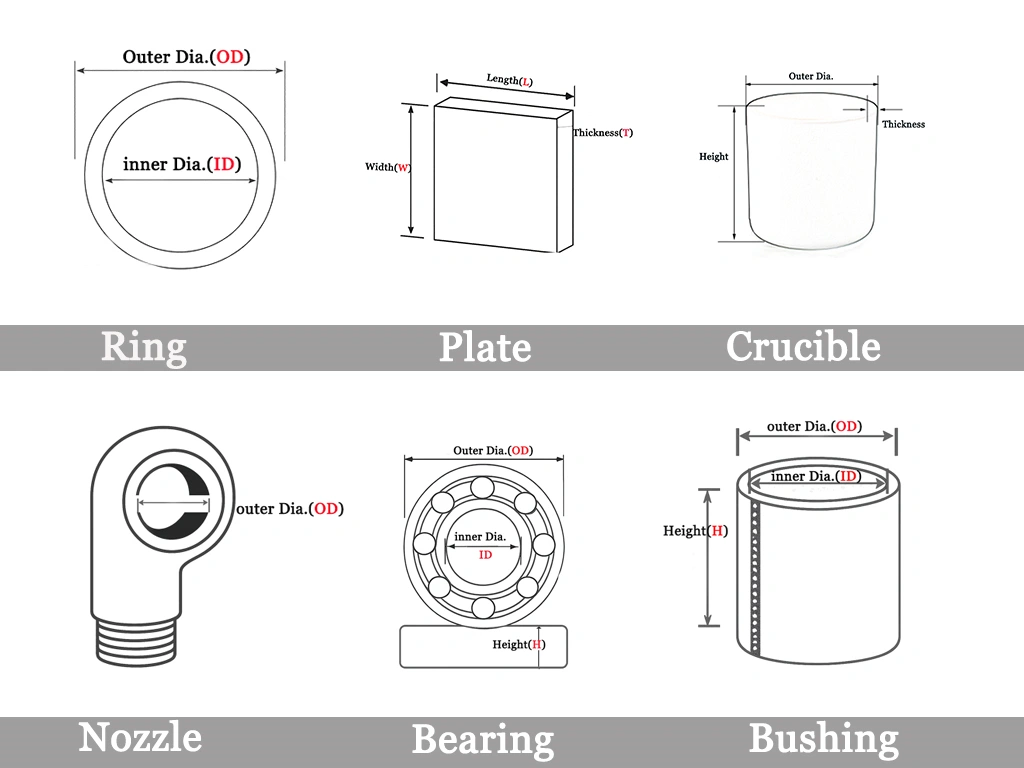
Item No. Length*Width(mm) Thickness(mm) Copper layer thickness(mm)
AT-SIN-FT1001 10*10——127*178 0.25 0.127、0.2、0.25、0.3、0.4、0.5、0.8
AT-SIN-FT1002 0.32
AT-SIN-FT1003 0.38
AT-SIN-FT1004 0.63
AT-SIN-FT1005 1.0
AT-SIN-FT1006 Other thickness customization


AMB Si₃N₄ Substrate Packaging

  • Each Si3N4 active metal brazed substrate is sealed in anti-static packaging.
  • Packed in foam-lined boxes to prevent mechanical damage.
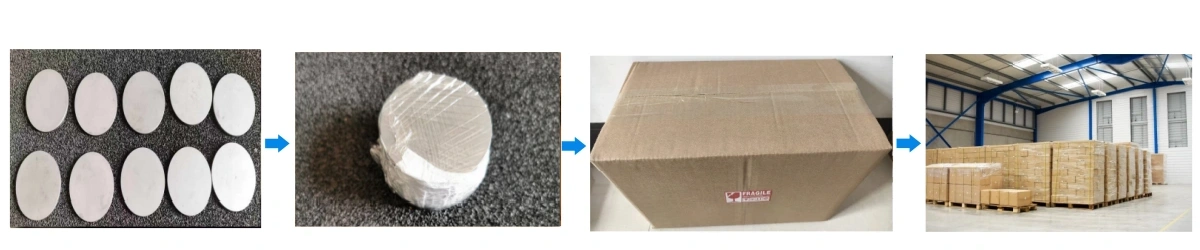
AMB Si₃N₄ Substrate Packaging

AMB Silicon Nitride Substrate Applications

  • Silicon Nitride AMB Substrate for EV Inverter

    ✅Key Advantages

    1. Lower Junction Temperature Rise – Silicon Nitride AMB Substrate for EV Inverter reduces Rth(j-c) by ~15% when using 500 µm copper compared to standard AlN DBC in SiC traction modules.
    2. Extended Power Cycling Life – With AMB Si₃N₄ Ceramic Substrate for Power Module structure, SiC devices maintain >10,000 cycles (−40 to 150 °C) without copper delamination or substrate cracking.
    3. Low Contact Resistance Drift – Copper bonded to the AMB Si₃N₄ substrate maintains <0.1 mΩ resistance shift after 100 hours at 175 °C, ensuring long-term inverter efficiency.

    ✅ Problem Solved

    A European EV inverter manufacturer experienced die-attach fatigue and DBC substrate fracture at around 4,000 thermal cycles. After replacing Al₂O₃ DBC with Silicon Nitride AMB Substrate for EV Inverter (0.38 mm Si₃N₄ + 300 µm copper), module life increased to over 9,500 cycles, case temperature dropped by 7 °C at 600 A continuous current, and warranty failure rate decreased from 0.45% to 0.08%.

  • AMB Si₃N₄ Ceramic Substrate for Power Module in PV

    ✅Key Advantages

    1. Continuous Output Stability – AMB Si₃N₄ Ceramic Substrate for Power Module lowers thermal resistance by 0.12 K/W, enabling inverter operation at full load without derating.
    2. High Voltage Reliability – Dielectric strength above 20 kV/mm ensures safety in 1500 V DC bus environments.
    3. Higher Sintering Yield – Warpage below 25 µm per panel allows <2% void rate in Ag-sintered IGBT dies, improving bonding reliability.

    ✅ Problem Solved

    A solar inverter company reported module shutdowns caused by IGBT overheating above 120 °C during peak generation. After switching to AMB Si₃N₄ Ceramic Substrate for Power Module, junction temperature dropped by 9–11 °C, thermal trip events were reduced by 75%, and system uptime increased from 97.2% to 99.1% in a 50 MW installation.

  • AMB Si₃N₄ Substrate for Power Module in Rail Traction & Industrial Drives

    ✅Key Advantages

    1. Shock and Vibration Endurance – AMB Si₃N₄ Ceramic Substrate for Power Module withstands >20 g impact without micro-cracking in railway converters.
    2. Reduced Maintenance Cost – Improved fracture toughness and copper adhesion extend the traction module lifetime to over 5 years, doubling maintenance intervals.
    3. High Current Overload Capability – 500 µm copper AMB structure handles temporary overloads above 900 A without warpage or solder lift-off.

    ✅ Problem Solved

    A traction system integrator observed cracks in AlN-based substrates after 18 months of metro operation. After adopting AMB Si₃N₄ Ceramic Substrate for Power Module, module service life exceeded 5 years, unplanned maintenance frequency dropped by 40%, and annual shutdown-related costs were significantly reduced.

AMB Silicon Nitride Substrate Usage Instructions

  • Installation & Assembly

    1. Clean copper and ceramic surfaces using ethanol, isopropanol, or plasma cleaning to remove oils and oxide layers before silver sintering or soldering.
    2. For silver sintering, apply uniform pressure of 20–40 MPa across the whole panel to avoid voids under SiC chips.
    3. During soldering, heat the entire substrate gradually to prevent thermal gradient; localized heating above 300 °C for more than 10 minutes may cause copper lifting or ceramic stress cracks.
    4. Use alignment pins or positioning holes to keep chip placement deviation within ±0.05 mm.

  • Storage

    1. Store in a dry room with humidity <50% RH and temperature 20–25 °C to avoid copper surface oxidation and moisture absorption by the ceramic.
    2. Keep the substrate in vacuum-sealed moisture barrier bags with desiccant until assembly to prevent surface oxidation or warping.
    3. Once opened, use within 48 hours or reseal in nitrogen-filled packaging.

  • Cleaning & Maintenance

    1. Recommended cleaning: ethanol or ultrasonic cleaning in deionized water with neutral detergent (<pH 8).
    2. Avoid solutions containing fluoride, alkali, or ammonia, which may attack the copper layer or weaken metallization.
    3. Avoid bending, vibration impact, or clamping directly on the ceramic edge to prevent micro-cracks.
    4. If surface oxidation occurs before bonding, use plasma or micro sandblasting followed by vacuum drying.

  • Common Mistakes & Solutions

    Issue Cause Solution
    Silver paste voids during bonding Copper or ceramic surface oxidation/moisture Plasma cleaning + 120 °C vacuum drying for 30 min before bonding
    Copper delamination or peeling Local overheating (>850 °C) or rapid cooling Control the heating rate <5 °C/s and avoid torch heating
    Warpage after sintering Uneven pressure during silver sintering or insufficient fixturing Use graphite fixtures, weight blocks or flat tooling plates
    Solder joint cracking Temperature cycling and CTE mismatch stress Use Ag-sintering or Ni/Au finish instead of SnPb solder
    Scratches on the copper surface Improper handling or stacking without separators Use soft polymer sheets between each piece during transport

 High Thermal Conductivity AMB Silicon Nitride Substrate FAQ

  1. Q: What is a Si3N4 active metal brazed substrate, and how is it different from DBC alumina or AlN substrates?
    A: A Si3N4 active metal brazed substrate uses a silicon nitride ceramic core bonded with copper using Ti-bearing brazing alloy. Unlike Al₂O₃ or AlN DBC, the active metal brazing silicon nitride substrate offers fracture toughness of 6–8 MPa·m¹ᐟ² and survives over 10,000 power cycles, making it suitable for SiC power devices.
  2. Q: Why do EV traction inverter manufacturers choose silicon nitride substrate AMB copper clad instead of AlN or ceramic PCB?
    A: Because the silicon nitride substrate AMB copper clad combines high mechanical strength and copper layer thickness up to 500 µm, resulting in 15–20% lower thermal resistance and reduced substrate cracking during vibration, which is critical in automotive inverter environments.
  3. Q: What is the typical thickness tolerance and flatness of the active metal brazing silicon nitride substrate?
    A: Si₃N₄ AMB panels can be controlled to ±0.03–0.05 mm in thickness, and flatness can be maintained under 20–30 µm per 140×190 mm panel, which is necessary for pressure sintering and high-area SiC die attachment.
  4. Q: What copper thickness options are available for silicon nitride substrate AMB copper clad boards?
    A: Common configurations include 70 µm, 140 µm, 300 µm, and 500 µm copper on one or both sides. Thicker copper helps reduce current density and heat flux but requires precise warpage control from a qualified Si₃N₄ AMB substrate manufacturer.
  5. Q: Can AMB Si3N4 substrates be used for silver sintering of SiC MOSFETs and IGBTs?
    A: Yes. The low warpage of active metal brazed silicon nitride substrates ensures uniform pressure and void-free sintered layers, with <2% porosity when pressure is applied at 20–40 MPa.
  6. Q: Can a Si3N4 active metal brazed substrate support double-sided cooling designs in power modules?
    A: Yes. Because the ceramic layer has CTE close to SiC chips and high flexural strength (>800 MPa), it allows double-sided copper structures for baseplate-free modules and liquid-cooled SiC automotive inverters.
  7. Q: What information should I provide to a Si₃N₄ AMB substrate manufacturer for custom production?
    A: You should specify ceramic thickness, copper thickness, panel or unit size, copper trace layout (Gerber or DXF file), surface finish (Ag, Ni, Ni-Au), warpage tolerance, and bonding method (soldering or silver sintering).

Active Metal Brazing Silicon Nitride Substrate Reviews

  • ⭐️⭐️⭐️⭐️
    We switched to a silicon nitride substrate AMB copper clad for our 750 V SiC inverter project. After 9,800 power cycles, none of the modules showed copper lift-off or ceramic cracks. The Si₃N₄ active metal brazed substrate clearly improved thermal stability by about 8 °C compared with AlN DBC.
    -- Markus Hoffmann, R&D Engineer, E-Traction Systems GmbH
  • ⭐️⭐️⭐️⭐️⭐️
    We ordered custom AMB panels from ADCERAX, which is a Si₃N₄ AMB substrate manufacturer in China for our EV traction inverters. They followed our copper layout and thickness requirements (0.32 mm ceramic + 300 µm Cu), and the warpage stayed under 25 µm, which was critical for silver sintering of SiC dies.
    -- Kazuki Tanaka, Power Electronics Manager, Kyoto Drives Corp.
  • ⭐️⭐️⭐️⭐️⭐️
    Our previous DBC boards had solder fatigue issues in high-load UPS systems. After using active metal brazing on a silicon nitride substrate, the junction temperature dropped from 118 °C to 107 °C under full load, and thermal trip alarms reduced by nearly 70%.
    -- Sarah Mitchell, Procurement Lead, VoltSecure Power Solutions
  • ⭐️⭐️⭐️⭐️⭐️
    As a small OEM company, we needed a low-volume customized Si₃N₄ active metal brazed substrate with 500 µm copper for high-current rectifiers. ADCERAX accepted 30-piece prototyping, provided Gerber feedback within 48 hours, and delivered panels with no copper oxidation or edge chipping.
    -- Giovanni Russo, Technical Director, ModuTech Engineering S.r.l.
customize size

Custom AMB Silicon Nitride Ceramic Substrate

As a Si₃N₄ AMB substrate manufacturer, we support engineering-level customization to match different module layouts, copper current paths, and thermal interface requirements for SiC and IGBT applications.

1. Substrate Dimensions
• Thickness options: 0.25/0.32/0.38/0.50/0.63 mm
• Panel or single-unit size according to module housing or press-fit design
• Edge finishing: deburred, chamfered, laser-cut

2. Copper Configuration
• Copper thickness: 70μm/140 μm/300μm/500 μm (single or double-sided)
• Copper pattern: chemical etching or laser forming to match circuit design
• Option for copper-filled via or solder stop area upon request

3. Surface & Metallization Finish
• Coating selection: Ag, Ni, Ni-Au, or Ag-Sn for soldering or silver sintering
• Surface roughness control for improved solder wetting or pressure sintering
• Oxidation-prevention packaging with batch traceability

4. Machining & Tolerance Control
• Laser drilling of holes, slots, registration marks, and alignment keys
• Dimensional tolerance up to ±0.03 mm for thickness and cutting precision
• Warpage control ≤20–30 μm per panel for vacuum soldering or sintering

5. Thermal & Electrical Requirements
• Built to match power cycling conditions or high dielectric strength designs
• CTE and flatness certified for SiC chip bonding and baseplate assembly

Related Products

ADCERAX - Your Trusted Advanced Ceramics Manufacturing Partner

Direct factory manufacturing with comprehensive ceramic materials expertise and global supply capabilities

Direct Factory Manufacturing

China-based ceramic materials production facility with state-of-the-art equipment

Engineering Team

Experienced professionals in advanced ceramics applications and custom design

Quality Control

Strict quality control standards for technical ceramics manufacturing and quality management

Global Supply Chain

Serving customers worldwide with technical ceramics and rapid response

24/7 Technical Support

Round-the-clock support for ceramic components inquiries and technical assistance

500+ Satisfied Customers

Trusted by global customers for advanced ceramic materials and precision components

Get in touch with us

Our team will be happy to respond to you in less than 24 hours.

Adcerax's factory

Quick Quotation

*Our team will answer your inquiries within 24 hours.

*Your information will be kept strictly confidential.

Ready to Solve Your Engineering Challenge?

Partner with ADCERAX for reliable, high-performance advanced ceramic solutions. Our engineers are ready to discuss your project.

E-mail

info@adcerax.com

Phone

+(86) 0731-74427743 | WhatsApp: +(86) 19311583352

Response Time

Within 24 hours

Quick Quote

The more details you provide, the faster we can quote.

*We respond within 24 hours. All inquiries are confidential.

Download Catalog

Get Your Custom Sulution

The more details you provide, the faster we can respond.

customize size

*We respond within 24 hours. All inquiries are confidential.

Download Catalog