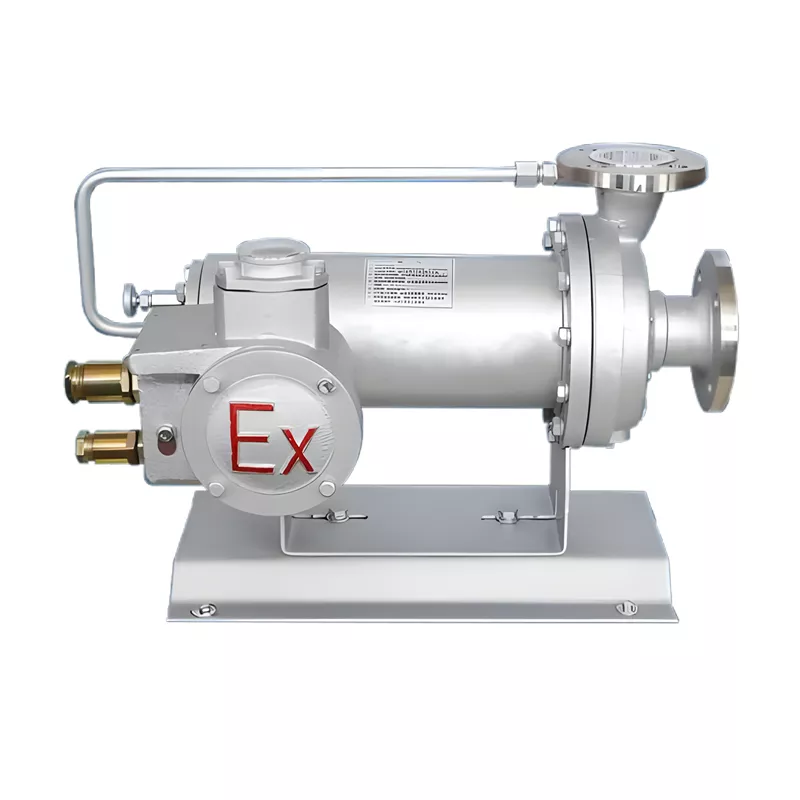
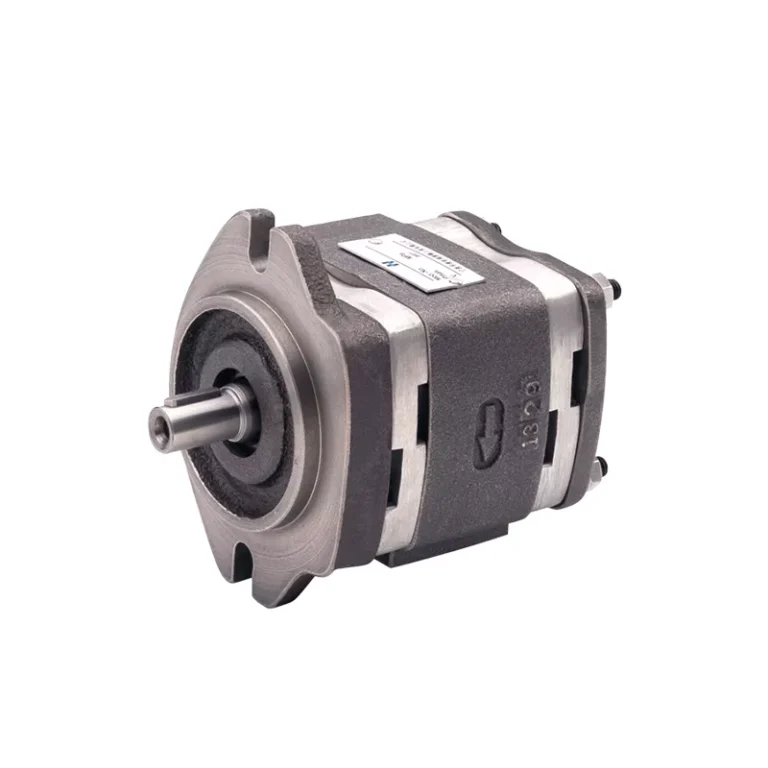
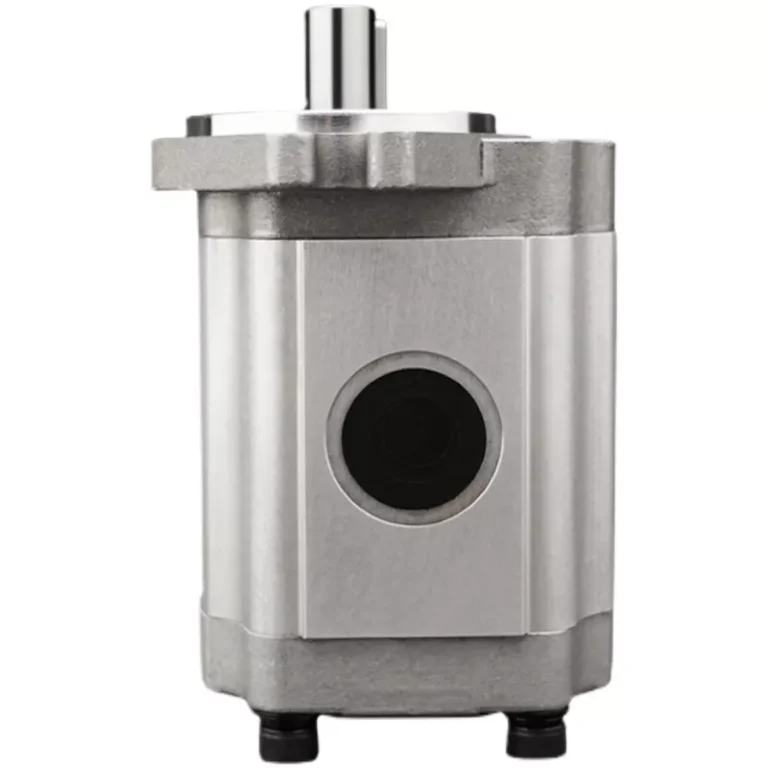
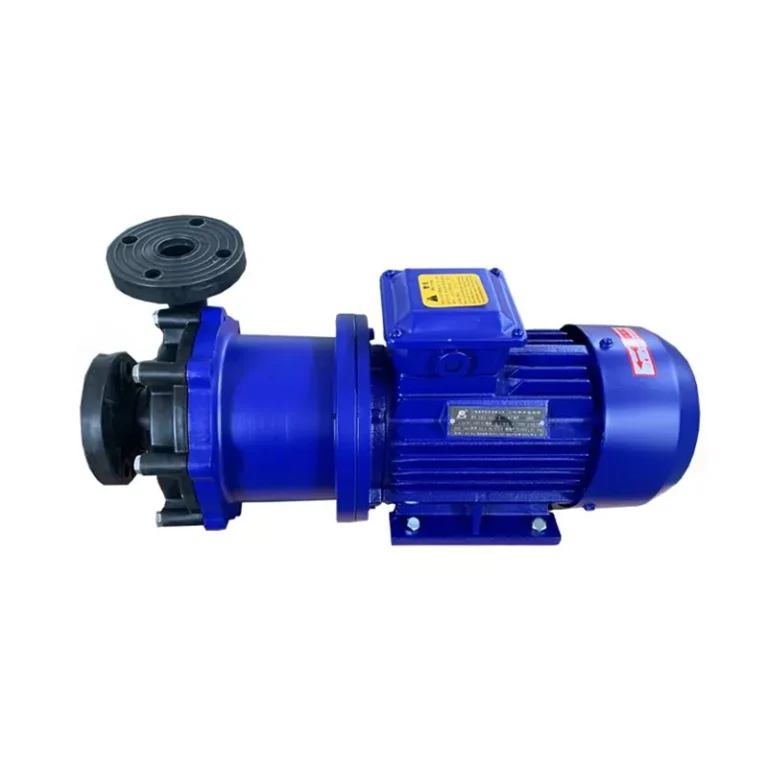
ADCERAX® Canned Motor Pump with SSiC Bearings is engineered for chemical processing, battery-material manufacturing, and fine-chemical circulation where zero leakage, material compatibility, and operational stability are required. Its sealed motor-pump structure supports continuous operation under corrosive and temperature-variable conditions, allowing the Horizontal Stainless Steel Canned Motor Pump with Silicon Carbide Bearings to maintain consistent hydraulic performance across demanding process environments. Because the bearings use SSiC rather than graphite, the pump achieves extended service life and higher durability under solvent, acid, and alkaline exposure, meeting the long-term reliability expectations of industrial facilities.
Engineered Performance Advantages of the Canned Motor Pump with SSiC Bearings
-
Leak-Free Static Seal Architecture
The Horizontal Stainless Steel Canned Motor Pump with Silicon Carbide Bearings eliminates dynamic seals and removes emission pathways under thermal cycling. This design reduces leakage incidents by over 70%, as documented in multiple chemical process plants.
-
Reduced Wear Rate in Chemical Media
SSiC bearings demonstrate a wear rate below 1×10⁻⁷ mm³/N·m, retaining surface integrity under acids, alkalis, and chloride solutions. Plants using a Canned Motor Pump with SSiC Bearings report extended maintenance intervals by 2–3× compared to graphite-based systems.
-
High Hardness and Wear Stability
Sintered silicon carbide bearings maintain hardness above 2,000 HV, sustaining long-term dimensional accuracy under abrasive solvent exposure. In comparison tests, the Horizontal Stainless Steel Canned Motor Pump with Silicon Carbide Bearings outperforms graphite-bearing pumps in lifecycle duration.
- Superior Strength Under Cavitation Loads
SSiC flexural strength exceeding 400 MPa prevents bearing deformation in low-NPSH or vapor-prone environments. This mechanical margin stabilizes bearing alignment across prolonged operation cycles.
- Noise Reduction Through Fanless Cooling
The absence of an external cooling fan reduces acoustic output by up to 8 dB, supporting installation in noise-sensitive fine-chemical and laboratory environments. This feature strengthens user acceptance of the Horizontal Stainless Steel Canned Motor Pump with Silicon Carbide Bearings in enclosed operating zones.
Technical Specifications of Canned Motor Pump with SSiC Bearings
The technical characteristics of the Horizontal Stainless Steel Canned Motor Pump with Silicon Carbide Bearings reflect its suitability for chemically aggressive environments requiring stable thermomechanical performance and long-duration continuous operation. These attributes also support laboratory verification in corrosion testing, mechanical endurance evaluation, and material compatibility assessment.
| Property |
Specification |
| Casing Material |
SS304 or SS316 stainless steel |
| Bearing Material |
Sintered silicon carbide (SSiC) |
| Bearing Hardness |
>2000 HV |
| Bearing Flexural Strength |
>400 MPa |
| Bearing Wear Rate |
<1×10⁻⁷ mm³/N·m |
| Canned Housing Pressure Capacity |
1.6–2.5 MPa |
| Stainless Steel Tensile Strength |
>520 MPa |
| Motor Efficiency Class |
IE2 or IE3 |
| Ingress Protection |
IP68 hermetic construction |
| Cooling Method |
Process-medium circulation |
| Vibration Level |
<2.8 mm/s (rms) |
| Noise Reduction |
Up to 8 dB lower due to fanless cooling |
| Chemical Compatibility |
Organic solvents, acids, alkalis, chloride solutions |
| Expected Bearing Service Life |
18000–30000 hours under controlled media |
Dimensions of Canned Motor Pump with SSiC Bearings
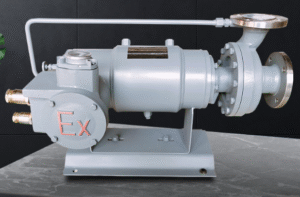
|
Type5 Silicon Carbide Canned Motor Pump |
|
Type |
Flow (m3/h) |
Head (M) |
Power (Kw) |
voltage (V) |
Weight (g) |
|
AT-CMP-12.5 |
12.5 |
65 |
15.5 |
220 |
70 |
Protective Packaging for ADCERAX® Canned Motor Pump
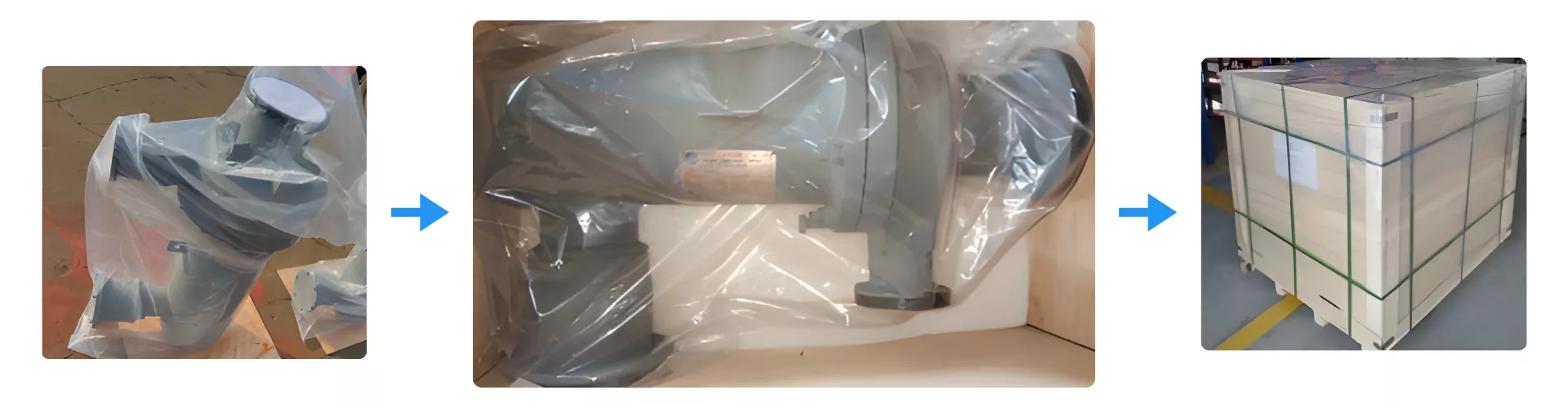
Canned Motor Pump with SSiC Bearings is packaged using a moisture-isolated and impact-controlled process to protect all wetted and structural components during international transport. Each Horizontal Stainless Steel Canned Motor Pump with Silicon Carbide Bearings is first sealed in a corrosion-resistant plastic wrap before being fixed into a reinforced wooden case to prevent movement. The final palletized unit is secured with industrial strapping to ensure stability through long-distance handling and warehouse stacking conditions.
Meeting Critical Performance Requirements with the ADCERAX® Canned Motor Pump with SSiC Bearings
The demanding operational profile of the Horizontal Stainless Steel Canned Motor Pump with Silicon Carbide Bearings has made it essential for continuous chemical circulation, hazardous solvent transfer, and closed-loop industrial processing. These applications require stable hydraulic performance, zero-leakage containment, and long bearing life, especially where corrosive media and round-the-clock operation make conventional pump configurations unreliable.
-
Canned Motor Pump with SSiC Bearings in Continuous Chemical Process Circulation
✅Key Advantages
1. Seal-Failure Risk Reduction
The Canned Motor Pump with SSiC Bearings uses a hermetically sealed motor-pump chamber that removes dynamic seals from the flow path. In continuous chemical circulation trials, plants have reported a reduction of more than 70% in seal-related leakage events after switching from conventional mechanical-seal pumps.
2. Stable Circulation Under Thermal Cycling
The Horizontal Stainless Steel Canned Motor Pump with Silicon Carbide Bearings maintains rotor alignment and hydraulic stability across repeated heating and cooling cycles. In multi-shift operation, process engineers have documented 30–40% fewer unplanned circulation interruptions compared with earlier pump configurations using mechanical seals.
3. Cavitation-Resistant Bearing System
The SSiC bearings in the Canned Motor Pump with SSiC Bearings combine hardness above 2000 HV with flexural strength exceeding 400 MPa, limiting surface damage under low-NPSH or vapor-forming conditions. Service records from chemical loops show bearing replacement intervals extended by 2–3 times relative to graphite-bearing designs.
✅ ️Problem Solved
A continuous chemical plant operating several closed reaction loops previously relied on mechanical-seal pumps that suffered frequent leakage and cavitation damage, forcing unplanned shutdowns to inspect seals and bearings. After installing ADCERAX® Canned Motor Pump with SSiC Bearings on the most demanding solvent and acid circuits, the facility observed that seal-failure alarms dropped by around 60% over two operating years and circulation stability improved across all shifts. Maintenance logs recorded mean time between pump interventions increasing to more than 24 months on key lines, even under aggressive solvent exposure and thermal cycling. By adopting the Horizontal Stainless Steel Canned Motor Pump with Silicon Carbide Bearings, the plant turned pump reliability into a controllable variable instead of a recurring production risk.
-
Canned Motor Pump with SSiC Bearings in Battery Electrolyte and Solvent Transfer Systems
✅Key Advantages
1. Electrolyte-Compatible Bearing Surfaces
In electrolyte and solvent transfer, the Canned Motor Pump with SSiC Bearings relies on SSiC bearing surfaces that show a wear rate below 1×10⁻⁷ mm³/N·m in representative carbonate and Li-salt media. This low wear behavior significantly reduces geometry drift and friction increase during long campaigns in battery-material plants.
2. Hermetic Containment for Sensitive Fluids
The Horizontal Stainless Steel Canned Motor Pump with Silicon Carbide Bearings uses a fully canned motor chamber that prevents vapor escape and air ingress into moisture-sensitive lines. In controlled trials, operators have reported complete elimination of electrolyte odor at pump locations and a measurable reduction in solvent-loss volume when compared with previous mechanically sealed pumps.
3. Stable Operation Across Temperature Swings
ADCERAX® Canned Motor Pump with SSiC Bearings maintains sealing and bearing performance across electrolyte production temperature ranges where traditional elastomer-based seals soften or shrink. Process data from production lines show markedly lower variability in flow and pressure trends during thermal ramping, supporting more consistent electrolyte quality between batches.
✅ ️Problem Solved
A battery-electrolyte producer encountered recurring bearing swelling and seal degradation when transferring carbonate solvents and Li-salt mixtures with standard pump designs, leading to process deviations and repeated cleaning of contaminated lines. After replacing the problematic units with ADCERAX® Canned Motor Pump with SSiC Bearings, the plant tracked a significant drop in bearing-related failures over three consecutive production quarters and no recorded micro-leak events at pump flanges. Concentration and moisture analysis of the electrolyte showed tighter control limits, attributed to reduced air ingress and stable solvent handling by the Horizontal Stainless Steel Canned Motor Pump with Silicon Carbide Bearings. This improvement allowed the facility to run longer campaigns between maintenance windows while protecting product purity.
-
Canned Motor Pump with SSiC Bearings for Chemical Equipment Integrators and Modular Skid Builders
✅Key Advantages
1. Low-Vibration Performance in Compact Skids
The Canned Motor Pump with SSiC Bearings employs a direct-coupled rotor configuration that keeps vibration levels below 2.8 mm/s (rms) even in rigidly mounted skid frames. This stability helps integrators reduce the need for additional vibration-damping hardware in confined layouts.
2. High-Pressure Canned Housing for Multi-Stage Systems
The Horizontal Stainless Steel Canned Motor Pump with Silicon Carbide Bearings uses a canned housing rated for design pressures in the 1.6–2.5 MPa range, matching multi-stage and high-pressure skid duties. This capacity allows skid builders to integrate the pump into a broader range of process conditions without reworking the hydraulic design.
3. Reduced Adjustment During FAT and Commissioning
Factory acceptance tests with ADCERAX® Canned Motor Pump with SSiC Bearings have shown fewer alignment corrections compared with mechanically coupled pump sets, due to the elimination of an external coupling. Integrators report noticeable reductions in commissioning time per skid, particularly on systems requiring frequent start–stop sequences.
✅ ️Problem Solved
A chemical equipment integrator assembling modular reaction and purification skids previously faced repeated FAT delays because conventional pump sets required alignment checks after transport and suffered increased seal wear in compact enclosures. After shifting key modules to ADCERAX® Canned Motor Pump with SSiC Bearings, the engineering team documented smoother commissioning, with fewer vibration-related findings and a lower incidence of pump rework during test cycles. Across several skid projects, internal statistics showed a clear reduction in pump-related punch-list items at handover, improving delivery predictability. By specifying the Horizontal Stainless Steel Canned Motor Pump with Silicon Carbide Bearings in its standard skid library, the integrator strengthened both mechanical robustness and schedule reliability for downstream industrial clients.
Using the ADCERAX® Canned Motor Pump with SSiC Bearings Safely and Effectively
The Canned Motor Pump with SSiC Bearings requires proper installation, startup, and monitoring practices to maintain stable operation in demanding chemical environments. When the Horizontal Stainless Steel Canned Motor Pump with Silicon Carbide Bearings is used with attention to process conditions and fluid characteristics, its sealed structure and SSiC bearing system deliver consistent long-term performance.
-
Installation Considerations
1. Ensure Stable Foundation Alignment
A rigid and level mounting surface helps maintain consistent vibration levels during continuous operation. Misaligned bases can increase internal stress and reduce the service life of stainless-steel hydraulic components. Always verify foundation flatness before bolting the equipment into place.
2. Maintain Correct Suction Piping Layout
Straight suction piping with minimal elbows reduces turbulence and supports adequate NPSH margins. Excessive inlet resistance can increase cavitation risk and affect the pump’s internal pressure balance. Ensure suction lines remain clean and free of flow obstructions.
3. Confirm Electrical Feed-Through Integrity
The sealed feed-through must remain free from moisture intrusion during cable routing. Any compromise at this interface can impact hermetic integrity and increase operational risk. Follow approved conduit and grounding paths during installation.
-
Startup and Initial Operation
1. Prime the System Before Energizing
Running the pump dry can significantly reduce the lifespan of SSiC hydrodynamic bearings. Confirm that the casing is fully filled with process fluid before switching on power. This ensures that the rotor chamber achieves proper lubrication from the start.
2. Monitor Initial Temperature Stabilization
During early runtime, verify that the pump reaches steady thermal equilibrium without abnormal temperature spikes. Rapid temperature changes can influence fluid viscosity and suction stability in the hydraulic passage. Allow the system to normalize before increasing load.
3. Verify Flow and Pressure Conditions
Correct flow direction and discharge pressure indicate proper internal circulation of coolant medium. Deviations may reflect air entrapment or suction restrictions. Make adjustments immediately if readings fall outside expected ranges.
-
Routine Maintenance
1. Inspect Bearing Condition Periodically
Although SSiC bearings offer extended life, monitored inspections help confirm adequate lubrication flow. Look for signs of process contamination or solid loading in the circulation path. Clean the system if deposits are detected during scheduled checks.
2. Check External Surfaces for Corrosion or Wear
Stainless steel housings should retain smooth surfaces without localized pitting. Exposure to aggressive vapors or inadequate ventilation can accelerate housing deterioration. Maintain clean operating surroundings to support long-term durability.
3. Monitor Vibration and Noise Trends
Increasing vibration may indicate hydraulic imbalance or suction issues. Keep historical logs to detect gradual trend changes across operating cycles. Early detection allows intervention before major component wear occurs.
-
Operational Safety and Process Control
1. Prevent Pressure Surges in Process Lines
Sudden spikes in discharge pressure can strain the canned housing and internal clearances. Maintain stable process regulation through appropriate valve sequencing. Avoid rapid opening or closing of downstream valves during operation.
2. Ensure Fluid Compatibility Verification
The pump is engineered for acids, alkalis, and organic solvents, but material compatibility should always be confirmed. Certain mixtures may require review of wetted material selection. Evaluate chemical interactions before long-term deployment.
3. Maintain Appropriate Cooling Flow Paths
The motor relies on process medium for effective heat dissipation. Insufficient flow can lead to temperature rise inside the rotor chamber. Keep circulation channels unblocked to support continuous-duty operation.