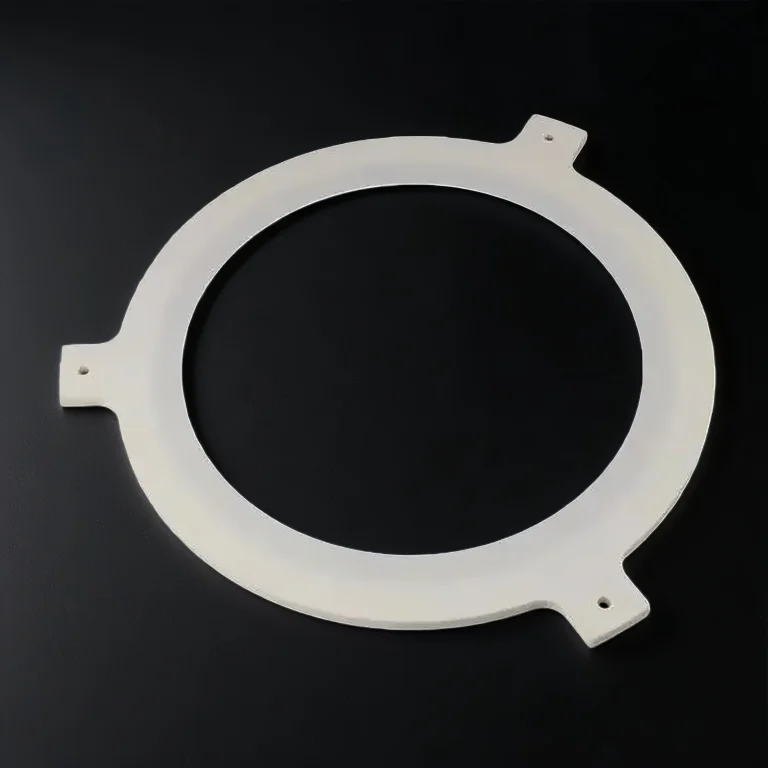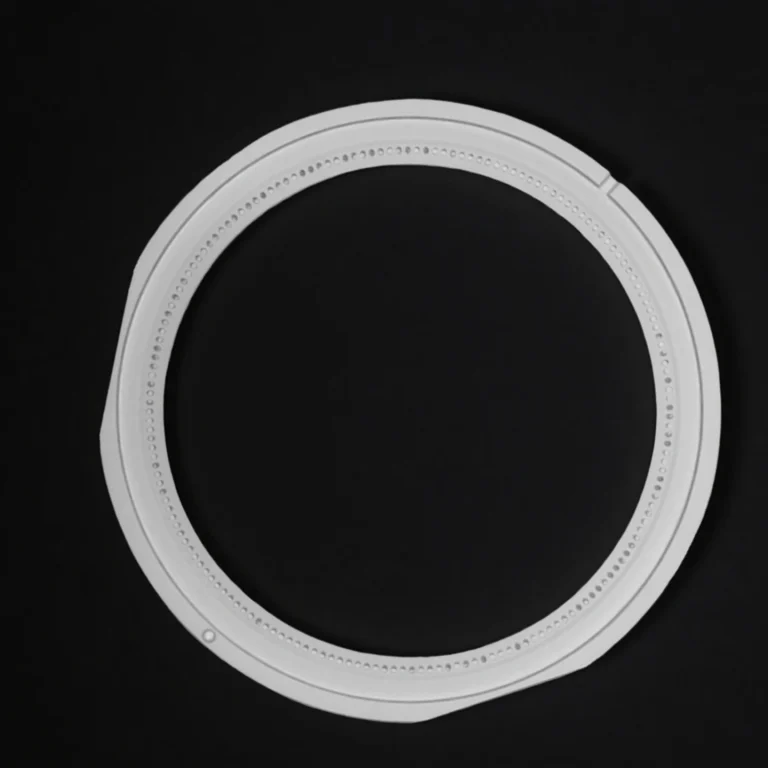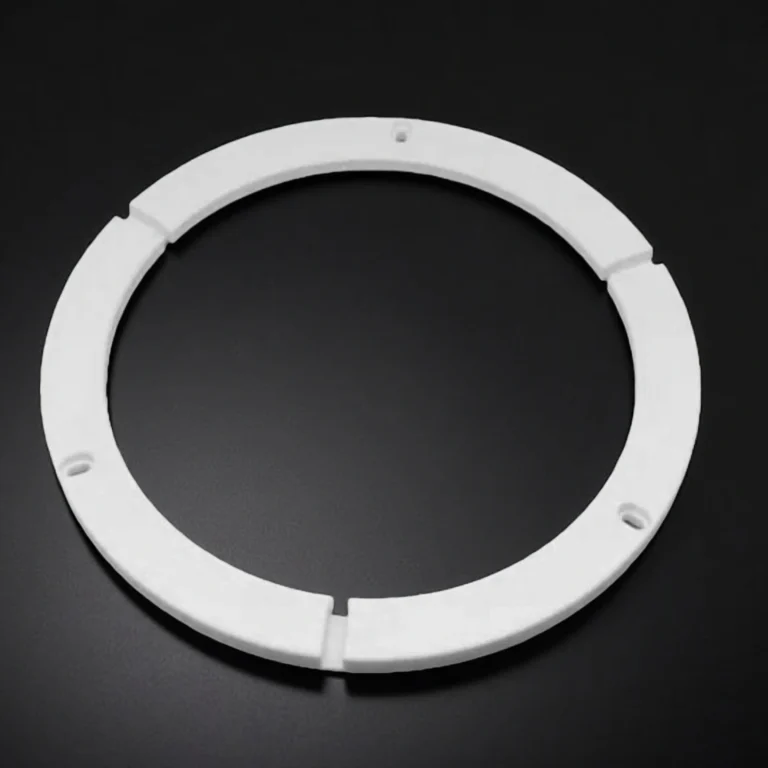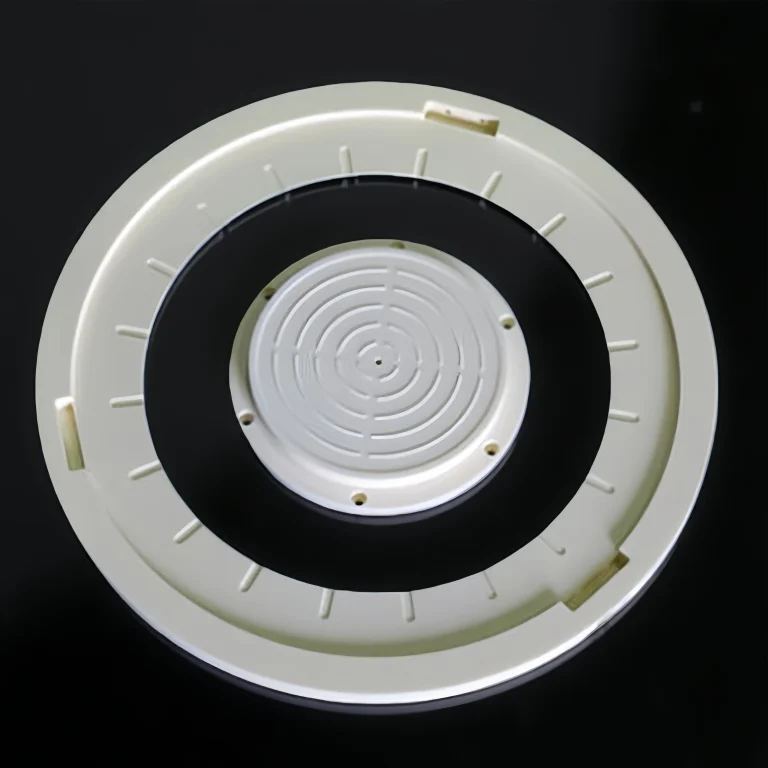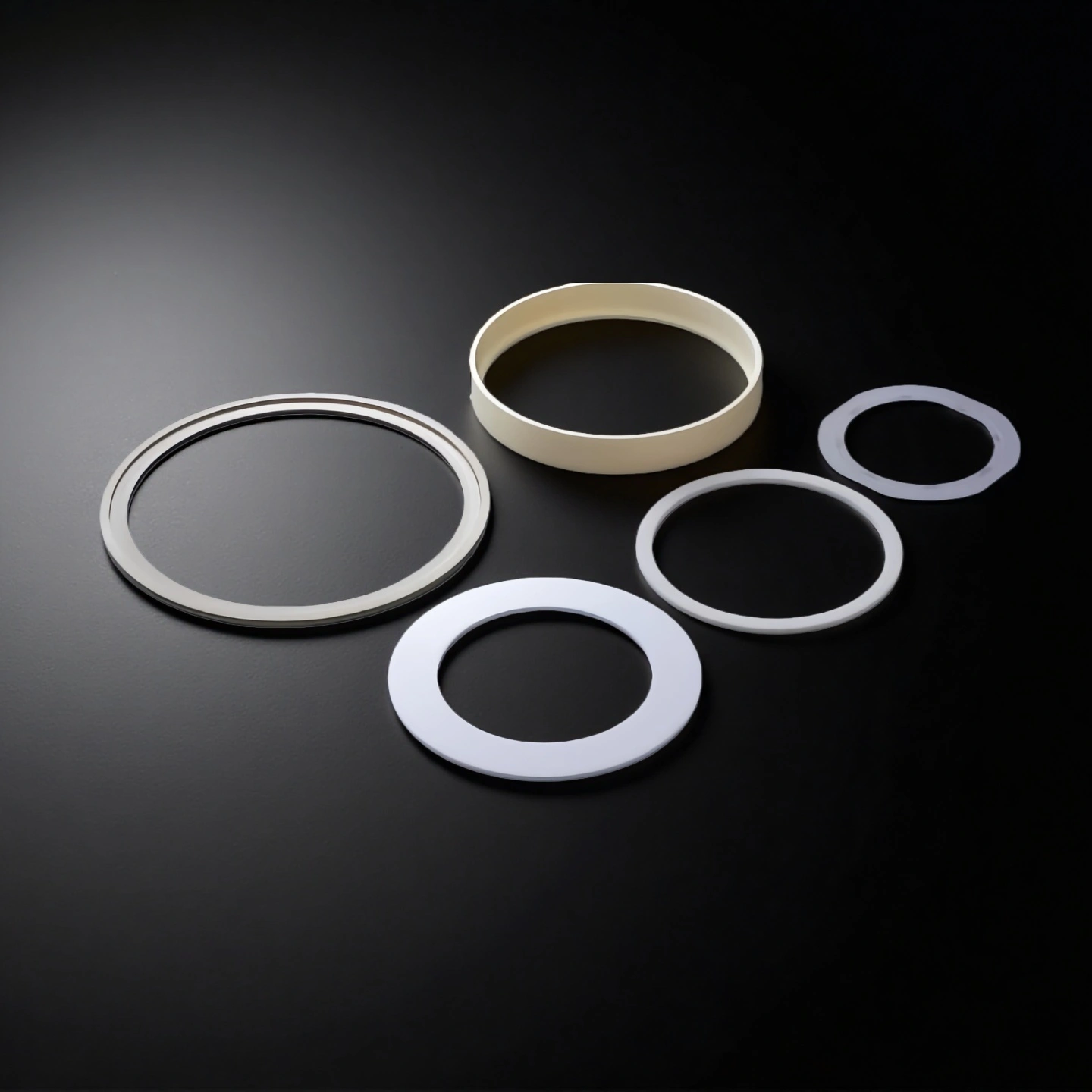
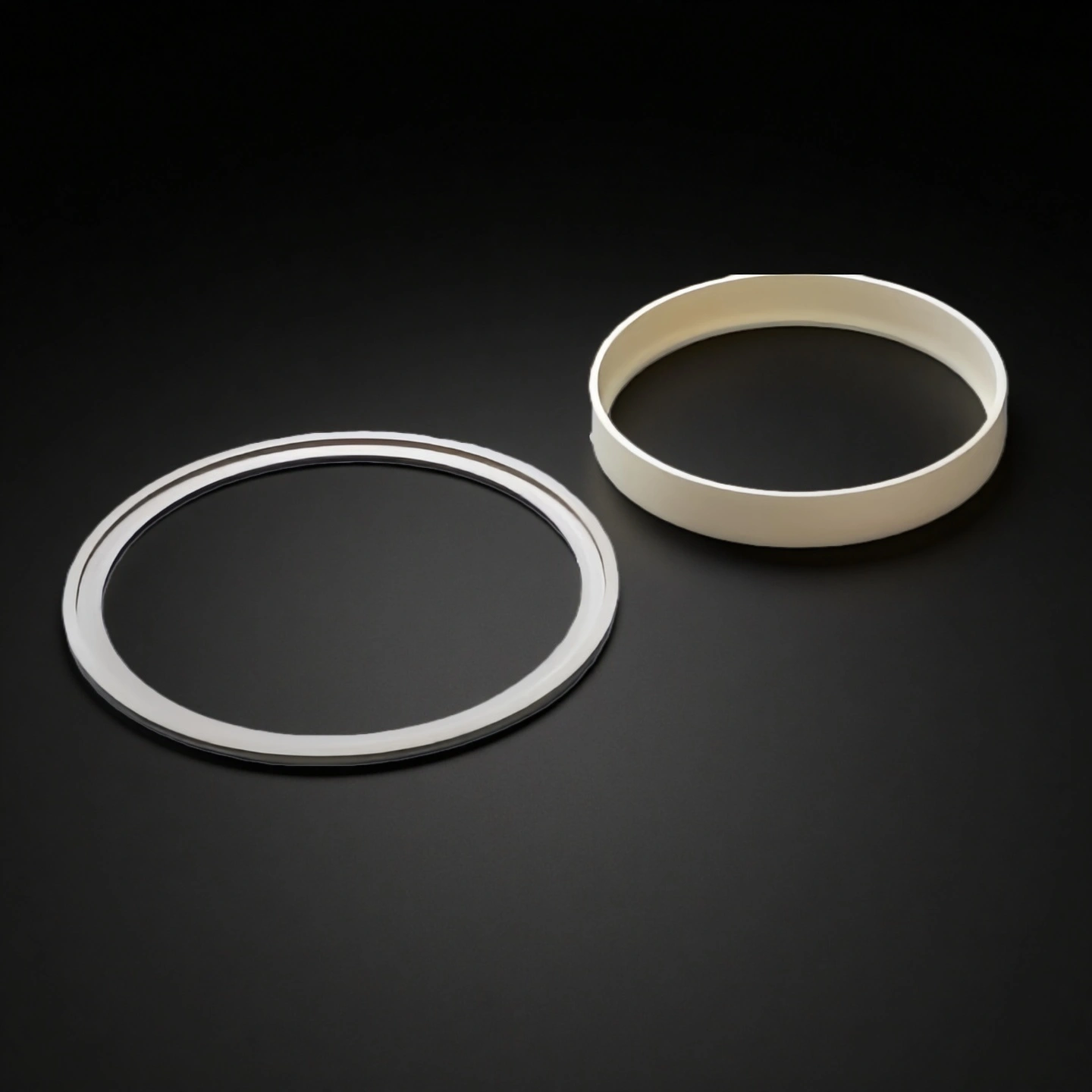
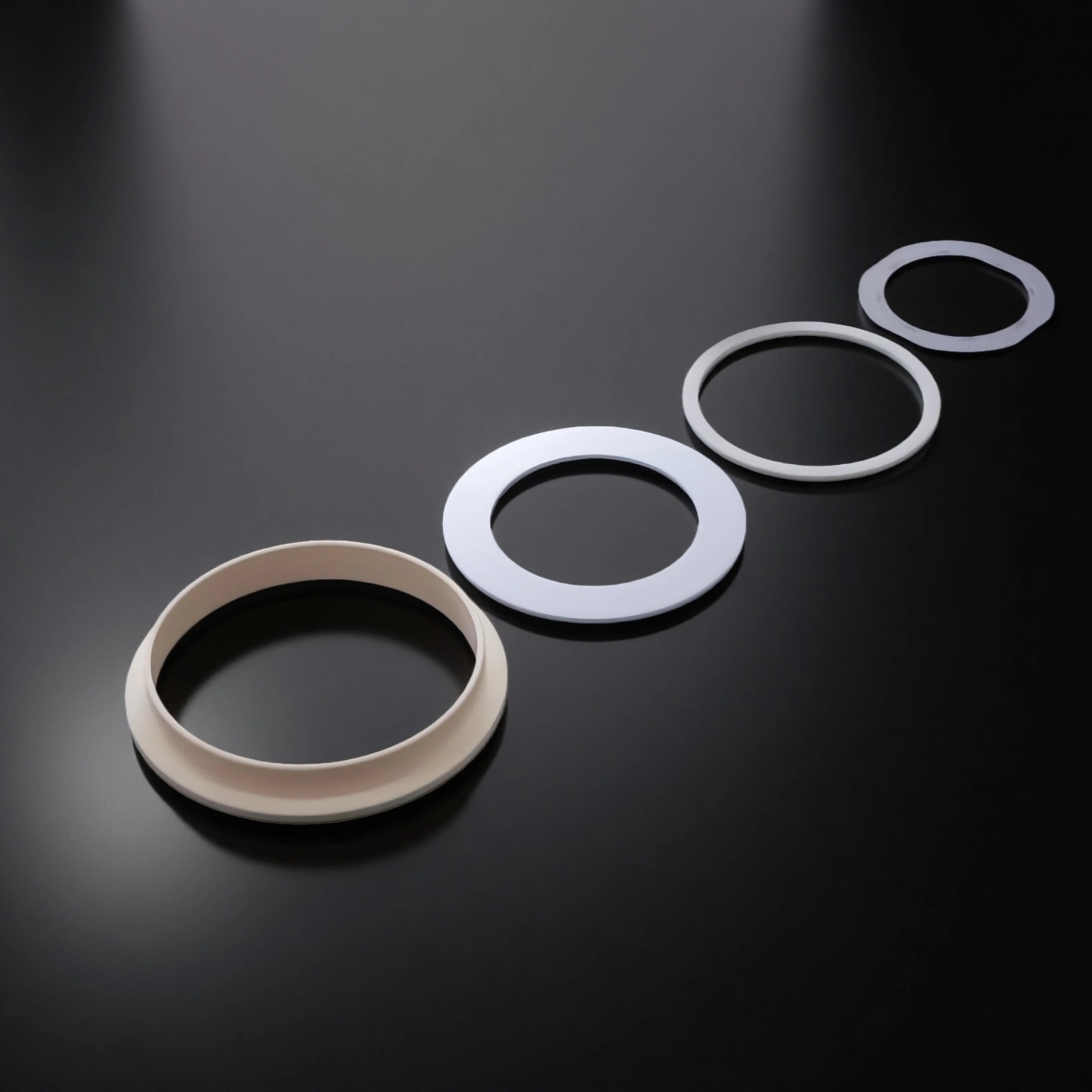
A High Purity Alumina Ceramic Focus Ring is a precision-machined ceramic ring installed around the active process area inside a vacuum plasma or coating chamber to control edge conditions and protect surrounding hardware. By setting a defined boundary for the plasma or deposition zone.
High Purity Alumina Ceramic Focus Ring Benefits
-
Controlled seating geometry: Flatness and parallelism targets are held within the agreed tolerance band so the high purity ceramic focus ring sits fully supported on the chamber seat, reducing rocking, uneven clamp load and distortion during thermal cycling.
-
Engineered edge protection: Defined chamfers or radii on inner and outer edges limit micro-chipping during handling and installation, helping the ring survive repeated tool opens and rebuilds without generating loose fragments.
-
Surface zoning option: Smooth functional faces and optional textured capture zones can be specified on the same focus ring so that critical sealing or seating areas remain clean while peripheral regions are better able to retain deposits and reduce particle return.
-
Predictable wear locations: Ring cross-section, step height and surface finish can be designed so that erosion is concentrated in expected high-flux zones near the inner or outer edge, making wear patterns easier to monitor and replacement timing easier to plan.
-
Repeatable rebuild compatibility: Consistent control of OD/ID, height and key feature dimensions from batch to batch allows the high purity ceramic focus ring to be swapped during refurb cycles without re-tuning hardware, simplifying spares planning and chamber qualification.
Machinable Glass Ceramic Ring Properties
| Machinable Glass Ceramic Physical Properties | ||
| Property | Typical value | Notes |
| Purity | ≥ 99.9 % | Some grades can reach 99.99 % |
| Density | 2.5–2.6 g/cm³ | Archimedes method |
| Open porosity | ≤ 0.07 % | Effectively non-porous |
| Water absorption | 0 % | No measurable uptake |
| Colour | White | Clean, uniform appearance |
| Hardness (Mohs) | 4–5 (up to 6–7) | Depending on grade |
| Machinable Glass Ceramic Thermal Properties | ||
| Property | Typical value | Notes |
| Coefficient of thermal expansion (CTE) | 72 × 10⁻⁷ /°C | Average from −50 to 200 °C |
| CTE 25–300 °C | 90 × 10⁻⁷ /°C | For design over mid-range temperatures |
| CTE 25–600 °C | 112 × 10⁻⁷ /°C | |
| CTE 25–800 °C | 123 × 10⁻⁷ /°C | |
| Thermal conductivity | 1.7 W/m·K | At 25 °C |
| Continuous use temperature | ~800 °C | Long-term service |
| Short-term maximum temperature | ~1000 °C | Depends on load and atmosphere |
| Machinable Glass Ceramic Mechanical Properties | ||
| Property | Typical value | Notes |
| Young’s modulus | ≈ 65 GPa | Room temperature |
| Flexural strength | ≥ 100 MPa | Three-point bending |
| Compressive strength | ≥ 500 MPa | Room temperature |
| Impact resistance | ≥ 2.56 kJ/m² | Indicative value for brittle fracture |
| Poisson’s ratio | ≈ 0.29 | |
| Shear modulus | ≈ 25 GPa | Derived from E and ν |
| Machinable Glass Ceramic Electrical Properties | ||
| Property | Typical value | Notes |
| Dielectric constant (1 kHz) | 6–7 | 25 °C |
| Dielectric loss (tan δ, 1 kHz) | 1–4 × 10⁻³ | 25 °C |
| Dielectric strength | > 40 kV/mm | Sample thickness 1 mm |
| Volume resistivity @ 25 °C | ≈ 1.0 × 10¹⁶ Ω·cm | High insulation level |
| Volume resistivity @ 200 °C | ≈ 1.5 × 10¹² Ω·cm | |
| Volume resistivity @ 500 °C | ≈ 1.1 × 10⁹ Ω·cm | |
High Purity Alumina Focus Ring Specifications
| High Purity Focus Ring | ||
| Item No. | Diameter (mm) | Thickness (mm) |
| AT-HP-YJH01 | Customize | |
High Purity Alumina Focus Ring Packaging
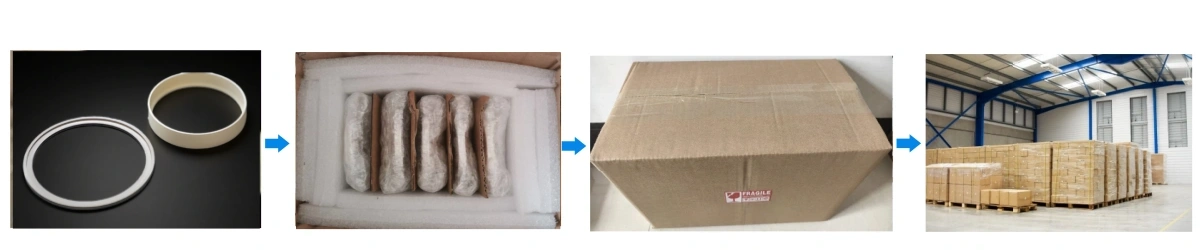
- Clean wrap: ring is wrapped with clean film + soft interlayer to prevent face scratches.
- Shock protection: foam cutout supports ID/OD to avoid edge impact during transit.