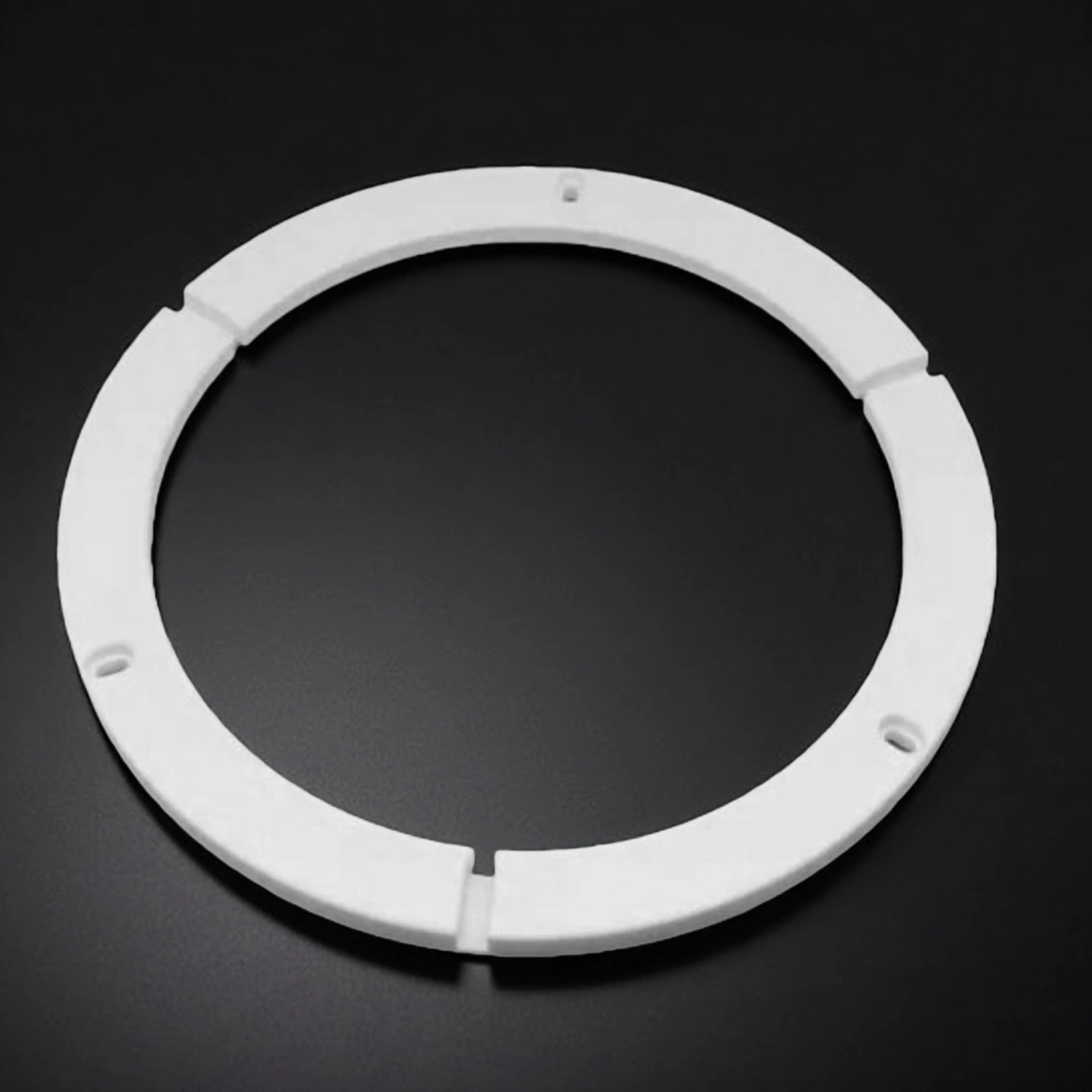
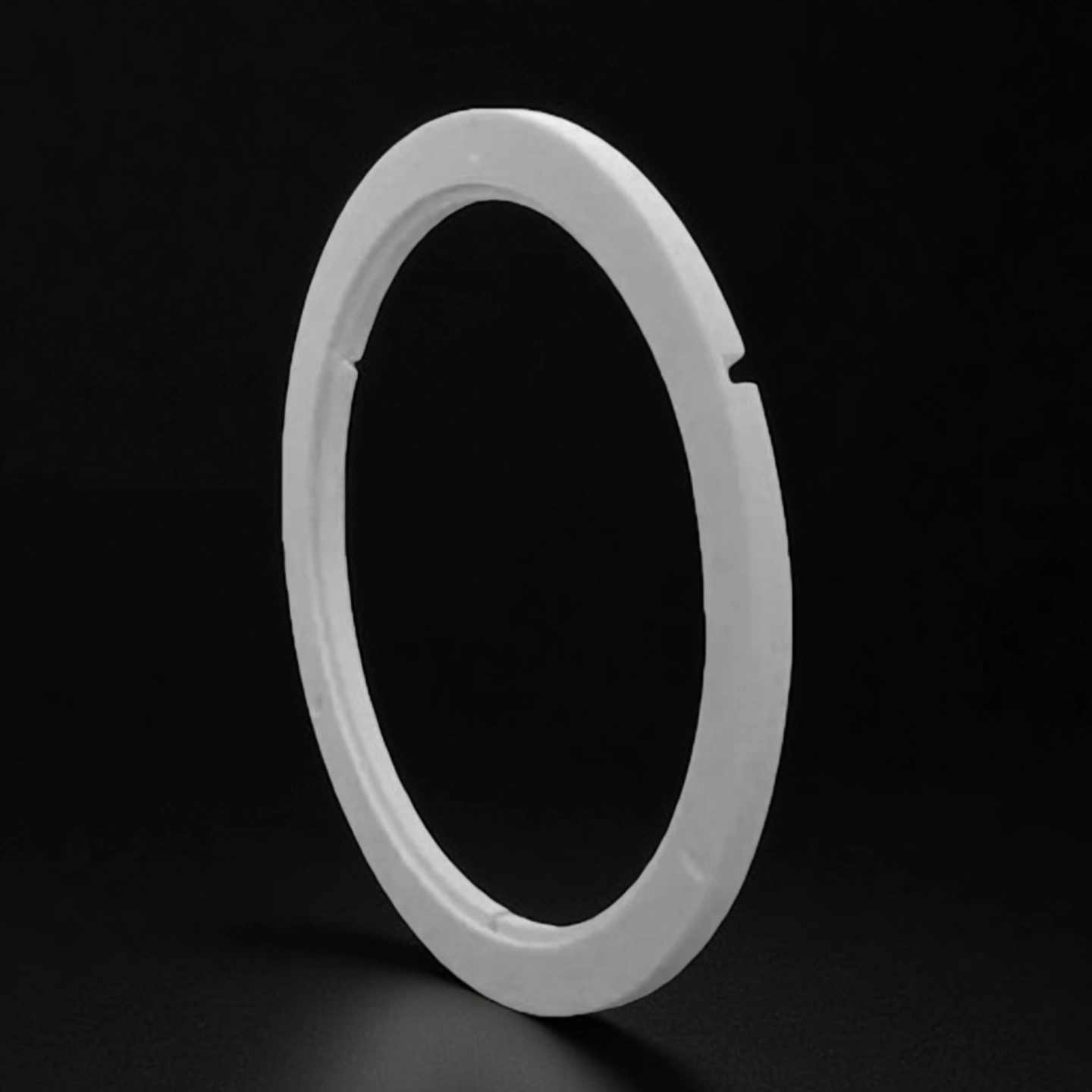
High Purity Alumina Edge Ring for Plasma Boundary Control in Vacuum Chambers

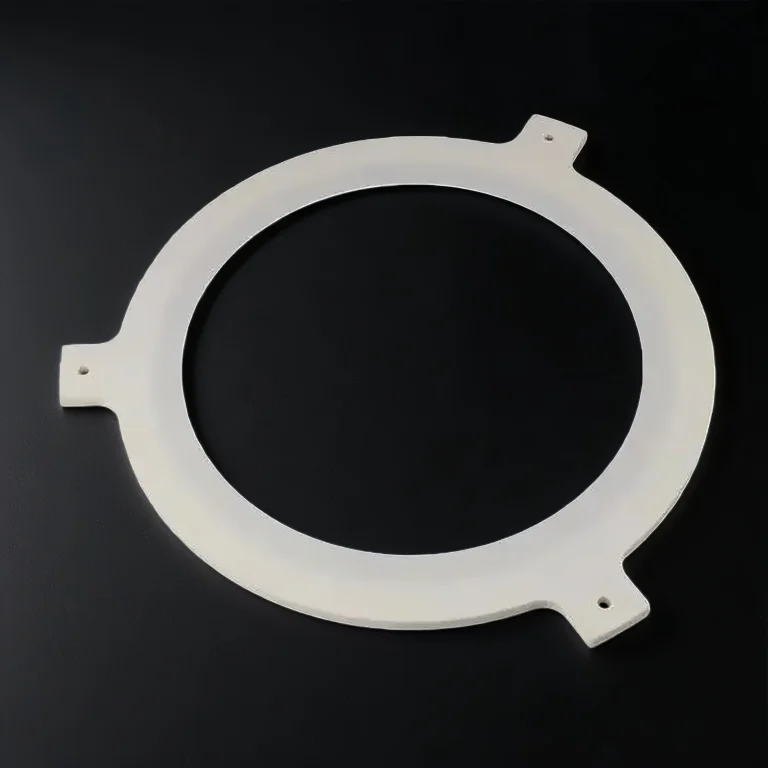
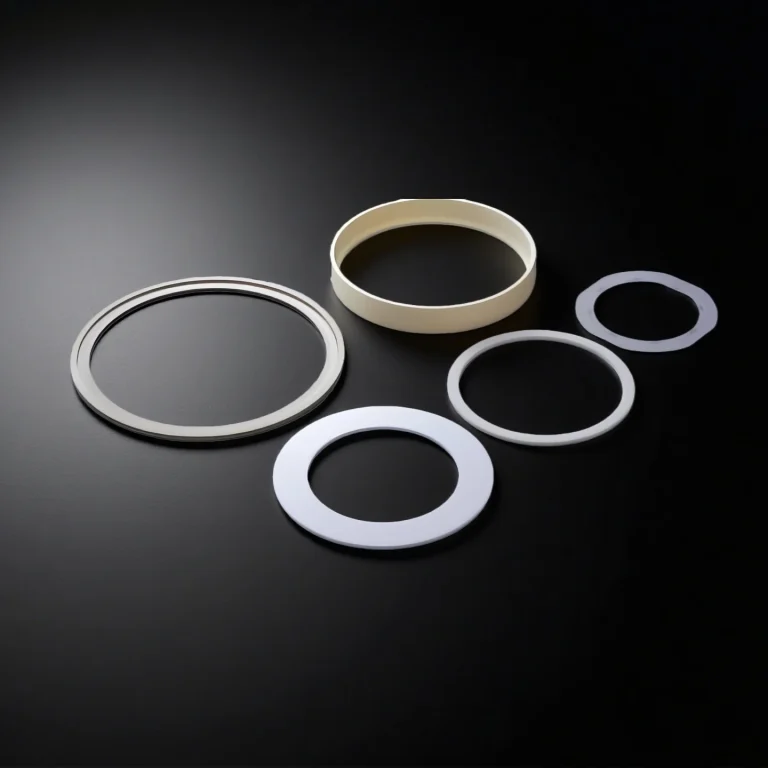
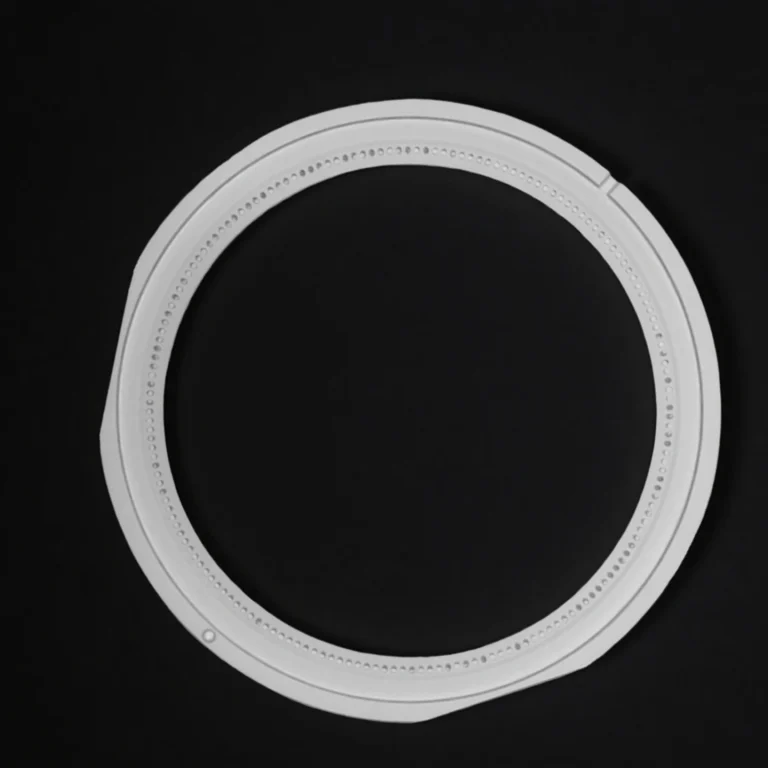
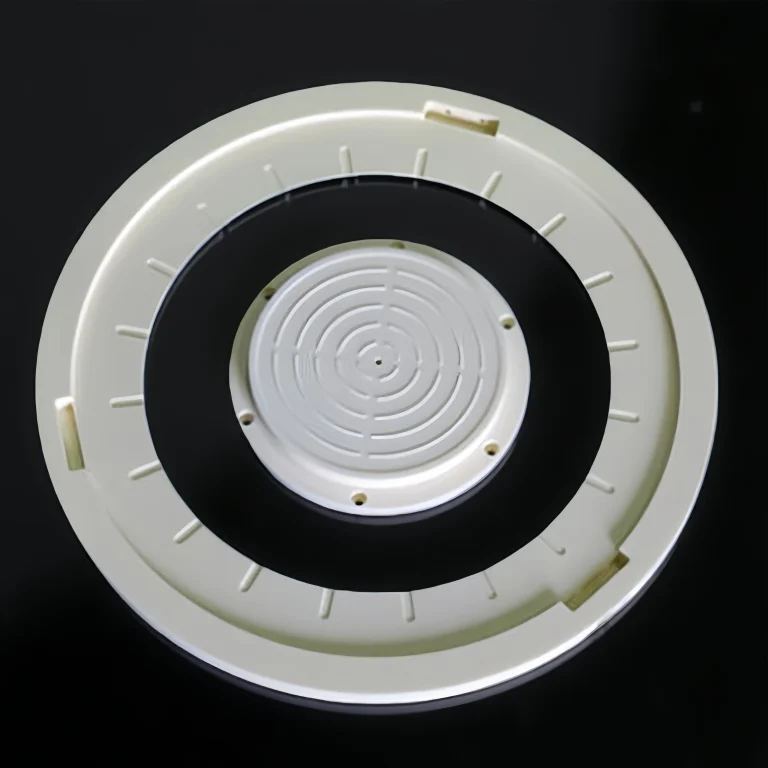
ADCERAX supplies High Purity Alumina Edge Rings in common chamber-fit ranges and manufactures custom rings from drawings or samples, including interface steps, notches, and controlled edge geometry for your specific chamber layout.

Catalogue No. AT-HP-YH01
Material Al₂O₃
Purity  99%-99.99%
Volume Resistivity ≥ 10¹⁴ Ω·cm
Bulk Density 3.98 g/cm³
24H Standard Dispatch
Small Batch Support OEM
Factory Direct
Expert Engineering Support

A High Purity Alumina Edge Ring is a dense, high-purity Al₂O₃ ceramic ring installed inside plasma or vacuum process chambers to define the process boundary, protect nearby hardware, and stabilize edge-zone behavior by using controlled ring geometry (OD/ID, steps, chamfers, radii) and dielectric isolation.


High Purity Alumina Edge Ring Benefits

  • Boundary-geometry control: engineered chamfer/radius/step profiles define a stable edge-zone boundary, helping keep the active plasma region where the chamber design intends. A controlled edge profile also reduces sensitivity to small assembly differences between maintenance cycles, so edge behavior stays repeatable after rebuilds.

  • Dense body for stability: a high-density alumina body supports consistent mechanical integrity under repeated clamp/seat cycles and thermal cycling typical of vacuum process tools. Dense structure helps lower the risk of micro-chipping at edges and contact faces, which is critical for parts that are frequently removed and reinstalled.

  • Dielectric isolation by design: high volume resistivity supports electrical stability around the edge-zone region, which is important when the ring sits near powered components or field gradients. Consistent dielectric behaviour helps reduce unintended coupling changes after part replacement, improving process repeatability without re-tuning the chamber every time.

  • Low damage risk edges: controlled edge finish (defined corner-break, chamfer, and deburring) reduces chip initiation during handling, installation, and cleaning. This is especially valuable for thin lip features or stepped designs, where sharp corners can crack under point contact during maintenance.

  • Fit-critical interface control: OD/ID and seating features are treated as functional interfaces, not just dimensions. Tight control of datums, concentricity, and contact-face condition helps the ring seat without rocking, maintains alignment with adjacent shields or fixtures, and reduces the chance of uneven wear patterns over time.

  • Plasma exposure performance reference: for chlorine-based plasma environments, the ring can be specified toward low corrosion-rate targets (example: < 0.1 μm/h in Cl₂ plasma), with final suitability confirmed against the actual chamber recipe and duty cycle. This approach helps buyers translate “material choice” into a measurable wear expectation for planned maintenance intervals.

  • Contamination-aware material selection: a high-purity Al₂O₃ edge ring is often chosen when teams want to minimize process-side contamination risk and keep chamber chemistry more predictable. This matters most in applications where surface deposits and chamber wall conditions strongly influence edge-zone drift and cleaning frequency.

High Purity Alumina Edge Ring Properties

Property Unit 99.5% Al₂O₃ 99.6% Al₂O₃ 99.7% Al₂O₃ 99.8% Al₂O₃ 99.9% Al₂O₃ 99.99% Al₂O₃
Alumina content % 99.5 99.6 99.7 99.8 99.9 99.99
Density g/cm³ 3.89 3.91 3.92 3.93 3.94 3.98
Open porosity % 0
Color Ivory Ivory Ivory Ivory Ivory Ivory
Water absorption % 0 0 0 0 0
Young’s modulus (Elastic modulus) GPa 375 356 357 358 359 362
Shear modulus GPa 152
Bulk modulus GPa 228
Poisson’s ratio 0.22
Compressive strength MPa 2600 2552 2554 2556 2558 2570
Flexural strength MPa 379 312 313 314 315 320
Fracture toughness MPa·m¹ᐟ² 4
Hardness GPa 14.1 (≈1440 kg/mm²) 23 24 25 26 30
Thermal conductivity W/m·K 35 32–37 33–38 34–39 35–40 36–42
Thermal shock resistance ΔT °C 222 223 224 225 228
Maximum use temperature (no load) °C ≤1750 1755 1760 1765 1770 1800
Coefficient of thermal expansion 10⁻⁶/°C 8.4
Specific heat J/kg·K 880
Volume resistivity Ω·cm >1×10¹⁴ >1×10¹⁴ >1×10¹⁴ >1×10¹⁴ >1×10¹⁴ >1×10¹⁴
Dielectric constant (relative permittivity) 9.8 9.83 9.84 9.85 9.86 9.92
Dielectric strength kV/mm 16.9 23.2 23.4 23.6 23.8 24
Dissipation factor (loss factor @ 1 kHz) 0.0002


High Purity Alumina Ceramic Edge Ring Specifications

High Purity Alumina Edge Ring
Item No. Diameter (mm) Thickness (mm)
AT-HP-YH01 Customize


High Purity Alumina Edge Ring Packaging

  • Clean protection: each ring is wrapped to prevent surface abrasion and edge impact during transit.
  • Rigid isolation: foam/partitioned inner support keeps rings from contacting each other.
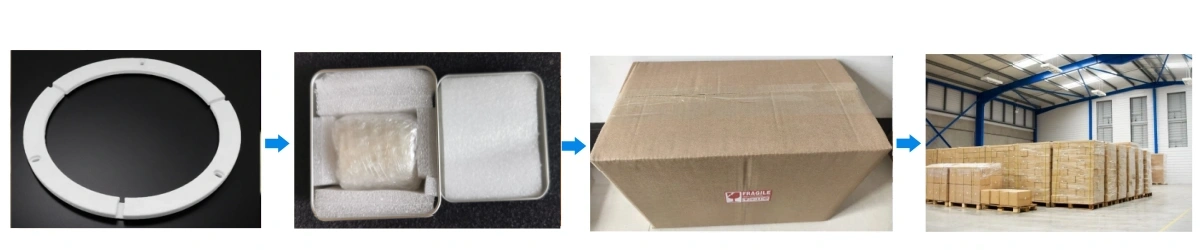
High Purity Alumina Edge Ring Packaging

Application Scenarios — High Purity Alumina Edge Ring

  • Industrial Plasma Cleaning & Surface Treatment Equipment

    ✅Key Advantages

    1. Edge-zone consistency: controlled ring geometry helps keep the active treatment boundary stable around the work zone.

    2. Dielectric stability: ≥ 10¹⁴ Ω·cm resistivity supports electrical isolation near the boundary region.

    3. Durable density: 3.98 g/cm³ density target supports a low-porosity body for repeatable maintenance handling.

    ✅ Problem Solved

    A surface-treatment OEM observed that edge-zone drift increased chamber-side interaction after maintenance reassembly. By switching to a High Purity Alumina Edge Ring specified with controlled chamfer/radius and high resistivity (≥ 10¹⁴ Ω·cm), the OEM stabilized the boundary behavior after repeated installs. The dense ring body (density target 3.98 g/cm³) reduced handling-related micro-chips compared with lower-density alternatives. The engineering team then locked the interface datums and edge geometry in the drawing to keep replacement rings consistent across service cycles.

  • Vacuum Coating Systems (PVD / PECVD) for Tools, Optics, Functional Films

    ✅Key Advantages

    1. Hardware shielding role: the ring helps reduce unnecessary exposure of nearby structures near the process boundary.

    2. Plasma exposure target: can be specified toward low corrosion-rate requirements (example: < 0.1 μm/h in Cl₂ plasma, recipe-dependent).

    3. Repeatable fit: controlled OD/ID and contact faces reduce rework during chamber rebuilds.

    ✅ Problem Solved

    A coating integrator faced recurring rebuild variability because replacement rings came with inconsistent edge break and contact-face quality. The customer moved to a drawing-defined High Purity Alumina Edge Ring with explicit flatness/parallelism callouts and a controlled corner-break. Using the high-purity, high-resistivity spec as a baseline (99.99% Al₂O₃, ≥ 10¹⁴ Ω·cm) improved repeatability in assembly checks. For chlorine-based processes, the customer required a low corrosion-rate target (example < 0.1 μm/h under their recipe) to keep ring wear predictable across planned maintenance.

  • R&D Vacuum/Plasma Systems and Pilot Lines (universities, institutes, corporate labs)

    ✅Key Advantages

    1. Fast iteration geometry: easy to request multiple edge profiles (radius/chamfer/step) for controlled experiments.

    2. Electrical isolation baseline: high resistivity spec supports stable test conditions across runs.

    3. Low-porosity body target: density target helps minimize variability from micro-porosity effects.

    ✅ Problem Solved

    A pilot lab needed a consistent boundary component to compare plasma settings across multiple weeks of testing. The lab standardized on a High Purity Alumina Edge Ring specification with fixed datums and edge geometry, then ordered two geometry variants for A/B process trials. The high resistivity spec (≥ 10¹⁴ Ω·cm) reduced electrical variability in the boundary region, while the density target (3.98 g/cm³) supported a stable ceramic body for repeated handling. This reduced rework time and improved cross-run comparability without changing the rest of the chamber hardware.

User Guide — High Purity Alumina Edge Ring

  • Pre-installation checks

    1. Confirm that the High Purity Alumina Edge Ring part number and drawing revision match your current chamber configuration.
    2. Inspect the ring visually under good light for shipping damage, edge chips, or visible cracks, especially at steps and contact faces.
    3. Verify OD/ID, height, and key interface features (notches, steps, pockets) against the drawing or a reference gauge.
    4. Clean the chamber seating surface and adjacent hardware to remove particles, flakes, and metal burrs before installing the new ring.

  • Installation steps

    1. Wear clean gloves and hold the edge ring by non-critical faces to avoid loading stress on sharp features.
    2. Place the ring gently onto the seating surface, aligning notches, keyways, or orientation marks with the chamber reference points.
    3. Check that the ring sits flat without rocking; if rocking occurs, inspect for trapped debris or burrs on the seating face.
    4. If clamps or retainers are used, tighten them evenly in a cross pattern so that the load is distributed and no local bending is introduced into the ceramic.
    5. Record installation date, ring serial or batch ID, and chamber ID in your maintenance log for lifetime tracking.

  • Use in process

    1. After installing a High Purity Alumina Edge Ring, run your normal conditioning step if your recipe requires it, and note any baseline values (pressure, power, uniformity data).
    2. Monitor edge-zone performance and wall deposition behaviour over several runs to confirm that the new ring geometry matches expectations.
    3. If you change process gases or duty cycle, review your expected wear interval for the edge ring and adjust inspection frequency accordingly.

  • Routine inspection and preventive maintenance

    1. Inspect the ring at each planned chamber for:
    a. edge chips or cracks at contact faces and step transitions,
    b. uneven erosion or grooving in the process-facing region,
    c. build-up that may interfere with seating or fixture contact.
    2. Replace the High Purity Alumina Edge Ring if cracks are visible, if chips exceed your internal chip size limit, or if erosion has reached your defined wear limit.
    3. Keep a simple record of “runs per ring” or “hours per ring” to build a practical replacement interval and avoid unplanned stoppages.

  • Storage recommendations

    1. Store spare High Purity Alumina Edge Rings in their original inner packaging or in dedicated trays with padded separators.
    2. Keep cartons in a dry, dust-controlled area away from heavy vibration and direct impact risk.
    3. Do not stack loose rings directly on each other; always separate them with soft layers to protect edges and contact faces.

  • Cleaning guidelines

    1. Use a compatible non-abrasive cleaner and lint-free wipes or soft pads on the process-facing surfaces.
    2. Avoid metal tools or hard scrapers on edges and steps; if mechanical scraping is necessary, control the force and work away from critical corners.
    3. After cleaning, rinse and dry fully before reinstallation to prevent residue from affecting seating and contact resistance.
    4. If your facility uses a defined cleaning protocol, qualify the High Purity Alumina Edge Ring within that procedure and document any special precautions.

FAQ — High Purity Alumina Edge Ring

  1. Q: What is a High Purity Alumina Edge Ring used for in a plasma chamber?
    A: It is used to define the process boundary, protect nearby hardware, and stabilize edge-zone behavior through controlled dielectric ceramic geometry.
  2. Q: How do I choose between a High Purity Alumina Edge Ring and a focus ring?
    A: An edge ring is typically specified for boundary definition and protection around the perimeter, while a focus ring is often tuned for edge-zone uniformity control; many chambers use one as the primary boundary component depending on layout.
  3. Q: Which drawing dimensions matter most for a High Purity Alumina Edge Ring fit?
    A: OD/ID, height, step features, critical contact-face datums, and any notch/alignment features matter most because they define how the ring seats and orients.
  4. Q: Can the High Purity Alumina Edge Ring be made to match an existing ring sample?
    A: Yes. You can provide a sample ring for dimensional mapping and then lock the critical interface datums and edge geometry in a controlled drawing.
  5. Q: How do I reduce chipping risk when replacing a High Purity Alumina Edge Ring?
    A: Use controlled corner-break specifications, dedicated trays, clean seating surfaces, and consistent orientation during assembly.

High Purity Alumina Ceramic Edge Ring Reviews

  • ⭐️⭐️⭐️⭐️⭐️
    We replaced our previous ceramic edge ring with the High Purity Alumina Edge Ring spec and the seating fit was consistent across two rebuilds. The controlled chamfer made handling easier and reduced small edge chips during installation.
    -- Michael R. | Maintenance Manager | Vacuum Coating Job Shop (Italy)
  • ⭐️⭐️⭐️⭐️⭐️
    ADCERAX quoted the High Purity Alumina Edge Ring from our drawing and kept the critical step features consistent. Pricing was workable for a spare-parts program, and the inspection points matched our datum scheme.
    -- Sophie L. | Supply Chain Lead | Industrial Plasma Equipment OEM (USA)
  • ⭐️⭐️⭐️⭐️⭐️
    The High Purity Alumina Edge Ring resistivity spec helped us keep boundary behaviour stable after maintenance. We also requested a second edge geometry option for comparison runs, and the differences were easy to validate.
    -- Daniel K. | Process Engineer | Surface Treatment System Integrator (Germany)
  • ⭐️⭐️⭐️⭐️⭐️
    Our customers ask for ceramic edge ring replacements with tight fit requirements. The custom High Purity Alumina Edge Ring versions we ordered matched the interface without rework, which reduced returns.
    -- Jason T. | Engineering Manager | Vacuum System Parts Distributor (Canada)
customize size

Custom High Purity Alumina Edge Ring

If you are specifying a High Purity Alumina Edge Ring, the customization is usually focused on interface fit and edge-zone geometry. Typical drawing items include:

  • OD / ID / Height: ring envelope dimensions, plus any max/min constraints from your chamber clearance.
  • Interface datums: define Datum A/B/C (seating face, ID/OD, and reference notch) to lock repeatable installation orientation.
  • Step features: step width/height, multi-step profiles, landing faces, and step-to-datum distances (critical for chamber fit and boundary position).
  • Edge geometry: chamfer size, edge radius, corner-break definition (e.g., “0.2–0.5 mm” controlled break) and transition zones for stepped edges.
  • Contact faces: seating-face width, sealing/contact face definition, and whether faces require grinding vs. as-sintered + finish machining.
  • Flatness & parallelism: targets for contact faces and step landings, including which face is the functional reference for assembly.
  • Concentricity/runout: between OD/ID and critical faces, plus runout limits relative to the seating datum for stable rotation/centering.
  • Roundness/cylindricity: OD/ID form tolerances when the ring interfaces with centering or alignment features.
  • Wall thickness limits: minimum section thickness at lips/steps and maximum thickness limits for thermal mass constraints.
  • Notches & keyways: quantity, angular position, width/depth, and datum reference (orientation features, alignment, sensor clearances).
  • Slots/reliefs/pockets: hardware clearance cutouts, weight-reduction pockets, vent paths, and anti-interference reliefs.
  • Through-holes / threaded features (if allowed): hole location and countersink/counterbore details (only if your chamber design permits ceramic holes).
  • Edge protection zones: “no sharp edges” regions, protected handling zones, and areas where micro-chips are unacceptable.
  • Surface finish zones: Ra targets on contact faces vs non-contact faces, plus “process-facing surface” requirements if applicable.
  • Surface condition options: as-fired / fine-machined / ground / lapped areas (specify which surfaces require each condition).
  • Deburring & chip criteria: allowable chip size limits at edges and steps, plus inspection criteria for edge integrity.

Related Products

ADCERAX - Your Trusted Advanced Ceramics Manufacturing Partner

Direct factory manufacturing with comprehensive ceramic materials expertise and global supply capabilities

Direct Factory Manufacturing

China-based ceramic materials production facility with state-of-the-art equipment

Engineering Team

Experienced professionals in advanced ceramics applications and custom design

Quality Control

Strict quality control standards for technical ceramics manufacturing and quality management

Global Supply Chain

Serving customers worldwide with technical ceramics and rapid response

24/7 Technical Support

Round-the-clock support for ceramic components inquiries and technical assistance

500+ Satisfied Customers

Trusted by global customers for advanced ceramic materials and precision components

Get in touch with us

Our team will be happy to respond to you in less than 24 hours.

Adcerax's factory

Quick Quotation

*Our team will answer your inquiries within 24 hours.

*Your information will be kept strictly confidential.

Ready to Solve Your Engineering Challenge?

Partner with ADCERAX for reliable, high-performance advanced ceramic solutions. Our engineers are ready to discuss your project.

E-mail

info@adcerax.com

Phone

+(86) 0731-74427743 | WhatsApp: +(86) 19311583352

Response Time

Within 24 hours

Quick Quote

The more details you provide, the faster we can quote.

*We respond within 24 hours. All inquiries are confidential.

Download Catalog

Get Your Custom Sulution

The more details you provide, the faster we can respond.

customize size

*We respond within 24 hours. All inquiries are confidential.

Download Catalog