Solid PCBN Cutting Tools | Polycrystalline Cubic Boron Nitride Inserts for Hardened Steel & Cast Iron

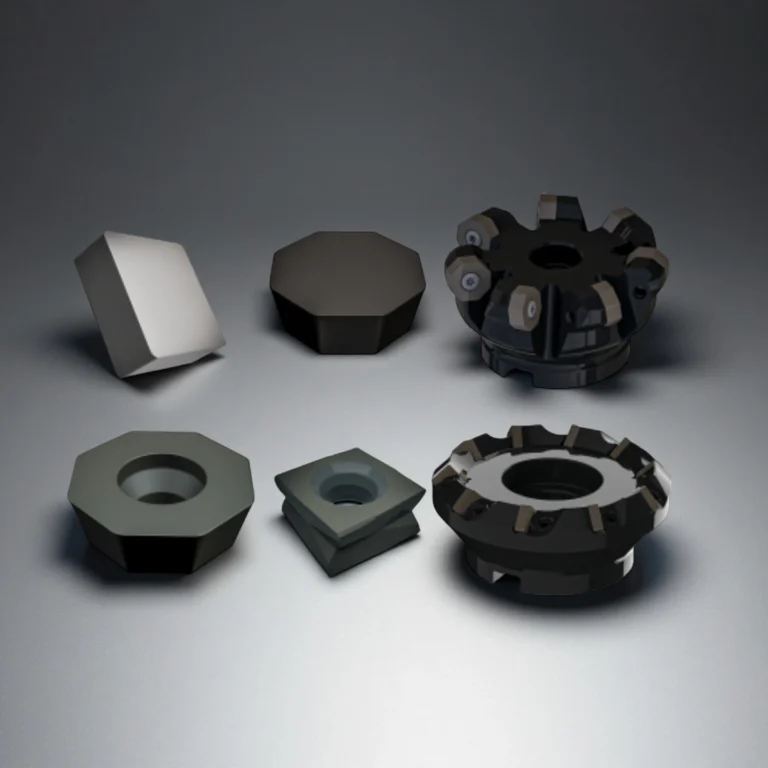
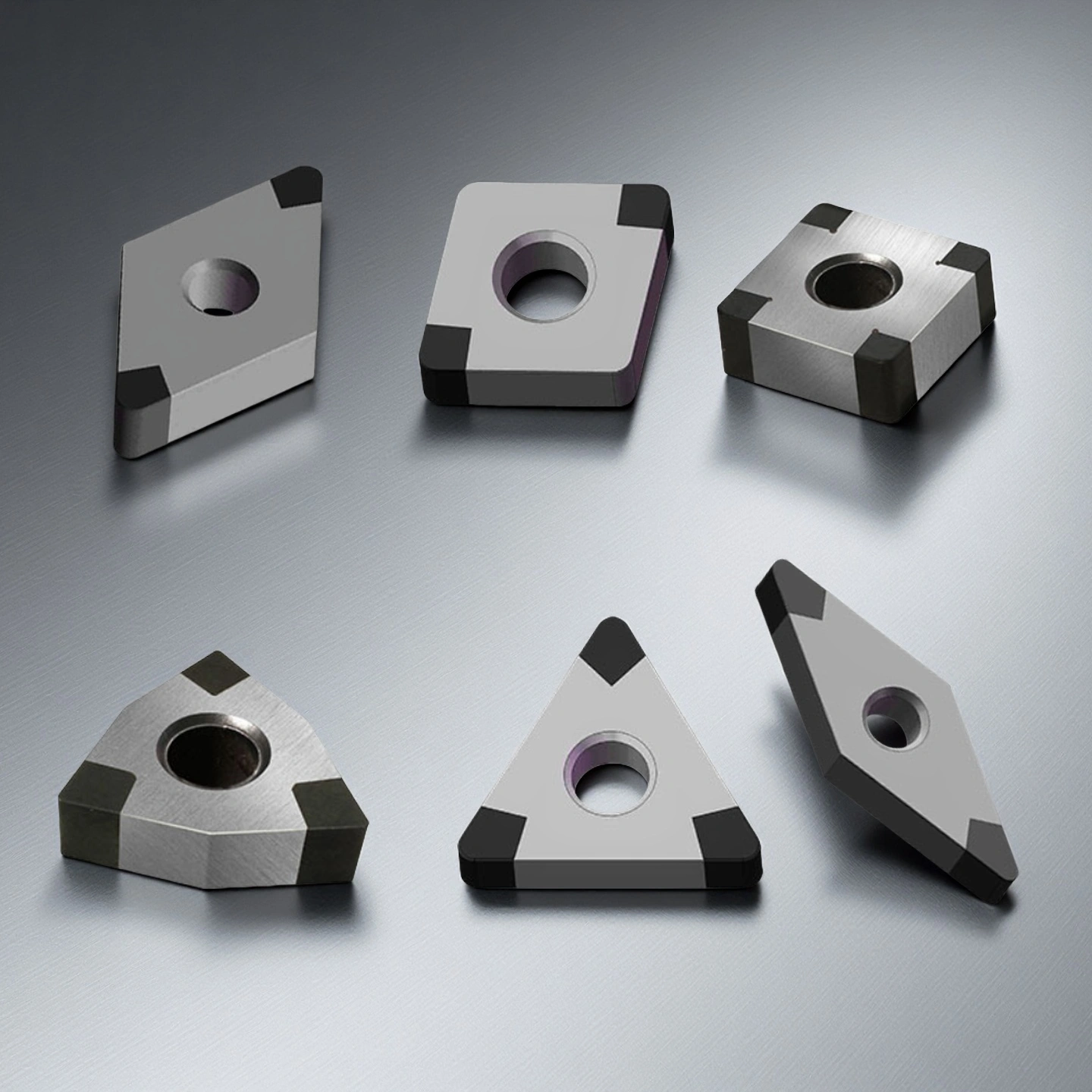
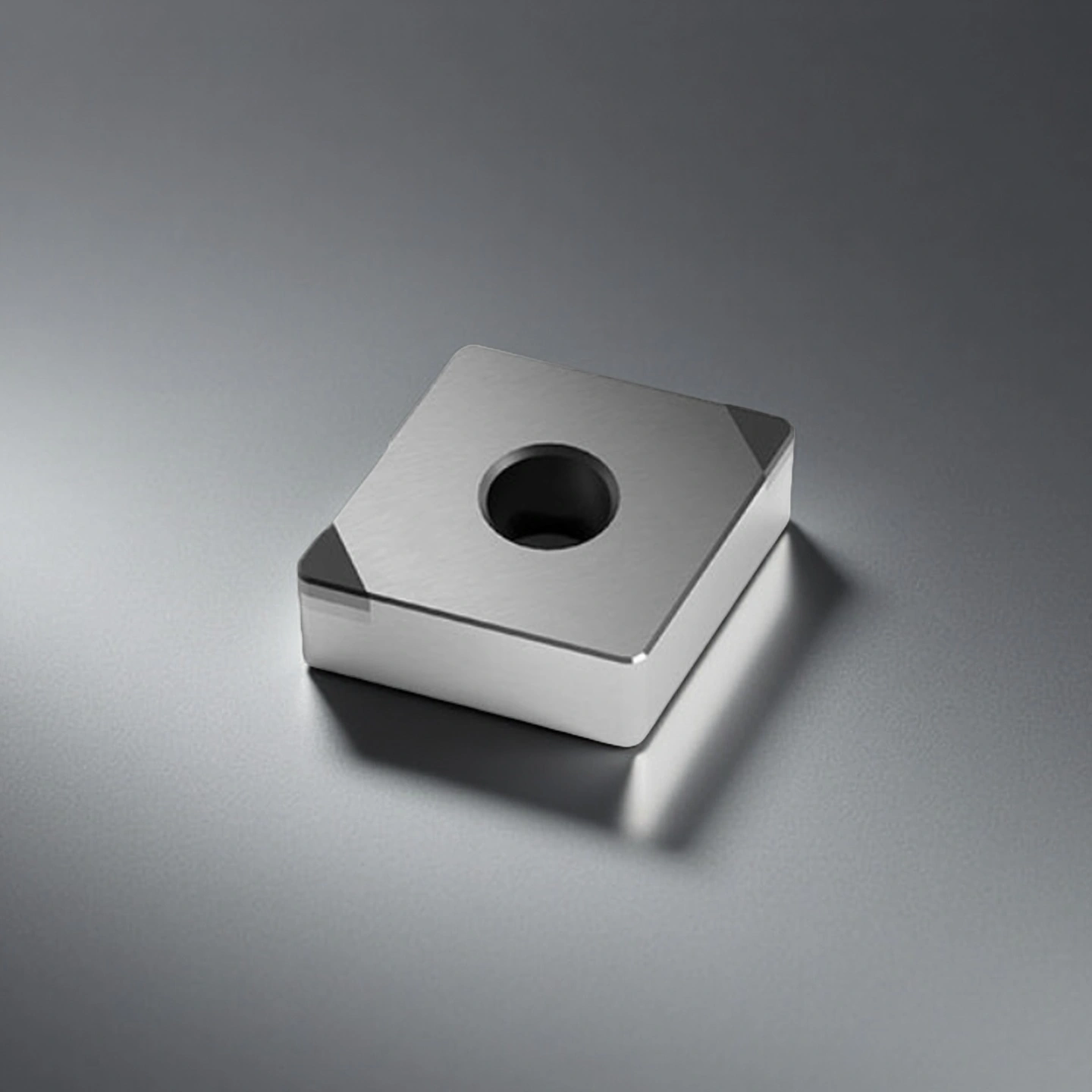
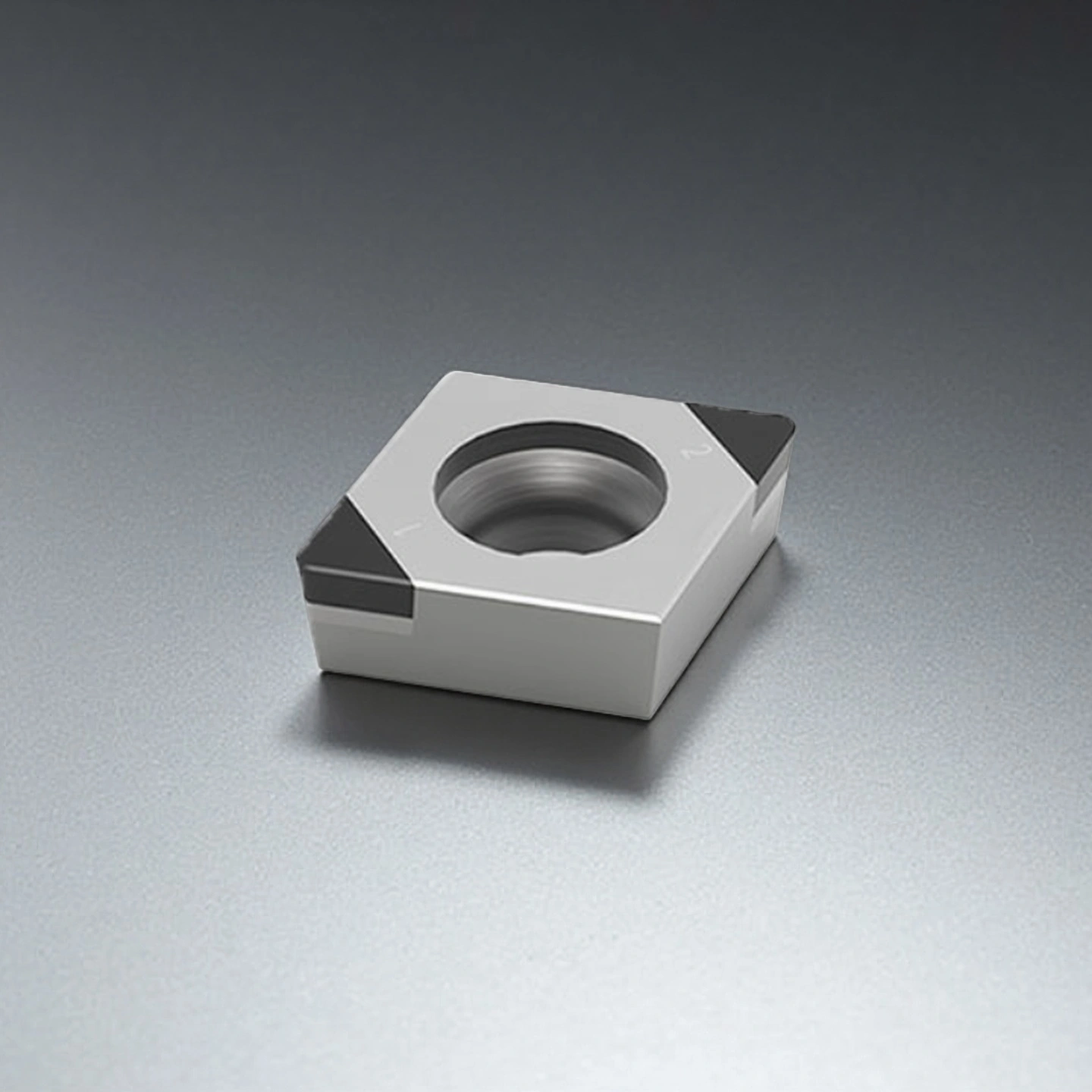
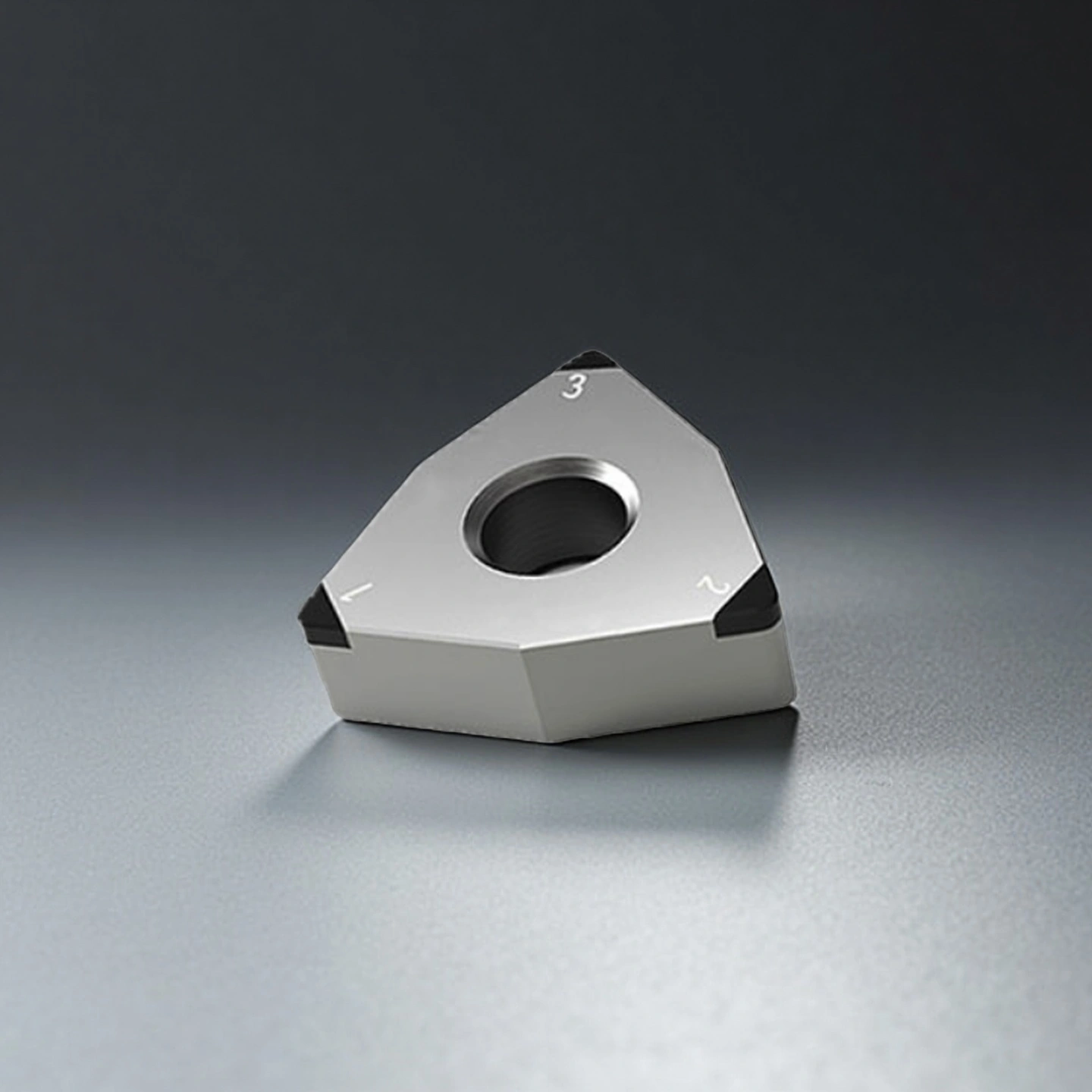
ADCERAX manufactures standard and customized PCBN Cutting Tools in multiple geometries (ISO CNGA, DNGA, SNGA, etc.) and edge preparations for hard turning, finishing, and interrupted cutting. Custom dimensions and brazed or full-CBN grades are available upon request.

Catalogue No. AT-CNGA120402-4N
Material polycrystalline cubic boron nitride
Thermal Stability Up to 1200°C
Density 3.45–3.50 g/cm³
Hardness (Vickers) 45–55 GPa
Dimensions/Sizes Download PDF
24H Standard Dispatch
Small Batch Support OEM
Factory Direct
Expert Engineering Support

PCBN cutting tools are made from polycrystalline cubic boron nitride, a superhard material designed for high-speed precision machining of hardened steels, cast irons, and powder metallurgy components. With exceptional hardness (45–55 GPa), high thermal stability up to 1200 °C, and chemical inertness against ferrous alloys, PCBN tools deliver extended tool life and superior dimensional accuracy in dry or hard-turning applications.

PCBN Cutting Tools Benefits

  • High-Temperature Strength – Maintains stable cutting performance up to 1200 °C, ensuring edge integrity under high-speed, dry machining of HRC 50–70 materials.
  • Chemical Inertness – Non-reactive with Fe, Co, Ni, preventing diffusion wear and built-up edge formation in ferrous alloy machining.
  • Extended Tool Life – Provides 5–10× longer life than carbide inserts, reducing tool change frequency and improving overall process efficiency.
  • Dimensional Accuracy – Edge and chamfer tolerance within ±0.02 mm, achieving IT6–IT7 precision in continuous or interrupted cutting.
  • Superior Surface Finish – Delivers Ra ≤ 0.4 µm on hardened steels and chilled cast iron, with wiper-edge geometry enabling higher feed rates.
  • Thermal Conductivity & Stability – Conductivity of 60–120 W/m·K ensures uniform heat dissipation and prevents thermal cracking during dry or MQL machining.


Polycrystalline Cubic Boron Nitride (PCBN) Cutting Tools Technical Properties

Property Typical Value Range Unit / Description
Crystal Structure Cubic Polycrystalline microstructure
Density 3.43 – 3.48 g/cm³
Vickers Hardness (HV) 45 – 55 GPa (second only to diamond)
Compressive Strength 4.5 – 6.5 GPa
Flexural Strength 0.8 – 1.2 GPa
Fracture Toughness (K₁c) 5 – 7 MPa·m¹ᐟ²
Thermal Conductivity 60 – 130 W/m·K (anisotropic; grade-dependent)
Thermal Expansion Coefficient 4.5 – 5.5 ×10⁻⁶ K⁻¹ (RT–1000 °C)
Thermal Stability (Air) Up to 1200 °C (oxidation threshold)
Electrical Resistivity 10⁶ – 10⁸ Ω·cm
Elastic Modulus (Young’s Modulus) 750 – 900 GPa
Poisson’s Ratio 0.15 – 0.20
Chemical Stability Inert to Fe, Co, Ni; reactive to Al at >1000 °C
CBN Content (by volume) 45 % – 95 % Adjusted for toughness or wear resistance
Working Temperature (inert/vacuum) ≤ 1200 °C (continuous cutting)
Typical Tool Life (hard turning) 3 – 10× longer than carbide

PCBN Cutting Tools Specifications

Type 1: PCBN Integral Welding Cutting Tool

PCBN Integral Welding Cutting Tool
Item NO. ISO Standard Designation Cutting Edge Length(mm) Inner Cutting Circle Dia.(mm) Thickness(mm) Bore Diameter(mm) Radius of Cutting Edge Arc(mm)
AT-CNGA120402-4N CNGA120402-4N 12 12.7 4.76 5.15 0.2
AT-CNGA120404-4N CNGA120404-4N 12 12.7 4.76 5.15 0.4
AT-CNGA120408-4N CNGA120408-4N 12 12.7 4.76 5.15 0.8
AT-CNGA120412-4N CNGA120412-4N 12 12.7 4.76 5.15 1.2
AT-DNGA110402-4N DNGA110402-4N 11 9.525 4.76 3.81 0.2
AT-DNGA110404-4N DNGA110404-4N 11 9.525 4.76 3.81 0.4
AT-DNGA110408-4N DNGA110408-4N 11 9.525 4.76 3.81 0.8
AT-DNGA150402-4N DNGA150402-4N 15 12.7 4.76 5.16 0.2
AT-DNGA150404-4N DNGA150404-4N 15 12.7 4.76 5.16 0.4
AT-DNGA150408-4N DNGA150408-4N 15 12.7 4.76 5.16 0.8
AT-DNGA150412-4N DNGA150412-4N 15 12.7 4.76 5.16 1.2
AT-SNGA120402-8N SNGA120402-8N 12 12.7 4.76 5.16 0.2
AT-SNGA120404-8N SNGA120404-8N 12 12.7 4.76 5.16 0.4
AT-SNGA120408-8N SNGA120408-8N 12 12.7 4.76 5.16 0.8
AT-SNGA120412-8N SNGA120412-8N 12 12.7 4.76 5.16 1.2
AT-TNGA160404-6N TNGA160404-6N 16 9.525 4.76 3.81 0.4
AT-TNGA160408-6N TNGA160408-6N 16 9.525 4.76 3.81 0.8
AT-TNGA160412-6N TNGA160412-6N 16 9.525 4.76 3.81 1.2
AT-TNGA220404-6N TNGA220404-6N 22 12.7 4.76 5.16 0.4
AT-TNGA220408-6N TNGA220408-6N 22 12.7 4.76 5.16 0.8
AT-TNGA220412-6N TNGA220412-6N 22 12.7 4.76 5.16 1.2
AT-VNGA160402-4N VNGA160402-4N 16 9.525 4.76 3.81 0.2
AT-VNGA160404-4N VNGA160404-4N 16 9.525 4.76 3.81 0.4
AT-VNGA160408-4N VNGA160408-4N 16 9.525 4.76 3.81 0.8
AT-VNGA160412-4N VNGA160412-4N 16 9.525 4.76 3.81 1.2
AT-WNGA060402-6N WNGA060402-6N 6 9.525 4.76 3.81 0.4
AT-WNGA060404-6N WNGA060404-6N 6 9.525 4.76 3.81 0.8
AT-WNGA060408-6N WNGA060408-6N 6 9.525 4.76 3.81 0.2
AT-WNGA080402-6N WNGA080402-6N 8 12.7 4.76 5.16 0.2
AT-WNGA080404-6N WNGA080404-6N 8 12.7 4.76 5.16 0.4
AT-WNGA080408-6N WNGA080408-6N 8 12.7 4.76 5.16 0.8
AT-WNGA080412-6N WNGA080412-6N 8 12.7 4.76 5.16 1.2


Type 2: PCBN Integral Composite Blades

PCBN Integral Composite Blades
Item NO. ISO Standard Designation Cutting Edge Length(mm) Inner Cutting Circle Dia.(mm) Thickness(mm) Bore Diameter(mm) Radius of Cutting Edge Arc(mm)
AT-CCGW09T302-2N CCGW09T302-2N 9 9.525 3.97 4.4 0.2
AT-CCGW09T304-2N CCGW09T304-2N 9 9.525 3.97 4.4 0.4
AT-CCGW09T308-2N CCGW09T308-2N 9 9.525 3.97 4.4 0.8
AT-CCGW09T312-2N CCGW09T312-2N 9 9.525 3.97 4.4 1.2
AT-CCGW120402-2N CCGW120402-2N 12 12.7 4.76 5.5 0.2
AT-CCGW120404-2N CCGW120404-2N 12 12.7 4.76 5.5 0.4
AT-CCGW120408-2N CCGW120408-2N 12 12.7 4.76 5.5 0.8
AT-CCGW120412-2N CCGW120412-2N 12 12.7 4.76 5.5 1.2
AT-CNGA120402-2N CNGA120402-2N 12 12.7 4.76 5.15 0.2
AT-CNGA120404-2N CNGA120404-2N 12 12.7 4.76 5.15 0.4
AT-CNGA120408-2N CNGA120408-2N 12 12.7 4.76 5.15 0.8
AT-CNGA120412-2N CNGA120412-2N 12 12.7 4.76 5.15 1.2
AT-DCGW070202-2N DCGW070202-2N 7 6.35 2.38 2.8 0.2
AT-DCGW070204-2N DCGW070204-2N 7 6.35 2.38 2.8 0.4
AT-DCGW070208-2N DCGW070208-2N 7 6.35 2.38 2.8 0.8
AT-DCGW11T302-2N DCGW11T302-2N 11 9.525 3.97 4.4 0.2
AT-DCGW11T304-2N DCGW11T304-2N 11 9.525 3.97 4.4 0.4
AT-DCGW11T308-2N DCGW11T308-2N 11 9.525 3.97 4.4 0.8
AT-TCGW0902 TCGW0902 9.6 5.56 2.38 2.5 0.2
AT-TCGW1103 TCGW1103 11 6. 35 3.18 2.8 0.2
AT-TCGW16T302-3N TCGW16T302-3N 16 9.525 3.97 4.4 0.2
AT-TNGA160404-3N TNGA160404-3N 16 9.525 4.76 3.81 0.4
AT-TNGA160408-3N TNGA160408-3N 16 9.525 4.76 3.81 0.8
AT-TNGA160412-3N TNGA160412-3N 16 9.525 4.76 3.81 1.2
AT-TNGA220404-3N TNGA220404-3N 22 12.7 4.76 5.16 0.4
AT-TNGA220408-3N TNGA220408-3N 22 12.7 4.76 5.16 0.8
AT-TNGA220412-3N TNGA220412-3N 22 12.7 4.76 5.16 1.2
AT-WNGA060402-3N WNGA060402-3N 6 9.525 4.76 3.81 0.2
AT-WNGA060404-3N WNGA060404-3N 6 9.525 4.76 3.81 0.4
AT-WNGA060408-3N WNGA060408-3N 6 9.525 4.76 3.81 0.8
AT-WNGA080402-3N WNGA080402-3N 8 12.7 4.76 5.16 0.2
AT-WNGA080404-3N WNGA080404-3N 8 12.7 4.76 5.16 0.4
AT-WNGA080408-3N WNGA080408-3N 8 12.7 4.76 5.16 0.8
AT-WNGA080412-3N WNGA080412-3N 8 12.7 4.76 5.16 1.2


PCBN Cutting Tools Packaging

  • Each insert is individually packed in anti-static plastic boxes with foam protection.
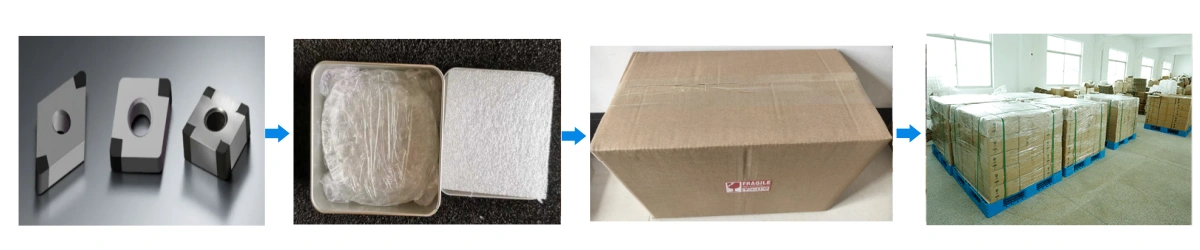
PCBN Cutting Tools Packaging

Applications of PCBN Cutting Tools

  • Automotive Transmission & Gear Manufacturing

    ✅Key Advantages

    1. Enables hard turning of gears (HRC ≥ 60) with consistent surface finish Ra ≤ 0.4 µm, eliminating secondary grinding.
    2. Handles continuous and interrupted cuts in gear flanks, shafts, and synchronizer rings with stable chip control.
    3. Achieves cycle time reduction up to 40 % compared to conventional grinding or ceramic inserts.
    4. Delivers extended tool life of 400–600 pcs per edge under dry cutting at Vc = 180–250 m/min and f = 0.1–0.25 mm/rev.
    5. Maintains uniform cutting forces with minimal thermal deformation, ensuring precise gear tooth geometry.

    ✅ Problem Solved

    A global transmission supplier faced high tool wear and unstable surface integrity in case-hardened gear steels.
    By adopting ADCERAX PCBN inserts (CBN 90 % grade, TiCN binder), they achieved 35 % higher productivity, reduced cycle time by 40 %, and cut annual tool cost by 20 % due to extended tool edge life and elimination of grinding steps.

  • Bearing & Tool Steel Machining

    ✅Key Advantages

    1. Provides exceptional wear resistance for hardened steels such as AISI 52100 (bearing steel), SKD11 (D2 tool steel), and M2 high-speed steel, with minimal flank wear under dry machining.
    2. Maintains edge sharpness and geometry stability at 1200 °C, even in prolonged finishing or light interrupted cuts.
    3. Ideal for achieving IT6–IT7 tolerance levels in inner and outer ring machining with consistent roundness and surface integrity.
    4. Reduces residual stress and improves bearing race fatigue life through smooth surface generation and controlled heat flow.

    ✅ Problem Solved

    In precision bearing races (HRC 62, dry turning), standard ceramic inserts caused micro-chipping and unstable tolerances. After switching to ADCERAX full-PCBN inserts (CBN 95 % with AlN-TiN matrix), dimensional variation was controlled within 3 µm, post-grinding was eliminated, and throughput efficiency improved by 25 %, ensuring consistent precision over multi-shift production cycles.

  • Powder Metallurgy & Cast Iron Components

    ✅Key Advantages

    1. Designed for machining sintered ferrous alloys, chilled cast iron, and Ni–Mo powder metallurgy parts, where conventional carbide fails due to rapid abrasive wear.
    2. Provides stable cutting performance under interrupted contact, thanks to the micro-grain PCBN matrix and TiCN–AlN binder system.
    3. Achieves tool life 6–8× longer than ceramic or Cermet inserts when cutting at Vc 150–230 m/min, maintaining Ra ≤ 0.5 µm and uniform dimensional control.
    4. Supports dry or MQL machining, preventing thermal cracking and oxidation at high-speed finishing conditions.

    ✅ Problem Solved

    A powder metallurgy component supplier experienced severe flank wear and size drift while finishing valve seat rings and oil pump rotors. After replacing coated carbide tools with ADCERAX PCBN inserts (CBN 85 % grade, multi-edge geometry), surface roughness improved from Ra 0.9 µm to 0.4 µm, and tool life increased from 80 pcs to 550 pcs per edge, reducing tool inventory and process downtime by 70 %.

Usage Instructions of PCBN Cutting Tools

  • Installation

    1. Ensure accurate insert seating using clean tool holders and precision clamping; improper seating can cause micro-chipping or vibration.
    2. Verify insert seat flatness within < 0.02 mm and parallelism between toolholder and insert surface before operation.
    3. Avoid direct mechanical impact on PCBN cutting edges; handle inserts with non-metallic tweezers or padded fixtures.
    4. When brazed PCBN tools are used, ensure uniform brazing thickness (≤ 0.05 mm) and no residual stress around the joint area.

  • Operation

    1. Recommended cutting parameters: Vc = 150–250 m/min, f = 0.05–0.25 mm/rev, and ap ≤ 0.5 mm, depending on hardness and work material composition.
    2. Always start at the lower limit of feed and gradually increase to optimize surface finish and tool wear balance.
    3. Coolant usage: avoid thermal shock—operate under dry conditions or MQL with controlled airflow; if coolant is required, maintain a stable flow rate and temperature.
    4. For interrupted cutting, reduce feed by 10–20 % and use positive rake geometries to minimize impact load.
    5. Monitor edge temperature via infrared or thermocouple sensors when machining above 1100 °C to prevent crater wear.

  • Maintenance

    1. Clean inserts using isopropyl alcohol or acetone, then dry with filtered air; never use abrasive cloths or metal brushes.
    2. Store in dry, dust-free, vibration-free environments below 30 °C, ideally with desiccant packs to prevent oxidation of brazed joints.
    3. Before reinstallation, inspect edge wear and micro-fractures under ≥ 20× magnification. Replace if flank wear exceeds 0.15 mm or chipping is visible.
    4. Keep insert boxes properly labeled to track cutting time, workpiece material, and feed conditions for each batch.

  • Common Issues & Solutions

    1. Chipping → Reduce feed or increase chamfer angle (e.g., 0.1 mm × 25°). Check clamping rigidity and toolholder runout (< 0.005 mm).
    2. Built-up Edge (BUE) → Increase cutting speed, apply MQL, or select a higher CBN-content grade for thermal stability.
    3. Surface Burn → Verify tool height alignment, reduce depth of cut, and control workpiece surface temperature below 400 °C.
    4. Crater Wear → Lower cutting speed or switch to TiCN binder grade for improved diffusion resistance.
    5. Edge Micro-fracture → Inspect insert seat flatness and ensure even torque on clamping screws (recommendation: 3–4 N·m).

PCBN Polycrystalline Cubic Boron Nitride Cutting Tools FAQ

  1. Q: What materials are most suitable for PCBN cutting tools?
    A: PCBN tools are ideal for machining hardened steels (HRC ≥ 55), sintered alloys, powder metallurgy components, and chilled cast iron, where carbide or ceramic tools fail due to rapid abrasive wear and thermal softening.
  2. Q: How do PCBN inserts compare with carbide or ceramic tools in tool life?
    A: Under dry cutting of hardened steel, PCBN tools typically last 5–10× longer than carbide inserts and 2–3× longer than ceramic inserts, especially in high-temperature and interrupted cutting conditions.
  3. Q: Can PCBN cutting tools be used for interrupted cutting or rough machining?
    A: Yes. High-CBN-content grades (≥90%) with TiCN or AlN binders perform well in light interrupted cuts, such as gear flanks or sintered valve seat rings, maintaining edge stability and predictable wear patterns.
  4. Q: How does the CBN content affect performance and application range?
    A: Low CBN (45–60%): higher toughness, suitable for continuous cutting and semi-finishing.
    High CBN (85–95%): greater wear resistance and hot hardness, ideal for hard turning and dry finishing.
    Choosing the right grade ensures a balance between toughness and wear resistance.

  5. Q: What are the most common causes of premature PCBN tool wear?
    A: Typical causes include improper clamping (flatness >0.02 mm), overuse of coolant causing thermal shock, excessive cutting speed, and workpiece surface contamination. Regular inspection and stable clamping are critical.
  6. Q: Can ADCERAX provide customized PCBN cutting tools for non-standard geometries?
    A: Yes. ADCERAX supports custom edge geometry, rake angle, corner radius (0.1–2.0 mm), and multi-edge regrindable designs, following customer drawings with tolerance ±0.02 mm.
  7. Q: What data should be provided for a PCBN tool quotation?
    A: To ensure accurate quotation and geometry matching, please provide:
    a. Workpiece material and hardness (HRC or HB)
    b. Cutting parameters (Vc, f, ap)
    c. Insert geometry / toolholder type
    d. Production volume & expected surface finish
    This allows our engineering team to recommend the most cost-effective PCBN grade and geometry.


Polycrystalline Cubic Boron Nitride Cutting Tools Reviews

  • ⭐️⭐️⭐️⭐️⭐️
    After switching to ADCERAX PCBN cutting tools in our gear production line, insert life increased from 80 to nearly 500 edges. The stable dry cutting performance reduced downtime and saved around 18% in annual tooling cost.
    -- Mark L., Production Engineer, GearTech Precision Co., Germany
  • ⭐️⭐️⭐️⭐️⭐️
    We needed non-standard chamfer geometry for hard turning of SKD11 molds. ADCERAX engineers adjusted the edge prep and binder grade exactly to our request — every batch arrived within tolerance ±0.02 mm.
    -- Sophia W., Tooling Manager, Mitech Mold Systems, USA
  • ⭐️⭐️⭐️⭐️⭐️
    By using ADCERAX PCBN inserts, we eliminated the post-grinding step for bearing races. The achieved Ra 0.35 µm surface finish exceeded our automotive client’s IT6 requirement.
    -- Takeshi N., Process Engineer, NSK Components Ltd., Japan
  • ⭐️⭐️⭐️⭐️⭐️
    Our factory machines high-chromium cast iron at 62 HRC. ADCERAX provided full cutting parameter guidance — the PCBN inserts maintained edge sharpness for over 1200 minutes with no chipping issues.
    -- Ahmed R., Operations Director, MetalForm Engineering, UAE
customize size

PCBN Cutting Tool Customized

We provide complete customization from prototype development to mass production, ensuring precise matching with your system’s thermal and electrical requirements.

  • Dimensions: Outer and inner diameters up to Φ300 mm, with machining tolerance within ±0.1 mm. Thickness and overall geometry can be adjusted to fit specific chamber or fixture layouts.
  • Heating Zone Configuration: Flexible layout design for 2–8 independent heating zones. Each zone can be separately controlled for uniform temperature distribution or localized heating optimization.
  • Electrical Parameters: Customizable voltage, current, and power rating (wattage) to ensure stable performance under specific thermal loads. Resistance values can be optimized according to your power supply system.
  • Connection & Mounting: Options for lead type (molybdenum, tungsten, graphite), terminal orientation, and mounting holes for direct installation in vacuum chambers or metallurgical systems.
  • Surface Finish Options: Available in as-deposited, polished, or coated finishes to meet thermal emissivity or cleanliness requirements. Surface roughness and coating thickness can be defined in your drawings.
  • Sensor & Thermocouple Integration: Support for built-in K-type or C-type thermocouples, or reserved sensor slots for real-time temperature monitoring.
  • Multi-Zone Design & Control Interface: Heaters can be engineered with zonal control interfaces compatible with PID or PLC-based systems, allowing precise ramp-up and steady-state temperature control.

Related Products

ADCERAX - Your Trusted Advanced Ceramics Manufacturing Partner

Direct factory manufacturing with comprehensive ceramic materials expertise and global supply capabilities

Direct Factory Manufacturing

China-based ceramic materials production facility with state-of-the-art equipment

Engineering Team

Experienced professionals in advanced ceramics applications and custom design

Quality Control

Strict quality control standards for technical ceramics manufacturing and quality management

Global Supply Chain

Serving customers worldwide with technical ceramics and rapid response

24/7 Technical Support

Round-the-clock support for ceramic components inquiries and technical assistance

500+ Satisfied Customers

Trusted by global customers for advanced ceramic materials and precision components

Get in touch with us

Our team will be happy to respond to you in less than 24 hours.

Adcerax's factory

Quick Quotation

*Our team will answer your inquiries within 24 hours.

*Your information will be kept strictly confidential.

Ready to Solve Your Engineering Challenge?

Partner with ADCERAX for reliable, high-performance advanced ceramic solutions. Our engineers are ready to discuss your project.

E-mail

info@adcerax.com

Phone

+(86) 0731-74427743 | WhatsApp: +(86) 19311583352

Response Time

Within 24 hours

Quick Quote

The more details you provide, the faster we can quote.

*We respond within 24 hours. All inquiries are confidential.

Download Catalog

Get Your Custom Sulution

The more details you provide, the faster we can respond.

customize size

*We respond within 24 hours. All inquiries are confidential.

Download Catalog