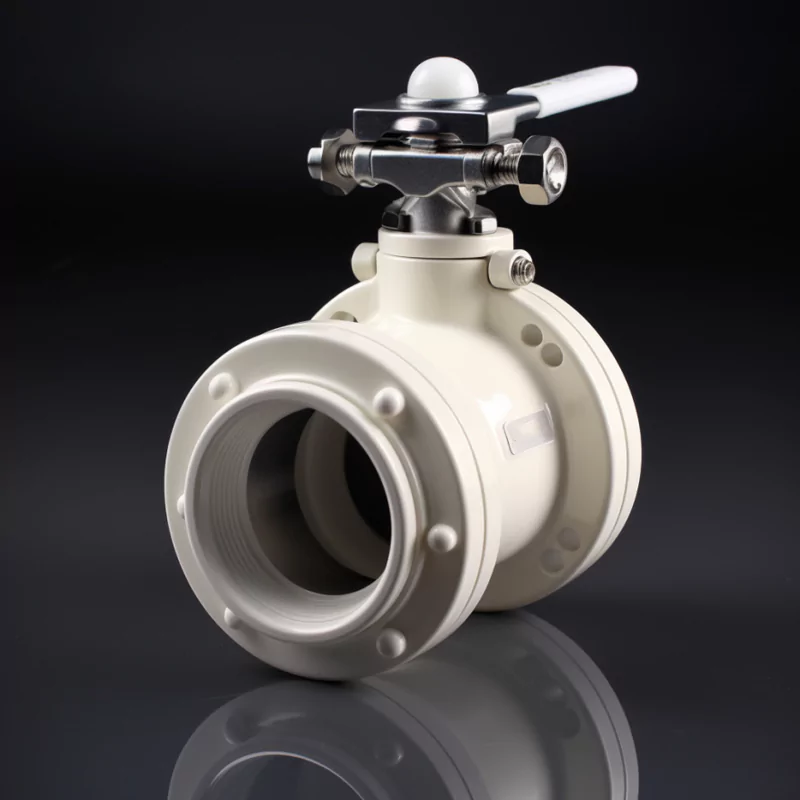
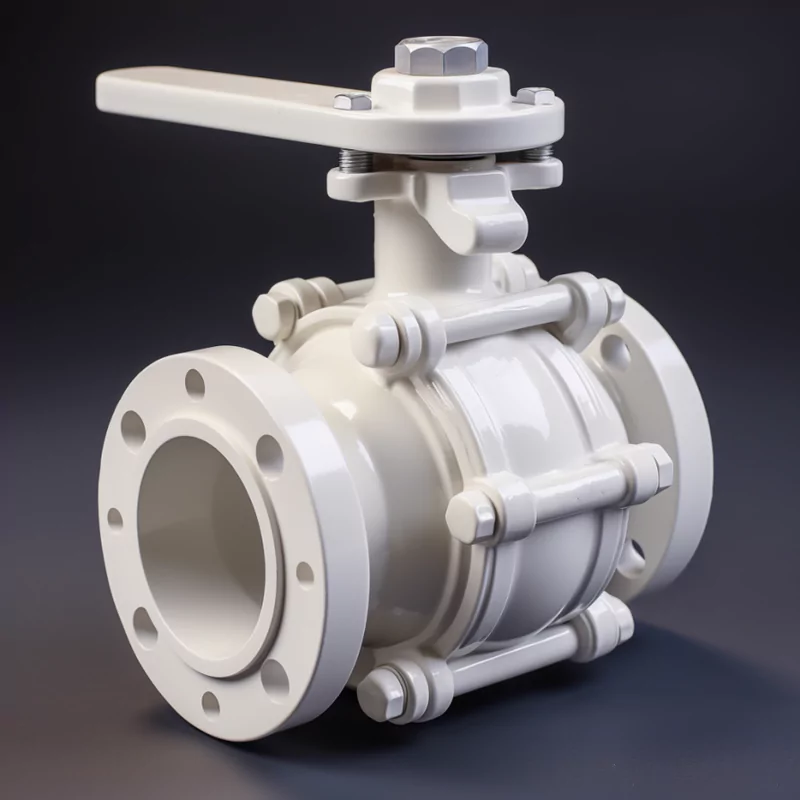
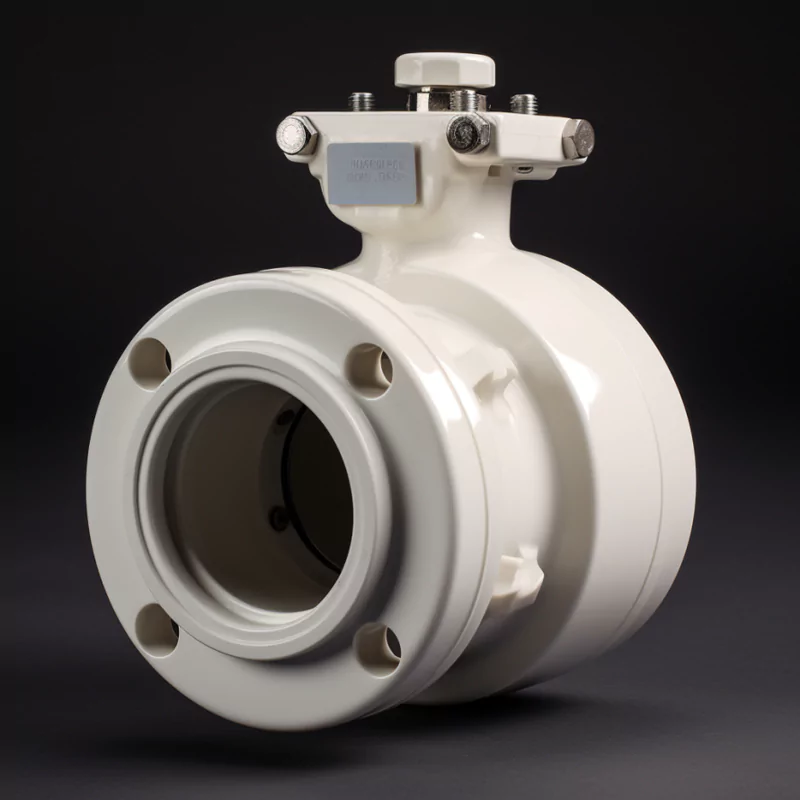
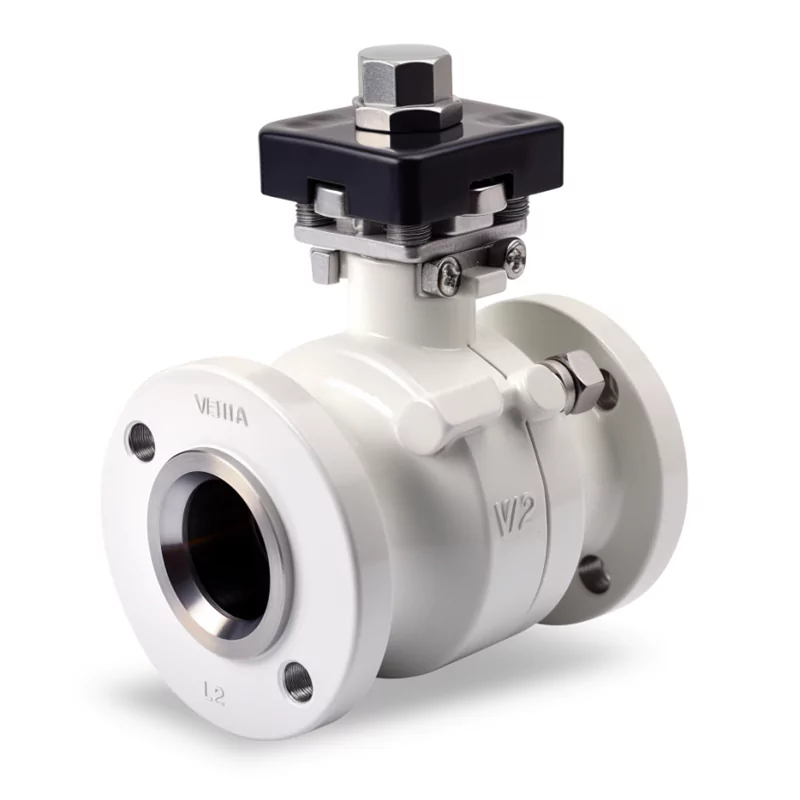
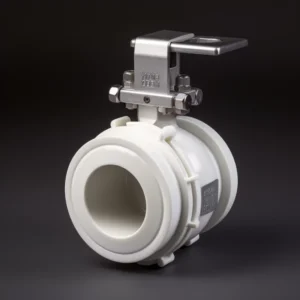
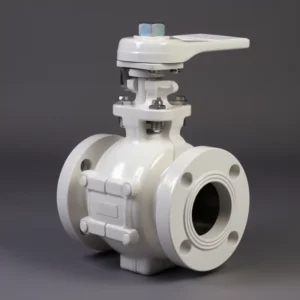
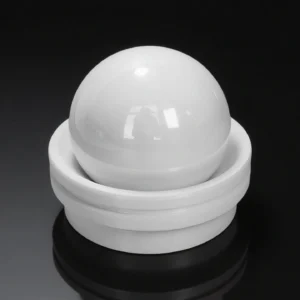
ADCERAX® V-Port Zirconia Ceramic Ball Valve is engineered for precise flow modulation and reliable shut-off in corrosive and abrasive media. Built with zirconia ceramics, it provides high hardness, chemical stability, and extended service life even in harsh operating conditions. Industries such as chemical processing, mining, power generation, and wastewater treatment rely on this valve for consistent performance and reduced maintenance downtime. Its V-Port design ensures accurate control while maintaining smooth and leak-free operation.
Features of V-Port Zirconia Ceramic Ball Valve
- Mining applications report downtime reduced by over 40%, lowering replacement costs and improving process continuity.
- Independent wear tests show a service life 3–5 times longer than conventional metal ball valves in slurry pipelines.
- The zirconia ceramic ball reaches HRA 88+, which is 8 times harder than stainless steel, ensuring long-term resistance to abrasive slurries.
- Zirconia ceramics maintain chemical stability in pH 2–12 media, resisting both strong acids and alkalis without degradation.
- Long-term immersion tests demonstrate zero mass loss after 1000 hours in 10% hydrochloric acid at 80 °C.
- In chemical plants, leakage rates were reduced to less than 0.01%, meeting strict safety and environmental standards.
- The V-Port geometry provides equal percentage flow characteristics with controllability ratio up to 50:1, enabling fine-tuned process control.
- Field data show flow deviation reduced by over 25% compared to standard ball valves, ensuring consistent throughput.
- Power station FGD systems achieved 98% operational stability, proving accurate modulation in fluctuating slurry loads.
Technical Properties for V-Port Zirconia Ceramic Ball Valve
The V-Port Zirconia Ceramic Ball Valve is designed with advanced zirconia materials that ensure durability, chemical stability, and precise flow control.
| Property |
Pure Zirconia (Monoclinic) - Unstabilized |
Yttria-Stabilized Zirconia (YSZ) |
Magnesia-stabilized zirconia (Mg-PSZ) |
| Typical Purity |
High-purity raw material, but unstabilized for the final product |
High purity |
High purity |
| Crystal Phases (at RT) |
Monoclinic (stable up to ~1170°C); Tetragonal and Cubic at higher temperatures. |
Primarily, Metastable Tetragonal can have a Cubic phase. |
Partially stabilized with tetragonal precipitates in a cubic matrix. |
| Density (g/cm³) |
5.65–6.05 |
5.85-6.1 |
~5.7 |
| Melting Point (°C) |
~2700-2715 |
Very High (similar to pure zirconia, but phase stability is key) |
Very High |
| Thermal Conductivity (W/m·K) |
Low (approx. 2-3) |
Low (approx. 2.5-3) |
Low (approx. 3) |
| Thermal Expansion Coefficient (10⁻⁶/K) |
~10 |
9.5-10 |
10 |
| Flexural Strength (MPa) |
Poor (due to phase transformation and brittleness) |
Up to 1000, 710-900 |
500 |
| Compressive Strength (MPa) |
Not typically used structurally |
~2000 |
~2500 |
| Fracture Toughness (MPa·m^0.5) |
Low (inherently brittle) |
Up to 10 (exceptionally high for ceramics due to transformation toughening), 8-9 |
6 |
| Hardness (Vickers, HV1) |
Moderate |
11-13 GPa, 1100-1220 kg/mm² |
1100 kg/mm² |
| Chemical Inertness |
Excellent in acids and alkalis |
Excellent |
Excellent |
| Biocompatibility |
Generally good, but stabilized forms are preferred for medical use |
Excellent, widely used in dental and medical implants |
Good |
| Typical Applications |
Refractories (at high temperatures) |
Structural ceramics, dental implants, oxygen sensors, cutting tools, thermal barrier coatings |
Refractories, structural components requiring specific thermal properties |
Specifications of V-Port Zirconia Ceramic Ball Valve

| Part No. |
Parts |
Material |
| 1 |
Valve Body |
WCB |
| 2 |
Middle Body |
WCB |
| 3 |
Gland Flang |
Engineering Ceramic |
| 4 |
Valve Seat |
Engineering Ceramic |
| 5 |
Ball |
Engineering Ceramic |
| 6 |
Bushing |
Engineering Ceramic |
| 7 |
Stem |
2Cr13 |
| 8 |
Packing |
Flexible Graphite |
| 9 |
Packing Gland |
WCB |
| 10 |
Lever |
WCB |

|
Zirconia Ceramic Lined V Ball Control Valve |
|
Item No. |
DN |
NPS |
H (mm) |
L (mm) |
D (mm) |
D1 (mm) |
D2 (mm) |
n-d |
b (mm) |
f (mm) |
|
AT-CVV-001 |
15 |
1 2" |
170 |
108 |
90 |
60.3 |
34.9 |
4-M12 |
11.6 |
2 |
|
AT-CVV-002 |
20 |
3 /4" |
180 |
117 |
100 |
69.9 |
42.9 |
4-M12 |
13.2 |
2 |
|
AT-CVV-003 |
25 |
1" |
185 |
127 |
110 |
79.4 |
50.8 |
4-M12 |
14.7 |
2 |
|
AT-CVV-004 |
32 |
1-1/4" |
220 |
140 |
115 |
88.9 |
63.5 |
4-M12 |
16.3 |
2 |
|
AT-CVV-005 |
40 |
1-1/2" |
230 |
165 |
125 |
98.4 |
73 |
4-M12 |
17.9 |
2 |
|
AT-CVV-006 |
50 |
2" |
247 |
178 |
150 |
120.7 |
92.1 |
4-M16 |
19.5 |
2 |
|
AT-CVV-007 |
65 |
2-1/2" |
270 |
190 |
180 |
139.7 |
104.8 |
4-M16 |
22.7 |
2 |
|
AT-CVV-008 |
80 |
3" |
310 |
203 |
190 |
152.4 |
127 |
4-M16 |
24.3 |
2 |
|
AT-CVV-009 |
100 |
4" |
355 |
229 |
230 |
190.5 |
139.7 |
4-M16 |
24.3 |
2 |
|
AT-CVV-010 |
125 |
5" |
430 |
356 |
255 |
215.9 |
157.2 |
4-M20 |
24.3 |
2 |
|
AT-CVV-011 |
150 |
6" |
490 |
394 |
280 |
241.3 |
185.7 |
4-M21 |
25.9 |
2 |
|
AT-CVV-012 |
200 |
8" |
590 |
457 |
345 |
298.5 |
215.9 |
4-M22 |
29 |
2 |
Packaging of V-Port Zirconia Ceramic Ball Valve
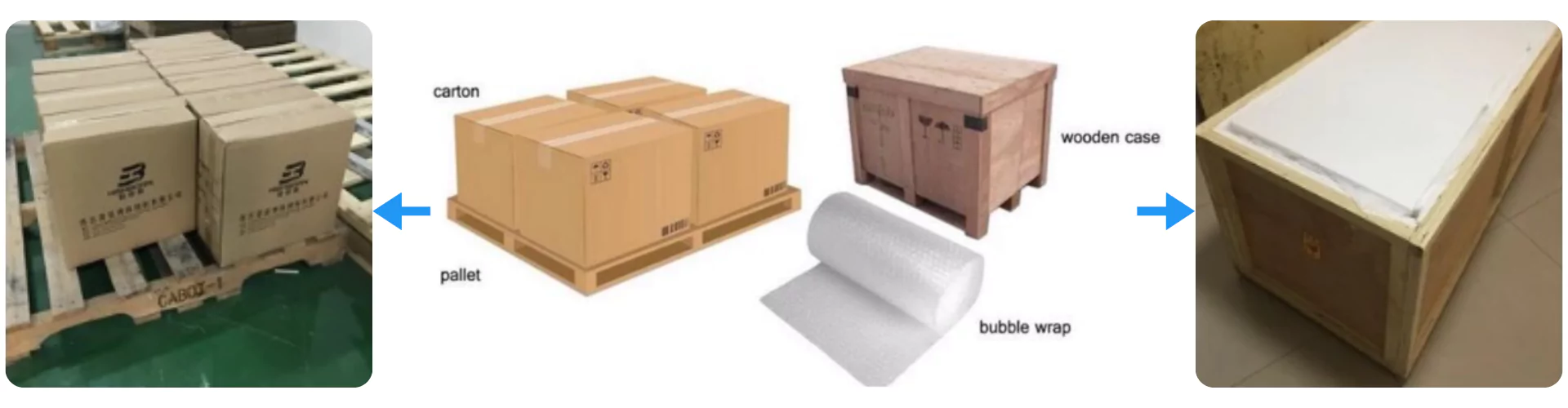
The V-Port Zirconia Ceramic Ball Valve is securely packed using bubble wrap, cartons, and reinforced wooden cases to ensure safe transit. Each shipment is palletized for stable loading and easy handling during international transport. This protective method guarantees it arrives intact and ready for installation.
Addressing Industrial Challenges with ADCERAX® V-Port Zirconia Ceramic Ball Valve
The V-Port Zirconia Ceramic Ball Valve is engineered to overcome specific industrial challenges where abrasive slurries, corrosive fluids, and precise modulation are critical. Its zirconia construction and V-Port design address pain points that standard valves cannot resolve, ensuring reliability in demanding applications.
-
Catalyst Dosing for Chemical Reactors
✅Key Advantages
1. Equal-percentage control (50–100:1 rangeability). The V-Port geometry on a segmented ball delivers equal-percentage characteristics for stable low-flow dosing, with typical rangeability 50–100:1 and up to 300:1 per manufacturer specs. This maintains tight feed control as ΔP changes across the loop, improving setpoint tracking in dosing lines.
2. Zirconia wear surface, HRA 88 / HV 1200–1300. Zirconia’s high hardness resists abrasion from catalyst powders and carbon black, reducing seat and ball erosion. This preserves Cv and dosing repeatability under slurry or solvent-borne catalyst feeds.
3. Shearing seat, non-clogging, Class VI shutoff. The segmented V-Ball’s wiping/shearing action minimizes build-up at the port, while Class VI shutoff prevents ratio drift from micro-leaks. This combination sustains recipe stoichiometry during continuous dosing.
✅ ️Problem Solved
A polymerization unit running abrasive catalyst slurry replaced metal control valves that leaked and drifted at low openings. With an equal-percentage V-Port valve (rangeability 50–100:1) and Class VI shutoff, the unit held stable dosing across turndown and eliminated low-flow stick-slip that previously upset the reactor. The zirconia trim (HRA 88 / HV 1200–1300) resisted abrasion, keeping Cv on-spec over the campaign. The shearing seat reduced fouling at the port compared to conventional trims. mated control. Maintenance and downtime savings exceeded USD 120,000/year, with payback inside the first maintenance cycle.
-
Slurry Feed of Mineral Processing Mills
✅Key Advantages
1. Abrasive-service ceramic internals. Ceramic-lined trims with hardness far above steels extend life in slurry services where entrained solids erode metal seats. Field reports in severe slurry show multi-fold life extension versus prior trims.
2. Equal-percentage modulation for stable mill loading. V-Port valves provide predictable gain, keeping feed steady as system ΔP varies and reducing oscillations in circulating load. Typical installed behavior remains near-linear across operating range.
3. Proven in hydrometallurgy slurry distribution. Ceramic V-Port valves are applied on nickel-chloride slurries where downtime is intolerable, demonstrating suitability for abrasive, corrosive feeds to mills and circuits.
✅ ️Problem Solved
In a nickel hydrometallurgy line, abrasive slurry distribution caused rapid trim wear and unstable mill feed with conventional valves. Fully ceramic V-Port control valves, proven in nickel-slurry service, stabilized feed while resisting erosion that previously forced frequent change-outs. Equal-percentage characteristics held controllability as slurry density and ΔP shifted. Plants using ceramic or segmented V-Ball designs in severe slurry report multi-cycle life gains and fewer shutdowns.
-
Lime Slurry Dosing for Water Treatment
✅Key Advantages
1. Anti-clog geometry matched to lime service. Guidance for lime systems warns that cavities and dead zones promote plugging; characterized V-port seats reduce accumulation at throttling edges. This design choice cuts interventions in high-solids lime feeds.
2. Controls across practical solids ranges. Water treatment manuals note lime slurries are typically run at <10% solids to avoid deposition, while case practice ranges ~2–10%; equal-percentage rangeability keeps dosing linear over these concentrations.
3. Process compliance via stable dosing. Poor mixing can leave only ~50% of dosed lime dissolved, and operators report clogging of pumps/valves; steady V-Port control with tight shutoff supports pH targets and reduces overshoot.
✅ ️Problem Solved
Problem Solved — Lime Slurry Dosing for Water Treatment
A municipal plant struggled with pH swings and frequent cleanouts in a 2–10% lime slurry dosing system. Replacing the throttling element with a V-Port control valve reduced plugging risk noted for lime service and provided equal-percentage modulation for stable dosing at low openings. Operating within handbook guidance (<10% solids) and improving mixing efficiency addressed undissolved lime (~50% risk without agitation). The result was steadier neutralization and fewer manual interventions.
User Guide for V-Port Zirconia Ceramic Ball Valve
This section provides practical instructions to help customers operate and maintain the V-Port Zirconia Ceramic Ball Valve safely and efficiently. Following these guidelines ensures long-term reliability, consistent performance, and reduced maintenance costs across industrial applications.
-
Installation Guidelines for V-Port Zirconia Ceramic Ball Valve
1. Ensure the installation direction matches flow requirements. Incorrect orientation can compromise performance and shorten service life. Always verify the arrow on the body before tightening connections.
2. Handle the valve with care during lifting and placement. Severe impacts or vibrations may damage ceramic components and affect sealing integrity. Use soft slings instead of rigid hooks.
3. Check all sealing surfaces before assembly. Dirt or scratches reduce sealing quality and may lead to leakage during pressurized operation. Clean surfaces thoroughly before installation.
-
Operation Recommendations
1. Open and close the valve using gradual torque application. Forcing the handle or actuator can damage the V-Port ball and reduce control accuracy. A smooth operation ensures longer service life.
2. During process adjustments, rely on the V-Port’s equal-percentage control curve. This provides precise modulation even at small openings, maintaining accurate flow control in sensitive systems.
3. Avoid exposing the valve to rapid pressure surges or water hammer. Such conditions may stress the ceramic internals and lead to premature cracking or surface fatigue.
-
Maintenance Practices
1. Perform regular visual inspections every 3–6 months. Look for wear on sealing components and actuator alignment issues, and replace parts before reaching critical failure.
2. Apply compatible lubricants to moving parts. This reduces friction on the stem and actuator interface, helping maintain smooth rotation without overloading the ball.
3. Record maintenance intervals and component replacements. A documented service log helps predict future wear patterns and reduces unexpected downtime.
-
Storage and Handling
1. Store the valve in a dry, dust-free environment. Excess humidity or chemical vapors can degrade seals and increase corrosion risk on non-ceramic components.
2. Use protective packaging such as bubble wrap and wooden cases for long-term storage. This minimizes accidental impacts and prevents micro-cracks in ceramic surfaces.
3. Keep the valve in a horizontal position during storage. Vertical stacking may cause stress on actuator connections or misalignment of the ball and seat.