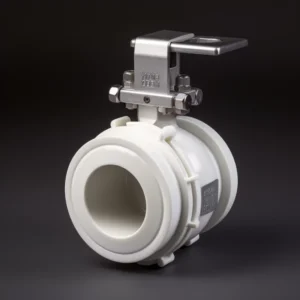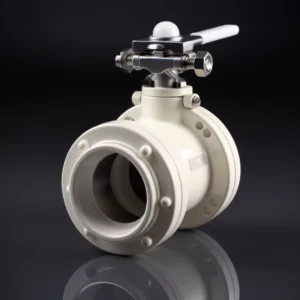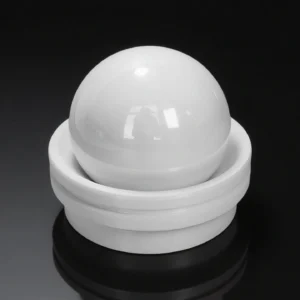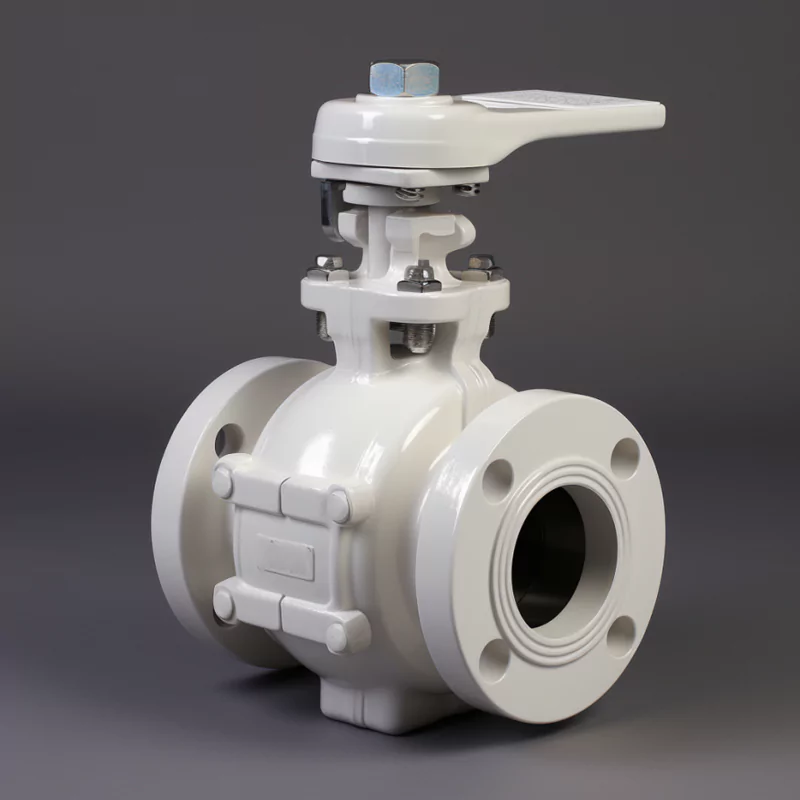
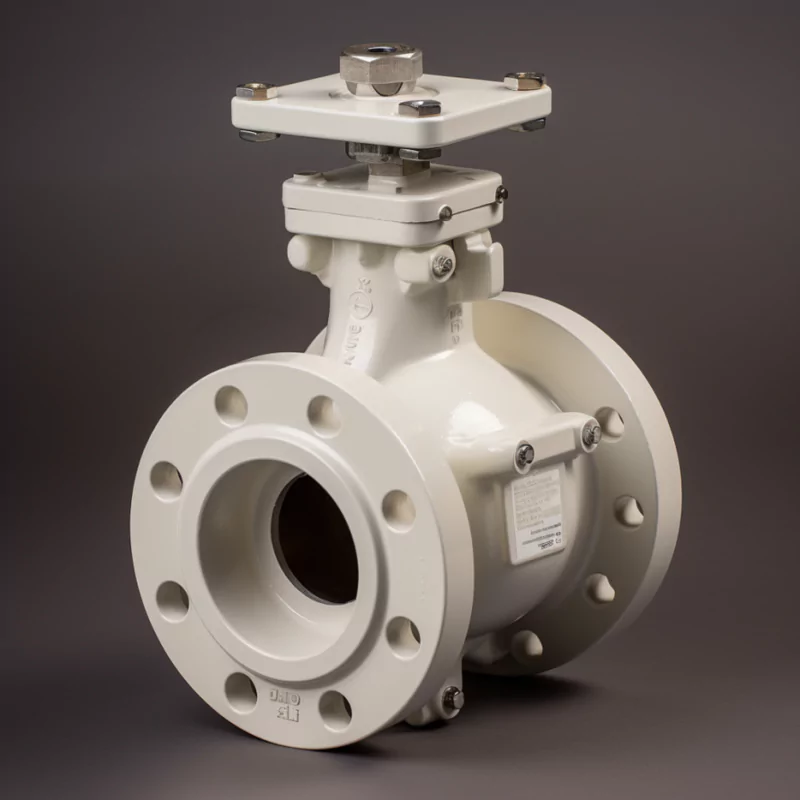
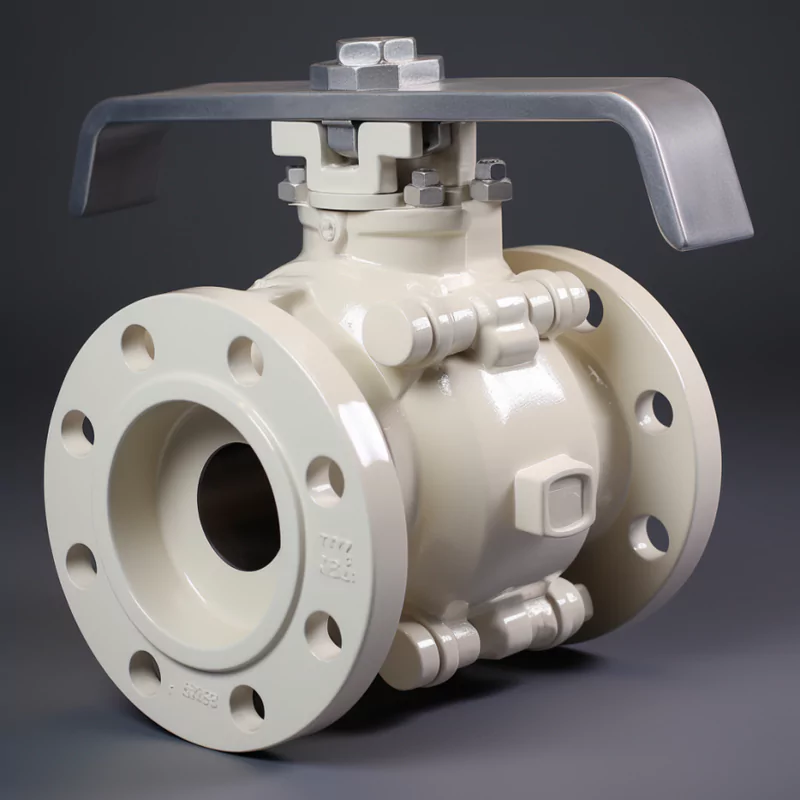
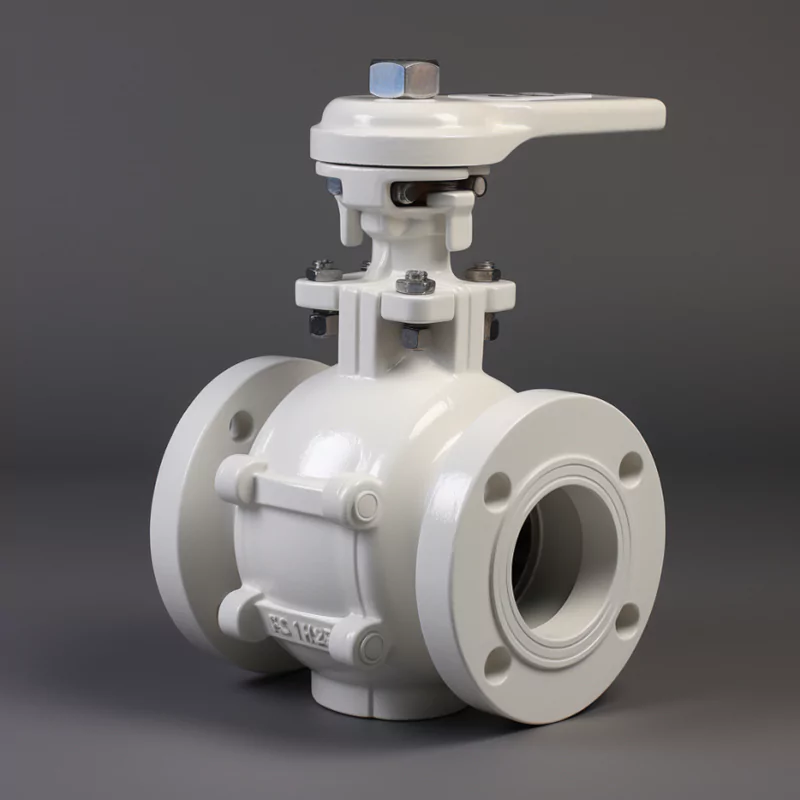
ADCERAX C-Type Zirconia Ball Valve with Eccentric Design is designed for slurry, sludge, ash slurry and corrosive process lines where conventional valves may suffer from seat wear, leakage or rising operating torque. Its eccentric semi-ball movement helps reduce direct rubbing between the ball and seat, while zirconia ceramic sealing parts provide wear resistance and chemical stability. The valve can be reviewed according to medium composition, solids content, pressure, temperature, connection standard and actuation method.
How the Eccentric C-Type Zirconia Ball Valve Works
The C-Type zirconia ball valve uses an eccentric semi-ball structure rather than a standard full-contact ball design. During opening, the sealing surface moves away from the seat, which helps reduce sliding friction, particle scratching and torque increase. During closing, the ceramic sealing surface returns to create a tight shutoff path. This structure is especially useful in slurry, sludge, crystallizing liquids and process lines where conventional metal or soft-seat valves may wear, seize or leak after repeated cycles.
For replacement projects, ADCERAX can review the existing valve drawing, failed seat condition, medium composition, solids percentage, pressure rating, temperature range, actuator torque and connection standard to confirm whether a C-Type zirconia ceramic design is suitable.
Key Advantages of C-Type Zirconia Ball Valve
Reduced Seat Rubbing
The eccentric semi-ball movement helps separate the sealing surfaces during valve travel. This reduces continuous rubbing between the ball and seat, which is important when abrasive particles, crystals or sludge fibers pass through the valve.
Zirconia Ceramic Wear Surface
Zirconia ceramic sealing parts provide high hardness, good fracture toughness and chemical stability. They are suitable for selected slurry, corrosive and particle-containing media where metal seats may suffer from erosion, pitting or deformation.
Stable Shutoff in Difficult Media
The C-Type structure is suitable for applications where the valve must close reliably after repeated cycles. It can help reduce leakage risk caused by scratched seats, trapped solids or uneven wear.
Suitable for Actuated Systems
Because the eccentric movement helps control friction, the valve can be reviewed for pneumatic or electric actuation. Correct actuator sizing should be confirmed according to valve size, pressure, medium and expected cycle frequency.
Technical Properties for C-Type Zirconia Ball Valve with Eccentric Design
The C-Type Zirconia Ball Valve with Eccentric Design is defined by its advanced material properties and engineered stability.
| Property | Pure Zirconia (Monoclinic) - Unstabilized | Yttria-Stabilized Zirconia (YSZ) | Magnesia-stabilized zirconia (Mg-PSZ) |
| Typical Purity | High-purity raw material, but unstabilized for the final product | High purity | High purity |
| Crystal Phases (at RT) | Monoclinic (stable up to ~1170°C); Tetragonal and Cubic at higher temperatures. | Primarily, Metastable Tetragonal can have a Cubic phase. | Partially stabilized with tetragonal precipitates in a cubic matrix. |
| Density (g/cm³) | 5.65–6.05 | 5.85-6.1 | ~5.7 |
| Melting Point (°C) | ~2700-2715 | Very High (similar to pure zirconia, but phase stability is key) | Very High |
| Thermal Conductivity (W/m·K) | Low (approx. 2-3) | Low (approx. 2.5-3) | Low (approx. 3) |
| Thermal Expansion Coefficient (10⁻⁶/K) | ~10 | 9.5-10 | 10 |
| Flexural Strength (MPa) | Poor (due to phase transformation and brittleness) | Up to 1000, 710-900 | 500 |
| Compressive Strength (MPa) | Not typically used structurally | ~2000 | ~2500 |
| Fracture Toughness (MPa·m^0.5) | Low (inherently brittle) | Up to 10 (exceptionally high for ceramics due to transformation toughening), 8-9 | 6 |
| Hardness (Vickers, HV1) | Moderate | 11-13 GPa, 1100-1220 kg/mm² | 1100 kg/mm² |
| Chemical Inertness | Excellent in acids and alkalis | Excellent | Excellent |
| Biocompatibility | Generally good, but stabilized forms are preferred for medical use | Excellent, widely used in dental and medical implants | Good |
| Typical Applications | Refractories (at high temperatures) | Structural ceramics, dental implants, oxygen sensors, cutting tools, thermal barrier coatings | Refractories, structural components requiring specific thermal properties |
Specifications of C-Type Zirconia Ball Valve with Eccentric Design

| Part No. | Parts | Material |
|---|---|---|
| 1 | Valve Body | WCB |
| 2 | Middle Body | WCB |
| 3 | Gland Flang | Engineering Ceramic |
| 4 | Valve Seat | Engineering Ceramic |
| 5 | Ball | Engineering Ceramic |
| 6 | Bushing | Engineering Ceramic |
| 7 | Stem | 2Cr13 |
| 8 | Packing | Flexible Graphite |
| 9 | Packing Gland | WCB |
| 10 | Lever | WCB |
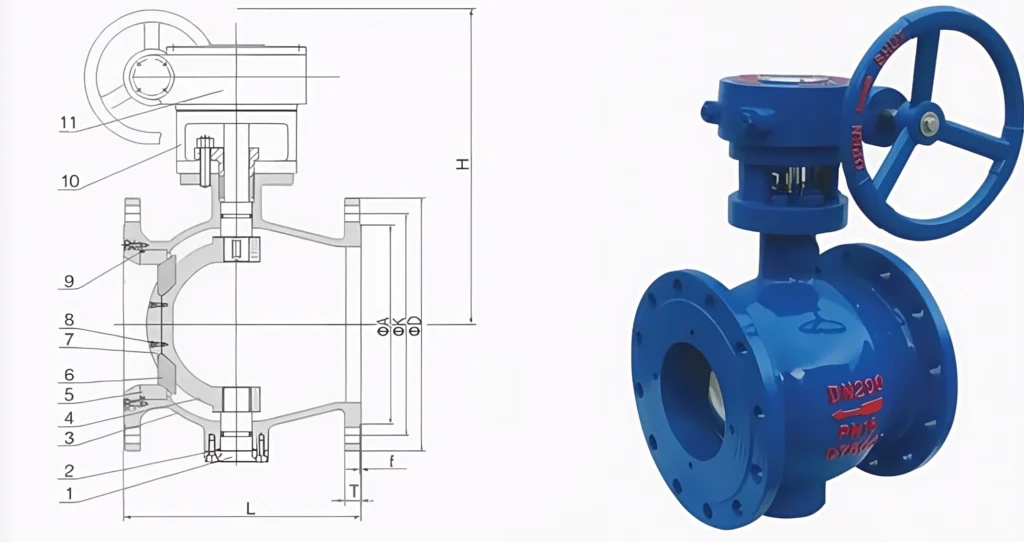
| Zirconia Ceramic Lined Eccentric Half Ball Valve | ||||||||||
| Item NO. | DN | PN (Mpa) | H (mm) | L (mm) | D (mm) | D1 (mm) | D2 (mm) | n-d | C (mm) | F (mm) |
| AT-CVP-001 | 50 | 1.6 | 230 | 124 | 165 | 125 | 100 | 4-∅18 | 16 | 3 |
| AT-CVP-002 | 65 | 1.6 | 237 | 145 | 185 | 145 | 120 | 4-∅18 | 18 | 3 |
| AT-CVP-003 | 80 | 1.6 | 260 | 165 | 200 | 160 | 135 | 8-∅18 | 20 | 3 |
| AT-CVP-004 | 100 | 1.6 | 270 | 194 | 220 | 180 | 156 | 8-∅18 | 20 | 3 |
| AT-CVP-005 | 125 | 1.6 | 320 | 210 | 250 | 210 | 185 | 8-∅22 | 22 | 3 |
| AT-CVP-006 | 150 | 1.6 | 340 | 229 | 285 | 240 | 211 | 8-∅22 | 26 | 3 |
| AT-CVP-007 | 200 | 1.6 | 390 | 243 | 340 | 295 | 265 | 8-∅23 | 26 | 3 |
| AT-CVP-008 | 250 | 1.6 | 420 | 297 | 405 | 355 | 319 | 8-∅26 | 30 | 3 |
| AT-CVP-009 | 300 | 1.6 | 510 | 338 | 460 | 410 | 375 | 8-∅26 | 30 | 4 |
Packaging of C-Type Zirconia Ball Valve with Eccentric Design
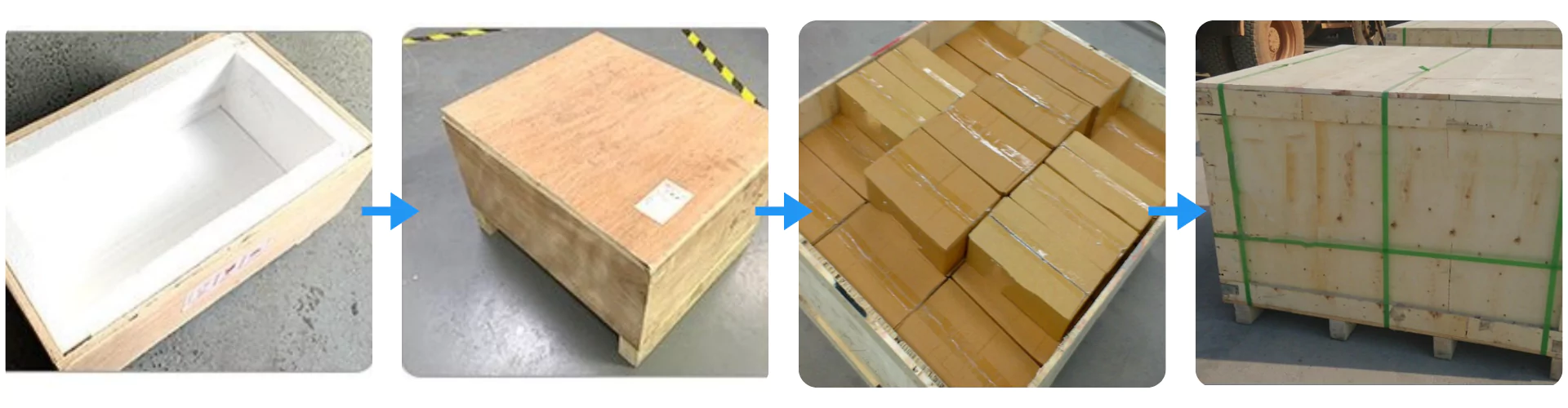
Each C-Type Zirconia Ball Valve with Eccentric Design is first secured in protective foam lining to prevent impact damage during transit. The product is then sealed in reinforced cartons and placed into strong wooden crates for export. This ensures that the C-Type Zirconia Ball Valve arrives safely with full protection against vibration, moisture, and handling stress.