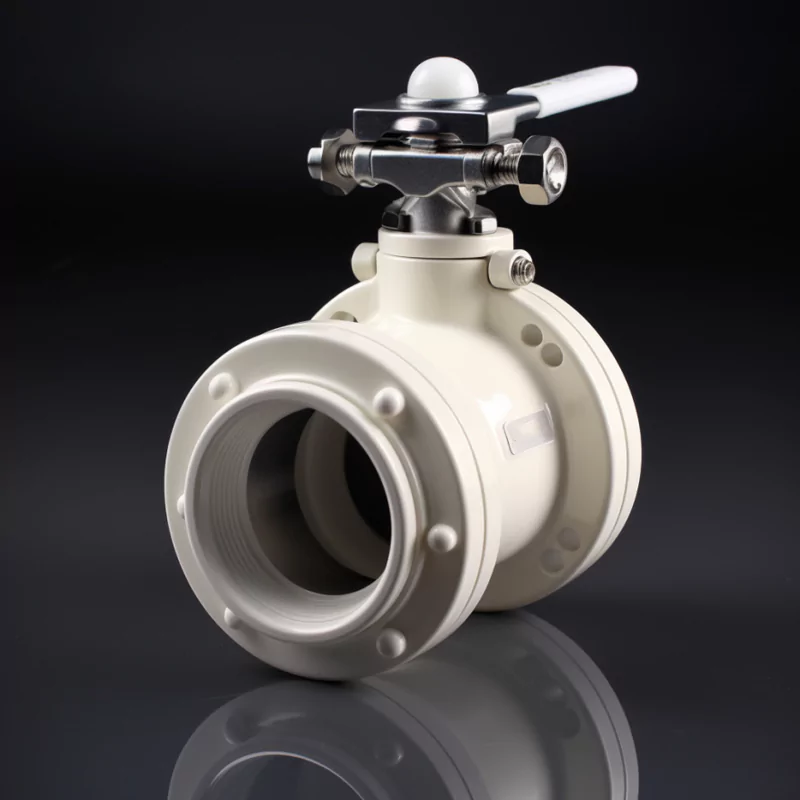
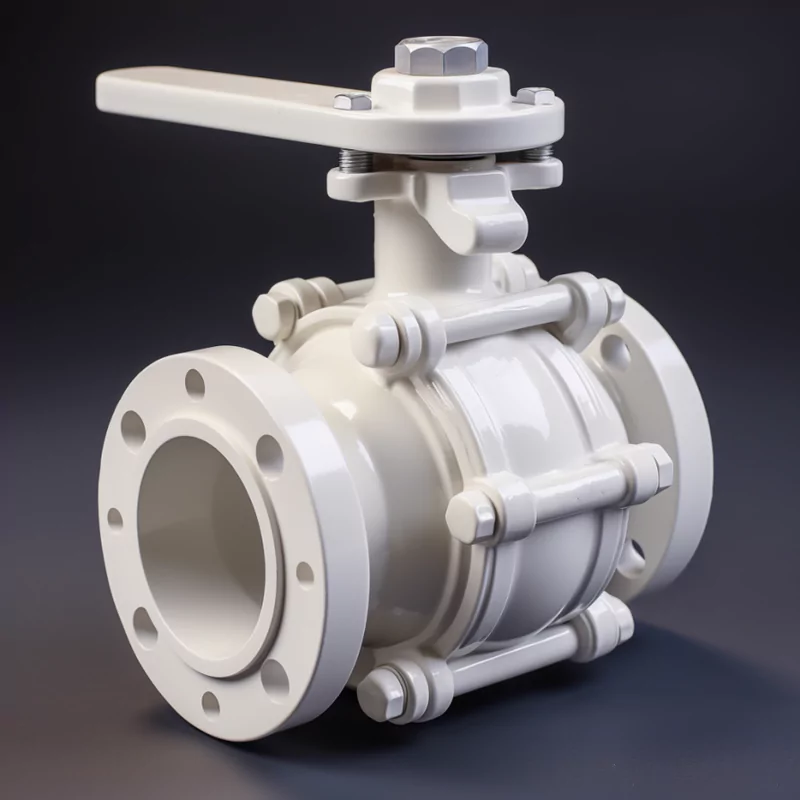
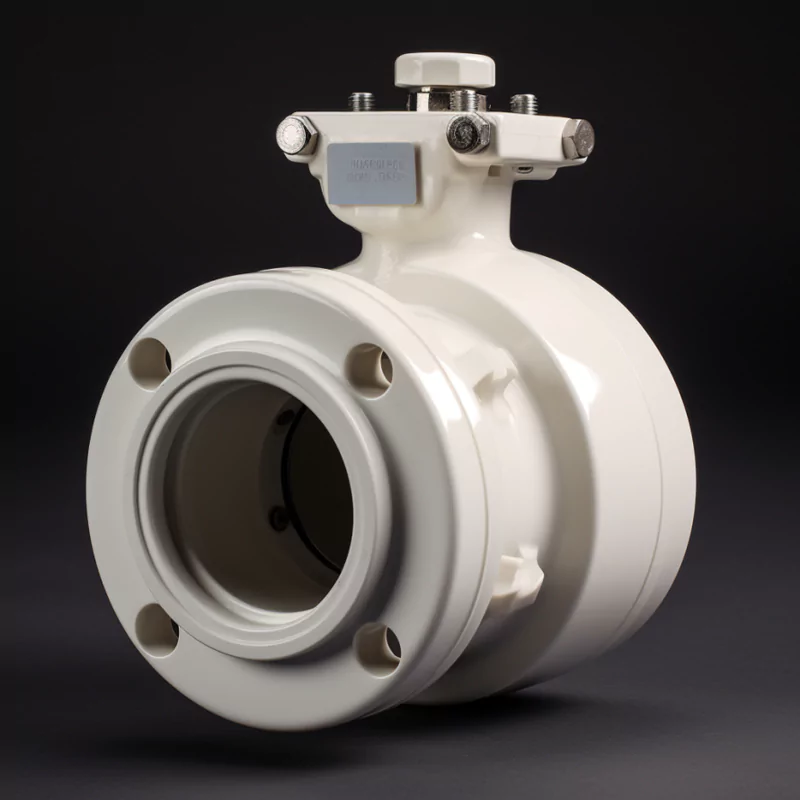
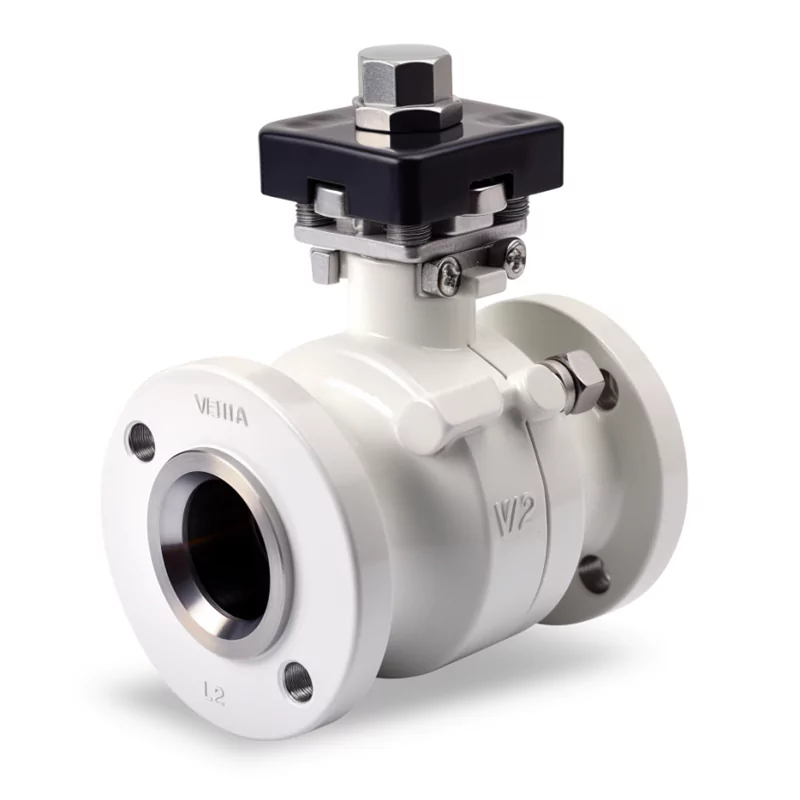
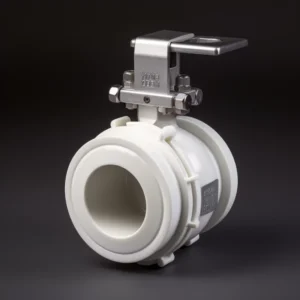
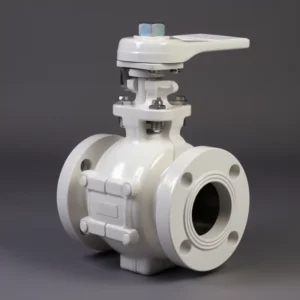
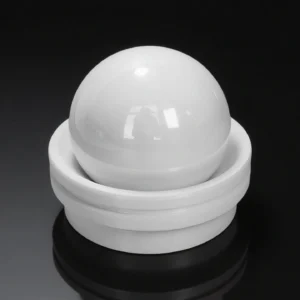
ADCERAX® V-Port Zirconia Ceramic Ball Valve is engineered for precise flow modulation and reliable shut-off in corrosive and abrasive media. Built with zirconia ceramics, it provides high hardness, chemical stability, and extended service life even in harsh operating conditions. Industries such as chemical processing, mining, power generation, and wastewater treatment rely on this valve for consistent performance and reduced maintenance downtime. Its V-Port design ensures accurate control while maintaining smooth and leak-free operation.
Key Benefits for Abrasive and Corrosive Flow Control
1. More Stable Flow Modulation
The V-port opening allows flow to increase more gradually as the ball rotates, making it more suitable for dosing, slurry feed and process control than a standard round-port shut-off valve. This helps operators reduce sudden flow changes in lines where pressure and medium concentration may fluctuate.
2. Better Wear Resistance at the Throttling Edge
In throttling service, erosion usually appears first at the opening edge, seat contact area and flow-impact zone. Zirconia ceramic provides a hard wear-contact surface, helping the valve maintain sealing and control performance longer than common metal contact surfaces in abrasive media.
3. Stronger Resistance to Corrosive Process Media
Zirconia ceramic is suitable for many acid, alkali and chemically aggressive fluid environments. When used as the ball and seat material, it helps reduce corrosion-related leakage, sticking and surface degradation in chemical transfer or wastewater treatment systems.
4. Easier Integration into Automated Systems
The valve can be reviewed with manual, pneumatic or electric actuation options. This makes it suitable for both local operation and automated control loops where repeatable positioning, response speed and control accuracy are important.
Technical Properties for V-Port Zirconia Ceramic Ball Valve
The V-Port Zirconia Ceramic Ball Valve is designed with advanced zirconia materials that ensure durability, chemical stability, and precise flow control.
| Property |
Pure Zirconia (Monoclinic) - Unstabilized |
Yttria-Stabilized Zirconia (YSZ) |
Magnesia-stabilized zirconia (Mg-PSZ) |
| Typical Purity |
High-purity raw material, but unstabilized for the final product |
High purity |
High purity |
| Crystal Phases (at RT) |
Monoclinic (stable up to ~1170°C); Tetragonal and Cubic at higher temperatures. |
Primarily, Metastable Tetragonal can have a Cubic phase. |
Partially stabilized with tetragonal precipitates in a cubic matrix. |
| Density (g/cm³) |
5.65–6.05 |
5.85-6.1 |
~5.7 |
| Melting Point (°C) |
~2700-2715 |
Very High (similar to pure zirconia, but phase stability is key) |
Very High |
| Thermal Conductivity (W/m·K) |
Low (approx. 2-3) |
Low (approx. 2.5-3) |
Low (approx. 3) |
| Thermal Expansion Coefficient (10⁻⁶/K) |
~10 |
9.5-10 |
10 |
| Flexural Strength (MPa) |
Poor (due to phase transformation and brittleness) |
Up to 1000, 710-900 |
500 |
| Compressive Strength (MPa) |
Not typically used structurally |
~2000 |
~2500 |
| Fracture Toughness (MPa·m^0.5) |
Low (inherently brittle) |
Up to 10 (exceptionally high for ceramics due to transformation toughening), 8-9 |
6 |
| Hardness (Vickers, HV1) |
Moderate |
11-13 GPa, 1100-1220 kg/mm² |
1100 kg/mm² |
| Chemical Inertness |
Excellent in acids and alkalis |
Excellent |
Excellent |
| Biocompatibility |
Generally good, but stabilized forms are preferred for medical use |
Excellent, widely used in dental and medical implants |
Good |
| Typical Applications |
Refractories (at high temperatures) |
Structural ceramics, dental implants, oxygen sensors, cutting tools, thermal barrier coatings |
Refractories, structural components requiring specific thermal properties |
Specifications of V-Port Zirconia Ceramic Ball Valve

| Part No. |
Parts |
Material |
| 1 |
Valve Body |
WCB Carbon Steel |
| 2 |
Middle Body |
WCB Carbon Steel |
| 3 |
Gland Flange |
Engineering Ceramic |
| 4 |
Valve Seat |
Engineering Ceramic |
| 5 |
Ball |
Engineering Ceramic |
| 6 |
Bushing |
Engineering Ceramic |
| 7 |
Stem |
2Cr13 Stainless Steel Stem |
| 8 |
Packing |
Flexible Graphite |
| 9 |
Packing Gland |
WCB |
| 10 |
Lever |
WCB |

|
Zirconia Ceramic Lined V Ball Control Valve |
|
Item No. |
DN |
NPS |
H (mm) |
L (mm) |
D (mm) |
D1 (mm) |
D2 (mm) |
n-d |
b (mm) |
f (mm) |
|
AT-CVV-001 |
15 |
1 2" |
170 |
108 |
90 |
60.3 |
34.9 |
4-M12 |
11.6 |
2 |
|
AT-CVV-002 |
20 |
3 /4" |
180 |
117 |
100 |
69.9 |
42.9 |
4-M12 |
13.2 |
2 |
|
AT-CVV-003 |
25 |
1" |
185 |
127 |
110 |
79.4 |
50.8 |
4-M12 |
14.7 |
2 |
|
AT-CVV-004 |
32 |
1-1/4" |
220 |
140 |
115 |
88.9 |
63.5 |
4-M12 |
16.3 |
2 |
|
AT-CVV-005 |
40 |
1-1/2" |
230 |
165 |
125 |
98.4 |
73 |
4-M12 |
17.9 |
2 |
|
AT-CVV-006 |
50 |
2" |
247 |
178 |
150 |
120.7 |
92.1 |
4-M16 |
19.5 |
2 |
|
AT-CVV-007 |
65 |
2-1/2" |
270 |
190 |
180 |
139.7 |
104.8 |
4-M16 |
22.7 |
2 |
|
AT-CVV-008 |
80 |
3" |
310 |
203 |
190 |
152.4 |
127 |
4-M16 |
24.3 |
2 |
|
AT-CVV-009 |
100 |
4" |
355 |
229 |
230 |
190.5 |
139.7 |
4-M16 |
24.3 |
2 |
|
AT-CVV-010 |
125 |
5" |
430 |
356 |
255 |
215.9 |
157.2 |
4-M20 |
24.3 |
2 |
|
AT-CVV-011 |
150 |
6" |
490 |
394 |
280 |
241.3 |
185.7 |
4-M21 |
25.9 |
2 |
|
AT-CVV-012 |
200 |
8" |
590 |
457 |
345 |
298.5 |
215.9 |
4-M22 |
29 |
2 |
V-Port vs O-Port Ceramic Ball Valve
| Comparison Point |
V-Port Zirconia Ceramic Ball Valve |
O-Port Zirconia Ceramic Ball Valve |
| Main Function |
Flow regulation and controlled throttling |
Full open/close shut-off |
| Port Shape |
V-shaped opening for gradual control |
Round full-bore or reduced-bore opening |
| Best Use |
Dosing, slurry flow control, process modulation |
Isolation, quick shut-off, low pressure-loss passage |
| Flow Behavior |
Better control at partial openings |
Better for unrestricted flow when fully open |
| Typical Buyer Need |
“I need stable control, not only open-close.” |
“I need clean shut-off and less clogging.” |
Choose a V-Port design when the system needs repeatable flow adjustment, dosing control or controlled slurry feed. Choose an O-Port design when the valve is mainly used for full open / close isolation with a clearer flow path. For abrasive throttling service, ADCERAX can review the port geometry, ceramic trim and actuator selection before quotation.
Packaging of V-Port Zirconia Ceramic Ball Valve
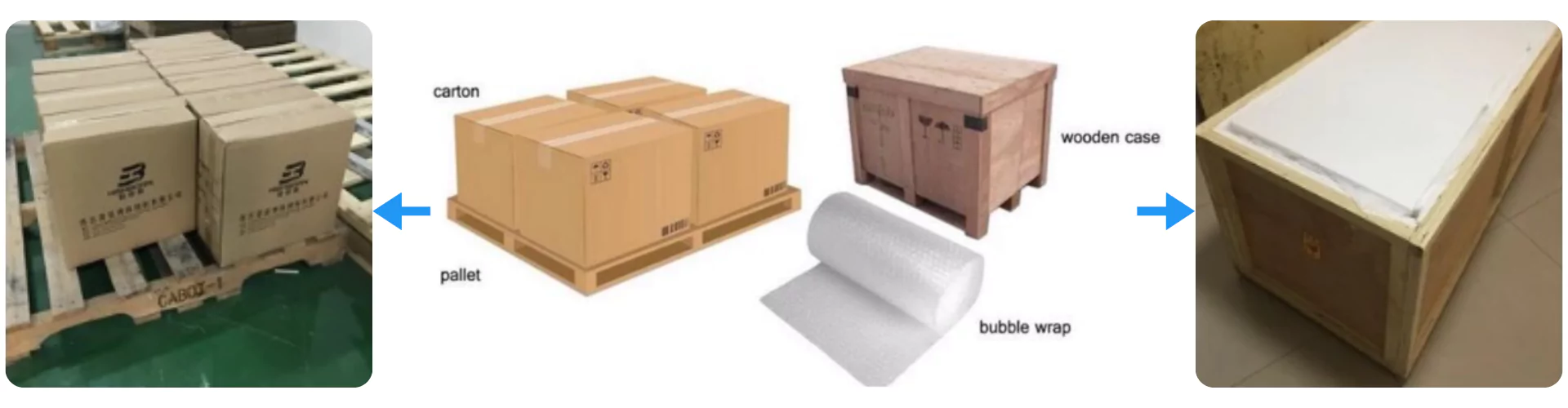
The V-Port Zirconia Ceramic Ball Valve is packed with cushioning protection, cartons and reinforced wooden cases according to valve size and actuator configuration. Ceramic contact parts are protected from impact and vibration, while palletized packaging helps improve handling stability during international shipment.
Suitable Applications for V-Port Zirconia Ceramic Ball Valve
V-Port Zirconia Ceramic Ball Valves are suitable for process lines where the valve needs to control flow, not only open or close the pipeline. They are often used in abrasive slurry, corrosive liquid and particle-containing media where metal throttling edges, seats or sealing surfaces may wear quickly. The V-port structure supports gradual flow adjustment, while zirconia ceramic contact surfaces help improve wear resistance in harsh operating conditions.
-
Chemical Dosing and Corrosive Liquid Control
V-Port Zirconia Ceramic Ball Valves are suitable for chemical dosing lines where corrosion resistance and stable flow adjustment are both important. In many chemical processes, the valve is not only used for isolation but also for controlling reagent feed, neutralization liquid, catalyst solution or corrosive transfer fluid. The V-port opening allows the flow to increase more gradually, which helps operators avoid sudden dosing changes and unstable process response.
Zirconia ceramic contact surfaces help resist chemical attack at the ball and seat, especially in systems where stainless steel or alloy surfaces may corrode, pit or lose sealing stability. This makes the valve useful for acid and alkali handling, wastewater chemical dosing, reagent feed systems and other corrosive process lines that require repeatable control.
-
Mining Slurry and Mineral Processing Lines
Abrasive slurry can quickly damage metal throttling edges, sealing surfaces and valve seats, especially when the valve works at partial openings for a long time. A V-Port Zirconia Ceramic Ball Valve helps protect the main flow-control area from particle erosion while supporting more stable modulation under changing slurry density and flow demand.
This valve is suitable for mineral slurry feed, tailings handling, hydrometallurgy lines and abrasive process fluids where both wear resistance and flow control are required. For these applications, the solid content, particle size, flow velocity, pressure and required control range should be reviewed before selecting the port geometry, ceramic trim and actuator type.
-
Lime Slurry and Water Treatment Systems
Lime slurry, wastewater and neutralization fluids often create scaling, plugging and unstable dosing problems. In these systems, a standard valve may suffer from seat wear, incomplete closing or poor control at low opening positions. A V-port ceramic ball valve can support controlled flow adjustment at partial openings while reducing wear on critical ceramic contact surfaces.
This design is useful for pH adjustment, lime dosing, wastewater treatment, sludge handling and neutralization systems where the valve must handle abrasive or scaling media repeatedly. The port angle, actuator type, cleaning method and installation direction should be reviewed together to reduce clogging risk and improve long-term operating stability.
-
Power Plant and FGD Process Lines
Power plant and flue gas desulfurization systems may involve alkaline slurry, abrasive particles and repeated flow adjustment. These conditions can create heavy wear on metal valve seats and throttling areas, especially in slurry circulation, dosing and discharge lines. Zirconia ceramic contact parts help improve wear resistance in the areas exposed to repeated flow impact.
A V-port design is useful when the system requires controlled slurry regulation rather than simple on-off isolation. It can help maintain smoother flow adjustment in abrasive process lines, while the ceramic ball and seat support better resistance to erosion and chemical exposure. Final selection should consider slurry concentration, pressure, temperature, actuator torque and maintenance access.
-
Industrial Process Lines Requiring Stable Partial-Opening Control
In some process systems, the valve may stay at a partial opening position for long periods. This operating condition is more demanding than simple open-close service because the flow continuously impacts the same edge and sealing area. A V-Port Zirconia Ceramic Ball Valve is suitable for these conditions because the V-shaped opening supports controlled modulation and the ceramic contact surfaces help resist localized wear.
It can be used in dosing skids, slurry feed lines, chemical process units and automated control loops where repeatable valve positioning is important. For automated systems, the actuator, control signal, valve torque and flow range should be matched carefully to achieve stable performance.
User Guide for V-Port Zirconia Ceramic Ball Valve
This section provides practical instructions to help customers operate and maintain the V-Port Zirconia Ceramic Ball Valve safely and efficiently. Following these guidelines ensures long-term reliability, consistent performance, and reduced maintenance costs across industrial applications.
-
Installation Guidelines for V-Port Zirconia Ceramic Ball Valve
1. Ensure the installation direction matches flow requirements. Incorrect orientation can compromise performance and shorten service life. Always verify the arrow on the body before tightening connections.
2. Handle the valve with care during lifting and placement. Severe impacts or vibrations may damage ceramic components and affect sealing integrity. Use soft slings instead of rigid hooks.
3. Check all sealing surfaces before assembly. Dirt or scratches reduce sealing quality and may lead to leakage during pressurized operation. Clean surfaces thoroughly before installation.
-
Operation Recommendations
1. Open and close the valve using gradual torque application. Forcing the handle or actuator can damage the V-Port ball and reduce control accuracy. A smooth operation ensures longer service life.
2. During process adjustments, rely on the V-Port’s equal-percentage control curve. This provides precise modulation even at small openings, maintaining accurate flow control in sensitive systems.
3. Avoid exposing the valve to rapid pressure surges or water hammer. Such conditions may stress the ceramic internals and lead to premature cracking or surface fatigue.
-
Maintenance Practices
1. Perform regular visual inspections every 3–6 months. Look for wear on sealing components and actuator alignment issues, and replace parts before reaching critical failure.
2. Apply compatible lubricants to moving parts. This reduces friction on the stem and actuator interface, helping maintain smooth rotation without overloading the ball.
3. Record maintenance intervals and component replacements. A documented service log helps predict future wear patterns and reduces unexpected downtime.
-
Storage and Handling
1. Store the valve in a dry, dust-free environment. Excess humidity or chemical vapors can degrade seals and increase corrosion risk on non-ceramic components.
2. Use protective packaging such as bubble wrap and wooden cases for long-term storage. This minimizes accidental impacts and prevents micro-cracks in ceramic surfaces.
3. Keep the valve in a horizontal position during storage. Vertical stacking may cause stress on actuator connections or misalignment of the ball and seat.
Information to Provide for a Faster Quotation
| RFQ Information |
Why It Is Needed |
| Medium name and composition |
Confirms chemical compatibility |
| Solid content and particle size |
Helps evaluate abrasion and clogging risk |
| Operating pressure and temperature |
Determines body, seal and actuator selection |
| Required flow range or Cv |
Helps review V-port geometry |
| Valve size and connection standard |
Ensures pipeline compatibility |
| Manual, pneumatic or electric operation |
Determines actuation and control interface |
| Drawing or existing valve model |
Reduces dimensional mismatch risk |
| Quantity and project timeline |
Helps review production and delivery planning |
Send your medium details, valve size, pressure, temperature and drawing. ADCERAX will review the ceramic contact parts, port design and actuation options before quotation.